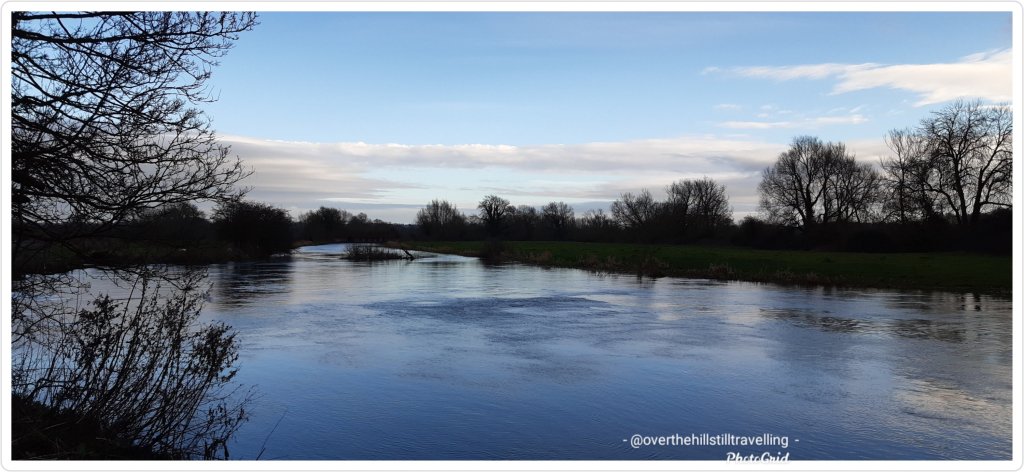
My time in Salisbury is now over, but fear not I shall return – when I start travelling with my grandson, Salisbury, Old Sarum and Avebury are on my very extensive list of ‘places to go on Granny and Jamie’s Adventures’. But I couldn’t leave without sharing what is, next to the Cathedral, the best aspect of the city…..The River Avon, in Salisbury, Wiltshire, such a beautiful space.
Synonymous with Shakespeare and Stratford Upon Avon, the Avon rises east of the town of Chipping Sodbury in South Gloucestershire, just north of the village of Acton Turville.
The river itself runs from a spring in Naseby in Northamptonshire, through Leicestershire, Warwickshire, Worcestshire and finally to the River Severn in Gloucestershire, passing through Bath and Bristol, the last big city on its route and beneath the famous Clifton Suspension Bridge.
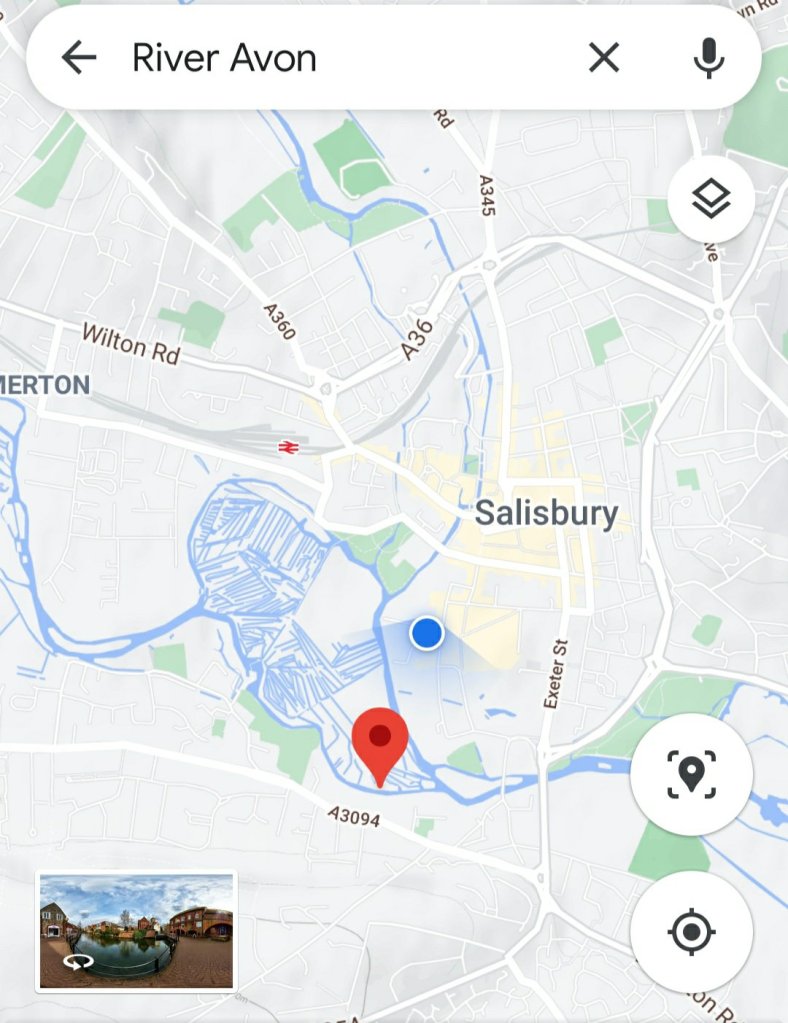
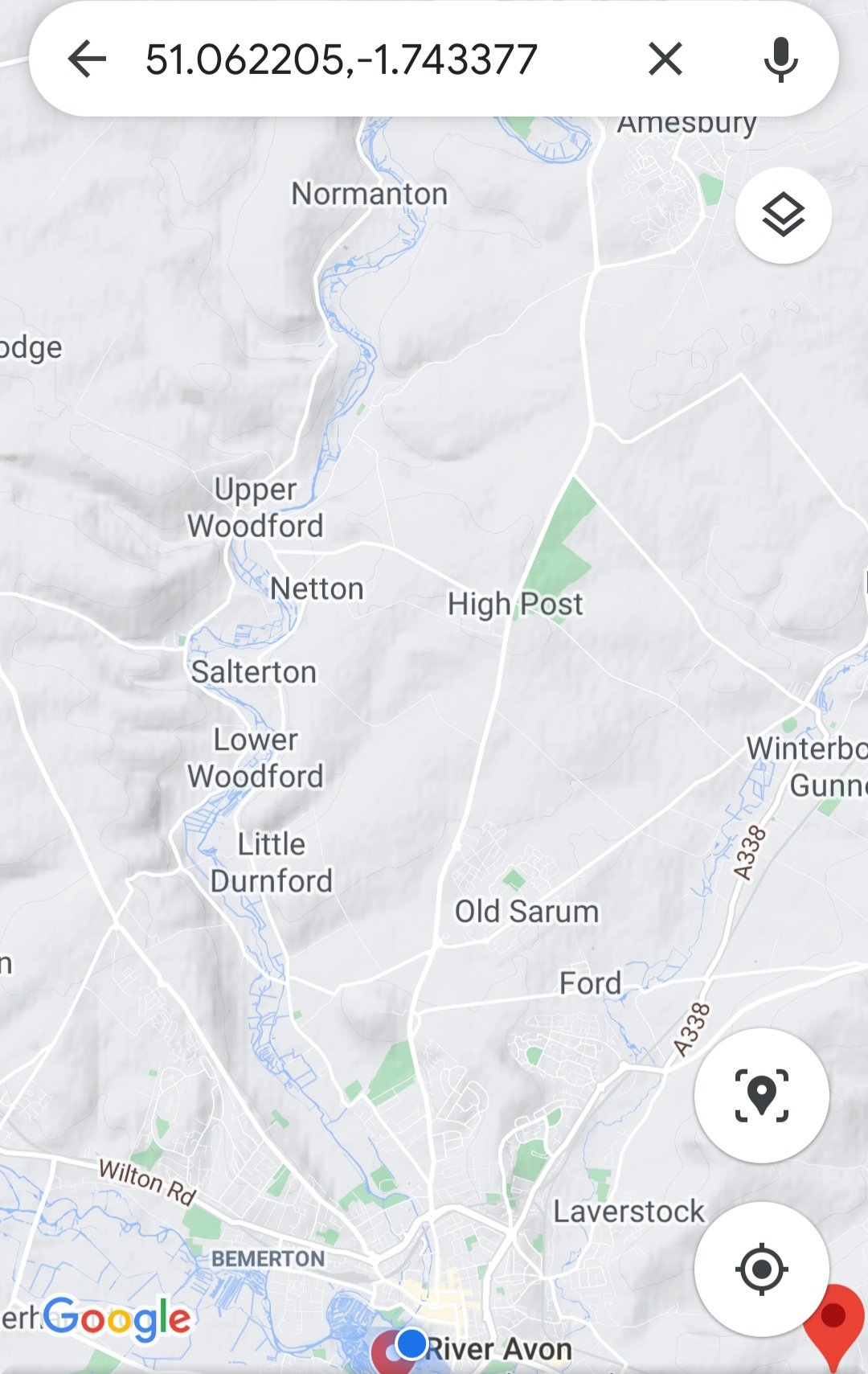
The River Avon is an exceptionally meandery river with lots of small tributaries and channels breaking away, leaving hundreds of little islands in its wake enroute to the sea…I tried to follow it on Google maps but gave up 😄😄😄
Running a somewhat circular path, the river drains east and then south through Wiltshire. Its first main settlement is the village of Luckington, two miles (3 km) inside the Wiltshire border, and then on to Sherston.
At Malmesbury it joins up with its first major tributary, the Tetbury Avon, which rises just north of Tetbury in Gloucestershire. This tributary is known locally as the Ingleburn, which in Old English means ‘English river’. Here, the two rivers almost meet but their path is blocked by a rocky outcrop of the Cotswolds, almost creating an island for the ancient hilltop town of Malmesbury to sit on. Upstream of this confluence the river is sometimes referred to as the ‘River Avon (Sherston Branch)’ to distinguish it from the Tetbury Branch. Information ref wikipedia with thanks.
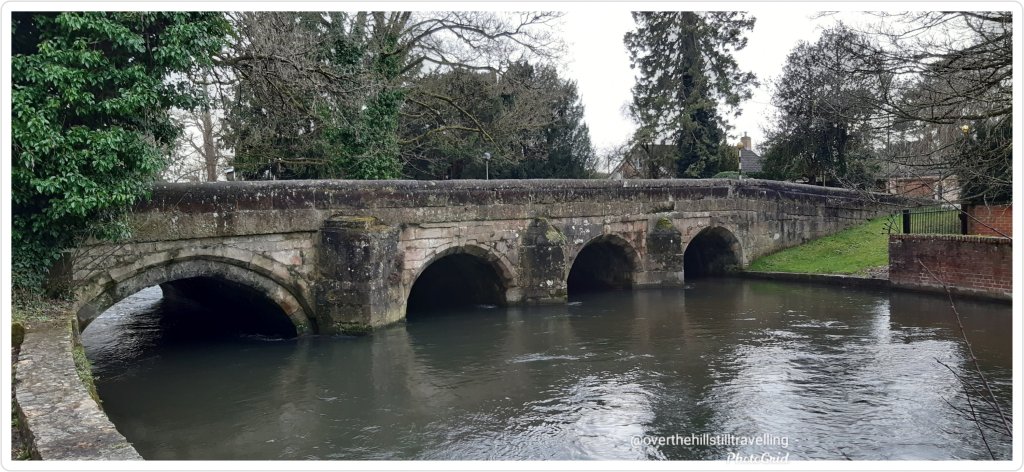
In Salisbury the river twists and winds within sight of the cathedral as it rushes past ancient inns, Norman churches, alongside meadows green and watery alive with wildflowers, butterflies, bees and swans, it splits into a multitude of channels and smaller tributaries around the city, with 2 distinct channels in the city rushing furiously through the millrace at the Maltings then flows fast beneath a 15th century bridge; Crane Bridge
The Maltings Crane Bridge
Pretty much wherever you are, you are within a short walk of the river.
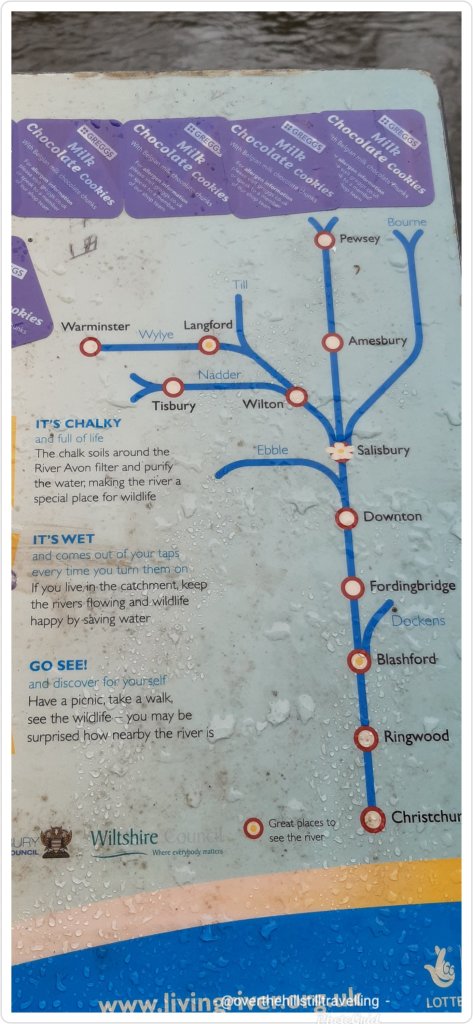
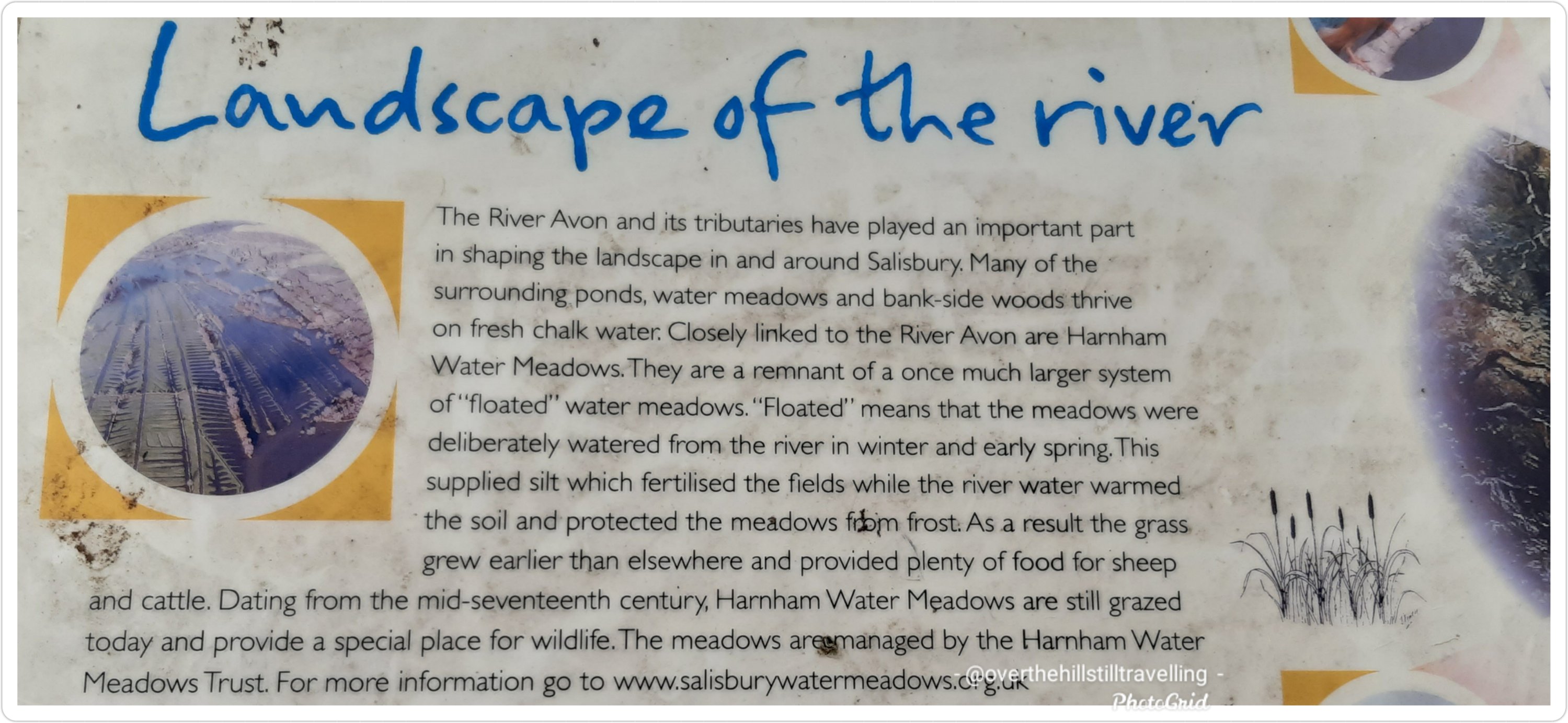
The chalk soils around the River Avon filter and purify the water, making the river a special place for wildlife. The Avon and its tributaries make up one of the largest chalk river systems in England, and is a source of clean drinking water.
Although I’ve been to Salisbury a few times, its always been a short visit and mostly spent in the cathedral or at Old Sarum (which is a fantastic place btw – a must visit), but I’ve never had the time to just meander and explore. Its been fantastic. I shall of course return someday in the future….
Meanwhile, here’s a short video showing scenes of the River Avon in Salisbury
I did a lot of walking during my breaks, through Churchill Park, Queen Elizabeth Park, and along the many and varied riverside walks in the city…I went as far afield as the area called Broken Bridges and had a walk along the River Nadder, blissful tranquility, a space of enchantment
Crossing the bridge towards Broken BridgesRiver Nadder, so clear you can see the bottom
And that’s it ….goodbye Salisbury, hope your cathedral is open next time I visit, I’d like to see the Magna Carta again 😊😊
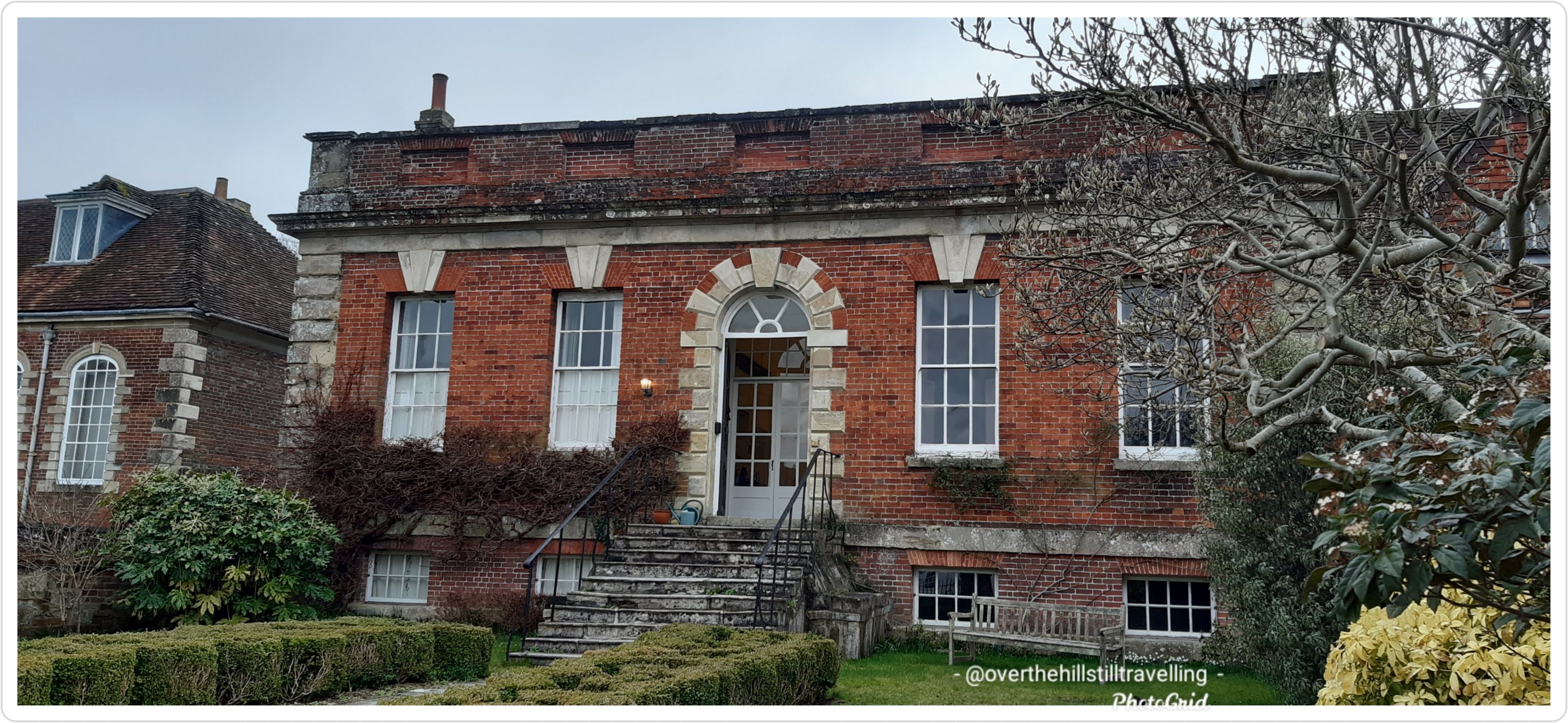
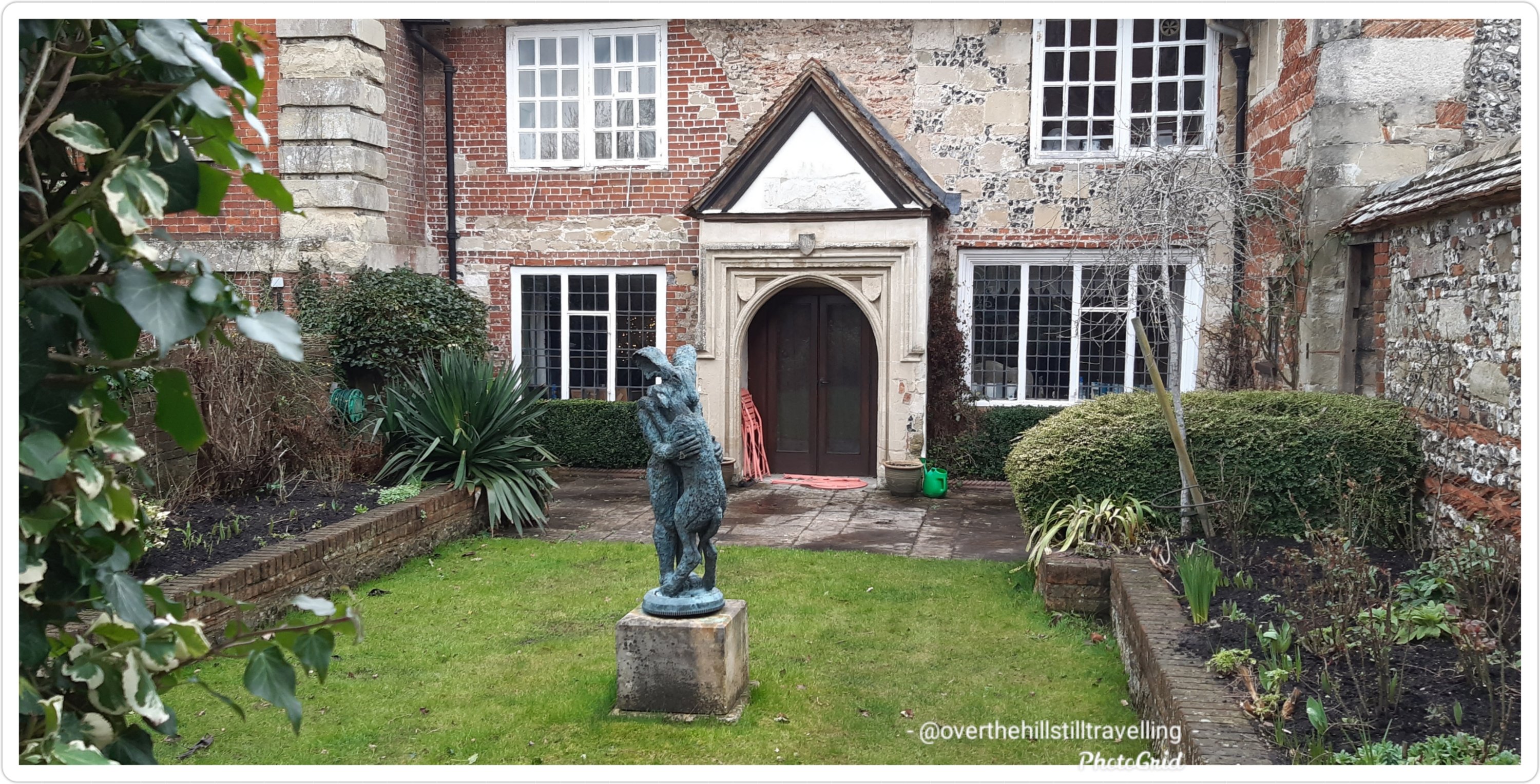
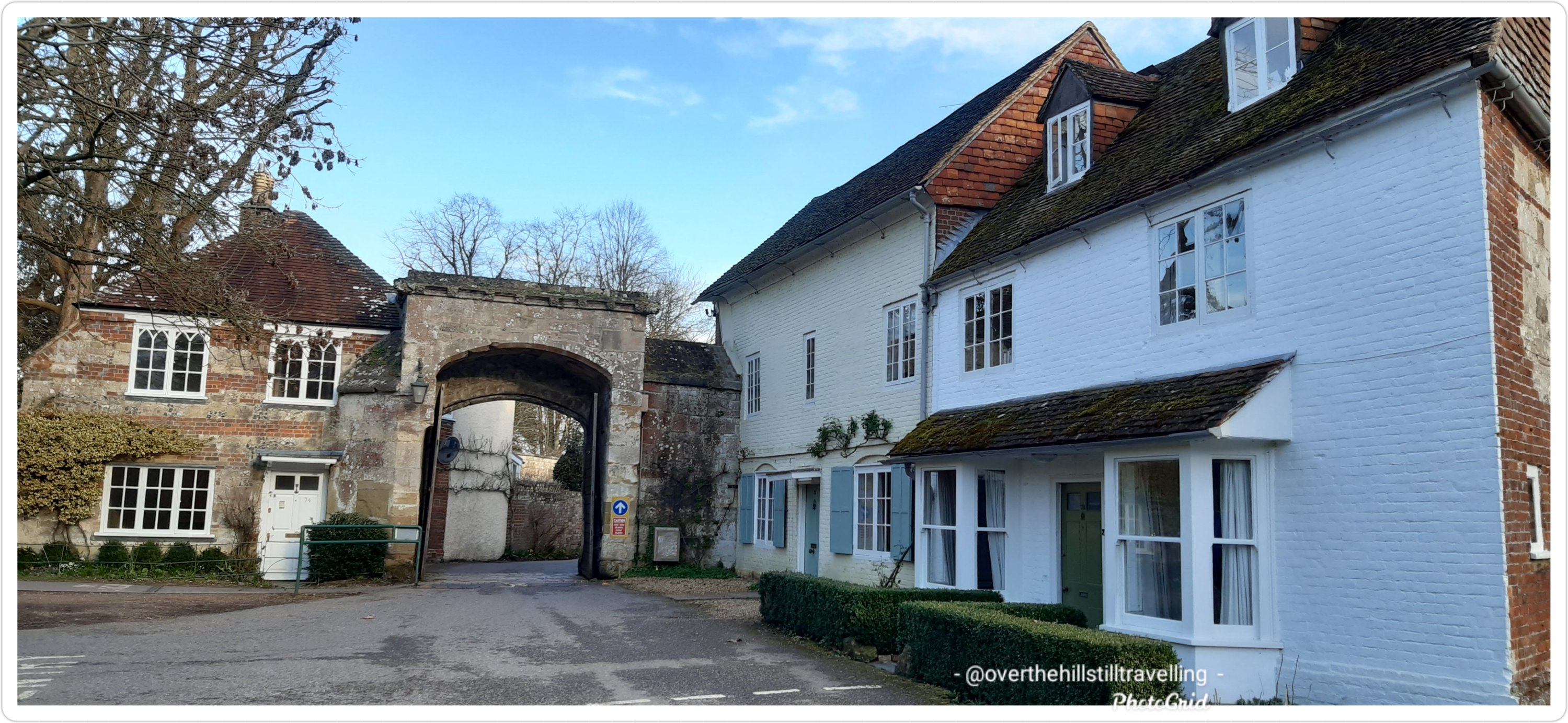
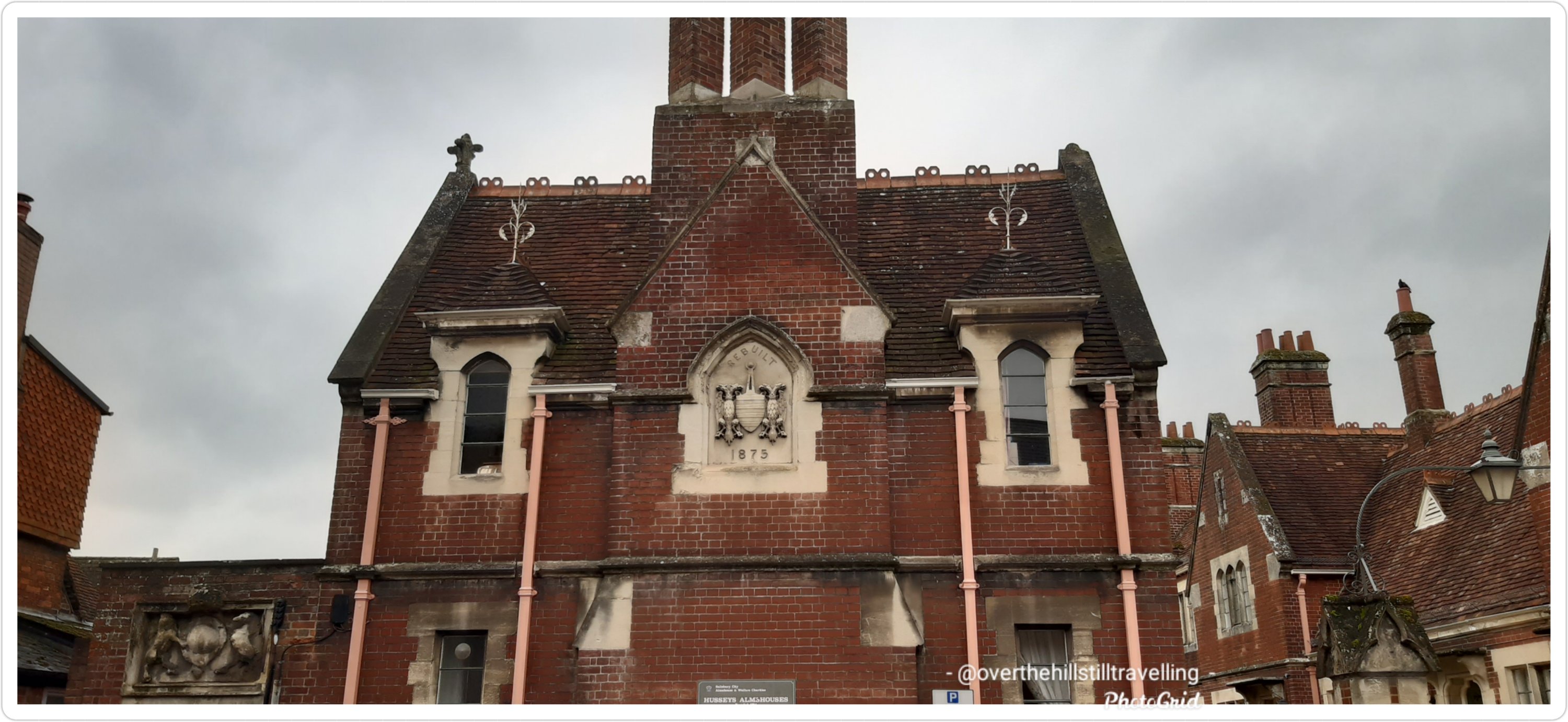
Besides all the most amazing and ancient buildings and houses dotted around Salisbury, there are many beautiful younger places. I was hard put to not photograph just about everything. I’ve scanned through my photos and pulled up the more interesting structures. Some are remnants of an older building, especially in The Close, others are dotted around the city. I hope you enjoy these as much as the others.
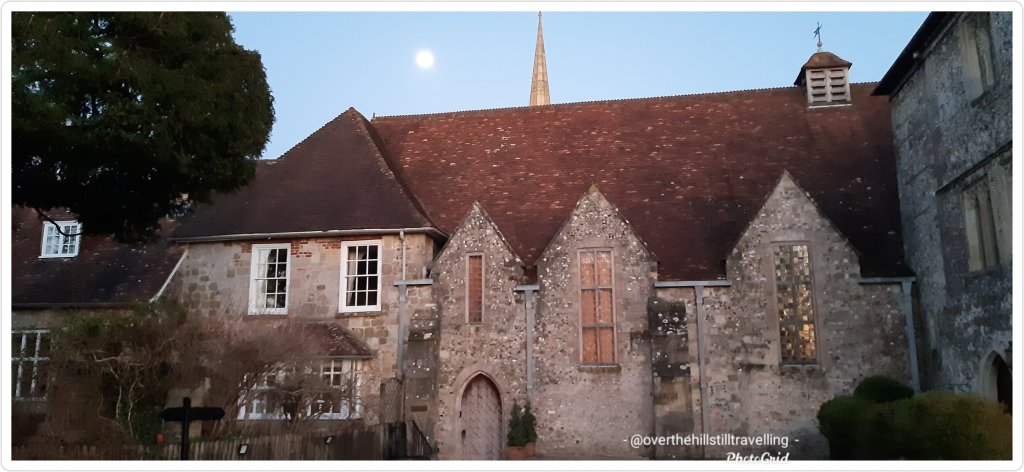
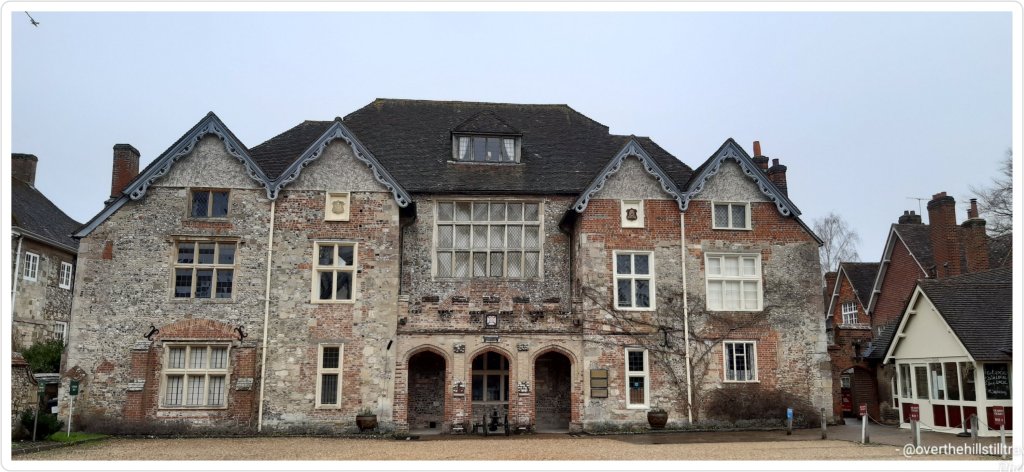
Front of the Medieval Hall
You can just see the spire of the Cathedral behind the building and the magical moon. I was lucky enough to work just around the corner from this building.
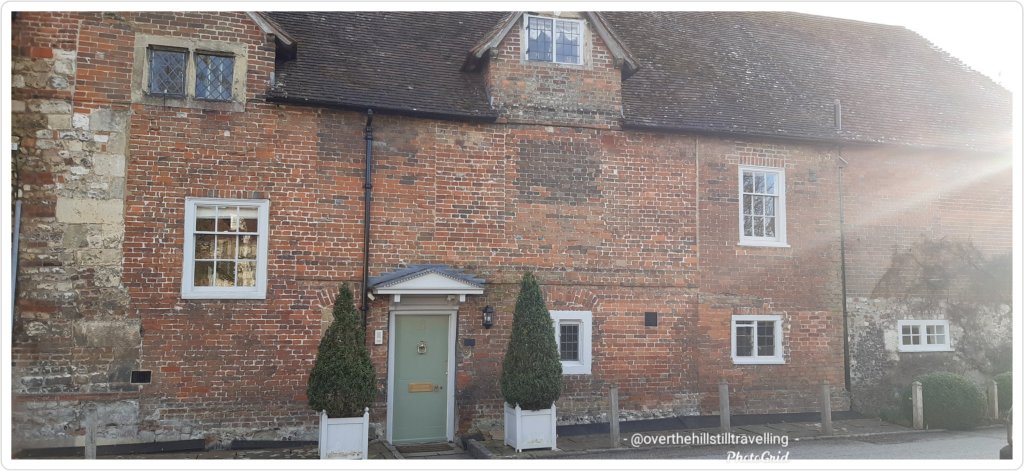
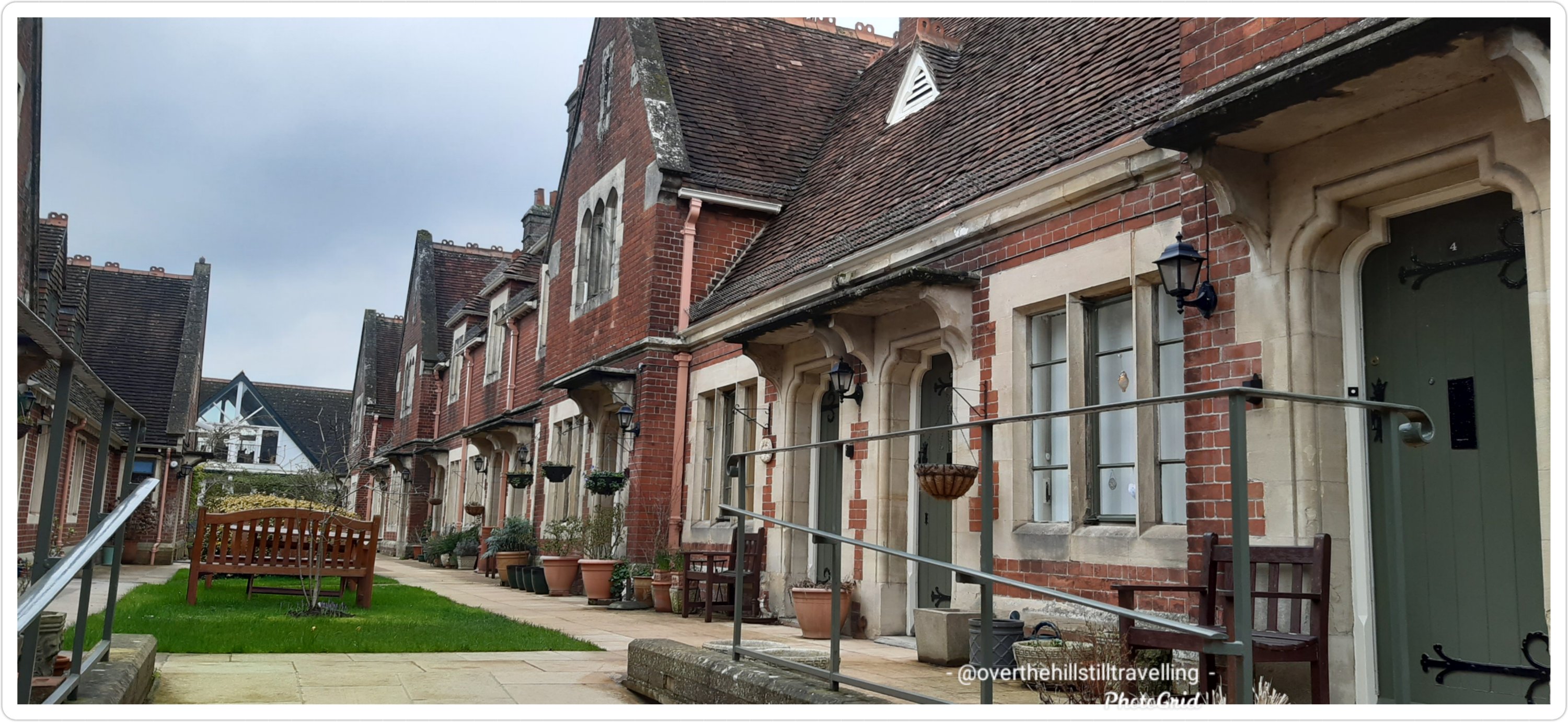
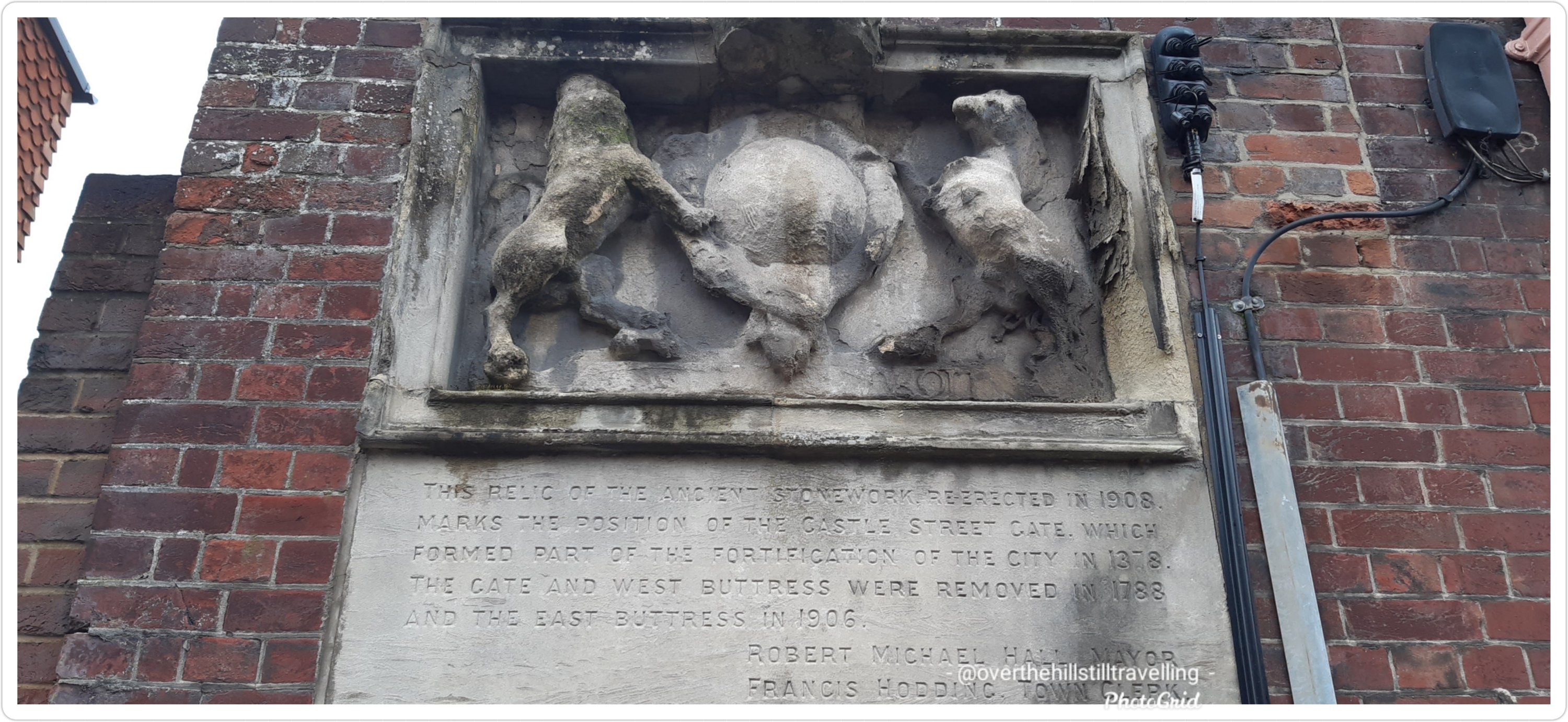
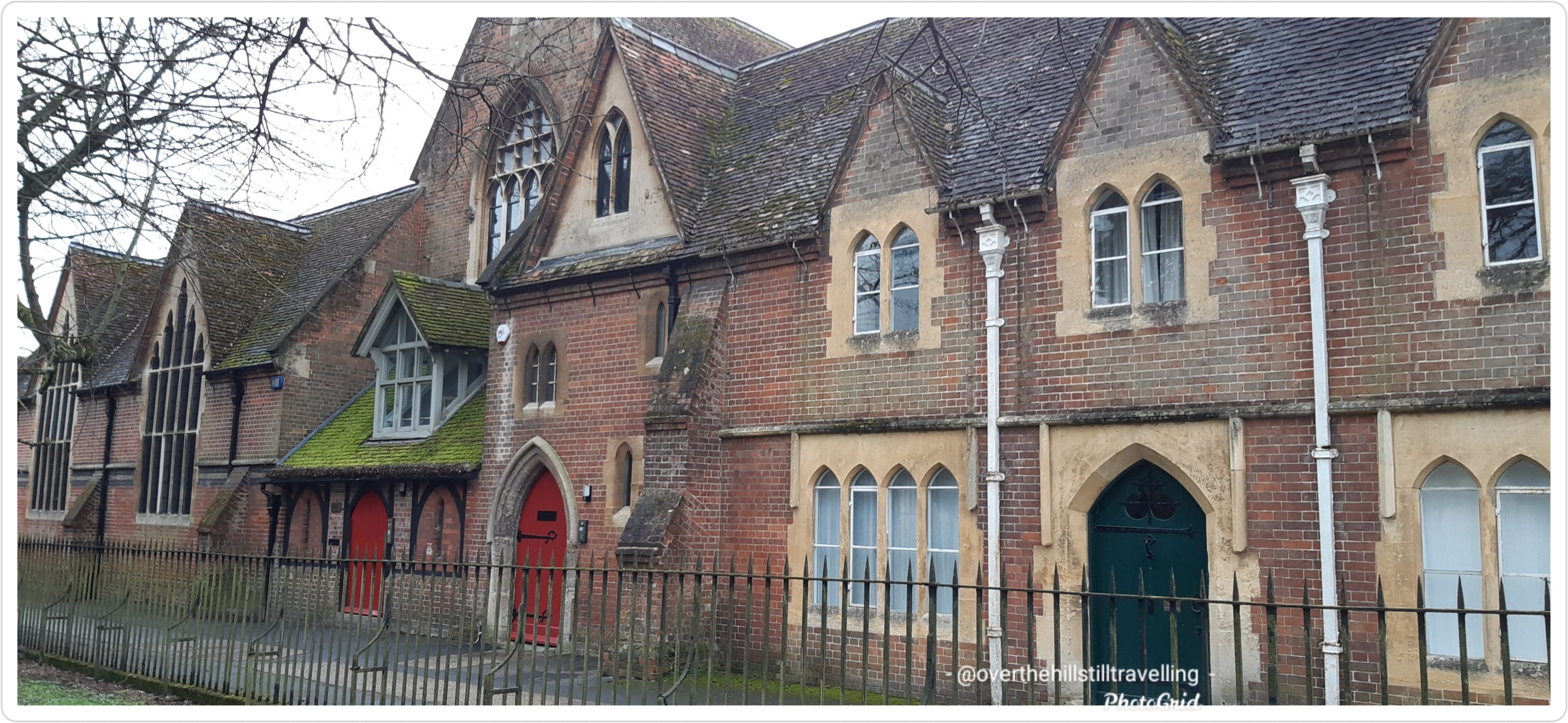
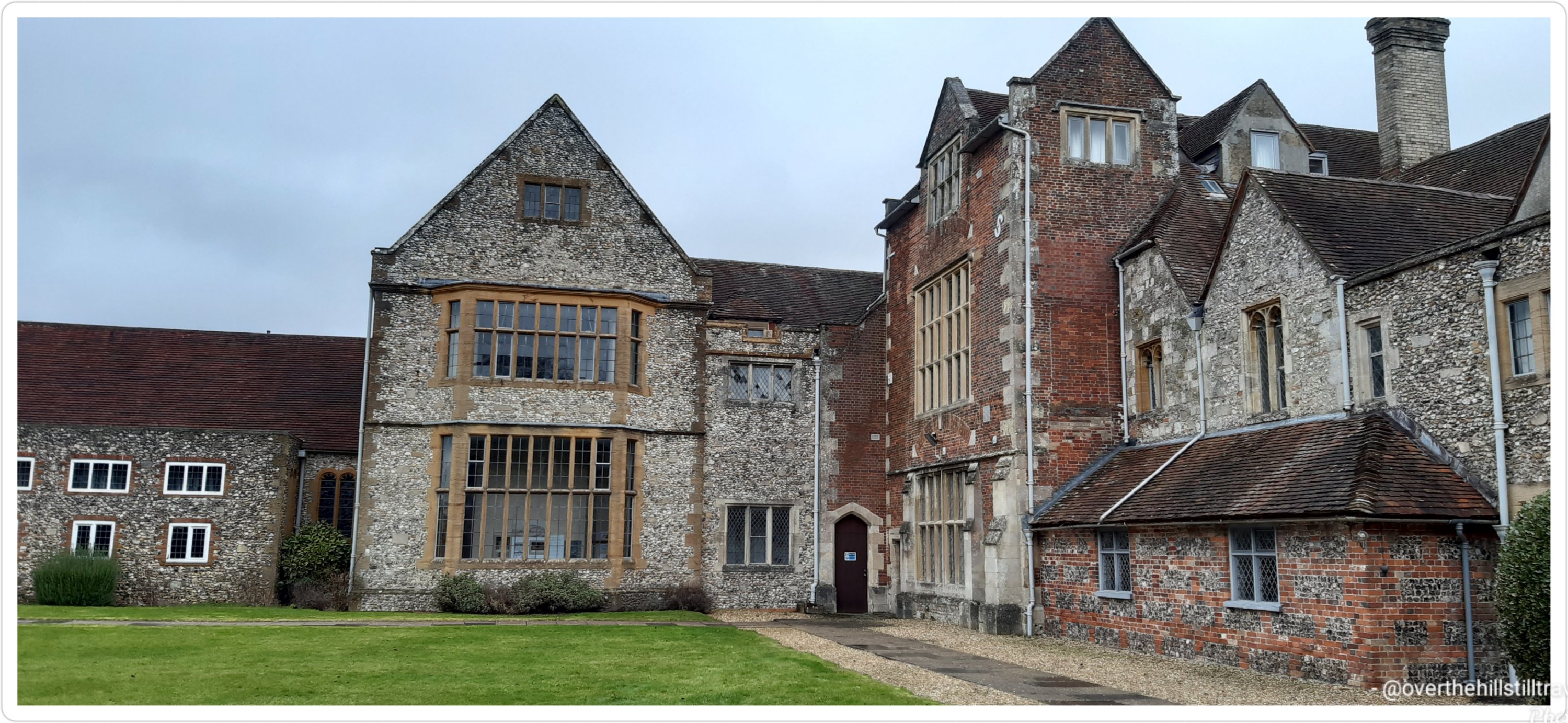
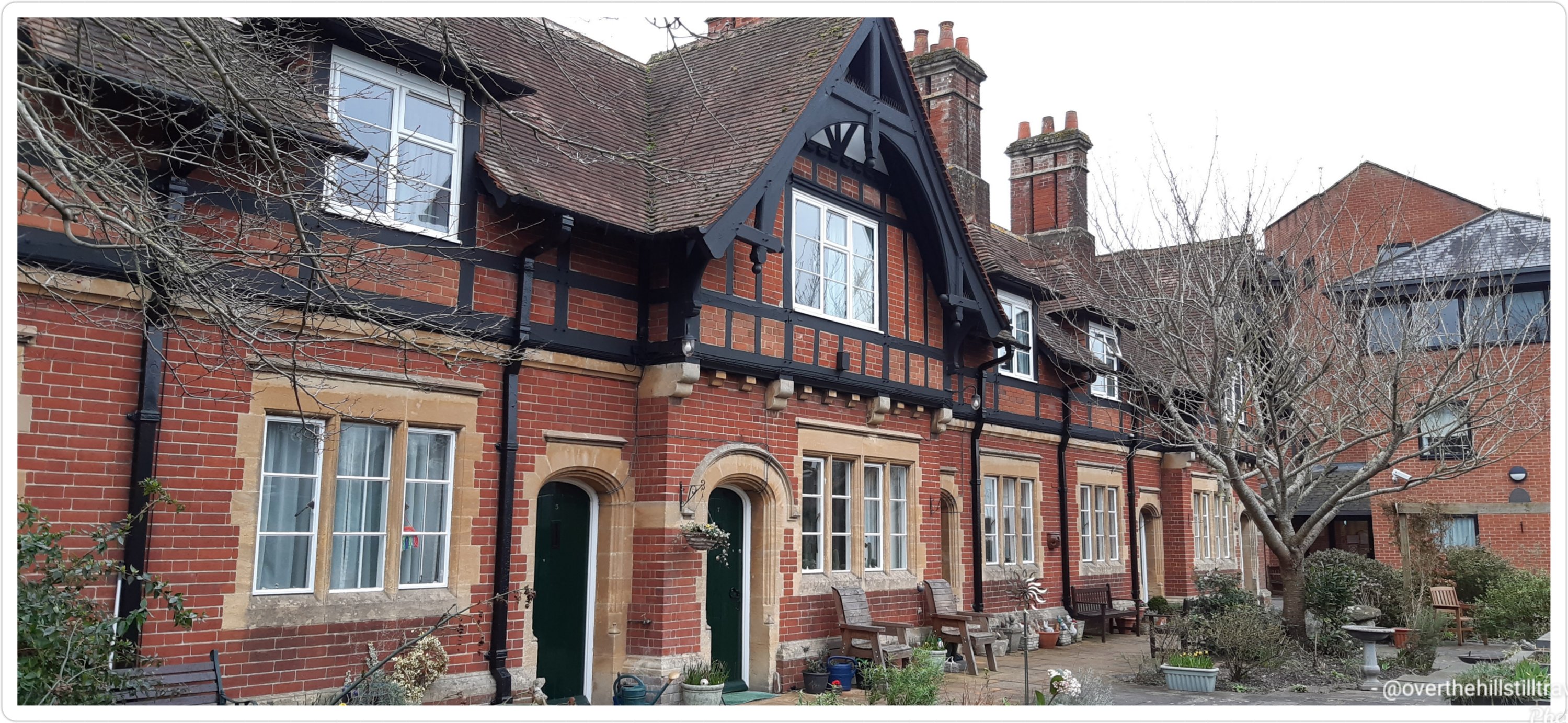
Back of the Medieval HallNot sure who this belongs to, but next door is the Archbishop’s house Also from the same era,slightly modernised In The CloseIn The CloseIn The CloseIn The CloseIn The Close facing the Cathedral – what a view…Arundells – in The CloseThe gate at De Vaux placeA house I saw in Harnham across the river Side view of above house. I totally love this house Alms Houses Alms Houses A relic of the ancient city gates 1378Old School House A side door of the old school house
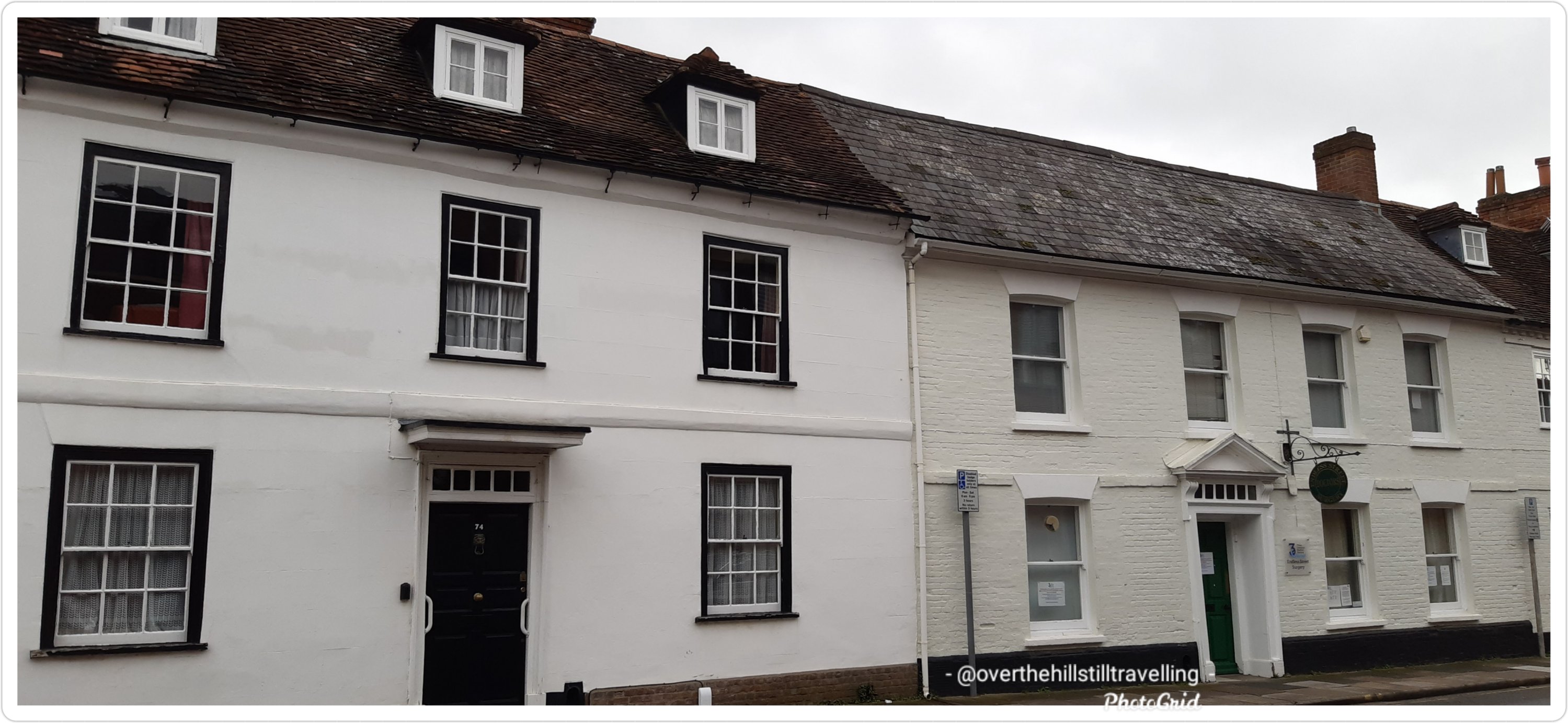
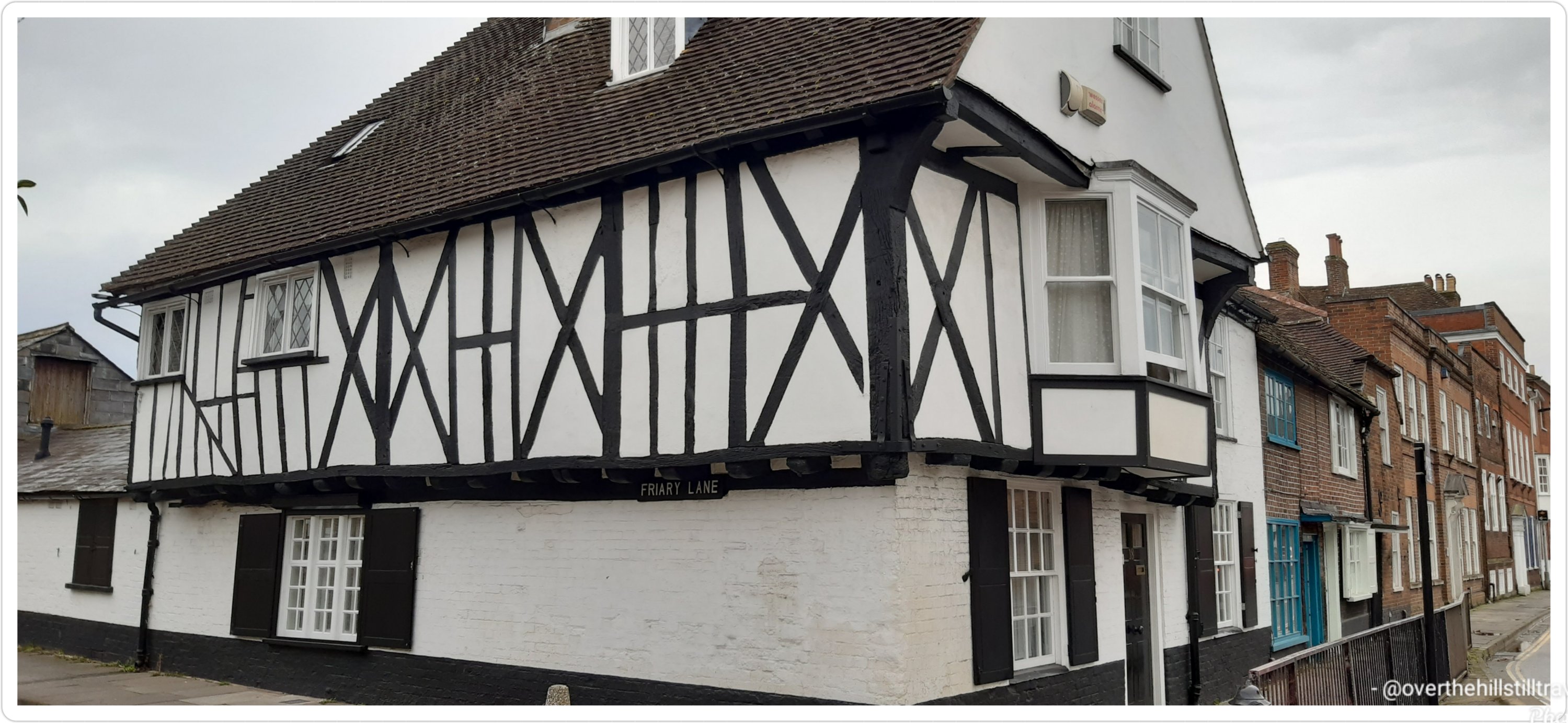
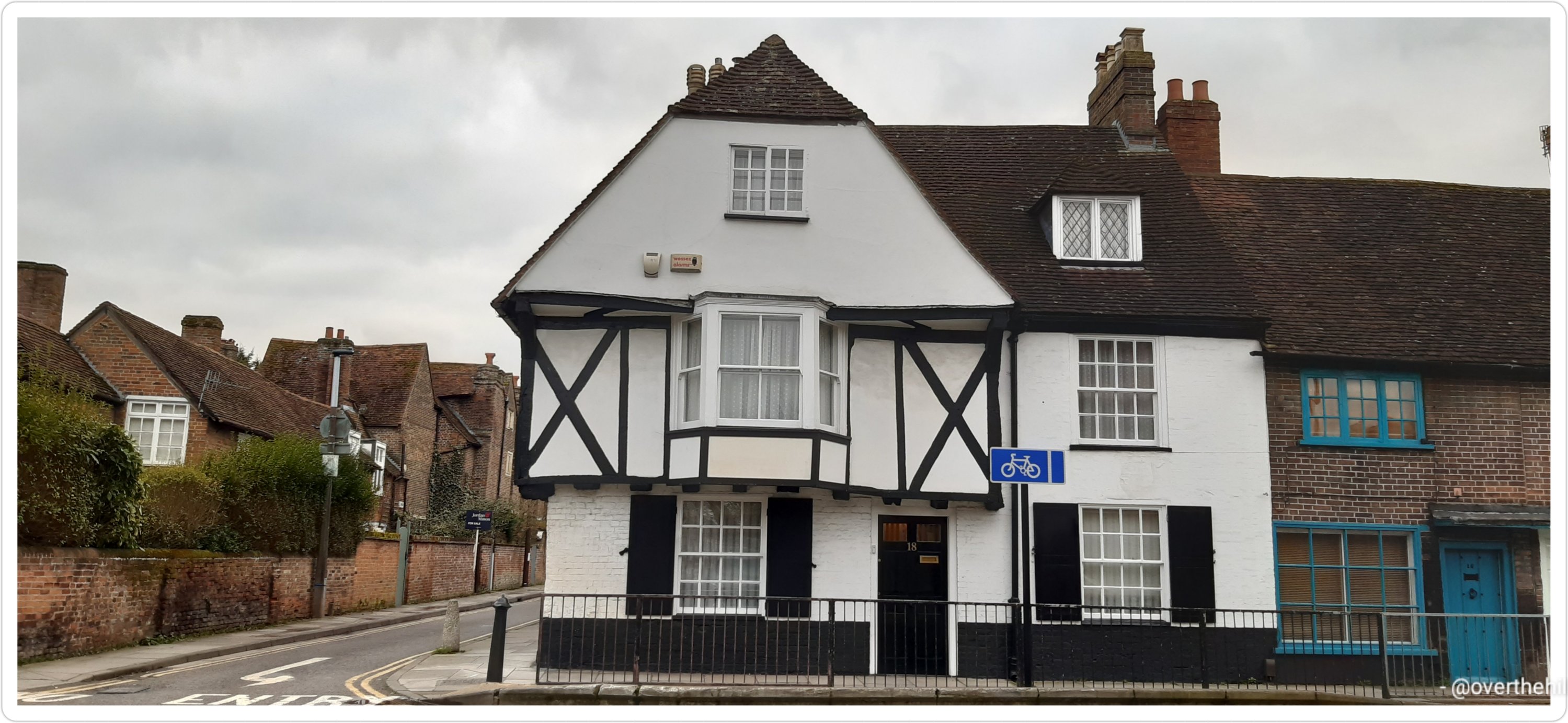
A few random houses. The variety of architecture is wonderful, makes for an interesting mix
The Guildhall and War Memorial
And to end off today; the clouds finally blew away and I saw my first sunset since arriving last week Thursday and just in time for my departure tomorrow. Typical
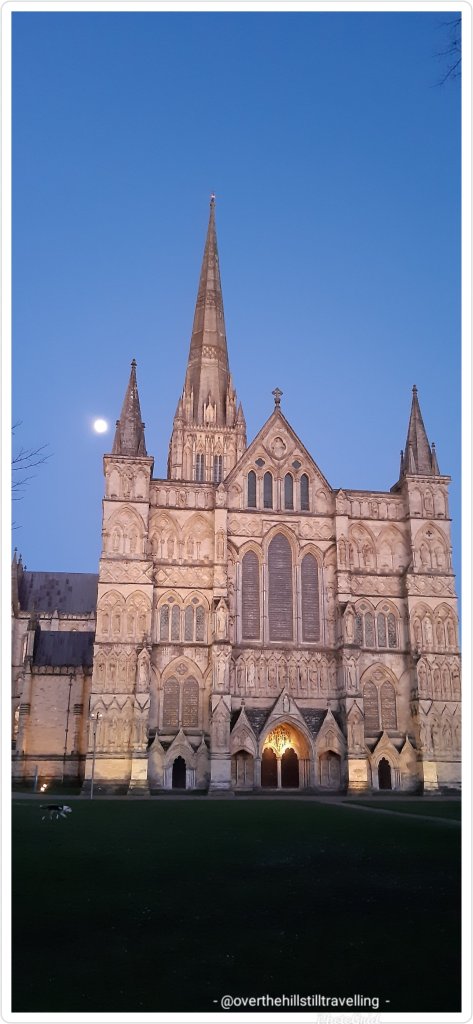
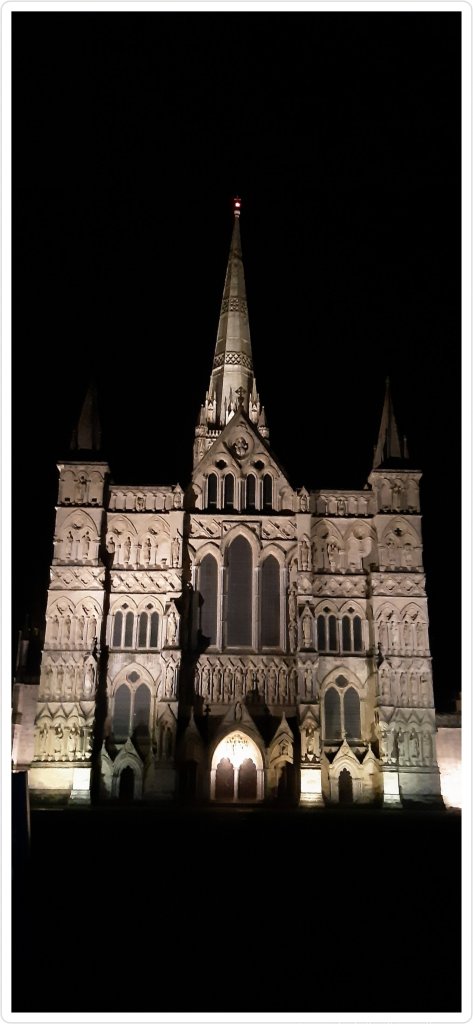
And I couldn’t possibly end this post without a view of the Cathedral…the moon is almost full and it looks stunning
Good morning 😃😃 So, here we go. Over the last few days I’ve done some extensive walking, all round Salisbury to find you the oldest and most interesting of the buildings. Some of them date back to medieval times, circa 13th century, and certainly the inns date to the 15th and 16th centuries, with lots of renovations, repairs and restoration I’m sure.
I’ve not listed them in order of age, that would take a fair amount of time and I’m short on that atm, so I’ll just post them as I saw them over the last 3 days.
But I will say, there’s something quite extraordinary to be able to touch a wooden post that dates back to 1500!!! I mean seriously…think about how much has happened in the last 500+ years, and how many people have passed by or visited these buildings.
Without doubt I have to start with the Cathedral. Possibly not the oldest building in the area, but certainly the most famous. I know from reading many of the information posts dotted around, especially at the churches, that there are Saxon and Norman remains in some buildings, but mostly that is limited to the churches.
Salisbury Cathedral circa 1220What I really appreciate about Salisbury is that pretty much wherever you are in the city, you can see the spire of the cathedral…no tall buildings compete.
‘Salisbury Cathedral is the most beautiful structure in England, and the Close around it the most beautiful space’. (‘Notes from a Small Island’ Bill Bryson.)
Starting off with what I do know, this building was part of a larger set of buildings all linked to the Bishops of the Cathedral which if course dates back to the early 13th century; started in 1220. I can recommend reading this article about The Close and its history. https://www.british-history.ac.uk/vch/wilts/vol6/pp72-79
The Wardrobe housing The Rifles Berkshire and Wiltshire Museum. The original building on the site was constructed in 1254. It was rebuilt in the 15th century and was used to store the robes of the Bishop of Salisbury; hence it was known as the “Bishop’s Wardrobe” or “The Wardrobe“.
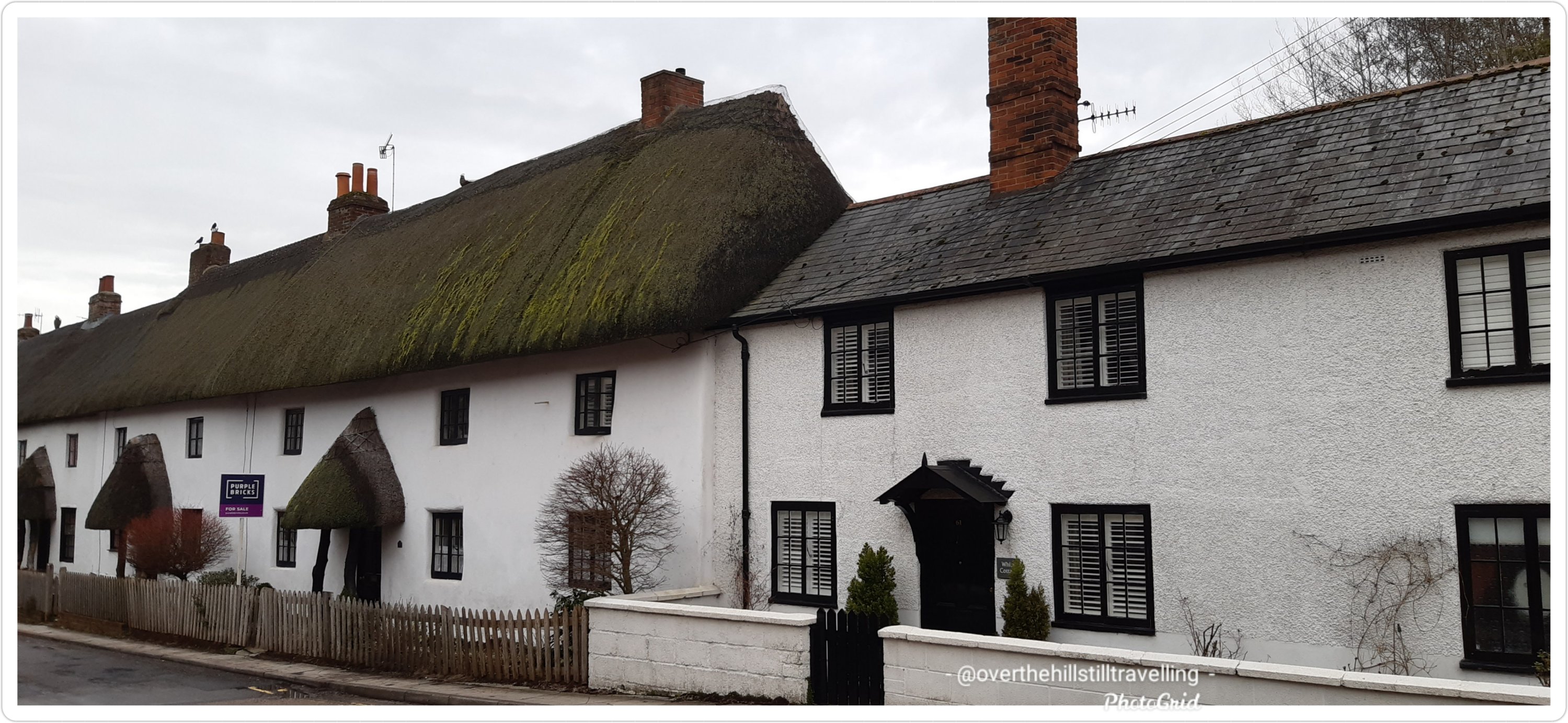
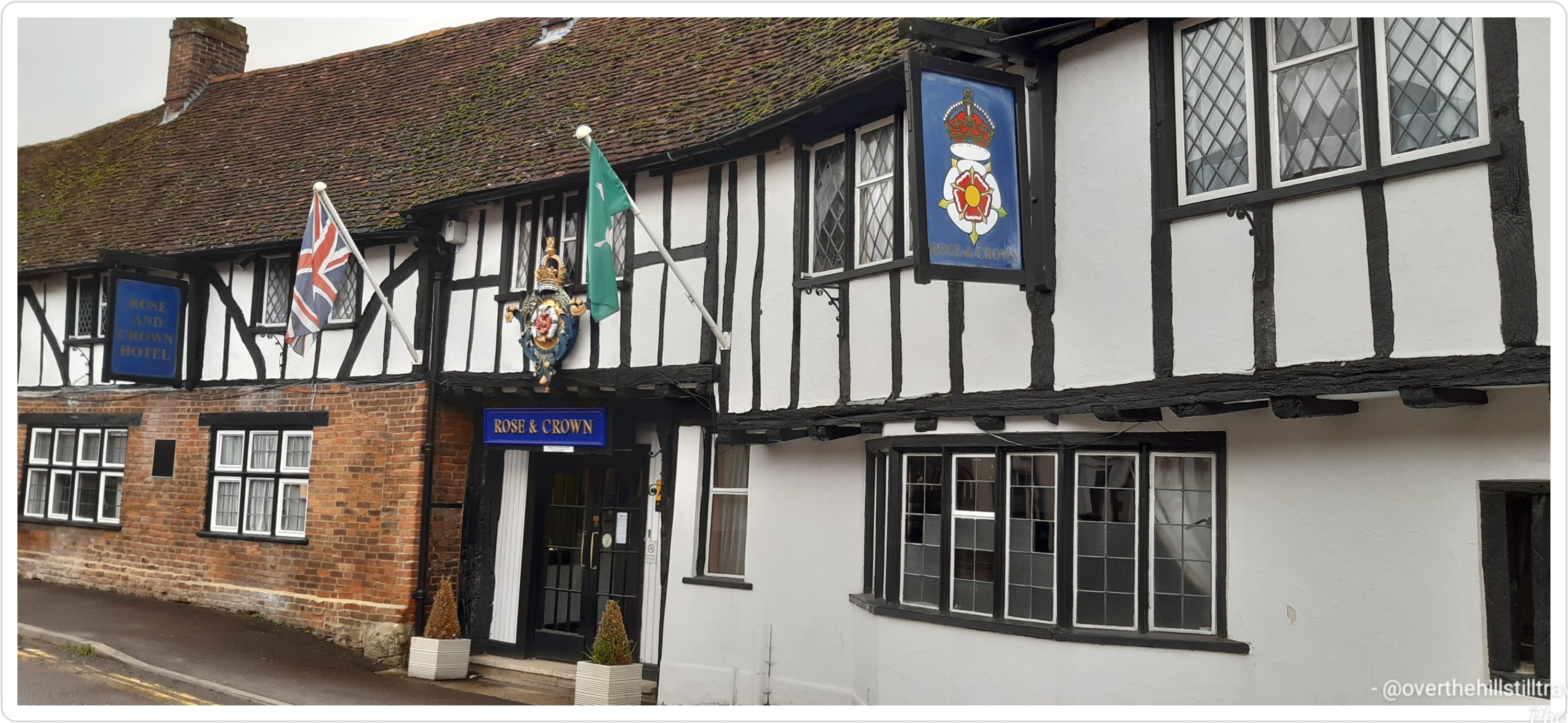
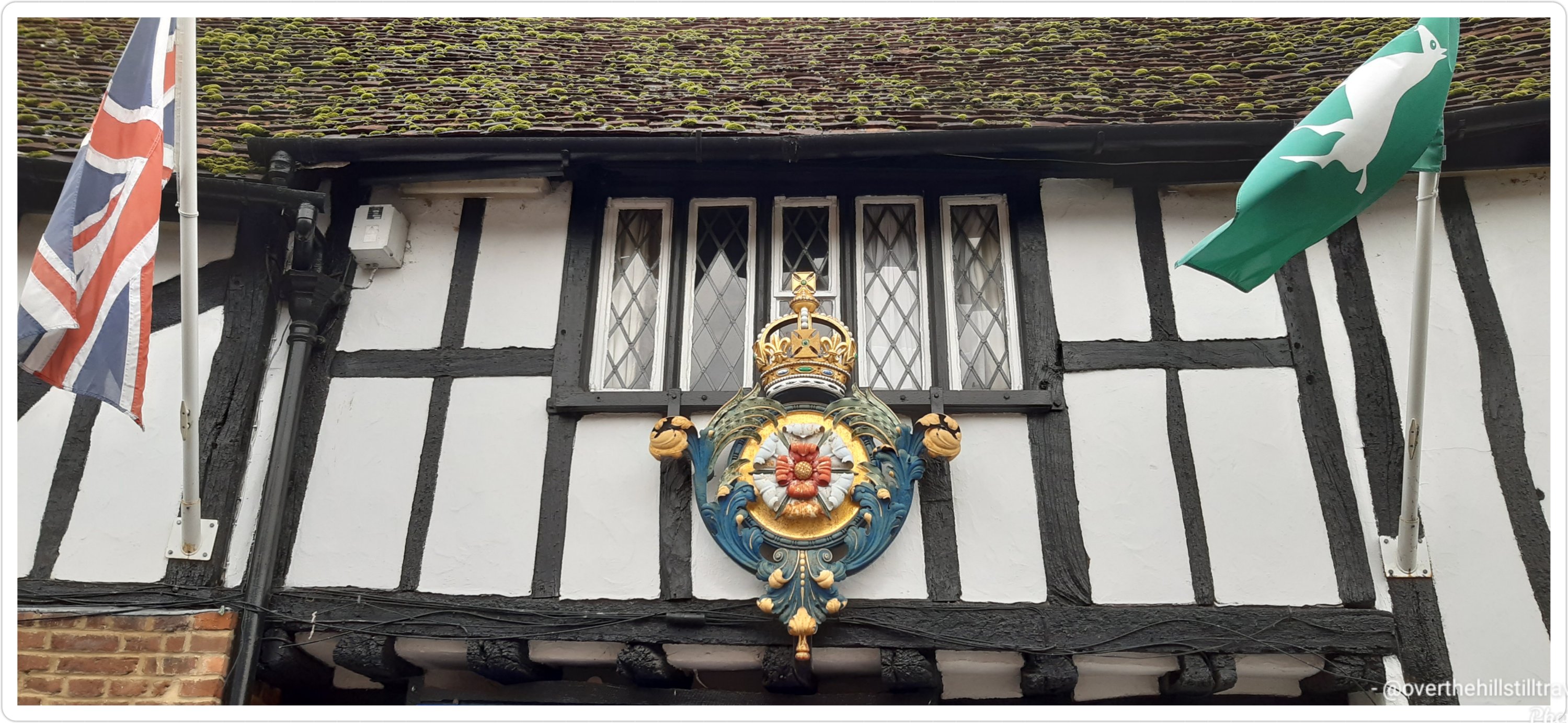
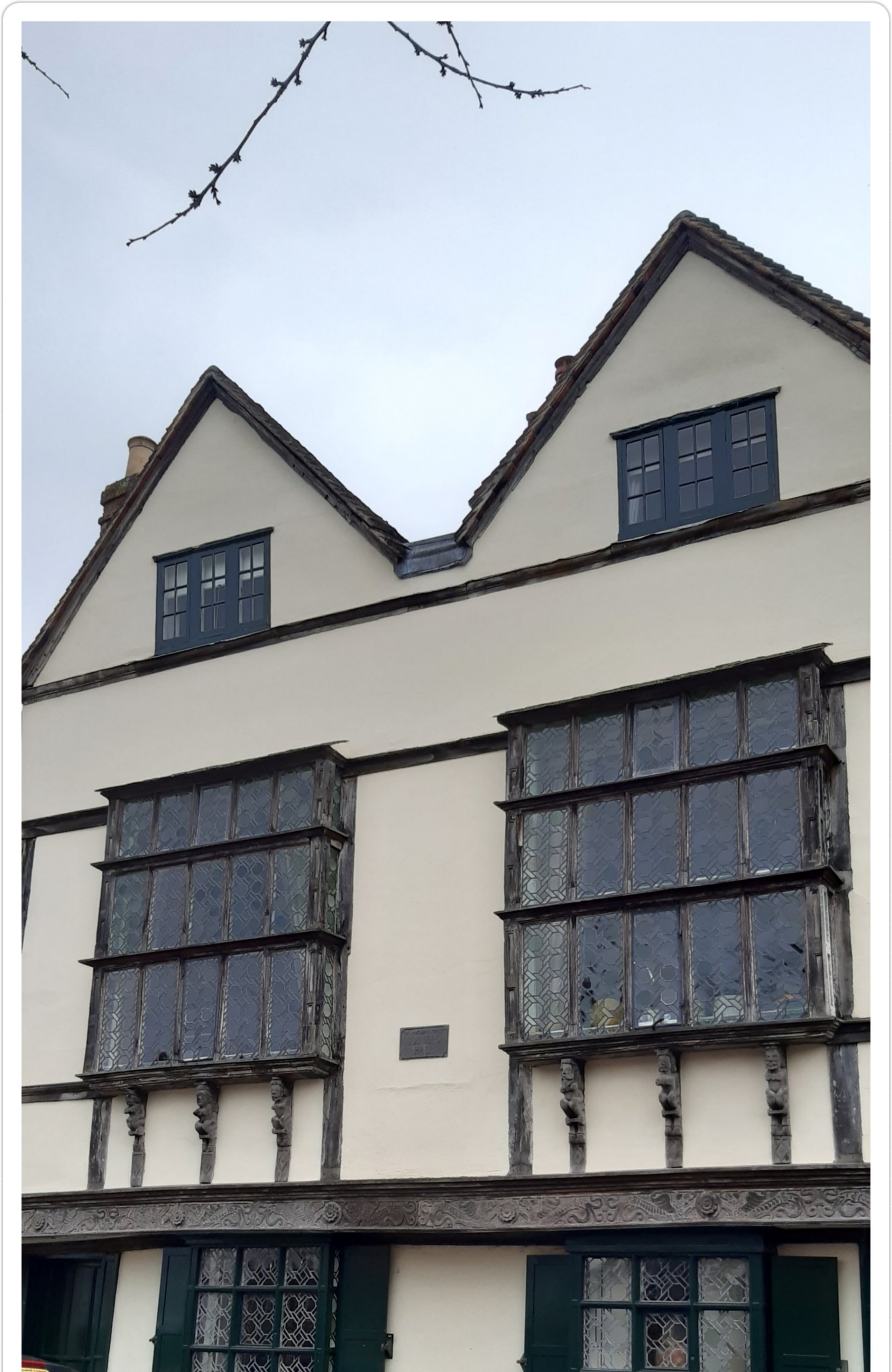
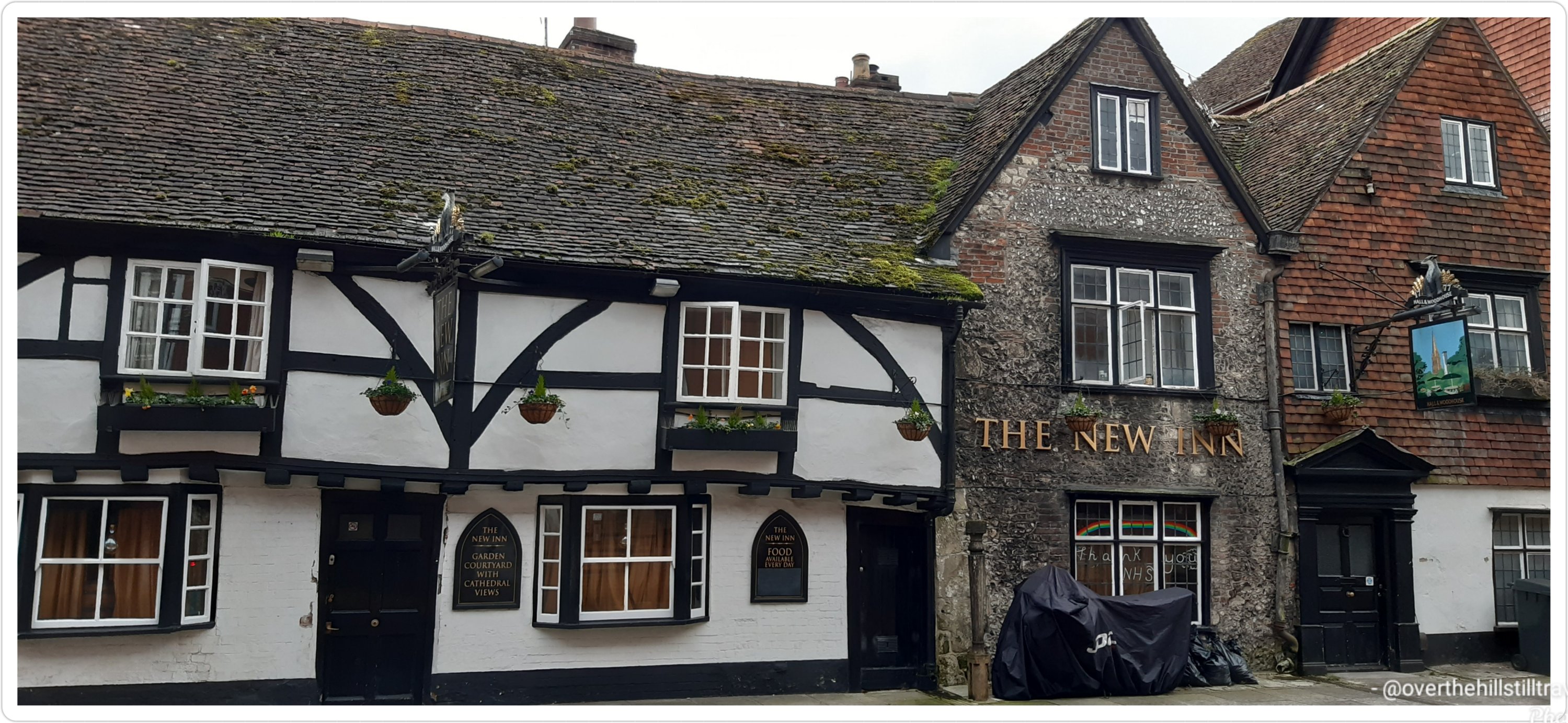
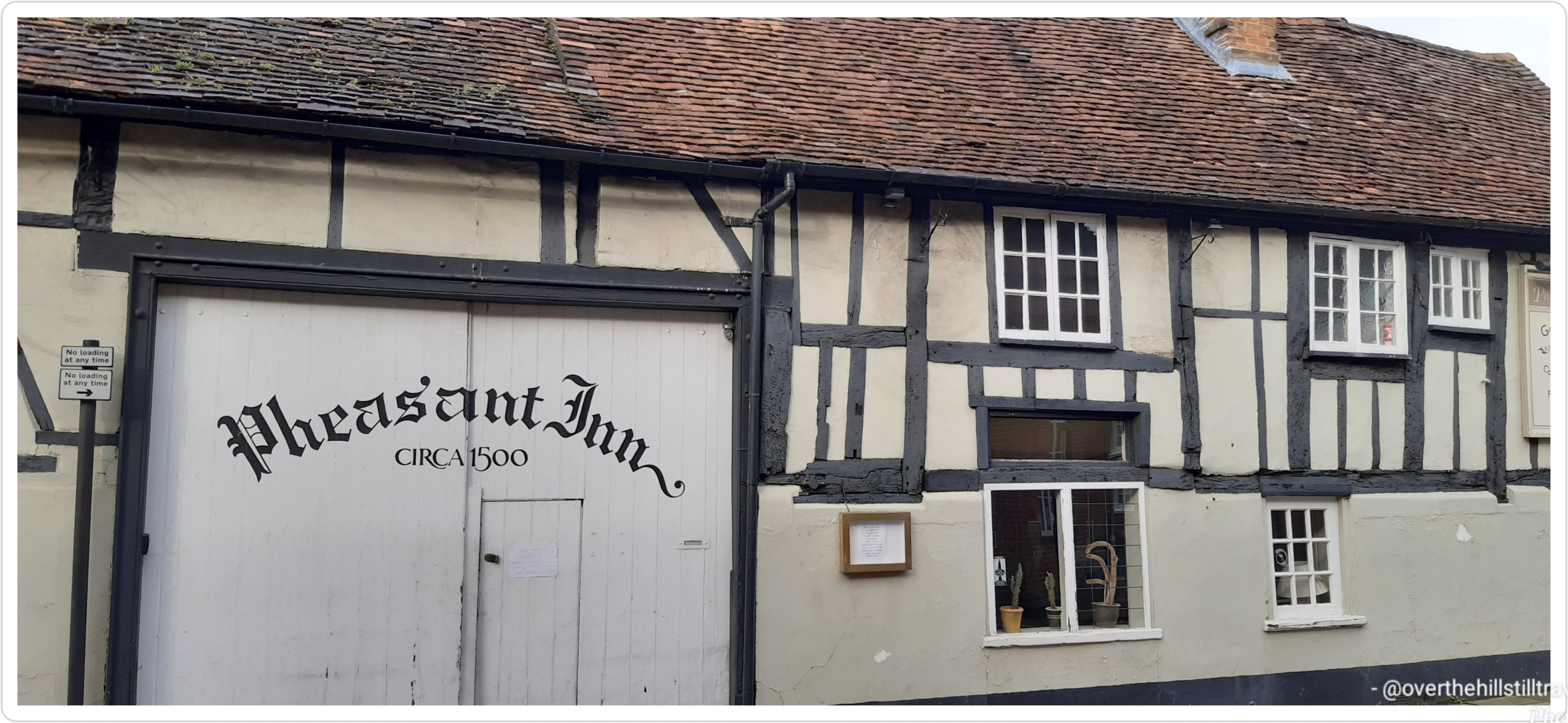
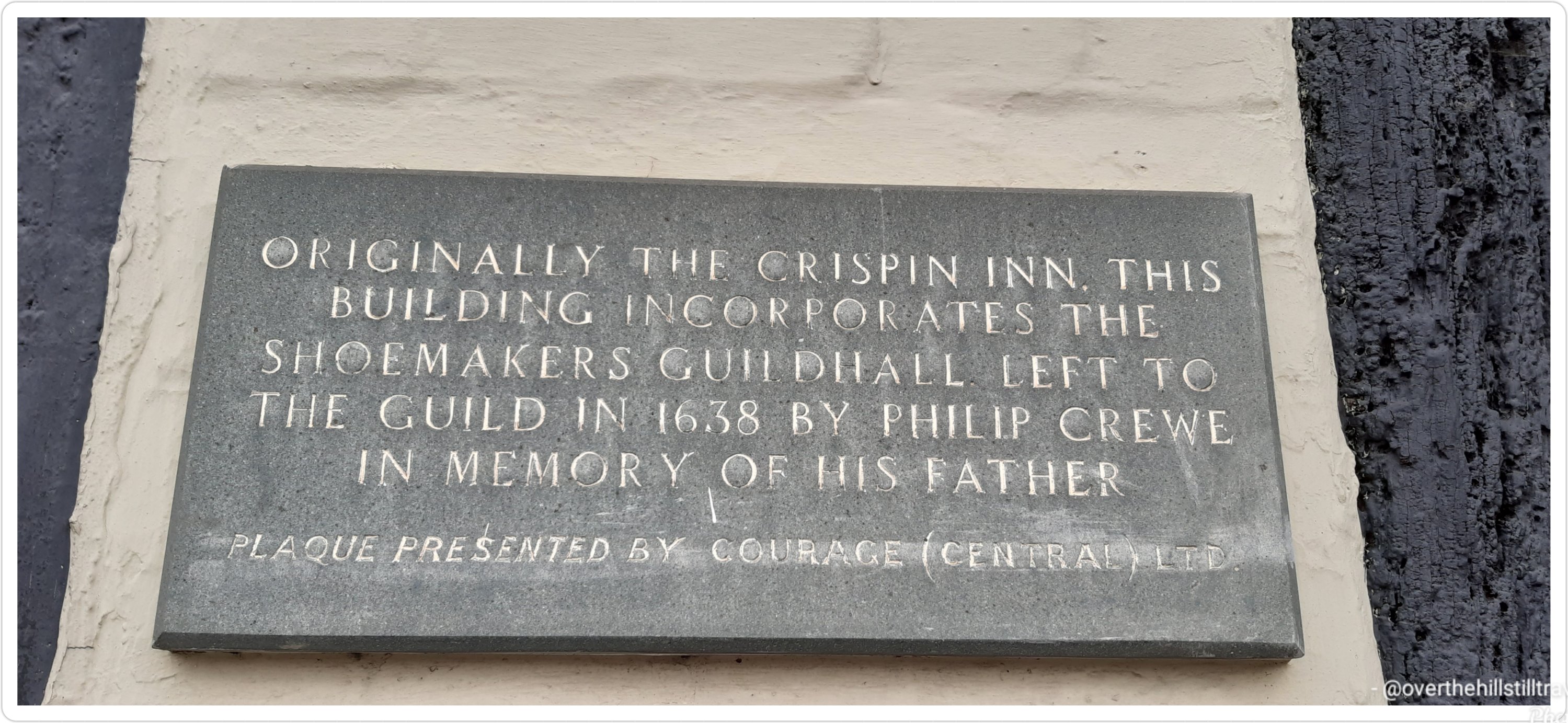
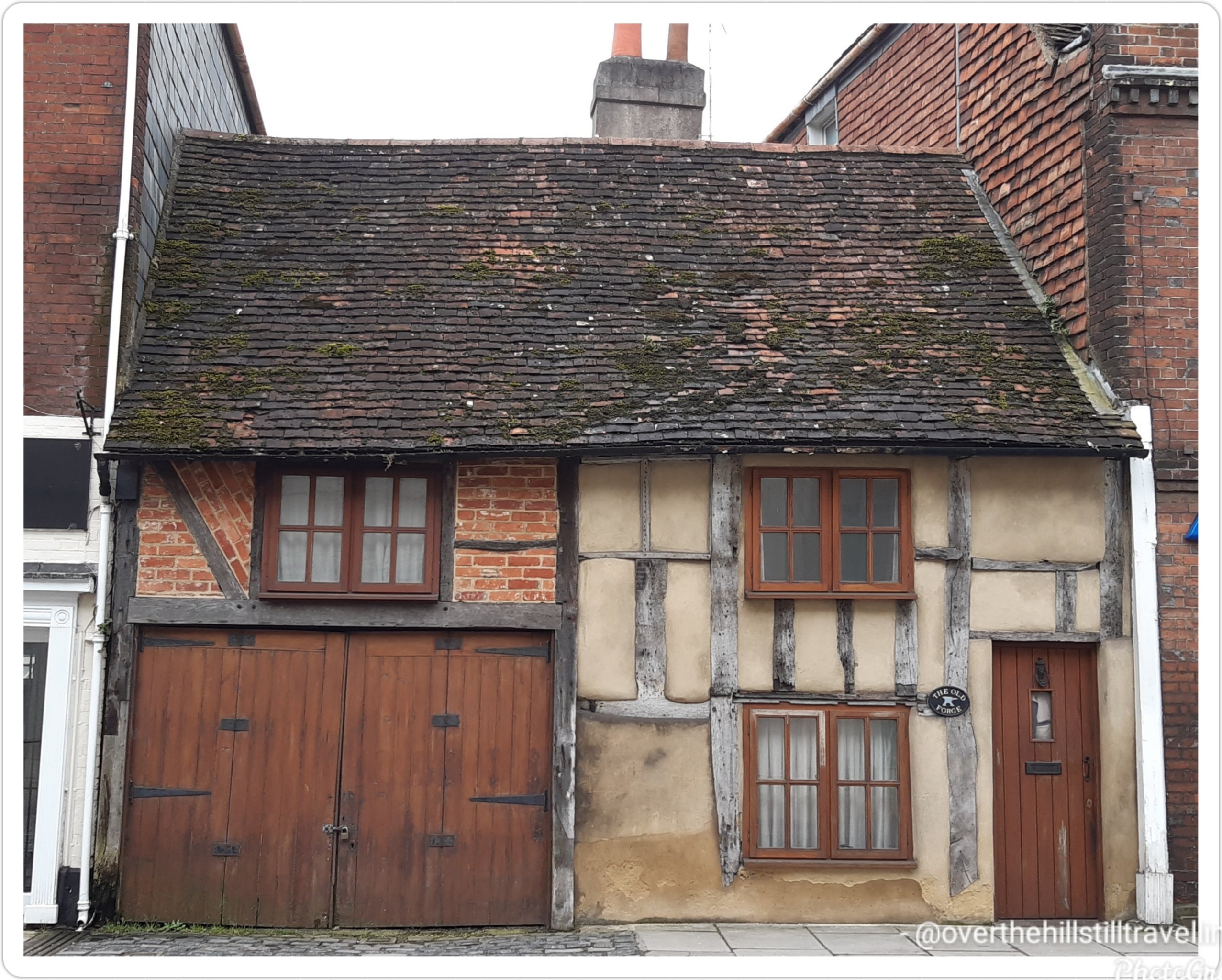
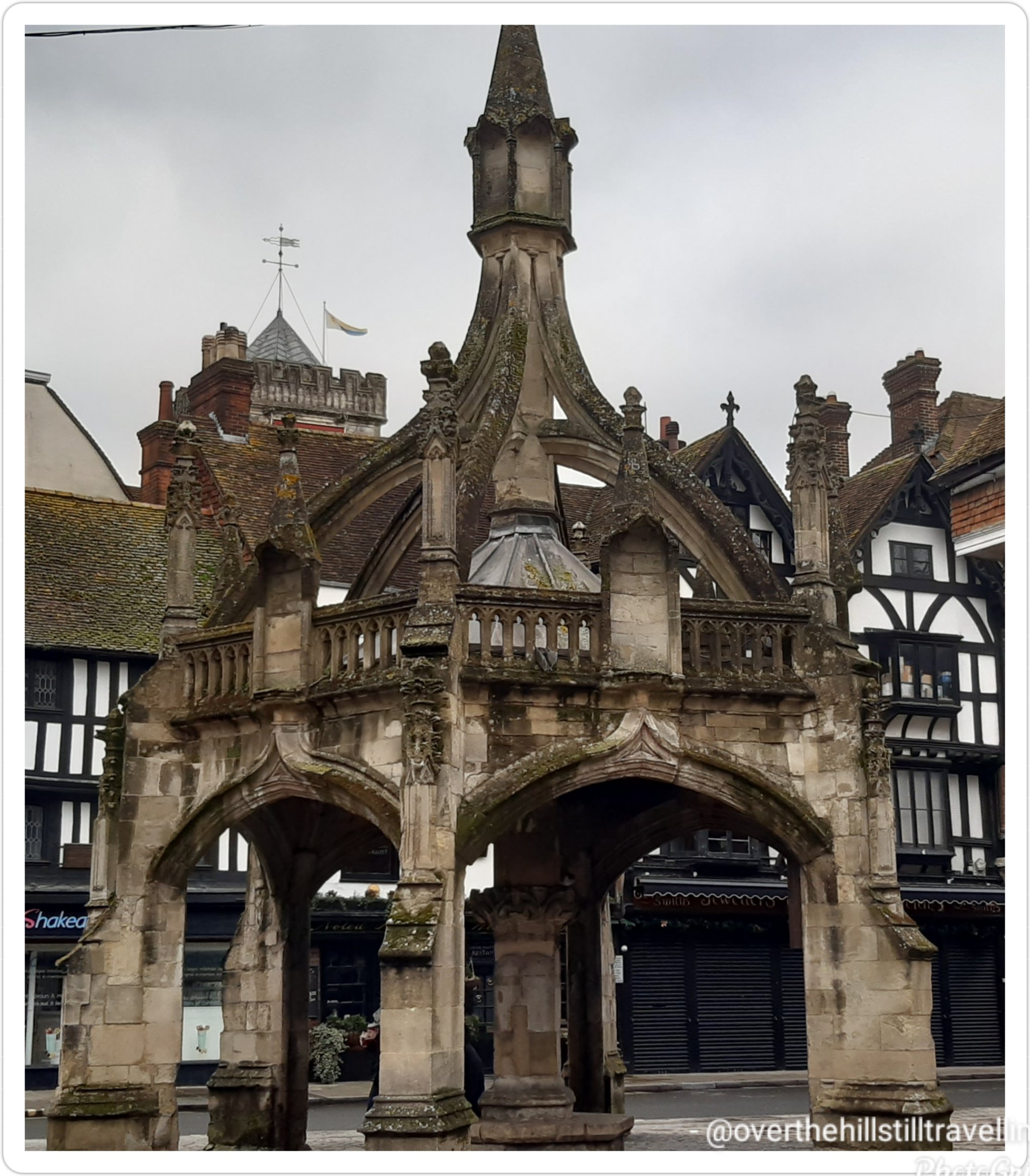
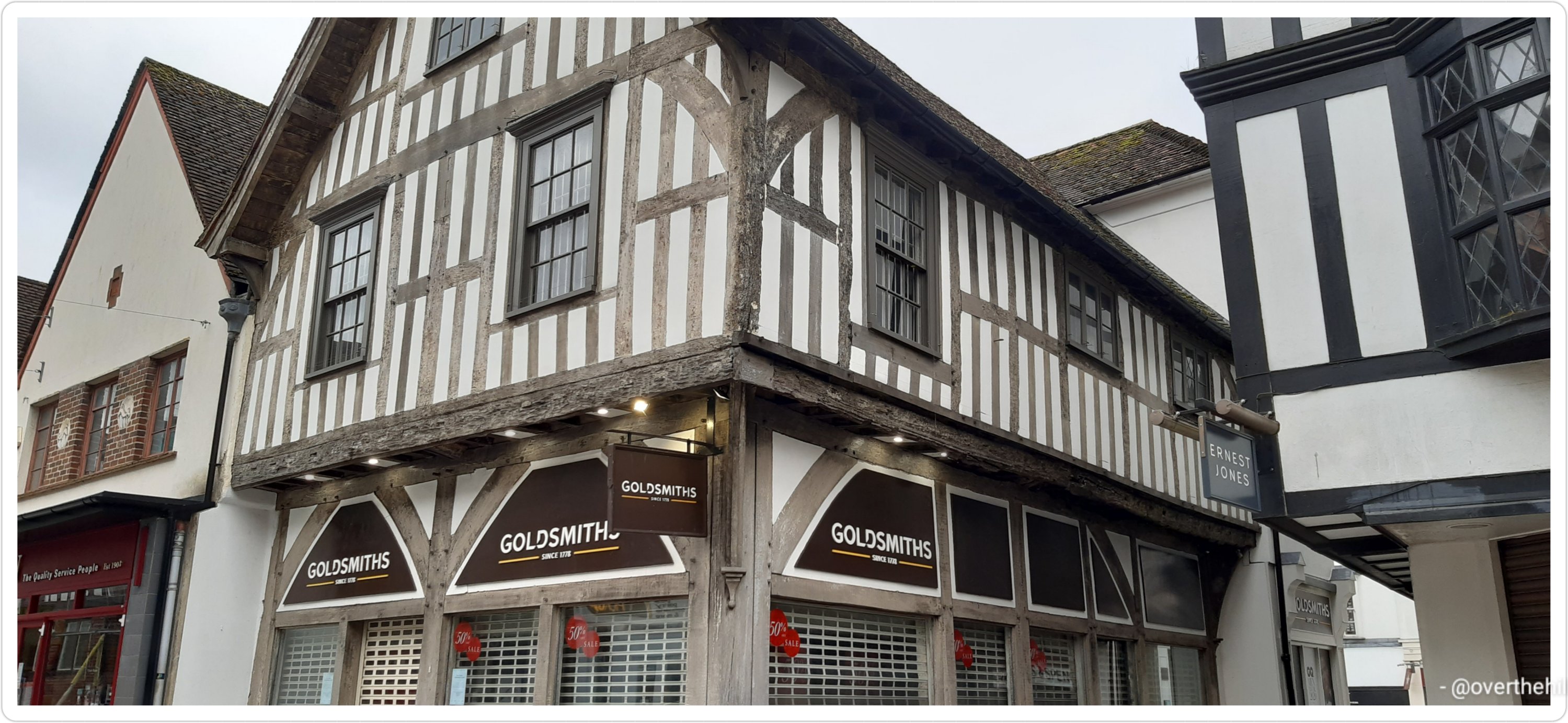
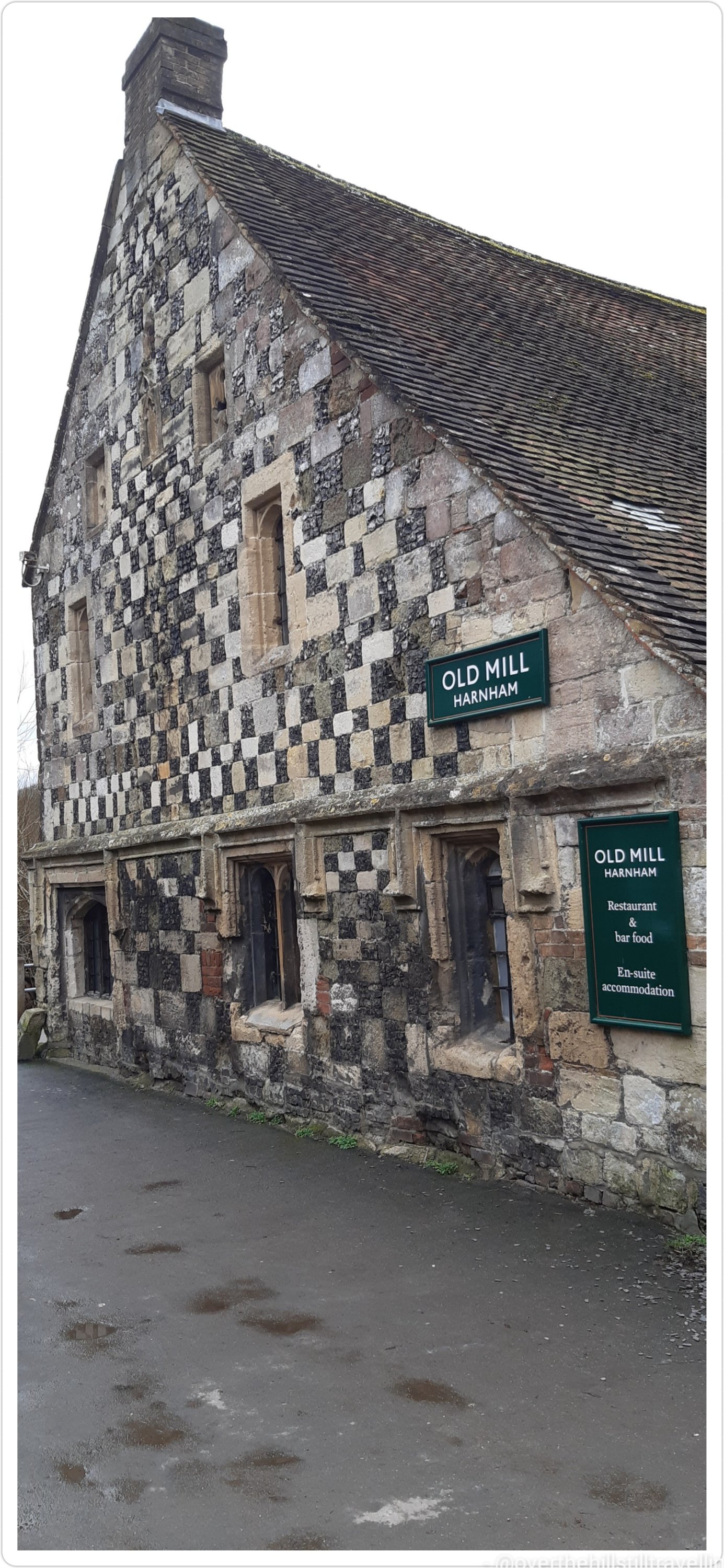
The Wardrobe Back of the Salisbury Museum The Salisbury Museum – The King’s House; the house was referred to as the Court of the Abbott of Sherborne in 13th-century documents. The Abbot of Sherborne Abbey used this house as his prebendal residence in Salisbury prior to 1539, when Sherborne Abbey was decommissioned during the Dissolution of the Monasteries. At that time the house was known as Sherborne PalaceThis is the top floors of a house that stands alongside St Nicholas Street on the river Rose and Crown – 13th century coaching innRose and Crown The carvings on the facade of this building are stunning 15th century inn; The New InnPheasant Inn circa 1500The Old Forge…I LOVE this house A 17th century Grade II listed building Reminds me of a similar building in Kingston Upon Thames The Poultry Cross featured in yesterday’s post about the 13th century market The Old Mill, Harnham – The Old Mill is a 15th century building with features dating back to 1250. After it’s early ecclesiastical beginnings, it was transformed in the 16th century to a paper mill.The Old Mill is just across the river and meadows from Salisbury proper Quaint thatched cottages in Harnham
I have images of many other buildings in the city which I’ll share in another post…
I hope you’ve enjoyed seeing some of these amazing buildings…have a fab day
Its extraordinary to realise that Salisbury has had a twice weekly market since 1227!
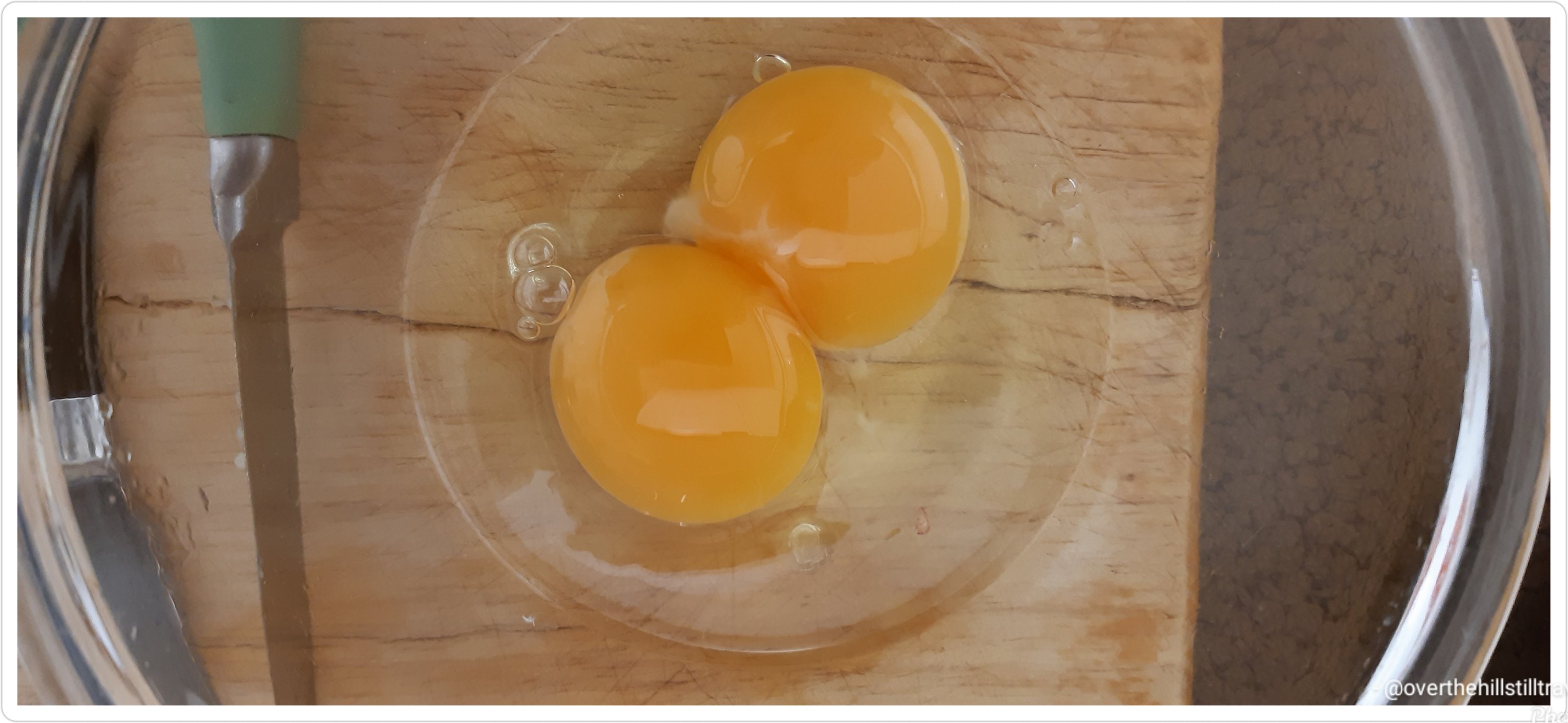
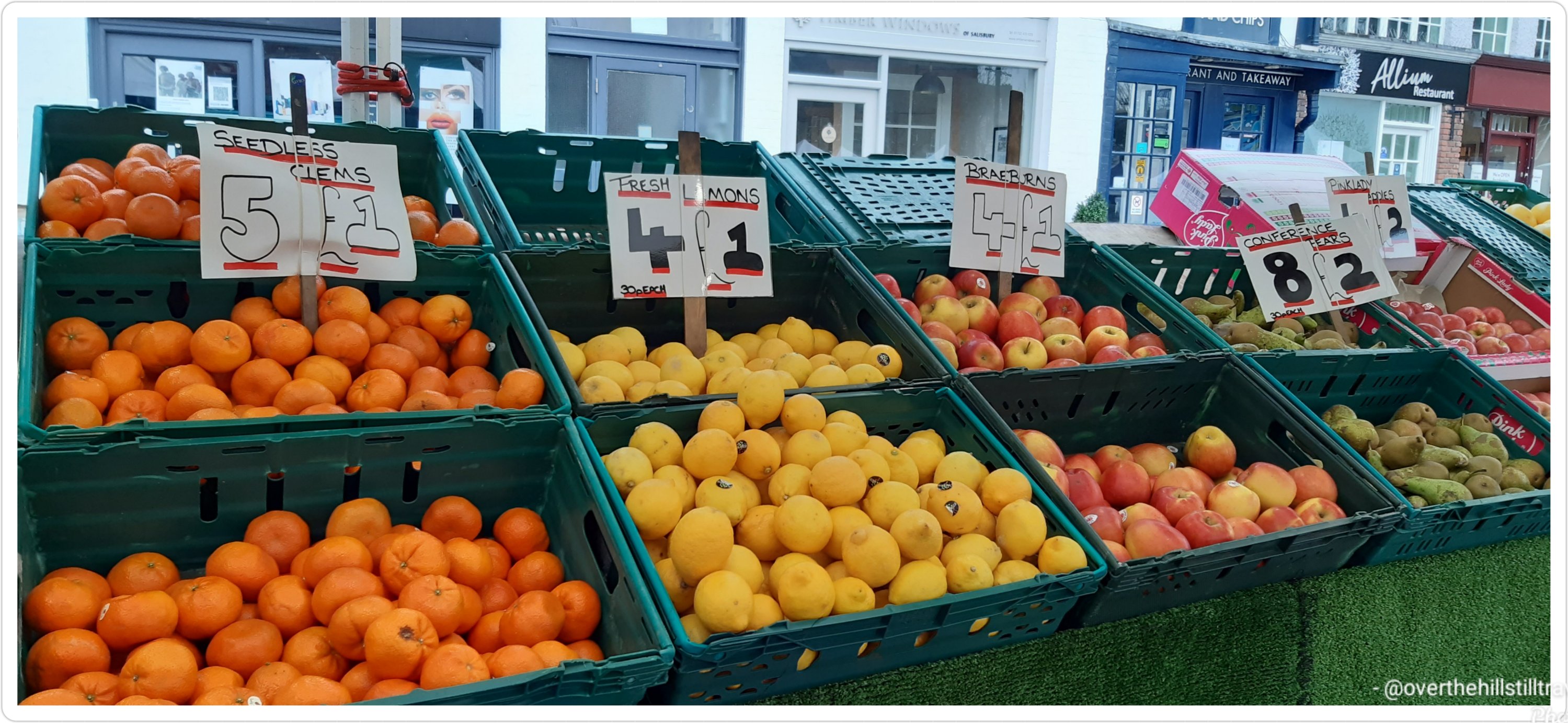
I popped over yesterday to try find some avocado but unfortunately I didn’t find any nice ones. Instead I did find some local farmers free range eggs and promptly bought a half dozen. I avoid eggs as much as possible because I don’t know their provenance and I do know that the supermarkets ‘free range eggs’ are not truly ‘free range’. I had 2 for my supper and the first one I cracked had a double yolk 😄😄
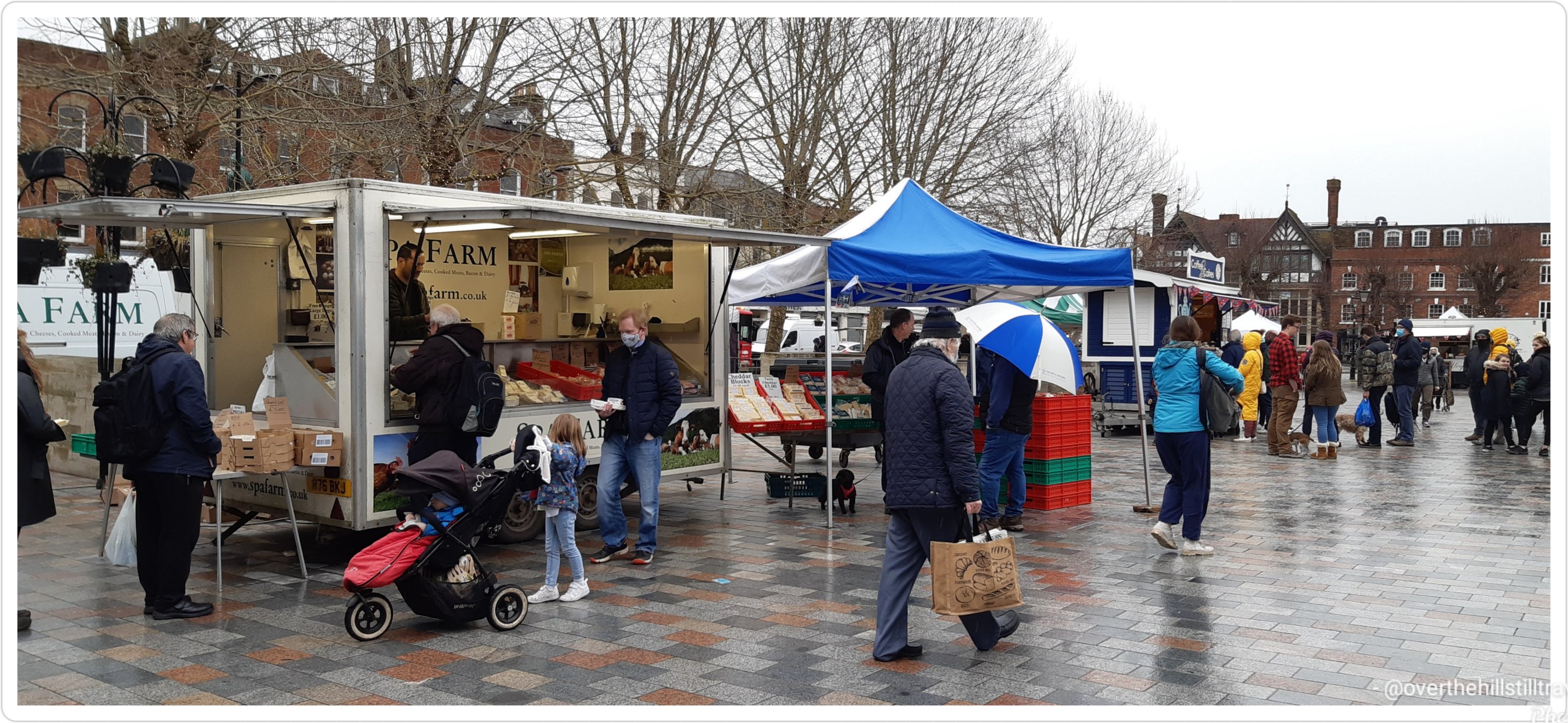
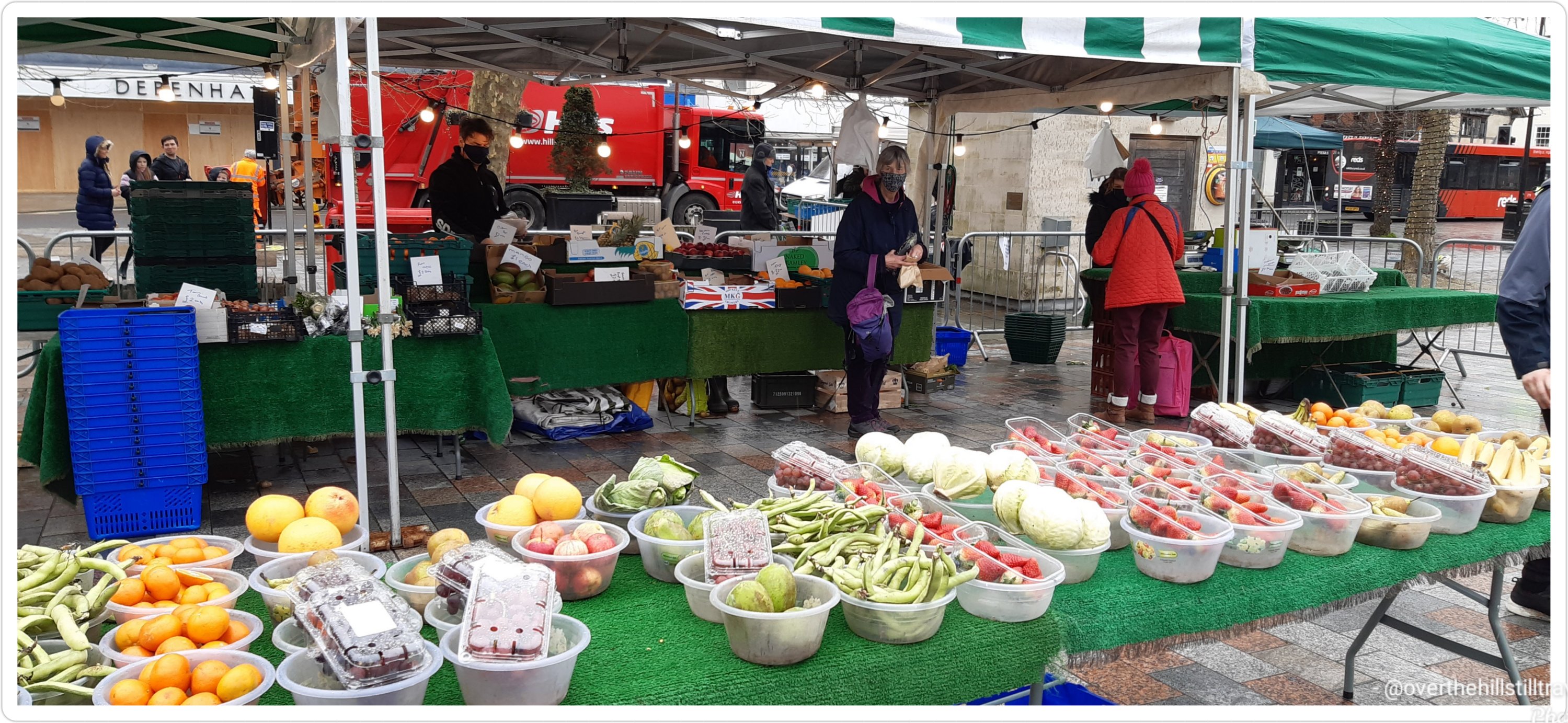
The market was in full swing when I got there, but not nearly as busy as I would have thought, but with Covid…its to be expected.
The colours on a grey day were a welcome sight, and although my time was limited, I did manage to whizz around and look at all the stalls.
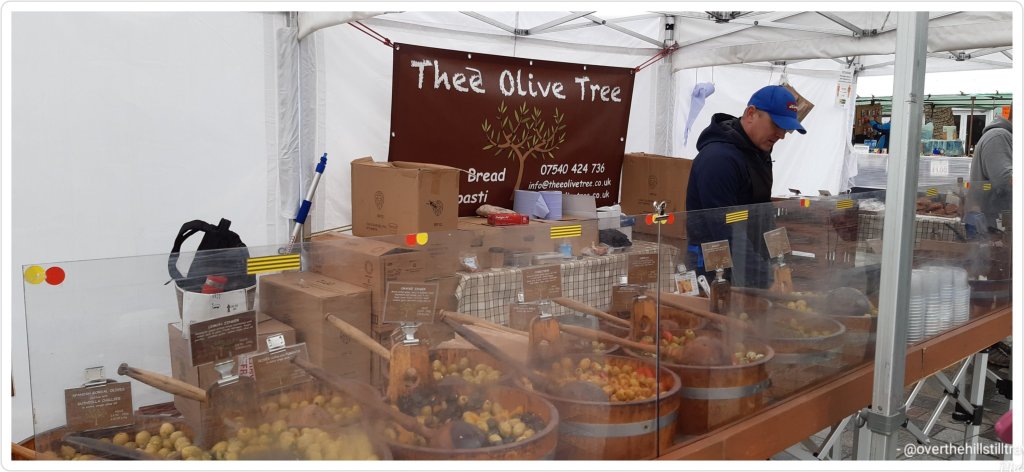
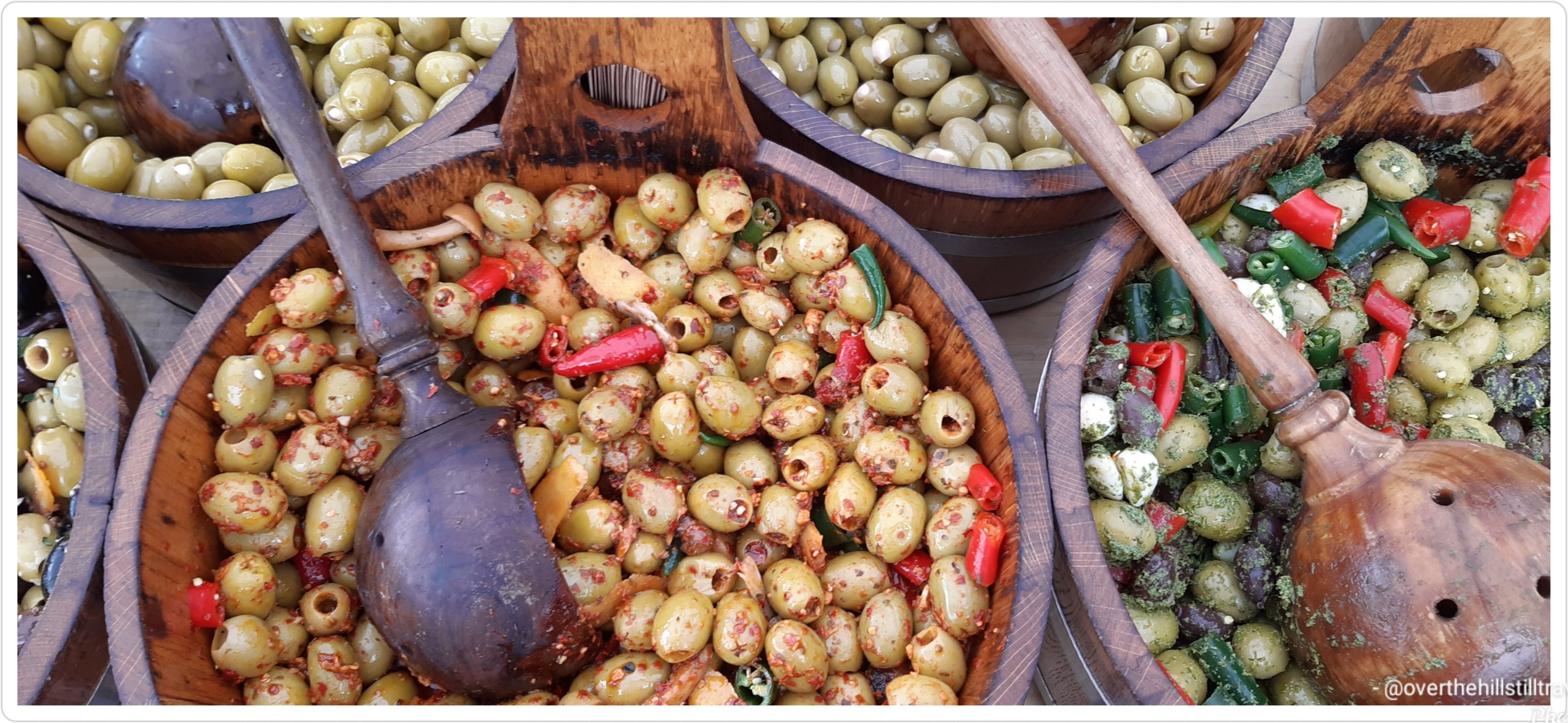
I saw these delicious olives, and was tempted…maybe Tuesday
Yummy
Later during my break, I walked through enroute from here to nowhere in particular, and it looked bereft…hardly anyone about. I guess the weather doesn’t help.
Intrigued by the date, I did a bit of research, and this is what I found. The market has been held in Salisbury since 1219 with the founding of the city, and the cathedral. At the time Salisbury was the largest city in the region and offered an opportunity for farmers and traders to sell their produce and wares.
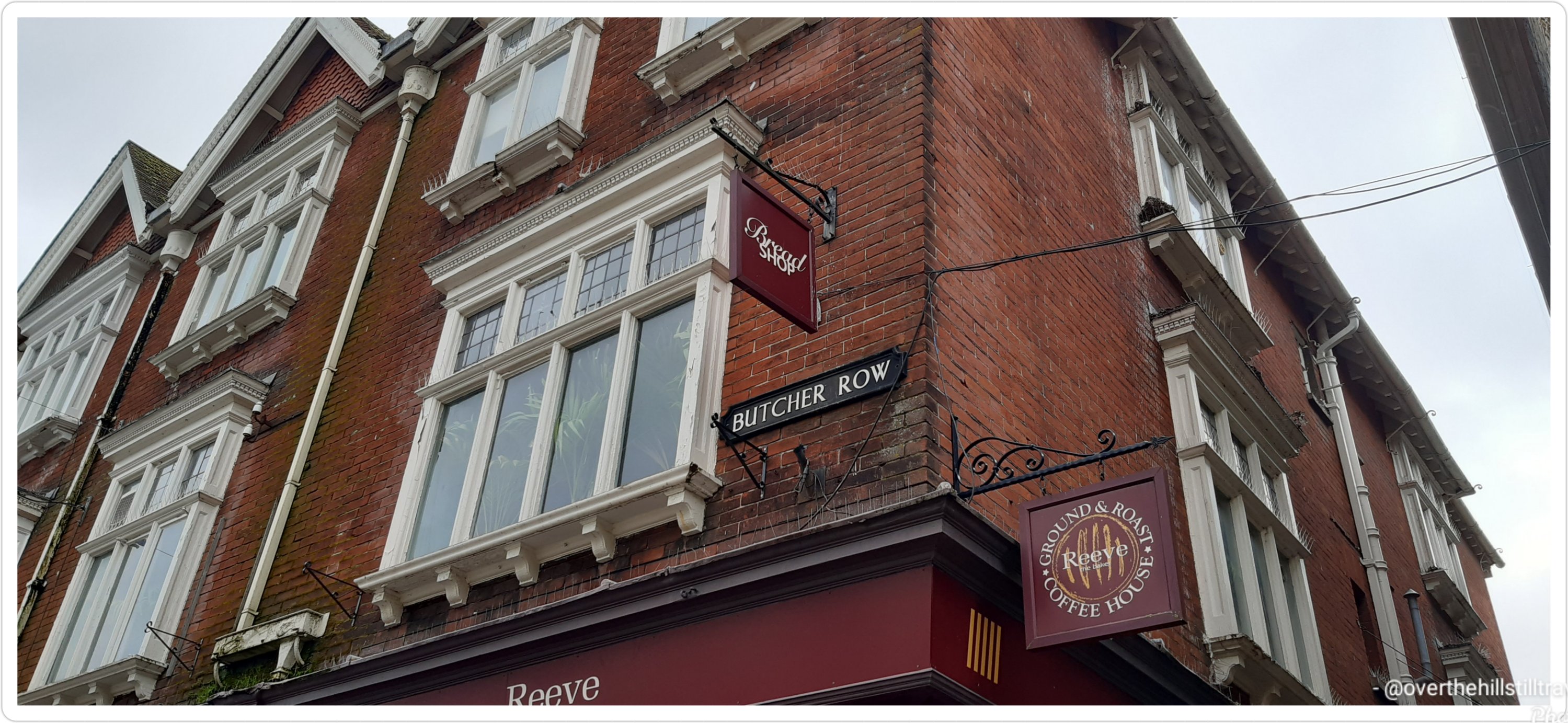
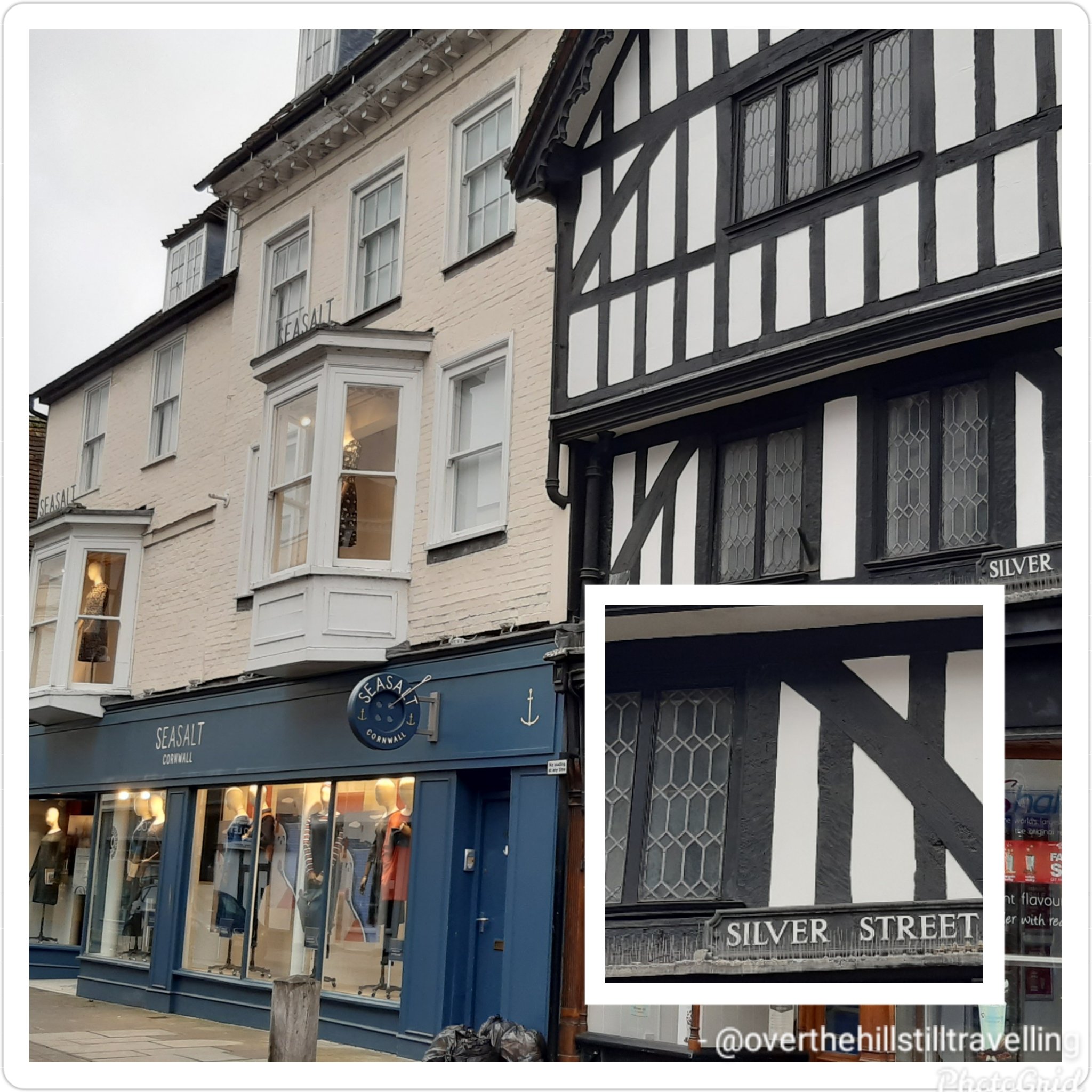
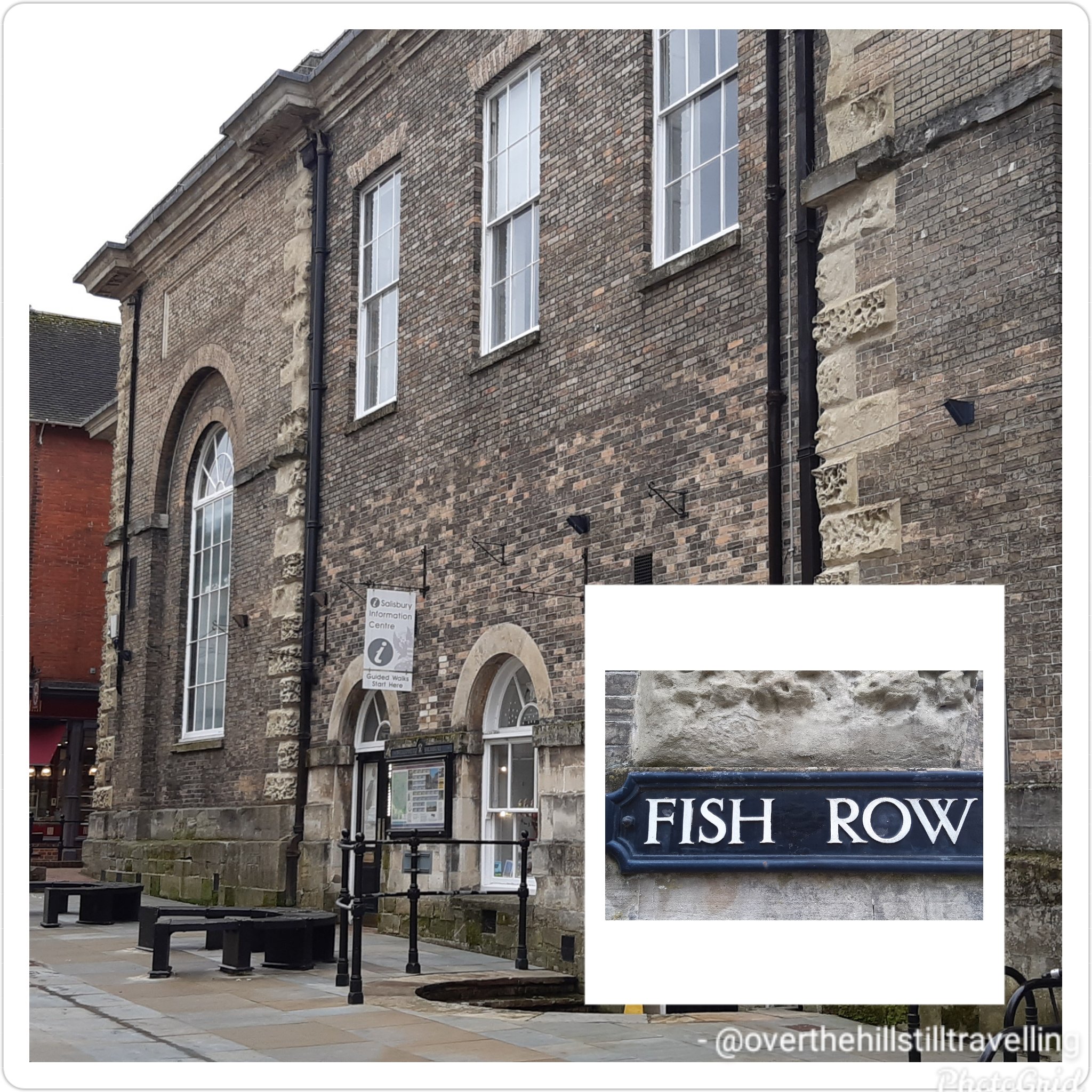
In 1361, market days were formalised and decreed to be held every Tuesday and Saturday, a tradition that continues until today. In medieval times, the market was much larger than it is today, and even spread down side streets. The streets in the area reflect the types of goods sold during medieval times; Fish Row, Silver Street, Butcher Row and the Poultry Cross.
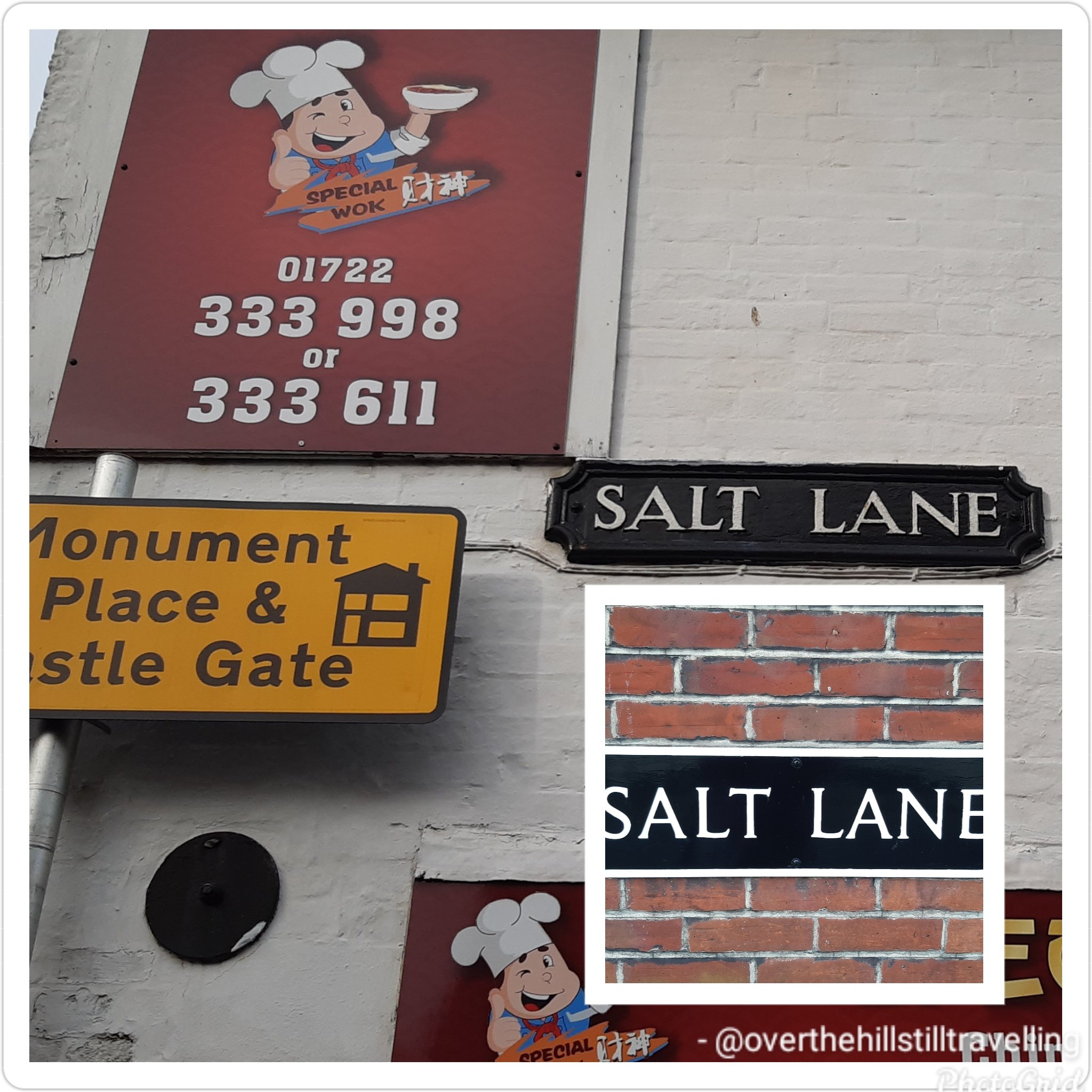
Poultry CrossButcher RowSilver Street Fish RowSalt LaneThis intrigued me 😄😄 Chipper Lane..
I wonder, did they have the equivalent of today’s chippy…?
I’ve been fortunate enough to visit many a market in towns around the country over the years, but even so, the amazement of the history never wanes.
Salisbury was a settlement in Domesday Book, in the hundred of Alderbury, mentioned in the chapters for Wiltshire and Somerset.
It had a recorded population of 102 households in 1086, putting it in the largest 20% of settlements recorded in Domesday, and is listed under 2 owners in Domesday Book.
Last night I arrived in Salisbury for my next booking. Just 1 week but enough time to enjoy the area and explore. I’ve visited Salisbury and the Cathedral in pre-covid days, and love this area.
Because I only officially started work at 11am today, I was free to go walkabout last night and again this morning…. which I duly did.
I’m working very close to the cathedral and can virtually see it from the front door of the house. Its an incredibly historic area and there’s a medieval hall within walking distance…like about 100 yards. Its amazing.
Because it was quite dark I didn’t stray too far, and didn’t take too many photos…but nonetheless, my camera was busy once again.
Here are a few images to whet your appetite
The main entrance
The original Salisbury Cathedral was completed at Old Sarum in 1092 under Osmund, the first Bishop of Salisbury. In 1220 the foundations were laid for the Cathedral at the site it is today.
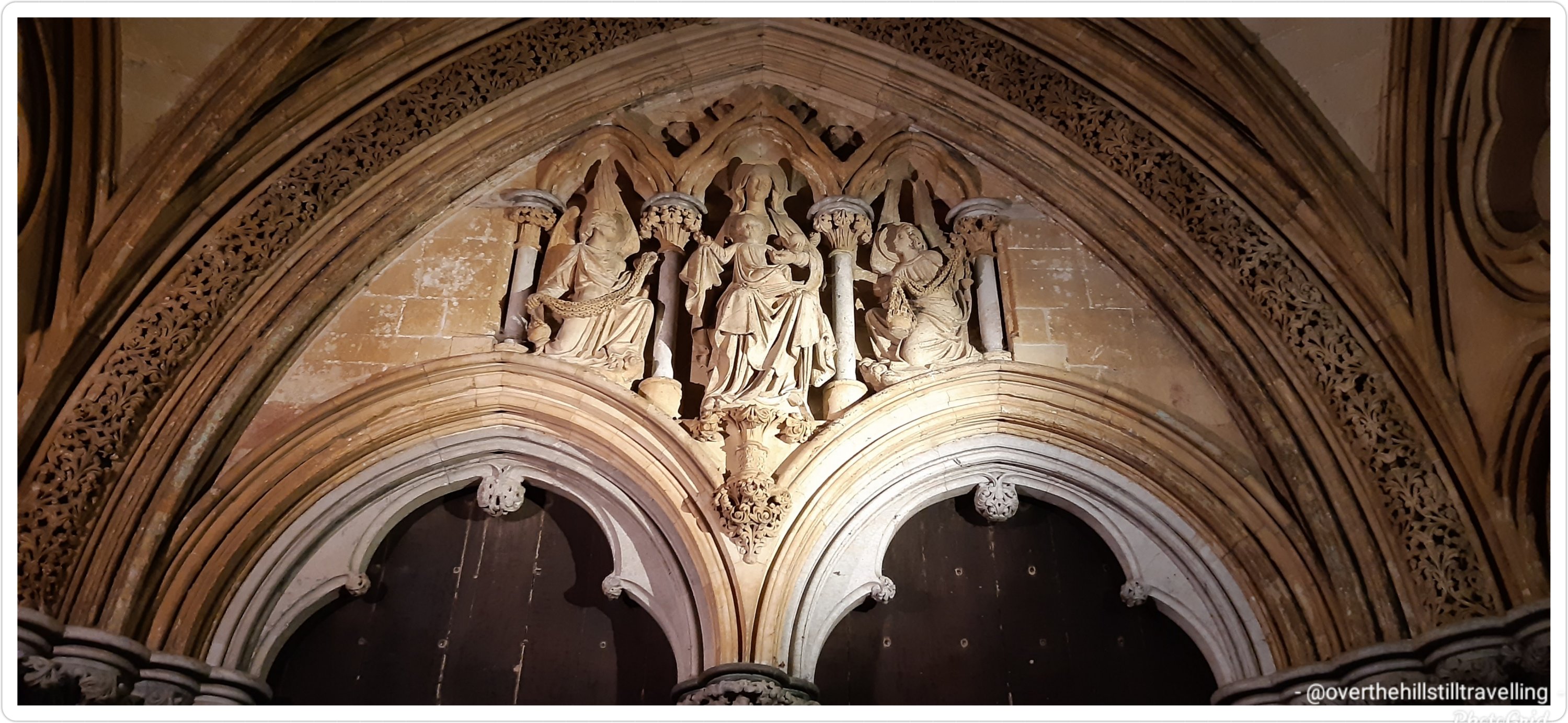
Stunning carving of Madonna and child above the entrance
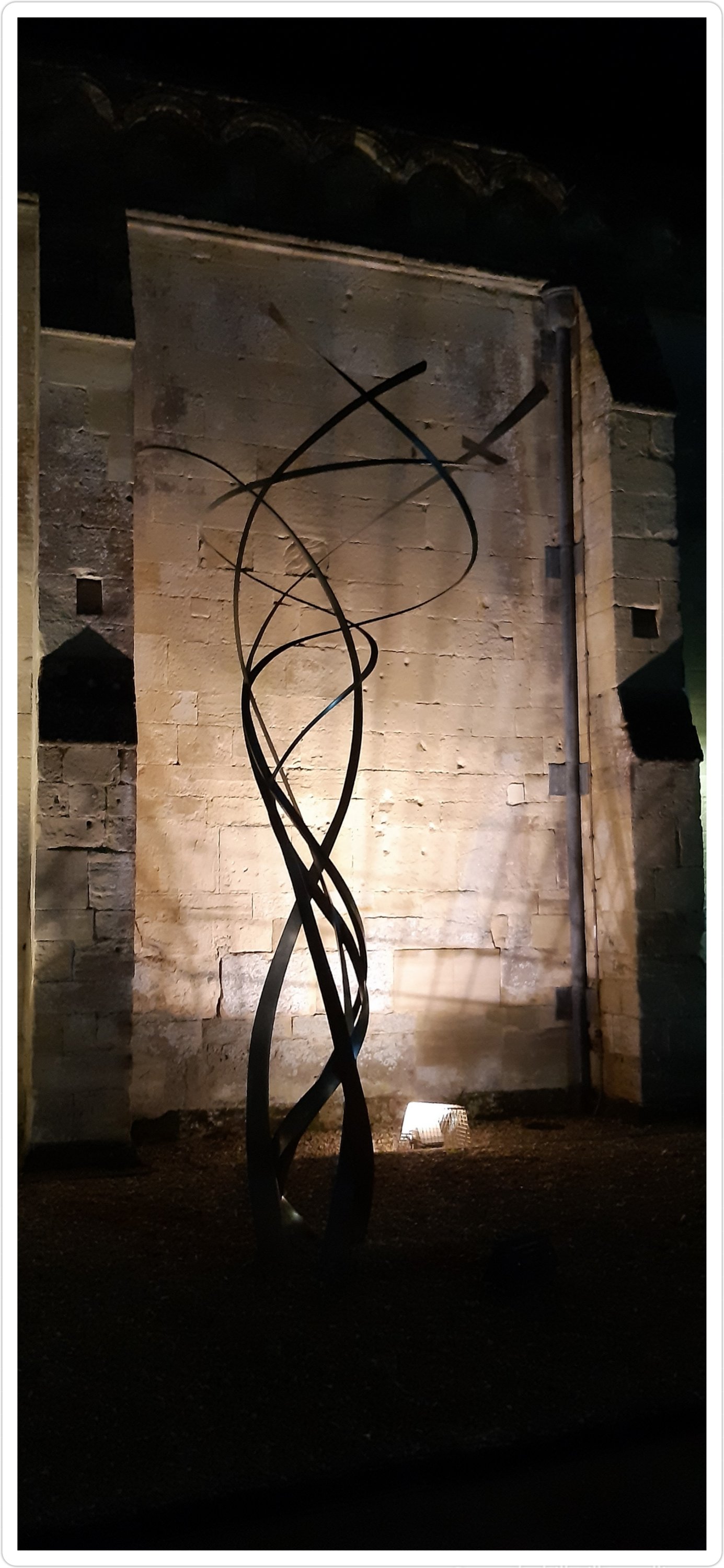
There are an amazing array of sculptures dotted around the cathedral grounds….
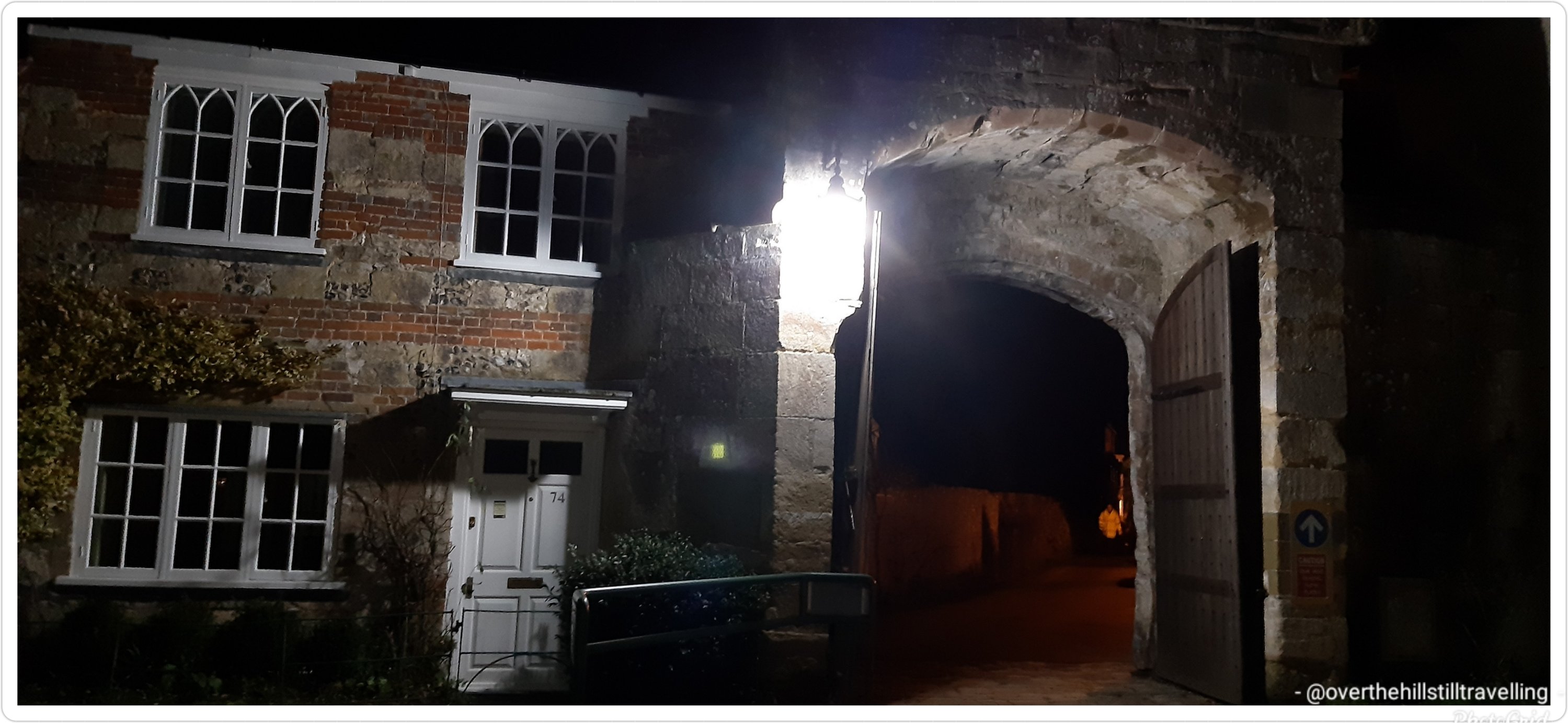
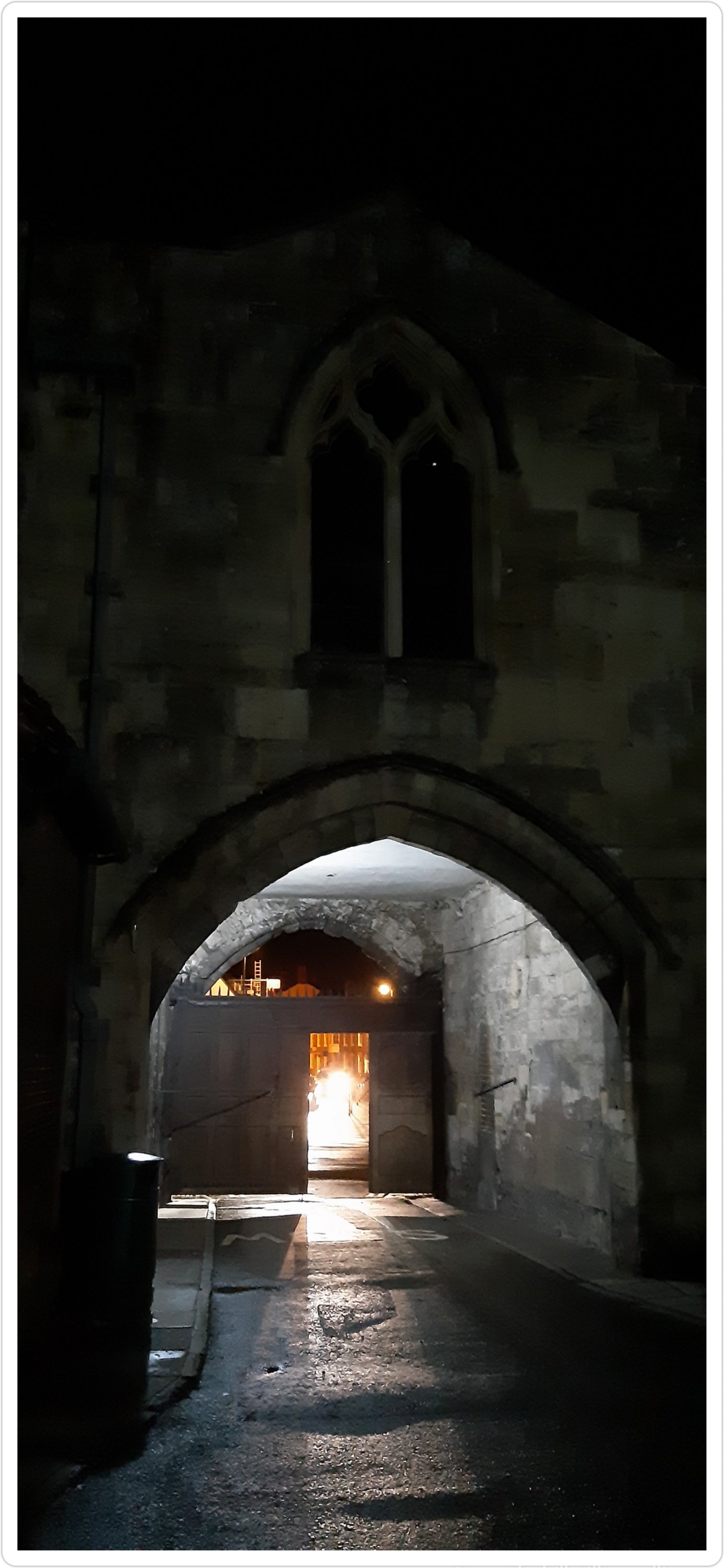
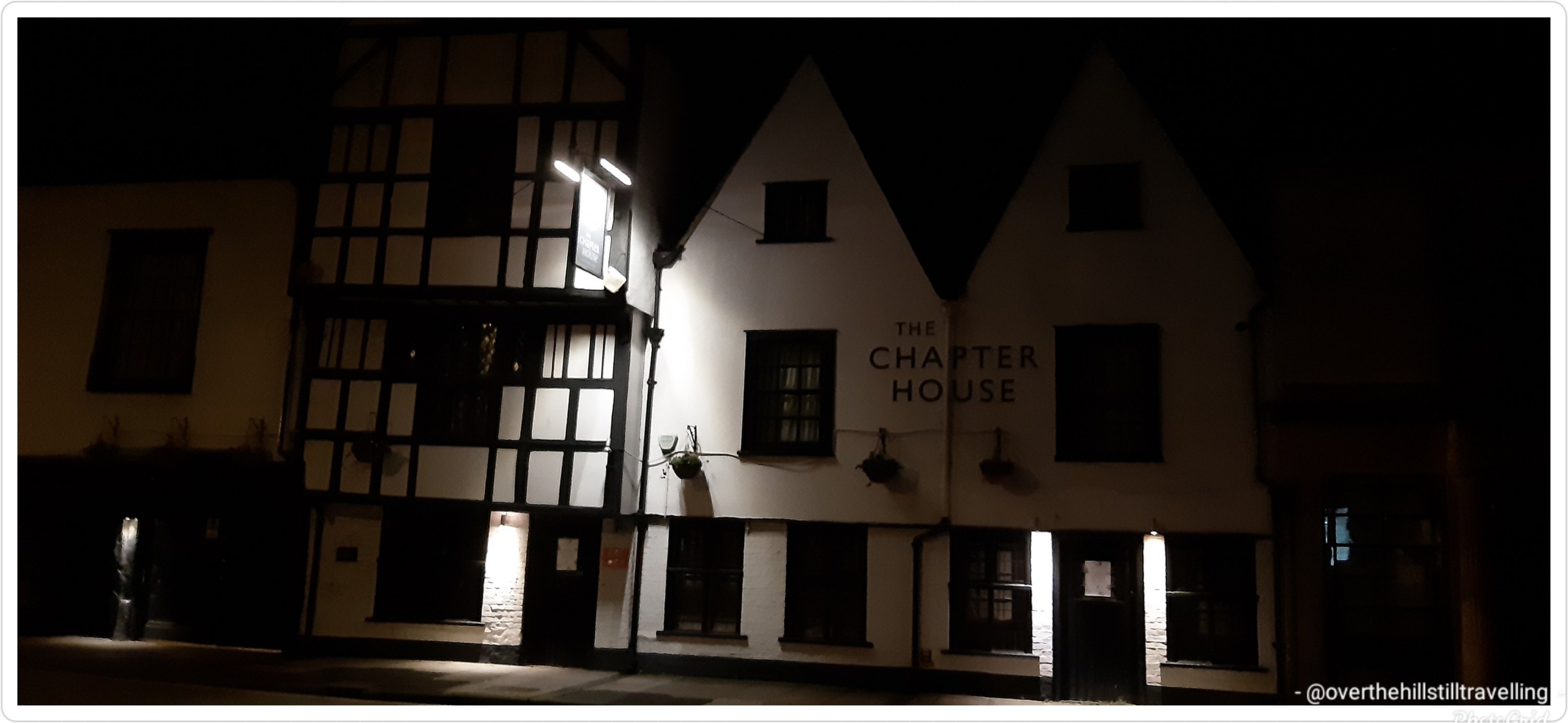
String QuartetSt Anne’s GateA bricked in door next to Malmesbury House History on the wall at Malmesbury House The Chapter House – outside the cathedral wallsOutside the cathedral wallsI’d love to know how old that house is Love love this Salisbury Cathedral looking ethereal in the dark
Salisbury Cathedral, formally known as the Cathedral Church of the Blessed Virgin Mary, is an Anglican cathedral in Salisbury, England. The cathedral is regarded as one of the leading examples of early English Gothic architecture. The main body was completed in 38 years, from 1220 to 1258.
At 80 acres, the cathedral has the largest cloister and the largest cathedral close in Britain. It contains a clock which is among the oldest working examples in the world. Salisbury Cathedral has the best surviving of the four original copies of Magna Carta. I was lucky enough to see the Magna Carta on my last visit.
In 2008, the cathedral celebrated the 750th anniversary of its consecration.
I’ll post some more photos taken this morning of the sculptures in the grounds, of which there is an amazing array, well as of the river Avon and some of the buildings in the city.
I had to concede defeat today and had my first Covid vaccine jab. I’m not happy about it, but when you start hearing things like “have you had a test recently, or when will you be having your innoculation?” from prospective clients et al, along with talk of vaccine passports, you know the writing is on the wall. We are but a commodity.
So I just said, to hell with it and booked an appointment. So many people are still totally ignorant of Covid and its transmission. Having the vaccine is not going to stop me from inadvertently passing it on to someone else in the event I come into contact with it. Its seems that some folk think it’s a magic wand, and once you have the jab you’re safe. You’re not. You’re just less likely to get really ill, and even then it’s no guarantee. Even the scientists are not wholly in agreement about the efficacy and what it means. Ugh. Anyway, it’s done. I can’t afford to not work.
The process itself was painless in all respects, and the system was smooth and flowed easily. Because of previous negative responses to a flu vaccine, I stayed institu for 25 minutes after the jab, just to make sure I didn’t just keel over and die 🤪🤪 and then I was away…the staff were friendly and well organised and I was impressed with the efficiency of it all. I still, 9 hours later have had no ill-effects. In case you’re wondering, I had the Astra-Zeneca vaccine. 🤔🤔🤔
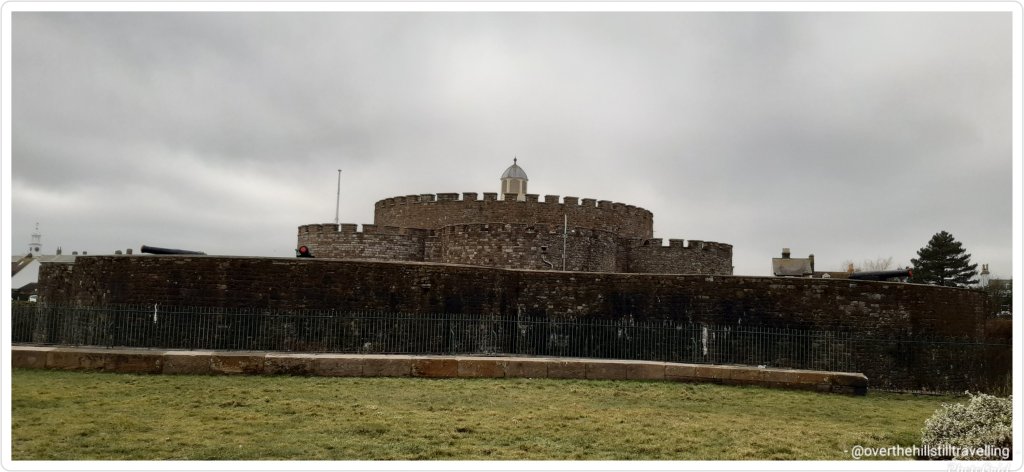
The good thing that came out of it is that I had an unexpected trip to Deal. After the jab, I set off for a walk to Walmer Castle. Its amazing how close the 2 castles are to each other…25 minutes brisk walk. But first I had a most delicious curried vegetable pie from Al’s Bakery on the High Street…totally recommended. If I’d known it would be so yummy, I’d have bought 2.
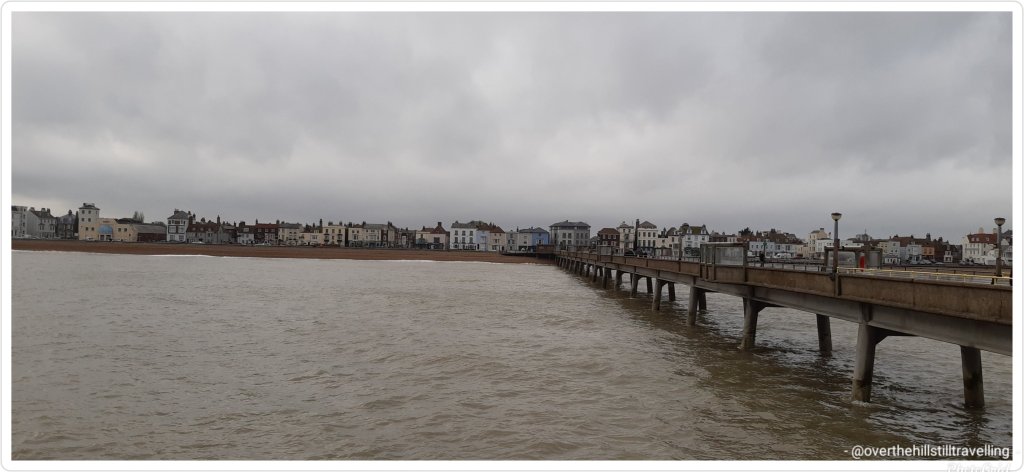
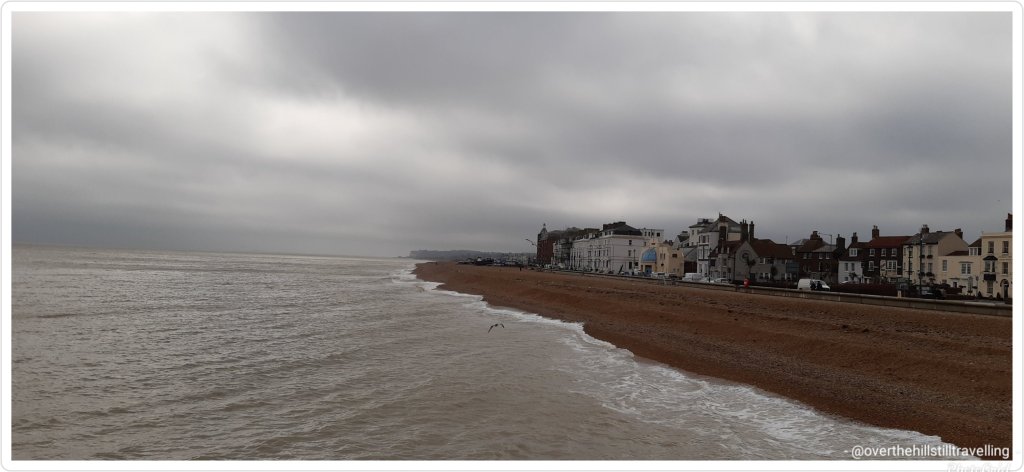
A quick walk along the pier as well, then back on the train…which remarkably, considering the delays caused by the land slip near Folkestone, arrived at Deal and stopped at exactly 14:32 (I was watching the clock) – even a Swiss train would be hard put to match that!! 😉
It’s a very long pier
Oh, and see that arrow pointing to the land in the distance in the next image… that’s the White Cliffs of Dover and last year I walked from Walmer to Dover via the cliffs…awesome walk and really beautiful
Deal Castle Walmer Castle
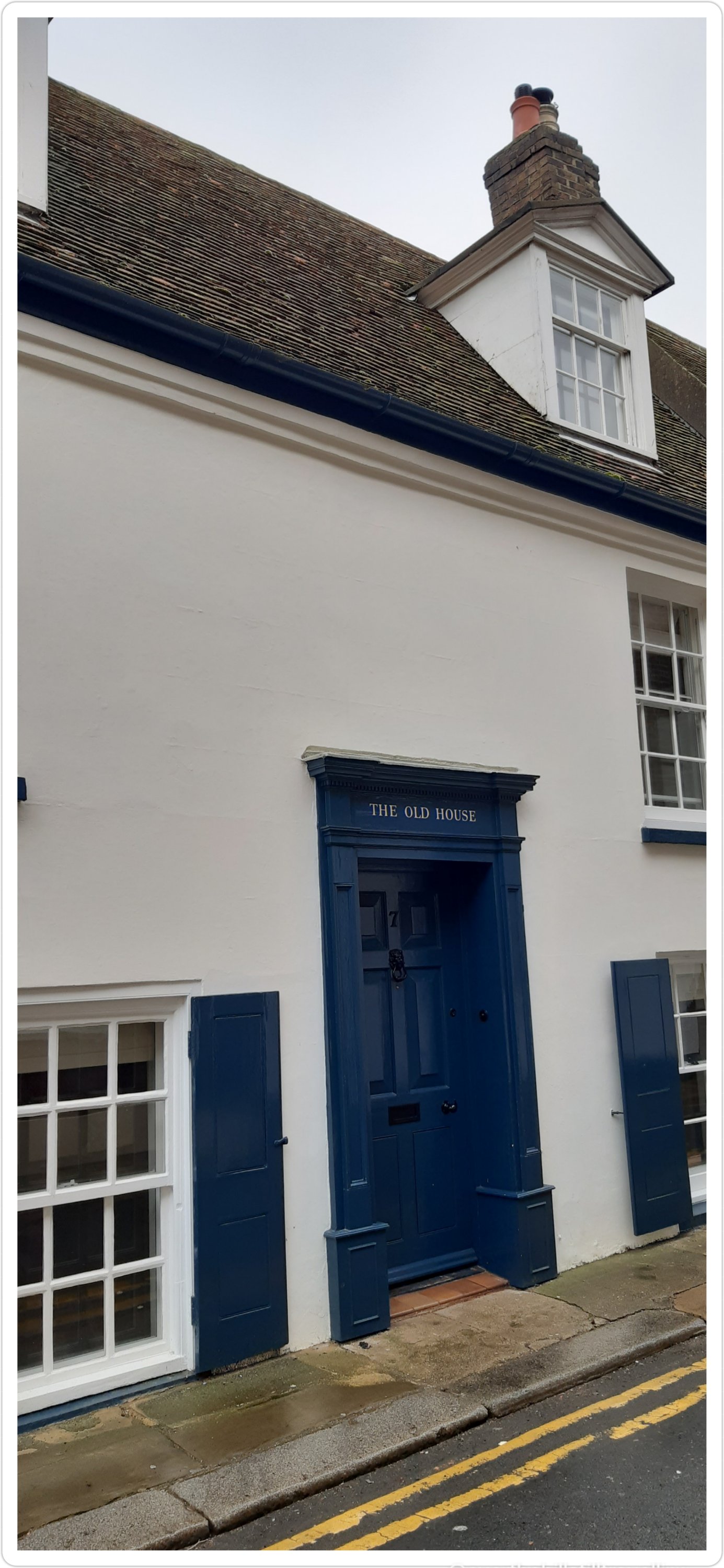
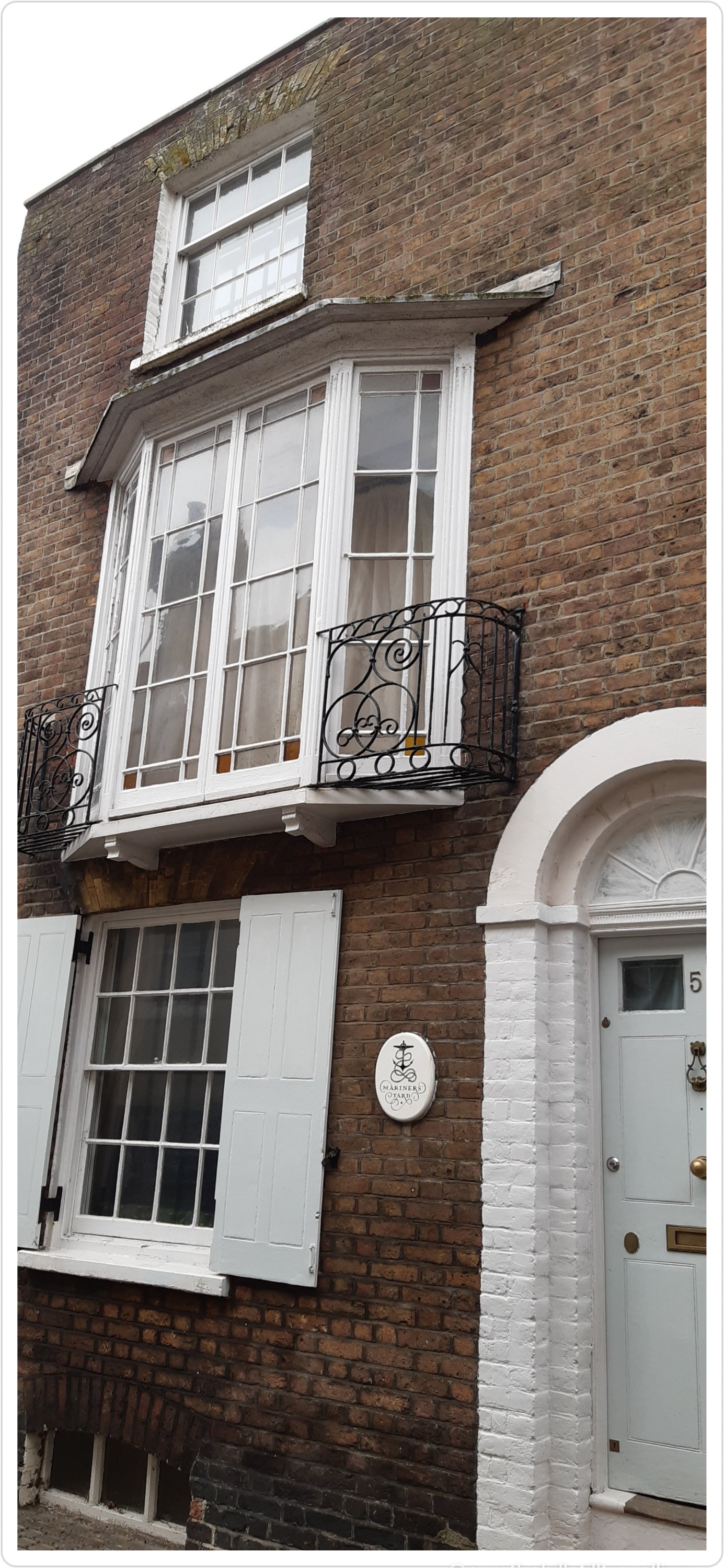
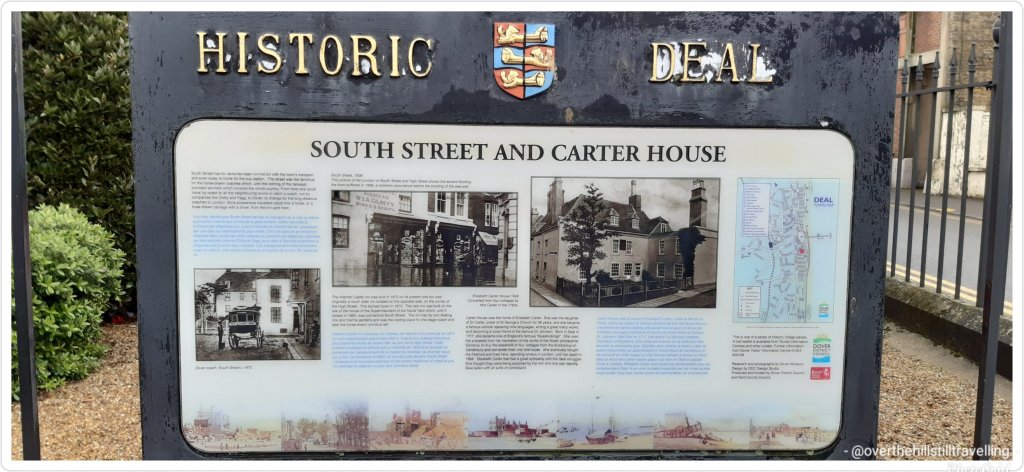
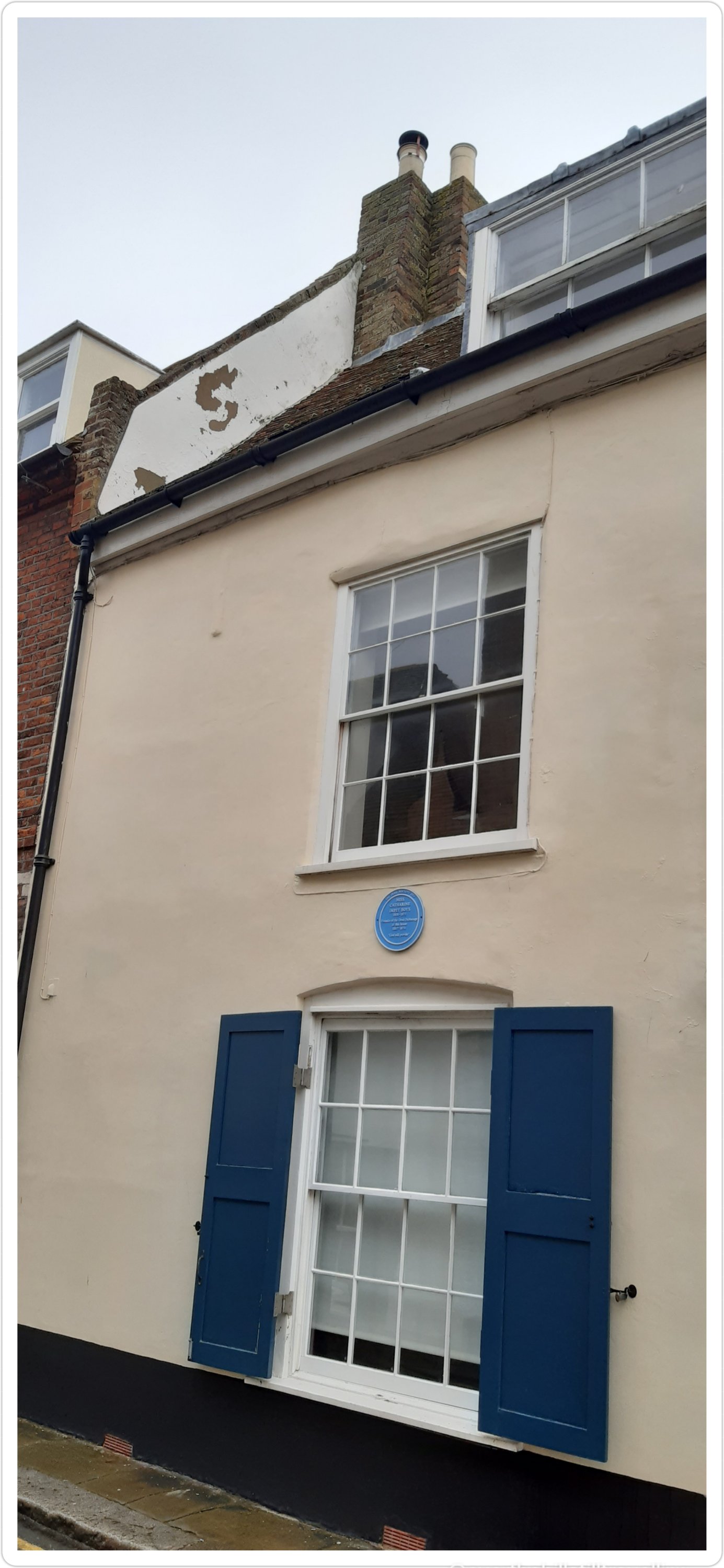
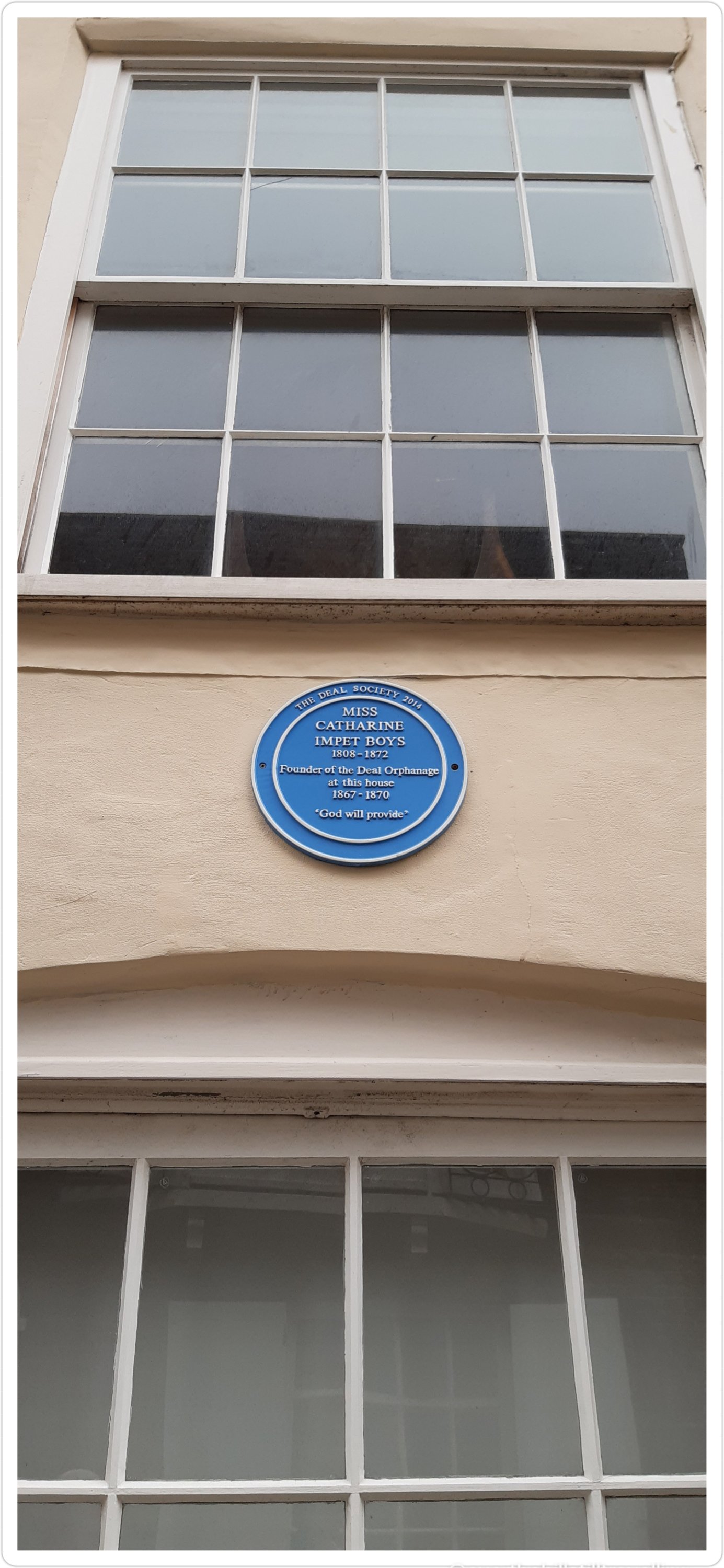
Deal is an incredibly historic town with some amazing old houses
Carter House
Although it was wet, cold and blustery, I really enjoyed my walk and as usual could have just kept going….as soon as lockdown lifts, that’s exactly what I’m going to do…
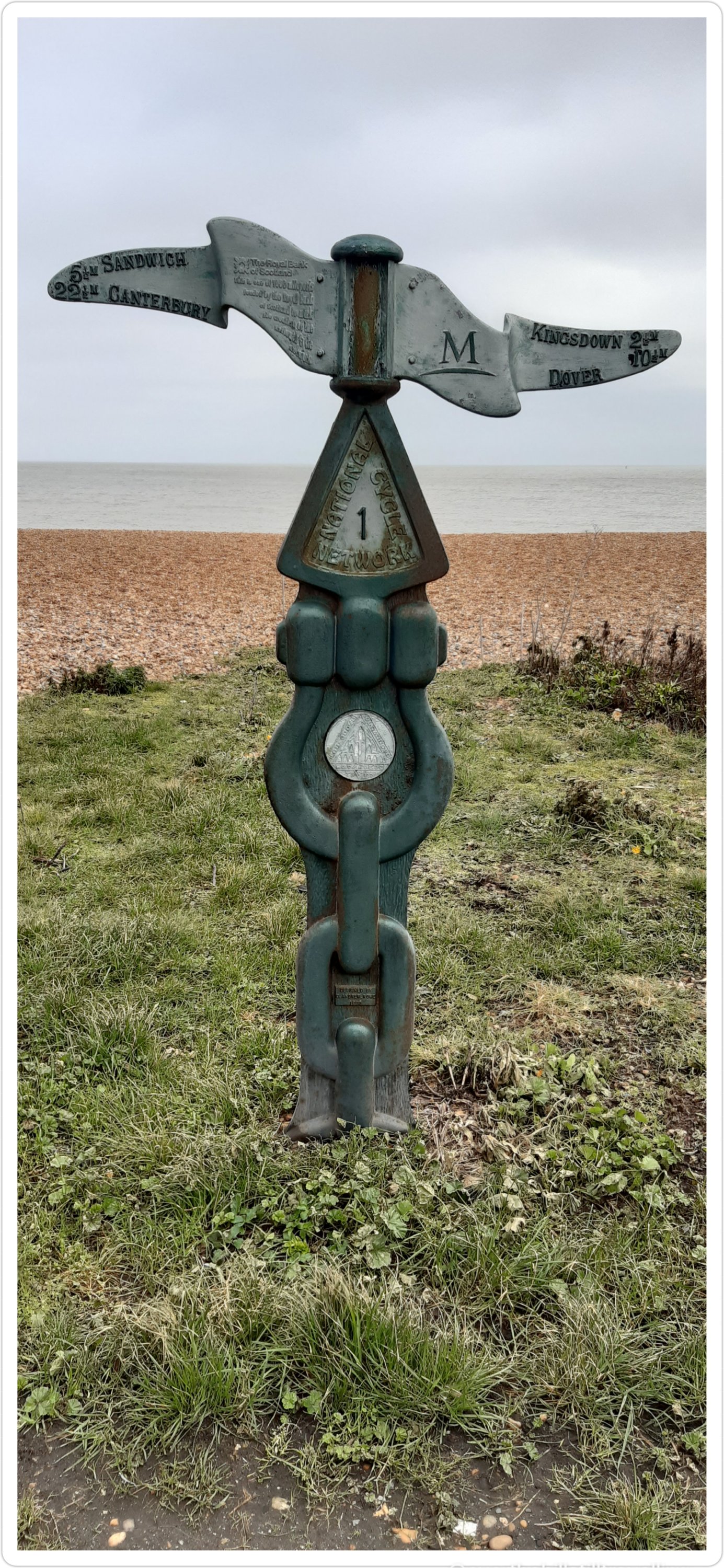
I love these cycle path signs….tempted to follow them one day 🚴♀️🚴♀️🚴♀️
Dover 10.5 miles
Dover 9 miles
I love this little square
And of course, you can’t visit a seaside town and not stop to look at the boats
A pretty fishing boat
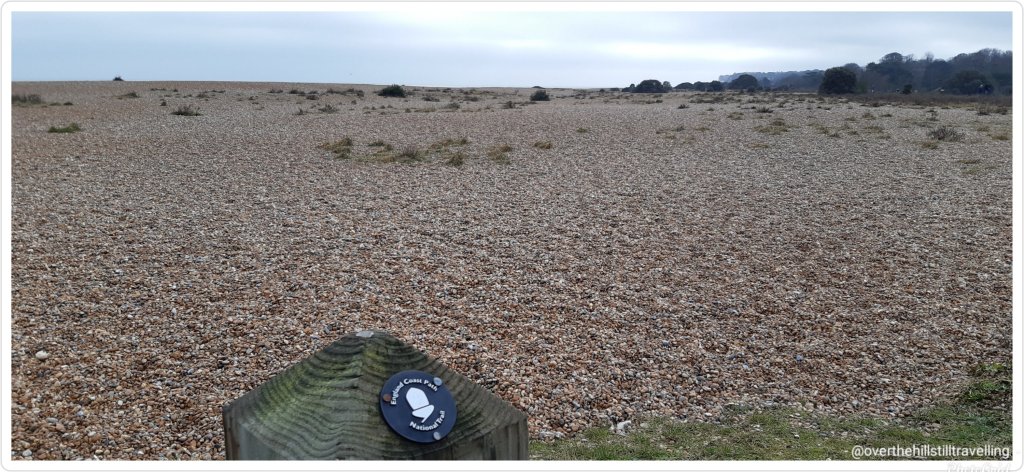
And finally, one of my favourite signs
The Acorn – symbol of the National Trails – England Coastal Path
And today’s walk added another 8kms to my Mt. Everest virtual challenge and takes me to nearly half way through the challenge 🚶🏻♀️🚶🏻♀️🚶🏻♀️👏👏👏
Both Deal and Walmer are mentioned in the 1086 Domesday Book :
Deal was a settlement in Domesday Book, listed as Addelam, in the hundred of Cornilo and the county of Kent. It had a recorded population of 31 households in 1086, putting it in the largest 40% of settlements recorded in Domesday, and is listed under 5 owners in Domesday Book.
Julius Caesar reputedly landed on the beach at Walmer in 55 BC and 54 BC. It is only one possible landing place, proposed judging from the distances given in his account of the landings in his Gallic Wars. However, recent archaeological research and digs have found that he landed at Pegwell Bay. Walmer is probably the settlement Wealemere listed in the Domesday Book.
As I mentioned….loads of history, and both castles are well worth a visit
When we first moved to the coast in 2016, travelling from London to Broadstairs on the train, past all the stations enroute, I remember being intrigued by the places behind the names, and excited about the possibility of exploring them all….and that was only those north of my destination. I subsequently discovered many more, south of Broadstairs.
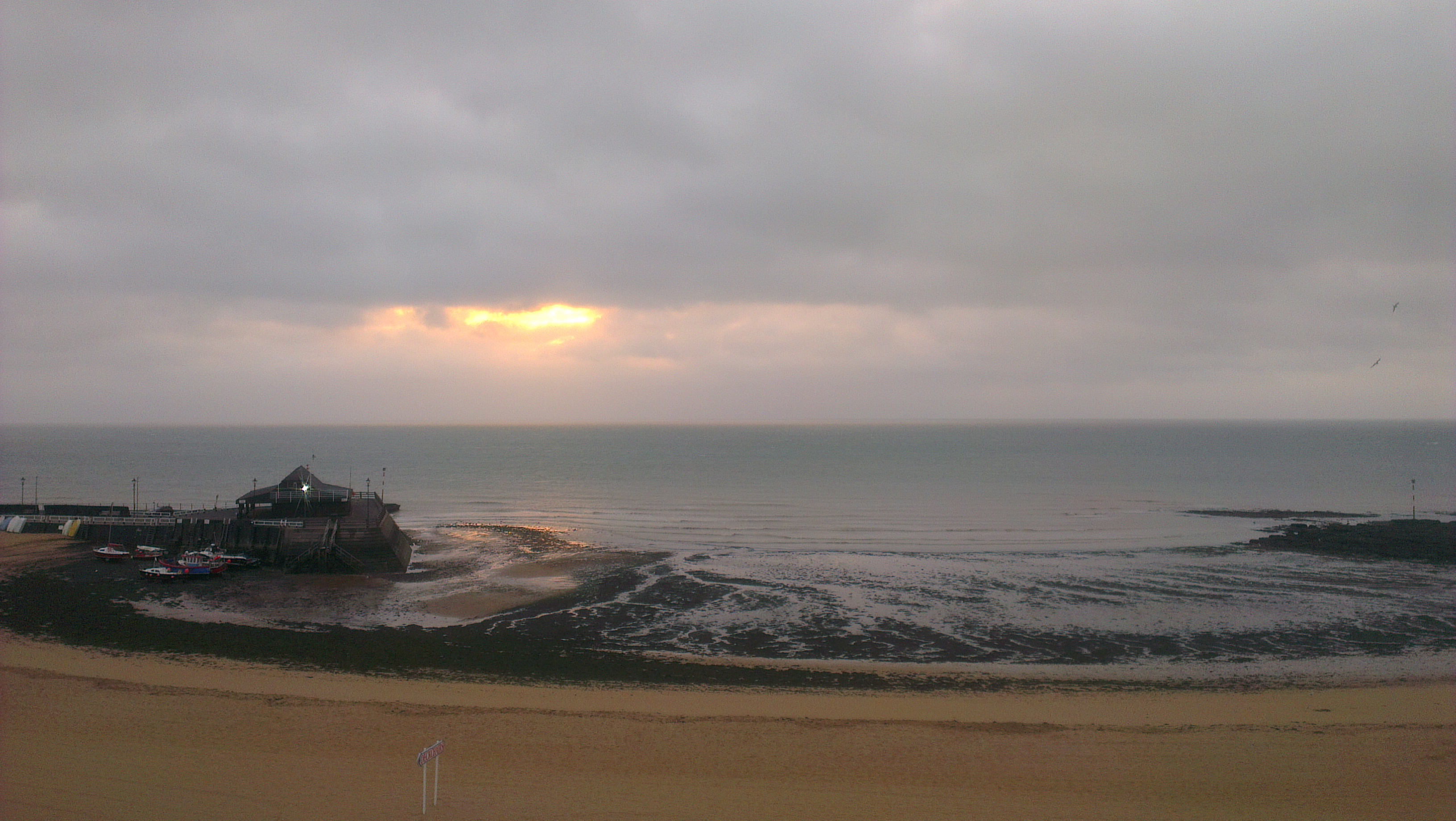
sunrise over Viking Bay, Broadstairs
I have since then been to all of the seaside towns, either by train or when out walking the coastline, as well as to many of the more inland places. They are all awash with centuries of history, and many of these villages, towns and the City of Canterbury, are mentioned in the 1086 Domesday Book. It is just phenomenal and I am constantly in thrall to the many layers uncovered during my research.
Faversham, along with Broadstairs, Canterbury, Sandwich and Dover are my favourite places to go….castles, Saints, Normans, Vikings, abbeys, a cathedral, ancient churches, historic houses, medieval houses, famous people and royal visits and tales of smugglers – who could resist!!
a network of smugglers tunnels wind their way below ground in Broadstairs
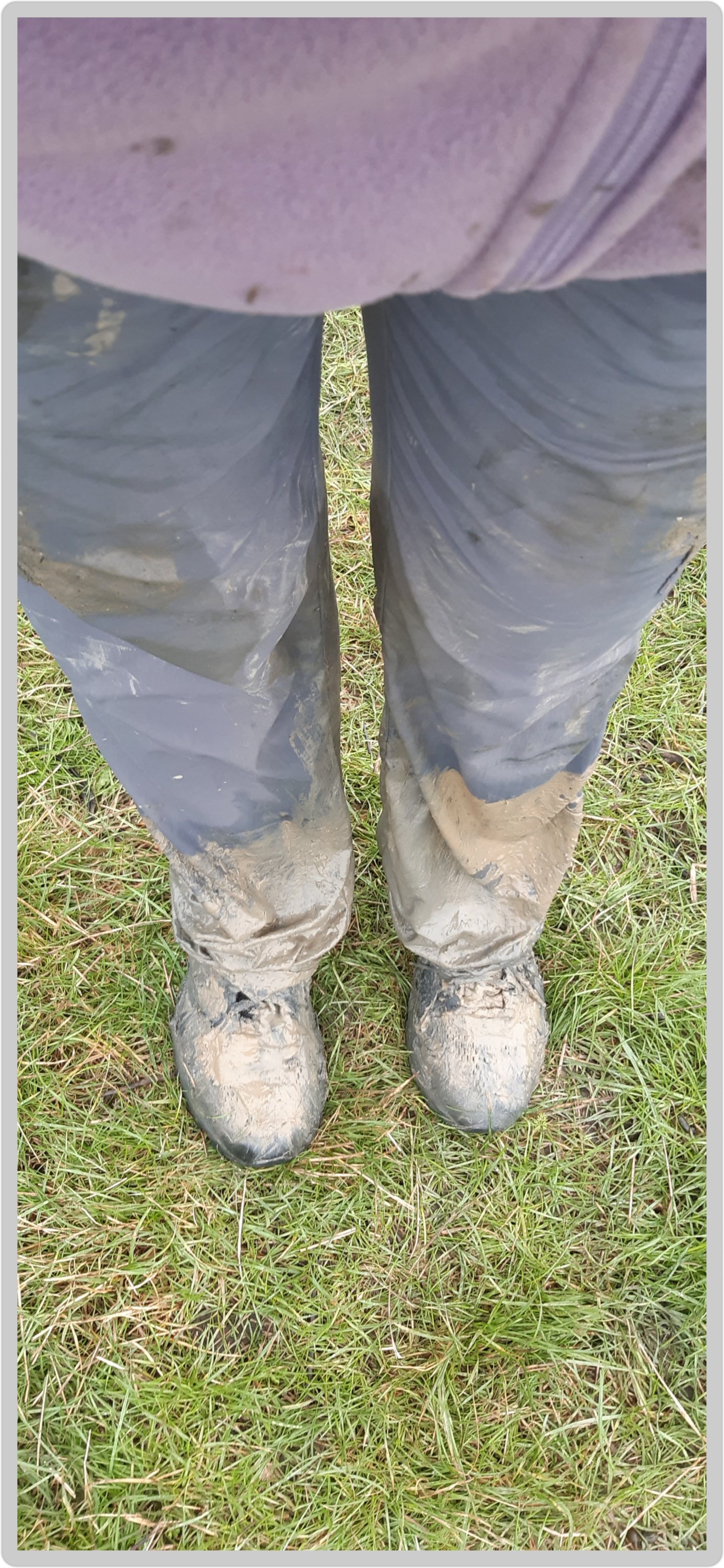
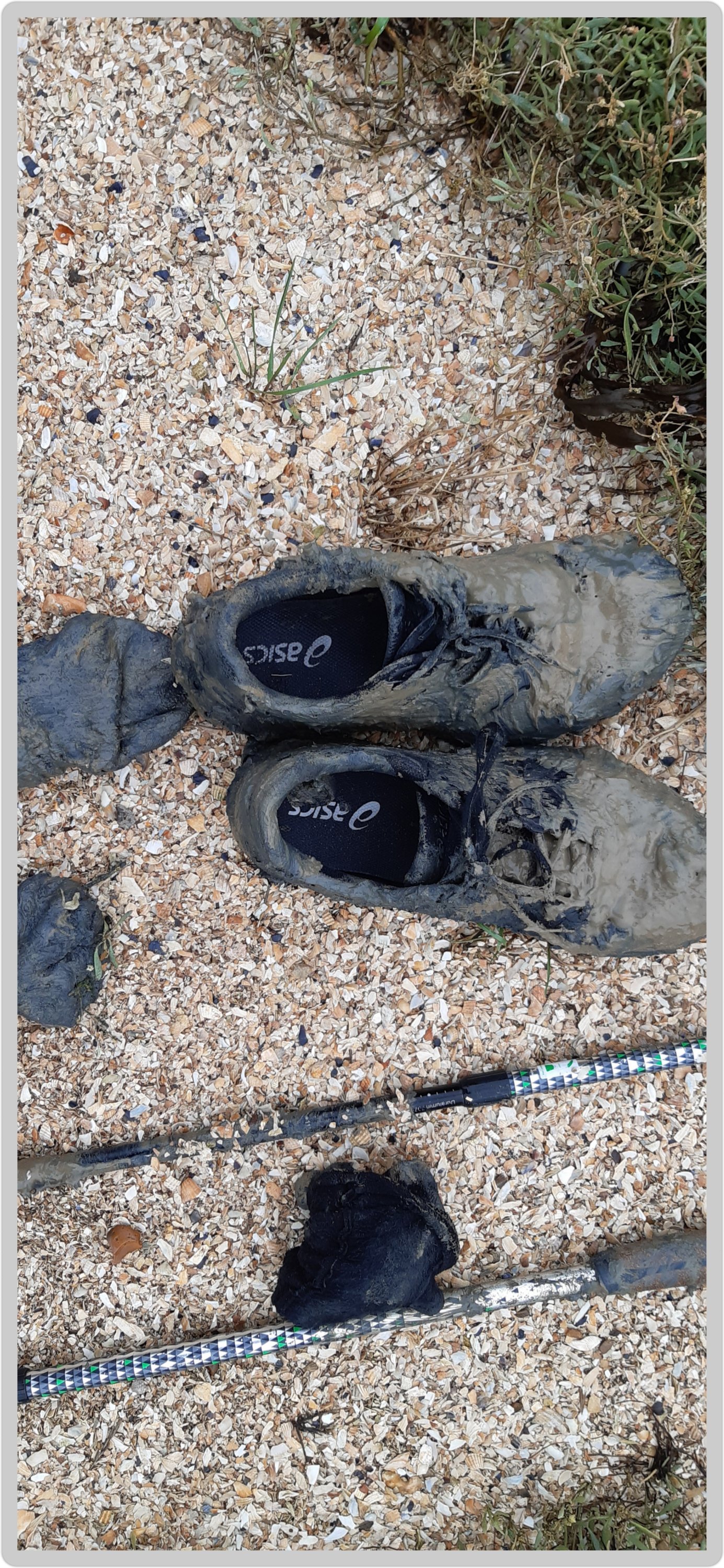
I first met Faversham on my Chaucer’s Canterbury Tales walk in 2017 (as mentioned in a previous blog), and although the memories are of blistered feet and muddy shoes, I still have fond feelings for the place 🤣🤣
The result of my foolish escapade!!
So since I mentioned it briefly yesterday, I thought I should expand on that and tell you more about this ever so fabulous and famous town, a town that missed out on being a city thanks to a small detail….it doesn’t have a cathedral (or a castle for that matter). Oh the semantics…
Faversham; Old English origin, meaning “the metal-worker’s village” lies next to the Swale, a strip of sea separating mainland Kent from the Isle of Sheppey in the Thames Estuary. There has been a settlement at Faversham since pre-Roman times, next to the ancient sea port on Faversham Creek, and was inhabited by the Saxons.
One of Henry VIII’s boats perchance??
Fefresham was held in royal demesne in 811, and is further cited in a charter granted by Coenwulf, the King of Mercia. Coenwulf described the town as ‘the King’s little town of Fefresham’, while it was recorded in the Domesday Book as Favreshant.
Mentioned as Favreshant in the 1086 Domesday Book, Faversham was noted as : King’s land, with 2 salthouses, a mill and a market; a market town and small port.
Faversham was used as a summer residence by the Kings and Queens of Kent, and has many other royal connections; Stephen (1092 or 1096 – 25 October 1154), often referred to as Stephen of Blois, was King of England from 22 December 1135 to his death in 1154 and was buried in Faversham Abbey. However, during the Dissolution of the Monasteries in 1538, most of the abbey was demolished, and the remains of Stephen were rumoured to have been thrown into Faversham Creek along with his consort and son who were buried with him. Subsequent excavations revealed empty tombs when they were opened.
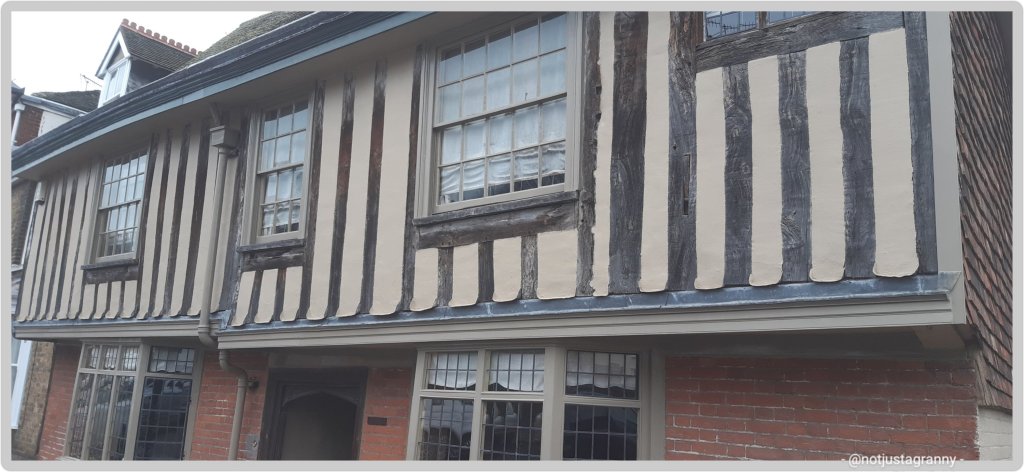
Abbey Street was constructed around 1201 in order to provide an appropriate approach to the abbey from the town, and still houses timber framed buildings; described as “the finest medieval street in southeast England”.
Medieval buildings in Abbey Street
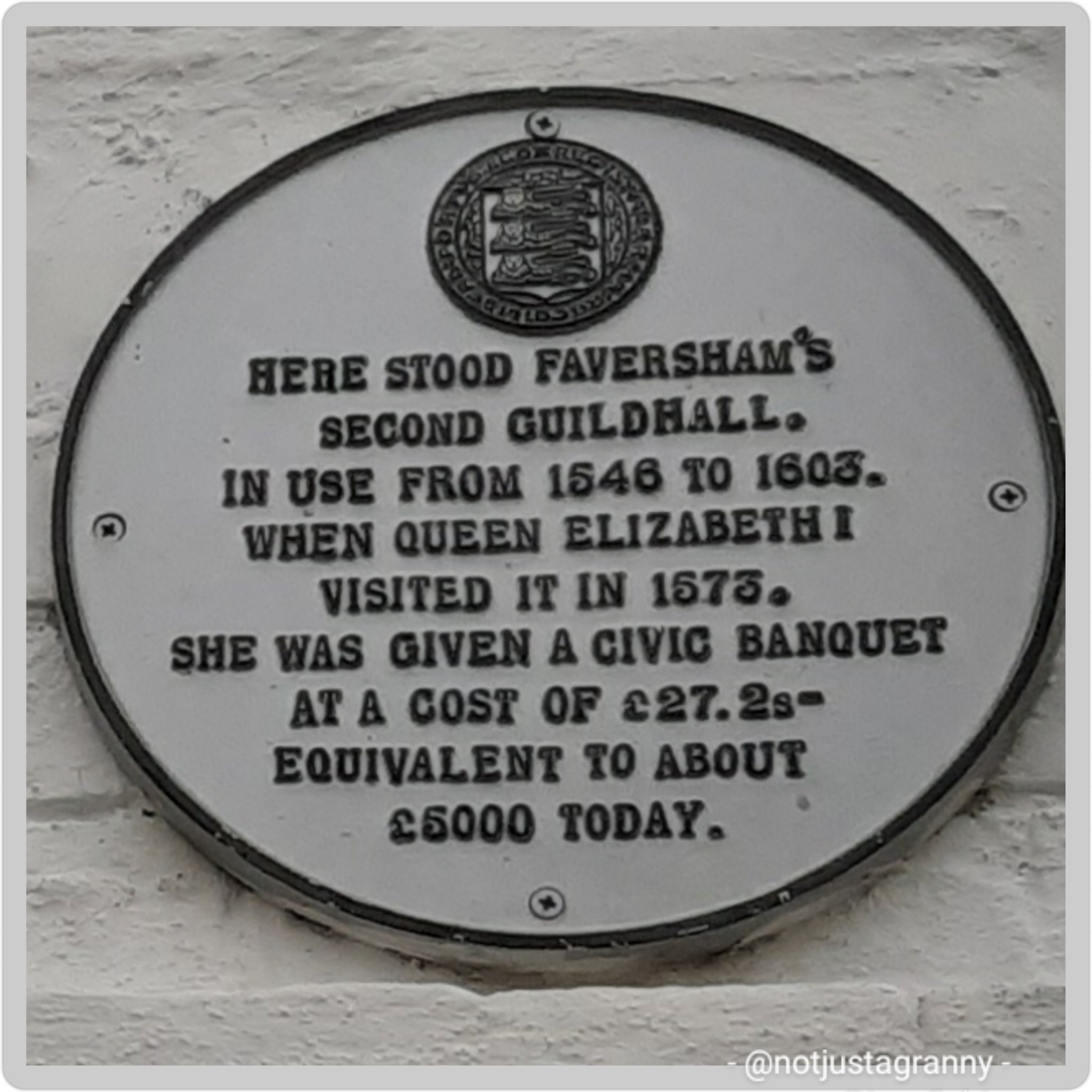
A royal visit by Queen Elizabeth I in 1573
Location of the Guildhall during Elizabeth I’s reignCurrent Guildhall – built as a market hall in 1574 by the people of the town and nearby parishes, converted into the Guildhall in 1605
Faversham was established as a link arm to the Confederation of Cinque Ports as the (Limb of Dover).
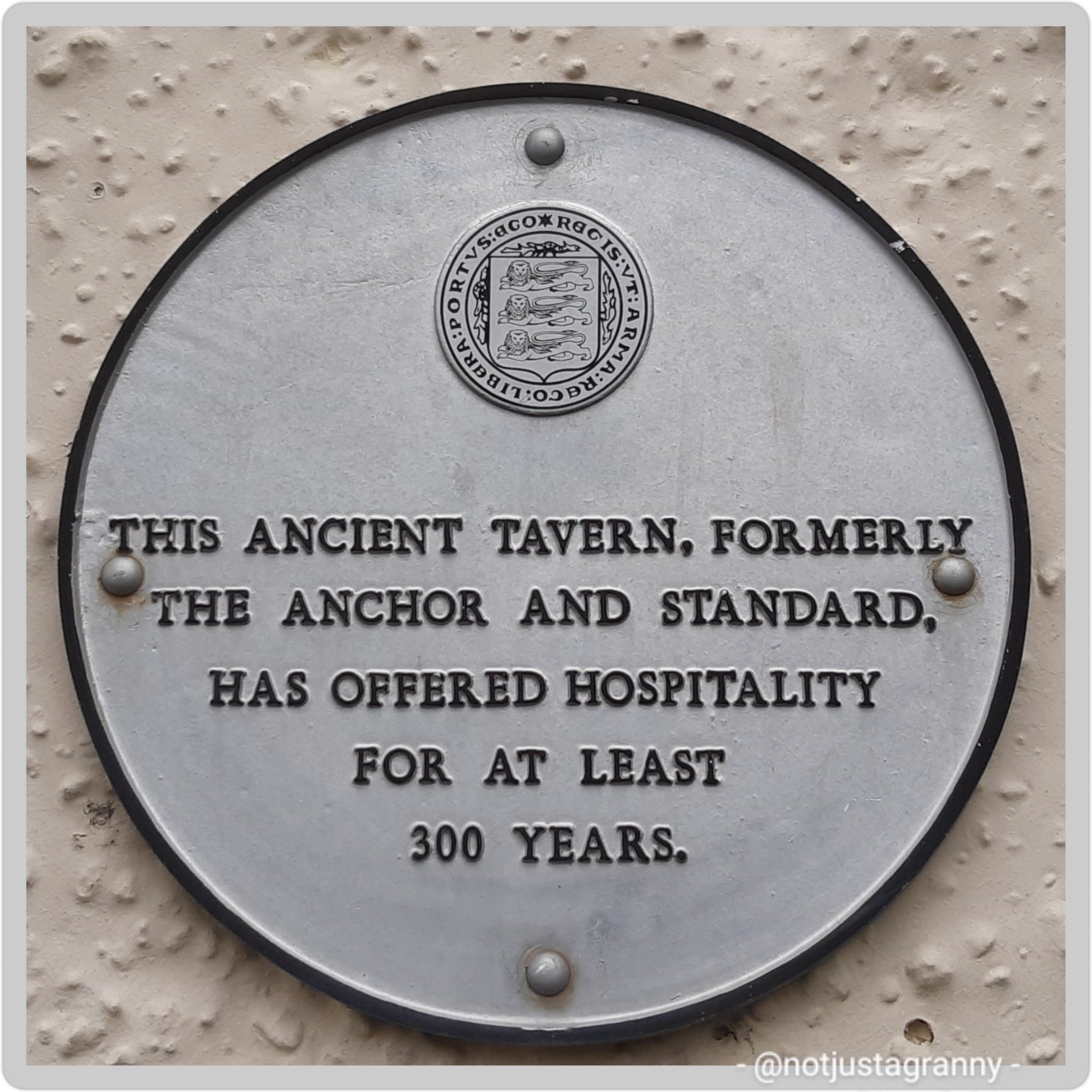
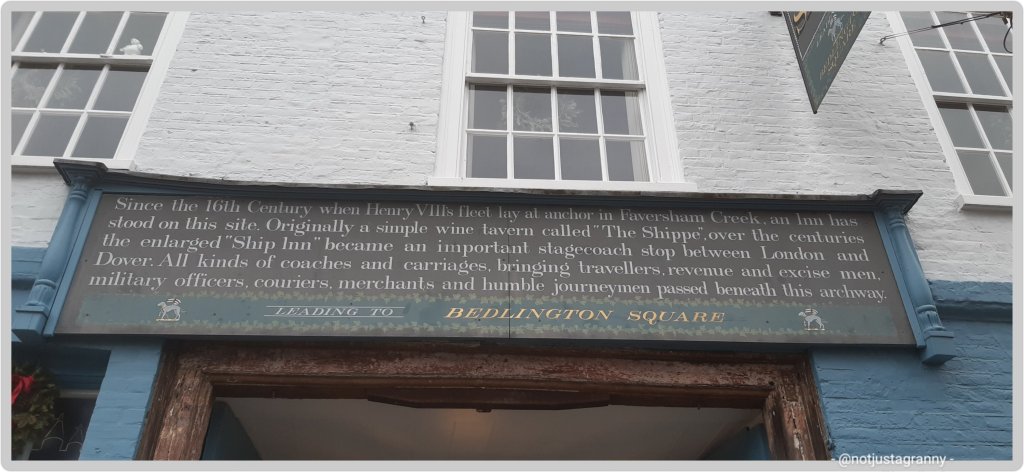
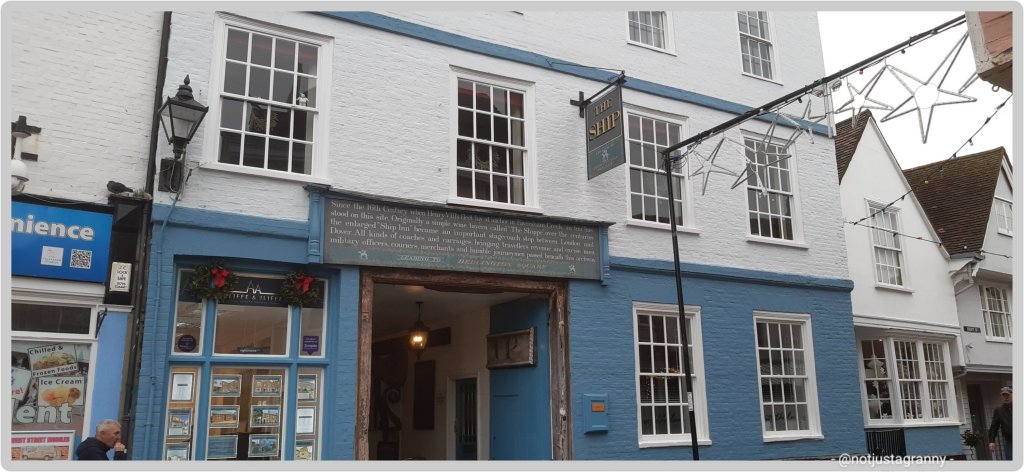
The Shippe Inn
Other famous people linked to Faversham (besides me, that is 🤣🤣🤣😉)
Richard Arden, a 16th century mayor, was murdered by his wife and her lover. Nice 🤪🤪🤪
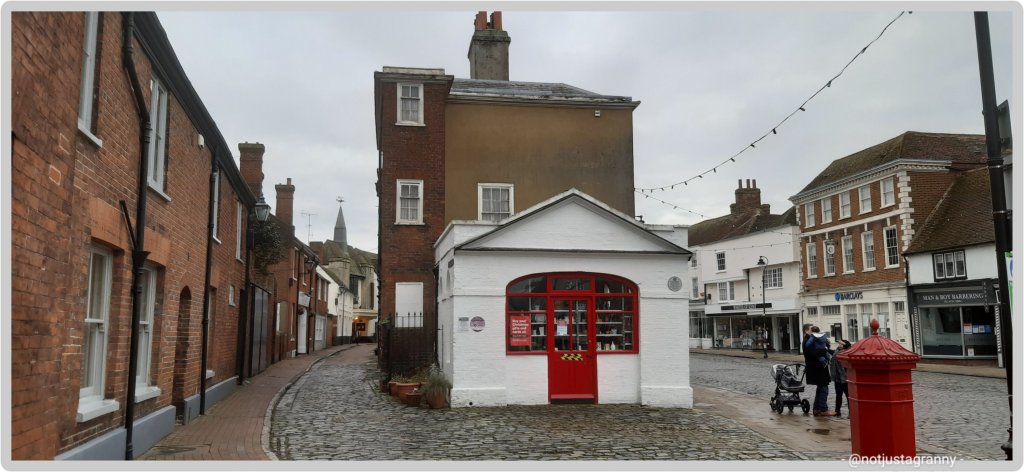
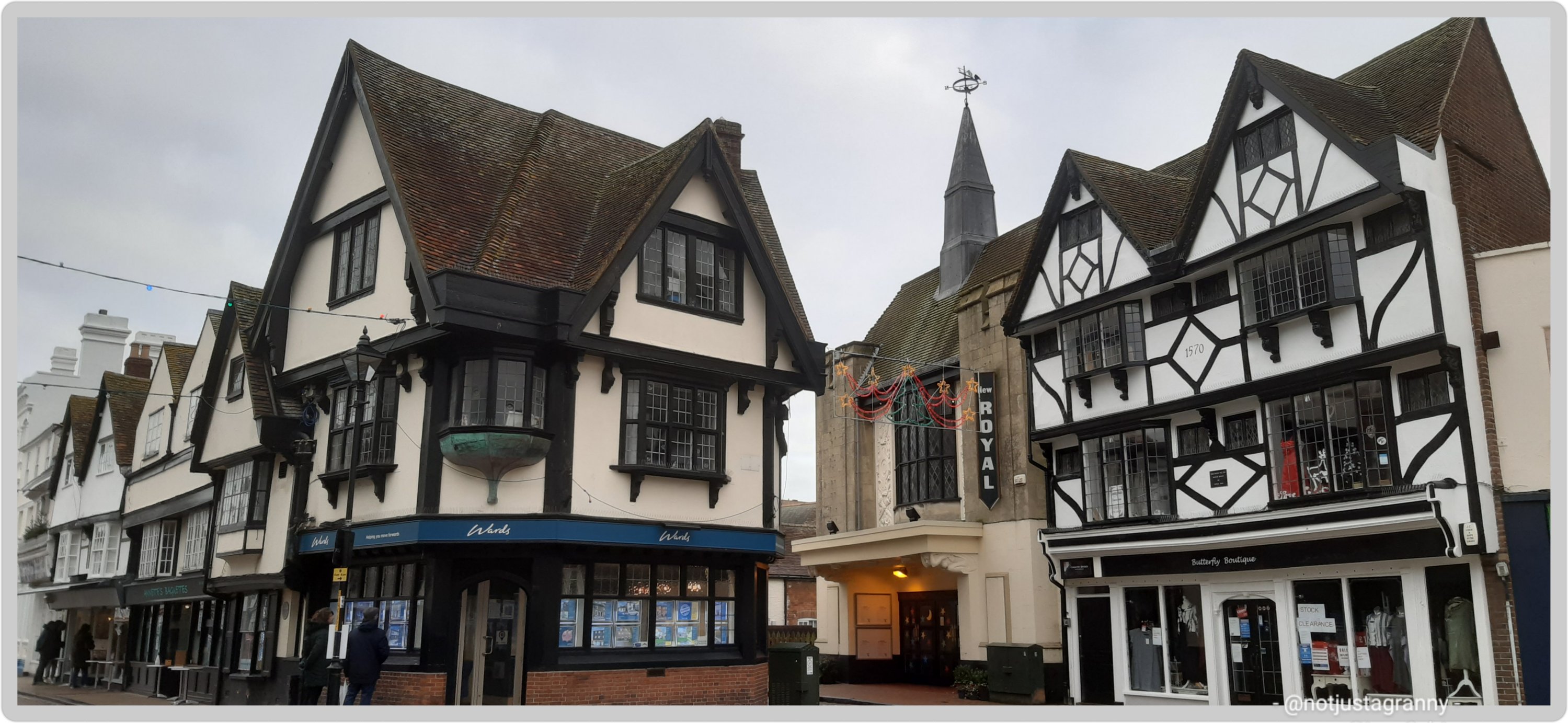
There are some fantastic buildings surrounding the market place
So many beautiful old buildings
Faversham also lies on the old Saxon Shore Way route between Gravesend on the river Thames near City of London and Hastings on England’s south east coast and known for the ‘Battle of Hastings’ which is when William the Conqueror defeated King Harald in 1066. William the Conqueror is responsible for the ‘Great Survey’ of England; the Domesday Book completed in 1086.
The Saxon Shore Way, a long-distance footpath of 163 miles in England, starts at Gravesend and traces the coast of SE-England as it was in Roman times, as far as Hastings in East Sussex. There are a couple of places where the route runs inland; around what was the Isle of Thanet – once separate from mainland England by the River Wantsum, and again on the south coast past Folkestone.
That’s us, the island on the right 😃😃
Some 5,000 years ago Thanet was separated from mainland Britain by 600 metres of sea – The Wantsum Channel, it is now connected again since the river/channel silted up some time ago.
When the English Channel was formed by the sea breaking through, an island of chalk was left on the east side of the county – now known as the Isle of Thanet.
The Wantsum Channel today
The SSW follows the creek inland from The Swale and into Faversham and then back out again from the opposite bank and once again follows The Swale and into the Thames river at Gravesend. Since I’ve already walked so many sections of the SSW on my various walks, it makes sense for me to actually do the whole route…one day LOL I mean it’s not like I don’t have about 100 other walks to do and I have LOADS of time on my hands ….as if 🤣🤣🤣
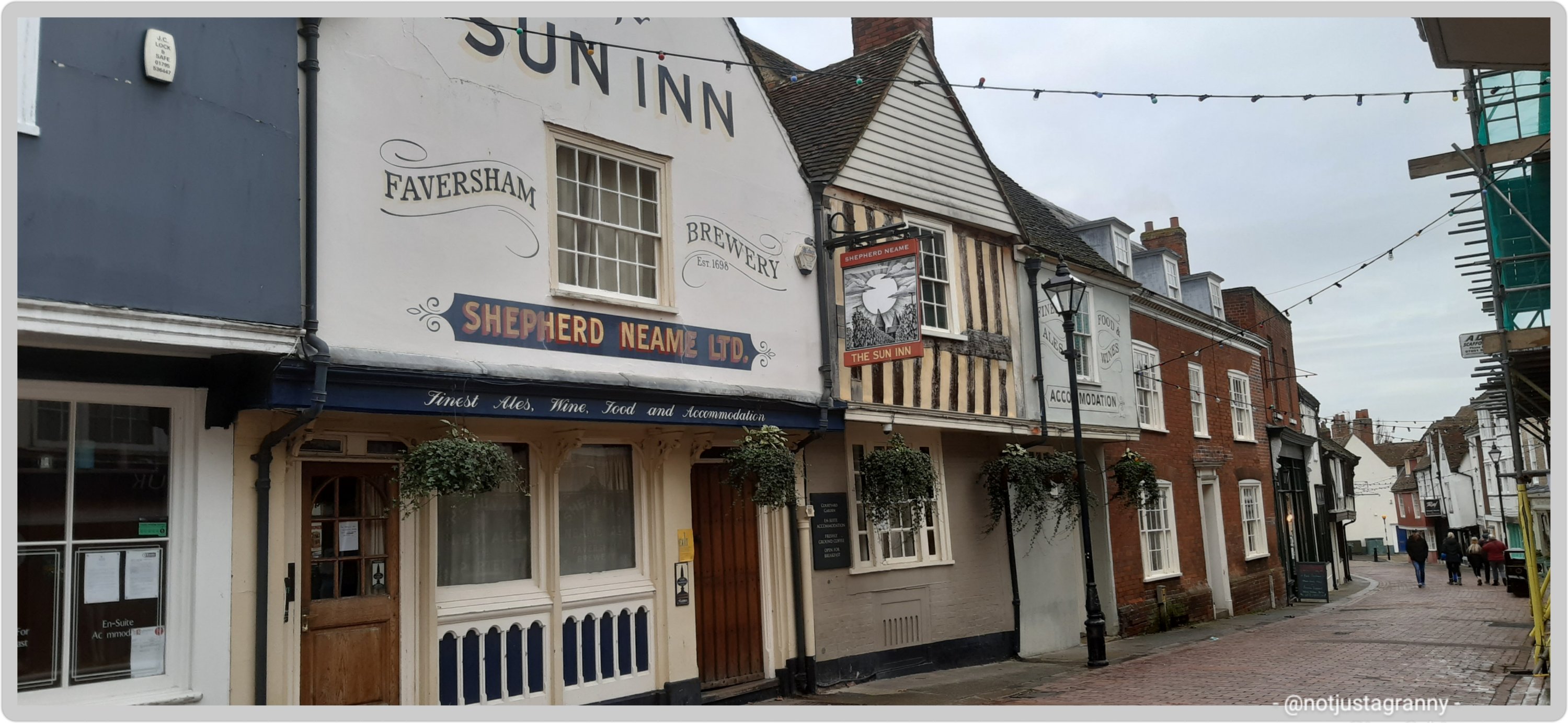
Faversham is located on the main road between the City of London and Dover and therefore became an important stop over for travellers between the Port of London and the Port of Dover. As a result of this inns were of paramount importance and today you can see and stay at one at least one such…The Sun Inn. Seriously one of my favourite ‘places I stayed’ on my many walks. It had everything I needed after arriving drenched and in pain. A massive double bed, a huge bath and fluffy white towels. Perfect.
The Sun Inn, Faversham – best room and bath everThe Sun Inn, Faversham – Day 3 Rochester to Faversham
Faversham truly is awash with history and I could write up so much more, but this is already quite a long post, so for now I’ll just add one more photo
historic buildings of Faversham
Okay, make it two photos LOL – the architecture is so varied that if you’re a fan of architecture you could spend the whole day walking around and still find more to see
architecture in Faversham
I’m sure to visit Faversham again when I start the next section of my insane intention of walking the entire English Coast and of course the Saxon Shore Way….now that my interest has been well and truly piqued. I’ll tell you more about it then…meanwhile…
Thanks for dropping by and taking the time to read about my adventures, I really do appreciate your time and support. Have a fab day/afternoon/evening wherever you may be in the world. 🌍🌎🌏
In case you’re interested: more about my Canterbury Tales Walk from Southwark Cathedral to Canterbury Cathedral (p.s. please don’t feel obliged to read any of them, it’s just in case you’re interested).
A tiny hamlet in the Faversham area of Kent, Thorley Forstal is literally just a scattering of pretty little houses amongst humongous fields of agriculture or animal husbandry…hence the long, long roads and vast distances I have to walk.
The name is recorded in the Doomsday Book as Trevelai, which corresponds with a Brittonic origin, where “Trev” means a settlement or farm house and “Elai” typically relates to a fast moving river or stream.
I have yet to see a river or a stream, but perhaps I haven’t yet walked far enough…..there are however plenty of flooded roads, especially atm with all the rain 🤪🤪
For the word ‘Forstal’, various descriptions are found ; a small opening in a lane too small to be called a common, a green before a house, a paddock near a farmhouse.
In the case of ‘Throwley Forstal’, all 3 options could apply since there are a few small lanes, two fairly decent greens, and a farm looks out onto the green.
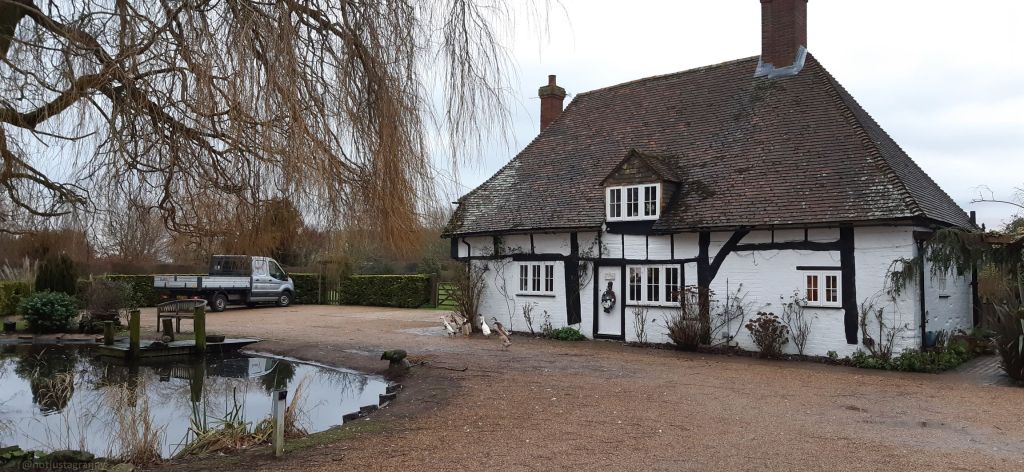
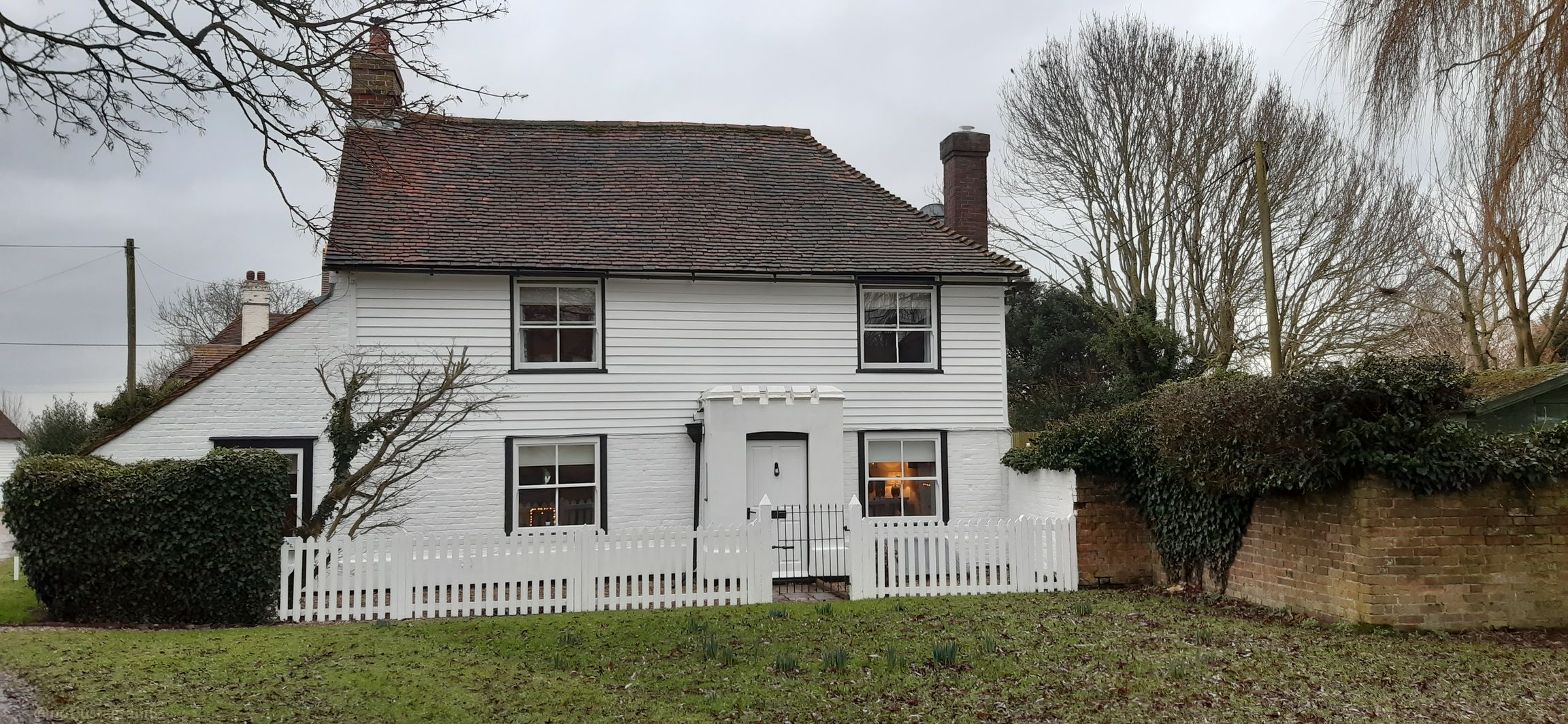
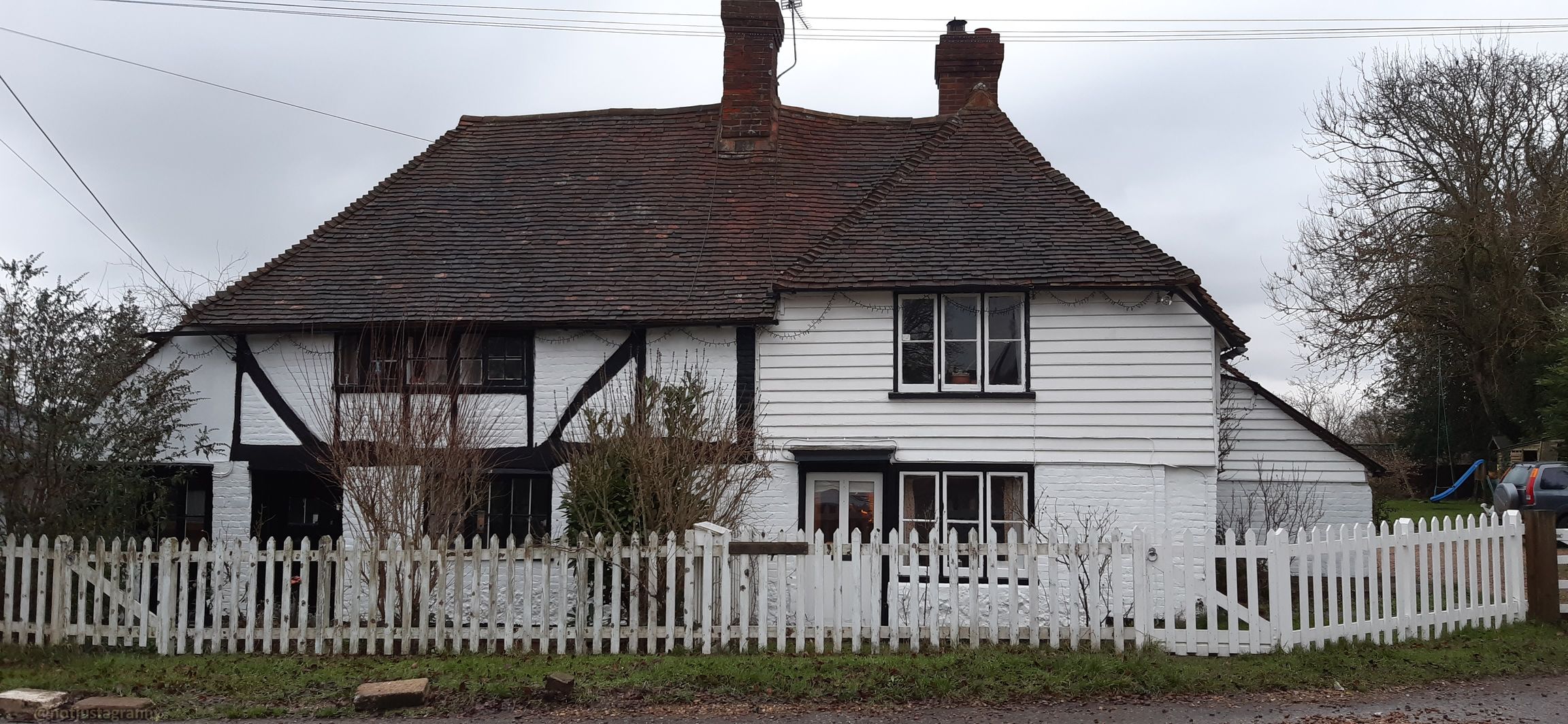
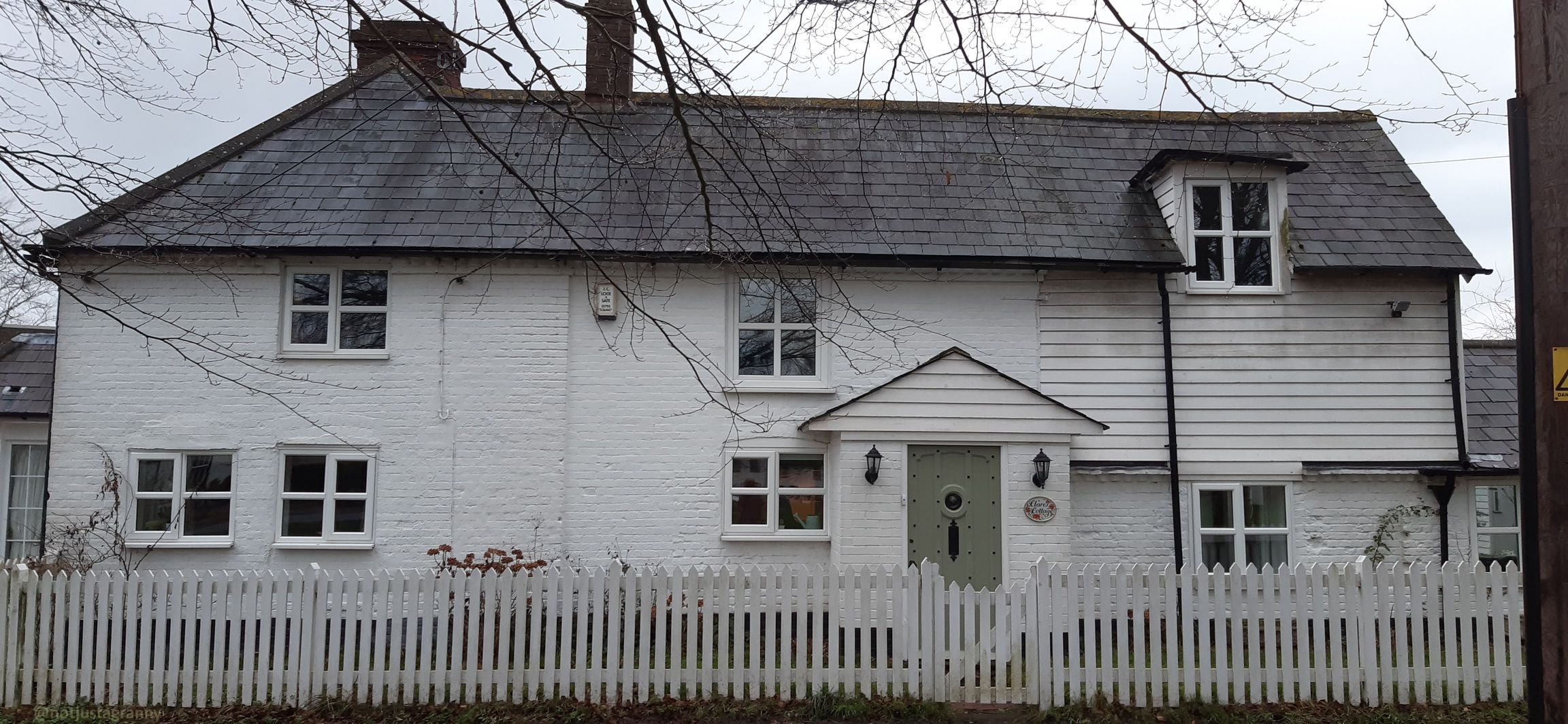
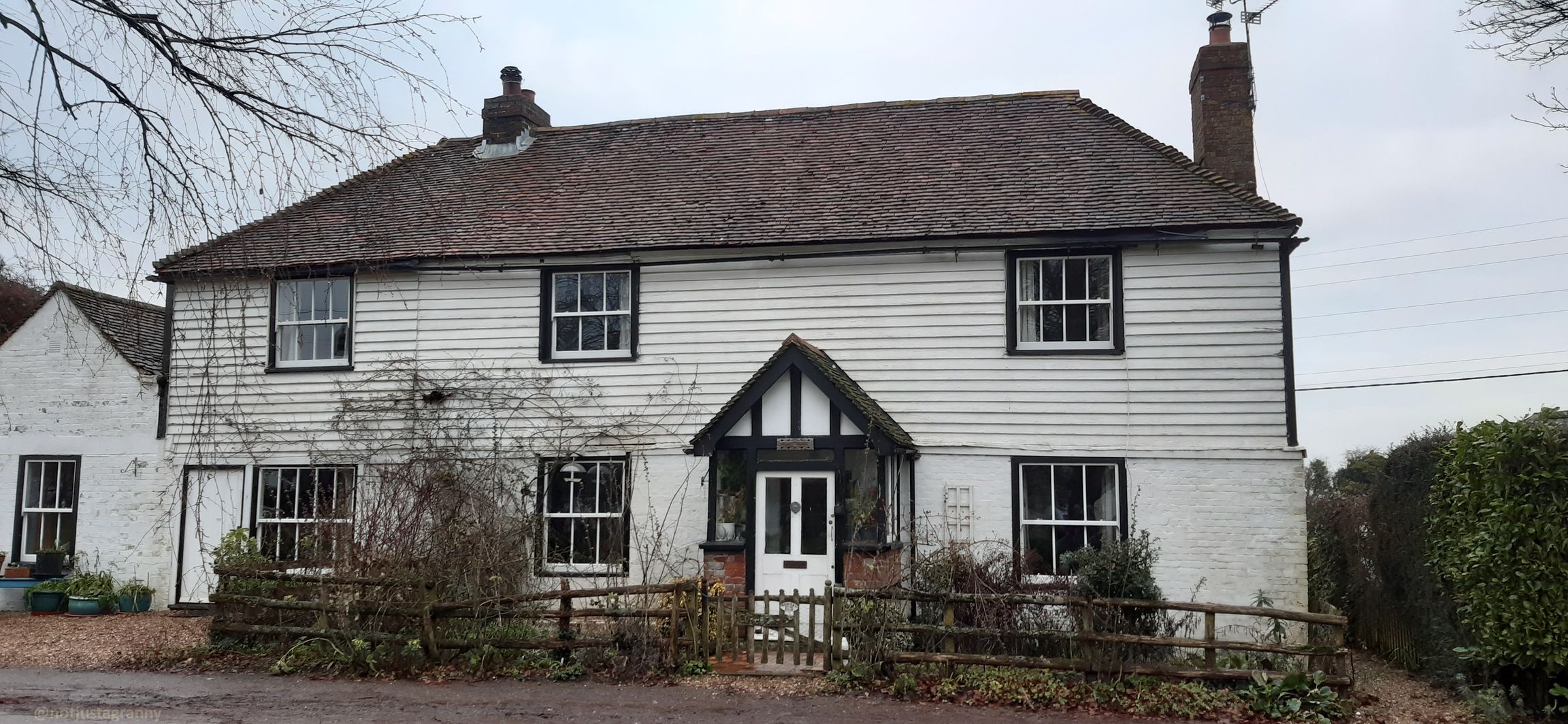
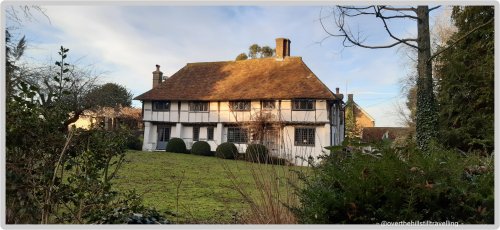
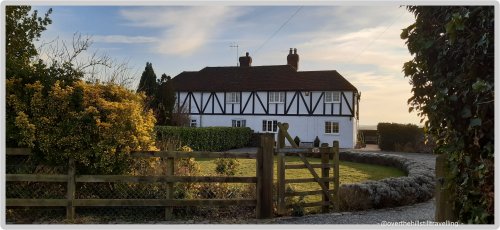
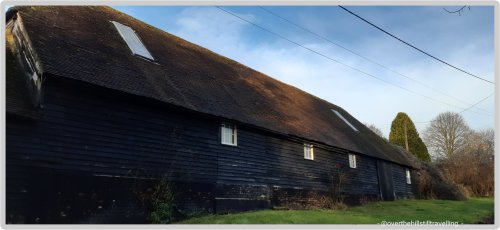
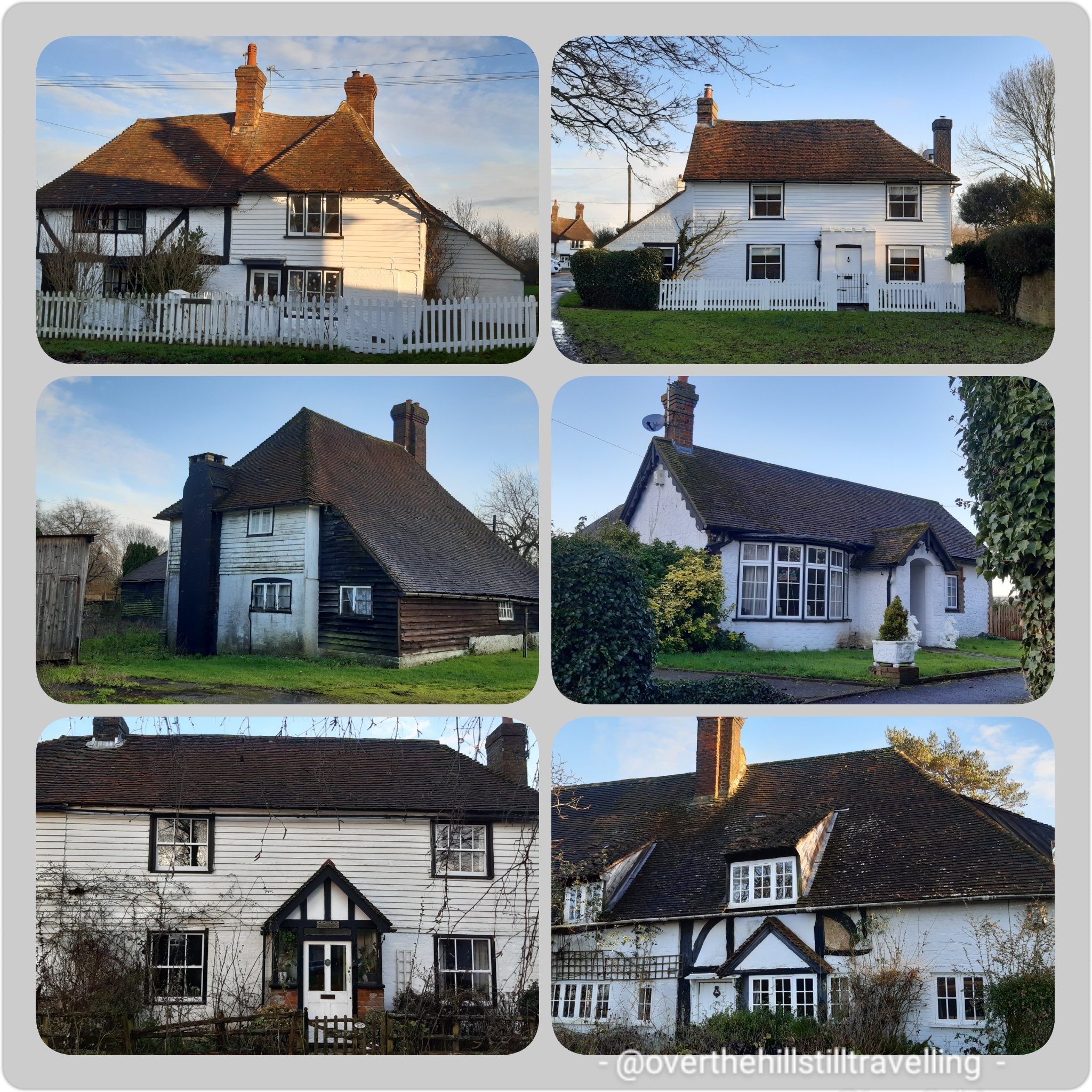
The houses are mostly white clapboard and so pretty. Many of the houses and barns in the area are listed and circa 15th, 16th and 17th century.
Throwley Forstal Forge Farm – literally right out of Beatrix Potter – did you spot the puddleducks? 😄😄
I love them all 🤫🤫😊
A pretty little place, there’s literally nothing more than a scattering of houses and a church. If you need supplies, it’s a 15 minute drive to Faversham.
My latest assignment has not taken me too far afield this time and I find myself in the depths of Kent. Not too far from where I’m located are villages familiar to me; Charing for instance….I stayed there on my pilgrimage to Canterbury in September. 🙂 so that’s been a fun discovery. I am of course familiar with Faversham having stayed there in 2017 during my Chaucer’s Canterbury Tales walk from Southwark Cathedral to Canterbury Cathedral, as well as which I finished my latest stretch of the English coast there last Saturday – from Whitstable to Faversham. The Sun Inn; 14th century inn, was the perfect place to stay and I’d love to stay there again sometime.
The Sun Inn, Faversham – 14th century inn with the best room and bath ever
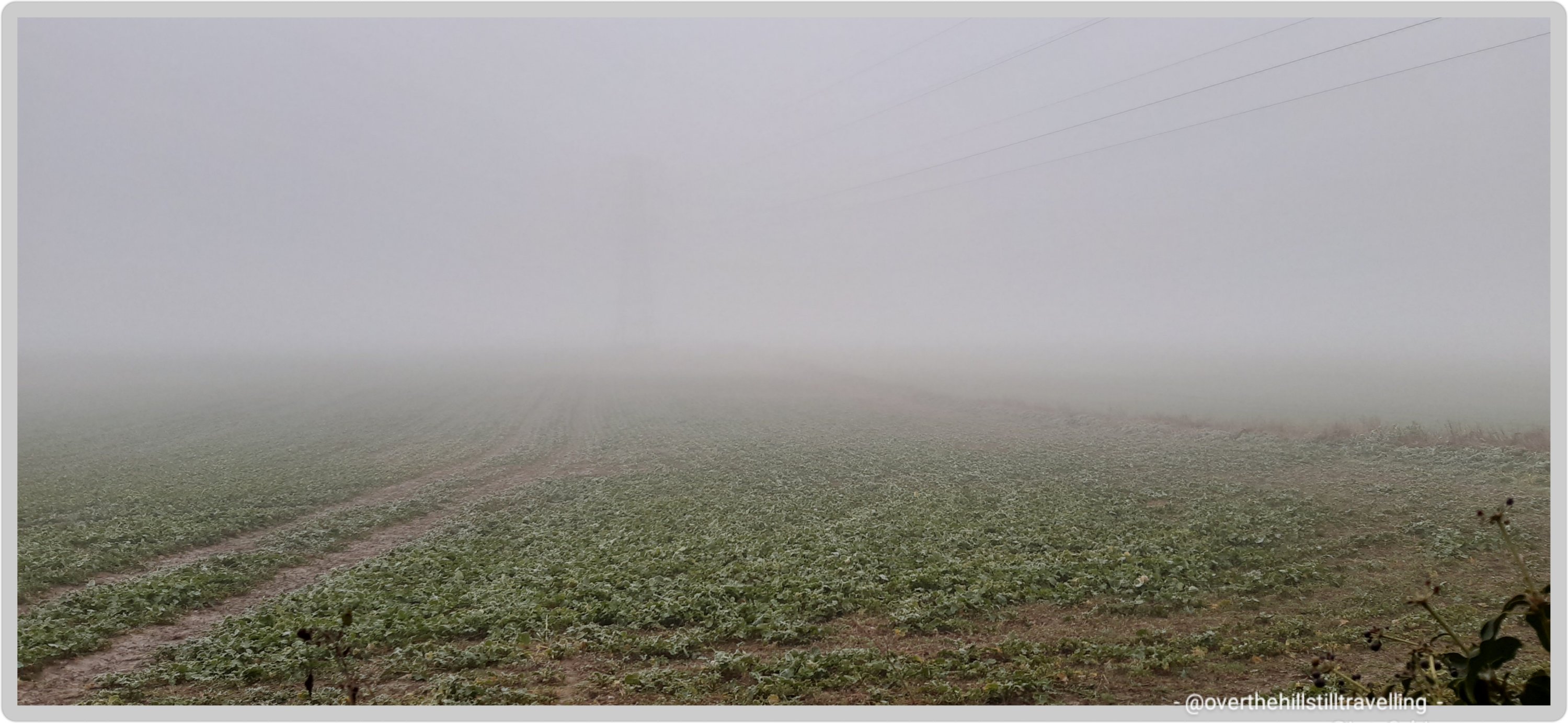
However, the house where I’m working is toooo far from Faversham for me to do any proper exploring, but I have a few country roads I can follow and so far I’ve had 2 good days to get out and about. Of the 5.5 days I’ve been here so far, 1,5 produced rain and 2 produced fog…so I’ve only managed 2 proper walks since arriving on Monday 4th. The sun looks like its burning through the fog so hopefully tomorrow will be a good day for walking.
a foggy day in Kent
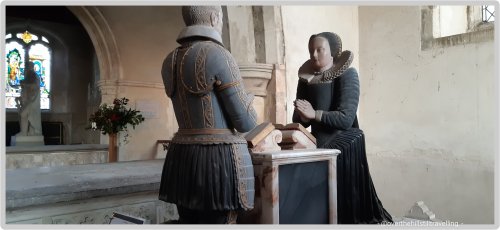
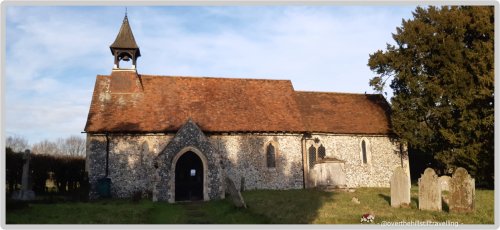
In the meantime the two walks have unveiled some gems as far as churches are concerned and some amazing houses…..some of which date back to the 15th century. In fact the house I’m working in was built in 1435!!! It’s pretty awesome with some fabulous beams and a huge fireplace. The floors are really wonky and sink in the middle and without heating, its VERY cold!!! I’ll let the photos do the talking
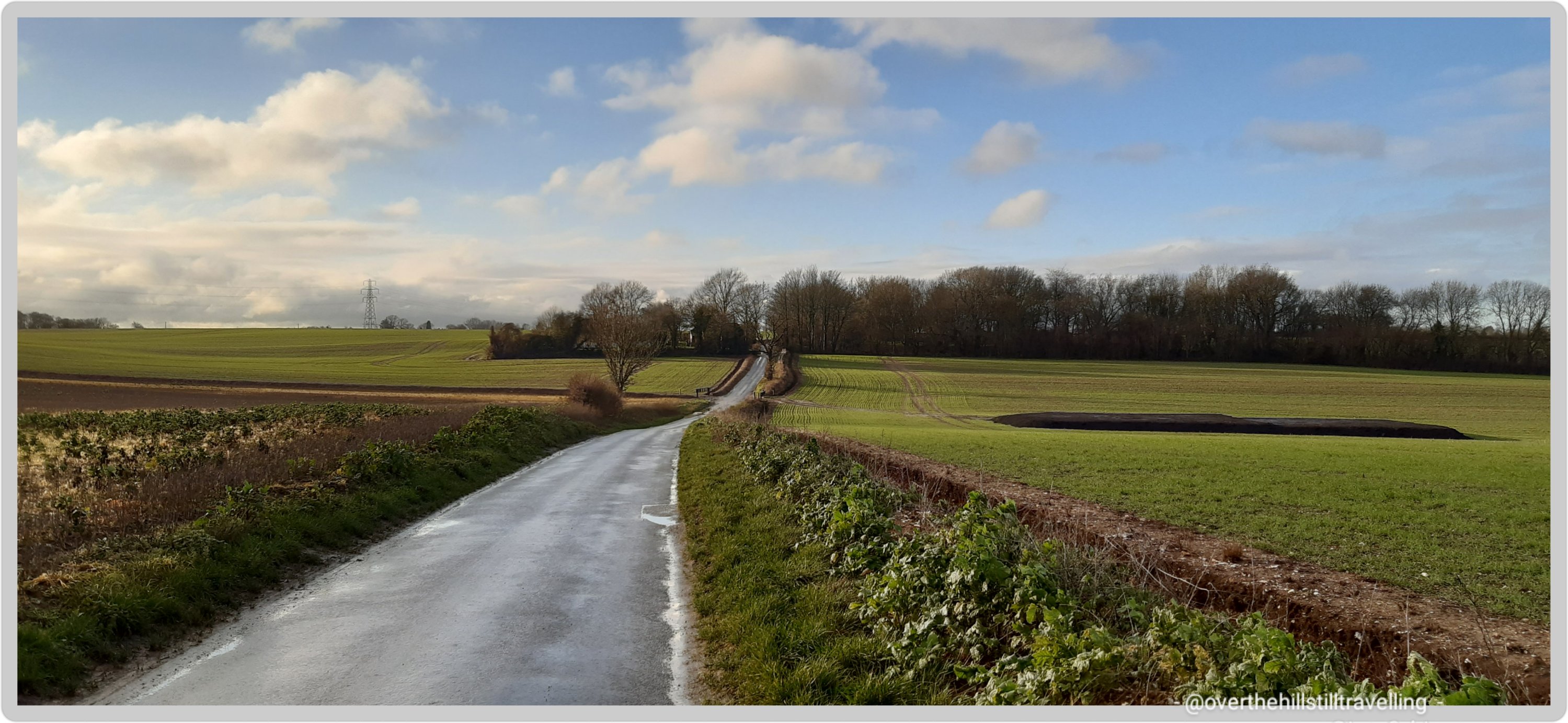
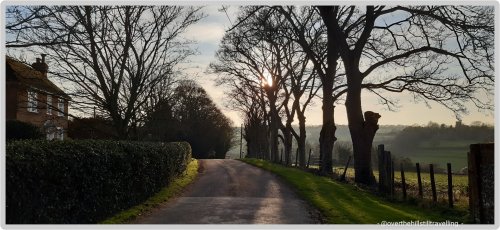
the long and winding road…..
St Michael and All Angels Church, Throwley
circa 12th, 13th, 14th and 15th centuries
St Lawrence’s Church, Leaveland, Kent
St Lawrence’s Church, Leaveland, Kent
St Lawrence’s Church, Leaveland, Kent
St Lawrence’s Church, Leaveland, Kent
a charming little church with the loveliest nativity scene
wonderful architecture
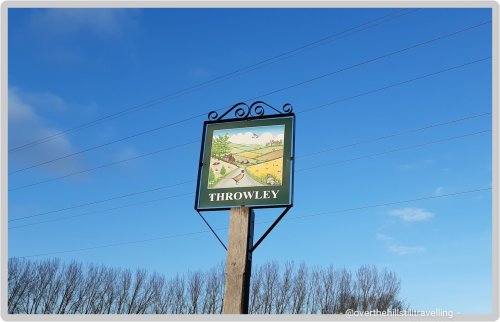
quirky features and a village sign
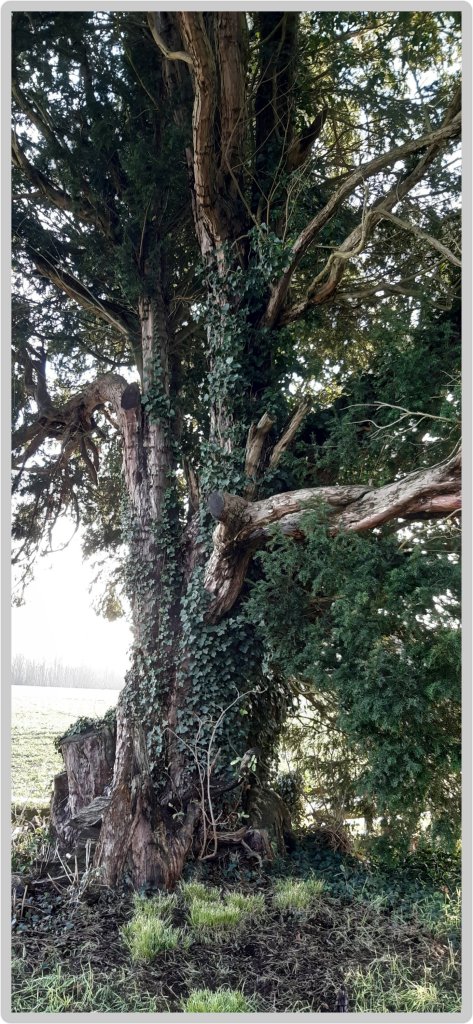
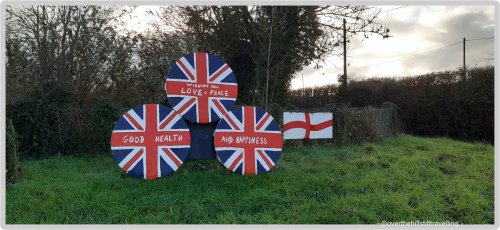
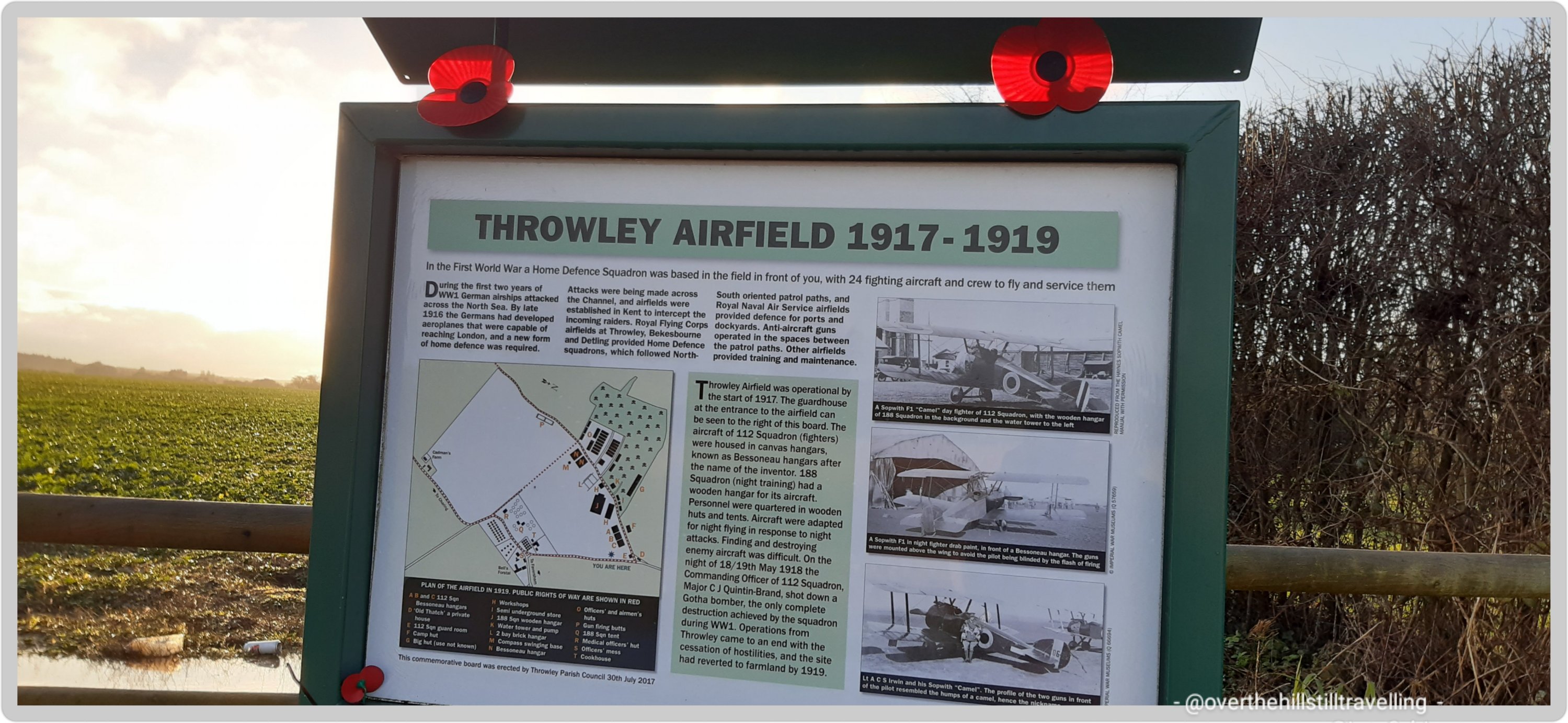
winter trees without their clothesThrowley Airfield 1917-1919The Old School 1873-1935houses at Throwley Forstal
Although I haven’t been able to get out that much, I have walked far and wide, clocking up 16.3 kms over 2 days. Its something of a challenge to find different routes when you’re limited to long stretches of road and a 2 hour break. If I had longer, I’d walk to Faversham for sure. It’s only 5 miles away but would take 1hour 35 minutes to walk there and no time to return before my 2 hours is up!!
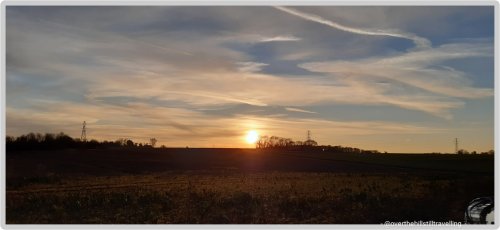
I have though seen 2 beautiful sunsets and enjoyed the lengthening shadows of the graveyard. Hopefully tomorrow will bring fine weather so I can get out again…
walk 1 sunset
walk 2 sunset
lengthening shadows
p.s. there may be a problem with the photo galleries…..if there is I will fix them later…..they look fine via my computer, but on my phone there seems to be an issue….sorry for that.
Following on from my recent walk from Margate to Whitstable via Reculver, researching the Roman fort uncovered the information that Reculver too had been mentioned in the 1086 Domesday Book. 😃😃👏👏 Roculf: Archbishop of Canterbury. Church, mill, 5 salthouses, fishery.
By no means a huge number, and considering that 13,418 (settlements) : cities, towns, villages and hamlets are mentioned….150 is not that many, but it’s way more than most have visited.
It’s still astounding to discover that many English people who have grown up in the country, have no idea of its existence.
1086 is only one of the most significant dates in English history following on from the 1066 Battle of Hastings, and yet…..
My original intention was to visit 101, but it seems that my travels and my job will take me to many more than I anticipated.
I’ve wanted to walk to Reculver from Broadstairs ever since we first visited the place some years ago, but never seemed to find the time, it also did not seem doable. But now with my crazy decision to walk the entire English coast over the next 5 years, it became doable ….😁😁 and in comparison to the distances I’ve since covered on my various walks, it was easy peasy
When I set off from Margate last week I could see the ruins of the church farrrrr away in the mists of time and remember thinking ” oh gosh, it’s so far, will I be able to do it ?” But it was easier than expected, and voila
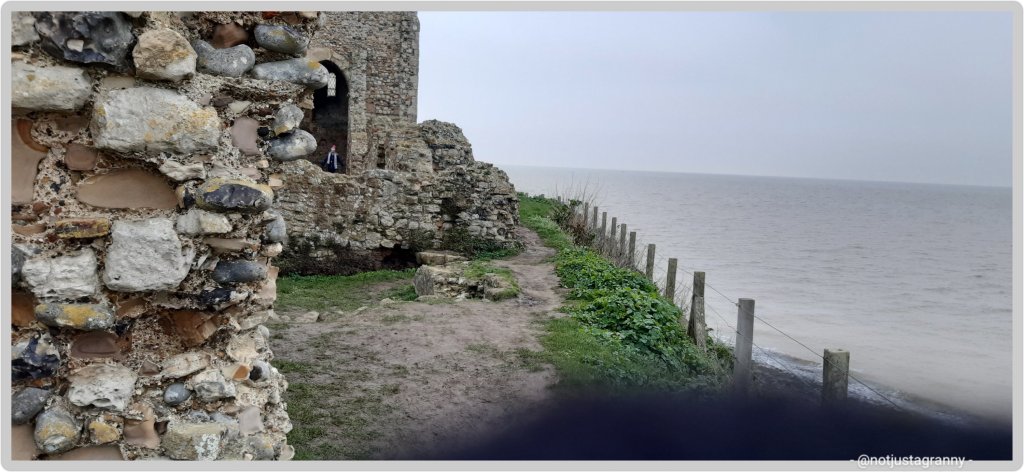
St. Mary’s Church, Reculver
St Mary’s Church, Reculver, was founded in the 7th century as either a minster or a monastery on the site of a Roman fort at Reculver, which was then at the north-eastern extremity of Kent in south-eastern England. In 669, the site of the fort was given for this purpose by King Ecgberht of Kent to a priest named Bassa, beginning a connection with Kentish kings that led to King Eadberht II of Kent being buried there in the 760s, and the church becoming very wealthy by the beginning of the 9th century. Ref wikipedia
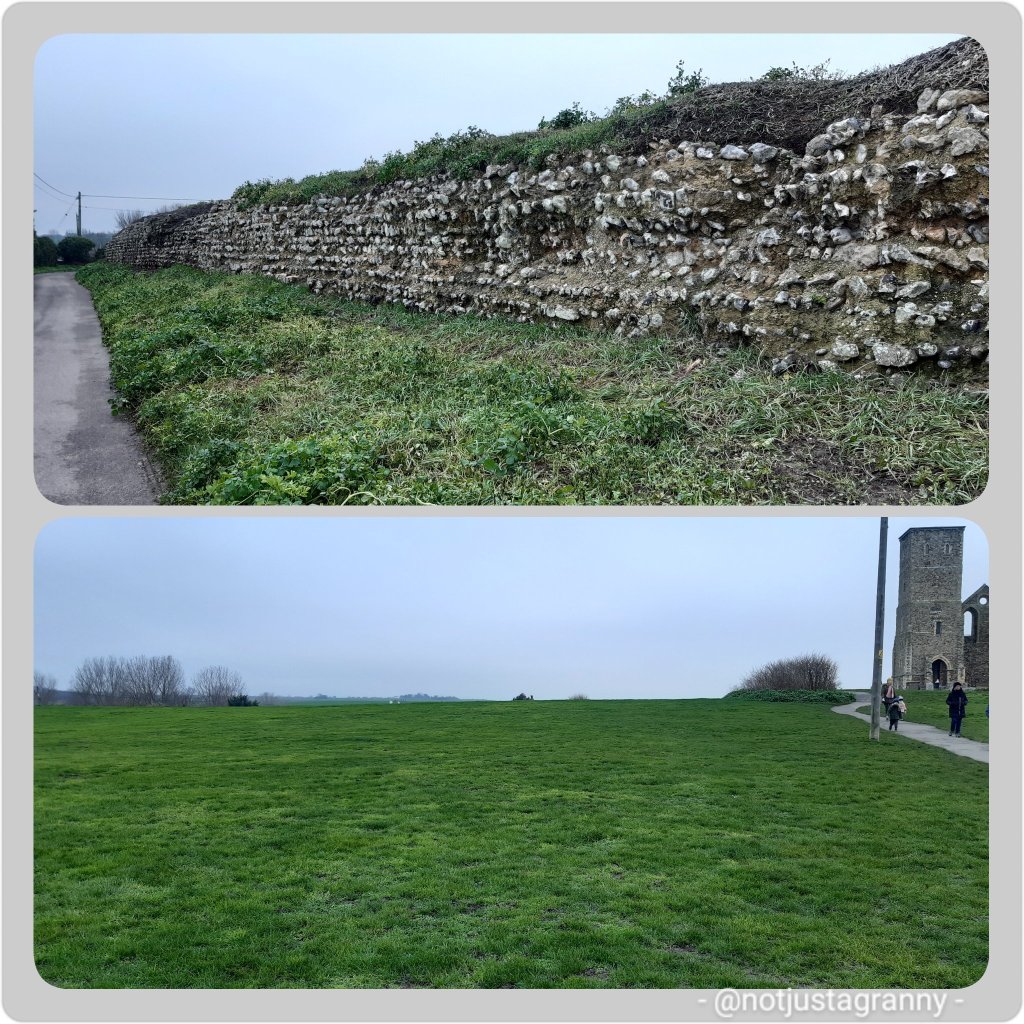
Will this too be eaten by the ever encroaching seaA Roman fort, now long gone The remains of the Roman wall, and where the fort once stood
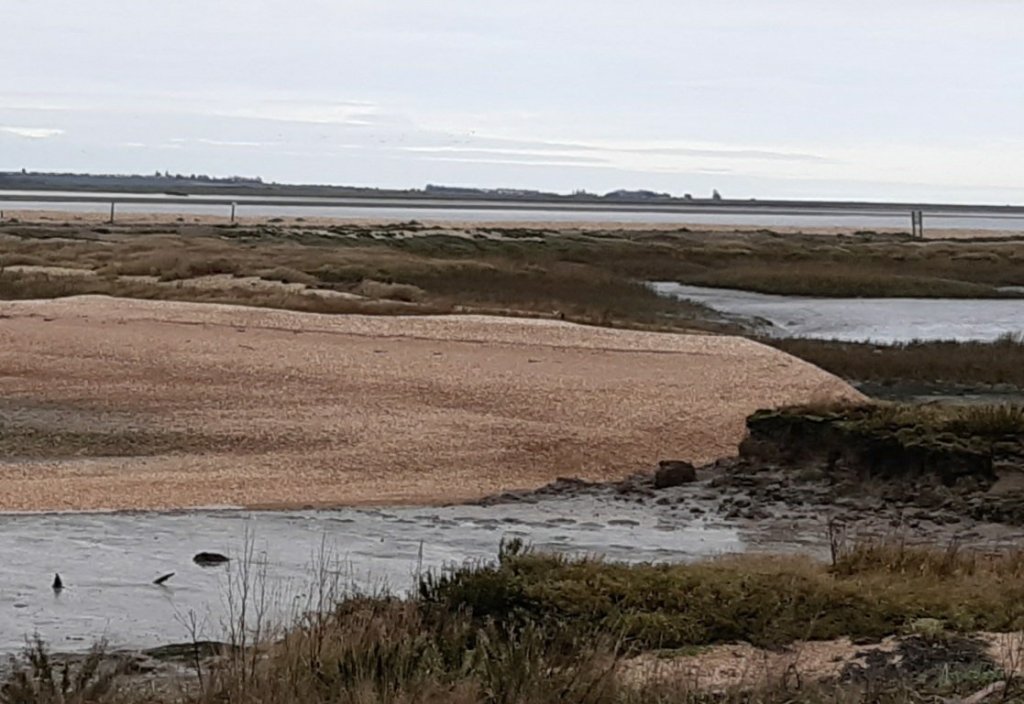
It’s a fascinating place and I’m certainly going to follow up on more of the history and I feel another visit is warranted. I noticed on my way to Reculver that there is a walk along the River Wantsum; which once cut off the Isle of Thanet from the mainland.
The River Wantsum
I 🔮 another walk in the future 😉😄😄 except it will not be in winter!! And I’m not walking across any mudflats….more of that later 🤪🤪














































































 Not Just a Granny
You must be logged in to post a comment.