So my lovelies, the time is almost nigh!! At 10:07 on 1st September; 3 weeks from today (whoop whoop), I’ll be on the train heading North. Destination Berwick Upon Tweed.
I start walking the Northumberland coast path that same night, albeit staying in Berwick for 3 nights…I’ll explain later.
Then in exactly 1 month from today, I start my official walk along Hadrian’s Wall. 4 years to the day from when I started my Portuguese Camino 😊😊
So bloody excited. I can’t tell you 💃💃💃 = my happy dance.
So wow, suddenly it’s only 3 weeks to go and I’m on my way.
The dates have been identified, there and back travel tickets booked, all accommodation is booked, Airbnb hosts contacted and confirmed, the routes identified, daily kilometres from here to there measured (repeatedly 🤪🤪), what to see noted, where to go planned, what to do listed, ferry trip booked, where to get my passports stamped noted.
Pepe is packed, Gemini and I have been practicing like mad – getting fit, which shoes to wear decided on, budgets calculated and as much planning as I can possibly do, done!!!
And just because, after weeks of planning and noting the route each day on the Northumberland Coast Path with the relevant distances, yesterday I only decided to rejig days 4-7 and fiddled about with the distances. But now it is a lot smoother, with one day shorter and another longer.
I confirmed yesterday that I can use my senior bus pass on all the bus routes that I need to use between end of day’s destination and return the next day. I’m going to be doing quite a bit of bouncing back and forth due to accommodation on the NCP.
I’m copying everything into an old-fashioned method of keeping records – a notebook 😁😁
Northumberland Coast Path here’s looking at you, and finally 🤞🤞 after a whole year of waiting Hadrian’s Wall…I see you!!
Now it’s a waiting game; 21 days and counting.
As for you Covid-19 with all your variants…..you know what you can do…😂😂😂
This stage was actually split into 2 really because I stayed for Trooping the Colour to see the Queen’s troops march past and of course my favourite the King’s Troops Royal Artillery…and I wasn’t disappointed. The whole affair was muted in comparison to previous years due to Covid-19 and we didn’t get to see The Queen or any of the Royal Family ride by in their carriages because the whole affair was held behind closed walls.
And so after a goodnight’s sleep I meandered down to the Long Walk and stopped to watch the procession of Troops. First The Queen’s Household Cavalry who looked absolutely splendid as always, then the Blues and Royals Cavalry who also looked absolutely splendid. The Footguards had already passed by the time I got there, and the Royal Artillery likewise. But I got to see them afterwards which is always a treat.
The Queen’s Household CavalryBlues and Royals CavalryKing’s Troop Royal Artillery
We were also treated to a Red Arrows flypast which was well exciting, and I’m so glad I stayed for that…even though it was probably going to make me late for my evening train home!
Red Arrows flypast
Once the Red Arrows had gone I set off to find somewhere to recharge my phone coz the battery had pretty much depleted itself with all the photos and videos.
I ended up at the Three Store and before I knew what had happened I had upgraded to a new contract and obtained a new phone, a tablet and a speaker with alexa installed – how did that happen? It also took well over 2 hours to transfer all my media and phone information, so by the time I left Windsor, it was already 15:13….wayyy behind schedule now! And my backpack was a lot heavier than when I started the day due to having to stuff in all the equipment! I felt it.
So my km’s in Windsor amounted to 2.95km with 10,314 steps, and the actual walk itself was 14.46kms over 3hours 53 minutes and 24,196 steps (just to be specific). An easily manageable distance between bridges.
Setting off I made my way to the river and yes, I bought an ice-cream LOL It was already quite hot and I figured I may as well start the day off on a good footing – food wise. Anyway the ice-cream I had bought the day before was delicious, so I figured a repeat wouldn’t be a bad idea…the chocolate at least would give me energy.
From there I meandered upstream a short way and relaxed on a bench while enjoying my treat….it’s not like I wasn’t already well behind schedule… The swans gathered for a sample, but we agreed it wouldn’t suit their digestive systems, so I declined to give them any LOL
Gimme, gimme, gimme….no!
Windsor Bridge is at least an 800-year old crossing point, although the present bridge was only built in 1822, and the first arched bridge over the river. In 1736 is was possible to walk over alive for 2d, while being being carried in a coffin cost 6s 8d. Weird!!
Windsor Bridge
I eventually got myself moving, although I can tell you for sure, that I was not in the mood for walking…but needs must, so off I went – crossing Windsor bridge to Eton
Eton
I soon found the path and crossed a lovely wide open green space. Dozens of sun-worshippers dotted the grass, all very sensibly socially-distanced (technically we were still in lockdown, although you would never have guessed).
Socially-distanced – Windsor Castle in the background
The path soon reached a lovely shady stretch which was a relief since it was extremely hot that day.
Ahhhh shade!!
Just before I entered beneath the trees I stopped for one last glimpse of Windsor Castle. Windsor is derived from the Anglo-Saxon ‘Wyndesore’ meaning ‘winding shore’, which probably refers to the Thames’ twisting course. The castle began as a fortress by William the Conqueror, is The Queen’s main home and the resting place of many monarchs, including Henry VI.
I wound my way along the path, walking beneath shady trees, crossing small bridges over little inlets and creeks, passing under bridges and stopping to photograph the graffiti
Bridges Graffiti on the underpass
and meandering alongside fields ripe with crops. The sky was a gorgeous blue with white fluffy clouds lazily puffing by and a gentle breeze worked hard to keep me cool.
Through fields of green This little river was ever so tempting, how much I would have loved a swim
I was on the lookout for a specific spot, a riverside seat known as ‘Athens’. Athens was an Eton College bathing spot where rules required that ‘boys who are undressed must either get at once into the water or get behind screens when boats containing ladies come in sight’. Mentioned in the guide book I was keen to see this notorious spot, but if it hadn’t been for the fact that I saw a gentleman leaning over looking at it, I would have marched right past! I stopped for a wee chat and hoorah! I finally met someone who was also walking the Thames Path, albeit from a different direction. I am sure though that there were likely others, but I just hadn’t met them. After a brief swapping of notes he went on his way, I captured an image of the rather obscure looking bench and went on mine…onwards, upstream.
Athens
Before long I reached Boveney Lock, ever so pretty and stopped to read the information board. Boveney Lock is set within the ancient landscape of Dorney Common. A dispute ove an unpaid toll in 1375 is thought to be the first mention of a lock at this location. In 1780 there are suggestions of a pound lock, and in 1820 various plans for a replacement lock proposed cuts to the mouth of Clewer Mill Stream because of difficult navigation of the tight bends downstream. The present location was chosen with a timber lock built in 1838. There is an avenue of chestnut trees, planted in the 1800’s that lead to the lock known as ‘Conker Alley’. Mentioned in the Domesday Book, the Manor of Boveney was given to the nuns of Burnham Abbey in 1266.
Boveney LockInformation boards enroute are so enjoyable to read
A short walk later and I reached the beautiful little 13th century church of St Mary Magdalene set back from the river in a field of green grasses. Built from chalk rubble, with a wood clad bell tower housing three bells, its only lighting; a candle (and sunlight). Its origins and history are something of a mystery, and in 1859 the churchyard was thick with gravestones, of which there is now no sign.
St Mary Magdalene
I stepped into the cool shady interior and stepped into another world. A calm air of simplicity enveloped me as I stepped through the door and honestly, I could have just sat there for hours…it was so beautiful and so peaceful.
I spotted the remnants of a medieval wall painting, the colours still quite rich.
Medieval Wall painting
It’s such a shame the purists managed to get their whitewash out, and literally destroyed thousands of these stunning wall paintings in hundreds of churches around the country. Fortunately modern technology has allowed for the recovery of some, but it’s costly and painstaking and not really affordable on the whole. I’ve visited quite a number of churches over the years where they have managed to recover/restore some of these works of art…a legacy we should be proud of.
Looking back
From Boveney Lock, the church is a very short walk upstream. The river was so calm and blue I was tempted to jump in for a swim LOL ….the cool green shady trees would have to suffice
Tranquility
A bit further upstream I spied a lovely building across the river but couldn’t discover what it was. Intriguing and annoying LOL A closer look at google maps tells me it might be Summer River House, but I can’t be sure.
I also spotted Oakley Court through the trees; (a riverside retreat with a golf course – tells you it’s most likely very expensive!!)…wow, it’s stunning. I shall have to go there some time by car. It’s very gothic looking with towers and gingerbread icing trimming and all. Uh yeah…I just had a look…£275 per night hahaha. In my dreams. The description on the website reads: Oakley Court is a Victorian Gothic Mansion House recently renovated and set in 35 acres overlooking the River Thames at Water Oakley in the county of Berkshire which features 118 bedrooms, 118 bedrooms just downstream from Windsor & Eton. Hah! Apparently Oakley Court was built in 1859 as a residence for an Englishman who hoped the Gothic Style would make his homesick French wife happy. General de Gaulle visited, and the building was used in the films: St Trinian’s, Half a Sixpence and The Rocky Horror Picture Show (my 2nd favourite film after Mary Poppins).
Oakley Court
The river wound it’s way lazily downstream and I wound my way sort of speedily upstream, although the river was likely a little bit faster I’m sure, passing through shady glades, alongside fields and islands, passing stunning houses and wondering just who can afford those mansions!!
I’m on the right path
The gravel paths are so much kinder on the feet than the metalled roads.
Without realising it I had walked right by Dorney Lake which featured in the 2012 Olympics and more recently the 2021 Oxford Cambridge Boat Race.
I passed a cycle route marker that told me I had 3 miles to Maidenhead – this was at 17:30 and I knew for sure that I was not going to make my ‘planned’ train at 18:30…oh well
Maidenhead 3kms
Looking across to Monkey Island I spotted a little gazebo through the trees and felt quite envious really…it looked so idyllic, and is apparently on the grounds of a rather grand B&B; Monkey Island Estate Luxury Hotel, and at £203p.n. not that much cheaper than the Gothic pile further downstream….but hey, it’s on an island. Monkey Island possibly means ‘monk’s island’ as it once belonged to Merton Priory on the River Wandle. In 1738 the Duke of Marlborough decorated the fishing lodge ceiling with monkeys!! A hotel since 1840, Edward VII and Queen Alexandra had tea on the lawn with 3 future sovereigns – George V, Edward VIII and George VI.
Looking across to Monkey Island
Passing through a private estate, once again I was overawed by the sumptious houses and the size of their gardens, mostly an array of resplendent colours; rose arbours, and creepers and flowers galore. Nice if you can afford it.
I could hear the hum and then roar of traffic ahead and looking at my map I realised I was soon to pass beneath the M4. Lockdown is essentially over really….we’re back to the business of polluting the air.
The next lock on the route, Bray Lock, soon hove into view and whizzed on by. I think they’re all so pretty and interesting.
Bray Lock – although it looks quiet and restful, the lock-keeper’s job is not – they are busy throughout the day.
Looking back I could see how the river split around the lock island and tumbled over the weir on the far side.
Looking back to Bray Lock
I was nearing Maidenhead now and I am definitely going to have to return to explore the opposite banks of the river…
The Thames Path
The Waterside Inn at Bray-on-Thames looked intriguing and their website tells me it’s: A unique riverside haven in a dreamy village setting, a revered restaurant with elegant quarters, just screams £££ – also very posh!! and a tad more expensive than the other two at £420 per night. Holy moley
The Waterside Inn
I could hear the traffic in the distance and all too soon I was walking beneath this beautiful red-brick railway bridge. Maidenhead Railway Bridge, completed by Brunel in 1839 carries the Paddington-Bristol railway line and appears in Turner’s 1844 painting Rain, Steam and Speed on the GWR
The Sounding Arch – Maidenhead Railway Bridge
A short walk later, passing some stunning houses
stunning houses and amazing gardenshow gorgeous is this house!!
and finally, quite exhausted from the heat and feeling the 2 days distance, I was crossing the river via Maidenhead Bridge.
Looking back across the river from whence I came Looking downstream from Maidenhead Bridge towards the railway bridge
Hoorah! I had reached my destination for Stage 7…it was now 18:38, and with another 2 km to reach the station, I had definitely missed my 18:35 train, as well as the next 2 trains as it transpired… I was so exhausted by the time I reached Maidenhead that I simply could not walk any faster, and so I had to wait for the 19:35 train and got home at 22:45….
Enroute to the station I passed one of the 2012 Olympic Gold Post Boxes; painted to celebrate the Paralympic success of equestrian Sophie Christiansen….awesome that they still paint them gold.
Gold painted post box
This section of the river; Staines to Maidenhead is seriously gorgeous and I so enjoyed my two days of walking. Both days were super hot and I must admit I found it hard going at times, but the serenity of the shady copses, the extraordinary history and the sheer joy of just walking more than made up for it. Rural mixed with urban, land lubbers and canal boat dwellers, bridges and locks, historical sites and a castle made for a most interesting jaunt along the Thames. I am so looking forward to walking Stage 8 Maidenhead to Marlow & Stage 9 Marlow to Henley. Both easy distances, so I may jig them a wee bit and see if I can squeeze more kms out of the day and squeeze 3 into two and get as far as Reading.
Although Stage 7 wasn’t as laden with history as with the previous stages, particularly through London and Stage 6 to Windsor, it was still so interesting, and from what I have gleaned from the guide book, most of the history lies on the opposite bank from where the official path runs. It’s a bit like a switchback, the River Thames; an optical illusion where you think something is one side, but as you get closer you find it’s not.
Talking of the guidebook, all writing in italics is either from the guide book or google.
And that brings to a close the 7th stage of my Thames Path walk. I’m hoping to do another 2 stages before year end, but it’s looking tricky time wise…I’m still following the Saxon Shore Way and walking the English Coast Path from Dover to Rye in October, with my jaunt along the Northumbrian Coast and Hadrian’s Wall in September… so we shall see.
Although it was a dream of mine to sail into Venice on a cruise ship after watching them sail into Venice from the sidelines, I’m really glad they’re taking this action. The damage caused is shocking and we really must take more care of the heritage of this fabulous place.
What are your thoughts on this action? Have you sailed into Venice on a cruise ship? Should cities like Venice be taking similar action to prevent further damage caused?
Eighty-one years ago today the Battle of Britain officially started, 10th July 1940.
Please spare a thought for all those who participated, from all Nations. Many would be killed during the Battle, some would die months later from wounds and burns sustained during those critical months, some would be killed later in the war. Others would carry their mental and physical scars for the rest of their lives.
We believe that only one Allied Battle of Britain airmen is alive today, Paddy Hemingway. Paddy celebrates his 102nd Birthday next week. We are not aware of any Luftwaffe airmen that survive from the Battle.
2938 Allied Airmen were entitled to wear the ‘clasp’ as a Battle of Britain airmen. 544 were killed or died from wounds sustained in the Battle. 795 further airmen would be killed by the end of the war.
All they ask is to be remembered….
Please ‘like’ and ‘share’ this, and the Kent Battle of Britain Museum page, and help us commemorate our Heroes ‘The Few’. Thank you
One of my absolute favourite memorials in London is the Battle of Britain memorial on Embankment in Westminster, opposite the London Eye.
Battle of Britain Memorial in London
Perched above the White Cliffs of Dover you will find the memorial to The Few at Capel-le-Ferne.
‘Never in the field of human conflict was so much owed by so many to so few’. Winston Churchill. 20 August 1940.
Referring to the ongoing efforts of the Royal Air Force and Polish fighter crews No. 303 Squadron RAF who were at the time fighting the Battle of Britain, the pivotal air battle with the German Luftwaffe, with Britain expecting an invasion. Pilots who fought in the battle have been known as The Few ever since; at times being specially commemorated on 15 September, “Battle of Britain Day”.
The Sculpture His view across The English Channel to France 🇫🇷
Memorial to The Battle of Britain at Capel le Ferne.
Still one of my favourite places to have visited in my travels around England.
I remember seeing a film, in my late teens, back in South Africa called The Battle of Britain. It had a profound effect on me and I sobbed for days after, and never imagined that one day, not only would I be living in Britain, but that I would fall in love with London and see all these amazing places. I certainly NEVER imagined for even 1 second that I would one day become a British citizen.
Here’s to The Few, from all corners of the world, long may they be remembered…
I love history and I love the English language, and this little piece combines both. I’m constantly fascinated by the origin of everyday expressions and sayings and traditions…we learn them growing up and repeat them accordingly without knowing or understanding their origin.
Over the years, on various tours at ancient castles etc the guides have frequently imparted little gems of information…like the saying: getting a square meal. My daughter sent me these last night so I thought I’d share them. Love this language so much…
So without further ado…
They used to use urine to tan animal skins, so families used to all pee in a pot & then once a day it was taken & Sold to the tannery…….if you had to do this to survive you were “Piss Poor”
But worse than that were the really poor folk who couldn’t even afford to buy a pot……they “didn’t have a pot to piss in” & were the lowest of the low
The next time you are washing your hands and complain because the water temperature isn’t just how you like it, think about how things used to be. Here are some facts about the 1500s:
Most people got married in June because they took their yearly bath in May, and they still smelled pretty good by June.. However, since they were starting to smell . …… . Brides carried a bouquet of flowers to hide the body odor. Hence the custom today of carrying a bouquet when getting Married.
Baths consisted of a big tub filled with hot water. The man of the house had the privilege of the nice clean water, then all the other sons and men, then the women and finally the children. Last of all the babies. By then the water was so dirty you could actually lose someone in it.. Hence the saying, “Don’t throw the baby out with the Bath water!”
Houses had thatched roofs-thick straw-piled high, with no wood underneath. It was the only place for animals to get warm, so all the cats and other small animals (mice, bugs) lived in the roof. When it rained it became slippery and sometimes the animals would slip and fall off the roof… Hence the saying “It’s raining cats and dogs.”
There was nothing to stop things from falling into the house. This posed a real problem in the bedroom where bugs and other droppings could mess up your nice clean bed. Hence, a bed with big posts and a sheet hung over the top afforded some protection. That’s how canopy beds came into existence.
The floor was dirt. Only the wealthy had something other than dirt. Hence the saying, “Dirt poor.” The wealthy had slate floors that would get slippery in the winter when wet, so they spread thresh (straw) on floor to help keep their footing. As the winter wore on, they added more thresh until, when you opened the door, it would all start slipping outside. A piece of wood was placed in the entrance-way. Hence: a thresh hold.
In those old days, they cooked in the kitchen with a big kettle that always hung over the fire… Every day they lit the fire and added things to the pot. They ate mostly vegetables and did not get much meat. They would eat the stew for dinner, leaving leftovers in the pot to get cold overnight and then start over the next day. Sometimes stew had food in it that had been there for quite a while. Hence the rhyme: Peas porridge hot, peas porridge cold, peas porridge in the pot nine days old. Sometimes they could obtain pork, which made them feel quite special. When visitors came over, they would hang up their bacon to show off. It was a sign of wealth that a man could, “bring home the bacon.” They would cut off a little to share with guests and would all sit around and chew the fat.
Those with money had plates made of pewter. Food with high acid content caused some of the lead to leach onto the food, causing lead poisoning death. This happened most often with tomatoes, so for the next 400 years or so, tomatoes were considered poisonous.
Bread was divided according to status. Workers got the burnt bottom of the loaf, the family got the middle, and guests got the top, or the upper crust.
Lead cups were used to drink ale or whisky. The combination would Sometimes knock the imbibers out for a couple of days. Someone walking along the road would take them for dead and prepare them for burial.. They were laid out on the kitchen table for a couple of days and the family would gather around and eat and drink and wait and see if they would wake up. Hence the custom of holding a wake.
The country is old and small and the local folks started running out of places to bury people. So they would dig up coffins and would take the bones to a bone-house, and reuse the grave. When reopening these coffins, 1 out of 25 coffins were found to have scratch marks on the inside and they realized they had been burying people alive… So they would tie a string on the wrist of the corpse, lead it through the coffin and up through the ground and tie it to a bell. Someone would have to sit out in the graveyard all night (the graveyard shift.) to listen for the bell; thus, someone could be, saved by the bell or was considered a dead ringer.
And that’s the truth….Now, whoever said History was boring? 😁😁😁😁
One of the best aspects of the English language is how its a conglomeration of different languages like French and Latin with a smattering of others in the mix.
There are hundreds of these little gems. I really must, one day when I’m no longer jaunting around the country, compile a list.
Do you know of any other sayings or expressions we use daily (or infrequently)? I’d love for you to share. 😃😃
Hot on the heels of Stage 4 between Richmond and Hampton Court, from here on I was breaking new ground. Except for brief forays along the banks of the Thames at Windsor, Oxford, Henley-on-Thames and Reading when visiting those places or working there, I have never walked along the banks of the river beyond Hampton Court. A whole new adventure awaited; places to go and things to see!
As mentioned in Stage 4, it was now taking longer and longer to get to my starting point and the train tickets were getting to the point where it would cost more or less the same to stay in an AirBnb overnight as pay for a daily ticket. So after this stage I will continue my journey in 2 day increments or more…probably a 4 day stint would be good at some stage.
I arrived at Hampton Court Station just after 10:40 having discovered via a very helpful station assistant in Ramsgate, that if I bought a same day return, I could in fact leave before 09:35, and also…today was Saturday, so I could leave much earlier than usual; which I duly did.
Good morning Hampton Court Bridge
Because it was still relatively early I decided to have a short excursion onto the little promontory for a quick sandwich and some tea; Cigarette Island Park, juts out into the Thames and offers superb views of the river and the palace. Not sure I like the name of the park…but still, it’s pretty and cool and green.
Fab view of the palace and river for breakfast
Now in East Molesey on the south bank of the Thames, after my tea and yum yums, I set off into the wild blue yonder…what will I find? First off some photos of the area, and a brief history…Hampton Court Bridge was opened in 1866 at the expense of a local man who lived in the area, Thomas Newland Allen (his coat of arms adorns the bridge). Originally a toll bridge, allowing Mr Allen to recoup his outlay, it was bought by the Metropolitan Board of Works in 1876, and the toll was lifted…I believe the locals were pleased – the National Anthem was played by the band of the 3rd Surrey Militia and there was a firework display!! I can’t imagine them doing that today!!
East Molesey – I just love this little house/storeCoat of Arms – Thomas Newland Allen. Love this design
Looking across the bridge to the Mitre Hotel (I had tea and scones with jam and cream there one day), I was reminded of the history of the hotel : the all new Mitre Hotel where quirky British sensibility meets elegant authentic luxury on the banks of the Thames…as it says on their website 🙂 Origins date back to the reign of Henry VIII. The building has been reconstructed since 1665 and is Grade II Listed as a mid-18th century edifice by Historic England. It is widely reported that The Mitre was built in 1665 at the direction of Charles II as a ‘hostel for visitors to the Palace’. The Mitre is on the site of The Toy, which originally stood on the opposite side of the road, near the Trophy Gates of the Palace… and is mentioned in 1653 in the Parliamentary survey of Hampton Court as a Victualling House. This house was famous for the convivial meetings held there by the “Toy Club”, of which William IV, then Duke of Clarence, was President. ref wikipedia
Mitre Hotel
Moving on, within a few paces I encountered my first lock of the day; East Molesey.
Molesey Lock
A stone’s throw from Hampton Court Palace is Molesey Lock, built relatively recently in 1815 by the Corporation of London. Before this lock was built, Hurst Park (on the south bank by the lock) was known as Moulsey Hurst. During droughts, the Thames was liable to become too shallow for river craft to pass through. The heavily laden barges were held up, sometimes for weeks at a time while the bargemen waited for the weather to turn. When it did, the higher water levels allowed the barges to float through. The lock’s 1905 rebuild was carried out to accommodate the long 200ft naval craft built at Platt’s Eyot, just upstream of the lock. Between the 1800s and early 1900s, Molesey was probably the most popular lock on the Thames – on summer Sundays. ref their site
Molesey Lock
I was ever so lucky to have another fine spring, almost summer’s day with blue skies, puffy white clouds and a soft breeze that kept me cool for most of the day.
Lovely open pathway makes for easy walking
Heading towards Walton-on-Thames, the path is wide and very rural. I don’t often have ‘house envy’ having already owned a couple of houses back in South Africa and all the accompanying headaches, but oh my word….look at those houseboats! whoa. It looks heavenly, although I’m sure it’s probably quite noisy living on the river.
Fab.U.lous houseboats
Again I was enchanted by the fabulous cherry blossoms and the many bluebells along the route. They really are gorgeous, just a shame they don’t last long.
Cherry Blossom 🌸lots of wonderful bluebells have flowered along the path…
I passed alongside Hurst Park and stopped briefly to look at what to expect ahead
Hurst Park – you are here! 😃 – heading upstream, river to my right
A little further on and I was amused by the antics of a little browney beige dog. He was splashing around in the river, then bounding out, running ahead of his entourage, hiding behind overgrowth on the river banks and when his ‘servants’ neared, he would bound into the river, splash about and jumping out run ahead and do the same all over again. It was ever so cute and went on for quite a while. He had so much fun! Lucky dog, I wished I could just jump in and splash about….approaching midday, it was getting quite hot.
Cute dog 🐕😍 had so much fun
At the next Thames Path direction marker, I could see Garrick’s Temple to Shakespeare across the river. I worked in Hampton once some years ago, so had the pleasure of visiting that little park on one of my many walks. Nearby is Garrick’s Villa where he lived : David Garrick became the lessee in 1754 and then bought the property in October that year, making it his country retreat and a place of recreation where he and his wife frequently entertained their friends. He embarked on extensive alterations inside the house and, either now or at a later stage, employed Robert Adam to re-design the facade in the classical style then in vogue. The house has a fascinating history if you’d like to learn more.
Garrick’s Temple to Shakespeare
Garrick’s Temple to Shakespeare, Hampton
David Garrick lived here – we don’t last as long as (some) bricks and mortar
The path runs alongside the river here without too much urbanisation, but with terrific views across the waters to Hampton. Garrick’s Ait on my right, I could see St Mary’s Parish Church across the river.
St. Mary’s Church, Hampton
Not much further along and I discovered the remarkable Memorial Sundial in Buckingham Gardens in West Molesey. I spent some time here reading as many of the plaques as I could see. The sun was right overhead and almost blinding, but it looks absolutely fascinating. Did you know that the Vikings sailed this far up the river!?? Apparently to raid Chertsey Abbey! Wow. Seriously, after all the stuff I’ve read about the Thames and London etc, I never knew that they travelled so far inland. I have not been able to find much information beyond this website about this amazing memorial, but there are some super images on the web.
Memorial Sundial West Molesey
Sundial
Vikings sailing up the Thames
Sundial
Hurst Park has a fantastic variety of wild life; fish and birds in particular. The river upstream of London is so much healthier for them.
The path too is super, wide and open albeit without much shade, which is always appreciated on a hot day. I got sunburned despite lashings of sunscreen.
So easy to follow…
A little further on and across the river from me was Platt’s Eyot, which sadly just 10 days later suffered a terrible fire that destroyed the warehouses and boat yard. Sadly one of the boats destroyed was one of the last remaining Dunkirk evacuation vessels.
Platt’s Eyot – no idea at the time it would burn to the ground in just a few short days
I loved all the canal boats tied up alongside the banks of the river…it must be such a different lifestyle living on a boat on the river. I think I’d like to try it out for a few months at some stage – perhaps when my grandson is older, then he can come visit and stay too ☺💙
Loved the canalboats…so quirky Lots of trees…no proper shade
Although you can’t really see it from the Thames Path, to my left are a lot of bodies of water…the Molesey Reservoirs Nature Reserve, Queen Elizabeth II Storage Reservoir, Bessborough Reservoir, Walton Advanced Water Treatment Works and Island Barn Reservoir, and across the river Sunnyside Reservoir and the Thames Water Hampton Water Treatment Works…..I was ignorant of all until I started looking at my photos on google maps LOL.
There are a lot of islands along this stretch of the river…and locks, and weirs. The path is well marked and you will see frequent direction markers.
Ya can’t get lost!!Secretive islands. That water looks incredibly tempting!
Next up was Sunbury Lock and weir. First built in 1812 Sunbury Lock is a lock complex of the River Thames near Walton-on-Thames, the 3rd lowest of 44 on the non-tidal reaches.
Sunbury Lock
I do love the lock masters houses! They are so pretty and so quaint. I spent a few minutes at each lock and for sure it’s a busy job being a Lockmaster! One of the qualities you would truly need is patience!! Did you know that they’re on duty from 9am to 6pm each day with an hour for lunch between 1pm to 2pm!.
Sunbury Lock..such a quaint house
I didn’t stop much along this stretch and I didn’t take many photos…mostly because the scenery was much the same; a long open path, few trees, and the river. A rare spot of shade and a bench…time for break
the guardians of the path – I really enjoyed the Thames Path along this section…wide and easy walkingA bench is always a good place for a rest..
There are a lot of really fancy houses along this stretch, on both sides of the river, some with gardens that stretch right down to the waterside. Oh and a pub! I was tempted to stop for a coke, but since I had refreshments I carried on till I found a bench under a shady tree and stopped there.
The Weir Pub – tempted to stop for a coke The Weir
Nearing Walton-Upon-Thames I noticed a lot of swans on the river. They seem to be more prolific the closer you get to Windsor. Did you know that Queen Elizabeth II owns all the swans in England. According to the official Royal Family website, the Crown has held the right to claim ownership of all unmarked mute swans swimming in open waters across the country since the 12th Century. Some of the swans are owned by the Vintners and Dyers, but are marked by those companies.
All the Queen’s swans? Swans galore
I continued beneath the lovely Walton Bridge and along the Desborough Cut. Manmade and formed alongside the Thames in order to ‘cut’ out a lengthy double bend in the river…I felt a little bit cheated really. LOL I will probably go back one day and walk that section..🚶♀️🚶♀️
Walton Bridge
As I neared the ferry I noticed a stunningly beautiful, albeit dilapidated house (a 13-bedroom mansion actually), on a small island….this was D’Oyly Carte Island I had read about in the guide book. I chatted to someone about the house and apparently it’s recently been bought and will be restored to it’s former glory. Quite right too, it’s beautiful. If I were a rich (wo)man, I’d buy it…. The house has links to Gilbert & Sullivan : Richard D’Oyly Carte, born in 1844, was a London theatre impresario who brought together dramatist WS Gilbert and composer Arthur Sullivan. A key theatreland figure in the latter part of the Victorian era, he built the Savoy Theatre in London and founded the D’Oyly Carte Opera Company.
D’Oyly Carte Island – my dream house
After oohing and ahhing and just dying to cross the footbridge that leads to the island, I continued on my ‘wey’ LOL (get it…wey 😉) and soon reached the juncture where the River Wey joins the Thames and at this point took the ferry across to the north bank and Shepperton.
If you look at the river on google maps at this point it’s like spagetti junction with the two rivers joining forces and weaving around islands and locks.
Spagetti Junction.. Walking the Thames Path
It was good fun…I love crossing the river by ferry and take every opportunity to do so. I arrived at the ferry point at the same time as a family with two children. They read the notice that said you had to ring the bell to summons the ferry from the opposite bank, but they were a bit timid and didn’t ring it very loudly…so I humoured them and rang it vigorously 😁😁 they nearly had hysterics! But, it worked…the ferry crossed over and picked us up. Hoorah!
the ferry to Shepperton at spagetti junctiondon’t pay the ferry man till he gets you to the other side…safely across the Thames, now in Shepperton
Safely across the river I headed upstream on what was now the north bank…my ultimate destination: Staines-Upon-Thames.
I passed Shepperton Lock on the left and felt sad that due to covid the tearoom was still closed, I would have stopped for tea for sure. I remember having tea there once many years ago…the view of the river is superb.
Shepperton LockStory of the river – when sorting through my images and reading these boards more closely, I was amused to note that they also called this section ‘spagetti junction’
I passed Pharaoh’s Island, so named after it was purchased by the Treasury to give to Admiral Nelson after the Battle of the Nile (1798). It’s fantastic how some of these islands got their names. It used to be called Dog Island, but Pharaoh sounds much more interesting.
love, love love this houseboat..moored alongside Pharaoh’s Island the river is now on my left hand side till Staines Upon Thames
Reaching Ryepeck Meadow Moorings I saw some fantastic boathouses…oh my gosh. Stunning. Lots of beautiful flowers lined the banks
another fantastic houseboat. I wonder what draws people to this type of lifestyle? It’s compact..a glorious splash of colour…so glad April is spring in the northern hemisphereFantastic houseboat – I’d live here 😀
The river curves and winds it’s way along, the path so close you could sit and dangle your hot, tired feet, in the cool, refreshing water…if only!! Maybe next time…although in reality, the water was quite a way down and I would have had to have long legs, which I don’t 🙄🙄
Ahead was a lovely green open space; Dumsey Meadow, but sadly few trees for respite from the baking sun. Mad dogs and Englishmen and all that springs to mind!
Dumsey Meadow – I was hoping for a shady break…
the birds of Dumsey Meadow – I love that they have these dedicated spaces to thrive
sadly I didn’t see any butterflies – they are really scarce this year
Hoorah! Chertsey Bridge…offered a brief respite from the sun! They need to put a couple of benches here..I’m sure they’d be well used.
Chertsey Bridge offered a brief respite – a couple of benches would be lovely
Follow the acorn!! Back to suburbia and a busy road – although I managed to get most of the way past before any traffic.
back to suburbia
And ahead Chertsey Lock and weir.
Chertsey Lock and weir
I soon passed under the M3
M3 I believe…although very noisy, at least it offered a brief respite from the sun
Ahead of me Laleham Park where I stopped for a short while to rest my poor feet, get some relief from the sun and have something to eat and drink. As I was walking towards the park a few horse and carts came clopping past.
absolutely beautiful animals…
I was a bit slow on the uptake and only managed to capture a very short snippet of film as they went past
but I did see the horses further up in Laleham Park cooling down in the river.
having a well-deserved swim at Laleham Park
Back to urban living and the often metalled surfaces that are so hard on the feet! Gosh, there are some gorgeous houses here. There are loads of direction markers too, so you can’t get lost.
another direction marker, another metalled surface, on the outskirts of StainesLarge houses…Laleham!
Hoorah! Staines 1.3/4 miles (2.8 kms) my feet rejoiced 🤭🤭
Staines!! Not too far to go
Penton Hook Lock soon hove into view (who makes up these names?) – I asked for a top-up of my water, but no-one had any taps available. There’s a huge marina here on the opposite side of the river… water water everywhere and nary a drop to drink! Bah humbug to covid. Penton Hook Lock, at 266 ft (81m) is the 3rd longest lock on the river, the 6th lowest lock of 44 on the non-tidal reaches of the River Thames. It faces an island which was, until its construction, a pronounced meander (a hook) and located on the site of its seasonal cutoff. It is against the left bank, marking the church parish medieval border of Laleham and Staines upon Thames in Surrey, for many centuries. Until 1965 their county was Middlesex.
Penton Hook Lock
Although the next few kilometres were quite residential, the houses were mostly set in large gardens and didn’t intrude on the path, which was lovely and wide and easy to walk on. I much prefer gravel to metalled surfaces.
Lovely wide gravel path
I passed a lovely old church; St Peter’s that I simply had to photograph…love these buildings.
St Peter’s Church, Staines-Upon-Thames
I was now on the outskirts of Staines, and nearing my destination….time 16:56 and I had been walking pretty much non-stop for 5 hours, except for brief stops as mentioned, which are seldom more than 10 minutes at a time.
2 minutes after passing St Peter’s Church I had my first view of the Staines-Upon-Thames railway bridge! Hoorah – soon I’d be crossing that bridge on my way home!
Staines Railway Bridge!! I could just see the Staines Bridge in the distance…whoop whoop
Back on urban territory I was soon in the thick of things, traffic, metalled surface etc etc….albeit a very pretty environment I must say. Enroute along the riverside path I passed by the Mercure Thames Lodge where I was meant to have stayed before the reality of the lockdown restrictions still in place hit home, and I had to cancel all my bookings 😦 It’s a gorgeous location, but ever so pricey over the period after lockdown.
where I was meant to stay if my plans had worked out…ahhh but lockdown rules! urgh
I walked by some absolutely gorgeous houses that reminded me of Bermuda…love those balconies and the flowers – just stunning. And finally…Memorial Gardens and so very near the end of today’s journey; Stage 5 of Walking the Thames Path!
I was well excited by now…soooo close to journey’s end
In the memorial gardens I saw a fabulous statue; The Swanmaster – he who counts the swans for The Queen during Swan Upping, a totally bizarre word for a really tricky job. Swan Upping still takes place once a year on the River Thames. The Swan Uppers weigh and measure the cygnets and check them for any signs of injury, commonly caused by fishing hooks and line. The young cygnets are ringed with individual identification numbers that denote their ownership if they belong to the Vintners or the Dyers livery companies; the cygnets’ ownership is determined by their parentage. However, all Crown birds are left unmarked. The Queen retains the right to claim ownership of any unmarked mute swan swimming in open waters, but this right is mainly exercised on certain stretches of the River Thames. ref their website. If you’d like to know more about swan upping, have a look at their website. It’s really interesting. I’ve been to both the the Worshipful Company of Vintners’ and the Worshipful Company of Dyers’ Halls during Open House in September. If you ever get a chance to go, do, it’s well worth the trip. The Vintners’ Hall in particular is absolutely stunning.
The Swan Master 1983 Staines-Upon-Thames by Diana Thomson FRBS
The Dancing Fountains – this must look gorgeous when the waterfountain is on
Dancing Fountain
Abstract sculpture of a swan – trying to save on battery by now, I didn’t stop to look at who the artist is, I figured I’d find it on the www…but no, not yet! Do you know who the artist is?
Interesting sculpture…I think it’s mean to depict a swan
The London Stone!! I had waited a long time to see this!
The London Stone – ever since I first got the guide book, I’ve looked forward to reach this point
What an amazing day! I had it all; history, fabulous view of the river, an amazing sundial, stunning houseboats, mysterious islands, quirky canal boats, locks and weirs, a ferry ride, passed through some terrific parks, saw interesting sculptures and the London Stone! a mostly amazing path – easy to navigate, blue skies, sunshine, a soft breeze from time to time, 172 photos, and boo hoo no ice-cream LOL I literally didn’t see any ice-cream vendors the whole way from East Molesey to SuT.
It was lovely to see so many people out and about enjoying the sunshine. The Thames Path is very much a shared path and along this section there were a number of places where families could have picnics, kiddies could run about and play, and enjoy the fresh air and our fabulous river. Watersports on the upper reaches of the Thames are hugely popular and you will often see kyakers, canoeists, rowers and of course all the fancy speedboats. You can take a ride along the river on a commercial ‘steam’ boat at a number of places along the river pretty much from Richmond. And you will frequently see canal boats chugging by…I’m often tempted to call out and ask for a ride LOL Of course with spring in the air, there was much flitting about and trilling songs from the birdlife and since the river is so much less polluted here, you will spot many a heron in the shallows, amongst much else…swans in particular are plentiful. It’s just wonderful.
I’m ever so pleased with my progress and sooo grateful for the fabulous weather! Long may it last!
I managed to get the 17:38 train and home by 9pm. hoorah. So Stage 6 and 7….when shall I do those I wonder?
As with Stage 3 I was on what felt like home ground today…
When I planned my day trips I saved this section especially for today; from Richmond to Hampton Court…my 2 most favourite places. When we lived in St Margaret’s, a stone’s throw from Richmond, I used to practically live at Hampton Court Palace. I was a member of the Historic Royal Palaces, and Hampton Court was an easy bus ride away….
This was also the shortest distance I’d planned. Initially I had planned to meet up with my daughter and family and spend the day in Hampton Court, but of course lockdown changed all that, besides which the rail tickets were exorbitant (🤣🤣🤣my autocorrect said: extortionate!! – too right!).
I was well excited for this section – I’ve walked this section so many times and it was all so very familiar to me…which made it more special – pretty much both sides of the river actually.
I’ve also had the joy and privilege of having travelled along the river on one of the boats in the 2014 Tudor Pull flotilla and on one of the boats following the 2012 Olympic Torch from Hampton Court to Kew (where the boat I was on returned upriver). Incredibly exciting.
The Stela at Hampton Court palace
GLoriana
Gloriana processing towards London
The 2014 Tudor Pull
Three cheers for the Gloriana – Tudor Pull 2014 the copyright for this video belongs to myself
Setting off really early from Ramsgate I arrived at Richmond station at just after 12noon. I set MapMyWalk and headed back towards Richmond Green. I planned on walking through the palace grounds enroute to the river.
The Green, Richmond – in summer you can watch a game of cricket or many other events that take place
The palace has such an extraordinary history and much I like did when we lived in the area, I walked through the grounds as often as possible. Although the current buildings are but a shadow of their former glory, it is still a thrill to walk through the same gate as did kings and queens of England.
Richmond Palace
The buildings are now privately owned, but hark back to more regal times; Palace Gate House, The King’s Wardrobe, the Trumpeter’s House & Lodge, Trumpeter’s Inn, the road I was on: Old Palace Yard. Just thrilling 🙂
Walking the Thames Path, Richmond Palace Richmond Palace, home to kings and queens of yore
Following Old Palace Lane I passed the ever so popular row of cottages dating back to the first half of the 19th century. They’re all painted white and on the whole have a splendid display of wisteria adorning the walls. It’s almost an attraction in itself.
Beautiful houses in Richmond; hung with wisteria – an attraction in itself
Back on the Thames Path
Goodbye Kew, hello Richmond, see you soon Ham House
Reaching the river, I set off upstream along Cholmondeley Walk towards the bridge.
Cholmondeley Walk, Richmond – heading upstream
As I reached the riverside an ice-cream van beckoned …so of course, since it was already midday, I bought myself a soft-serve with a flake…after all, why not? I stopped a couple of young ladies and asked them to please take a photo… Richmond, my favourite place outside of the City of London (well one of my ‘many’ favourite places LOL).
start the day with an ice-cream? why not, it’s my birthdaySt George’s Day – happy birthday from the days when I still had my 3 Days in London business 🙂
Knock knock… I always tap each bridge at the end of my walk to say hello…I’ve arrived at my destination.
Looking back at Richmond Bridge – upstream side
Of course I stopped to take some photos and the I was off….from this point onwards the path becomes very rural and you pass fields of cows, grassy parks, lots of leafy green trees and a long swathe of woodland.
islands in the stream – passing Petersham meadows on the left, heading upstreamriverside walking – the path gets very rural along this stretch
Not too far along and you will reach the magnificent Ham House.
Old Father Thames lounging about in front of Ham House; a fabulous 16th century mansion – a must visit
Ham House, a 17th-century house set in formal gardens on the banks of the River Thames was completed by 1610 by Thomas Vavasour, an Elizabethan courtier and Knight Marshal to James I. It came to prominence during the 1670s as the home of Elizabeth (Murray) Maitland, the Duchess of Lauderdale and Countess of Dysart and her 2nd husband John Maitland, the Duke of Lauderdale. Managed by the National Trust, it is claimed to be “unique in Europe as the most complete survival of 17th century fashion and power” – the house retains many of it’s original Jacobean features and furniture. I have visited on a couple of occasions in the past, and can highly recommend a visit if you are in the area. It is magnificent, as are the gardens. Ham House has featured in quite a few films, namely; The Young Victoria (2009), An Englishman in New York (2009), Anna Karenina (2012) and Downton Abbey (2019) to name but a few. A statue of Father Thames, designed by the sculptor John Bacon in 1775, resides on the lawns at the front of the house leading up to the front door.
The view from the main gates stretches along a narrow road towards the river, and as I headed back to the Thames path I was lucky enough to mythical beast being led past.
mythical beasts haunt the byways – what a beauty
Across the river, and almost opposite Ham House is Marble Hill House. Another magnificent historical house. A Grade I listed Palladian villa, located in Twickenham it was built between 1724 and 1729 as the home of Henrietta Howard, Countess of Suffolk, mistress of King George II when he was Prince of Wales, who lived there until her death in July 1767. Marble Hill House is a museum and managed by English Heritage. Also so well worth a visit. You can reach that side of the river via the Hammerton’s Ferry – a fun ride across the river….
Marble Hill House, Twickenham
which way shall I go?
Don’t pay the ferryman till he gets you to the other side….a fun ride across the Thames to Twickenham
Although I couldn’t see it from the Ham side of the river, you will also find Orleans House Gallery – Orleans House was a Palladian villa built by the architect John James in 1710 near the Thames at Twickenham for the politician and diplomat James Johnston. It was subsequently named after the Duc d’Orléans who stayed there in the early 19th century. And if you have the time and venture further inland (so to speak) you will find the extraordinary Strawberry Hill House (booking essential, oh my gosh….it’s exquisite). Strawberry Hill House’s story begins in 1747, when Horace Walpole discovered and purchased ‘Chopp’d Straw Hall’, one of the last remaining sites available on the banks of the Thames in fashionable Twickenham. He set about transforming what was then a couple of cottages into his vision of a ‘little Gothic castle’ with pinnacles, battlements and a round tower. Thus Strawberry Hill House was born – the House became a tourist attraction in Walpole’s lifetime and beyond.Independently owned, this house is a must visit if you’re in the area and have the time.
an overview of where I was and what there is to see – Richmond
And now that I’ve given you a virtual tour of these most magnificent houses, back the the Thames Path and some more lovely houses and a superb pub across the river
looking across the river to Twickenham – The White Swan Pub is a super place for outdoor dining
On my right hand side (on the day, looking upstream) and fronting Twickenham old town is Eel Pie Island, a dual purpose island with a small nature reserve and boat yards, a number of houses, an eclectic mix of people amongst whom are a number of artists and was once famous for being the site of the Eel Pie Island Hotel, originally a genteel 19th-century three-storey building that later hosted ballroom dancing during the 1920s and 1930s, various jazz bands and then, in the 1960s, rock and R&B groups; including The Rolling Stones, The Who, Pink Floyd and Black Sabbath and Genesis, amongst many others. If you’re interested there’s loads of info on wikipedia.
Eel Pie Island on the left looking downstream towards Richmond
I once lived in a gypsy caravan on the banks of the river on Eel Pie Island…only for about 4 months, but it was ever so amazing, and noisy LOL – besides the people at the pubs, the geese and ducks in the morning…woww! The island can be accessed via footbridge from the Twickenham side of the river and every year the artists open their studios for visitors.
Onwards…the path along this section is so beautiful and peaceful, with greenery everywhere you look. I was lucky to have the most amazing weather and the river ran cool and blue to my right as I marched along…..at peace with the world. At 13:40 I found a shady spot to relax and enjoy some tea and a sandwich.
easy walking and shady trees on a hot day
there is no shortage of lovely places to relax and have a break
my view while relaxing at the riverside
To my left and stretching from Richmond as far as Teddington Lock and ending just before Kingston are the Ham Lands Nature Reserve; this beautiful 72-hectare nature reserve lies in the bend of the River Thames between Richmond and Kingston. The site is a mix of habitats, mainly woodland, scrub, grassland and wetlands that contain a diversity of plants and animals, including numerous rare species that are hard to find in London. There are meadow wildflowers that attract bees and butterflies and the reserve is teaming with bird life.
huge swathes of land are left wild and natural for nature to enjoy
Heading towards Teddington Lock I passed a small branch of the Thames where I spotted some youngsters enjoying an outings on canoes; one of the Forest Schools – Little Squirrels at Thames Young Mariners. I’d love for my grandson to go to a Forest School.
Forest Schools and water activities
On the right hand side I spotted the Teddington Obelisk and suddenly there it was; Teddington Lock.
Teddington Lock, 2nd of many locks you find upstream between Richmond and the source of the Thames
so many places to go….
How did I get there so quickly? LOL From Richmond Green to Teddington Lock (dating to 1857) took just 1.5 hours! Much quicker than I expected. Unfortunately access to the lock was closed so instead I climbed up to the bridge and viewed the lock from both the lock and the weir sides of the river. If I had crossed right over I would have found The Anglers Pub, a mid-18th century pub where I have enjoyed a good meal in the past. But not today….time was marching on, and so should I.
looking upstream and downstream from the footbridge at Teddington Lock – on the Ham side of the river
looking downstream and upstream to the weir on the footbridge on the Teddington side of the river
Back on the path I noticed one of the Port of London Authority motor boats go by. The River Thames is managed by the PLA from source right up to Teddington Lock; the river is considered to be the tidal right up to this lock; ergo part of the North Sea. Below Teddington Lock (about 55 miles or 89 kilometres upstream of the Thames Estuary), the river is subject to tidal activity from the North Sea. Before the lock was installed, the river was tidal as far as Staines, about 16 miles (26 km) upstream. Brooks, canals and rivers, within an area of 3,842 square miles (9,951 km2), combine to form 38 main tributaries feeding the Thames between its source and Teddington Lock. ref wikipedia
Port of London authority taking care of the lock
The PLA’s responsibility extends from a point marked by an obelisk just downstream of Teddington Lock (the upstream limit of the tidal river) to the end of the Kent/Essex strait of the North Sea (between Margate to the south and Gunfleet Lighthouse, near Frinton-on-Sea, to the north,) a total of about 95 miles (150 km) ref wikipedia.
All the way long the Thames Path from Richmond (and in fact pretty much from Putney the previous day) I found trees abloom with spring blossoms and flowers. The bluebells in particular seems to be wantonly prolific this year.
besides the gorgeous weather, the fields were abloom with colour and blossoms
This whole area is just stunning and with the glorious weather I felt on top of the world.
like the Camino, you learn to spot even the smallest sign that you’re going in the right direction
I spotted a direction marker on high : Kingston 1/4 mile and Hampton Court 3 miles. Bring it on!
nearing Kingston
I passed a beautiful old building on my left with the British Coat of Arms adoring the wall, but I didn’t think to stop and look at the building properly to find out more. (if you happen to know what this is or was, please leave a comment 🙂 )
wish I knew what this building is
Suddenly and without further ado, the greenery ended and I was back in concrete and suburbia. I had reached the outskirts of Kingston. Just past the building above I noticed a mama and papa duck guiding their babies 🙂 sweet
Mummy and Daddy herding the kids… what a ruckus they made 🙂
I stopped off for a quick 10 minute rest in the Canbury Community Gardens. I’ve visited these lovely gardens previously when at a booking in Surbiton. It was now just on 14:50 and seriously I was amazed at how quickly I had reached Kingston.
Kingston; so much history
time for tea and a sandwich
A fantastic town to visit, Kingstonwas built at the first crossing point of the Thames upstream from London Bridge and a bridge still exists at the same site. It was this ‘great bridge’ that gave it its early importance in the 13th century. Kingston was occupied by the Romans, and later it was either a royal residence or a royal demesne.There is a record of a council held there in 838, at which Egbert of Wessex, King of Wessex, and his son Ethelwulf of Wessex were present. In the Domesday Book it was held by William the Conqueror. Kingston was called Cyninges tun in 838 AD, Chingestune in 1086, Kingeston in 1164, Kyngeston super Tamisiam in 1321 and Kingestowne upon Thames in 1589. The name means ‘the king’s manor or estate’ from the Old English words cyning and tun. It belonged to the king in Saxon times and was the earliest royal borough. According to the Anglo-Saxon Chronicle, two tenth-century kings were consecrated in Kingston: Æthelstan (925), and Æthelred the Unready (978). There are certain other kings who are said to have been crowned there. The town of Kingston was granted a charter by King John in 1200, but the oldest one to survive is from 1208. The ancient market is still held daily in the Market Place, including today such produce as fish, jewellery, exotic foods, local foods and flowers. ref wikipedia We’ll be hearing more about bad King John later on in the journey; Stage 6 when I reach Magna Carta Island (which isn’t actually an island) enroute to Windsor.
an alternative throne! Canvey Gardens, Kingston
I love Kingston, it’s history is absolutely fascinating. There is so much to see here if you are a history fanatic, as well as some wonderful modern features. Continuing on my way I passed a beautiful memorial to a young girl; Rosie Mitchell, just 15 years old.
in memorium 😦
I passed some hoardings and stopped to photograph the stunning artworks that adorned the walls. How talented some people are!
fabulous street art, Kingston
Within the town, but not too far from the river, you will find Out of Order by David Mach, a sculpture in the form of twelve disused red telephone boxes that have been tipped up to lean against one another in an arrangement resembling dominoes.
Out of Order sculpture, best known as the 12 tumbling phone boxes in Kingston – by David Mach
Out of Order sculpture, best known as the 12 tumbling phone boxes in Kingston – by David Mach
Passing John Lewis building and just before the bridge is small plaza where on your left you can see a fabulous mural of Kingston and just before the bridge in the basement of John Lewis, a preserved 14th century undercroft (cellar) – a beautiful chequer board pattern of chalk blocks and flints, with half of its roof still surviving.
a pretty mural on the John Lewis building
14th century cellar in a corner of the John Lewis building – riverside
It’s at this point that you want to be crossing the river to the north side….back into Richmond-Upon-Thames. The reason for that is because if you stay on the south bank of the Thames Path you will once again encounter a lot of diversions….namely the Thames Sailing Club and Hart’s Boatyard and a minor reservoir and you’d have to walk along the very busy Portsmouth Road, as well past as a long row of houses.
fun on the river at Kingston
Kingston Bridge aka Horse Fair Bridge
So since I did not wish to walk along that road I crossed over via Kingston Bridge; aka Horse Fair Bridge and then left onto Barge Walk, which would take me along a lovely rural and shady route right up until Hampton Court Palace. Until Putney Bridge was opened in 1729, Kingston Bridge was the only crossing of the river between London Bridge and Staines Bridge. According to 16th-century antiquarian John Leland, the bridge existed in the centuries when Anglo-Saxon England existed (after Roman Britain and before 1066 Norman invasion).Kingston is known to have had a bridge as early as 1193; a flimsy wooden structure replaced by the current bridge in 1828.
Kingston – looking upstream
I guess I shall have to visit the twinned towns too 🙂
The Barge Walk, a lovely wide riverside path, runs for 5 kms and follows a curve in the river offering lovely views of the river and the opposite bank, taking you from Kingston Bridge all the way to Hampton Court Bridge, enroute passing Raven’s Ait Island on the left (many a wedding reception is held on the island), and Hampton Court Home Park on the right. This historic towpath has been part of the Hampton Court estate for 500 years!
‘You are here’ – bottom left hand side – where I was near Kingston Bridge…
There was a quicker way to reach the palace…diagonally across from Kington Bridge is Hampton Court palace 🙂
hoorah! Nearly there
Barge Walk on the Hampton side
It was wonderful to be able to stretch my legs and just walk. Although the Barge Walk is a shared path, there is plenty of space for everyone.
Barge Walk – alongside Home Park; Hampton Court Palacering for the ferry – Surbiton on the opposite side of the river
Lined with trees and natural habitat, Barge Walk takes you right into the bosom of nature with birdsong from every tree, butterflies and bees flitting here and there, cherry trees heavy with pink spring time blossoms.
The Barge Walk heading upstream to Hampton Court
pretty pink blossoms on the Barge Walk
Cherry blossoms
looking across the river to Surbiton and the reason you want to walk on the Hampton Court side of the Thames PathYou are here (on the right near the island) – Home Park map, Hampton Court Palace
About midway there is a small gateway above a short flight of steps that will take you into the Home Park. I recall a most embarrassing incident that occurred here one fine day on one of my many walks along this section of the river… involving my bottom and stinging nettles – the operative word being ‘stinging’!! I’ll leave it to your imagination to figure out what happened!! LOL
Home Park, looking a little bereft of greenery
Soon I reached the perimeter of the palace proper….a lovely red brick wall that led to the magnificent Tijou Screen, designed by French master blacksmith, Jean Tijou in 1690.
beautiful trees provide shady respite on a hot day, the Barge Walk at Hampton Court – nearing the palace nowapproaching the Tijou Gates at Hampton Court Palace – in the distance Hampton Court Bridge
Finally, what I had looked forward to the whole day; first view of the beautiful Baroque palace and gardens.
The Baroque Palace at Hampton CourtThe stunning Tijou Gates at Hampton Court Palace
Hampton Court Palace is a Grade I listed royal palace in the London Borough of Richmond upon Thames. Building of the (old) palace began in 1514 for Cardinal Thomas Wolsey, the chief minister of King Henry VIII. Although it seemed like such a very long way it is only 12 miles (19.3 kilometres) upstream of central London. Along with St James’ Palace, it is one of only two surviving palaces out of the many the king owned. Managed by the Historic Royal Palaces charity, the palace is currently in the possession of Queen Elizabeth II and the Crown. King William III’s massive rebuilding and expansion work, which was intended to rival the Palace of Versailles, destroyed much of the Tudor palace. His work ceased in 1694, leaving the palace in two distinct contrasting architectural styles, domestic Tudor and Baroque. King George II was the last monarch to reside in the palace.
So near now to my journey’s end, it was just on 16:50 when I rounded the final corner to behold the extraordinary Tudor Palace; the wonderful Tudor Great Gatehouse. In the forecourt of the palace is where the Tudor Pull begins it’s historic journey downstream to the Tower of London. As I mentioned earlier, I had the great good fortune, via my dear friend Joe, Captain of the Trinity Tide, to participate in the flotilla one year. It was amazing. I must try to find some of the photos…they are all uploaded to an external hard-drive somewhere in my storage.
Hampton Court Palace – the extraordinary Tudor Palace
The history of the palace is longer than my arm, so I won’t go into too much detail, suffice to say, it is magnificent and next to the Tower of London and Dover Castle, it is my absolute favourite palace in England and I practically lived here I visited so often. Do have a look on wikipedia if you want to find out more, it’s absolutely fascinating.
Hampton Court Bridge 🙂 hoorah
Heading up onto Hampton Court Bridge I stopped off at the ice-cream cart to buy my 2nd soft-serve and flake of the day! Only 2 you might say…..well I didn’t really have time for more LOL – it took me exactly 4 hours from bridge to bridge.
a very bad selfie LOL – end the day as I started it, with an ice-cream
looking back – downstream from Hampton Court Bridge
I quickly checked the train times and since I had a bit of time available I stopped on the bridge to admire the view…and then it was homeward bound. I was ever so keen to make the most of the glorious weather and just keep walking, but then I would only have gotten home on the last train….tomorrow would have to suffice.
stunning poppies in the forecourt of Hampton Court Station
Did I ever say how much I love walking?
He who feared he would not succeed sat still
There is no fear that I will ever sit still…..unless I’m watching a movie of course, or reading a book….although I don’t have much time for those atm. LOL
Stage 5; Hampton Court to Staines to follow shortly. What I was now finding is that it was taking me half the day just to reach my start point, so after Stage 5 I’m going to plan two-day stages and sleep over wherever suits best on the 1st day. I’m hoping to do Staines to Windsor on one day and Windsor to Maidenhead on another. Dates to be determined.
In case you missed the start of my journey as I walk the Thames Path from sea to source….
After walking Stage 6 of the Thames Path on Friday I stayed overnight in Windsor to watch the Queen’s Birthday Parade on Saturday morning.
Arriving in Windsor…time for an ice-cream 😁
Albeit a muted affair in comparison to the usual London events, it was still very exciting to see the Queen’s Horse Guards, the Blues and Royals and of course my favourite; the King’s Troop Royal Artillery.
Horse Guards King’s Troop, Royal Horse Artillery
A massive bonus was the Red Arrows flypast – as always just thrilling and wowwed the crowds. It’s so endearing how there’s a collective scream of excitement and much cheering as they approach and clapping after the planes have flown over.
The Red Arrows – always a favourite at these events
I had decided to walk back into town via The Long Walk and find a good vantage point to watch.
It was just luck that I was on the Long Walk. When I got there I saw all the police lined up along the route and after chatting to one of them I discovered that the troops were not going through the town as I thought, but along the Long Walk…so I stayed. Major awesome.
I also got interviewed by LBC but not sure if they used the footage…however these 2 were pure gold!! So serious, so patriotic and very very clearly absolute Monarchists. Loved The Queen, they even sang happy birthday….😄😄😄❤
God Save The Queen 👸❤
After all the excitement, I went searching for a 3G store to have them charge my phone before I set off to Maidenhead on Stage 7….and not only did I have my phone charged (the battery on the Samsung A40 has always been pathetic, but I ended up with a new contract; Samsung Galaxy A52 and a tablet with dock and Alexa built in 😂😂😂
Did I really need this?? 🤪🤪 the tablet will make a huge difference to my life – as soon as I figure out how it works 😁😁The lopsided house – used to be a tea-room A quirky bullAll The Queen’s Swans
I had a brilliant visit, chatting about conspiracy theories, the Pyramids and secret societies…the staff 3 Store at Windsor are just amazing and really friendly. Meanwhile they transferred all my data to the new phone, but I left so late that I missed my connection at Maidenhead and only got home at 22:45 🙄🙄😴😴
A long but brilliant day. The mileage for these two stages will ho towards The Cabot Trail virtual challenge…looking forward to the next postcard. Meanwhile the last postcard was gorgeous
Today I’m in Deal with my grandson 💙 (who is currently fast asleep in his pram) to visit Deal and Walmer Castles, both of which are open today…hoorah.
It’s a gorgeous day in Kent, I hope it’s good wherever you are. Enjoy your day.
Stage 3 : Battersea Park to Richmond 21.04.2021 – 27.02 kms – 6 hours 24 min – 40,316 steps – elevation 82 meters
Battersea Park to Richmond – what a joy. I was totally excited about this section of the Thames Path because it passes some of the places I love so much.
I left home fairly early and caught the train to Battersea Park station and retraced my steps to Rosery Gate.
Gatehouse Battersea Park – back where I ended..
Once in the park I followed the signs for the Thames Path till I reached Chelsea Gate and stopping only to take a photo of the bridge.
The Thames Path 😝😝 through Battersea Park
, I set off along the Sri Chinmoy Peace Mile. What a splendid section of the path, wide open space and stunning views of the river (in my opinion, the whole path should be like this 😉)
The Sri Chinmoy Peace Mile – I forgot to actually take a photo of the mile 🤔🤔
As you head upstream with the river on your right you will arrive at the magnificent London Peace Pagoda. This beautiful structure is worth a few minutes of your time. Walk right around it to appreciate the sheer magnificence of this wonderful place – the Pagoda is dedicated to the realisation of Universal Peace. It’s beautiful.
The London Peace Pagoda London Peace Pagoda
Never one to follow a straight route, I often go off-piste to explore and today, after viewing the Peace Pagoda i walked across to the fabulous fountains, and then back again.
Fountains in Battersea Park
Next up the stunning Albert Bridge – another of my favourite bridges, it looks ever so pretty when lit up at night. I stopped to take a pic of the guard house – Albert Bridge Notice ‘All troops must break step when marching over this bridge’ – that always gives me a chuckle when reading it….
Albert Bridge All Troops must break step….
The path along this section is really lovely, well paved and clean as it passes office and apartment blocks on the left. I crossed a wee creek; Ransome’s Dock, via a footbridge, then stopped to look at the fabulous Atrate barge/sailing ship moored alongside the banks. I soon reached Battersea Bridge where I briefly stopped to photograph the beautiful swan sculpture by Catherine Marr-Johnson, these very naturalistic swans are captured in the act of taking flight…across the Thames…
AtrateSwans taking flight…
The next Thames Path signpost read: Wandsworth Park 2.5 miles (4km) – okay so another hour then. Passing through an open space is another interesting sculpture: ‘In Town’ of a man, woman and child by John Ravera.
In Town – John Ravera
The pathway along this section is beautifully paved, wide and clean, passing a number of apartment blocks on the left and a view across the river to Chelsea Harbour Pier from whence Queen Elizabeth II set sail along the Thames for her Diamond Jubilee in 2012 (OMG!! that was 9 years ago…feels like just recently… where does the time go?).
The varied path…
Going strong at this stage I passed some fabulous houseboats moored alongside the banks and soon reached St. Mary’s Church Battersea, made famous by JWM Turner who painted scenes of the church from the opposite banks of the river.
St. Mary’s Church, Battersea
Parked in front of the church was a little coffee and sandwich trailer – @thefeelgoodbkry : The Feel Good Bakery – For every Feel Good sandwich you buy, a child in need of food will receive a free meal. That’s it. Simple. ‘One Small Sandwich for man, one giant sandwich for mankind’. I stopped to buy some coffee and a sweet treat, and got to chatting to the chap managing the show who told me more, so I did a bit of research and found more information on their website: We are a charitable bakery and youth development programme creating job opportunities for young people in South West London, simultaneously feeding children in Kenya and Romania one sandwich at a time through our “one-for-one” scheme. What a brilliant scheme.
The Feel Good Bakery
The church was open, so never one to miss an opportunity I popped in for a quick look around. St. Mary’s is the oldest church in Battersea and the original church was built around 800AD, the current church completed in 1777, designed by Joseph Dixon. The church has strong connections with art and literature through the artist and poet William Blake, who married Catherine Boucher there on 17 August 1782. ref wikipedia The interior was quite simple in relation to some of the churches I’ve visited, and the stained glass windows are exquisite. One such window commemorated Benedict Arnold who was ‘Sometime General in the arm of George Washington. So a strong American connection and the window depicts the American flag alongside the British flag.
St Mary’s Church Battersea
Outside, the view across the river from the little park is so peaceful. I could have stayed the day, but instead I sat on one of the benches for a short while to enjoy my coffee and pastry.
View from the porch of St. Mary’s
Setting off again I stopped a bit further on to look back and the tide was well out. Next up Battersea Railway Bridge…onwards
Looking back…
I passed the London Heliport which brought back joyous memories of my 60th birthday when my daughter surprised me with a helicopter flight over London for my birthday. It also brought back a memory of my father; it was the last time I spoke to him. He died a few years later. As I got back to the riverside after the diversion round the heliport and the hotel, I was treated to a helicopter coming in to land. 🙂
London Helicopters
The path was still beautifully wide and paved, with attractive residential apartments lining the route. I don’t mind the type of development where the designers et al have had the courtesy to leave the path unhindered and free for walking.
Battersea Reach. It’s many years since I walked along this section of the river and I was pleasantly surprised. Besides the lovely ‘pathway’, the Thames Tidal planting added a wonderful element of nature to the area; the planting has seen the reintroduction of native plant species by planting them into the new river bank.
Tidal planting on the Thames
I passed Wandsworth Bridge and followed the path until my route was once again blocked by a great big industrial site. Ugh. And so another diversion, this time around the Western Riverside Waste Authority complex and then heading back to the river after crossing the River Wandle; it wasn’t very pretty and looked dark and forlorn with the tide out.
Poor River Wandle
The sign suggested that the next section was called ‘Riverside Walk’, but it was closed off for some dortbif construction. Instead, I meandered between high-rise apartment blocks and business premises passing some interesting sculptures.
Highrise living in Wandsworth
And then Wandsworth Park at the far end of which I had another diversion around a row of residential houses that lead right down to the banks of the river a small church and so to Putney Bridge. The route took me past some lovely houses and through an interesting open space.
Diversion in Wandsworth Park The acorn sticker shows the way Putney Bridge is in view
Wandsworth Park; a Grade II listed Edwardian park, is lovely, albeit not as lush as some of the parks you find dotted along the Thames. I did find the magnificent avenue of Lime and Plane trees absolutely stunning and stopped to puzzle over the sculpture – Pygmalion by Alan Thornhill. One of a number of similar sculptures dotted around on the Putney Sculpture Trail. I can’t say that they are they type of sculptures that appeal to me, but I’m guessing some people may like them.
Trees Wandsworth Park Sculptures by Alan ThornhillSt Mary’s next to Putney Bridge – love the sundial
Once passed Putney Bridge the Thames Path became more rural with a lot more trees and greenery and gravel instead of paving or metalled surfaces. Its wonderful walking along these sections; fresh air, birdsong, flowers and peace….blissful.
Rural Thames path
I passed the Steve Fairbairn memorial on the Mile Post; a stone obelisk popularly known as the Mile Post, is exactly one mile from the Putney end of the Championship Course. I thought about my friend Joe who is Captain of the Trinity Tide for Trinity House in London. I’ve often watched the various London races he and his crew participate in on the Thames.
Memorial to Steve Fairbairn
Ahead of me I could see a gorgeous red-brick building with a domed tower….intrigued I wondered what it was – it’s a Harrods furniture depository LOL Such a fancy word and building for storing furniture…but hey it’s Harrods!
Harrods furniture depository
I saw lots of rowers on the river at this stage, many of the rowing clubs line the banks of the Thames from here on. The waters are a LOT calmer than in central London, with a lot less traffic so it makes a suitable environment for practising, and I could hear the various megaphones amplifying the coach’s voices. I love watching rowers on the river, but with time marching on, I had to march on too: it was already 3pm by now. I did however stop for my 2nd short break to eat and replenish.
Putney
The beautiful, albeit fragile Hammersmith Bridge is currently closed to all traffic due to structural weakness and repairs going on. The 133-year old bridge is made of cast iron which is brittle and can shatter. So for the forseeable future it is structurally unsafe. She is quite old after all; built in 1824!!
Hammersmith Bridge
Welcome to Richmond Upon Thames – why thank you!!! Yes!! At 15:18 I finally reached the border of Richmond. Whoo whoo not long to go now till journey’s end and my favourite place in Greater London. Richmond U-T is twinned with Fonteinebleau in France, Konstanz in Germany and Richmond, Virginia USA. Across the river I could see some of the pretty Georgian and Victorian houses that face the river. Richmond is an area with a rich tapestry of history.
Welcome to Richmond Upon Thames
On my walk, at various places, I noticed quite a few sad little memorials: remembering people who had drowned in the river. The Thames is deceptive and on the surface does not give an indication of the dangerous and fast currents just below. I’ve seen a large car being lifted up and carried off from a slipway in Richmond before…..the river is tidal and powerful and sometimes people forget that…with tragic consequences. Just across from that memorial is a sad little memorial to Freddie the Seal who was viciously attacked by a dog off it’s leash.
Memorial to Freddie the Seal
Dog owners KNOW that they are meant to keep their animals on a leash, but no! “oh, he’s never done that before” or “oh, my dog would never behave like that” until they do! And it always comes as ‘such’ a surprise!! The culprit’s owner in this instance actually got off with her misdemeanour….The owner of the dog which brutally mauled a popular Putney seal to death will not face charges, the Metropolitan Police has confirmed. Of course she won’t, she’s a barrister! Ugh. Makes me so mad. Why isn’t she facing charges…other people have??? Anyway, I digress. This type of injustice makes me furious. Stupid woman.
Back to the river…
The pathway is delicious at this stage, soft gritty gravel beneath your feet, lush green trees on both sides, Loverly!! I saw a memorial bench to David and Margaret Sharp “who did so much to create the Thames Path” Thank you 🙂
Thank you David and Margaret
All too soon though you reach urban conglomeration again LOL and boof back to the metalled surfaces…hell on the feet. With Barnes Railway Bridge behind me and Chiswick Bridge just 1.3 miles ahead it was now 16:12 and in reality I still had quite a way to go before reaching Richmond Bridge.
Urban development, not always pretty
Not long after I reached Chiswick Bridge where the annual Oxford/Cambridge race; The Boat Race, passes the finish line. Many a year have I stood near the bridge to watch the end of the race as well as the preceding Watermen’s Race. In most years over 250,000 people watch the race from the banks of the river between Putney and Mortlake.
Budweiser – excellent location for a brewery And a pub next door 😄😄🍻🍻This is the spot where I would stand to watch the race finishes – Chiswick Bridge Joe Lane Capt of the Trinity Tide and crew at the 2014 Boat Race
Not a brilliant image, I pulled it off instagram since I don’t have a copy in my storage – however….
Kew Bridge and Gardens was now just 2 miles ahead of me. I cannot tell you how many times I have walked this stretch of the river….it is beautiful. When we lived in Richmond I would often stroll along the banks of the Thames from Richmond Lock to Chiswick Bridge, just because I could. This stretch of the river as well as from Richmond Bridge to Hampton Court is so familiar to me and it felt really good to be walking here again.
At Kew Pier I noticed a concrete key-shaped sculpture….on investigation I found it is called ‘Cayho’ by Marc Folds. It’s really quite odd that I’ve never seen it before although it’s been there since 2000. I guess we see different things at different times. According to the sculptor, it’s called CAYHO, the AngloSaxon name for Kew – ‘key shaped piece of land’. How cool is that!
CAYHO
The Thames Path is a mostly shared space and you will cross ‘paths’ with fellow walkers, joggers, runners and cyclists, dog-walkers, parents pushing strollers or running after escaping toddlers.
Along this stretch of the river is where you will start to see some of the many little islands in the stream…there are dozens of islands dotting the path of the Thames; large and small, unoccupied and residential/business islands, eyots or aits. Many offer a refuge for wildlife, which personally I think is the best use for them.
Islands and rowers
Hello Kew! So nice to see yew!! 🙂 Oh how much I love Kew.
The Pink Palace – Kew Gardens. My heartbeat escalated…yayyy I’m nearly there. By now it was 17:03 and I had been walking since 12:05pm. I have to say this again – this section of the river is absolutely gorgeous..any time of the year. Lush leafy trees, thick green grass, and heavenly views of the river…sunset on a clear night from this area is fab.u.lous! Its equally gorgeous in winter when the trees have shed their foliage, and of course spring and autumn are splendid.
Kew Palace – the Pink Palace
Kew Palace is the smallest of all the royal palaces, originally built as a fashionable mansion for wealthy London silk merchant, Samuel Fortrey in 1631. In the 1720s, the royal family, George II and Queen Caroline and their children arrived and took leases on the palace and several other houses in the near vicinity. It was a place where they could be private, domestic, and live normal lives unencumbered by the trappings of ceremony and deference. The gardens were cultivated as an idyllic pleasure ground. Later the house became a refuge for George III, when he fell ill and was thought to have become mad.
Kew Gardens is absolutely magnificent with so much to see and do. Their annual orchid festival is a feast of colour, you could never imagine there were so many varieties of orchids. I really must visit again. At this point the pathway is wide with edges m’dear! Ever so posh territory now! Hah! Here too, gorgeous clumps of bluebells decorated the verges…seriously, I’m sure the colours of the flowers are more vibrant this year! All flowers and blossoms….they all seems so much brighter.
A peek at Kew Gardens near the riverside
I stopped briefly to look back and in the far distance I could see the apartment block towers of Putney, or is it Barnes? Across the river is Syon House, not visible from here, but you can see the pretty pink structure that is the Old Pavillion in Old Isleworth, close to Syon Park.
Across the river, the Old Pavilion
Within a few minutes I was walking past Richmond Lock – the first of the locks on the tidal Thames, it controls the river at high tide and prevents, mostly, flooding of Richmond and higher places upstream. However…if you lived in Richmond, Twickenham or St Margaret’s, you’ll know for sure that at high tide, cars that are parked along the riverside get swamped, and I’ve even seen a car lifted up by the river from a slipway and sent sailing off towards the sea…it would likely get stuck at the lock, but just imagine your car sailing down the river and through London central!!
I’ve had some hilarious moments at high tide, and one time had to be rescued off the metal barrier after I decided it would be a good idea to walk along it to access the bridge. I very quickly realised the folly of my endeavour hanging precariously over the top rail till the gentleman who lived in the nearest barge waded through the water in his knee high wellies and carried me off. My daughter captured the incident on camera for posterity 🤪🤪🤪🤪 Although she was laughing so much I’m surprised she was able to keep the camera steady.
Richmond Lock
Then I was crossing the Greenwich Meridian line that runs across through the Old Deer Park (a fragment of the land connected to Richmond Palace, named from the hunting park created by James I in 1604) and marked with a metallic strip across the path so you don’t miss it. The King’s Observatory, located in the Old Deer Park, Richmond Surrey, was commissioned in 1769 by King George III, a keen amateur astronomer. The Observatory cupola, housing its telescope, is now the oldest of its type in the world.
Old Deer Park, hunting ground of Kings and QueensGreenwich Mean Time
I soon passed The Swan Pub and Asgill House and remembered so many happy evenings and days in this area; sitting on the edge of the riverside, legs dangling towards the river and watching as it rose quickly, higher and higher till it touched your feet and you had to move pretty pronto or get a wet bottom LOL I also remember walking, no shoes on, along this section of the path wading through the water at high tide. Many of the businesses that line the path have high water marks on their doors where the high tide had intruded.
The Swan Pub, Richmond and Asgill House
That path, Cholmondeley Walk, in the bottom left image is sometimes under 2-3 feet of water at high tide.
I had planned to meet a friend from instagram at the bridge at 6pm, and it was now just after…so I hurried along, passing a couple dancing to flamenco music…the charms of the Richmond Riverside. Always something musical happening.
Dancing at Richmond Riverside
And then…journey’s end!! Hoorah! At exactly 18:04 I touched the bridge…..I had made it. Stage 3 done and dusted.
Richmond Bridge
I was glad though that it wasn’t high tide right then or I’d have had to make a big diversion through town. Veevs and I connected at last and because it was already quite late, we headed for the station via The Green, but first a short diversion to go past Richmond Palace.
Richmond Palace
Richmond Palace is a fantastic place, albeit a lot smaller than it was originally, once a royal home erected about 1501 by Henry VII of England (n 1509 Henry VII died at Richmond Palace), Richmond Palace was a favourite home of Queen Elizabeth, who died there on 24 March 1603. It remained a residence of the kings and queens of England until the death of Charles I in 1649 after which it was sold and eventually fell into disrepair. Only vestigial traces survive, most notably the Gatehouse, the King’s Wardrobe, The Trumpeter’s House etc…all now private residences. It even has connections to Chaucer: In 1368 Geoffrey Chaucer served as a yeoman at Sheen. Queen Mary I, after her marriage to Phillip II of Spain, spent her honeymoon there. Richmond Palace was one of the first buildings in history to be equipped with a flushing lavatory, invented by Elizabeth I’s godson, Sir John Harington. There is so much history attached to the palace and I can’t possibly list it all, so I’ve added a link to wikipedia in case you’re interested to read more than just the snippets I’ve included above.
I bought my ticket home and we had just enough time for a quick chat while I quenched my thirst with a hot chocolate 🙂 of course. I think I deserved it.
Battersea Park to Richmond. What a terrific walk and section of the river. Although I was squeezed for time and didn’t have much chance to dilly dally, I did stop a few times for short breaks. The riverside from Putney onwards is so inviting and if you can find a free bench to sit on, there are lots of little spaces and hollows where you could find a fallen log or boulder to sit on and while away the time.
Stage 2 : Greenwich to Battersea Park 18.04.2021 – 22.01 kms – 6 hours 20 min – 38,376 steps – elevation 102 meters
As mentioned in my progress report this stage too was longer than I originally planned, but I wanted to push through as far as possible and thereby get further along and also shorten a later day’s journey.
I left home at 07:50 for the 08:16 train to London via London Bridge and onto Greenwich arriving at Greenwich station by 10:40. As I left the exit of the station I noticed an interesting art installation; a number of bicycles had been attached to the roof above my head! Cool idea!!
interesting idea for unused bicycles
I set MapMyWalk and off I went…. back to the riverside for the next stage of my walk along the Thames Path, heading upstream.
First a quick visit to Cutty Sark and of course another photo LOL a daytime pic of the foot tunnel entrance and a view upstream – I’m on my way!!!
Cutty Sark and a merry go round
Greenwich foot tunnel
Just because 😊😊tide is out – I’m heading upstream
Having planned on walking as far as Vauxhall, due to my extra section to Greenwich yesterday, by the time I reached Vauxhall Bridge it was still relatively early so I pushed on to Battersea Park….a place I love and the District area where my paternal Grandfather was born (hence my ability to get British citizenship).
Today’s walk was no less winding and twisting than yesterday’s and there were a lot more diversions…it looks like I was drunk if you look at the gps trail LOL
When you see this configuration, you can be sure of a diversion
I was VERY pleased to note than since the last time I walked this section (2017) there was now a walkway directly along the Thames Path; and the Greenwich Reach Swing Bridge has been added to cross Deptford Creek, without having to divert along the A200. I subsequently had a look on google and apparently it was opened in 2015 (?) – but I genuinely don’t remember it being there in 2017….maybe it was closed on the day, because I do remember having to divert and walk along the busy road.
I stopped at the wonderful statue of Peter the Great and had a photo done!! 😃 we have Russian heritage from my maternal grandfather, so yeah, maybe we’re related 😉
Peter the Great and Cindy the Elder 😁
Across the river was Canary Wharf. It’s amazing how often you get a view of that area as you traverse the path. Tower Bridge 4.25miles 🙂
Thames Path and Canary Wharf
Looking back I could see the masts of the Cutty Sark faintly visible on the skyline.
There were numerous diversions, one of which took me well away from the riverside and past ‘Twinkle Park’ 🙂 cute name and very pretty.
Twinkle Park on the Thames Path
From there you take a huge diversion through Deptford and eventually walking through Sayes Court Park, Lower Pepys Park and Pepys Park where you finally meet the river again. Ugh.
The Thames Path doesn’t always run alongside the Thames River
On closer inspection it would appear that the original route has more recently (?) been bricked off?? I wish I could remember the route from 2017.
I’m pretty certain I remember walking through a gap in the wall, then going right along a very narrow pathway before turning left again towards Twinkle Park – perhaps I’m mistaken.
There’s a lovely tree in Sayes Court Park that I noticed; a mulberry tree believed to have been planted in John Evelyn’s garden in 1698 by the Russian Tsar, Peter the Great, who stayed in Sayes Court during his trip to England, as art of the Grand Embassy. Amazing that it hasn’t been sacrificed on the altar of progress!!
Mulberry Tree
Mulberry tree
Planted by Peter the Great ☺☺ phenomenal history
Deptford is one of the most historic areas of greater London, and so well worth a visit. a snippet: the small fishing village of Deptford became an important supply centre for the Royal Navy in the 16th century after King Henry VIII established a shipbuilding dockyard there. Around 350 Navy vessels were built in Deptford between 1545 and 1869. They wouldn’t recognise the place now!
Deptford history
At St George’s Square I noted an information board about Sir Francis Drake: Explorer Sir Francis Drake is best remembered as the first Englishman to circumnavigate the globe in his ship The Golden Hinde. Drake’s three-year voyage around the world from 1577-1580 made him one of the most famous men in Western Europe. Upon his return to Deptford, he was knighted by Queen Elizabeth I. The flight of stairs leading from the river to Foreshore are consequently known as ‘Drake’s Steps’. I had a quick look and they are quite unattractive.
Drake’s steps
You can see a replica of the Golden Hinde near Southwark Cathedral.
And on I went, zig zagging back and forth through industrial, maritime and residential areas diverting back and forth. The river Thames may be 215 miles (346 km) long, but the path I’m sure, is a LOT longer!!!
Another diversion
On I went passing South Dock Rotherhithe. Rotherhithe is another incredibly historic area and worth exploring when you have the time.
I soon reached Surrey Docks Farm – it’s ever so cute and with the partial lifting of lockdown, there were a lot of people visiting and sitting out in the sun drinking tea and eating cake and things. Kids ran around and the animals seemed bewildered at all the noise after the relative quiet of lockdown. I will take my grandson here to visit in 2022.
Surrey Docks Farm, Rotherhithe
There are so many interesting places to see along this stretch of the river with lots of little creeks and docks to be navigated, and I crossed numerous small bridges.
Bridges and diversions
The bridge at Lavender Pond Nature Reserve was quite fancy and I was grateful that these crossings allow you to traverse these places without having to divert. Like Deptford, Rotherhithe has so much history it’s quite extraordinary. You will also find sculptures and maritime relics dotted at various places along the path.
Then I passed Salt Quay and was reminded of the times I’ve stayed at the YHA nearby on many of my previous trips to London. It’s a perfect location for fantastic views of the river, and very close to Tower Bridge should you decide to walk alongside the river into central London.
Salt Quay, Rotherhithe
Here, beneath your feet you will find the Rotherhithe Tunnel, although you don’t actually see it since it passes below ground. I was excited to reach Cumberland Wharf Park because I knew what I would find; one of my favourite sculptures – The Pilgrim’s Pocket. An adorable sculpture of a Man (pilgrim) and a boy reading the Sunshine Weekly. Needless to say I took a lot of photos….I have lost count of how many photos I have of this sculpture!! There are story boards telling more about the history, well worth a read.
The Pilgrim’s Pocket, Cumberland Wharf
The Pilgrim’s Pocket, Cumberland Wharf
The Pilgrim’s Pocket, Cumberland Wharf
Next up the Brunel Museum. A small but fascinating museum, and especially if you go on the tour of the shaft. I remember when it opened many years ago, I was one of the first to visit with the rest of the group. We had to climb down some rickety stairs and scaffolding. Quite the adventure, but ever so much fun. Not for the fainthearted or people with a fear of heights. The Midnight Apothecary was open for bookings…socially distanced of course. Also a fun event if you’re with a good crowd.
Brunel Museum, Rotherhithe
Just a few metres along is the famous Mayflower Pub. It is said that the pilgrim fathers sailed from a dock nearby on the ship of the same name; The Mayflower. Mayflower was an English ship that transported a group of English families known today as the Pilgrims from England to the New World in 1620. After a gruelling 10 weeks at sea, Mayflower, with 102 passengers and a crew of about 30, reached America, dropping anchor near the tip of Cape Cod, Massachusetts, on November 21, 1620. ref wikipedia
Mayflower Pub, Rotherhithe
And then a short walk and opposite is St Mary’s Rotherhithe. I stopped to say ‘hello’. Master Christopher Jones Jr. Captain of the 1620 voyage of the Pilgrim ship Mayflower. He did however die in Rotherhithe, 5 March 1622 (52 years of age) and is buried in the church. After Christopher Jones died in 1622 the Mayflower lay idle on the mud flats of the River Thames near Rotherhithe and was reported in many books to be a “rotting hulk”. A sad end for a famous ship.
St. Mary’s and Master Christopher Jones
Back at the riverside you can see Tower Bridge (hoorah), The Shard, the the towers of London, as well as the bloody awful Walkie Talkie building. What a monstrosity. urgh. At this point I decided that since it was 1pm my feet deserved a rest and my belly some food. I tend to not eat much when walking, and neglect to feed the old belly. I had literally just reached the King’s Stairs Gardens where I could see lots of people stretched out on the grassy knoll, all sensibly socially-distanced of course, so made my way to the top of the mound and reclined on the grass, shoes and socks off and jacket under my head. I enjoyed my small picnic – same fare as the day before. Then I had a quick shut eye.
Is there anything more pleasant than lying on the grass in the sunshine
Setting off again at 2pm I made my way past The Angel Pub and stopped (for the gazillionth time) at the remnants of King Edward III’s Manor House. It’s super awesome to find these links with the past and brilliant that they survive and have not been ripped up for a block of flats.
King Edward III Manor House
Then I paid a visit to Dr Salter and family…a very sad story; his only daughter Alice died in 1910 at the age of 8 from scarlet fever. If you’ve never heard of Dr. Alfred Salter, it’s worth reading up on him and his wife…amazing couple.
Doctor Salter’s Daydream
From here again we have various diversions due to industrial development at the riverside, but in this instance it gives you the opportunity to walk past The Old Justice pub where Sir Paul McCartney, MBE, musician & songwriter, used the interiors and exteriors of this public house as locations in his film “Give My Returns to Broad Street” and for the music video to his hit single “No More Lonely Nights”.
Old Justice Pub & Paul McCartney
I occasionally encountered the Thames Tideway Tunnel construction sites and not too far along was another such. They’re mostly boarded up, but there are terrific information boards telling you about what they’re doing and why. Moving sewerage is the short answer!! LOL It’s quite an enormous enterprise really, but then Greater London does host quite a lot of people. I stopped to study the maps for a bit and to marvel at just how long the Thames River is.
The Harpy Houseboat looked resplendent in red and blue as I whizzed on by, eager now to reach Tower Bridge. The crossing at St Saviour’s Dock was thankfully open or I’d have had another diversion to navigate.
And voila Butler’s Wharf. A truly superb place with lots of little restaurants, interesting sculptures, maritime relics and of course a fab view of Tower Bridge, and when the tide is out, a little beach to do some mud-larking.
Butler’s Wharf and Tower Bridge
Hiding away in Courage Yard is the delightful sculptural fountain – ‘Waterfall’ by Antony Donaldson. Shad Thames is another fantastic place to while away the time.
Waterfall, Courage Yard
Finally I reached the bridge and promptly bought a much needed soft-serve ice-cream with flake – of course LOL. The time was now 14:35 and I had left Greenwich Station at 10:40. 3 hours of walking….not too bad eh.
Tower Bridge – 1st of many bridges from London to Hampton Court
A short video showing various features along the Thames Path between Greenwich and Tower Bridge.
After a short break I set off once again. How lucky I was to have such amazing weather!!
From here I pretty much photographed ALL the main attractions and ALL the bridges LOL I won’t share them all (“Whew”, I hear you say 😁😁)…instead I’ve created a short video so you can see some of the amazing places along the banks of the Thames from Tower Bridge to Lambeth Bridge.
Of course I had to stop and capture an image of another of my favourite London sculptures; The Navigators, David Kemp at Hay’s Galleria.
The Navigators, Hay’s Galleria
Approaching London Bridge I chose to walk the back streets and past Southwark Cathedral, but first my favourite quote:
“There are two things scarce matched in the universe; the sun in heaven, and the Thames on the earth.” Sir Walter Raleigh.
By now I was walking through another favourite area; Southwark – soooo much history it’s mind-blowing. Southwark Cathedral, The Golden Hinde, Winchester Place, The Clink Prison, The Anchor Pub (from whence Samuel Pepys observed The Great Fire of London in 1666), The Globe Theatre and then Tate Modern. By now I had a fab view of St Paul’s Cathedral. I was dying to cross the river for a quick visit….but time was marching on, so I did too. Next time.
St Paul’s Cathedral, City of London
An ever so popular area in front of the Tate Modern where you can usually catch a busker or watch the chaps with their bubbles, which the kiddies love.
We all love bubbles
I tried walking along the South Bank, but it was incredibly busy and I felt quite crowded out. I got as far as Waterloo Bridge before deciding I’d had quite enough of the crowds thank you – but first a photo of the famous open air book market.
Waterloo Bridge book market – not much social distancing going on there!
Crossing the river to the north bank
Downstream from Waterloo Bridge
I snuck into the Victoria Embankment Gardens. Ever so glad I did…..it was a haven of tranquillity and ablaze with splendid colour. The flower beds here in spring time are absolutely marvellous with hundreds of colourful tulips.
Tulips in Victoria Embankment Gardens
Victoria Embankment Gardens
I stopped for a brief respite and to snack while enjoying the late afternoon sunshine and peace, another of my favourite sculptures nearby; The Memorial to Arthur Sullivan by William Goscombe John. It’s ever so beautiful.
Alfred Sullivan memorial in Victoria Embankment Gardens
Then off again…still on the north bank till I reached Westminster Bridge where I returned to the South Bank. Along the way passing two of my favourite memorials; The Battle of Britain and Boudicca, and the White Lion sculpture at Westminster Bridge.
Battle of Britain Memorial
Battle of Britain Memorial
Bouddicca
Embankment Lion
I stopped to take a pic of Big Ben but it’s mostly covered with cladding…oh well. I’ve got ‘hundreds’ of photos of the tower!!
Once more across the river, opposite, the Houses of Parliament / Palace of Westminster looked dark and menacing – the sun was at just that angle.
Houses of Parliament, Westminster
I then followed the Albert Embankment towards Vauxhall Bridge.
Just outside St Thomas’s Hospital I noticed hundreds of hearts with names and dates painted along the wall of St Thomas’s Hospital boundary and thought “oh how lovely” without realising the significance. I was struck dumb and reduced to tears when I realised that is was a Covid-19 memorial and all those names I could see were of people who had died from the virus. It was shattering 💔💔💔
Covid-19 memorial, Albert Embankment
Covid-19 Memorial, Albert Embankment
Covid-19 Memorial, Albert Embankment
After pausing for a few minutes to pay my respects, I continued towards Lambeth Bridge where I passed Lambeth Palace; home to the Archbishop of Canterbury. That never makes sense to me…..he lives in London? – Canterbury is in Kent near the coast?? Like the Palace of Winchester in Southwark?? Daft.
Lambeth Palace
I was now passing through Nine Elms and making good progress. Passing the International Maritime Organisation I stopped for a quick pic of the International Memorial to Seafarers – Sculpture by Michael Sandle at the International Maritime Organisation.
International Memorial to Seafarers
At 16:51 I reached Vauxhall Bridge.
Diversion at Vauxhall
Due to the path being obstructed by apartment blocks, MI6 and of course further along the old Battersea Power Station on the next section of the river, I crossed over the river to the north bank at Vauxhall Bridge
MI-6 – where James Bond and ‘M’ work
North side of the river
I had a fab view of MI6 – you know James’s Bond’s old haunt!! Back in the City of Westminster I popped into the small Pimlico Gardens where I saw an interesting sculpture; The Helmsman – by Andre Wallace. These sculptures always fascinate me…the mind of an artist!!! How they visualise these things is just amazing.
The Helmsman
Not too much further and I was passing Battersea Power Station. I have to admit that I find it really strange to look at now with all the new developments that surround it.
Ex-Battersea Power Station
And boom!!! 17:27 and I could see Chelsea Bridge just ahead of me! Looking back I had a fine view of the downstream skyline as well as the Battersea Power Station and the Grosvenor Railway Bridge.
Chelsea Bridge
And then finally I was crossing the river towards Battersea Park and reached the Chelsea Gate at just on 17:36 ! Hoorah. To my surprise the Thames Path makes it’s way through the park, so following the signs I made my way towards Rosery Gate and the station…home time!!!
Looking back from Battersea Park
Thames path wends through the park
Gatehouse at Rosery Gate, Battersea Park
I switched mapmywalk off when I reached the platform: 6 hours, 19 minutes and 46 seconds LOL
The Shard, London Bridge – I’m on my way home
What a terrific day. Boy my feet were sore….. but although my feet were aching (38,376 steps!!) my heart was full of joy! I just love London and the day was absolutely glorious. I could not have wished for a better day. Stage 2 done and dusted. I then had a two day break; time with the family, before picking up again on 21st for Stage 3…..watch this space 🙂 Battersea Park to Richmond.

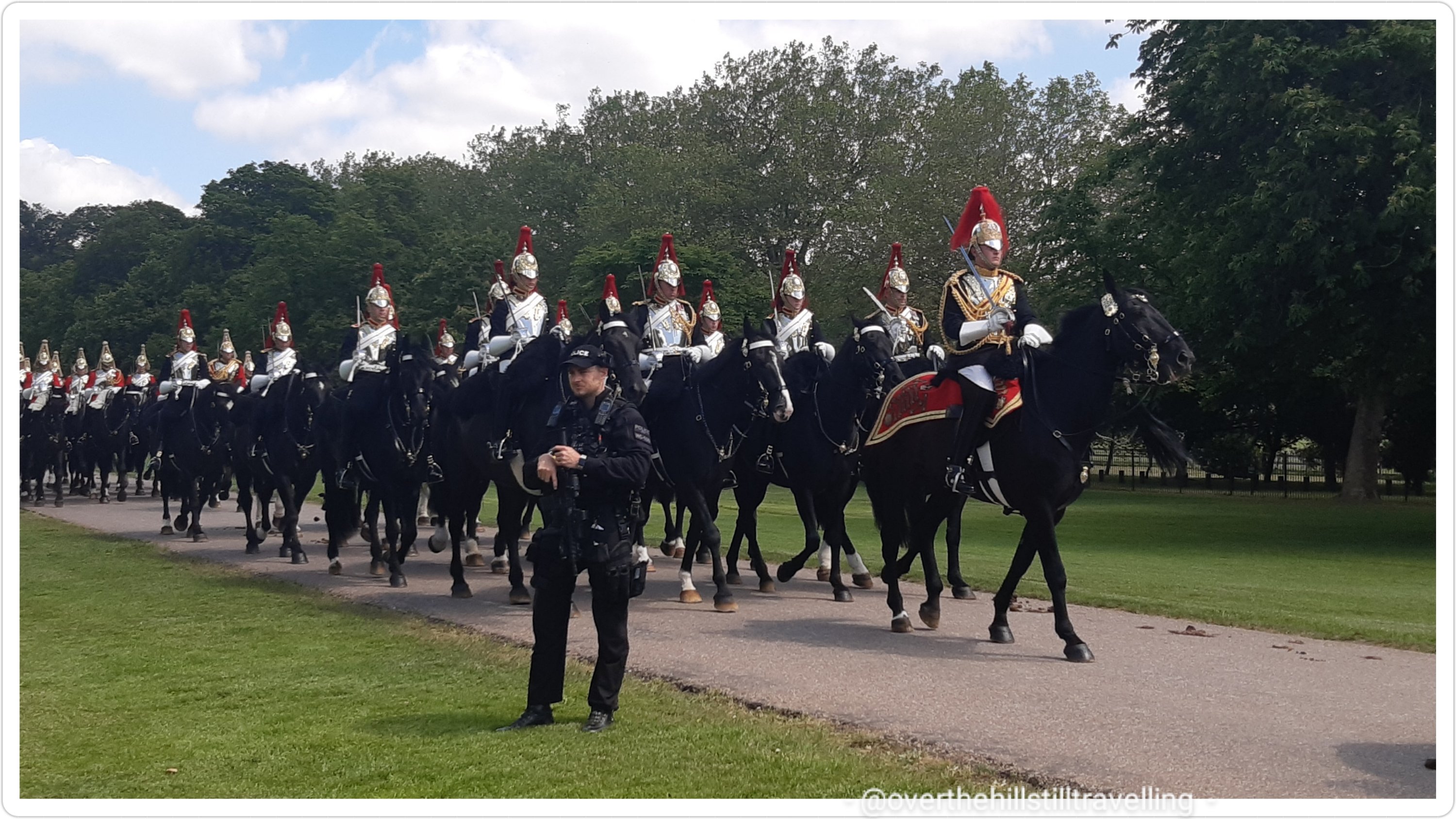
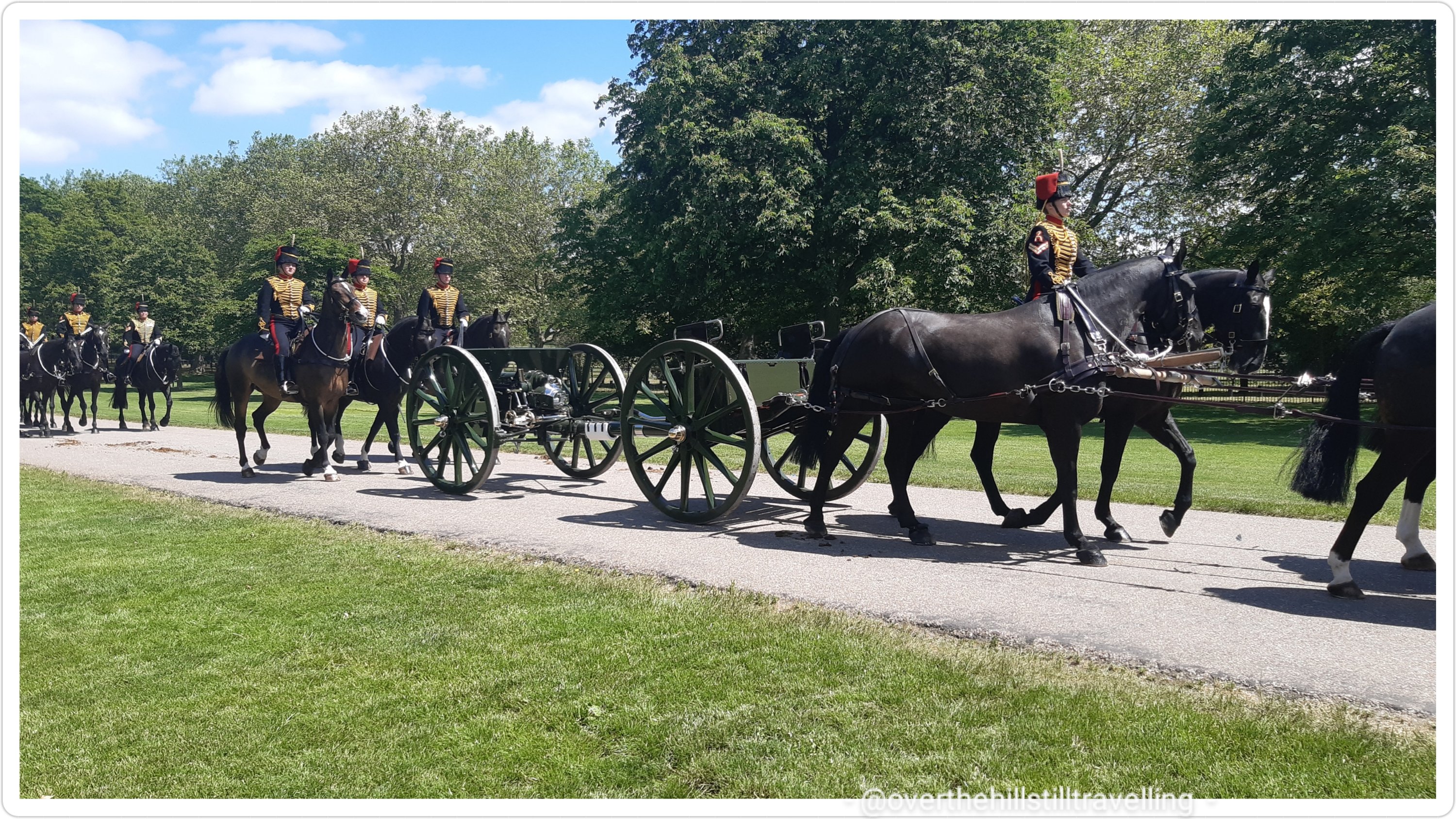

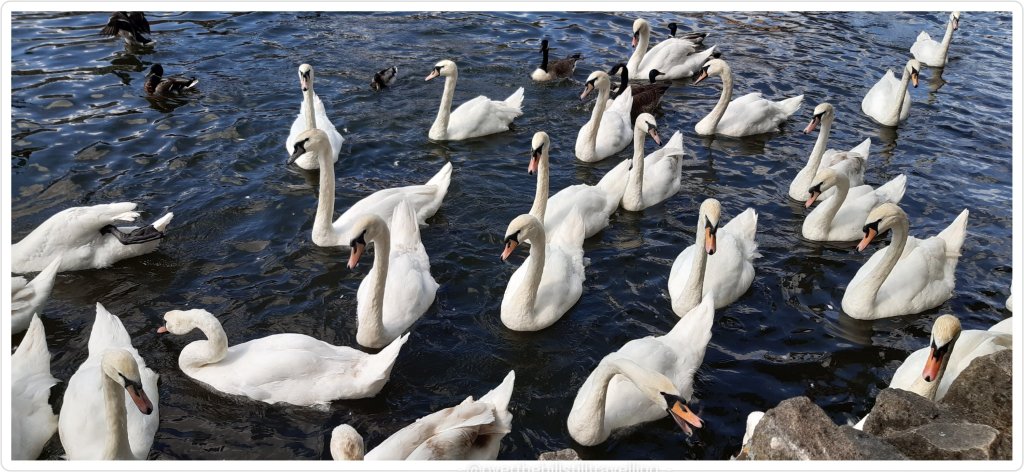


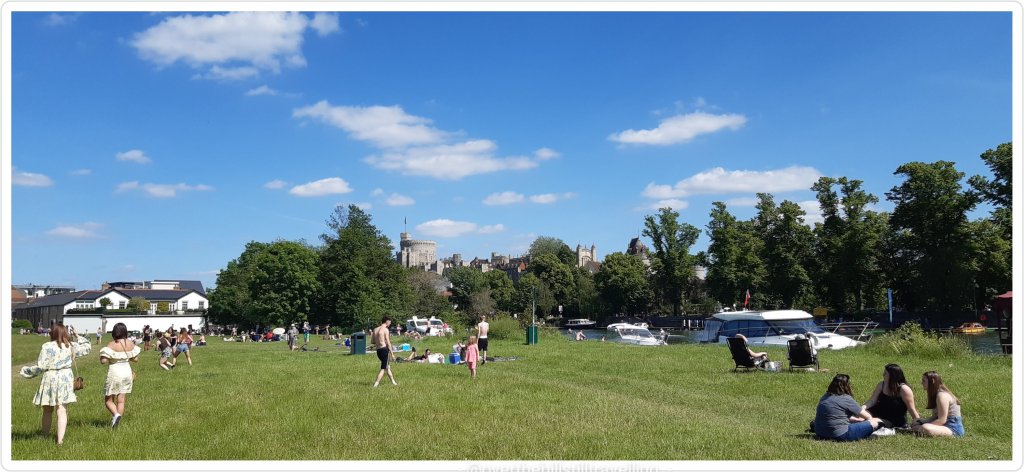
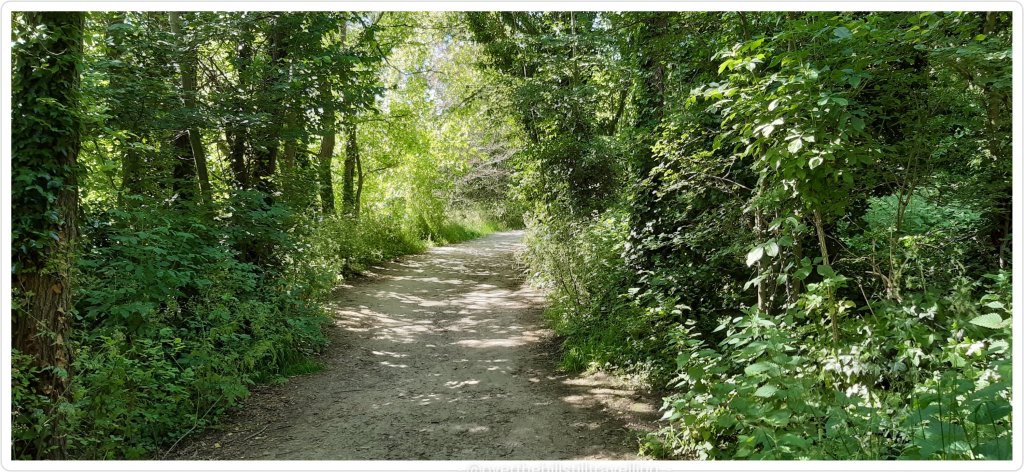


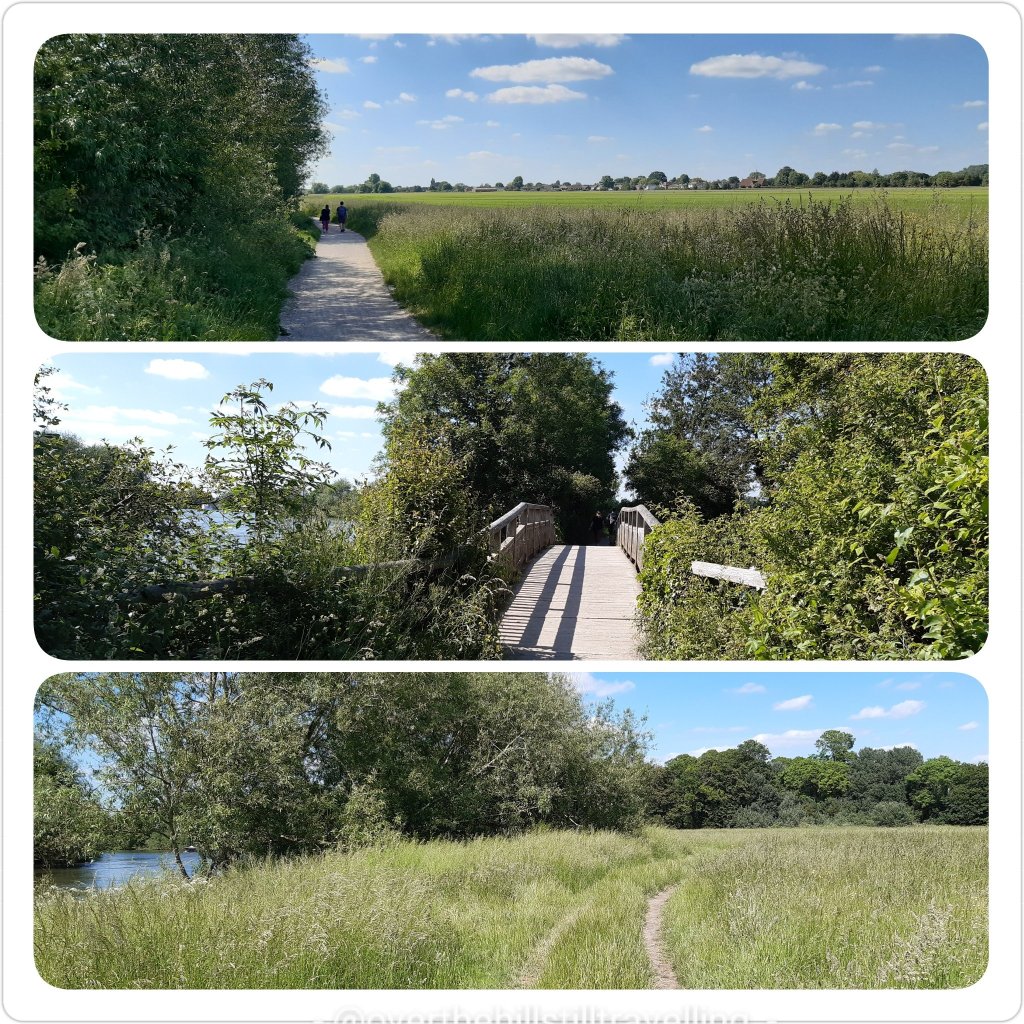


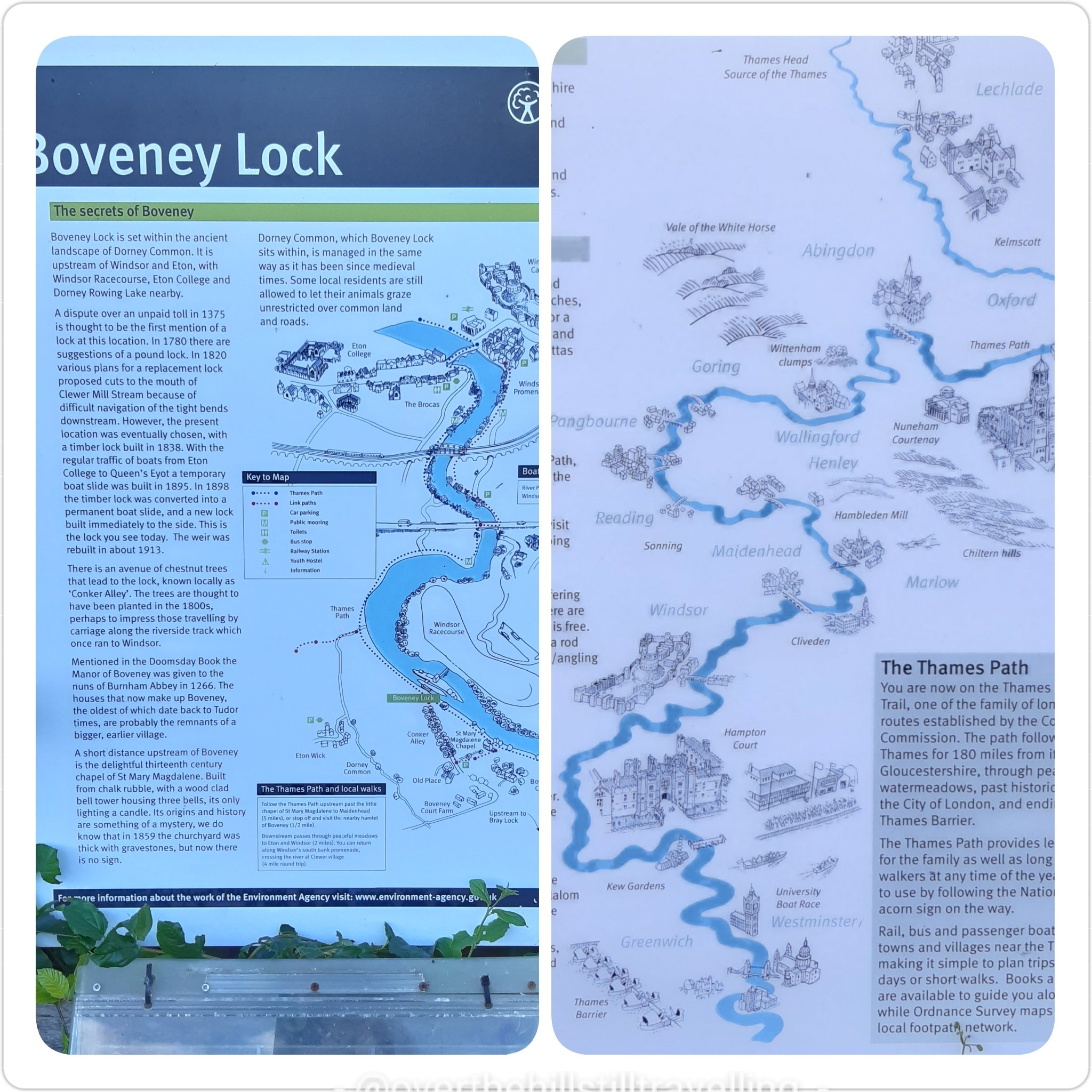


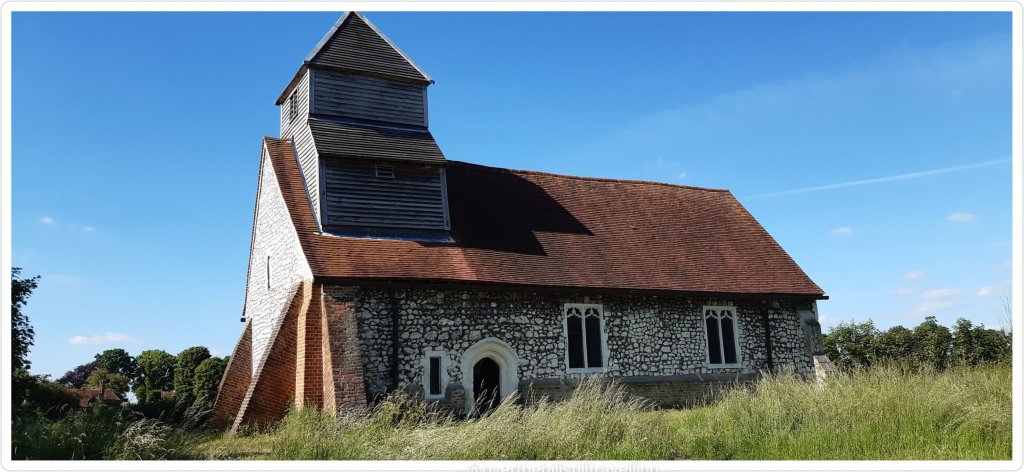
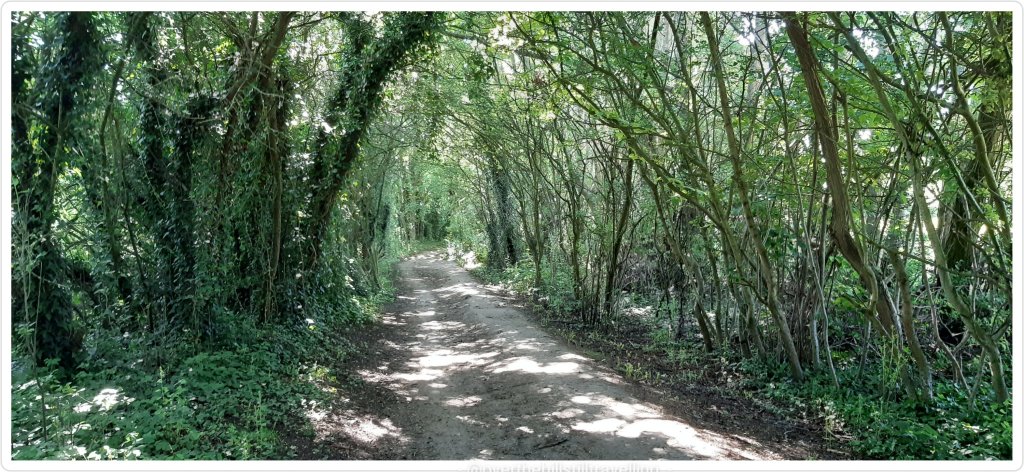
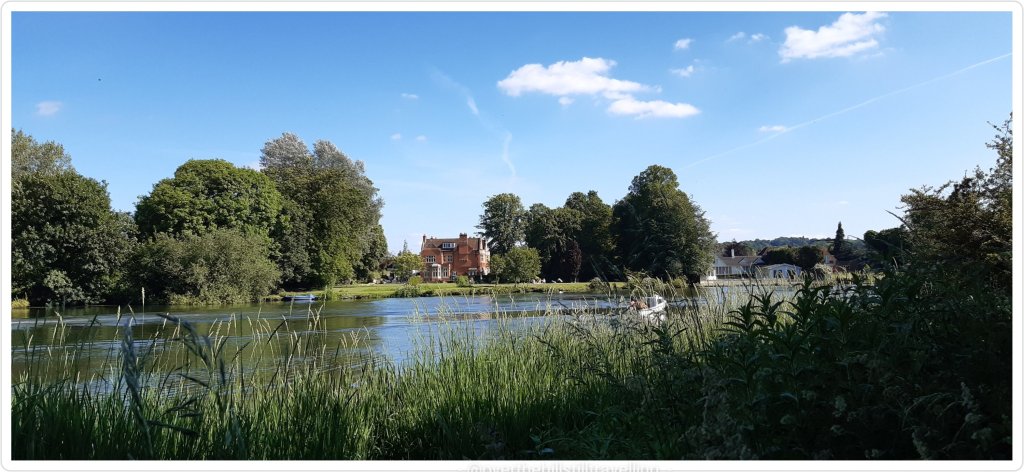
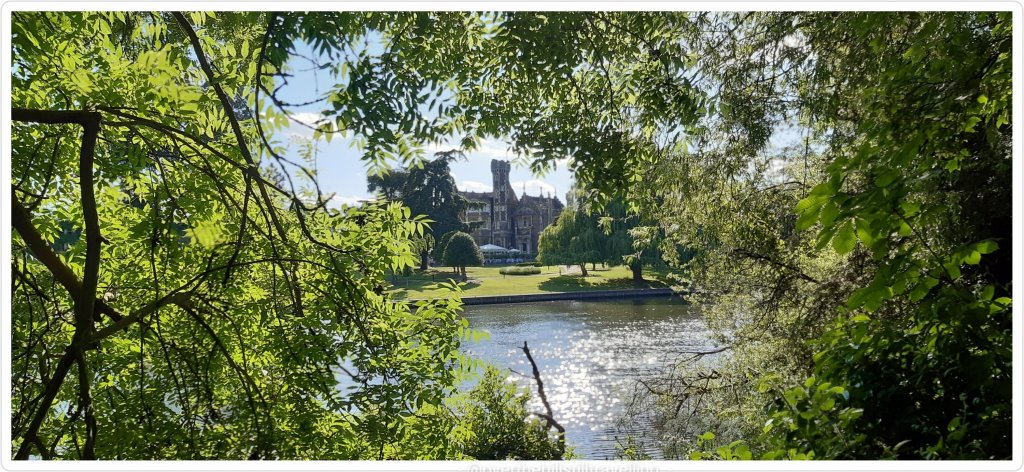
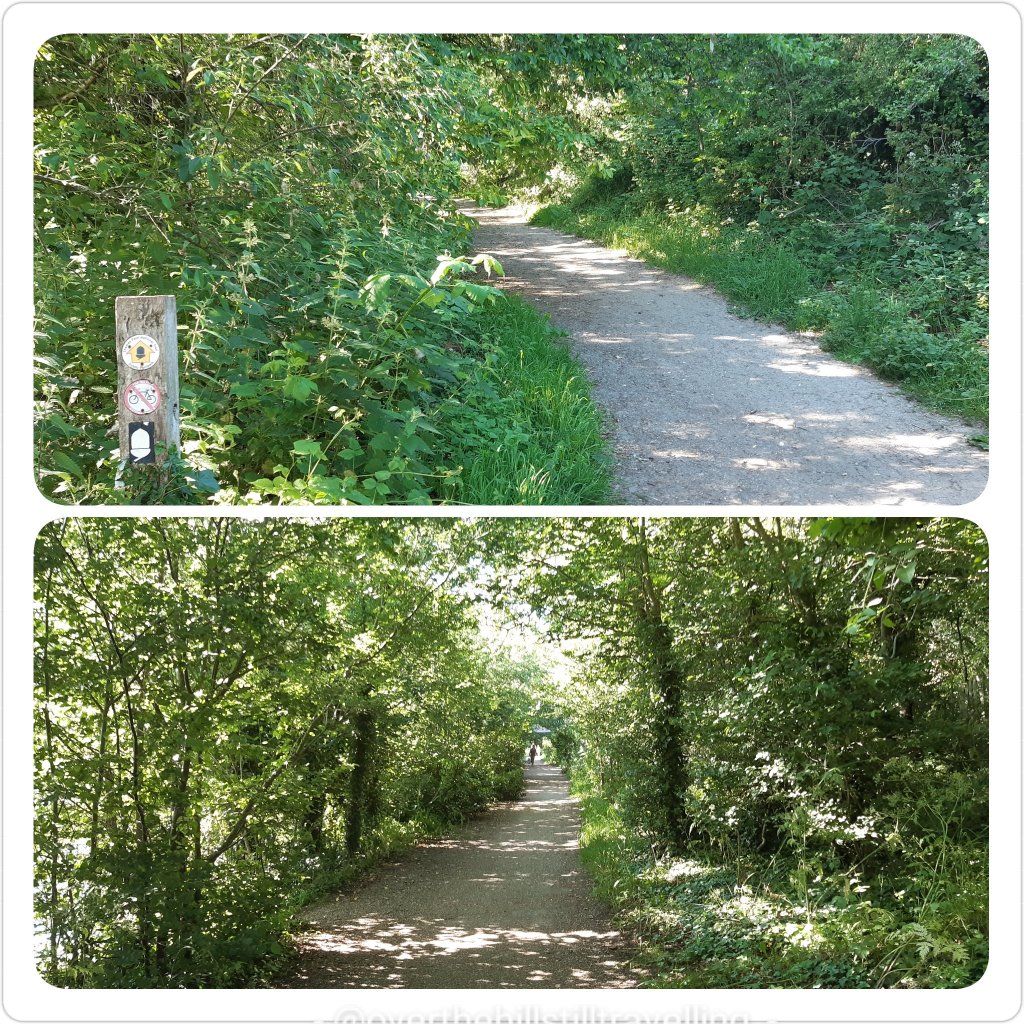


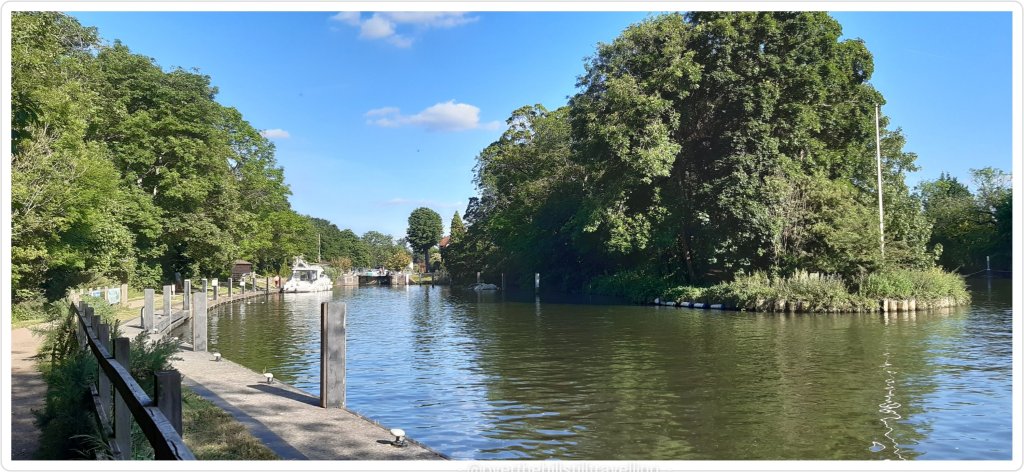

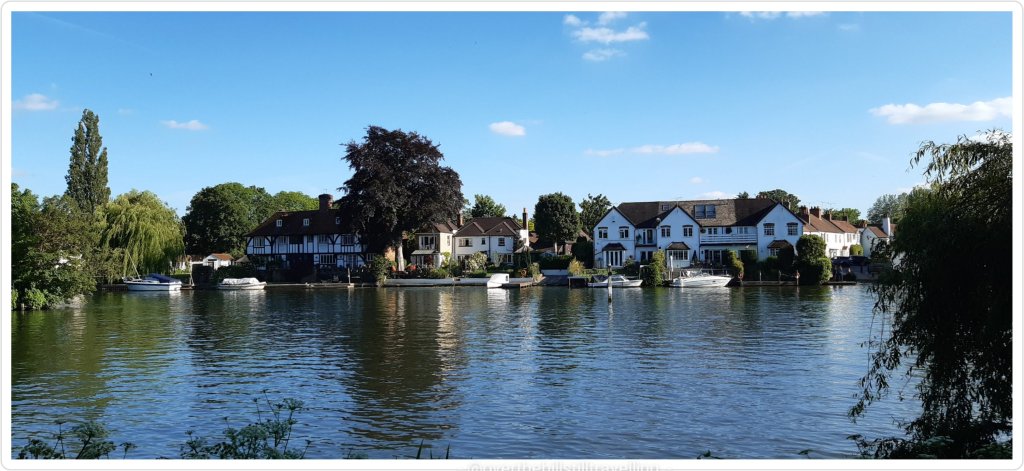

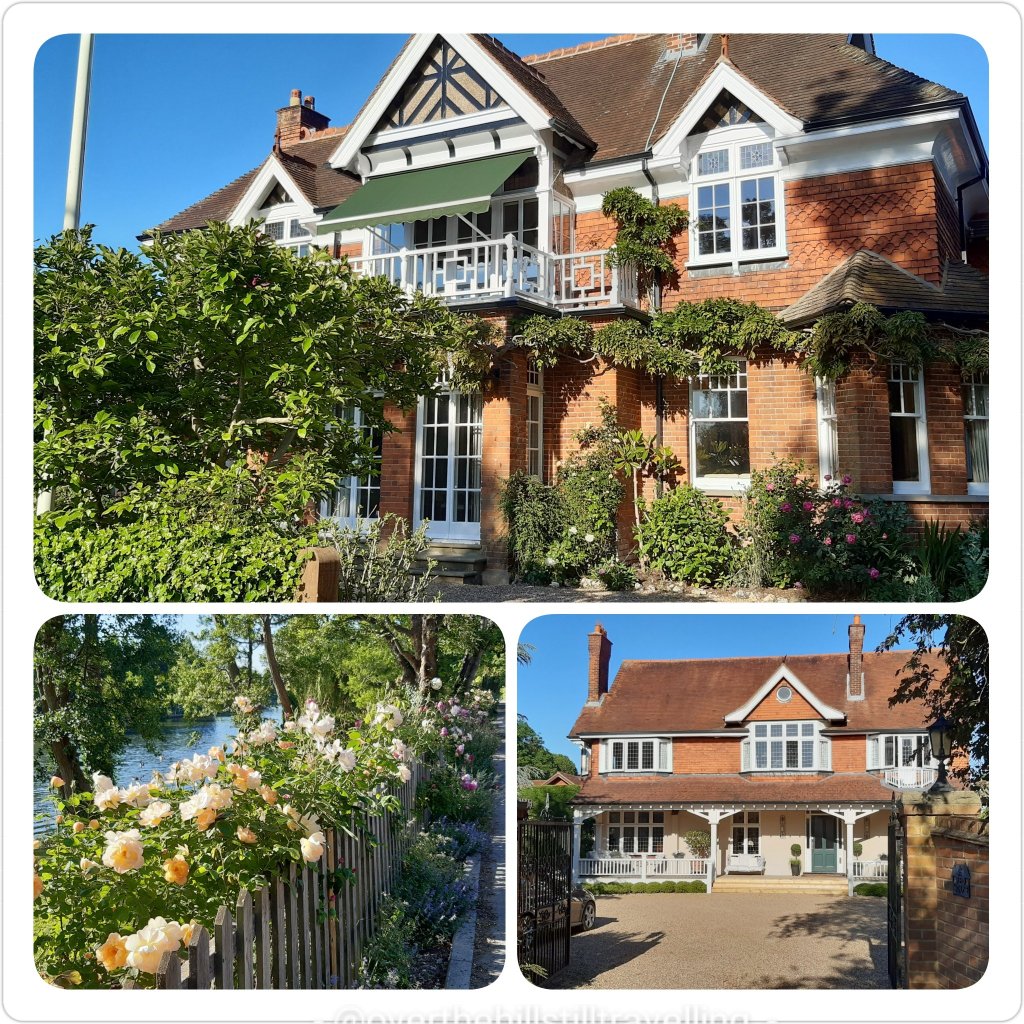

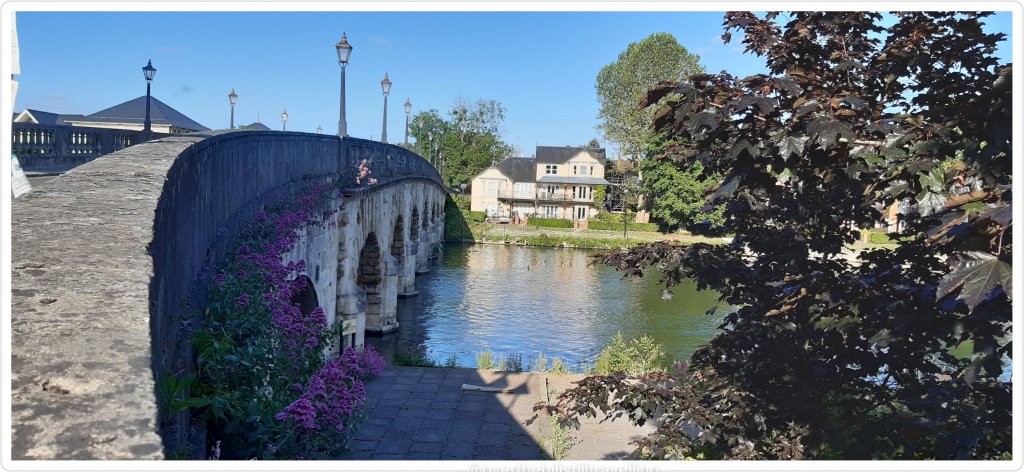
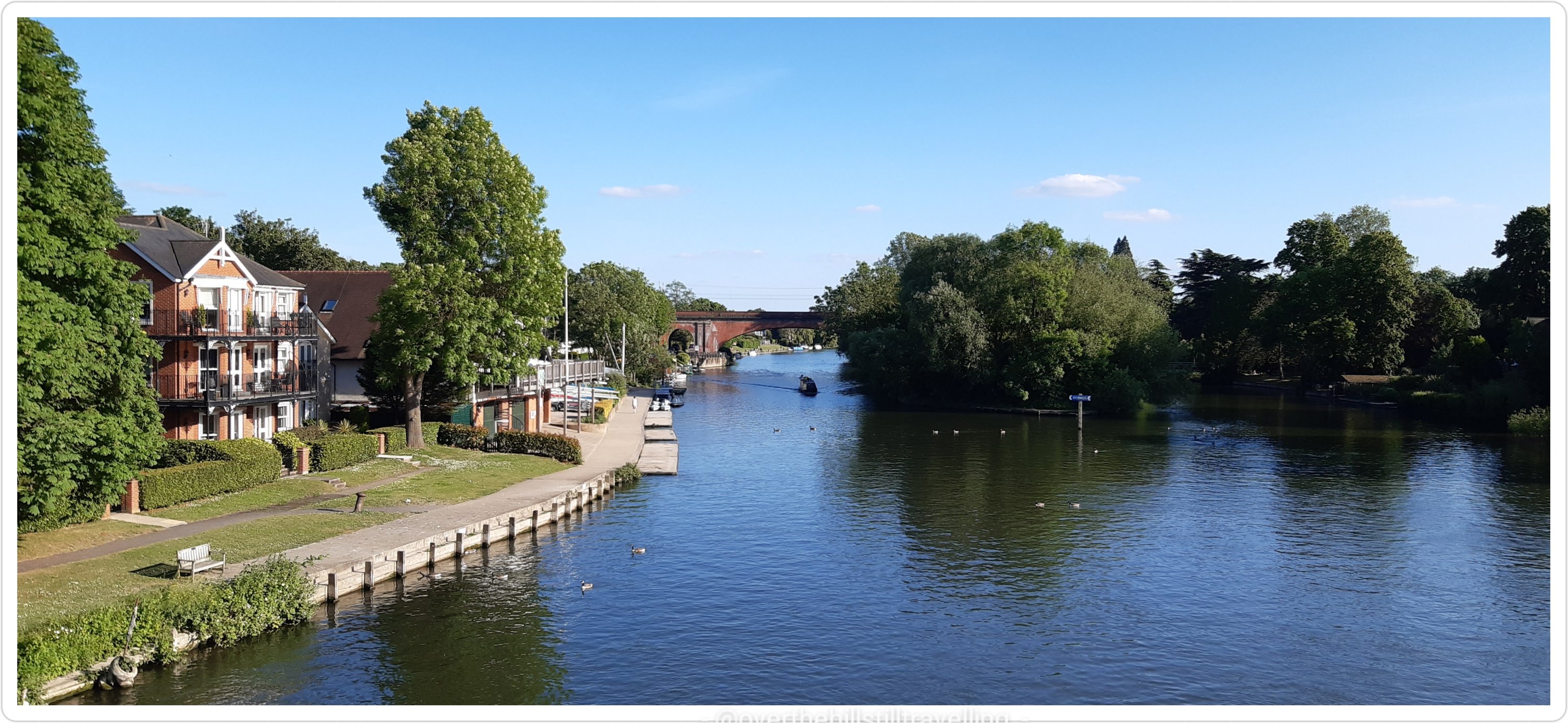
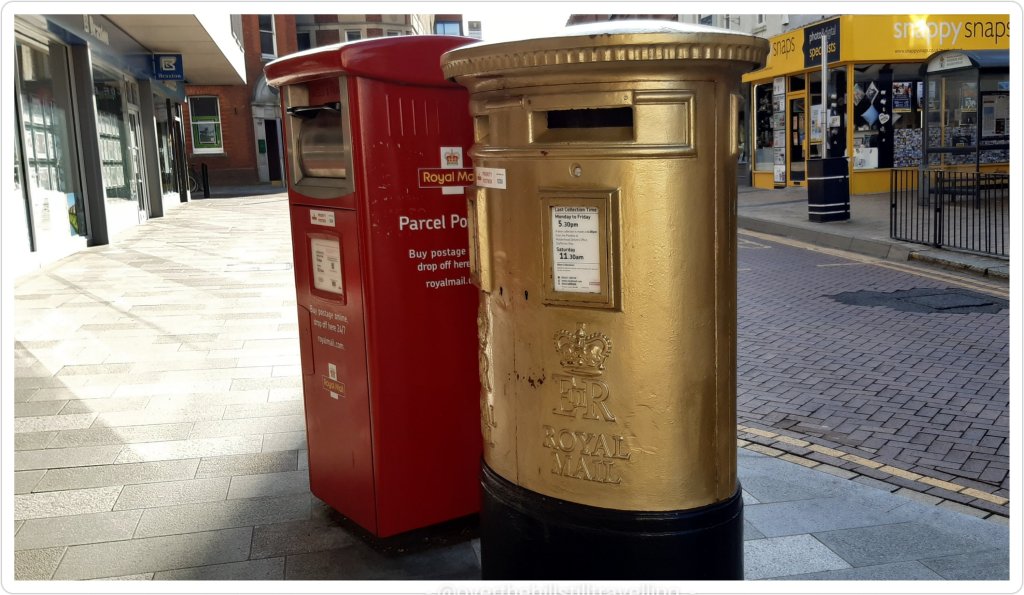


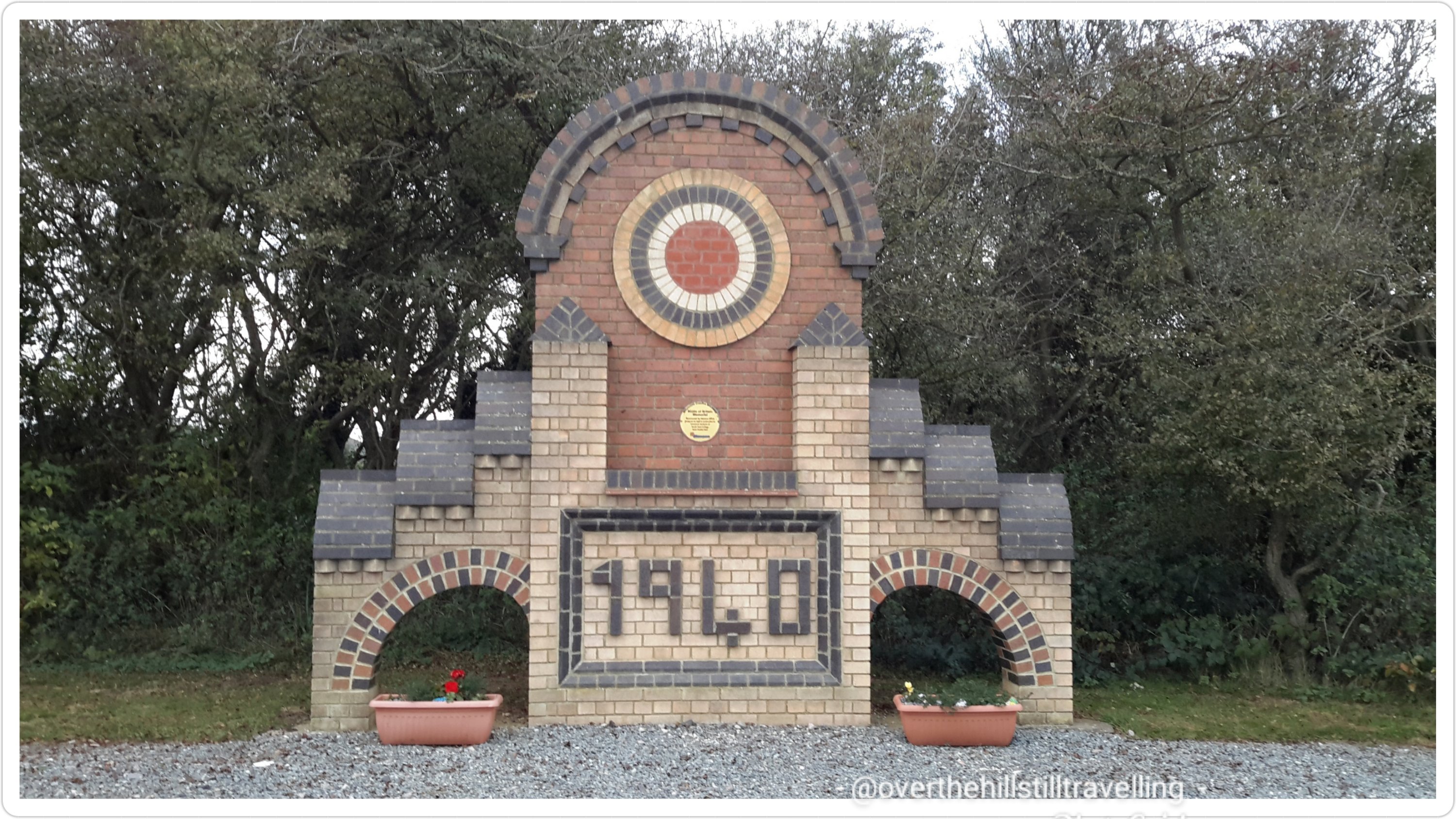
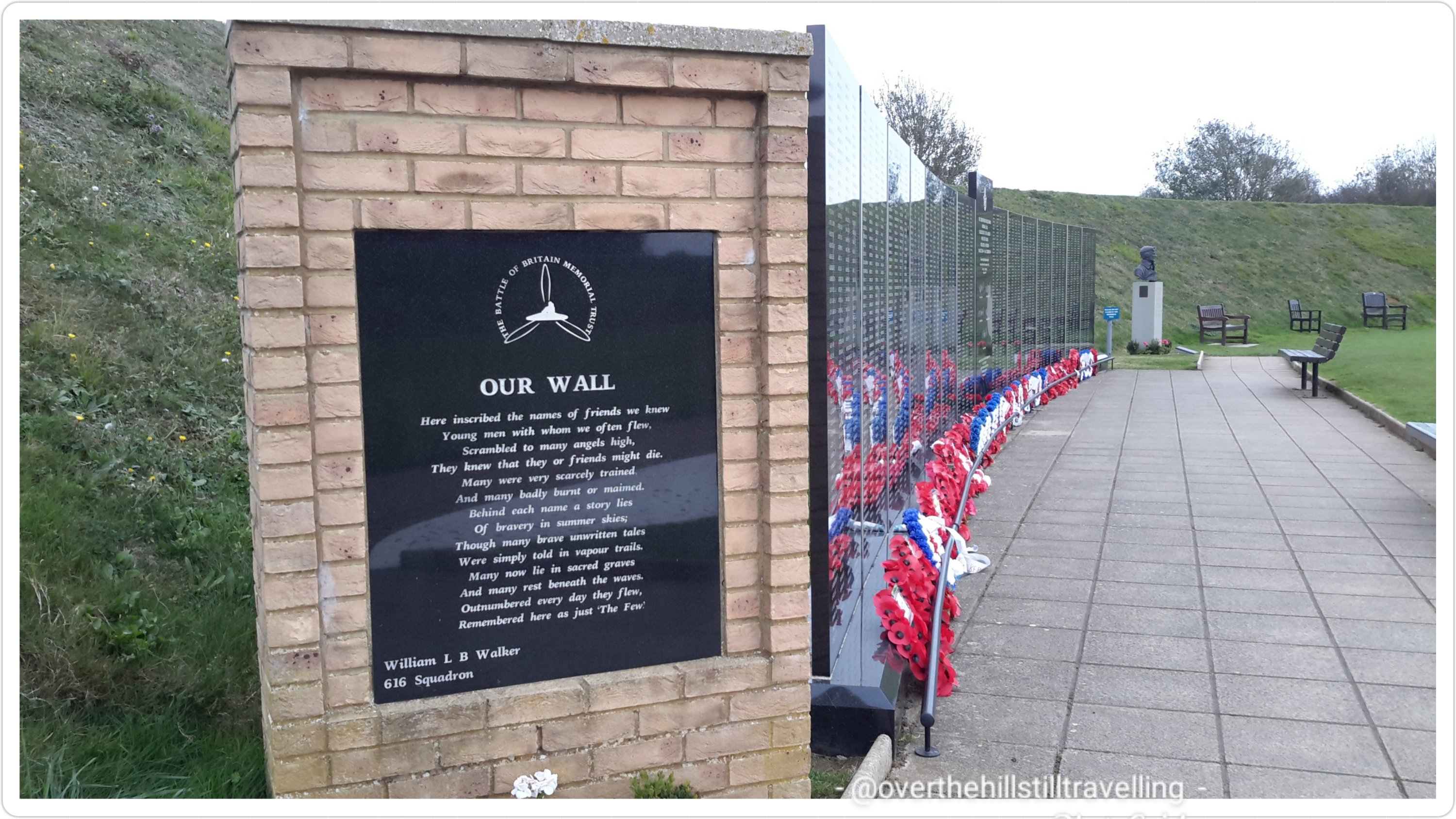
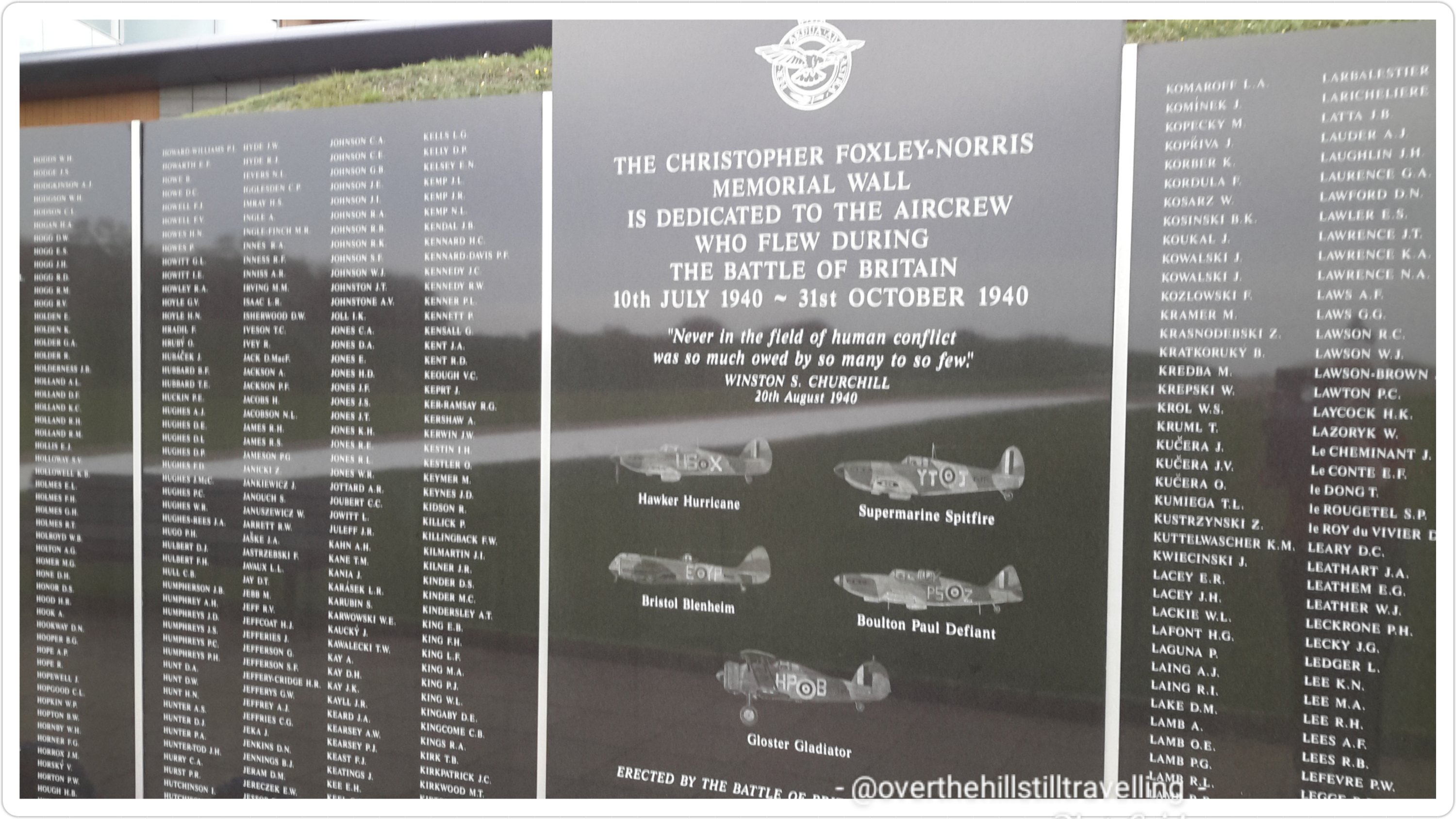


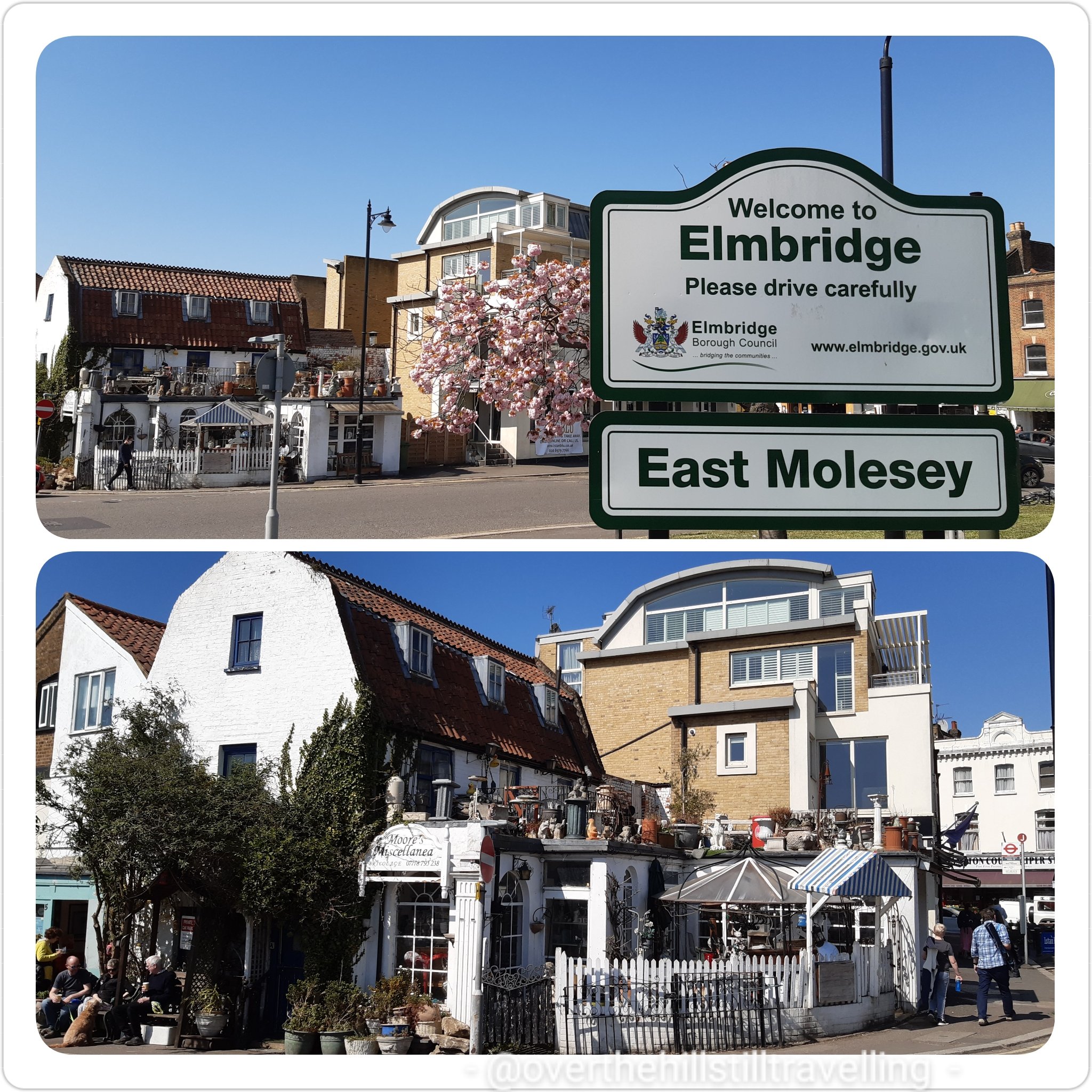
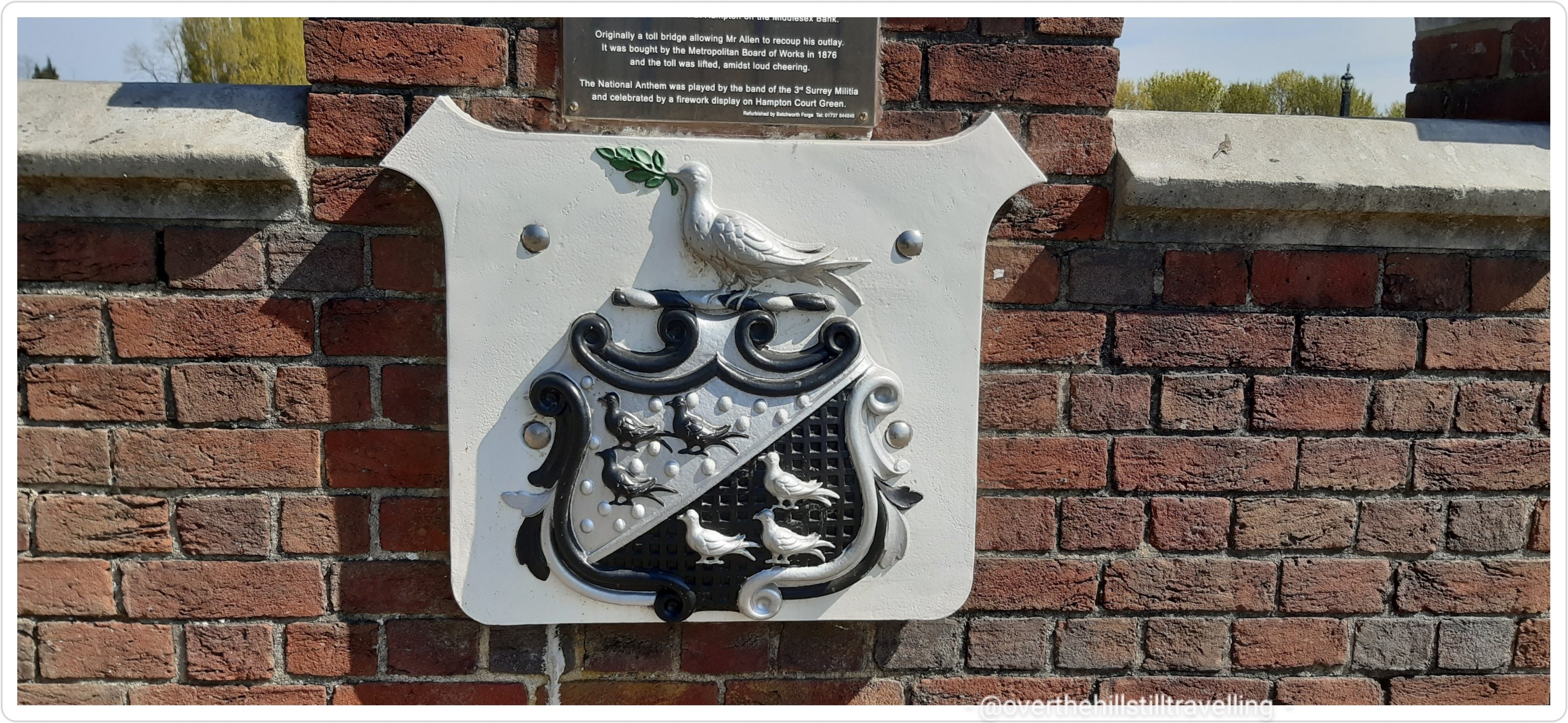
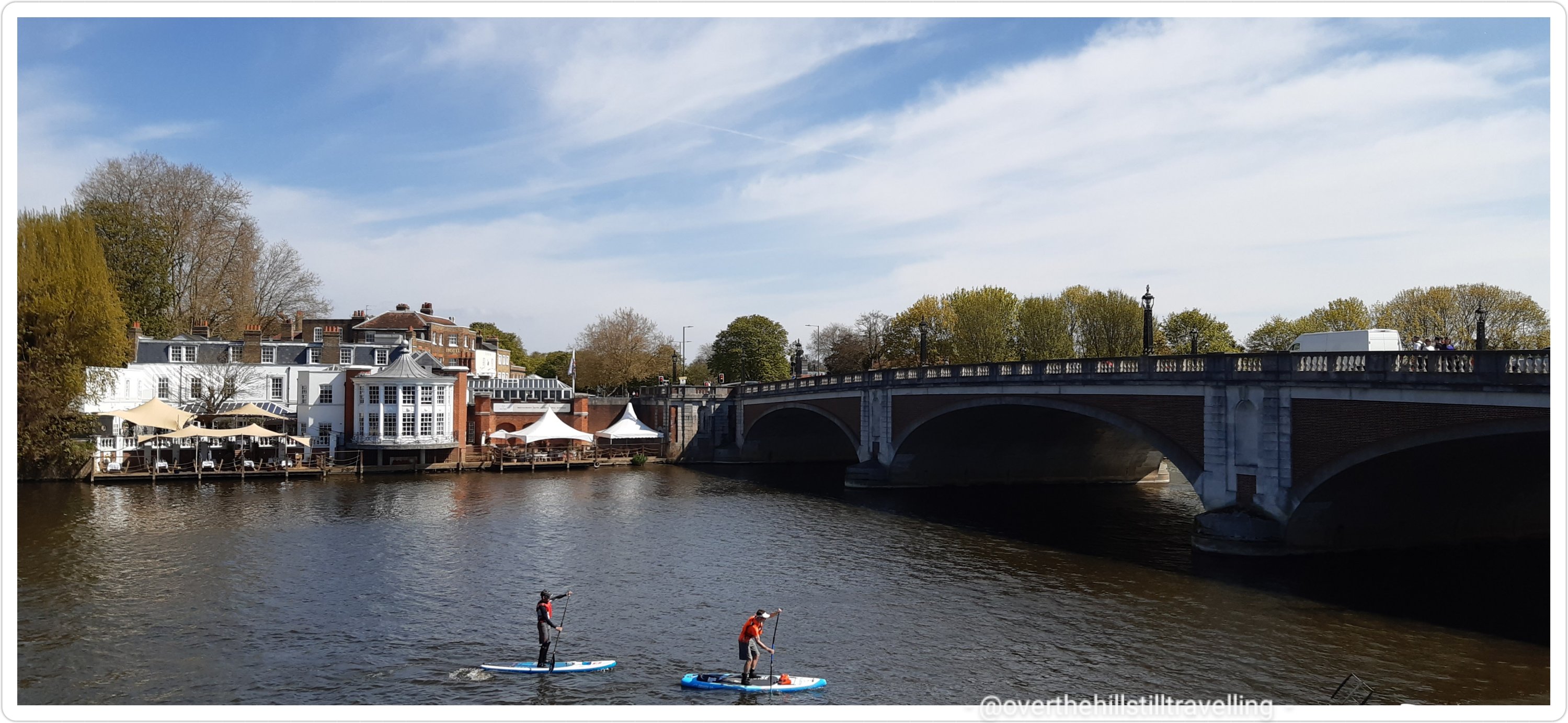

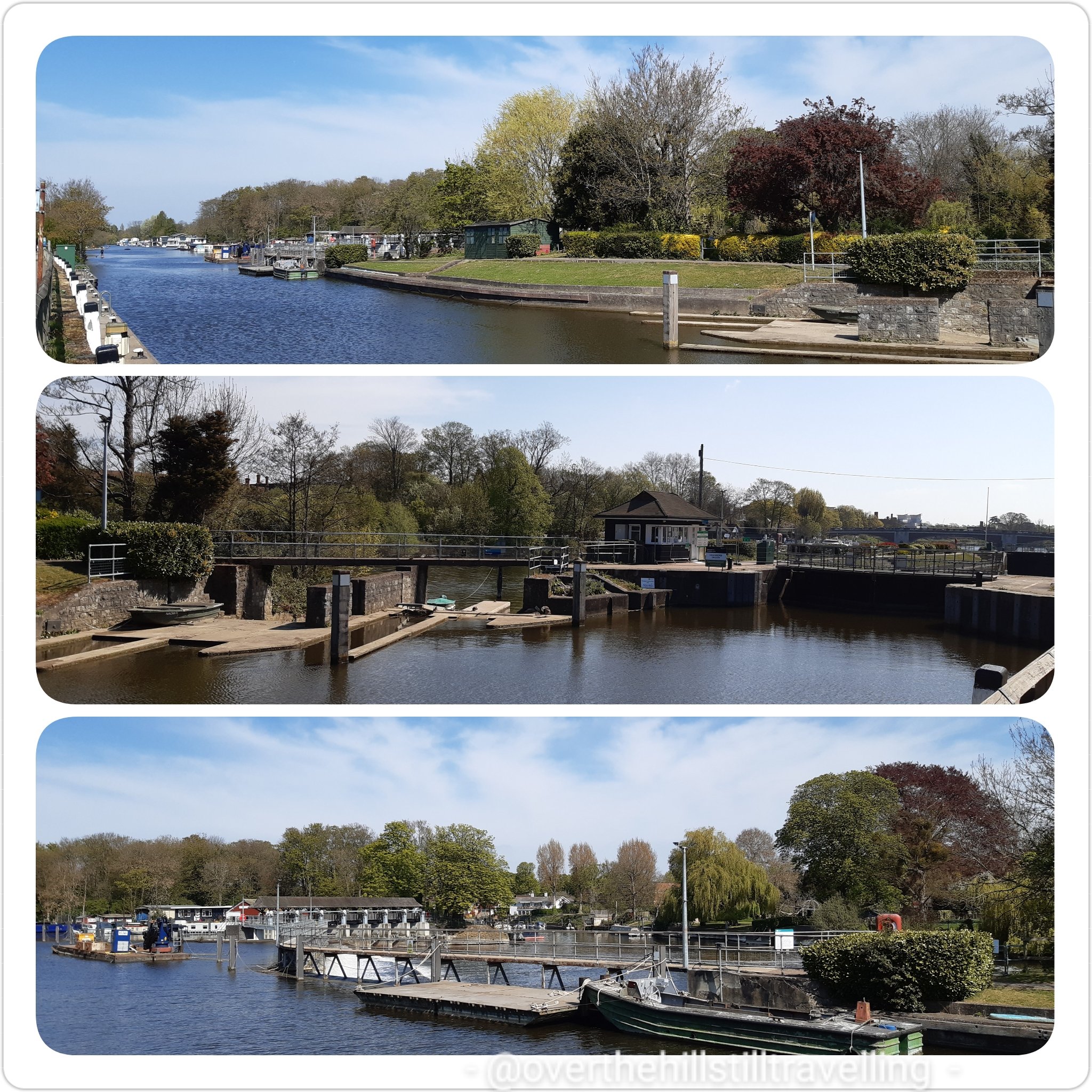
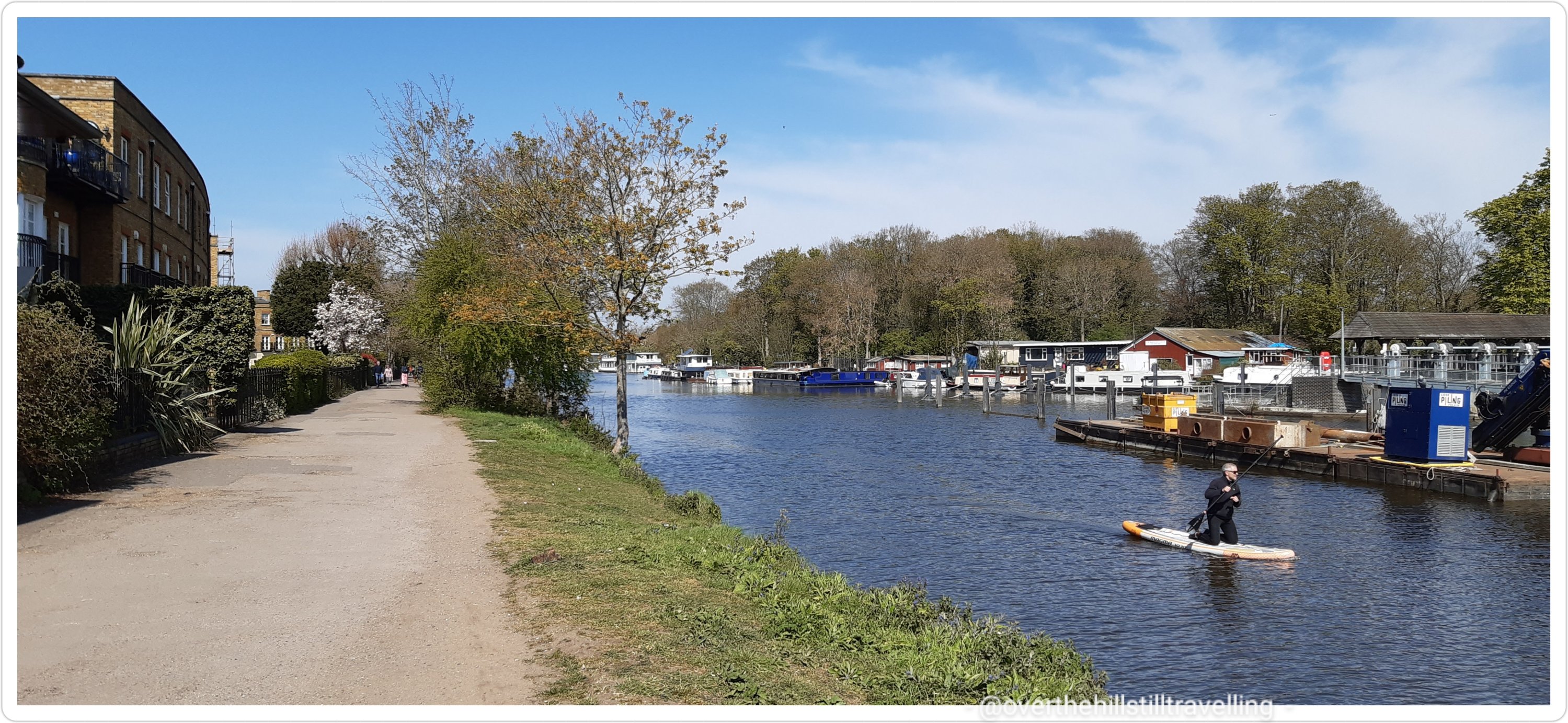



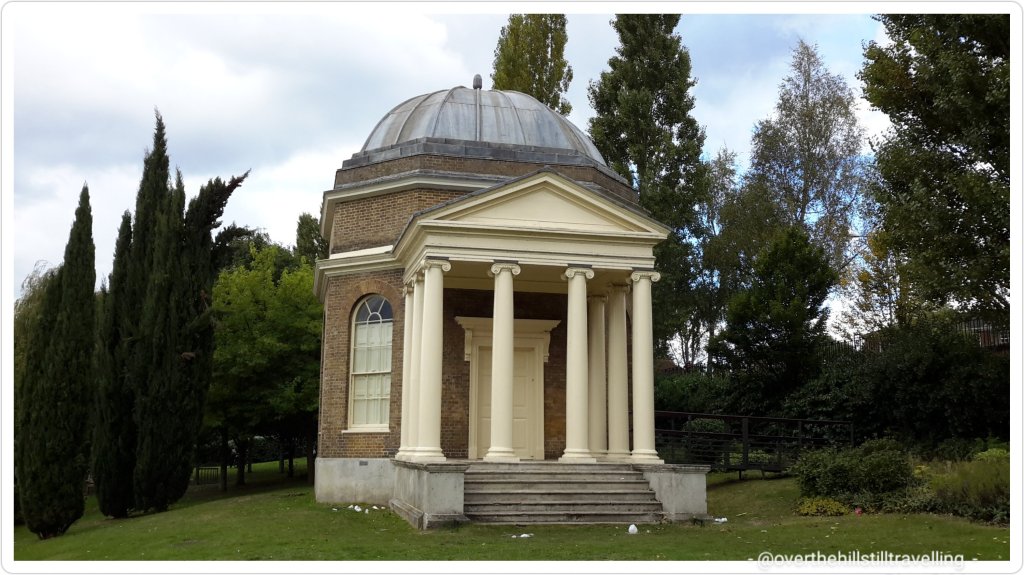


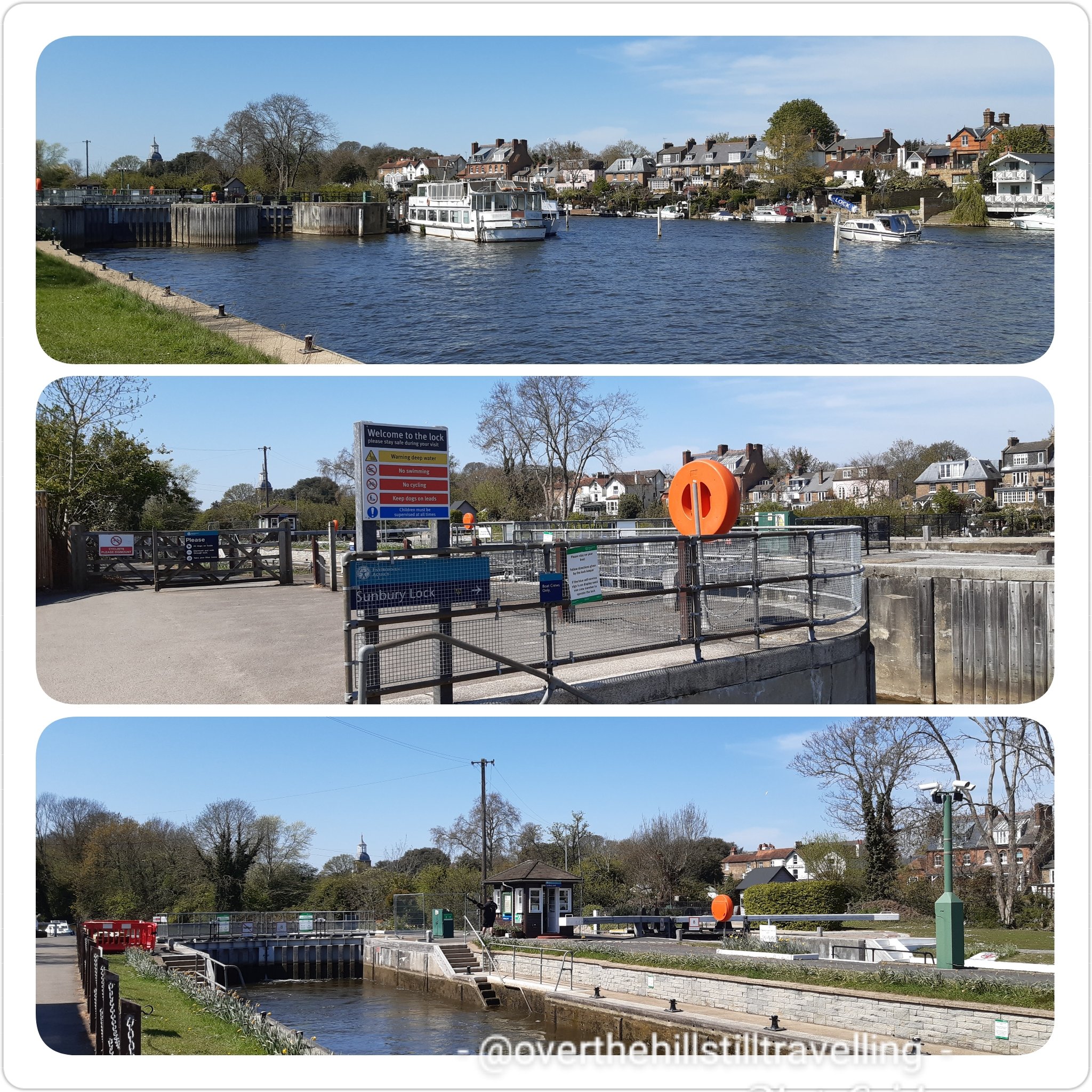


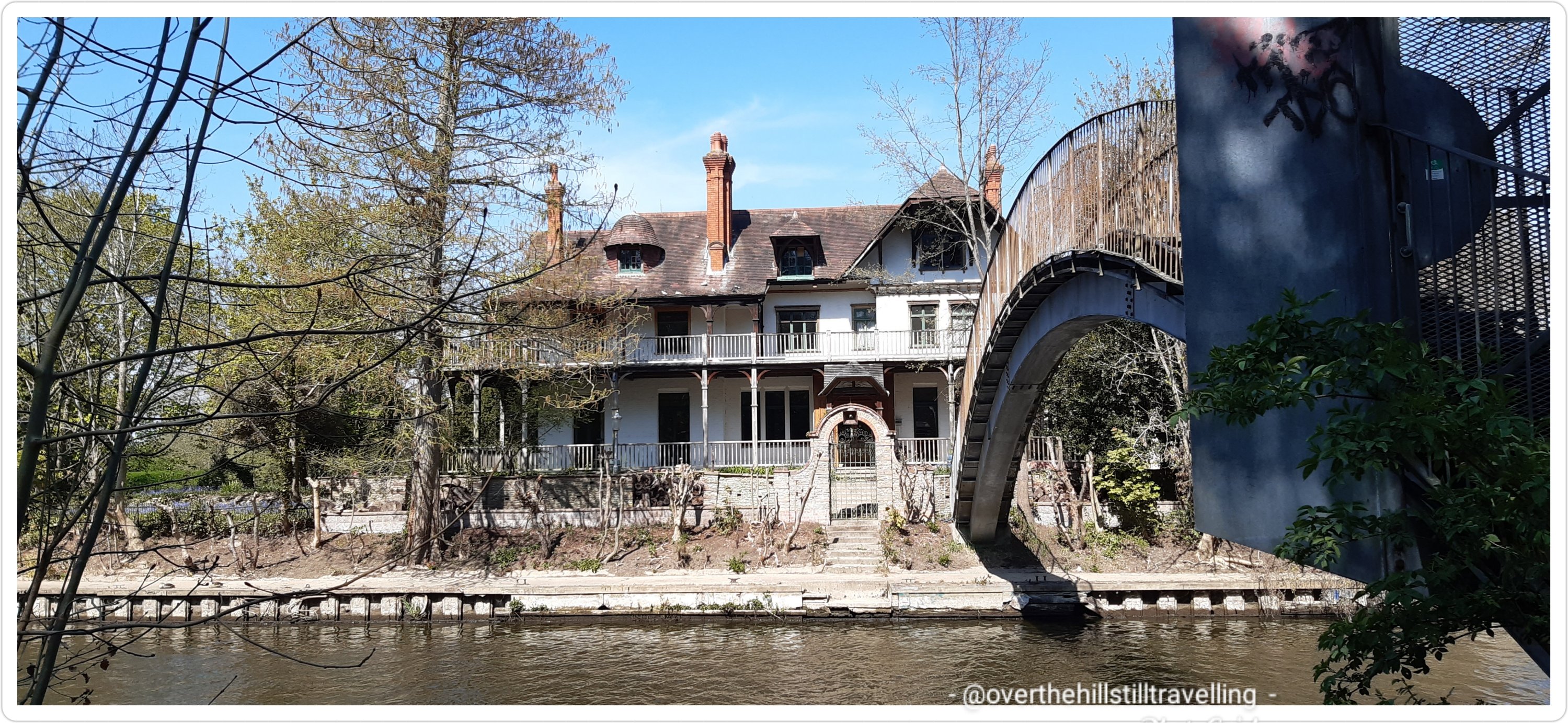


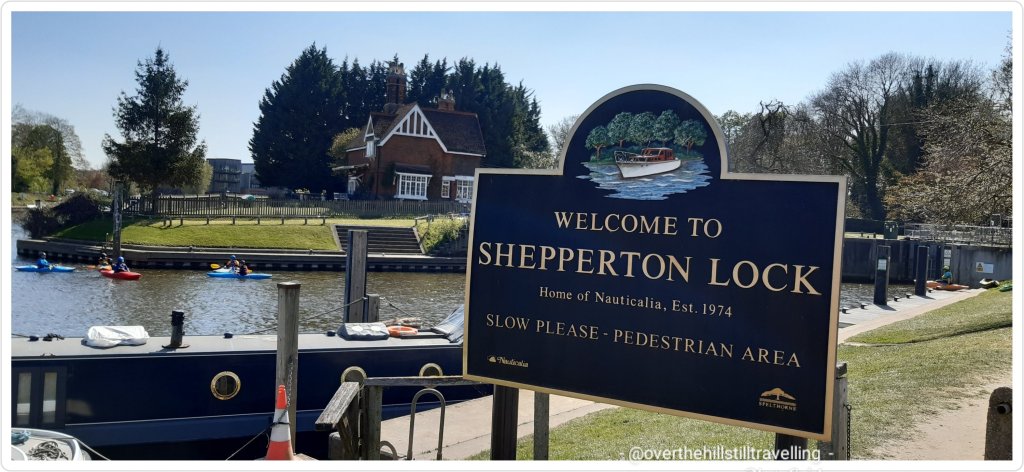


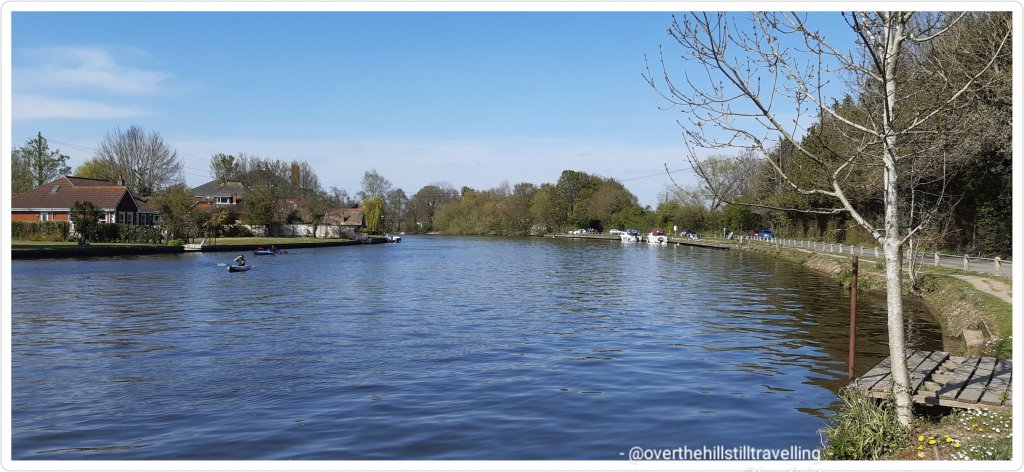
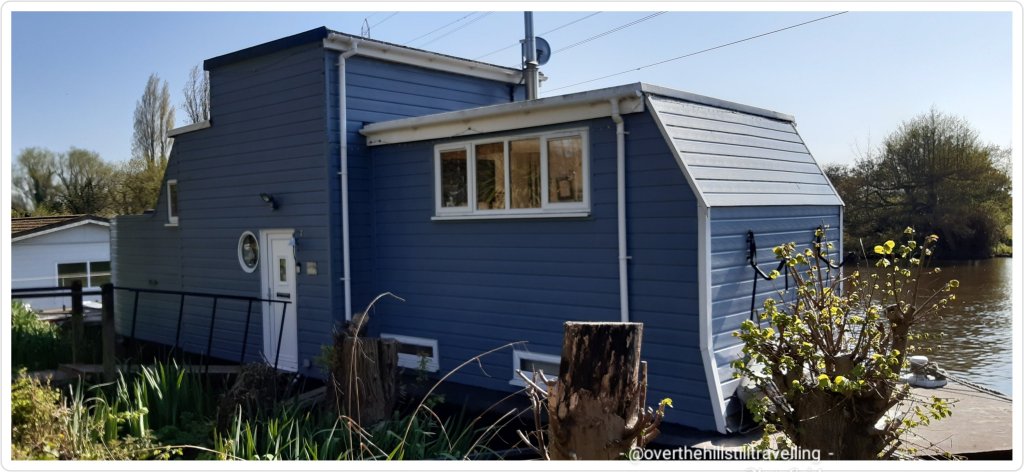


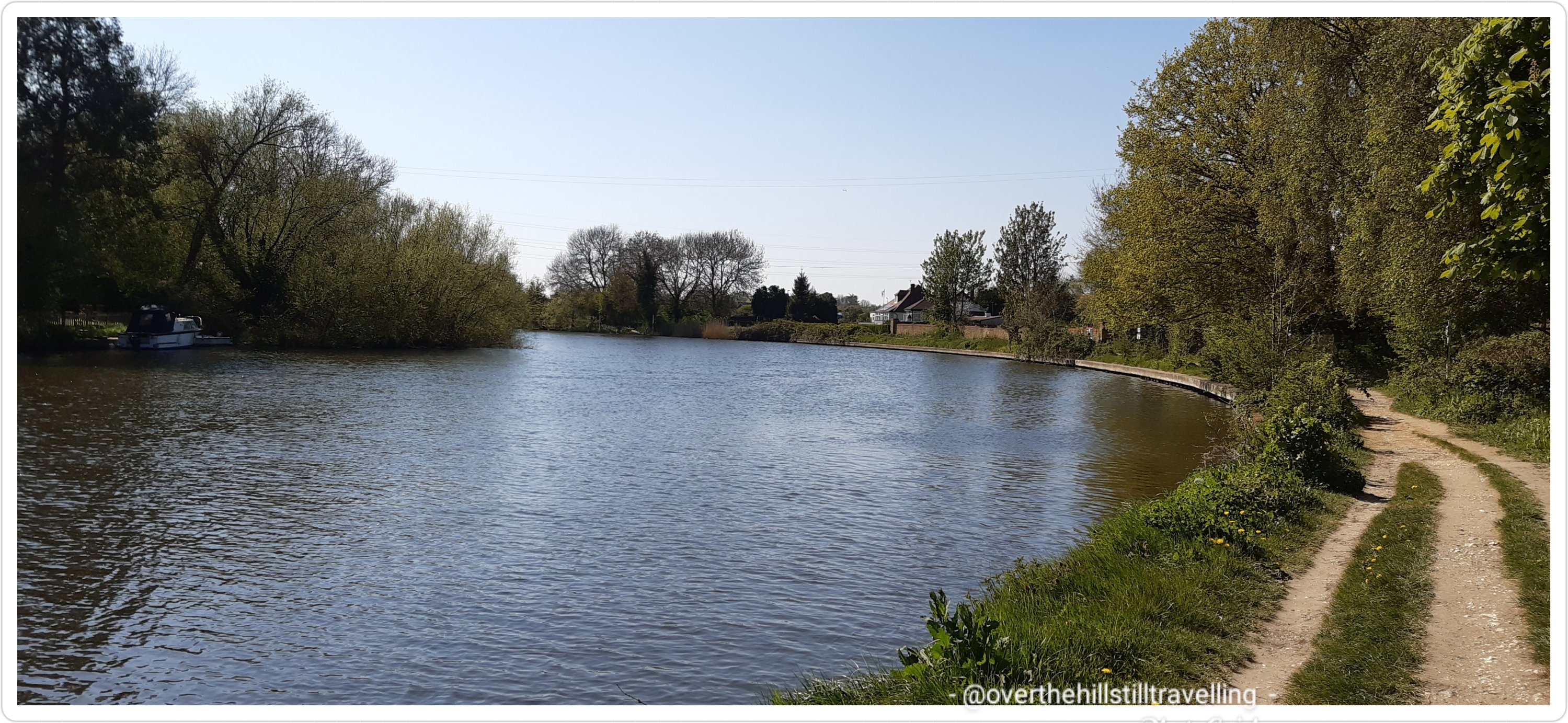
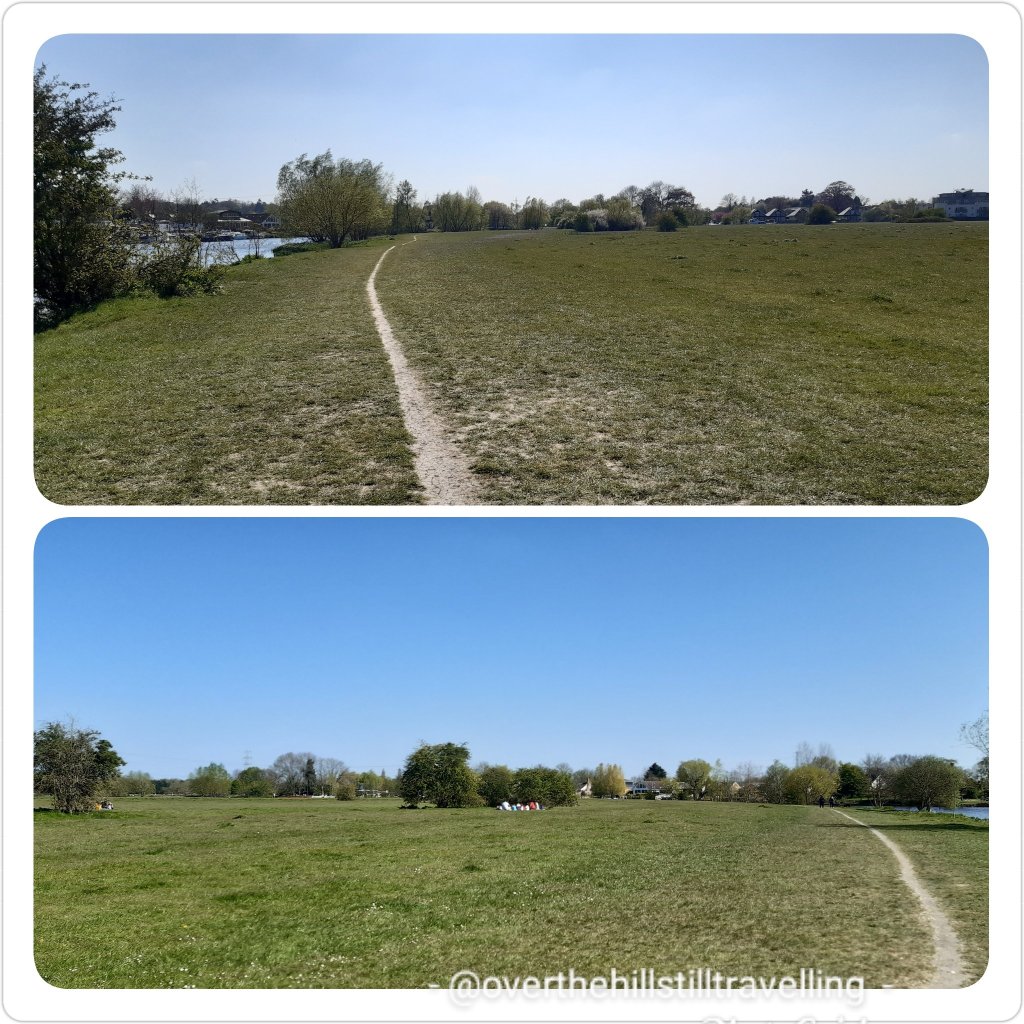

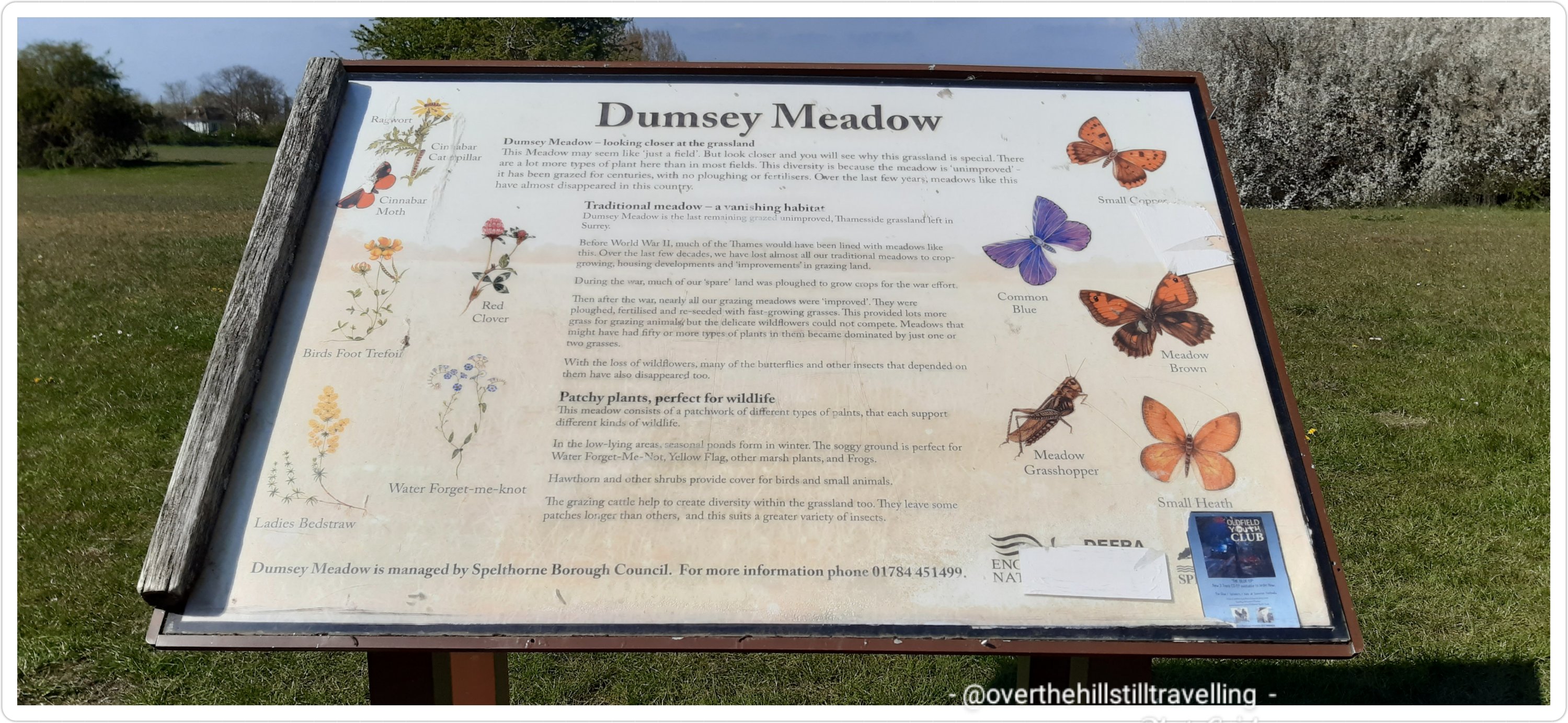


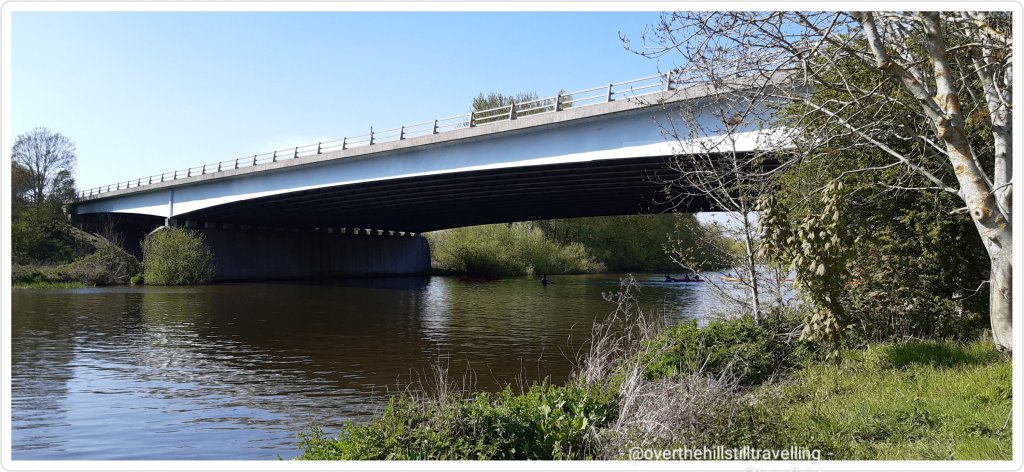




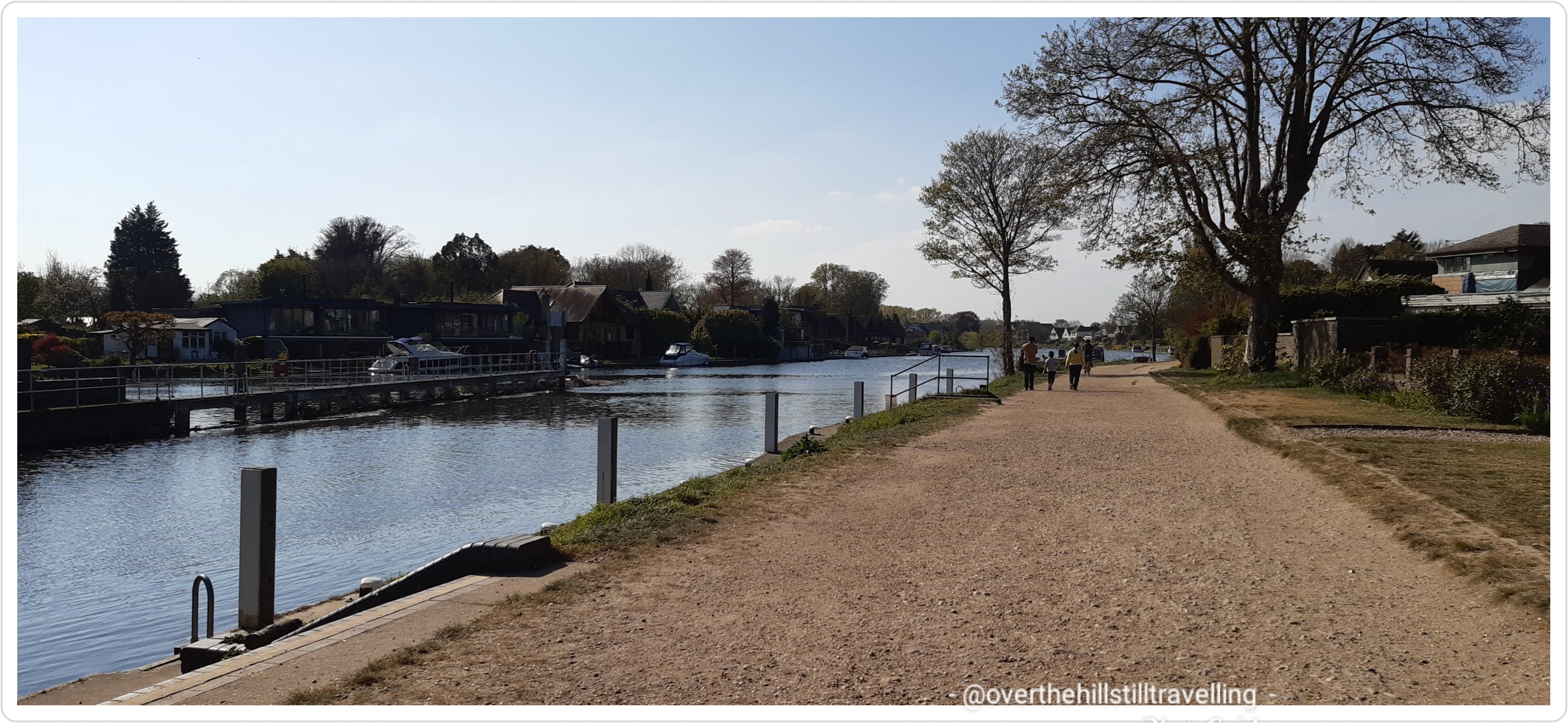


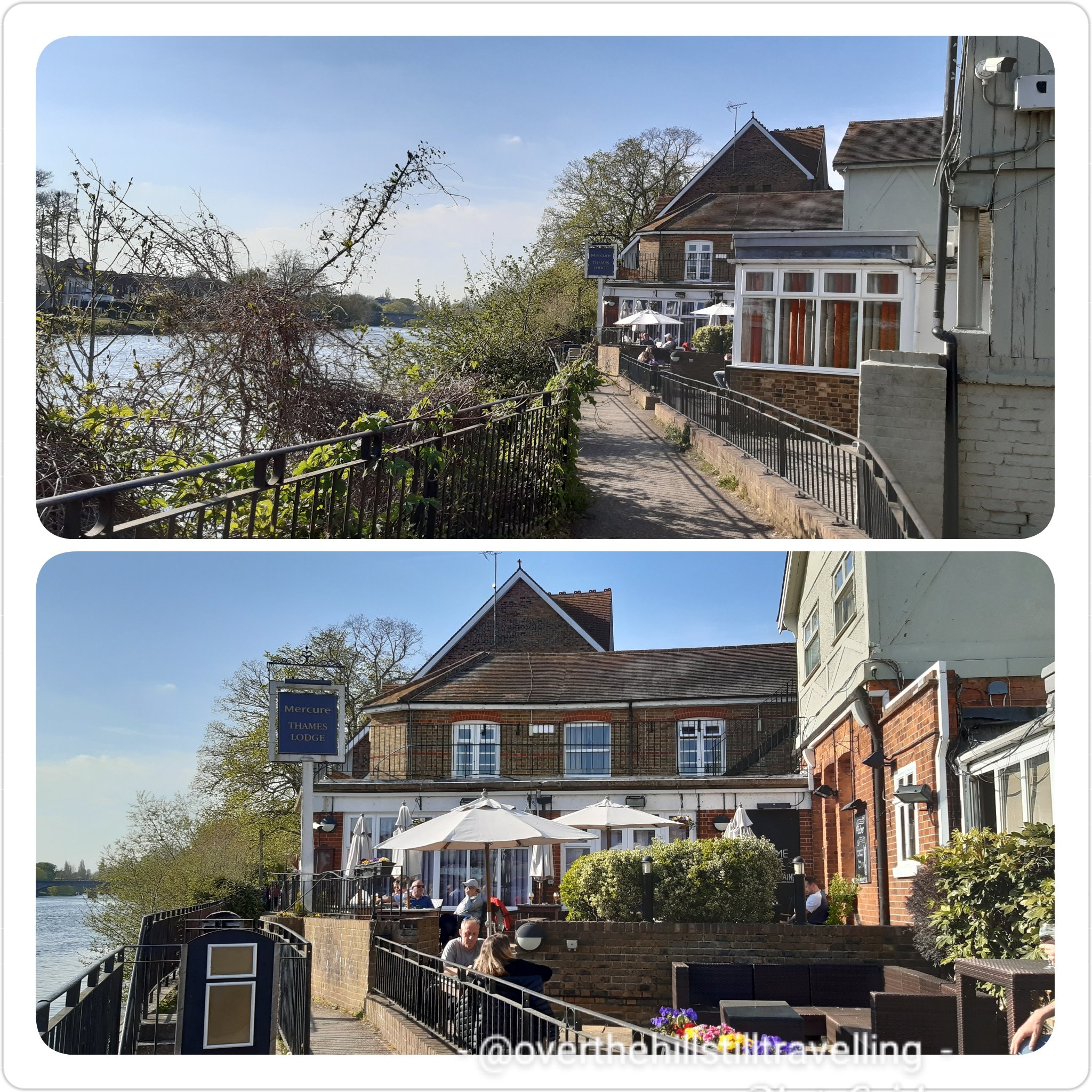

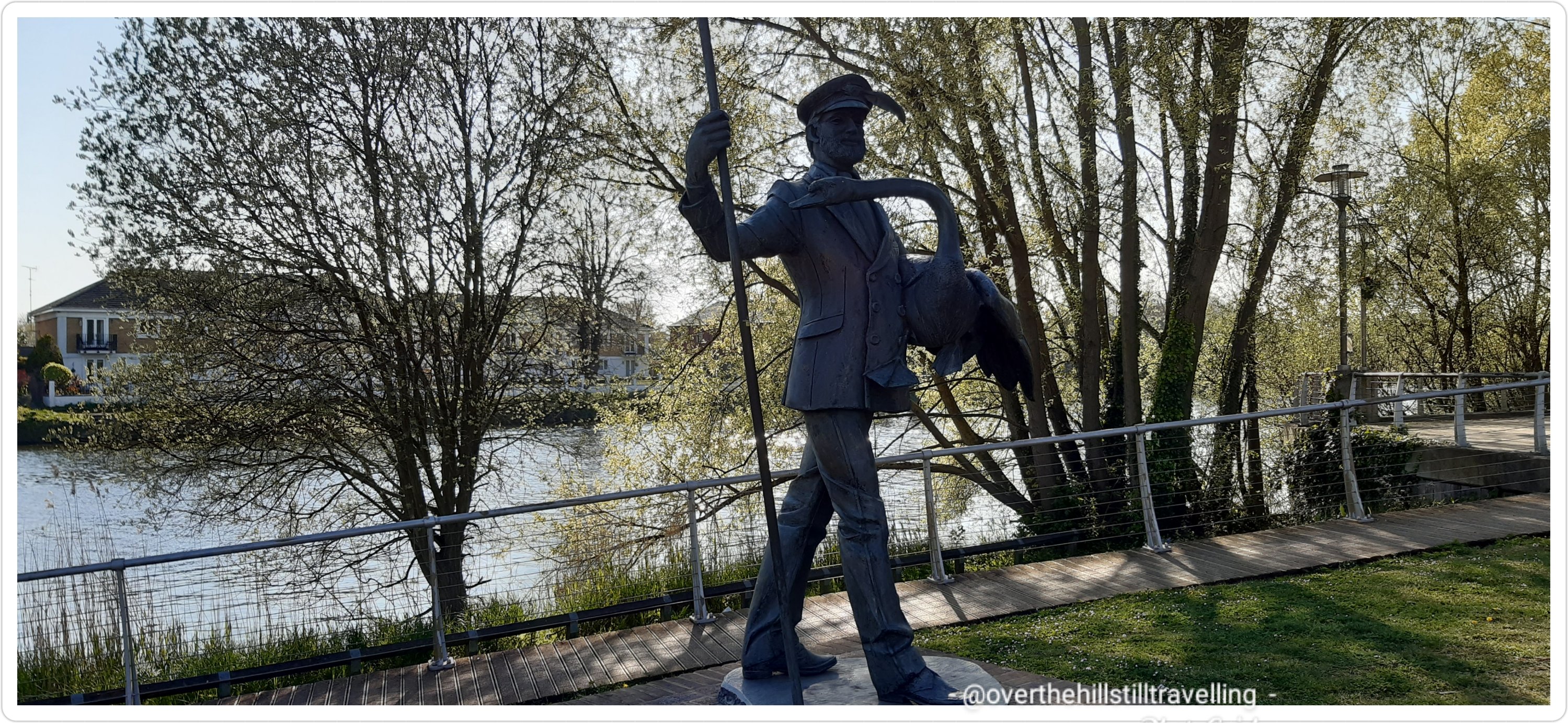

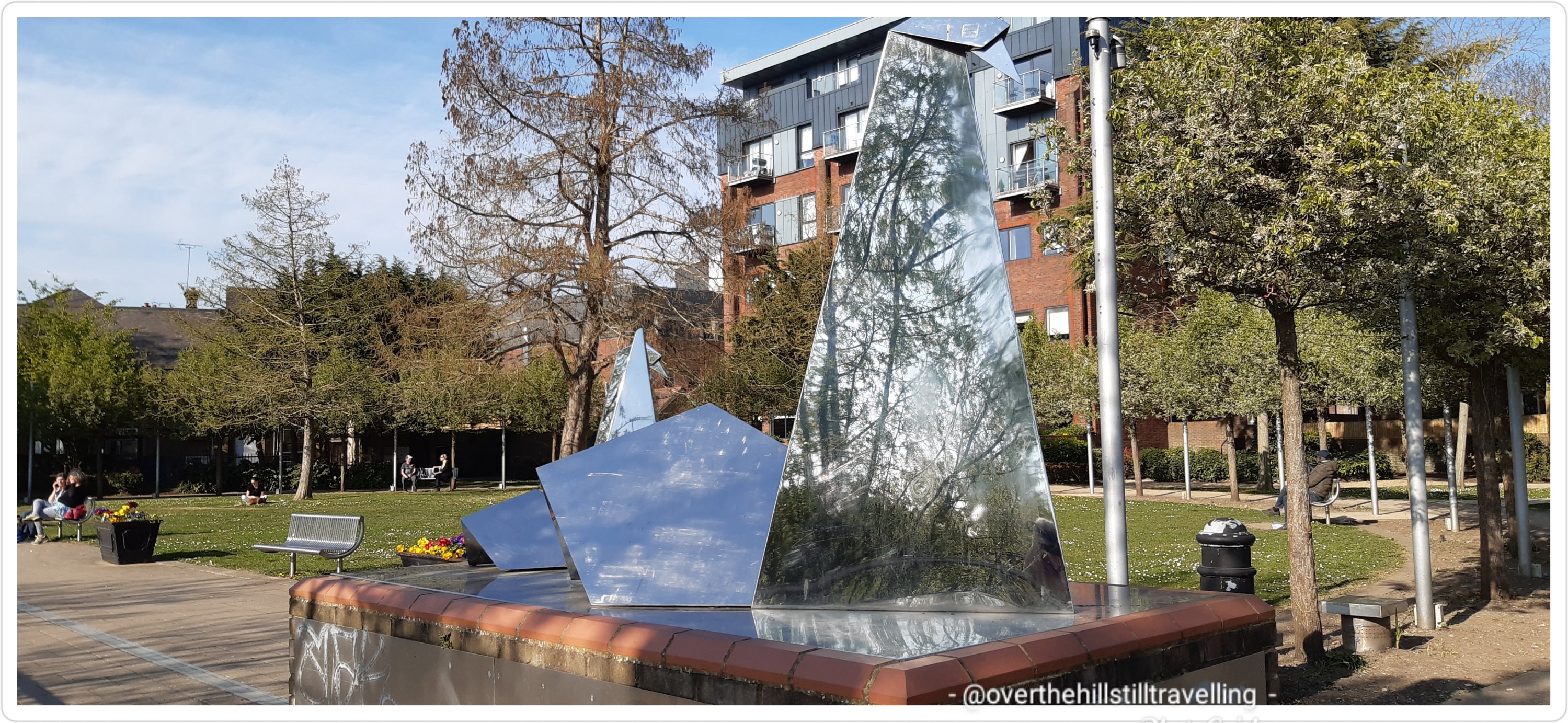


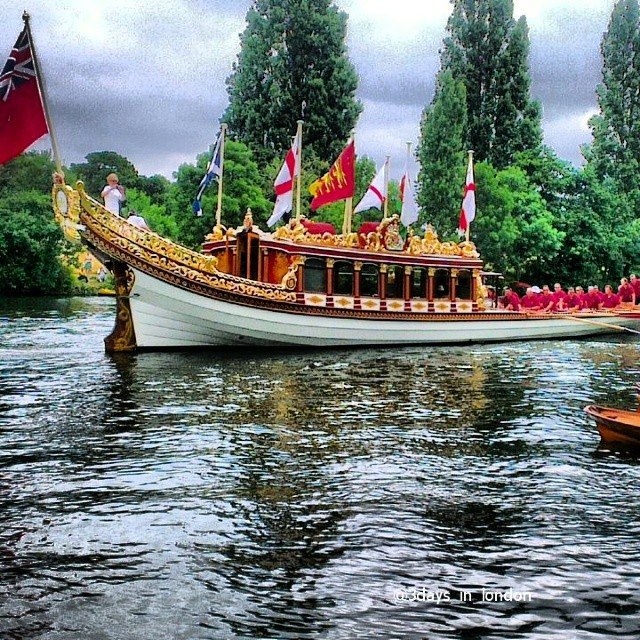

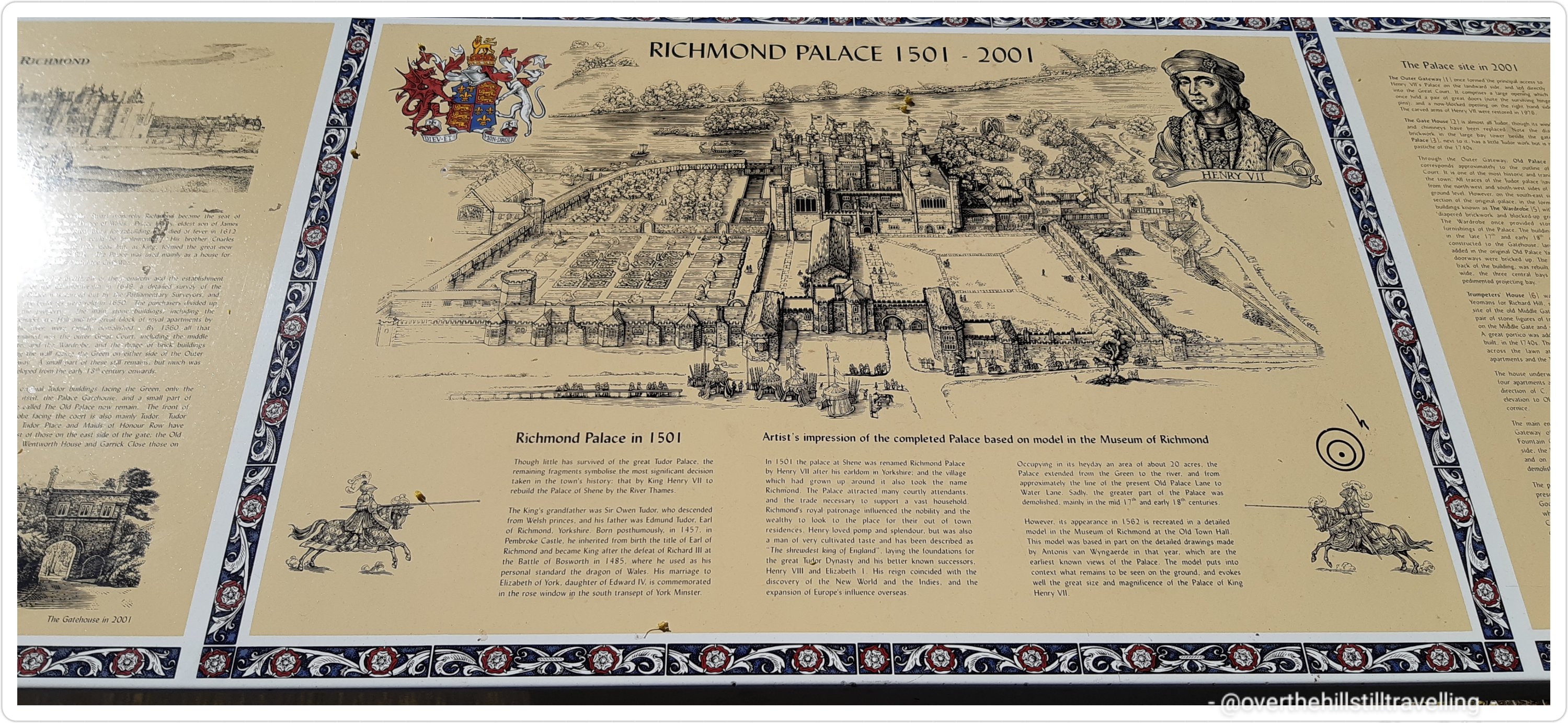
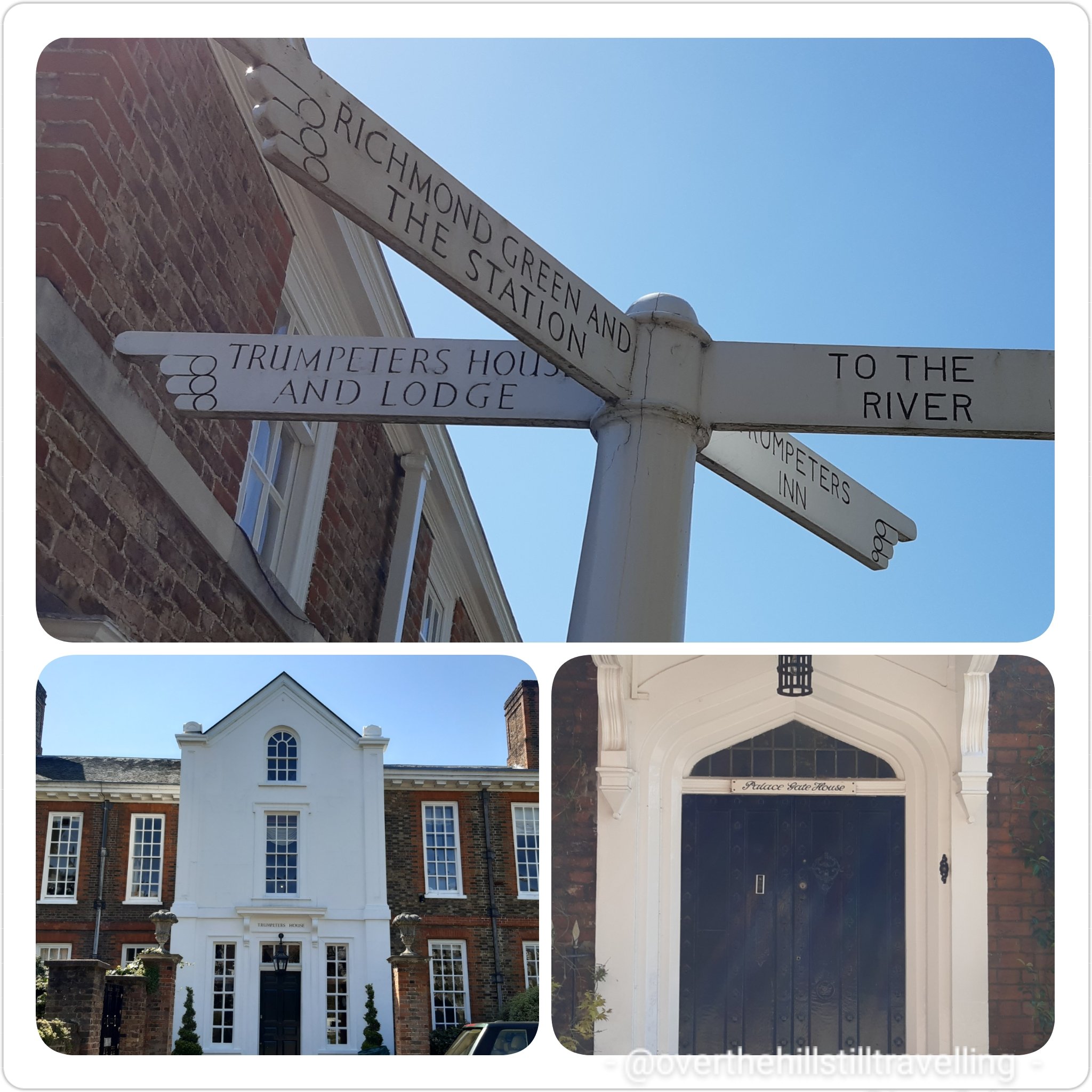

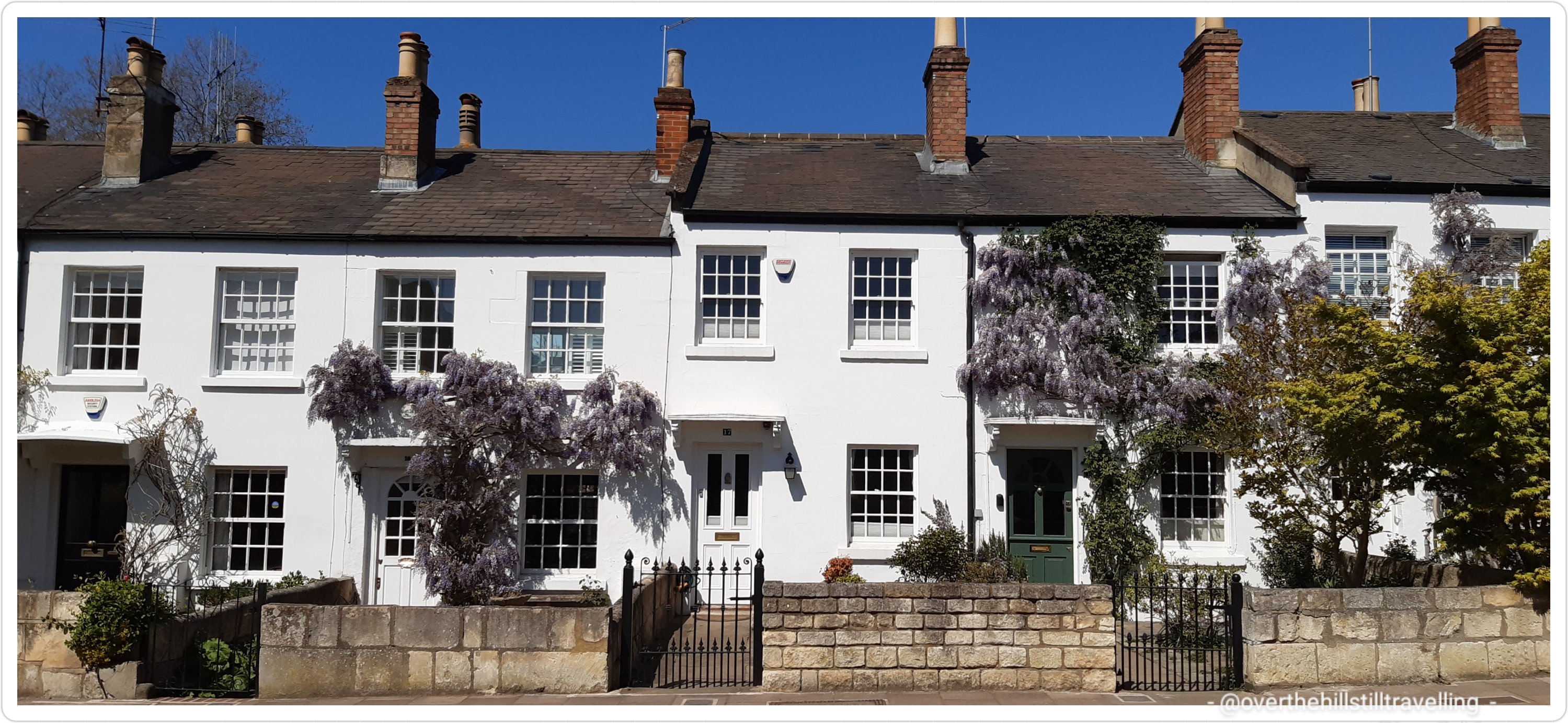


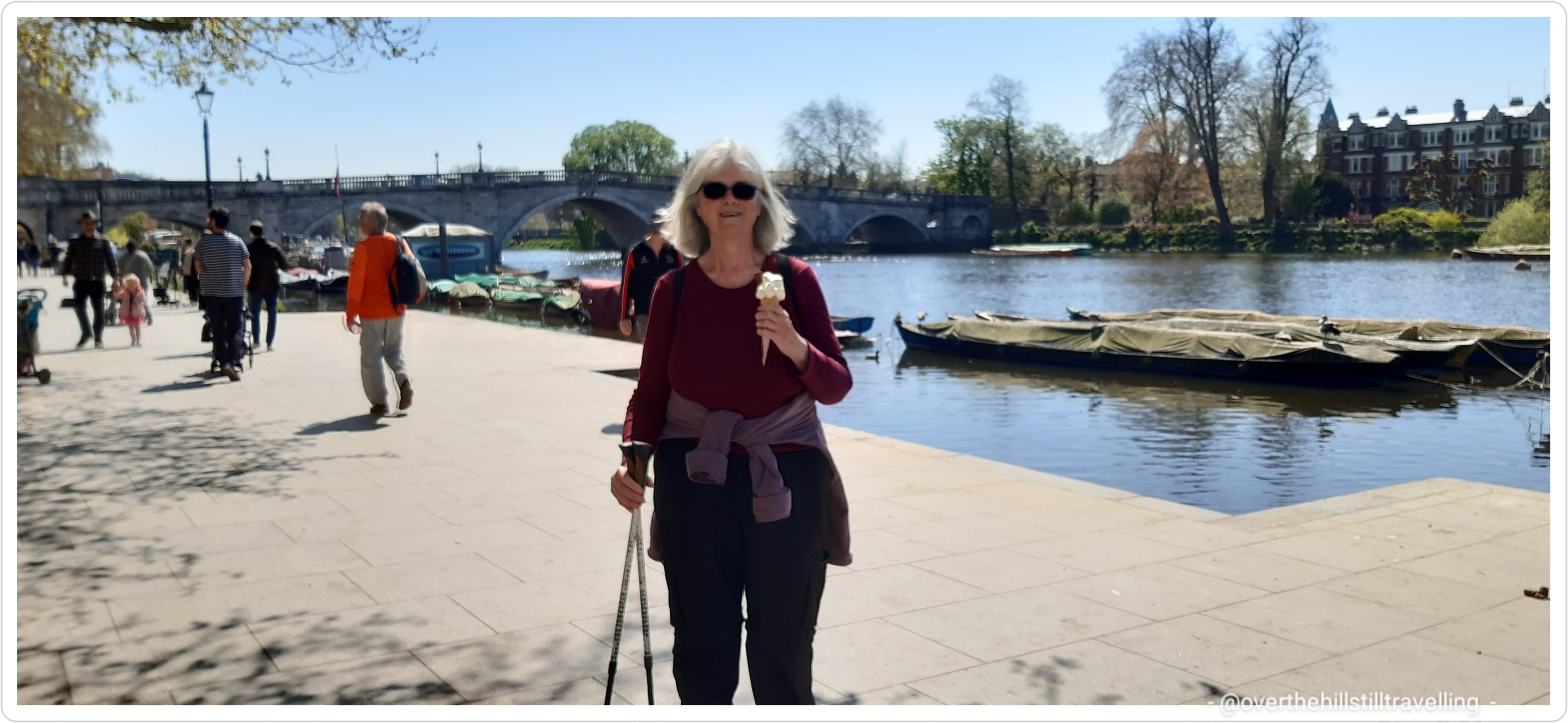


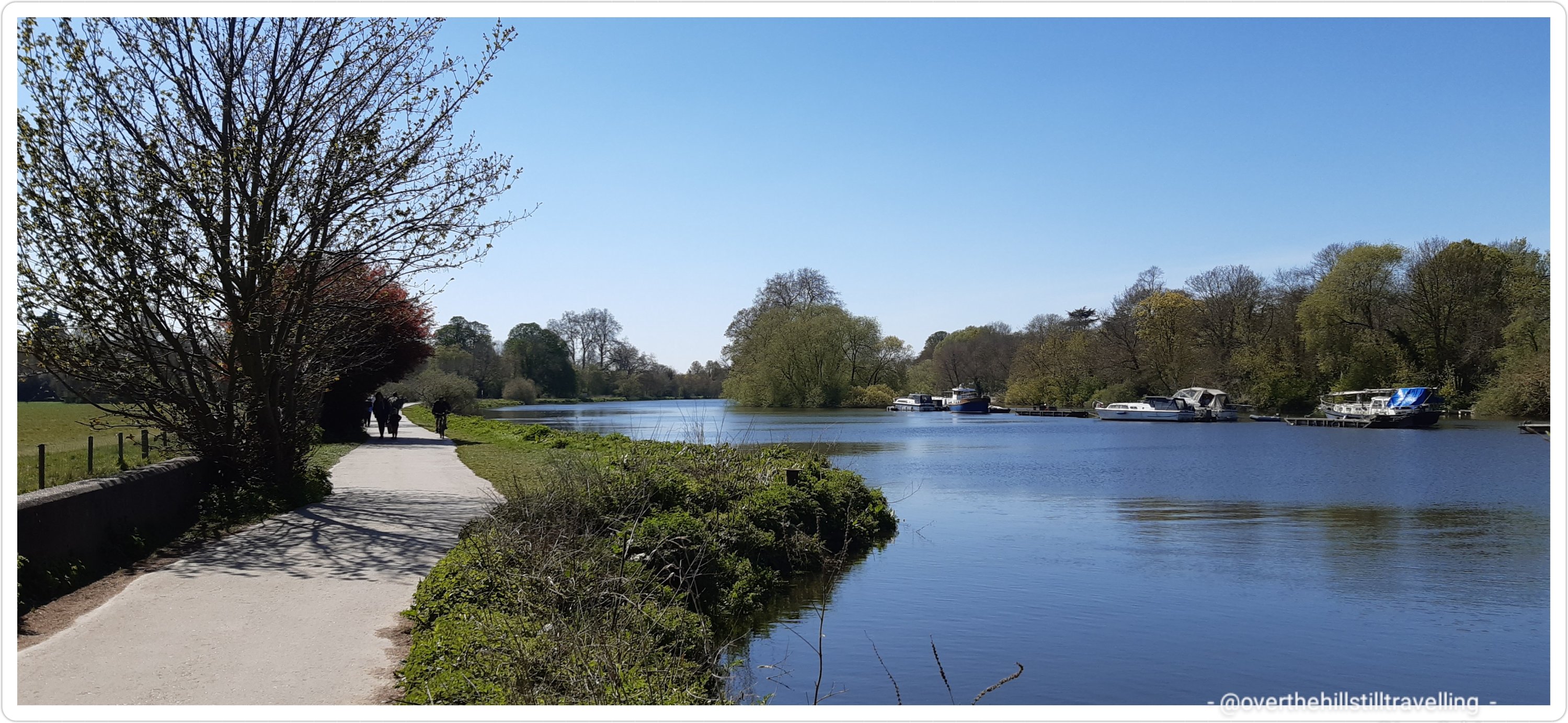


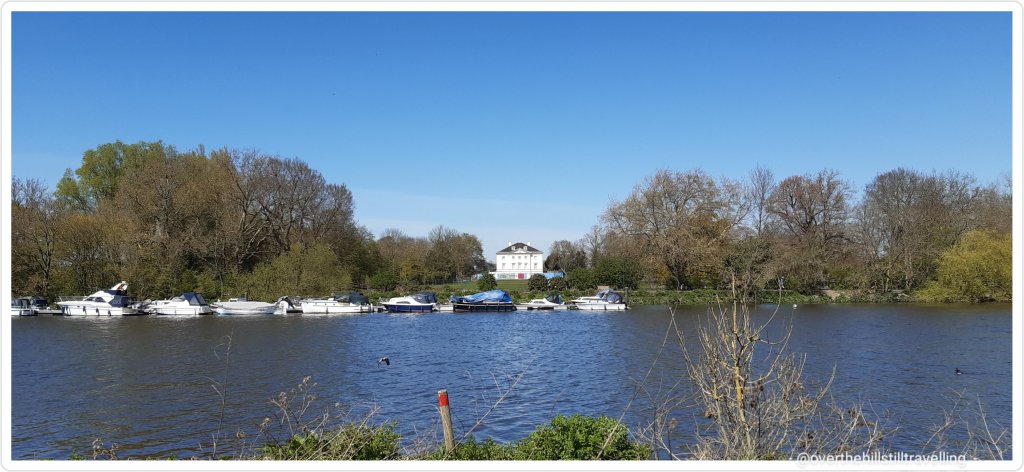


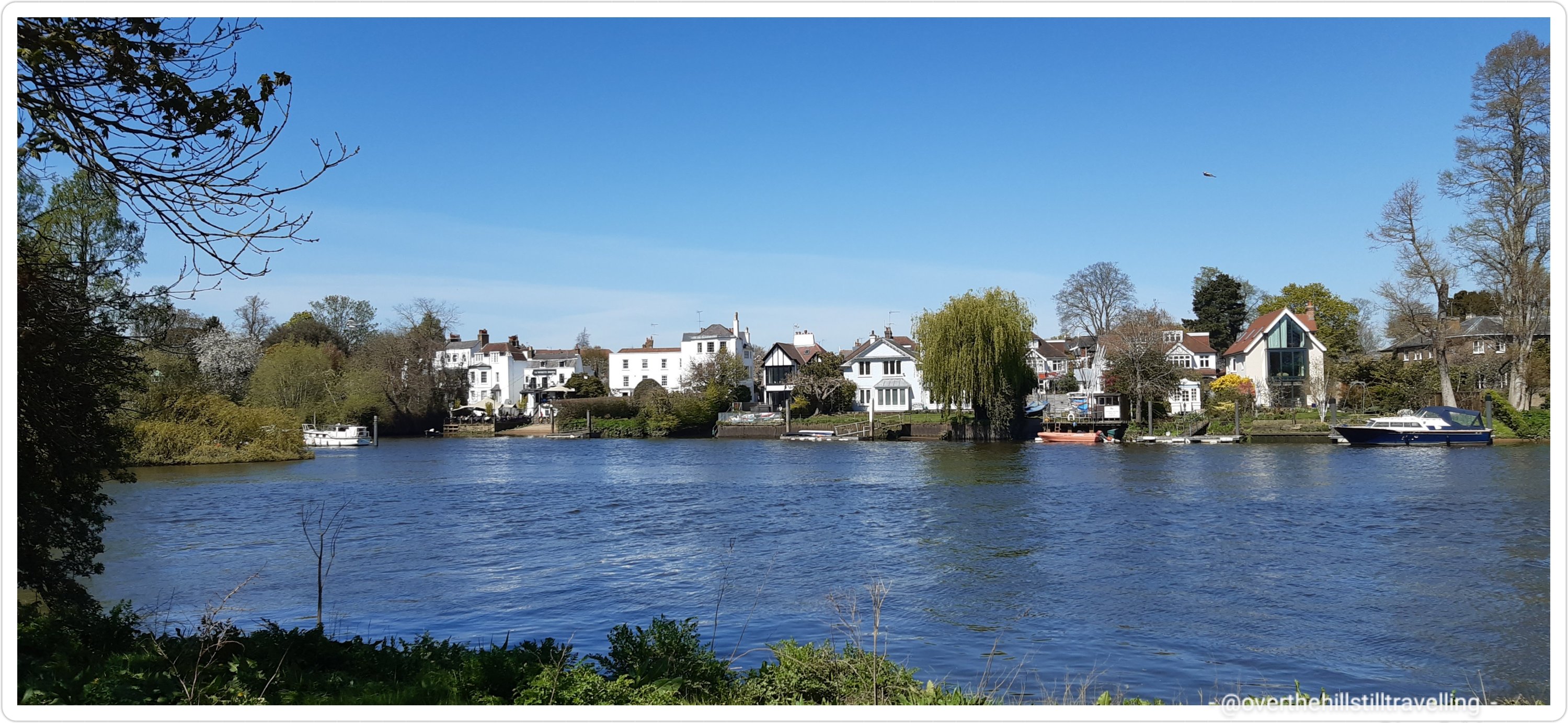


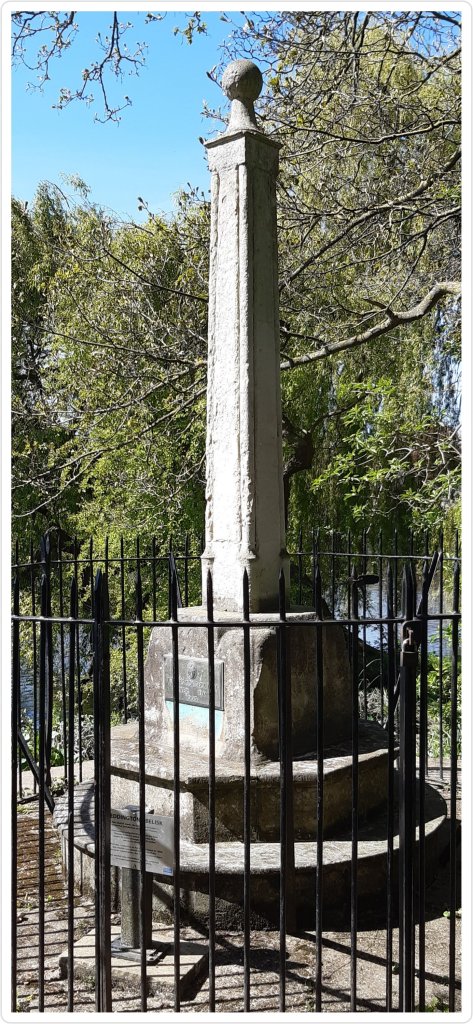

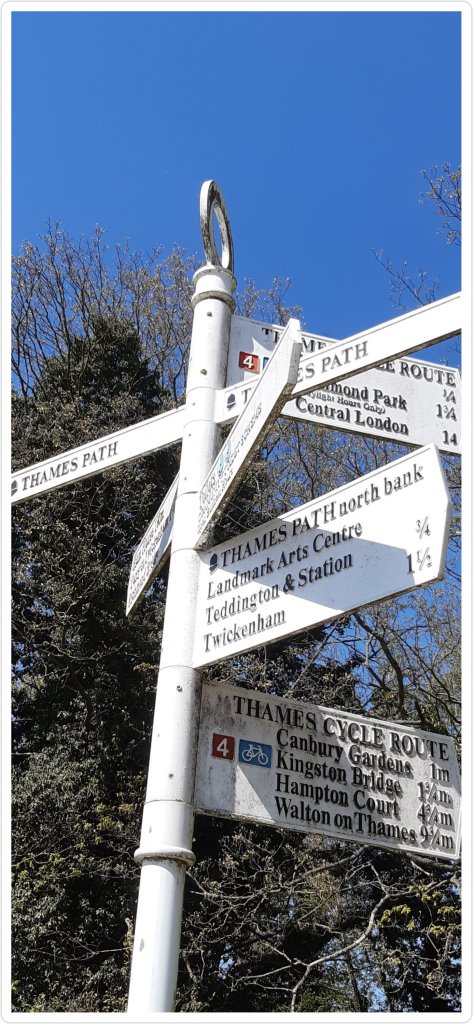

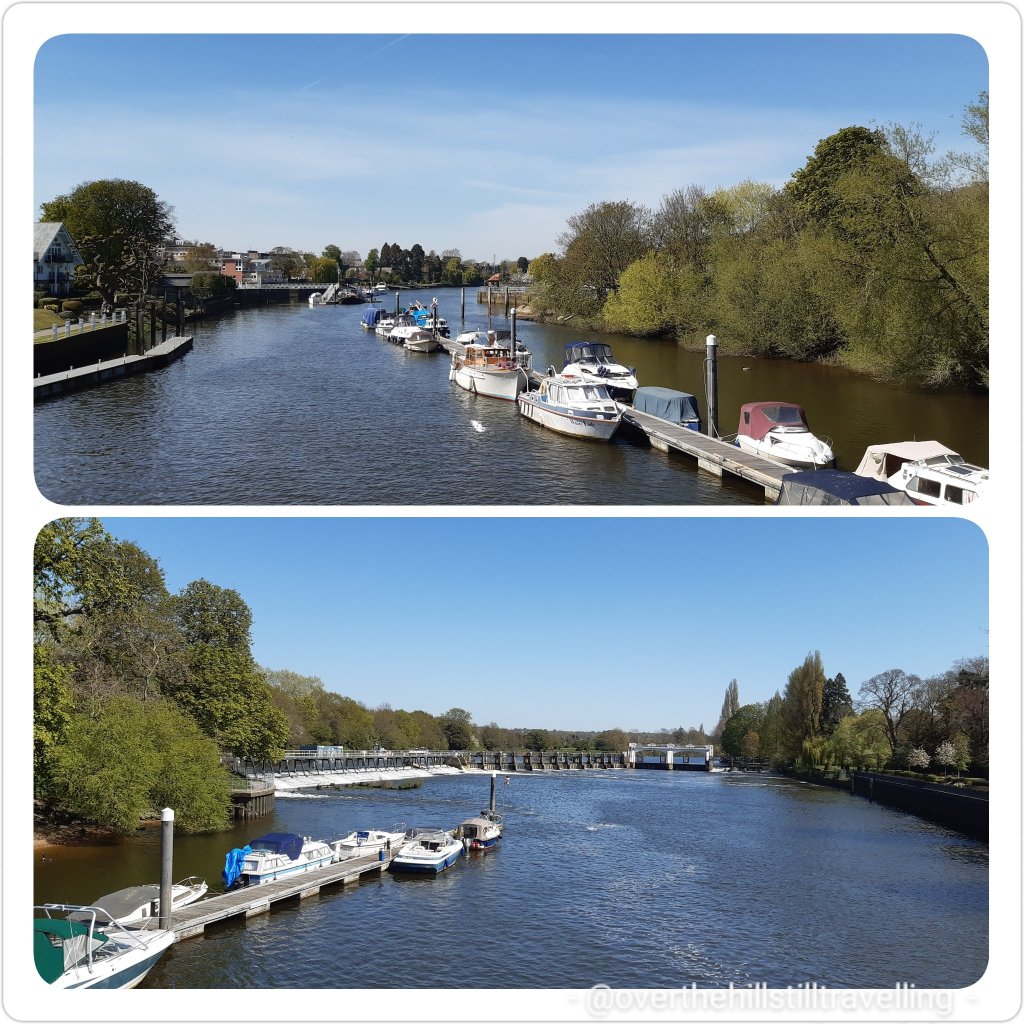

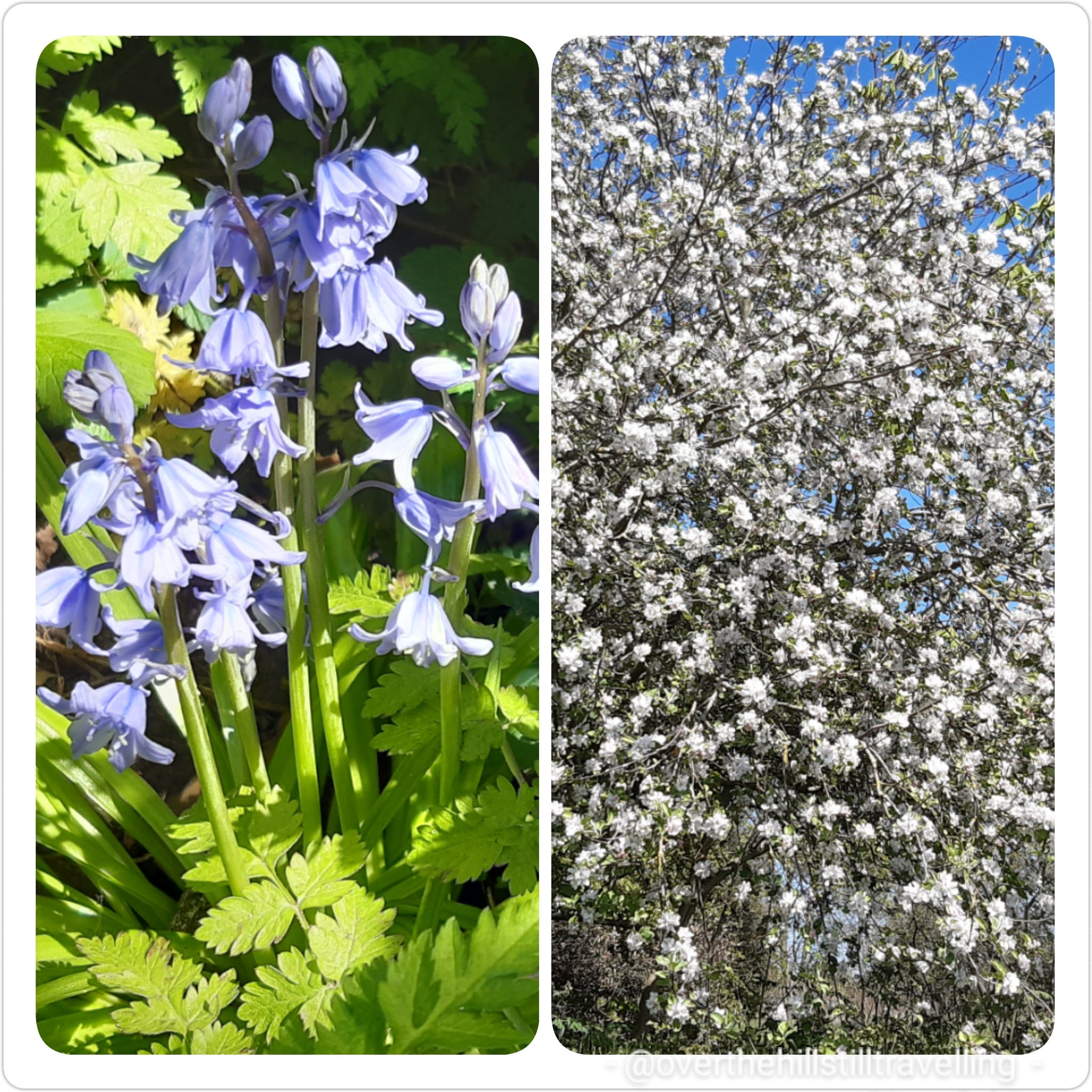

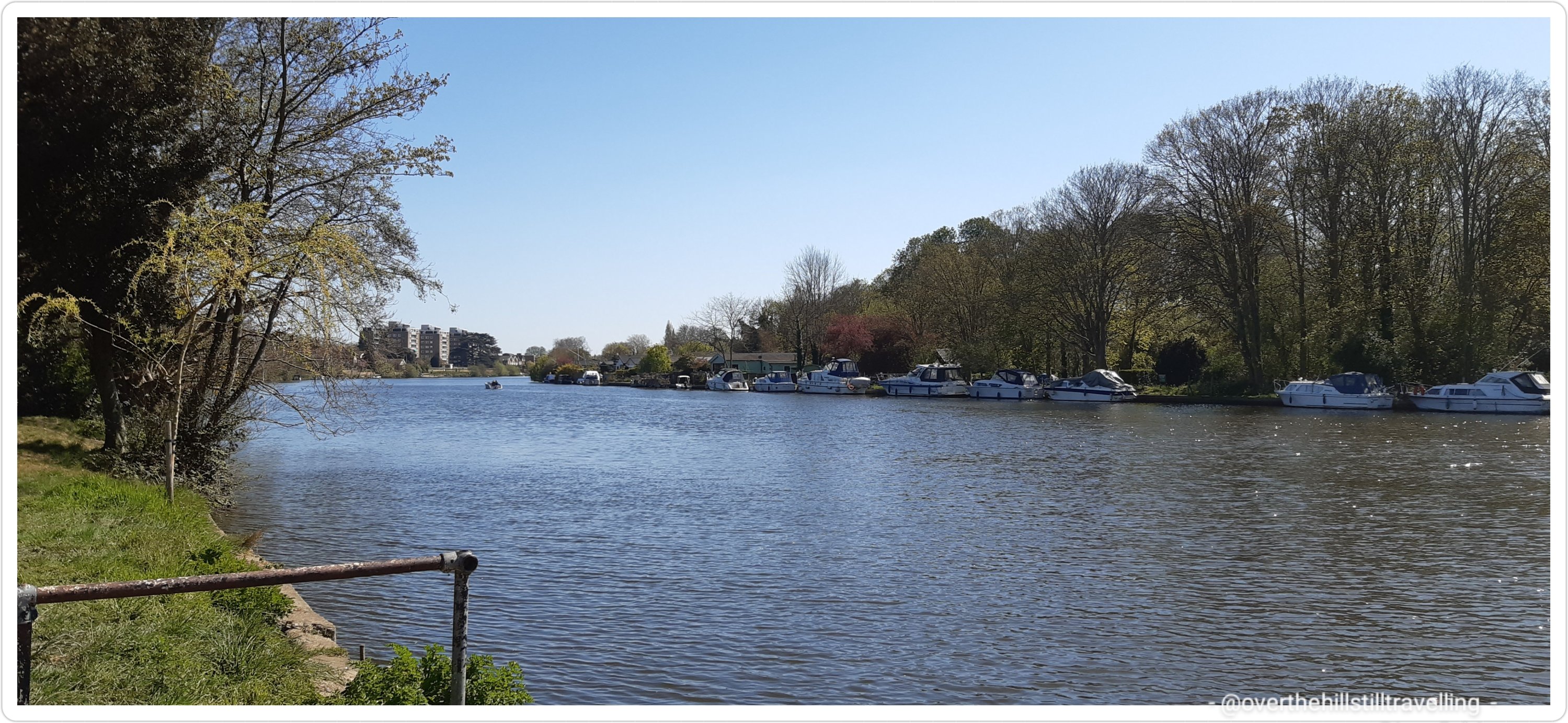
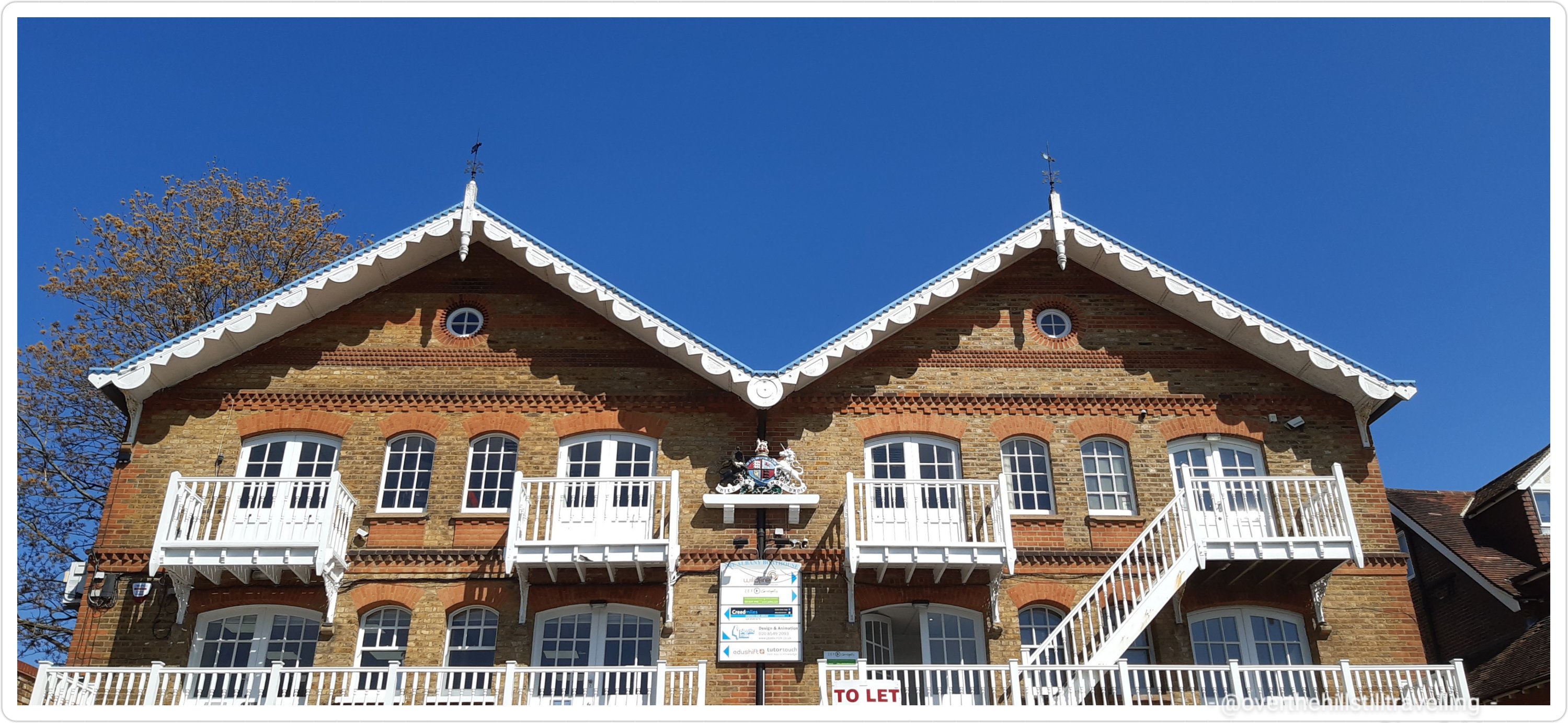

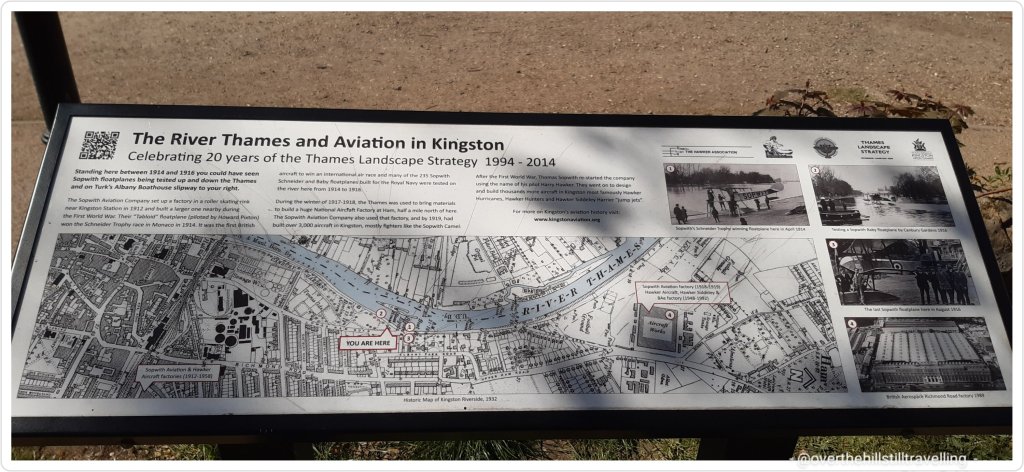



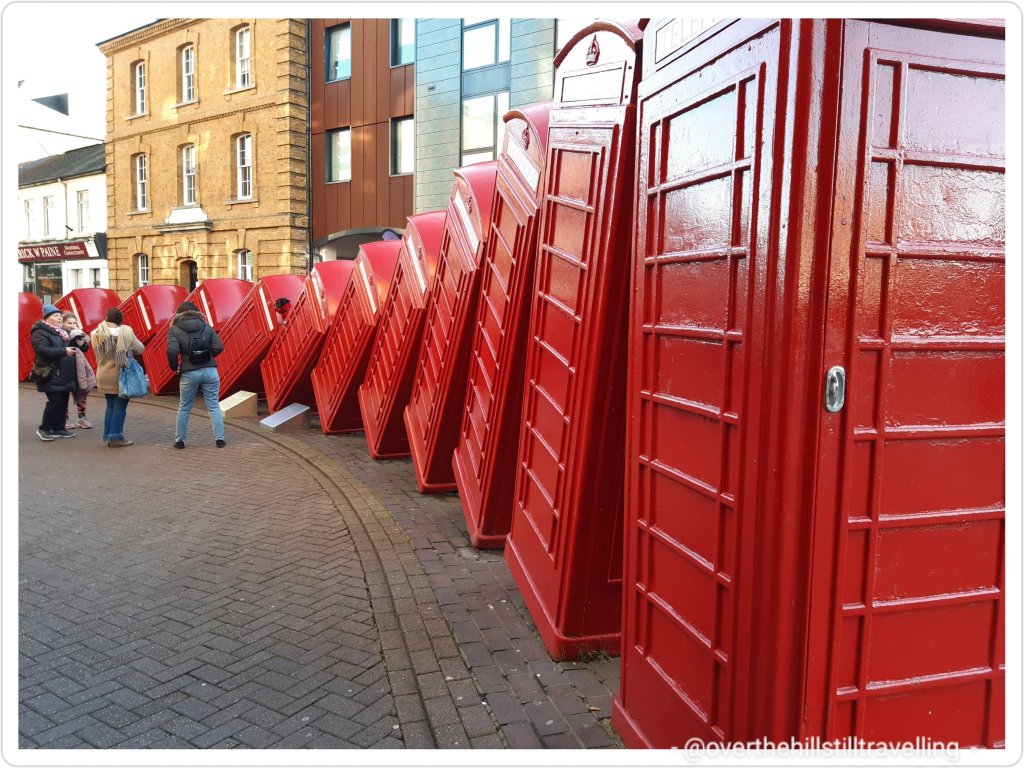


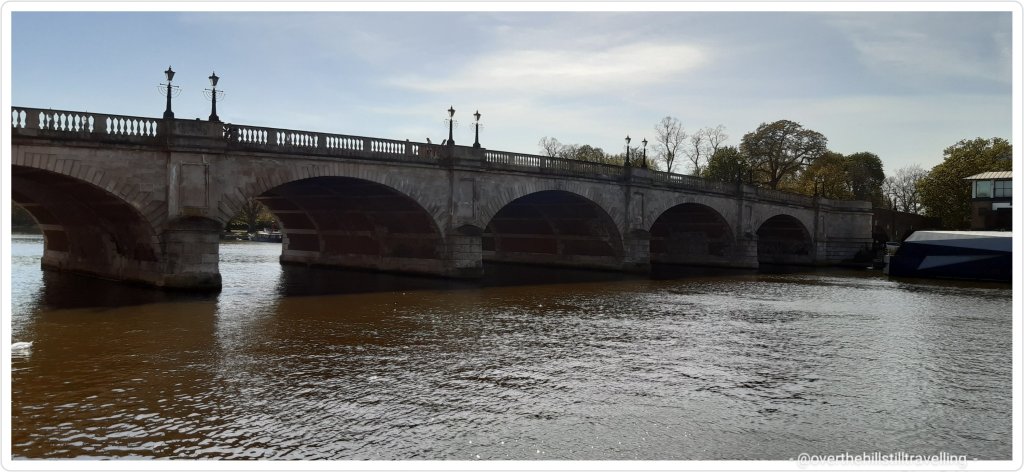


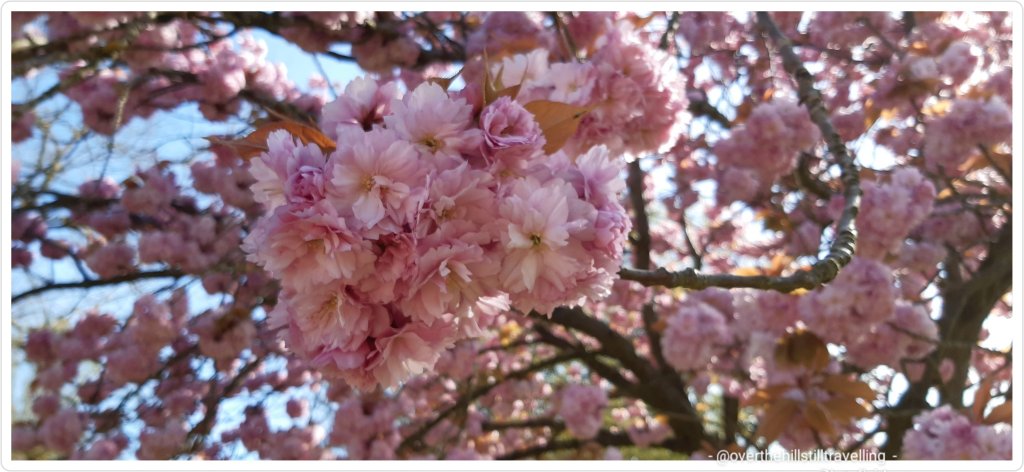


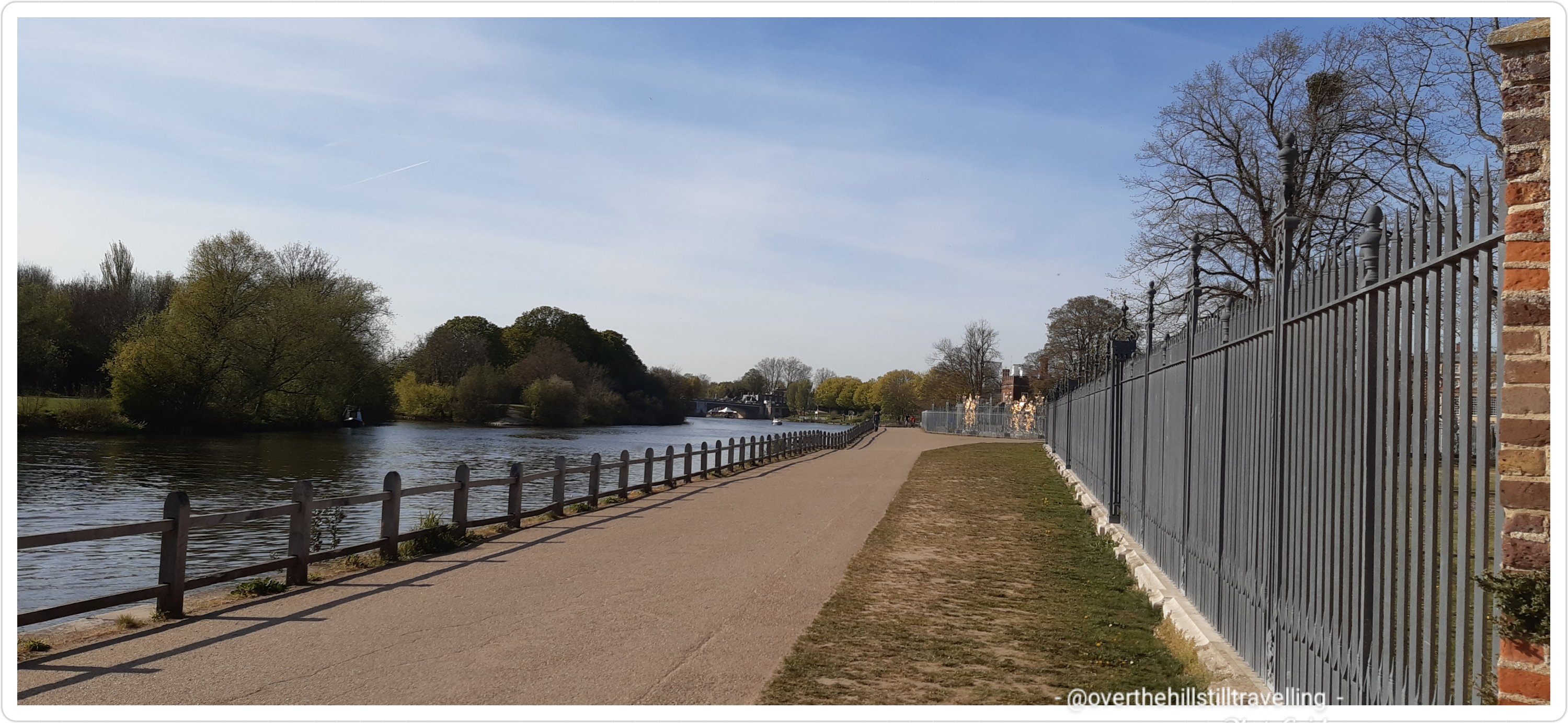


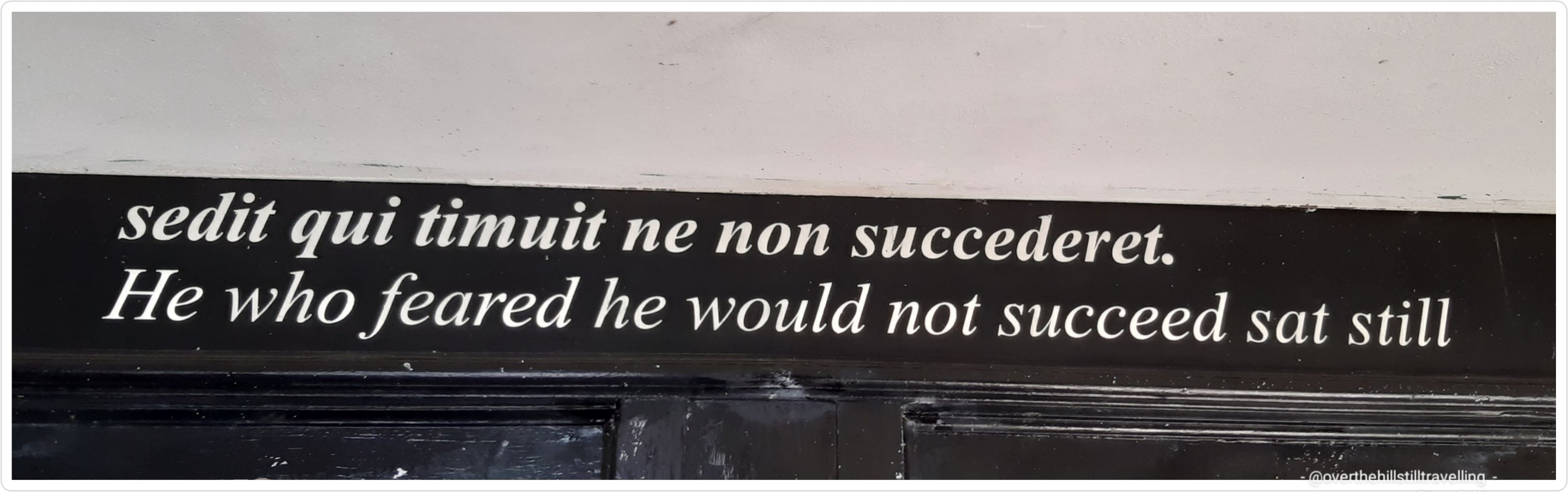


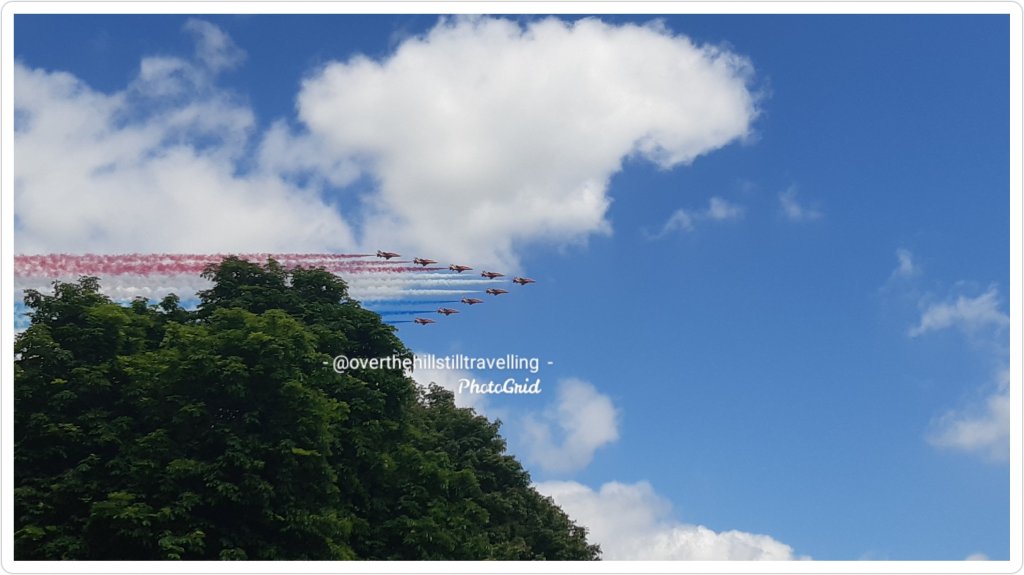
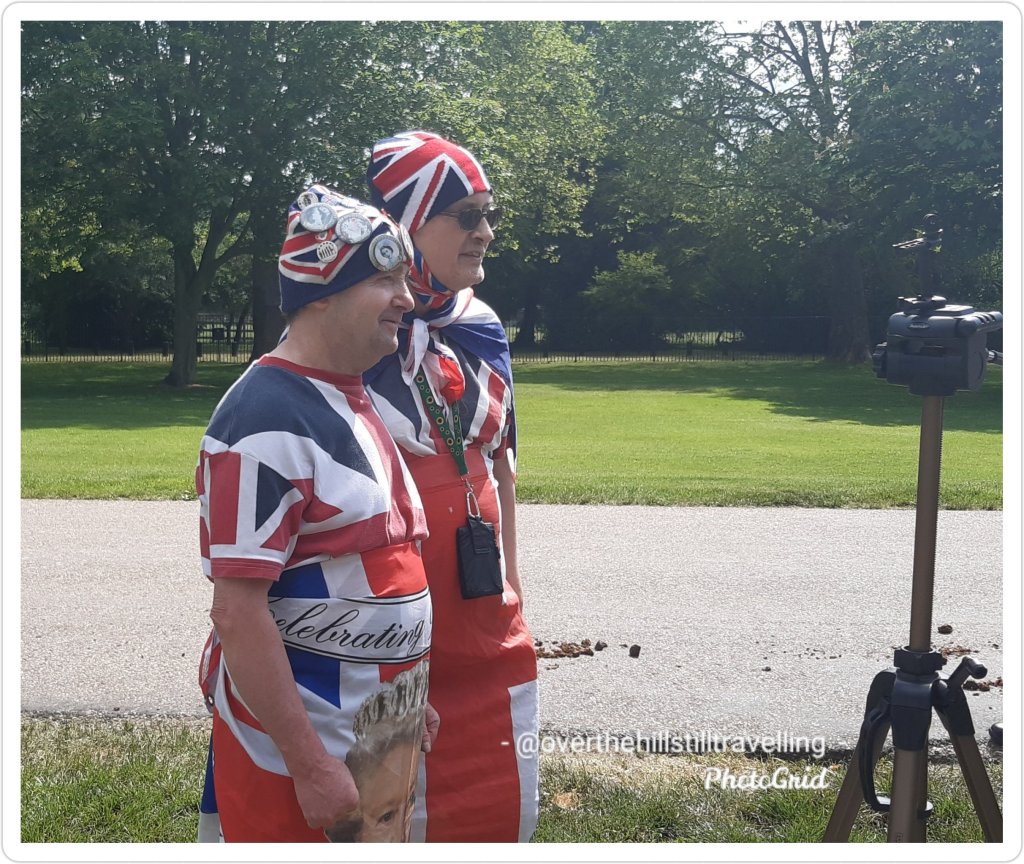


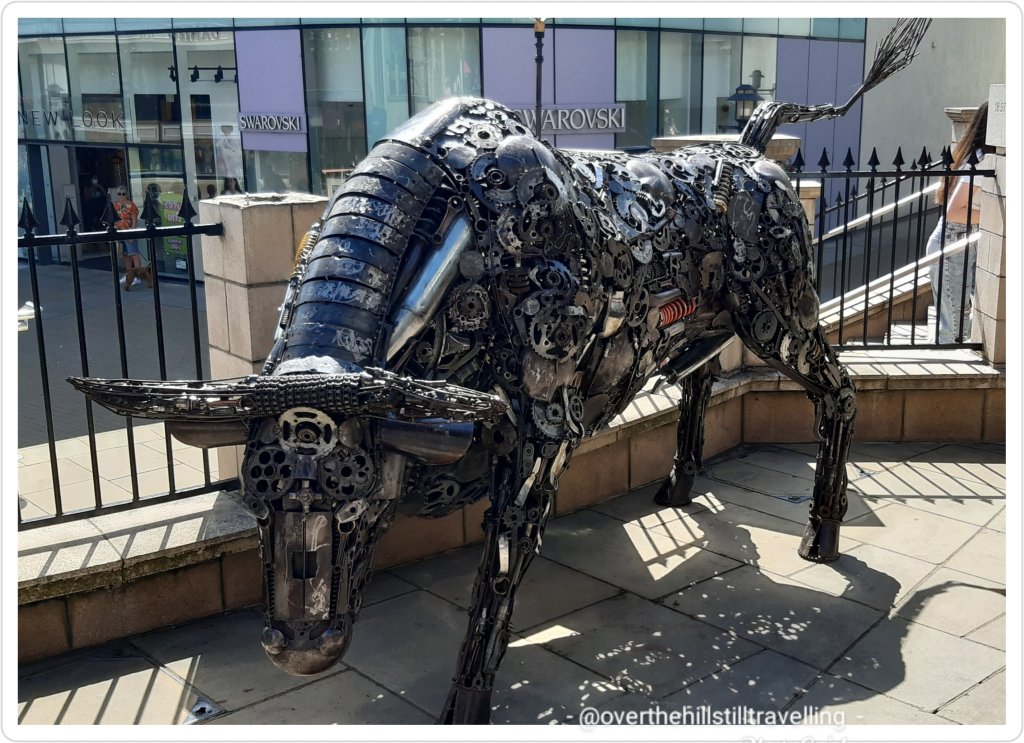

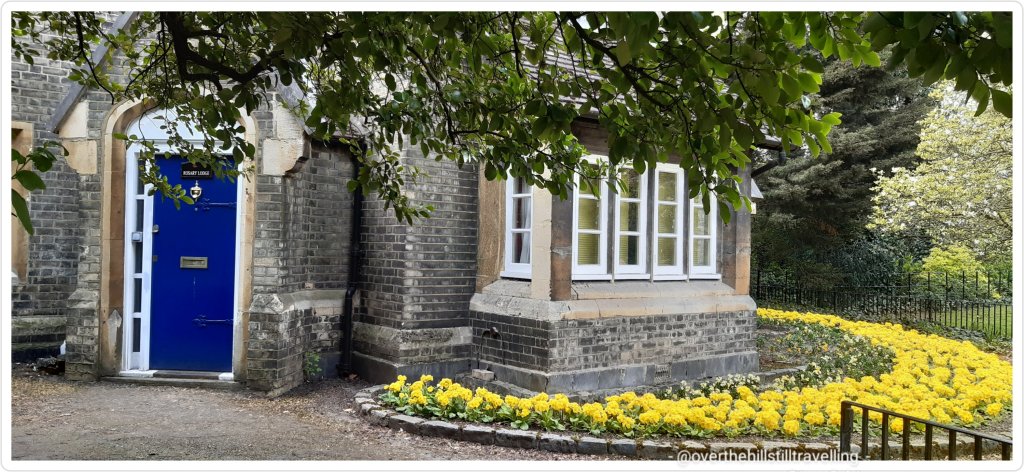

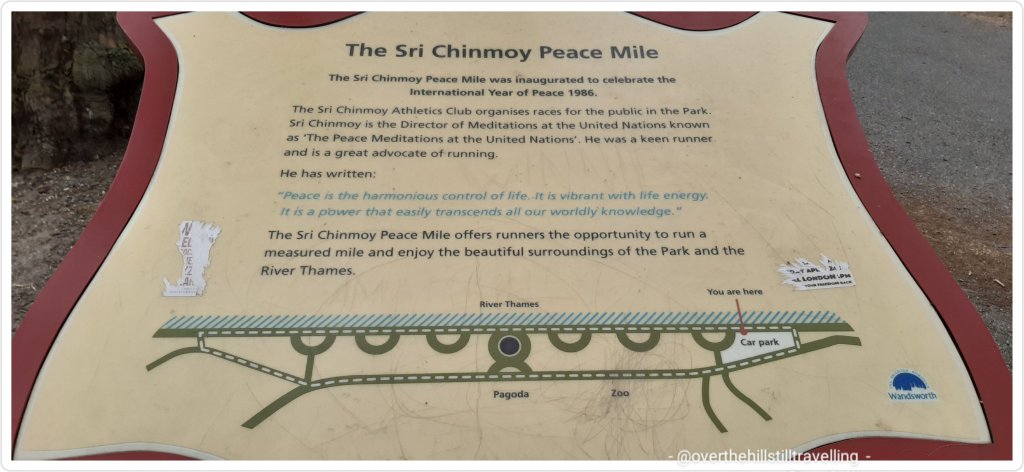


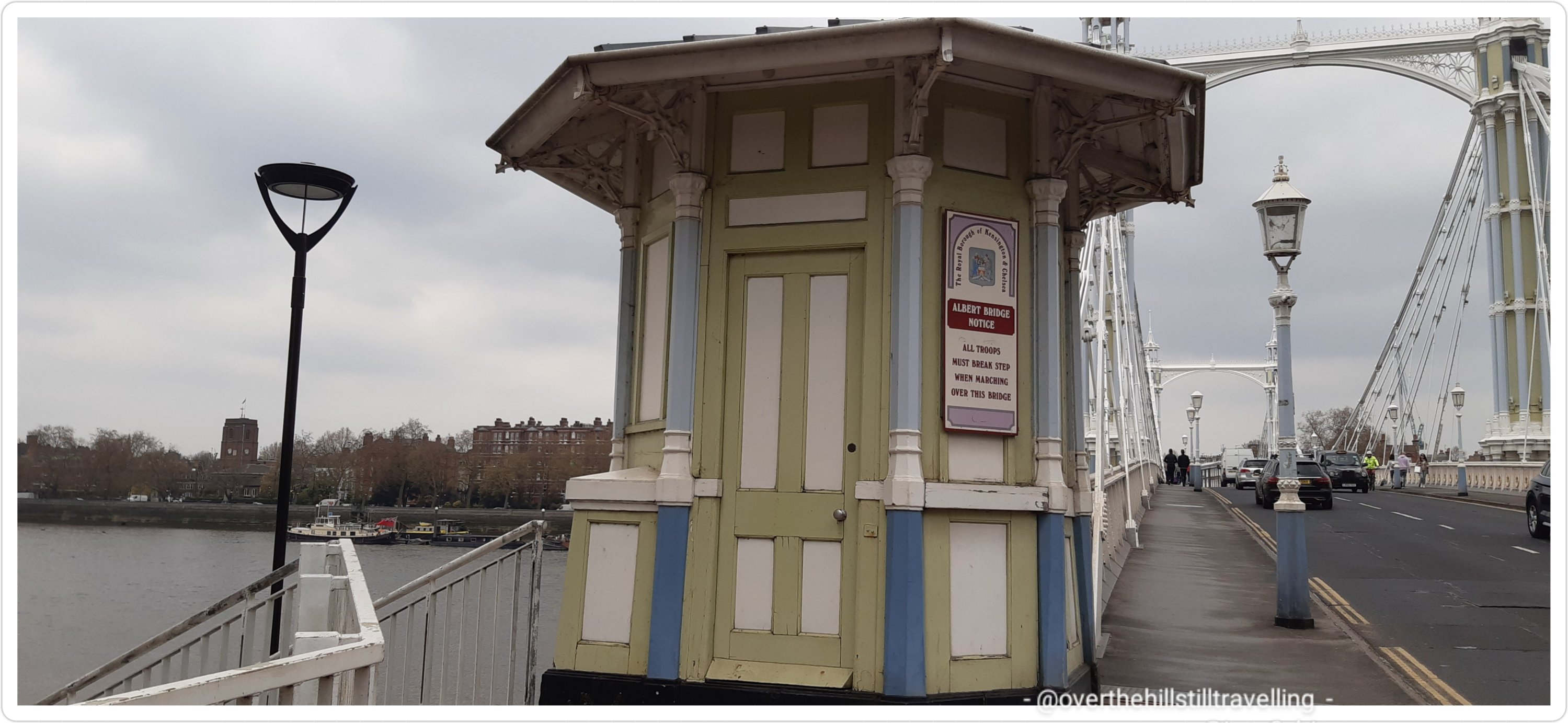


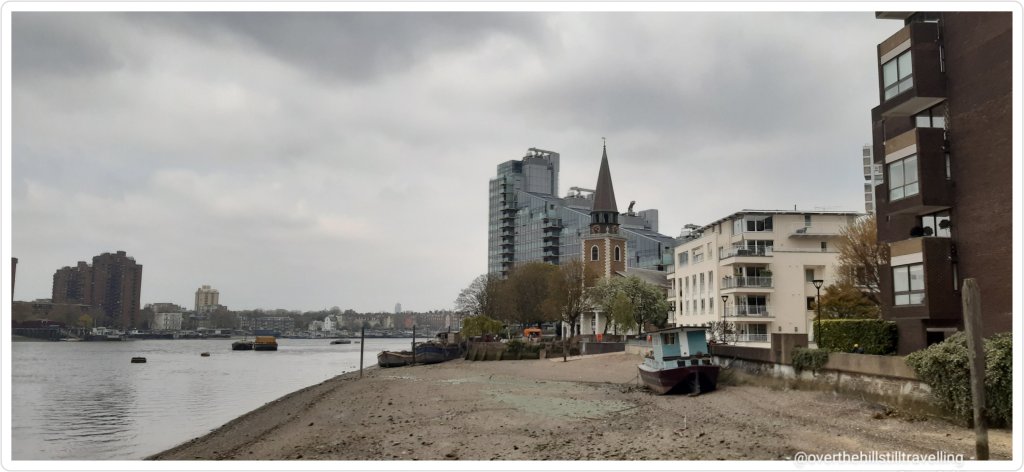


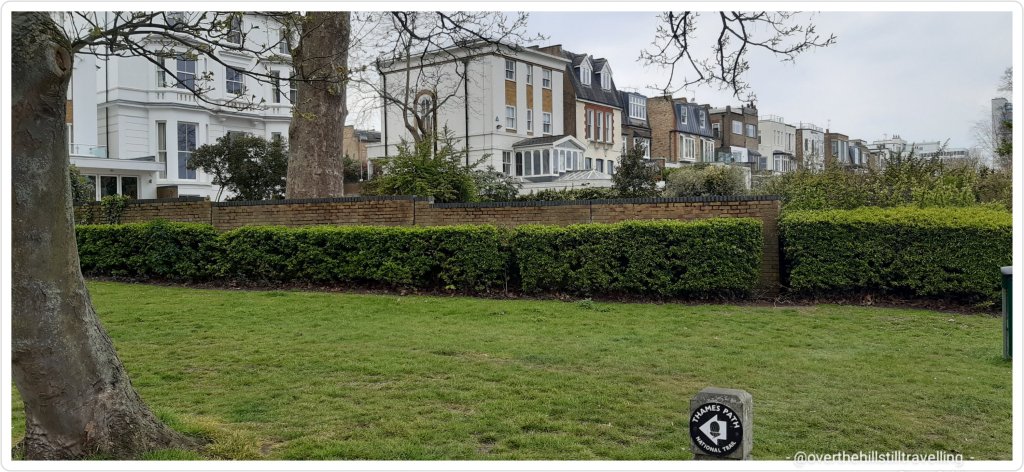

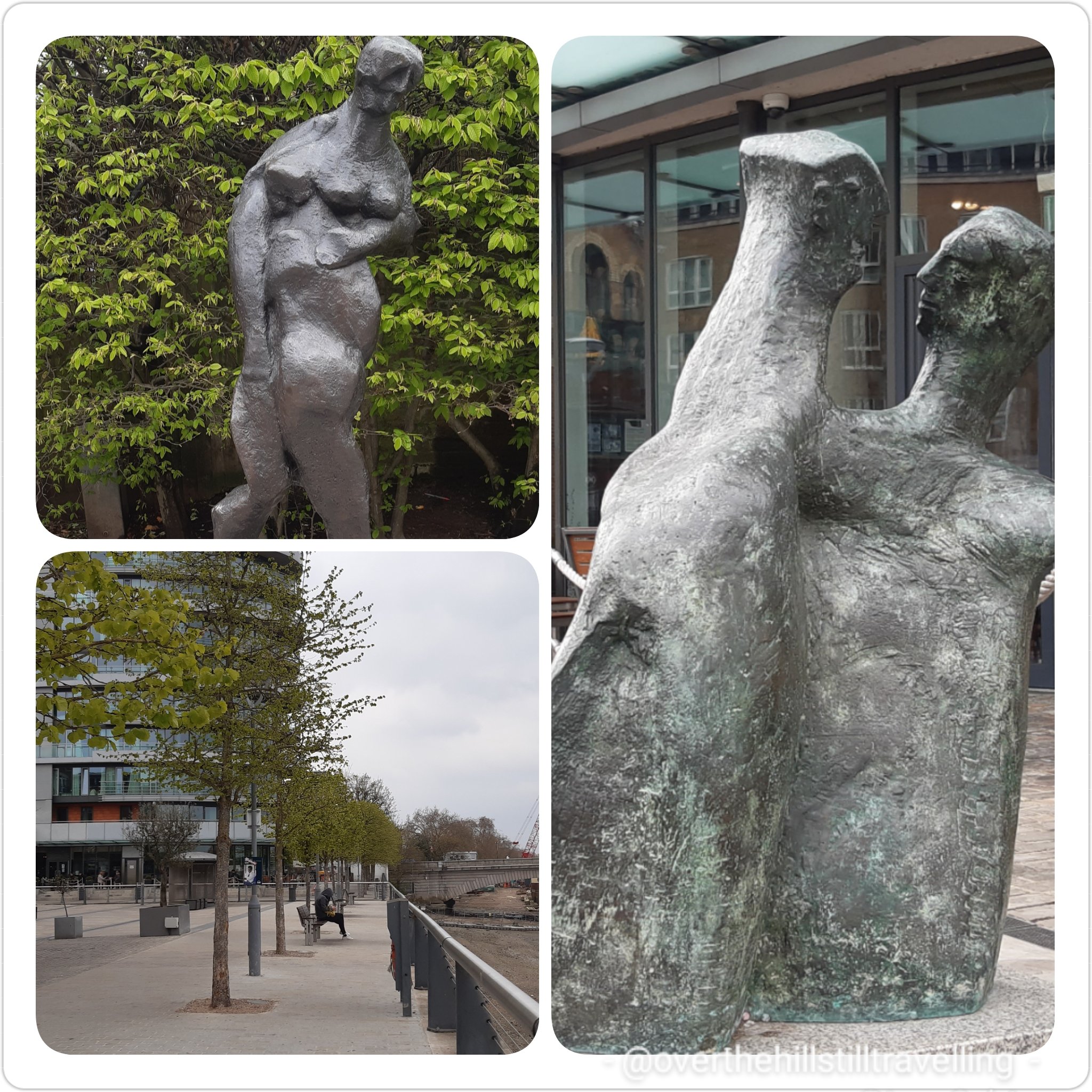


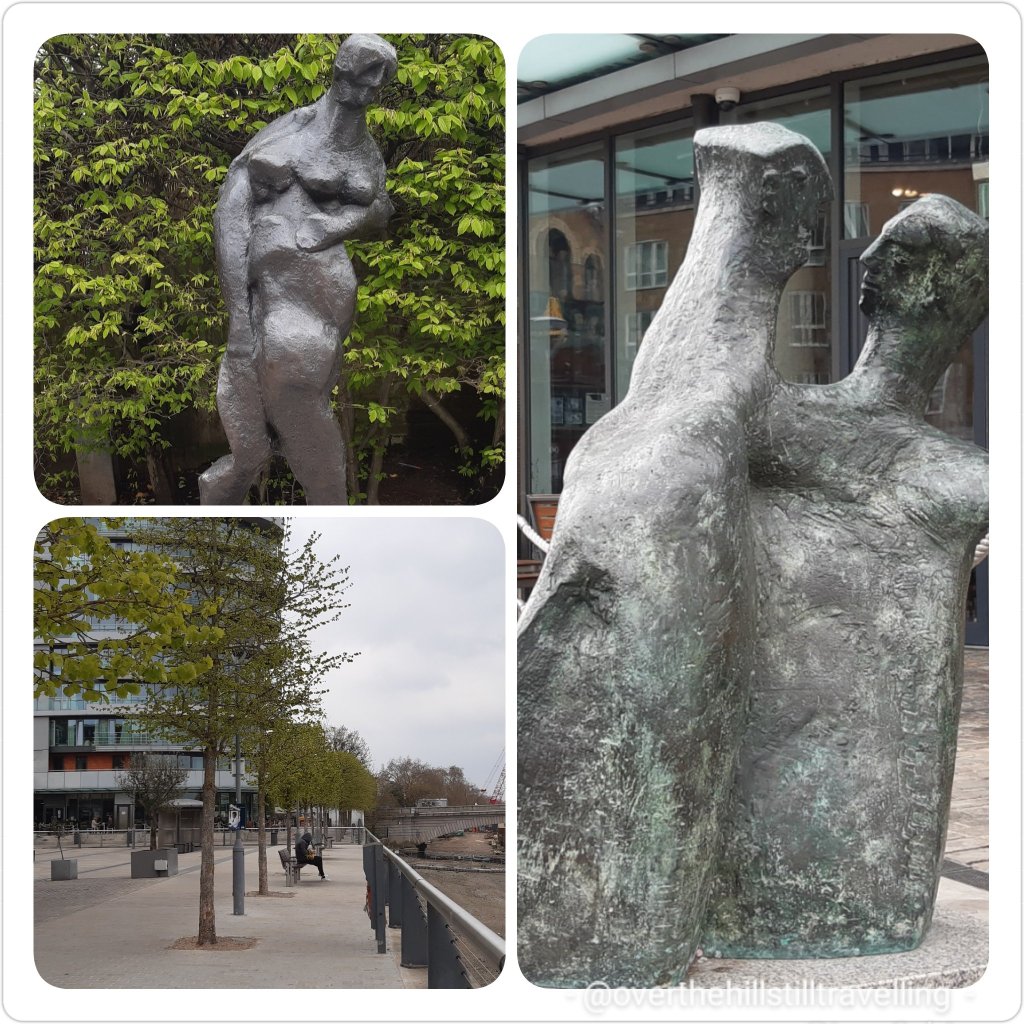


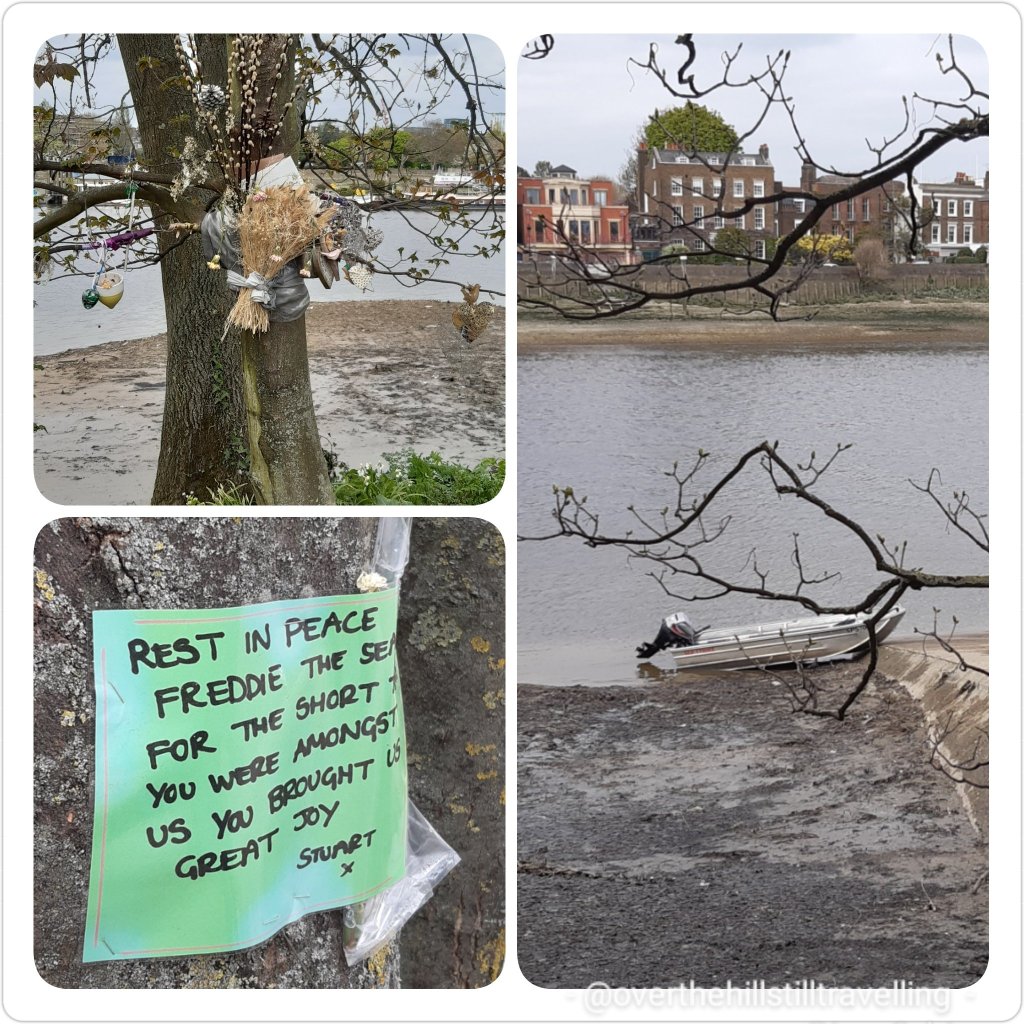


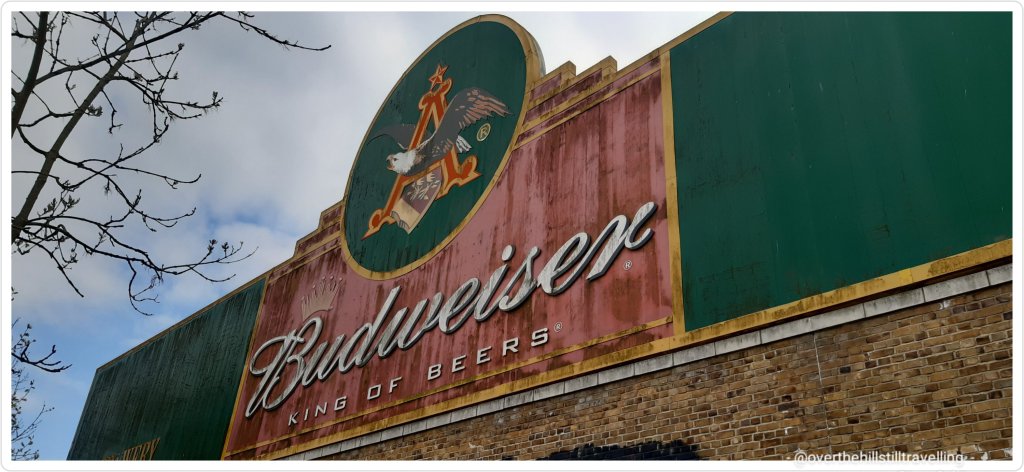


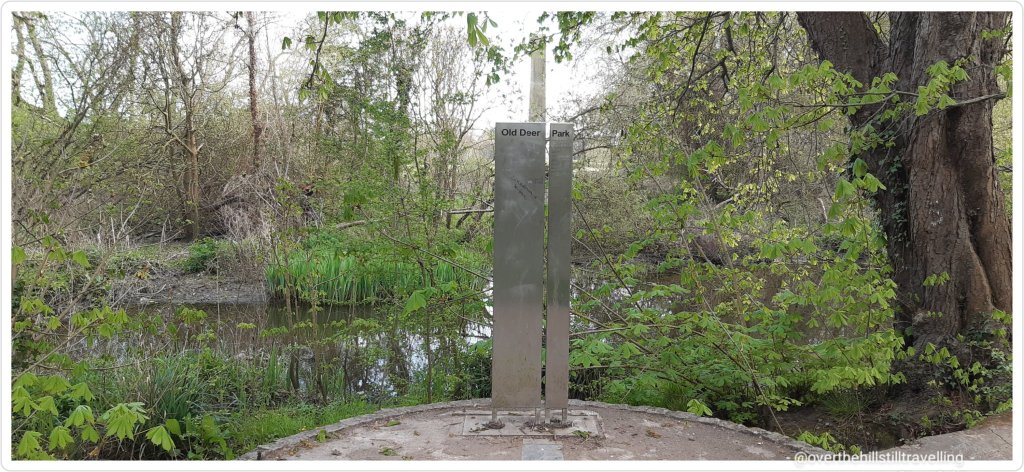

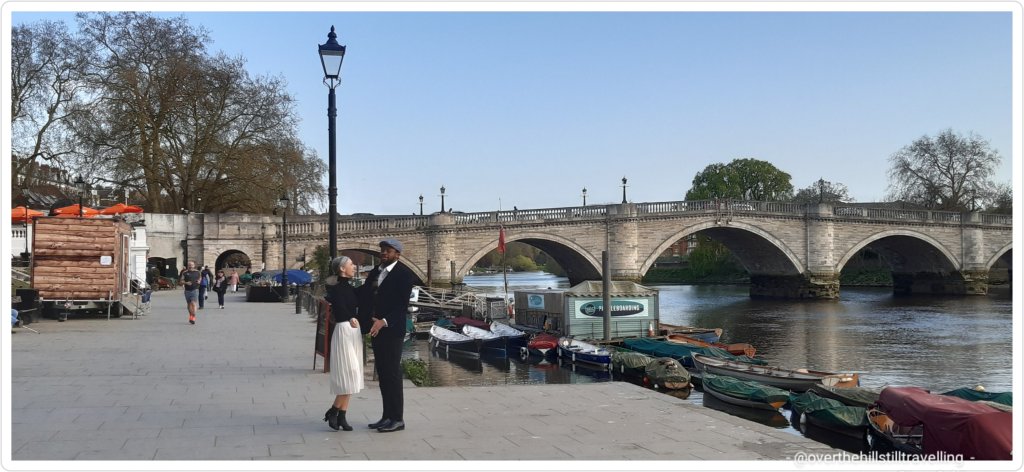
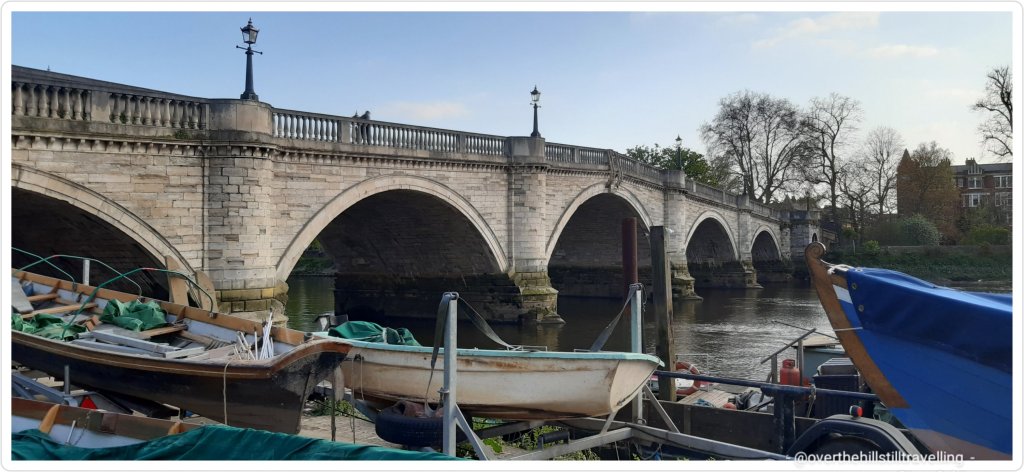
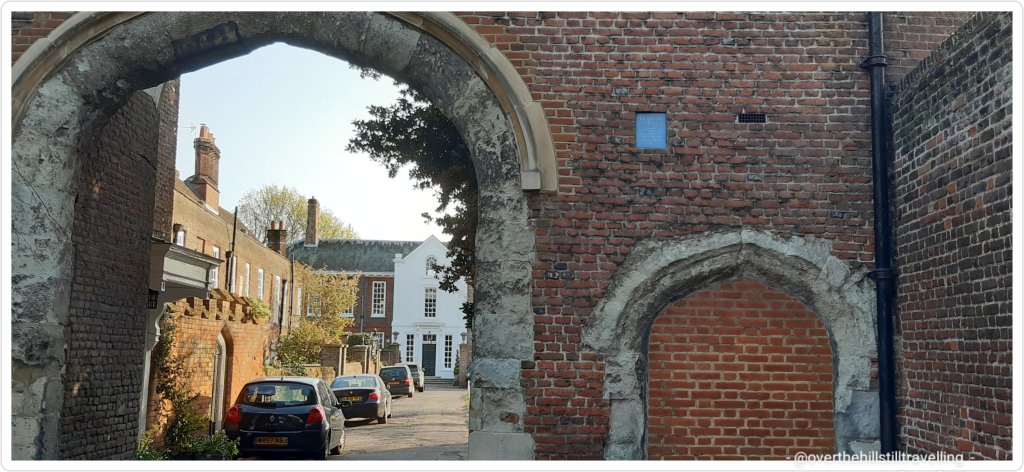

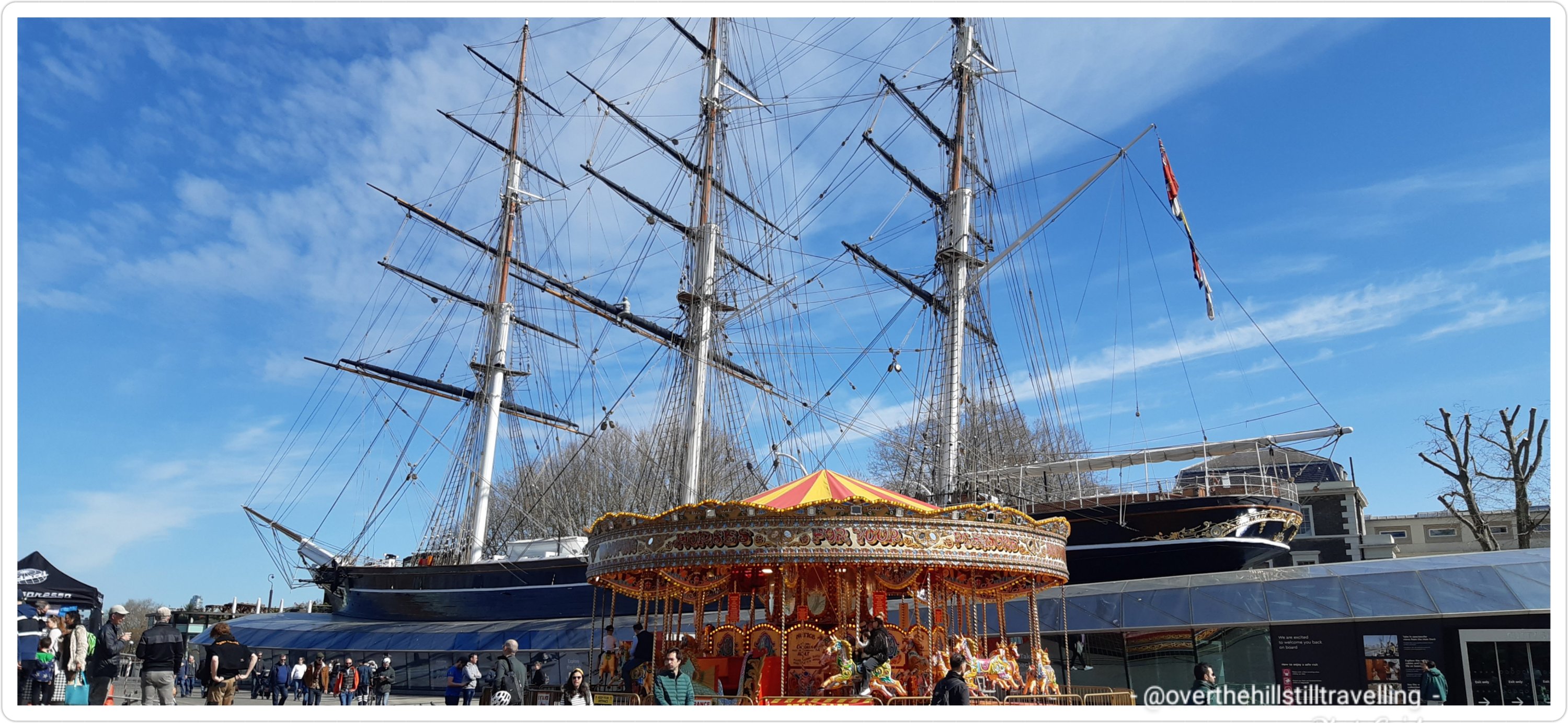


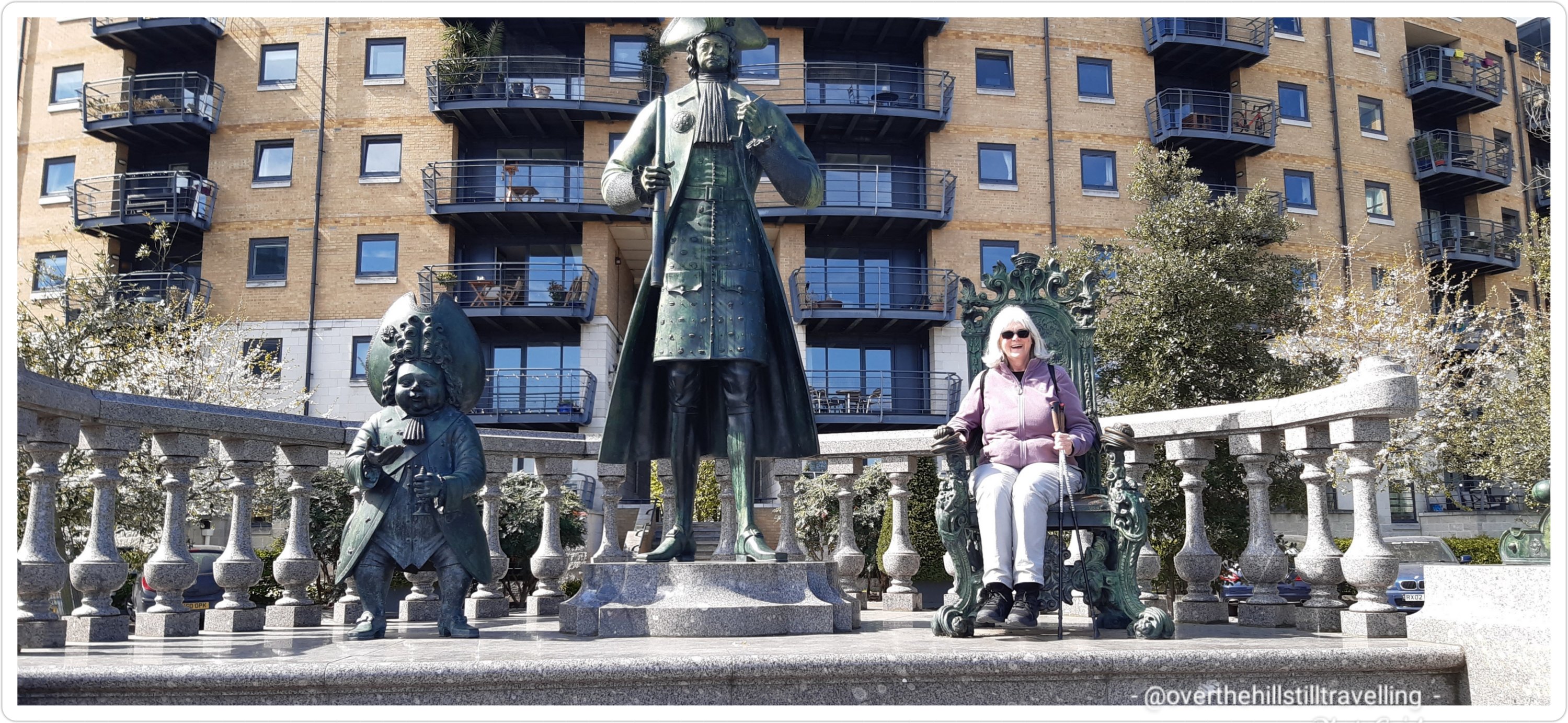

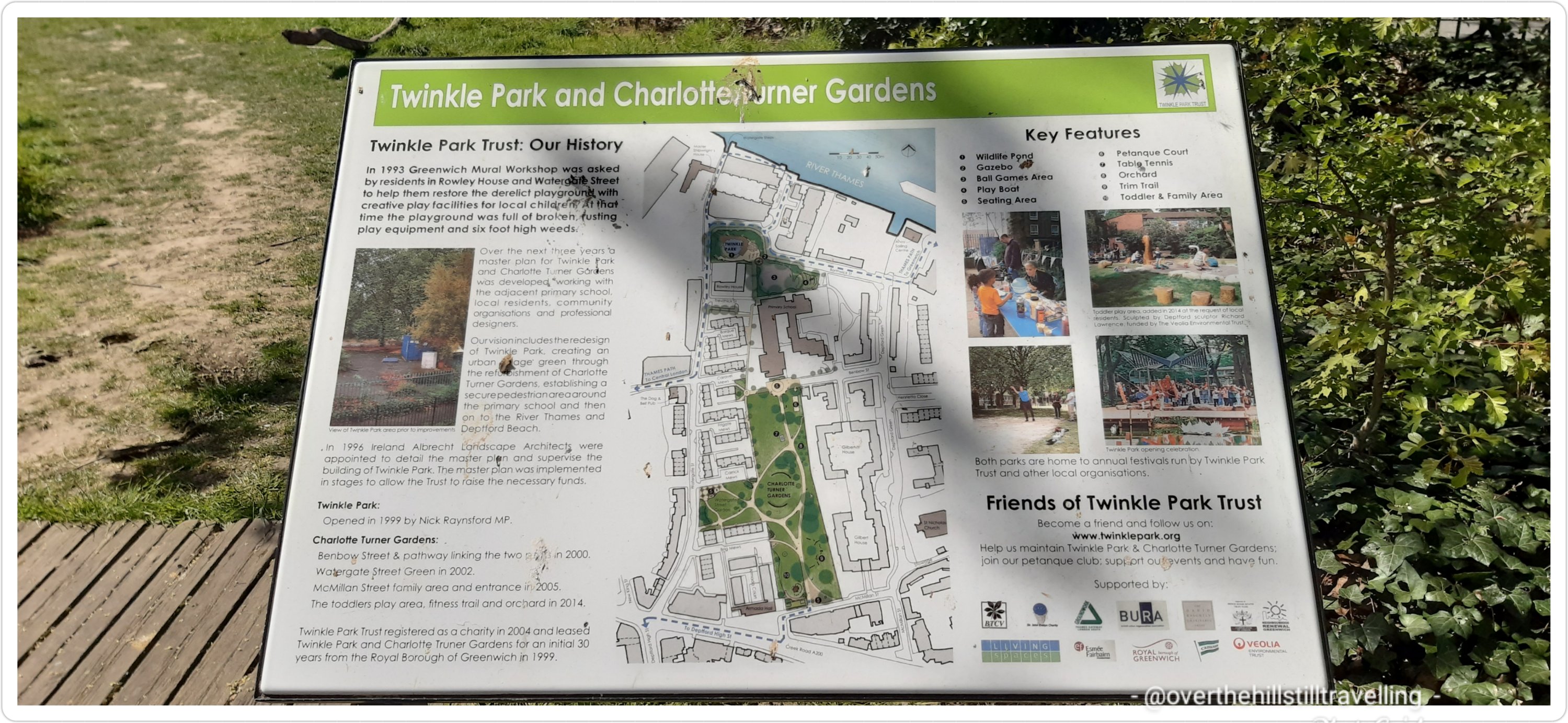
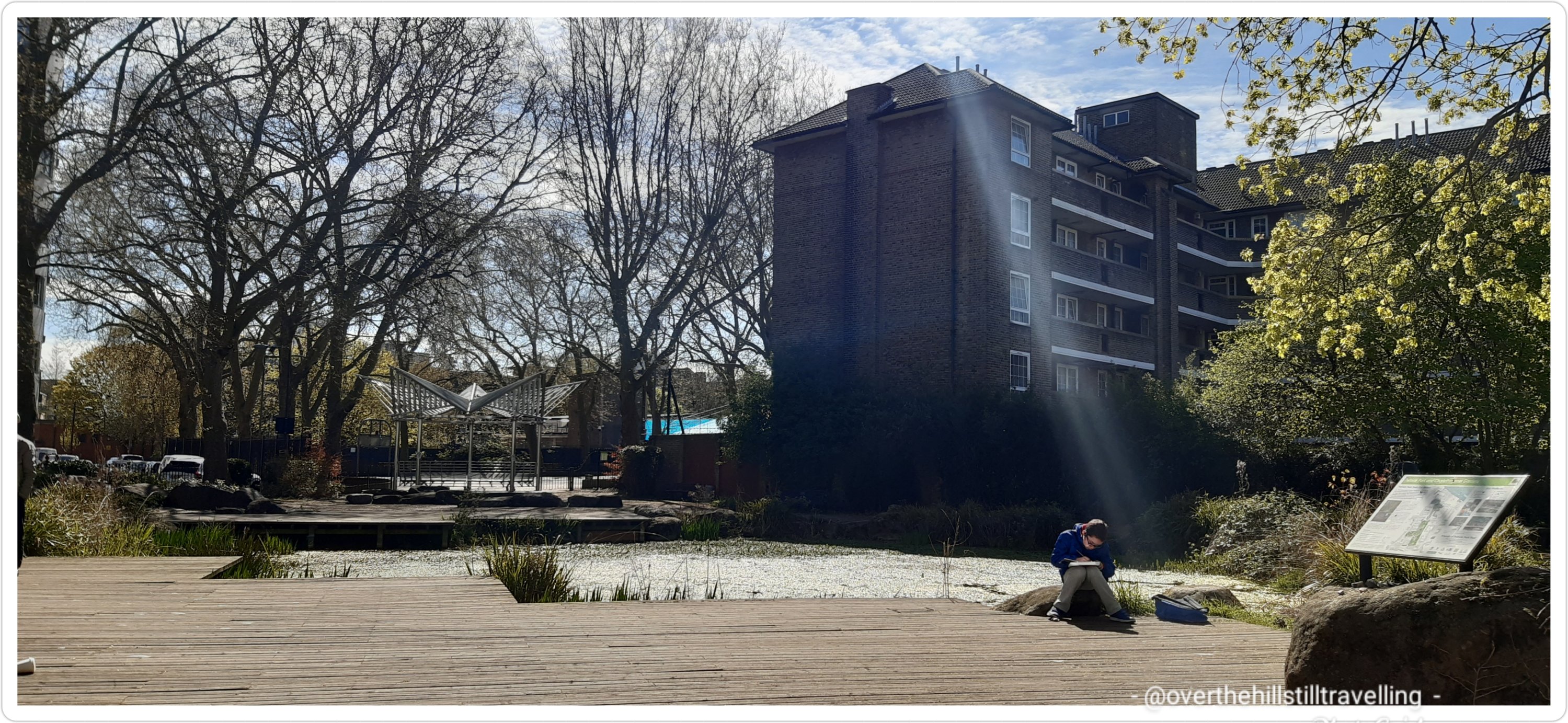


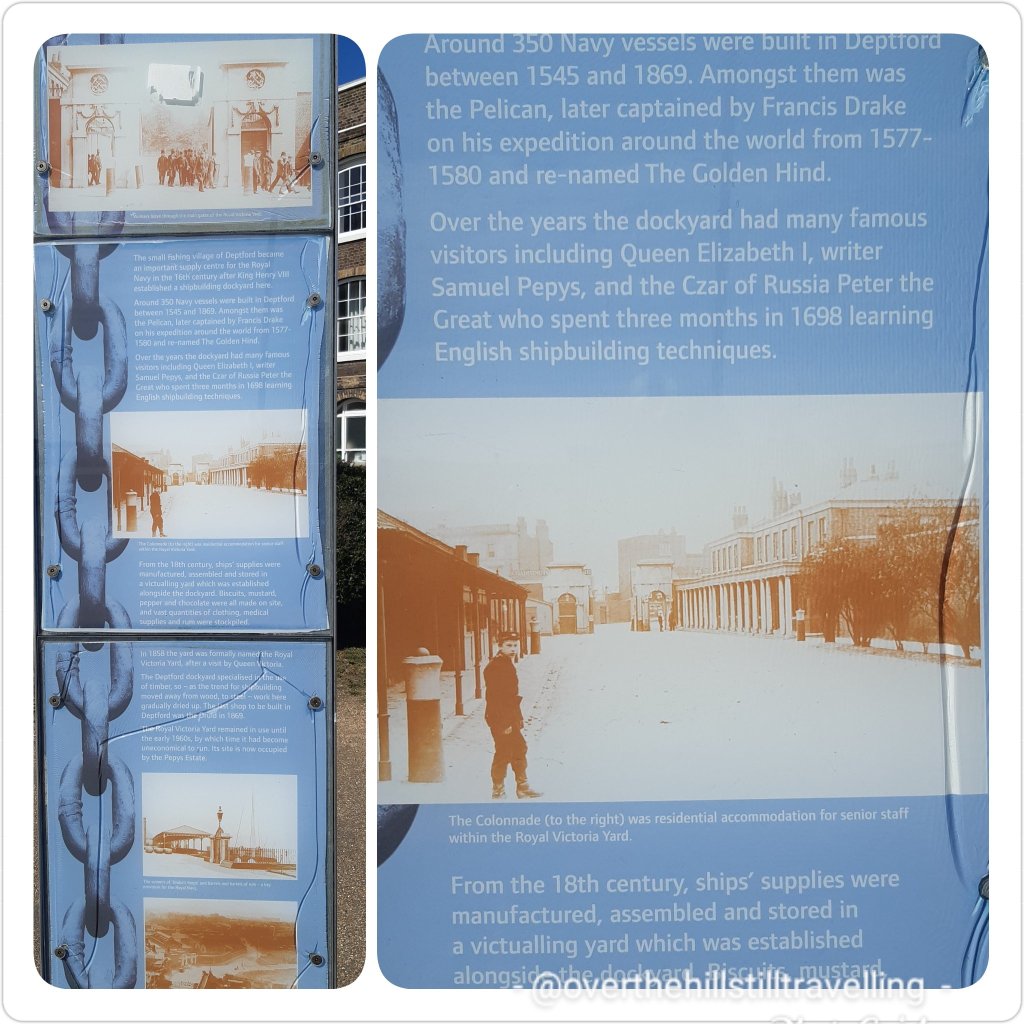



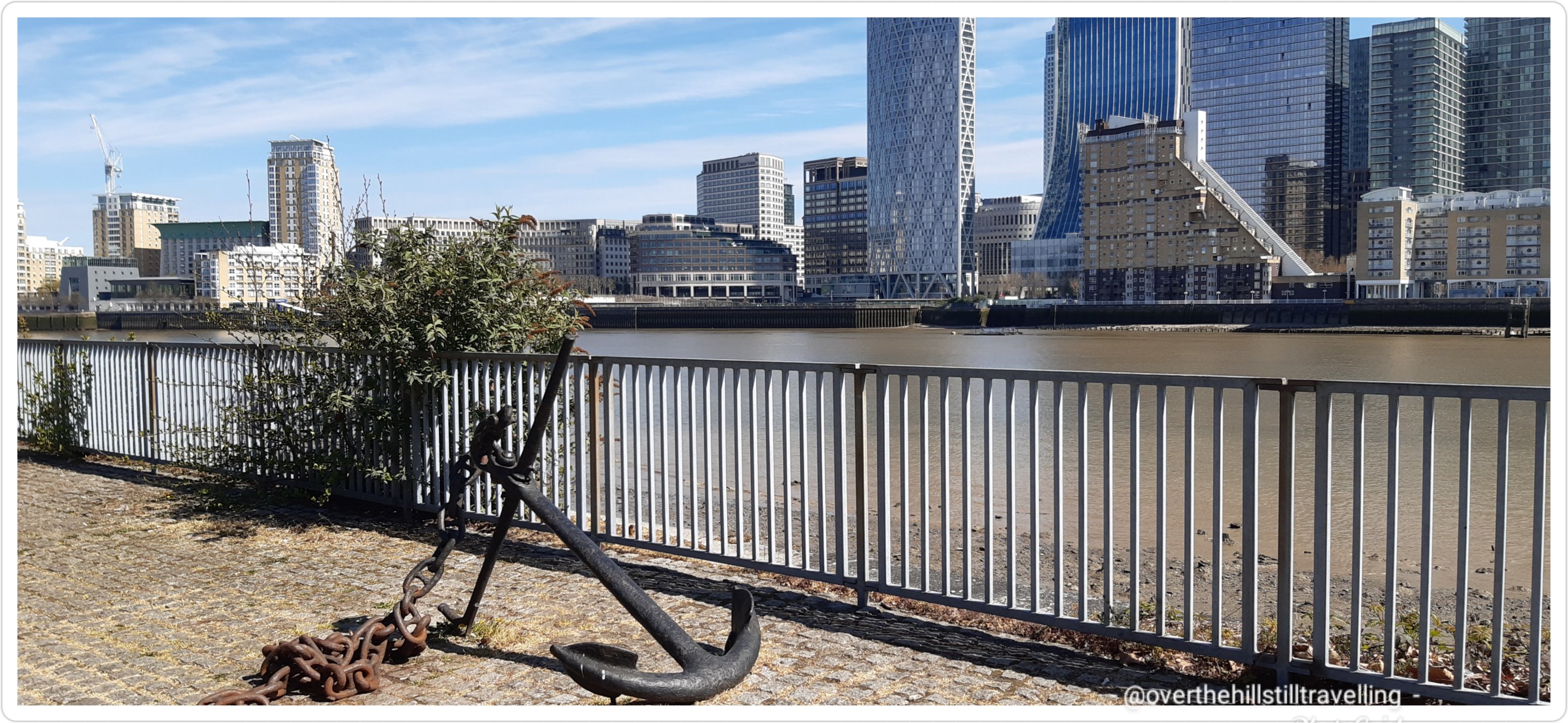


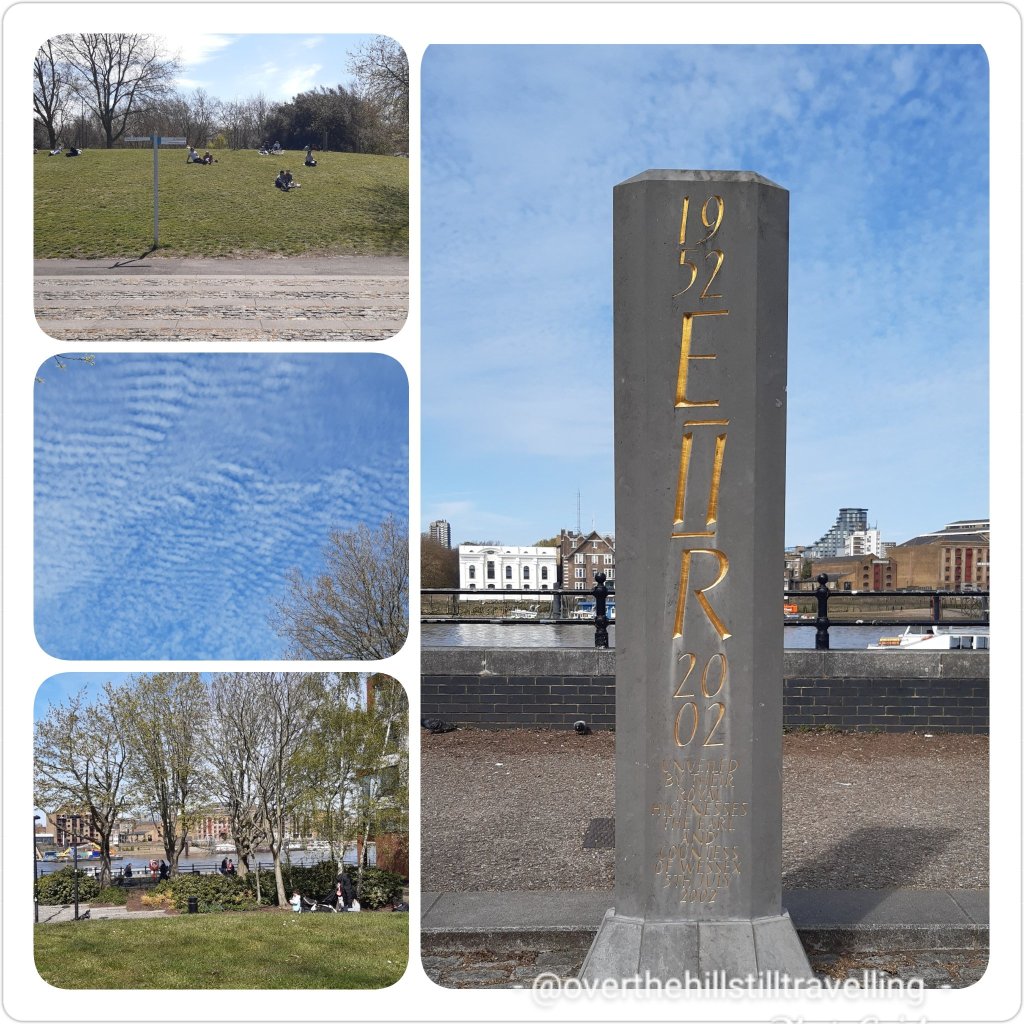

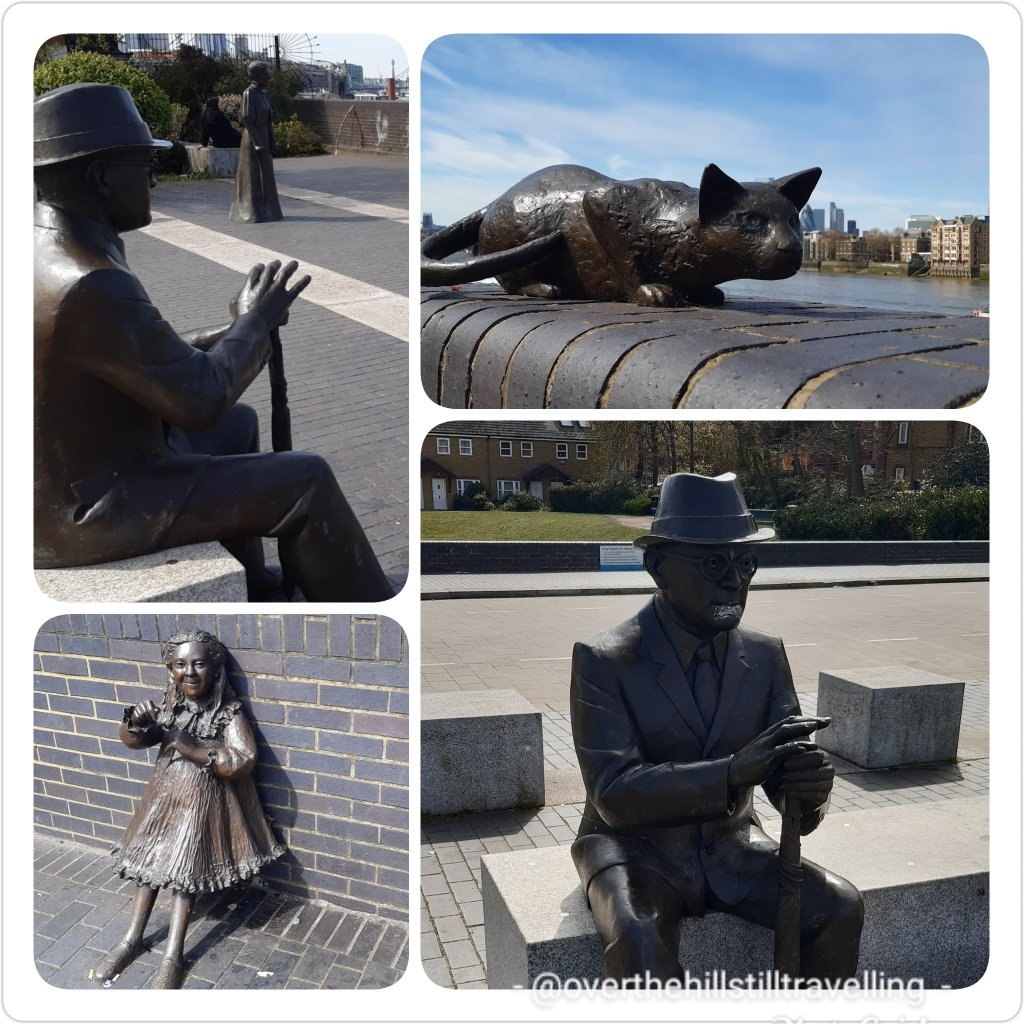
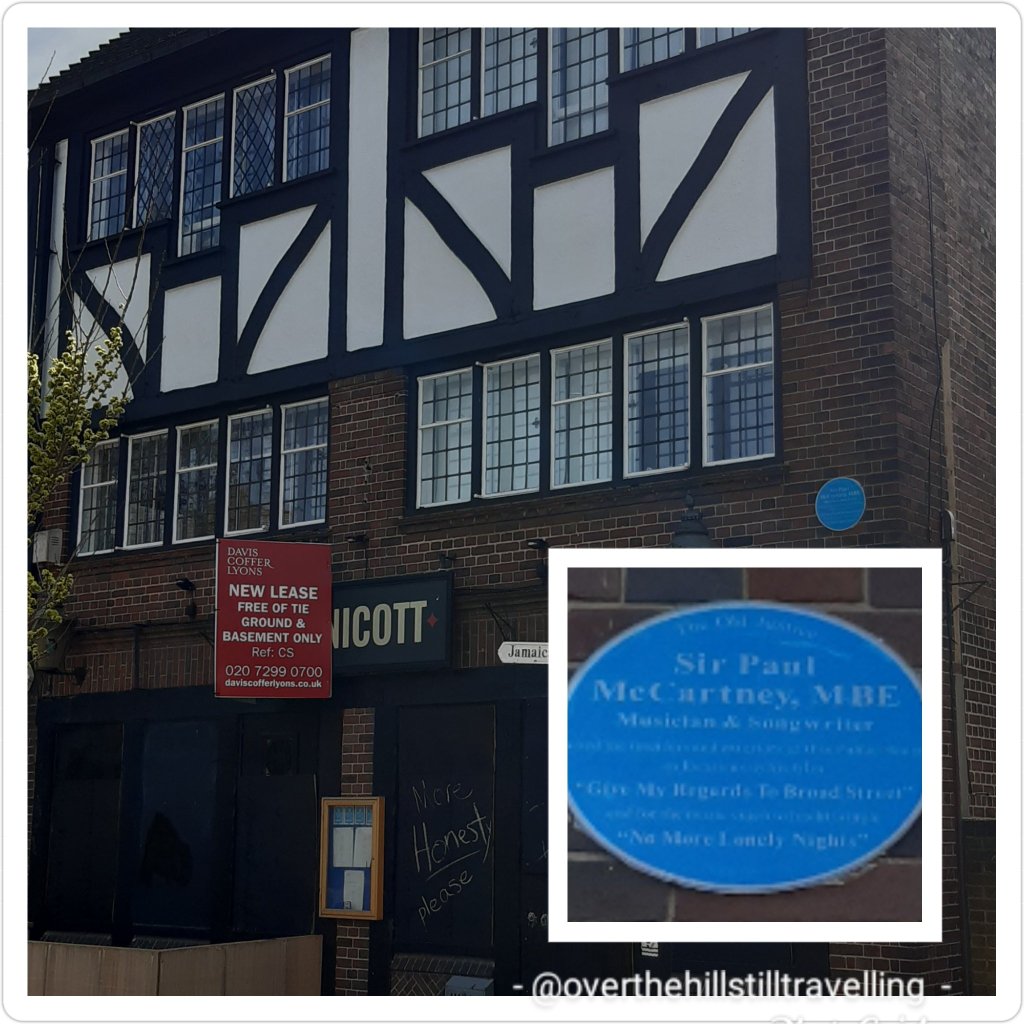

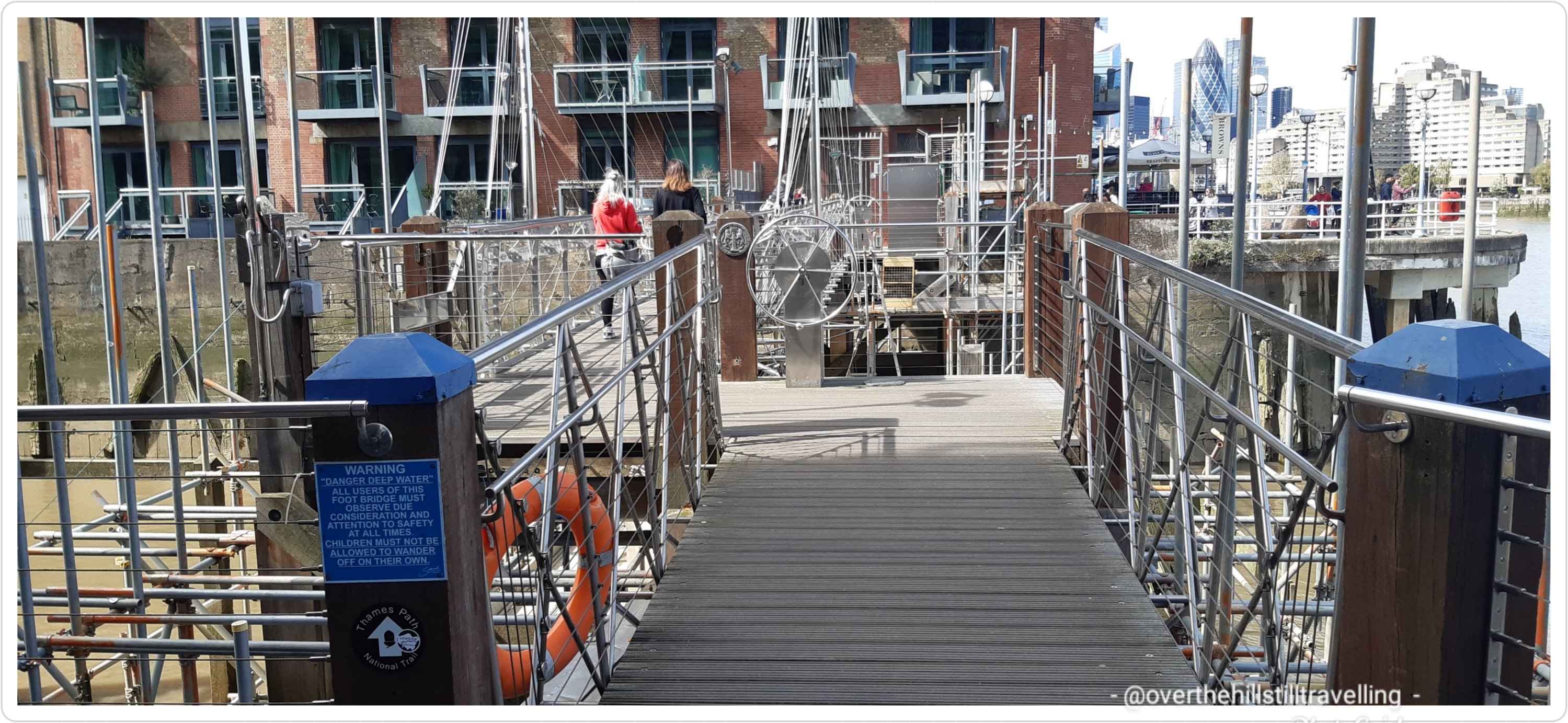


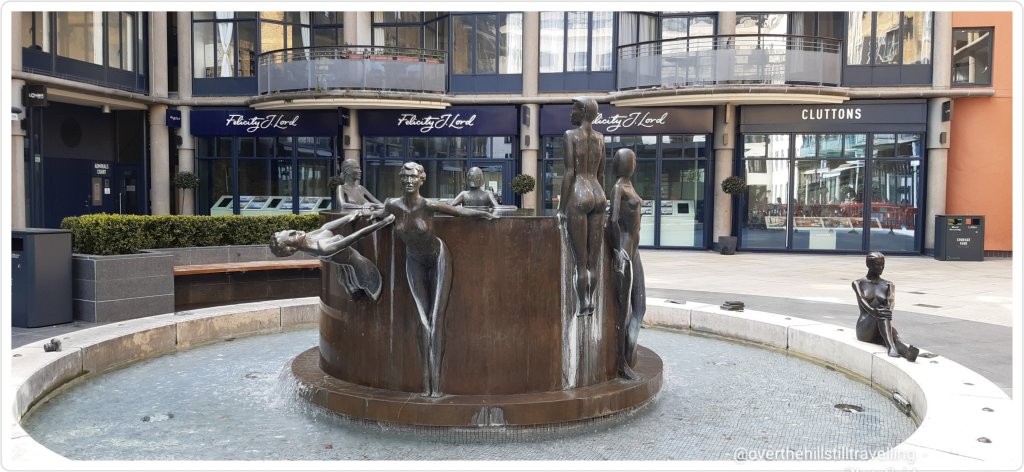

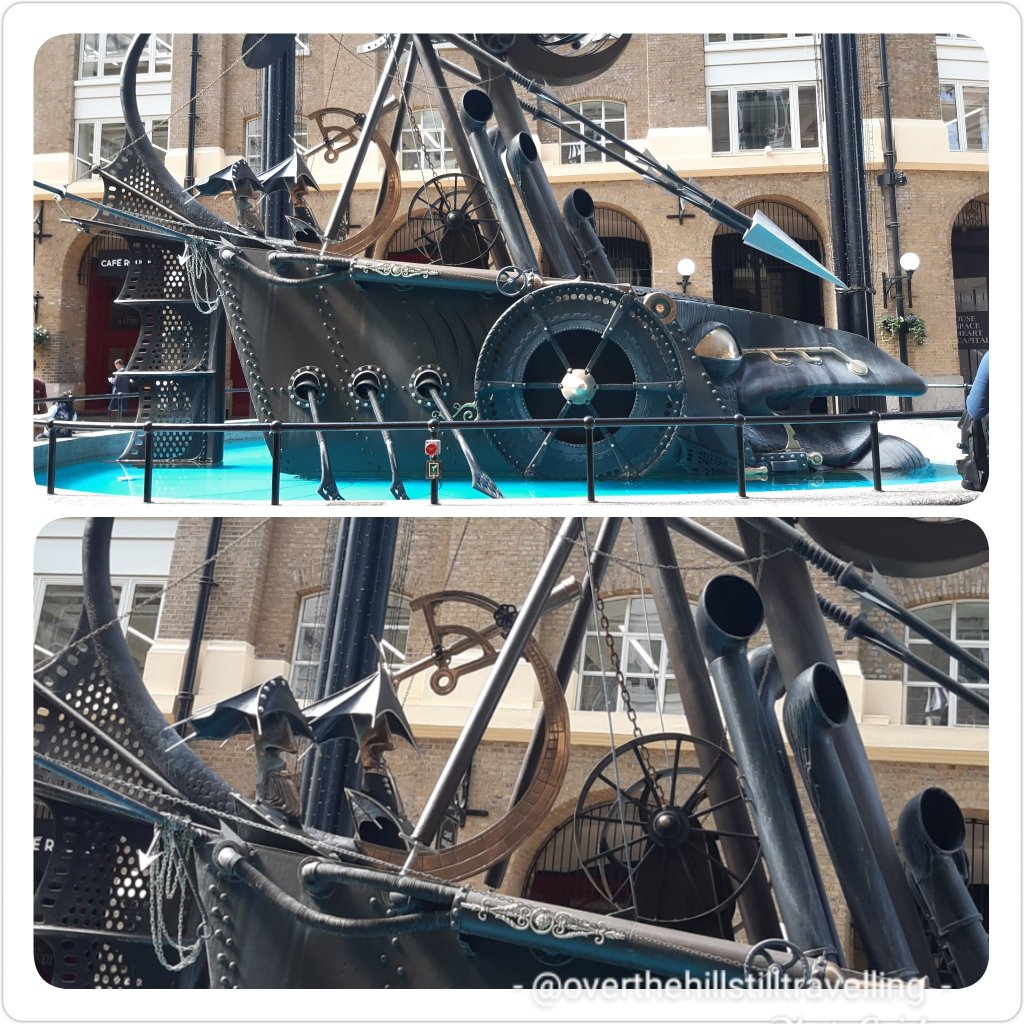


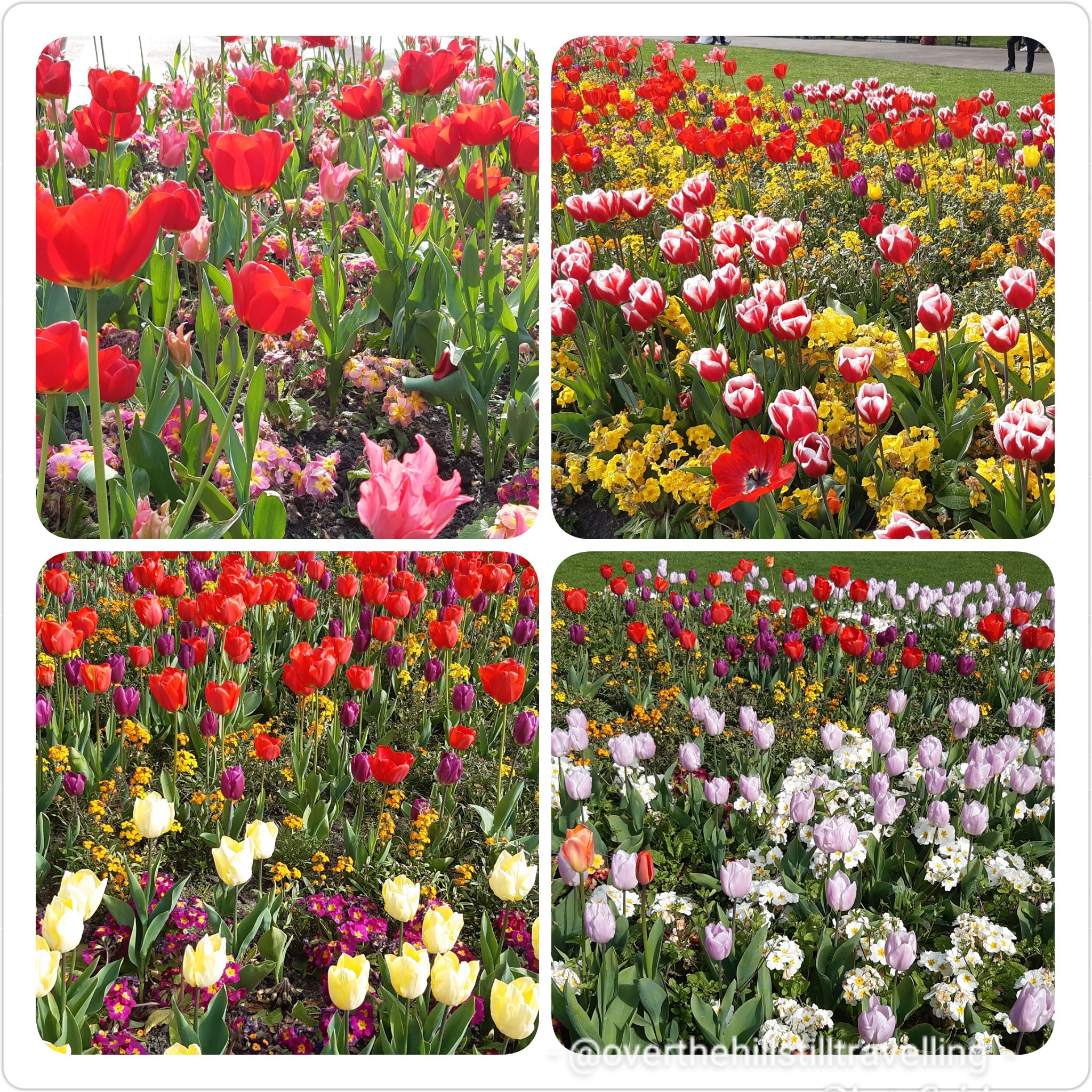


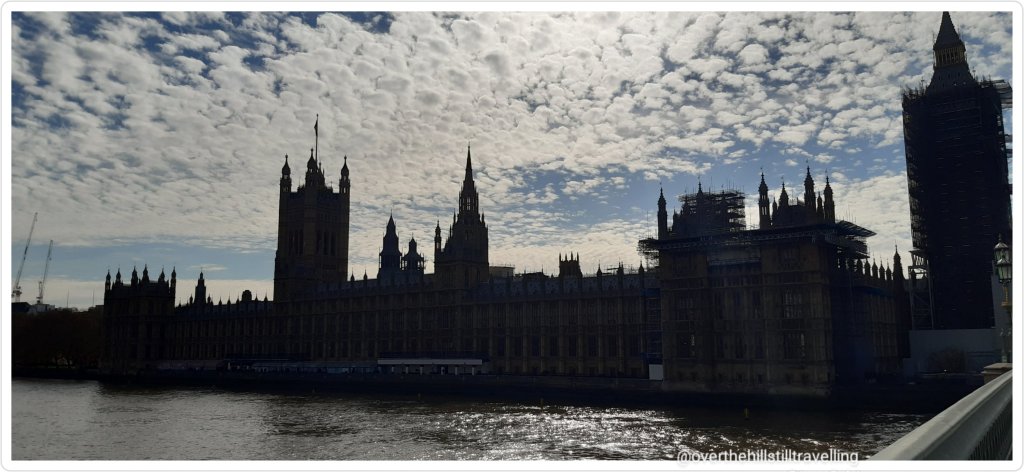

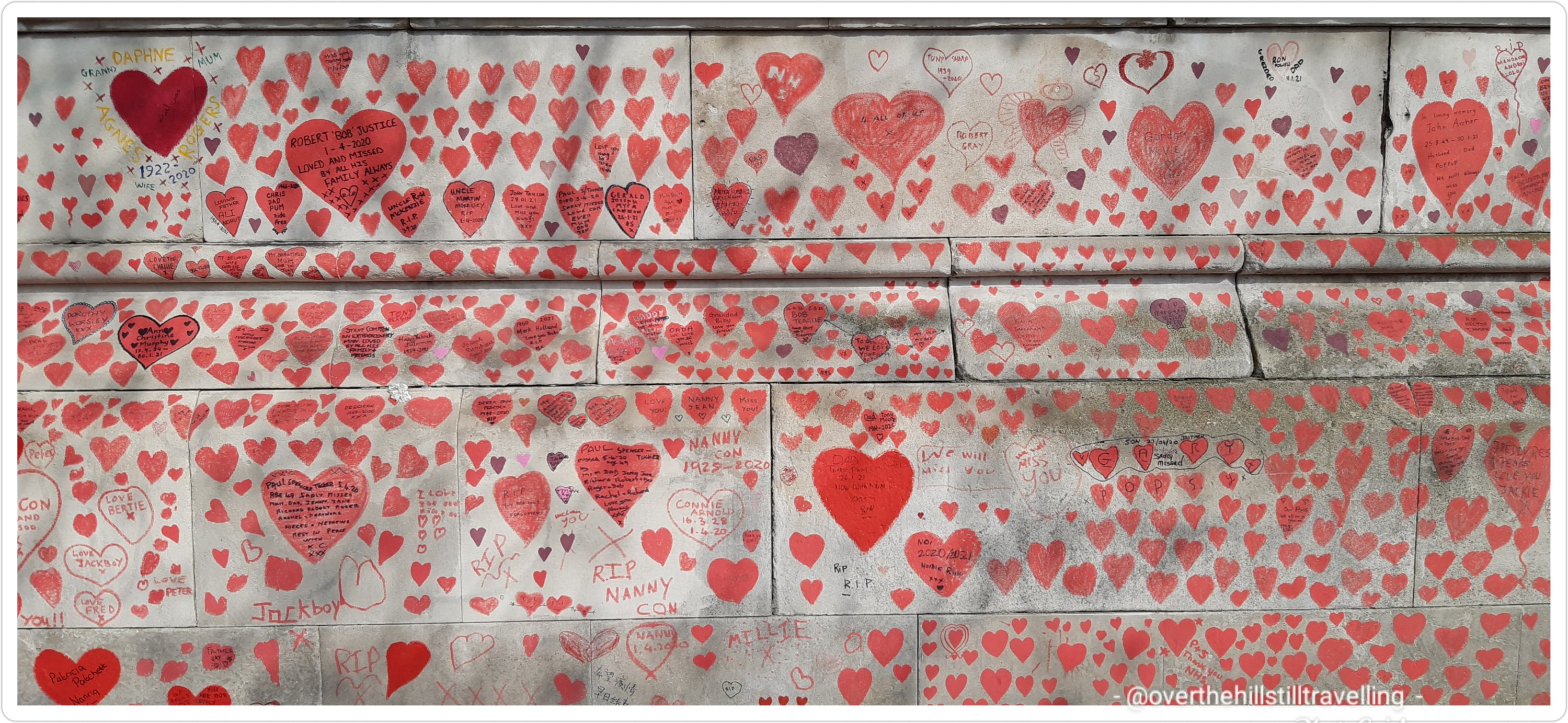


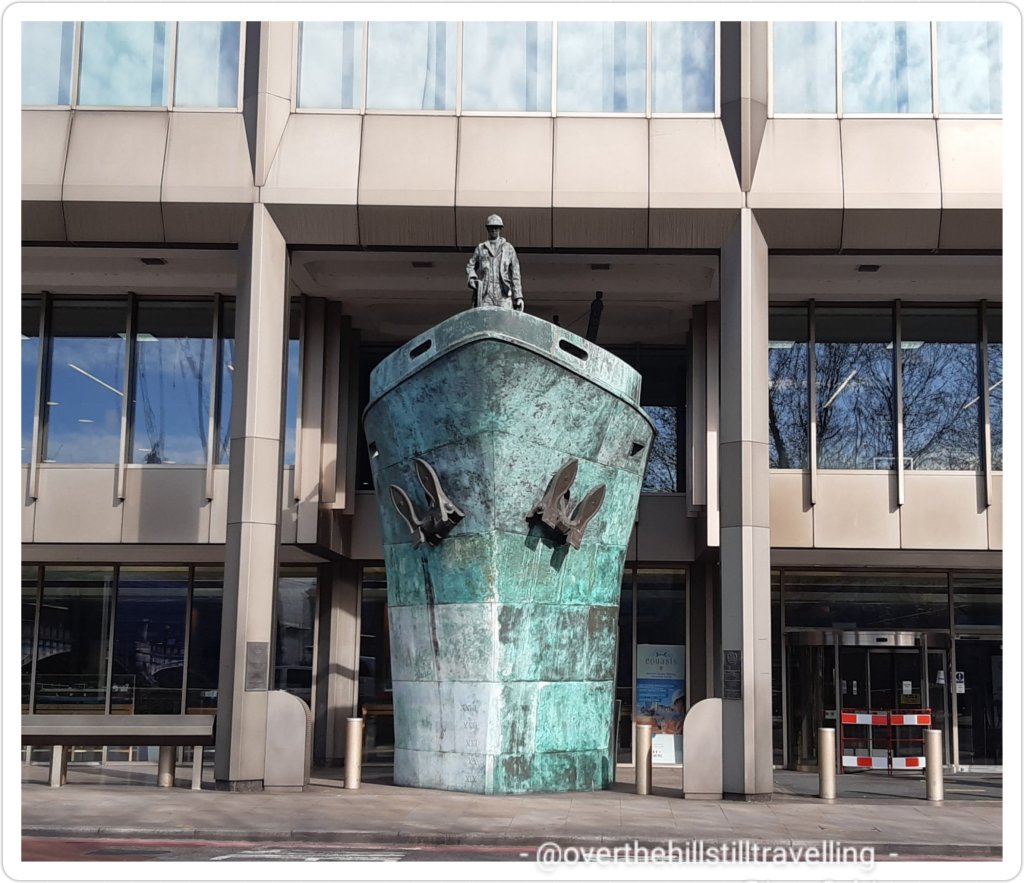


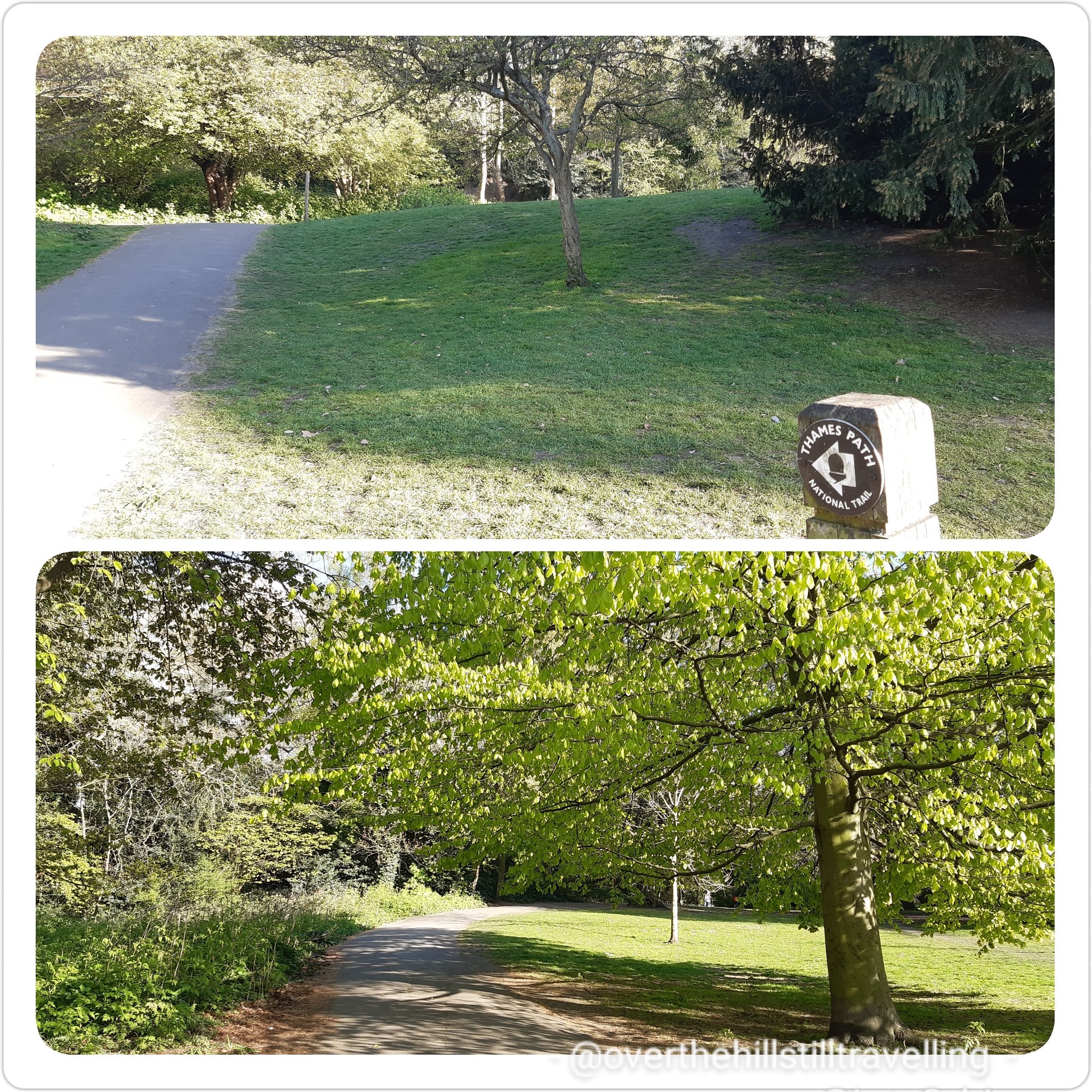


 Not Just a Granny
You must be logged in to post a comment.