A “Zionist” is a supporter of Zionism, a nationalist movement for the creation and support of a Jewish state in Palestine, the historical homeland of the Jewish people. The term comes from “Zion,” a hill in Jerusalem, and describes someone who believes in the Jews’ right to self-determination in the Land of Israel. NB: There were 3 or 4 possible locations in countries other than Palestine that were considered for the establishment of this ‘Land of Israel’. It had little to do with Christ or the supposed Holy land. See the end of this for other locations that were considered. None of which have any links to where Christ was born.
Zionism emerged in the late 19th century in Europe as a response to antisemitism, aiming to establish a homeland for Jewish people.
Israel is a Zionist project. Conceived by
Theodor Herzl: The founder of the modern Zionist movement, Herzl, envisioned an independent Jewish state in the 20th century.
The movement is rooted in an ancient connection and religious attachment of Jews to the historical region of Palestine.
NB: PALESTINE!!!
Zionists support the right of the Jewish people to self-determination in their historic homeland.
NB: That historic ‘homeland’ is ALSO the historic homeland of the Arabs; Palestinians who ultimately converted to either Christianity or Islam.
At that time, the population was a mix of Semetic peoples; Christian, Islamic, Jewish…the true Semites – NOT the Ashkenazi Jews from Europe who have NO genetic link to Palestine.
A central goal of Zionism was the creation of the state of Israel, which was declared in 1948 after World War II.
NB: AFTER WW2.
Zionism[a] is an ethnocultural nationalist[b] movement that emerged in late 19th-century Europe, seeking to establish and support a Jewish homeland through the colonization of Palestine.[2] This region corresponds to the Land of Israel in Judaism and is central to Jewish history.[3] Zionists wanted to create a Jewish state in Palestine with as much land, as many Jews, and as few Palestinian Arabs as possible. Ref Google
Zionism initially emerged in Central and Eastern Europe as a secular nationalist movement in the late 19th century, in reaction to newer waves of antisemitism and in response to the Haskalah, or Jewish Enlightenment.[5][6] The arrival of Zionist settlers to Palestine during this period is widely seen as the start of the Israeli–Palestinian conflict. The Zionist claim to Palestine was based on the notion that the Jews’ historical right to the land outweighed that of the Arabs.
NB: this notion of a ‘right’ to a particular land is based on white supremacist colonialism.
The Balfour Declaration was a public statement issued by the British Government in 1917 during the First World War announcing its support for the establishment of a “national home for the Jewish people” in Palestine, then an Ottoman region with a small minority Jewish population.
NB ‘ a small MINORITY!! But typical of white supremacist colonialism.
In 1948, the State of Israel declared its independence and the first Arab-Israeli war broke out. During the war, Israel expanded its territory to control over 78% of Mandatory Palestine. As a result of the 1948 Palestinian expulsion and flight, an estimated 160,000 of 870,000 Palestinians in the territory remained, forming a Palestinian minority in Israel.
NB: this was the Palestinians land as much as it was the land of the small minority of Jews in 1947/48.
But the Israelis forced 750,000 Palestinians out of their homes, their farms, their lands, their villages, and displaced to Arabs countries surrounding the newly formed Israel. If they refused to leave, they were killed.
The villages were razed to the ground and either rebuilt as Israeli settlements or covered with pine trees from EUROPE to hide the destruction.
Alternatives like British East Africa (Uganda) and Argentina were also seriously discussed. Other locations that were explored include Cyrenaica, Mesopotamia, Brazil, Paraguay, Nevada, Australia, Siberia, Cuba, Canada, Cyprus, Mozambique, the Sinai Peninsula, Suriname, and Madagascar.
Archive for the ‘Travel’ Category
Zionism, what it is, and why it has nothing to do with religion, and the big lie
Posted in Historical, news from around the world, Travel, tagged #dictators #trump, #FreePalestine #SaveGaza, #freepalestinefromzionistoccupation #FreePalestineFromTheRiverToTheSea, #gazagenocide #standupandbecounted #protest #genocide, #Palestine #genocide #savethechildren, #recognisePalestine, #Zionism on October 10, 2025| Leave a Comment »
Travel
Posted in European travels, Inspiration, It's my life, news from around the world, project 101, Travel, UNESCO Heritage Sites, walks around the UK, tagged bucket list travel, different cultures, Inspiration, learning, traditions, Travel on June 4, 2024| 1 Comment »
Try to travel, otherwise
you may become racist,
and you may end up believing
that your skin is the only one
to be right,
that your language
is the most romantic
and that you were the first
to be the first.
Travel,
because if you don’t travel then
your thoughts won’t be strengthened,
won’t get filled with ideas.
Your dreams will be born with fragile legs and then you end up believing in tv-shows, and in those who invent enemies
that fit perfectly with your nightmares
to make you live in terror.
Travel,
because travel teaches
to say good morning to everyone
regardless of which sun we come from.
Travel,
because travel teaches
to say goodnight to everyone
regardless of the darkness
that we carry inside
Travel,
because traveling teaches to resist,
not to depend,
to accept others, not just for who they are
but also for what they can never be.
To know what we are capable of,
to feel part of a family
beyond borders,
beyond traditions and culture.
Traveling teaches us to be beyond.
Travel,
otherwise you end up believing
that you are made only for a panorama
and instead inside you
there are wonderful landscapes
still to visit.
- Gio Evan, poet and songwriter.
Translated from Italian.
Genocide in Gaza
Posted in news from around the world, Travel, tagged action for children, babies, children, children suicide rates, children who lose parents to violence, genocide in Gaza, Palestine, Rafah, Zionists on May 30, 2024| Leave a Comment »
Who are we??
Who are we as human beings?
Who are we as a country?
Who are we as a civilization ?
Who are we that so many people are still unbelievably SILENT after nearly 8 months of this horrific, heinous slaughter?
36,000+ people killed in 245 days; half of them BABIES AND CHILDREN!! And that’s not counting the hundreds of humans buried beneath the rubble, their bodies rotting and being eaten by scavenging starving animals. Never mind the thousands who have suffered debilitating injuries; children without limbs, terrible burns, emotional scars that will never heal.
And yet the number protesting this horror is minimal in comparison to the population of our countries.
I understand why politicians are silent, although it’s totally immoral, but that ordinary people are either silent or supportive of the atrocities being committed by Israel against the Palestinians is beyond me. Totally, completely and utterly beyond me.
Are people so completely desensitised?
Has the gaslighting been that successful? Have the lies worked so well?
This is a GENOCIDE in our lifetime!
This is a HOLOCAUST in our lifetime!
As someone has said to me a number of times; an eye for an eye makes the whole world blind. She’s absolutely right. And it would seem that our tongues have been cut out too.
Europeans…
Posted in European travels, Travel, tagged colonialism, memoirs, racism, Travel on July 8, 2023| Leave a Comment »
Sometimes (a lot of the time) being white British and European (as in white skin) really makes me feel ashamed. Europeans (as in people with white skin) really are just shit. Now I know that doesn’t apply to everyone, and I know a lot has changed in the last few decades, but Seriously…the way dark skinned people (of all races and cultures) have been and are treated is just utterly disgusting…Reading memoirs of world travellers is unsettling and paints a harsh picture of colonialism, racism and white ‘superiority’.
World’s Most Scenic Railway Journeys
Posted in england coast path, It's my life, long distance walks - solo, Northumberland coast path, seaside towns of Britain, Travel, walks around the UK, tagged country walking long distance walking, craster, kippers, Lindisfarne, Northumberland coast path, train journeys, world's most scenic railway journeys on June 3, 2023| 4 Comments »
Good morning from a grey overcast Dover, Kent, England, UK 🇬🇧 😀 😉
Geez, I do wish this weather pattern would move on over now and we can finally get going with summer. It’s still very chilly with a sharp wind blowing, and feels more like autumn than spring/summer!
Last night, after my client had gone to bed, I watched a TV programme – for the first time in months!! ‘The World’s Most Scenic Railway Journeys’ on Channel 5. Its narrated by Bill Nighy who has such a beautiful voice.
I was so excited to see the route; the train left from Yorkshire and travelled through Durham and into Northumberland!!! It called in at some of the places where I stopped on my jaunt along the Northumberland Coast Path in 2021, albeit going from south to north, via Newcastle, Berwick-upon-Tweed and into Scotland and ending in Edinburgh.
It stopped in Craster and near Lindisfarne, and into Berwick-upon-Tweed.
I love the little snippets of history that they talk about and learned something last night….the expression ‘on tenterhooks’ comes from the fish industry and making kippers. The fish, crasters, are filleted and hung up on hooks before being hung up in a shed for smoking, and producing smoked kippers. Pretty neat eh! Never too old to learn something new 😉
It was thrilling to see all the places I had visited during my walk. Happy memories
Have a great day folks…
Is it too late?
Posted in around the UK, conqueror challenges, Fun Stuff, gratitude, It's my life, Travel, tagged conqueror virtual challenges 2021, conqueror virtual challenges 2022, happy new year, walking on January 14, 2022| 11 Comments »
To say Happy New Year 😁😁😁
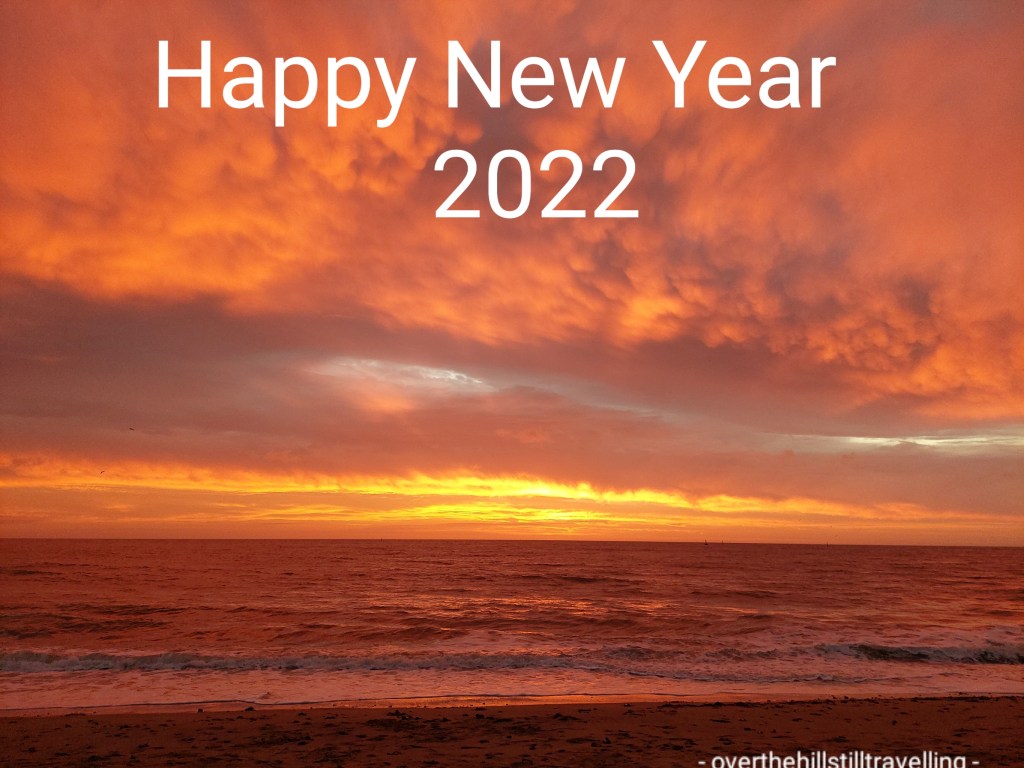
I’ve been awfully slack these last few months and after my computer kicked the bucket I simply did not have the will to write up a post using one finger 🙃 🤪🤪
So yeah. Thought I’d better at least get one post up before you’ll think I’ve done a runner 😁😁🚶🏼♀️🚶🏼♀️
I’m hoping to buy a new (refurbished) machine soon and then I can get back to writing.
I’m pleased to say I made my walking target of 3200kms for 2021, although it was very tough going the last few weeks of 2021 and my daily targets were exhausting, but I did it 👏👏👏

I’ve set a lower target of 2022kms for 2022…give my body a break 🙃
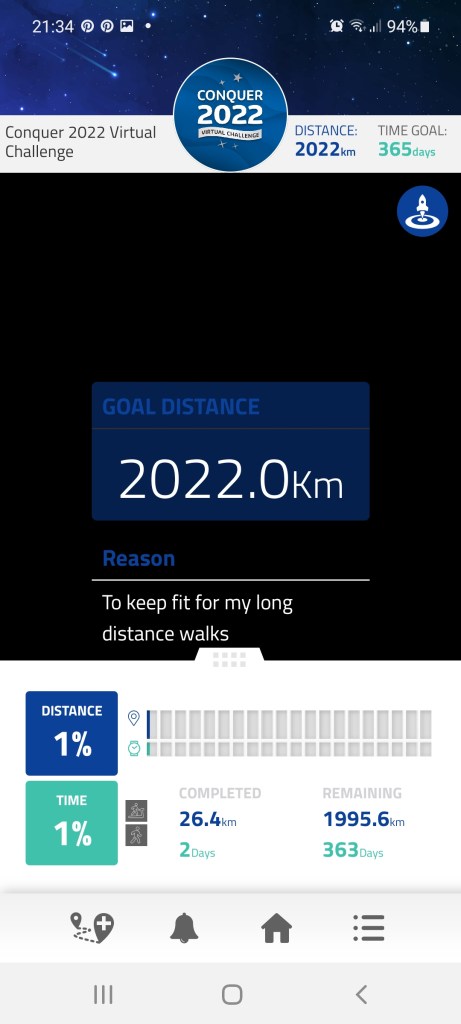
Wishing you all a happy, safe, healthy, wonderful New Year for 2022
People of Dublin
Posted in Historical, My European travels, Travel, tagged famous people of Ireland, musicians and artists of Ireland, people of Dublin, travel to Dublin, Visit Dublin, visit Ireland, writers and playwrites on December 1, 2021| 7 Comments »
If you have all day, I could list hundreds of colourful characters and famous people who have links with Dublin; some born in the city, some borne there on the winds of change and fortune.
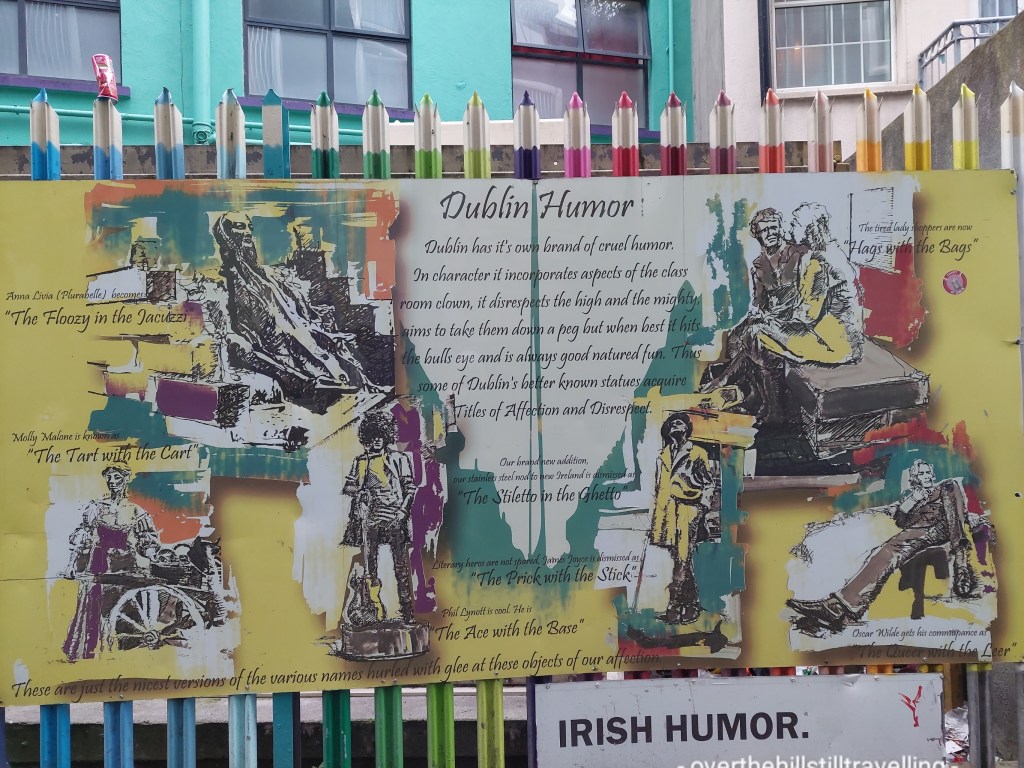
But of course you don’t have all day 😉 so I’ll stick with the few I encountered during my latest visit.
As mentioned in my previous post, we have the lovely Molly Malone, who by all accounts sold cockles and mussels during the day, and other wares by night!! Hence the nickname ‘The Tart with the Cart’, which I think is a bit unfair really…😂😂 Here are the lyrics of the song telling the story of Molly…
In Dublin’s fair city
Where the girls are so pretty
I first set my eyes on sweet Molly Malone.
As she wheeled her wheelbarrow
Through streets broad and narrow
Crying, “Cockles and mussels, alive, alive, oh!”
Alive, alive, oh
Alive, alive, oh
Crying, “Cockles and mussels, alive, alive, oh”
She was a fishmonger
And sure ’twas no wonder
For so were her father and mother before
And they both wheeled their barrows
Through streets broad and narrow
Crying, “Cockles and mussels, alive, alive, oh
Alive, alive, oh
Alive, alive, oh
Crying, “Cockles and mussels, alive, alive, oh
She died of a fever
And no one could save her
And that was the end of sweet Molly Malone
But her ghost wheels her barrow
Through streets broad and narrow
Crying, “Cockles and mussels, alive, alive, oh
Alive, alive, oh
Alive, alive, oh
Crying, “Cockles and mussels, alive, alive, oh
Alive, alive, oh
Alive, alive, oh
Crying, “Cockles and mussels, alive, alive, oh.

Then we have the louche Oscar Wilde – a very bad boy indeed, who was a tart at night and famous author by day; nicknamed: the ‘Queer with the Leer’. 🤔🤔 Unfortunately I didn’t get a pic of him this time, but he can be found lounging on a rock in St Stephen’s Green.
We also have the ‘Prick with the Stick’ which refers to none other than James Joyce, mentioned in the previous post as having frequented the King’s Inn.
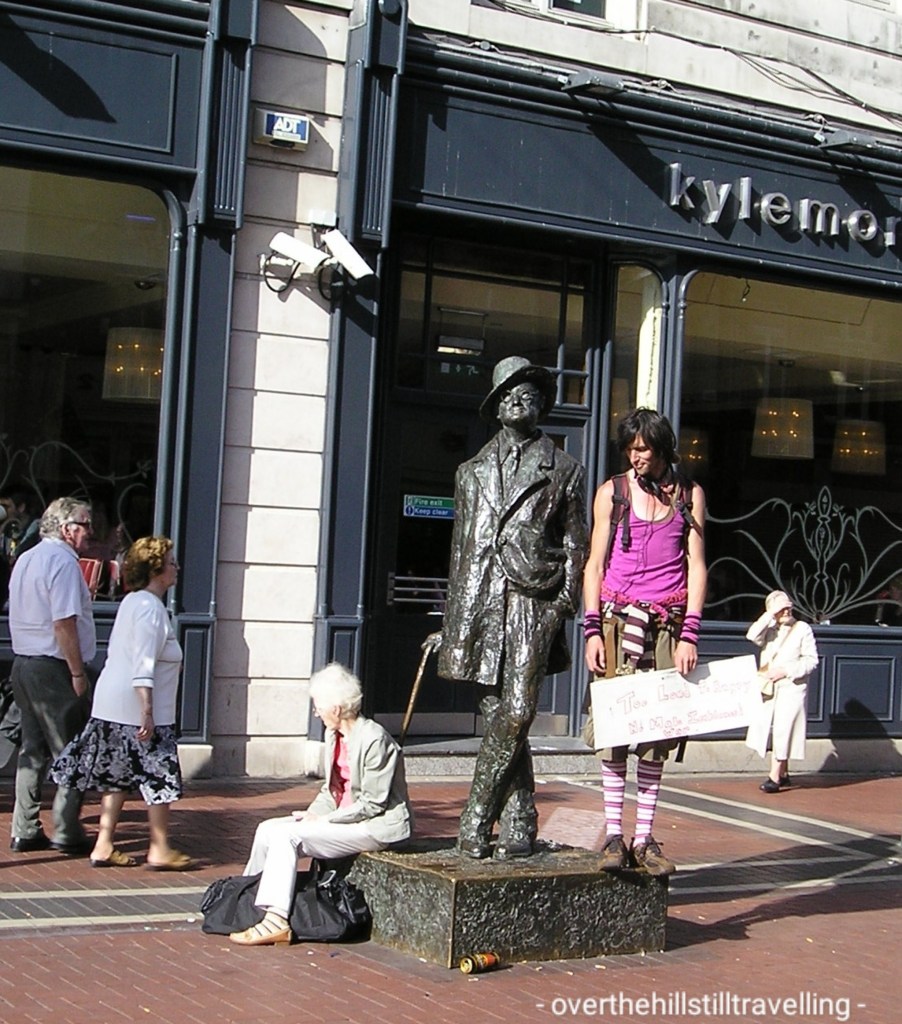
The variety of people, from all walks of life, is a long story…
Religion….

Literary giants…. of course James Joyce and Oscar Wilde fall into this category too, but I’ll leave them where they are with their respectively notorious histories…


Josephine Edna O’Brien DBE (born 15 December 1930) is an Irish novelist, memoirist, playwright, poet and short-story writer. Philip Roth described her as “the most gifted woman now writing in English”, while a former President of Ireland, Mary Robinson, cited her as “one of the great creative writers of her generation”. Her first novel, The Country Girls (1960), is often credited with breaking silence on sexual matters and social issues during a repressive period in Ireland following World War II. The book was banned, burned and denounced from the pulpit.
Political….
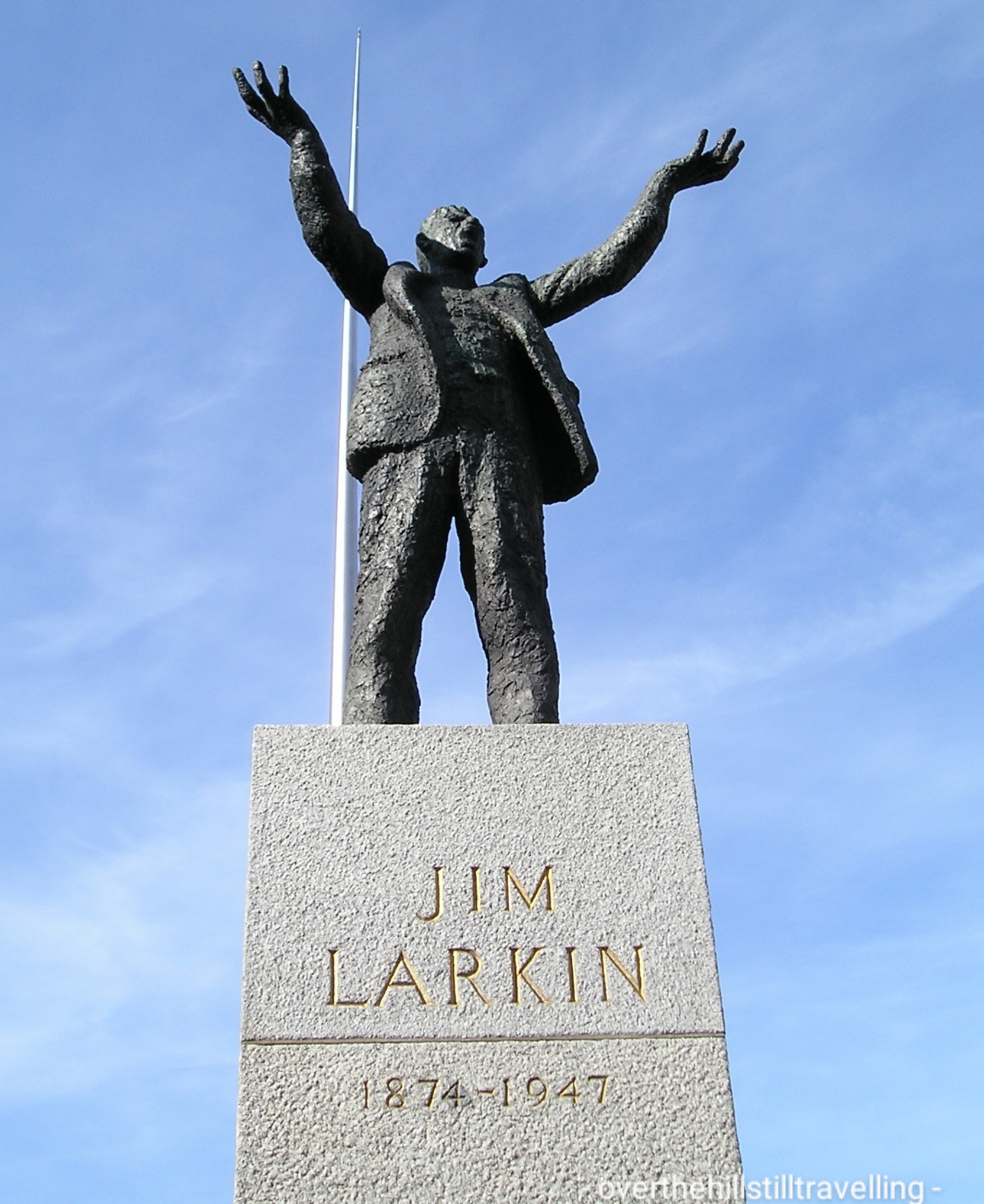
Music…
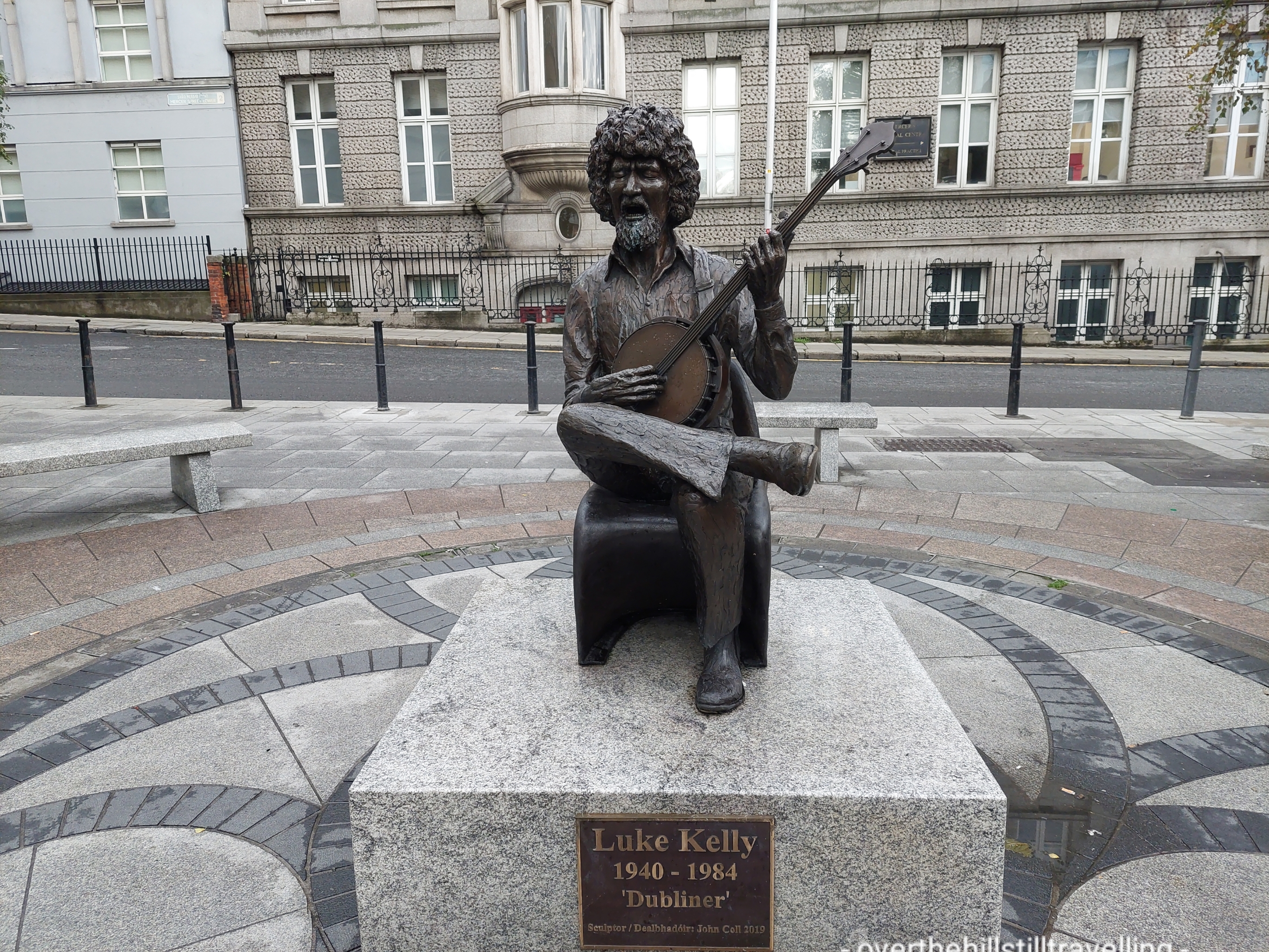
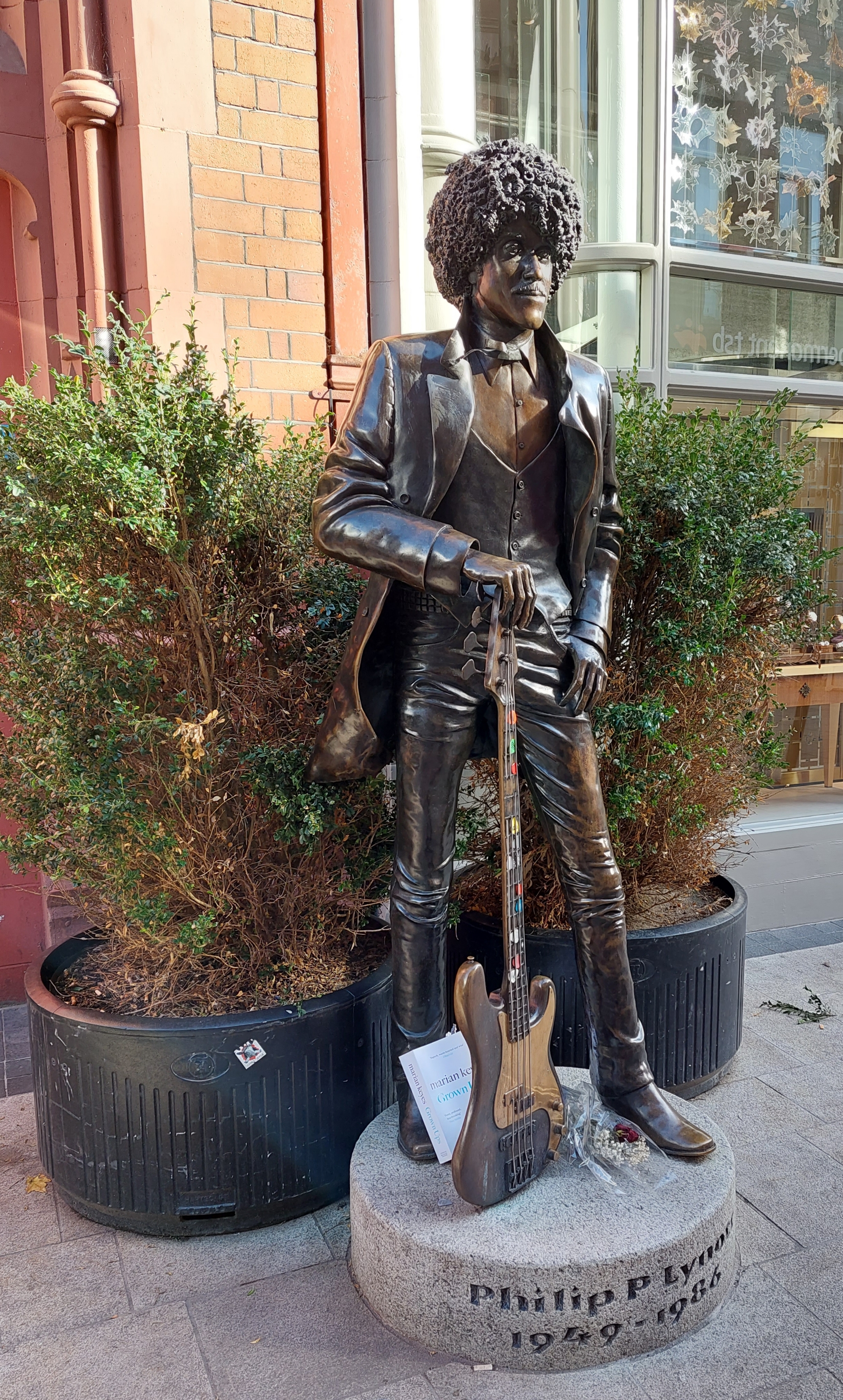


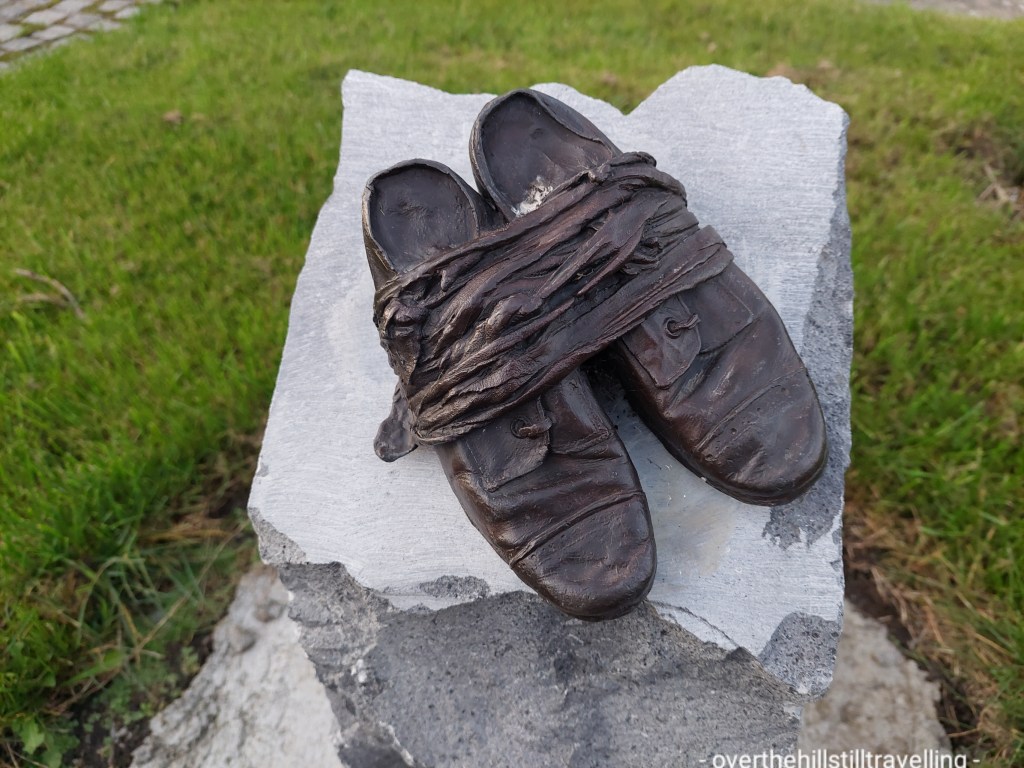
A few famous people who visited Dublin

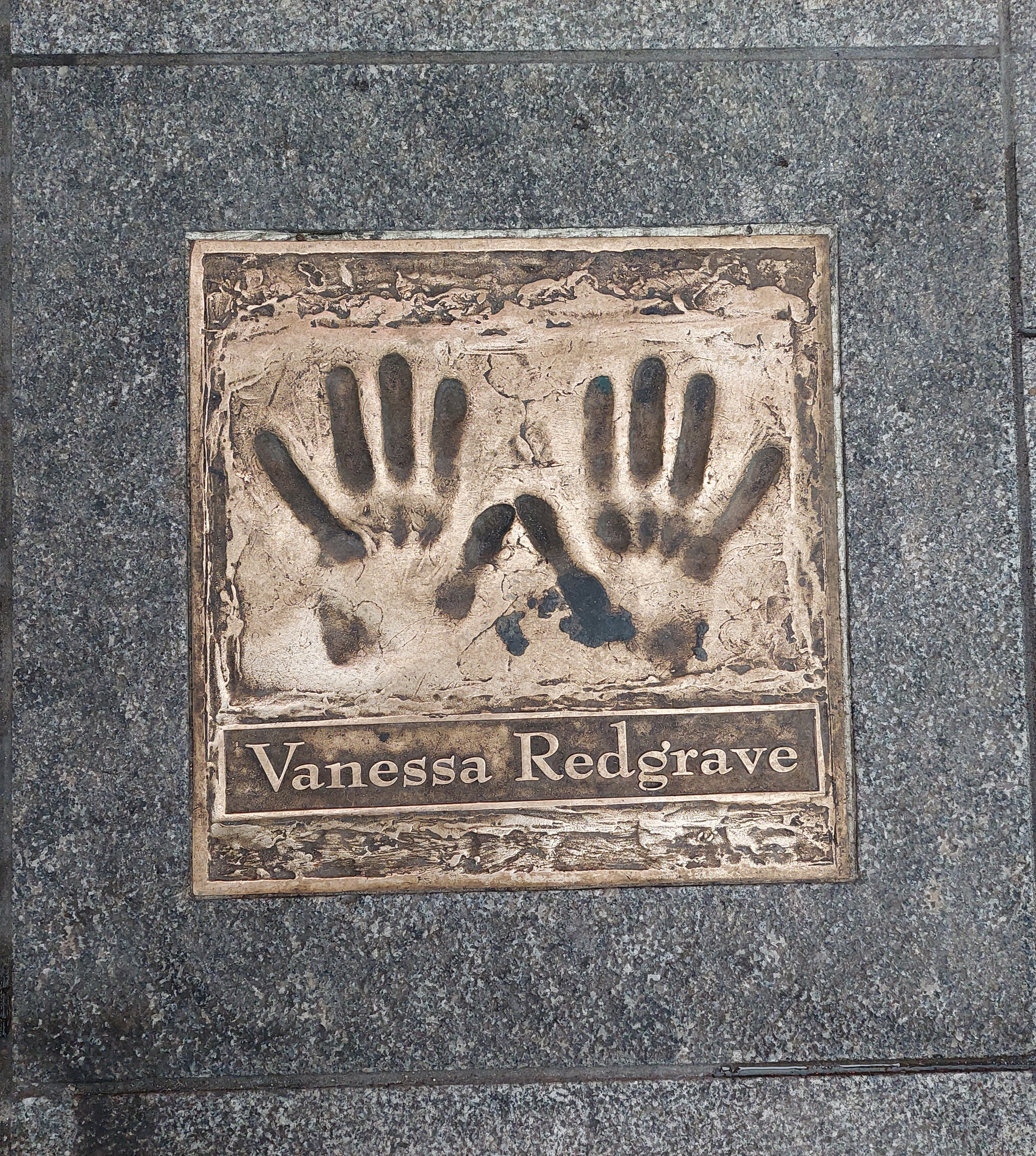

So there you have it. A few of the many many famous and infamous people who have ties to Dublin.
In my next post I’ll share some of the lengthy history of Dublin
Colourful and quirky Dublin
Posted in European travels, Holidays, It's my life, photography, Travel, tagged baby boomers travel, cities of the world, people and places of Dublin, Visit Dublin, visit Ireland on November 29, 2021| 6 Comments »
Dublin is one of my favourite places to visit. Its quirky, and colourful albeit dirty and home to one of my least favourite aspects of street life; the Dublin oyster 🤮
But I love the street art and the humour – the Irish are adept at poking fun at themselves, and that is a very attractive trait.
Amongst others, you’ve got; Molly Malone – The Tart with the Cart. The Hats with the Bags. The Stilleto in the Ghetto, the Queer with the Leer, the Ace with the Base.
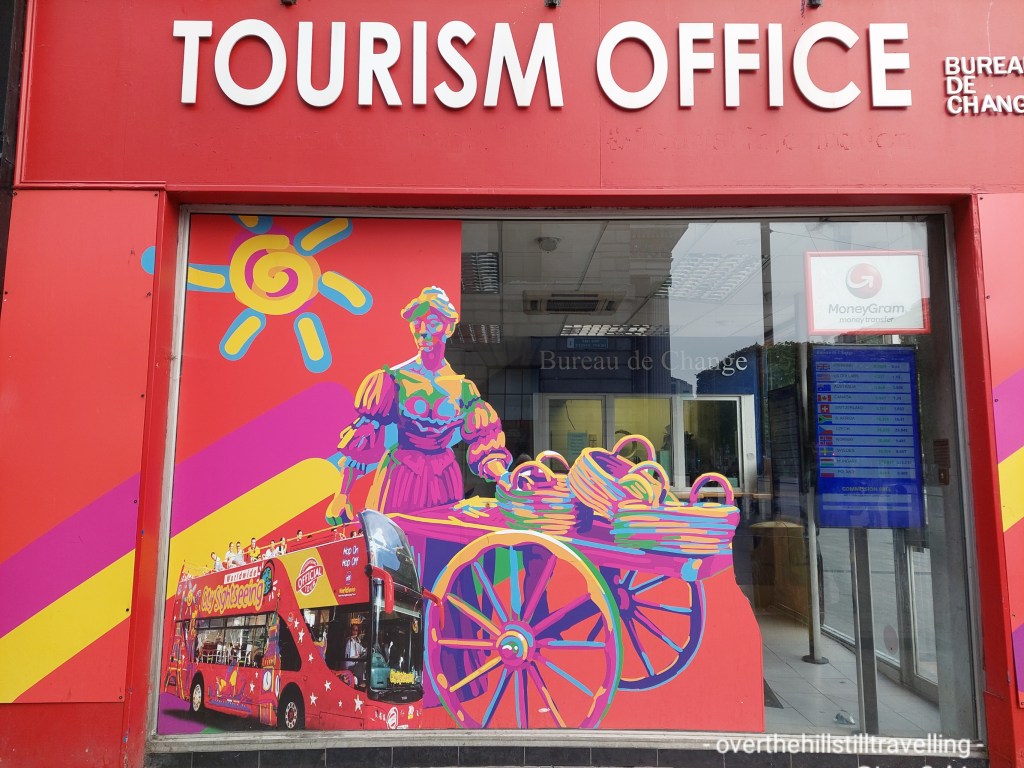


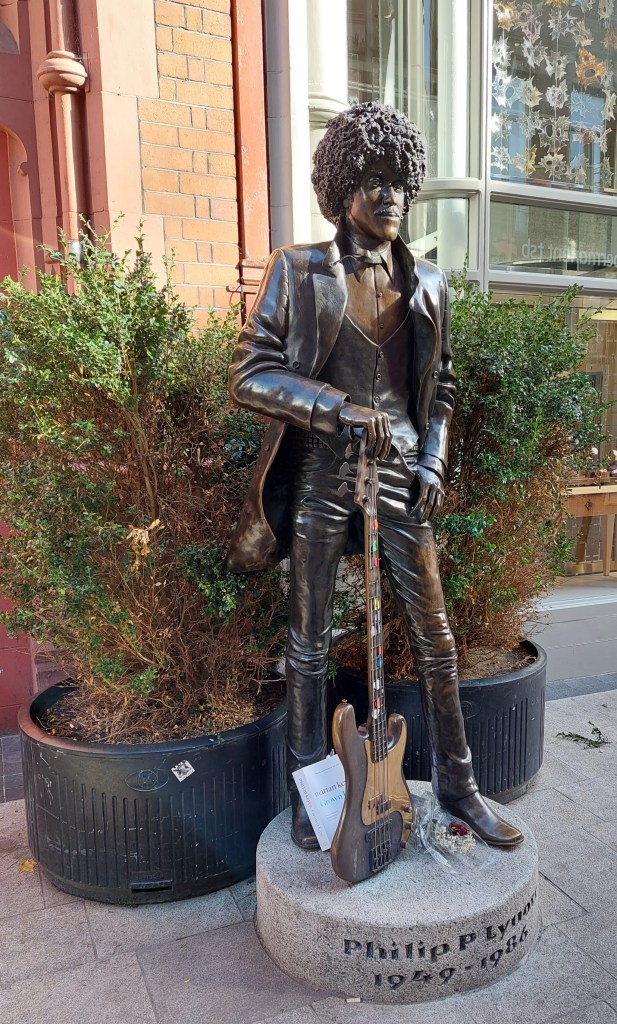
I captured these scenes while in Ireland for my sister’s 50th birthday 🎂 🥳 ; a fun and unexpected trip.
Whether you look up, sideways or down, you’ll be bound to find something somewhere…
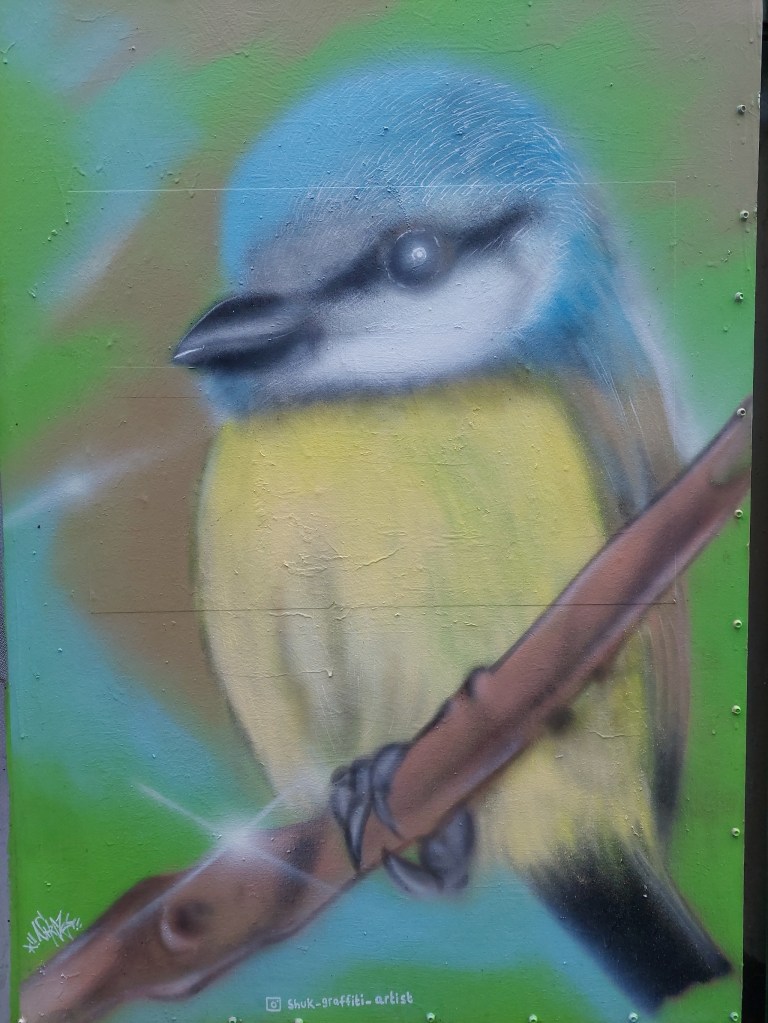


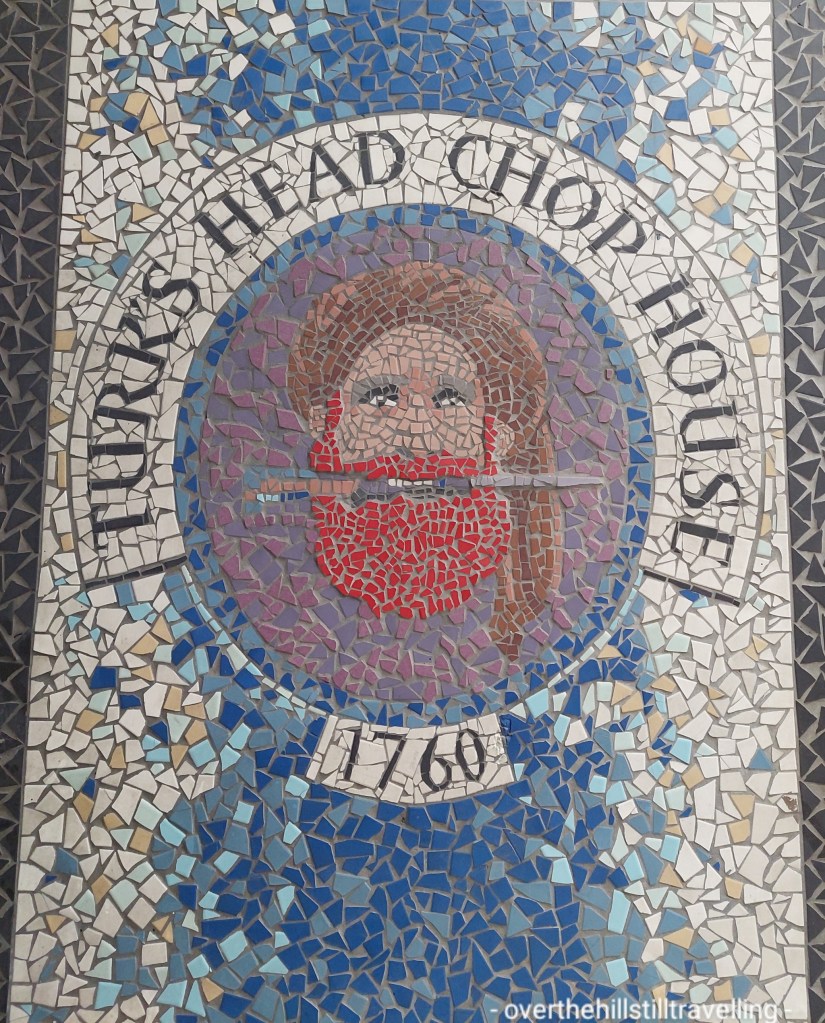


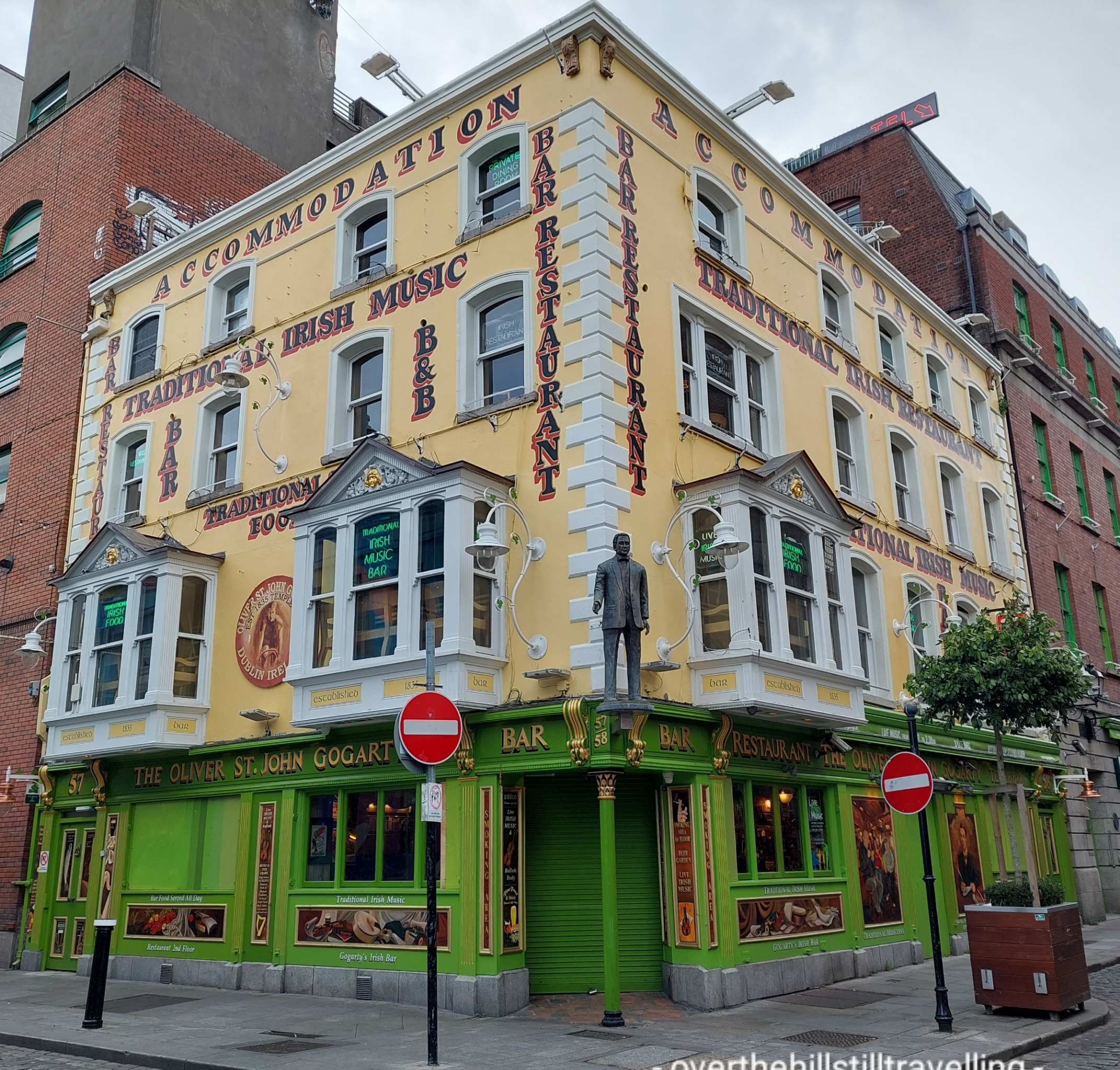


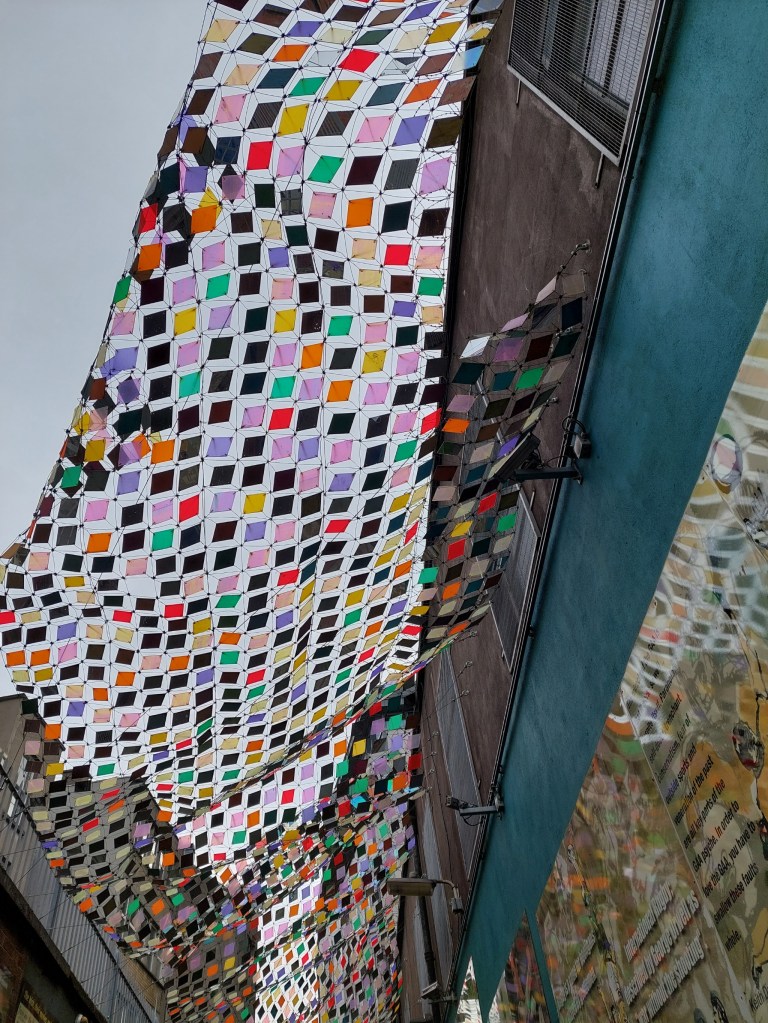
You may think that Dublin is dull and grey, but you would be mistaken.

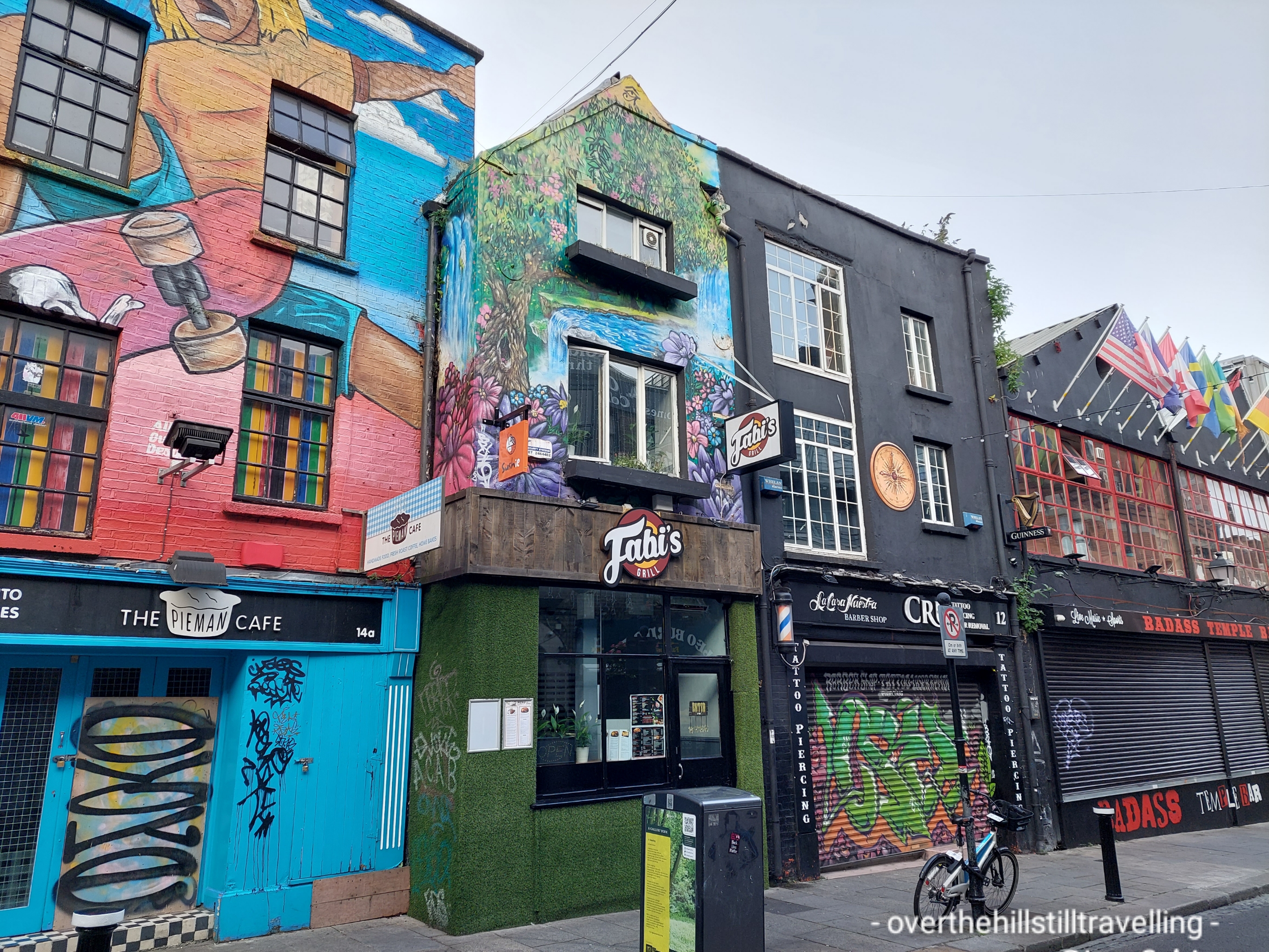
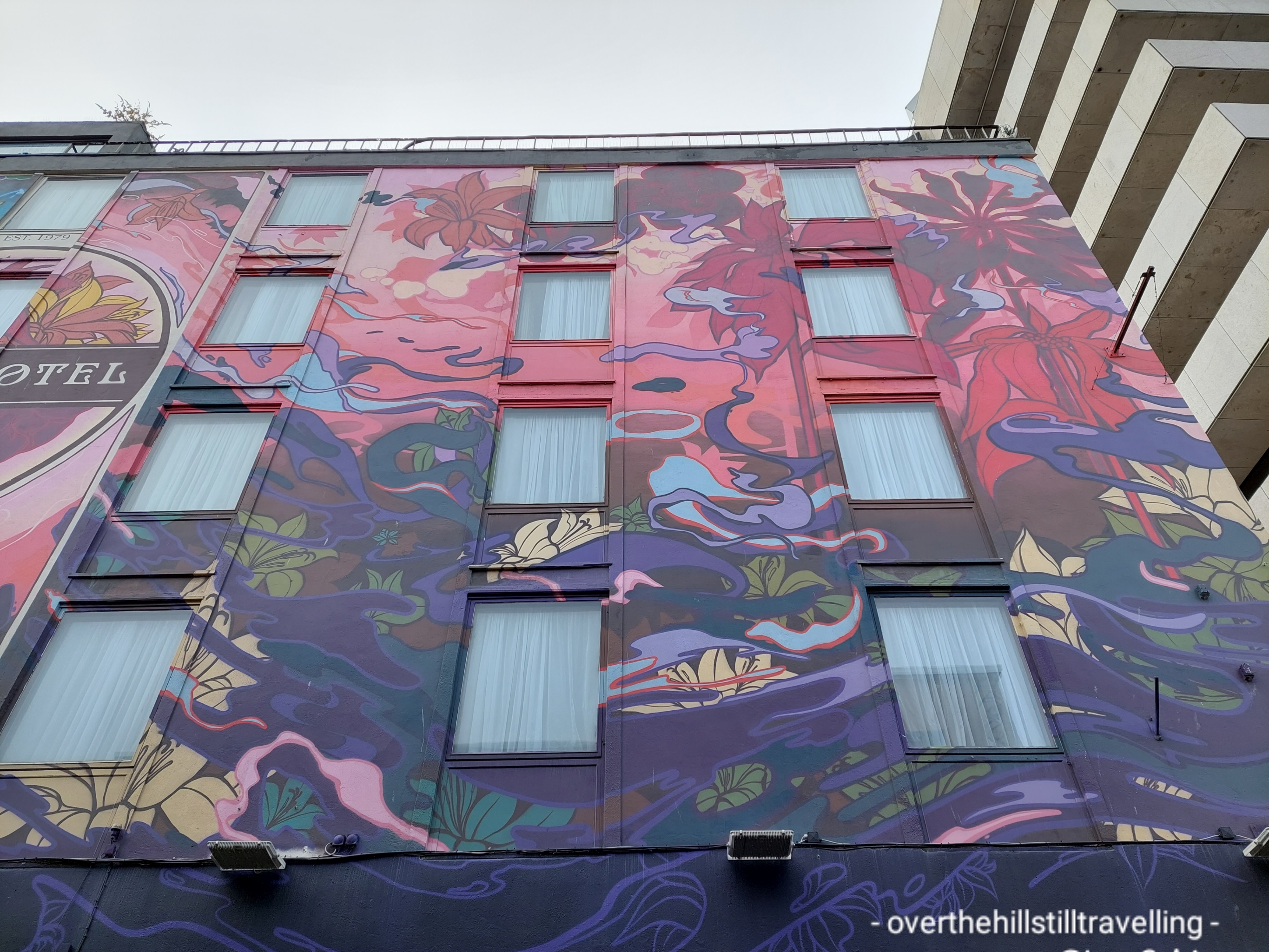
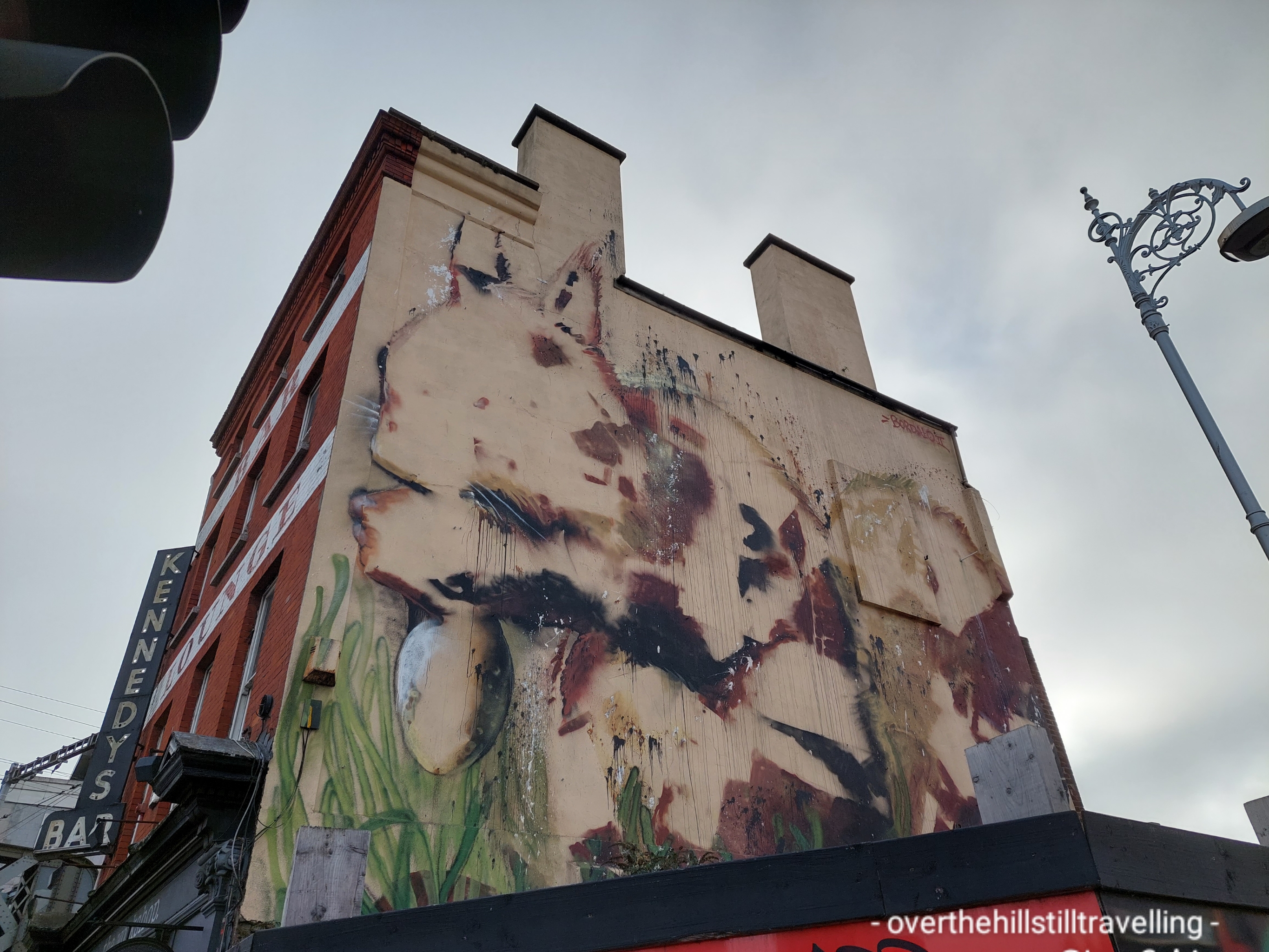

We actually stayed in Temple Bar, which as it turned out wasn’t too noisy, but then I’d never seen it so underpopulated…it’s usually heaving, day and night. I guess Covid-19 is still keeping patrons at bay.

I’ll share another post in a few days, featuring some of Dublin/Ireland’s people and history ..
Visiting Ireland
Posted in Castles of UK and Ireland, family and relationships, Fun Stuff, It's my life, Travel, tagged Eddie Rockets, family and relationships, Glendalough, Howth Castle, travel to ireland, walks in Ireland on November 23, 2021| 6 Comments »
Last month a few of us converged on Dublin, Ireland for my sister’s 50th birthday. She and her hubby flew over from South Africa and my daughter, son-in-law, grandson and I flew over from the UK.
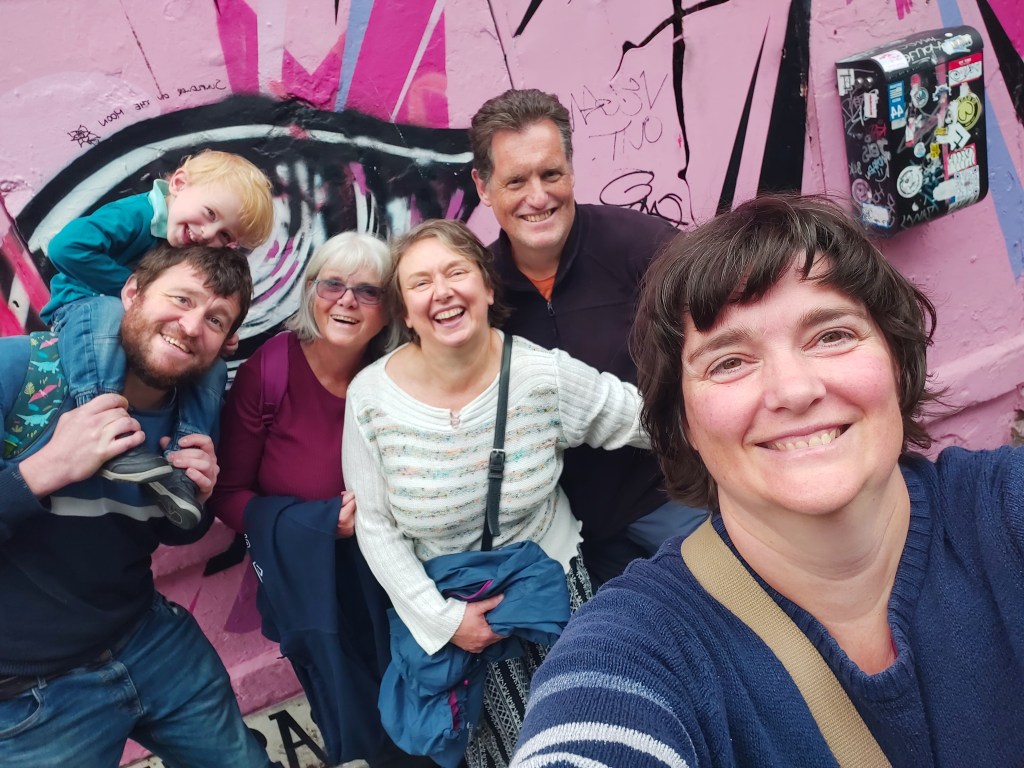
I love Ireland and enjoy visiting as often as possible…this was my 9th visit.
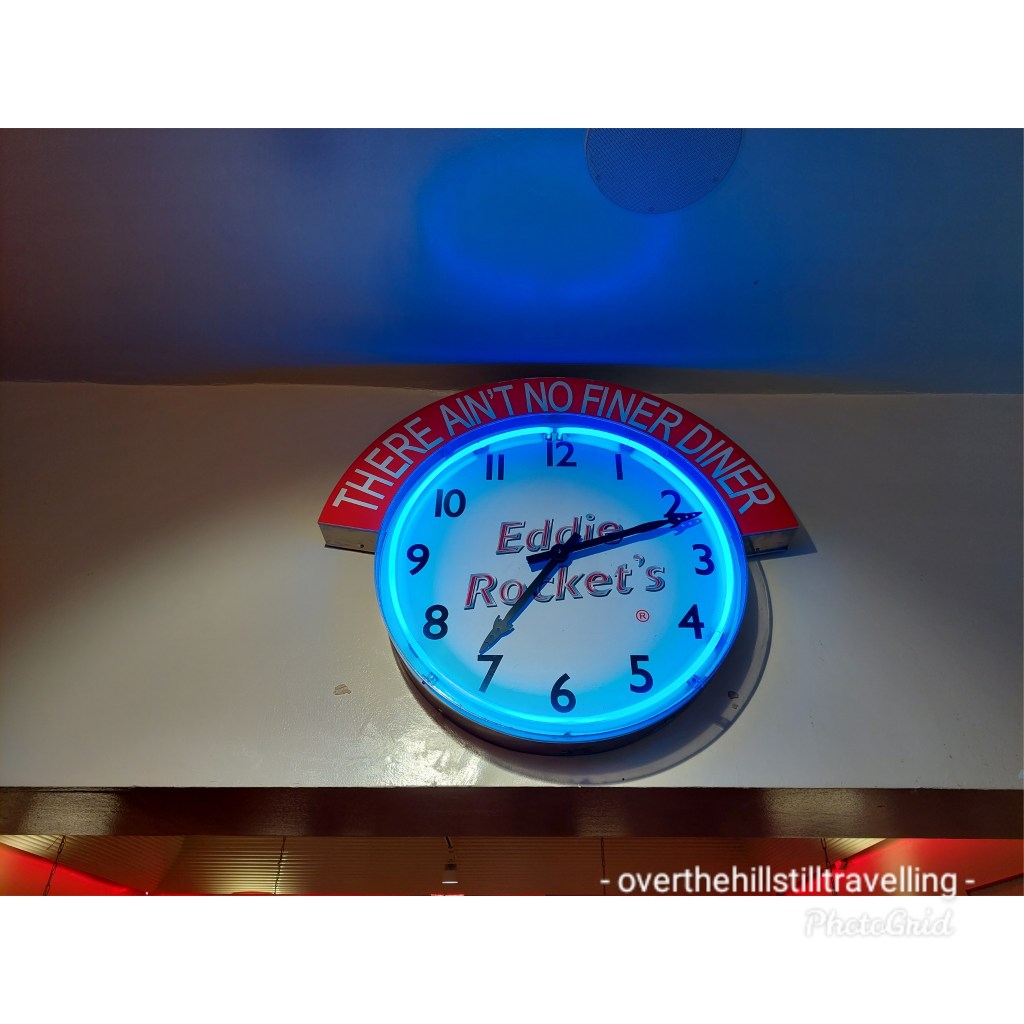
We had supper the first night at Eddie Rockets; the same place where I made the momentous decision to NOT return to South Africa, but to stay in Ireland for another 2 months till my visa expired, then fly across to the UK to obtain the necessary information to apply for my ancestral visa. (And here I am, 20 years later – my 20 year anniversary coincided with my sister’s birthday, so a meal at Eddie Rockets was a must!)
We had a few days of exploring and reminiscing and visited a couple of lovely places; Glendalough being one

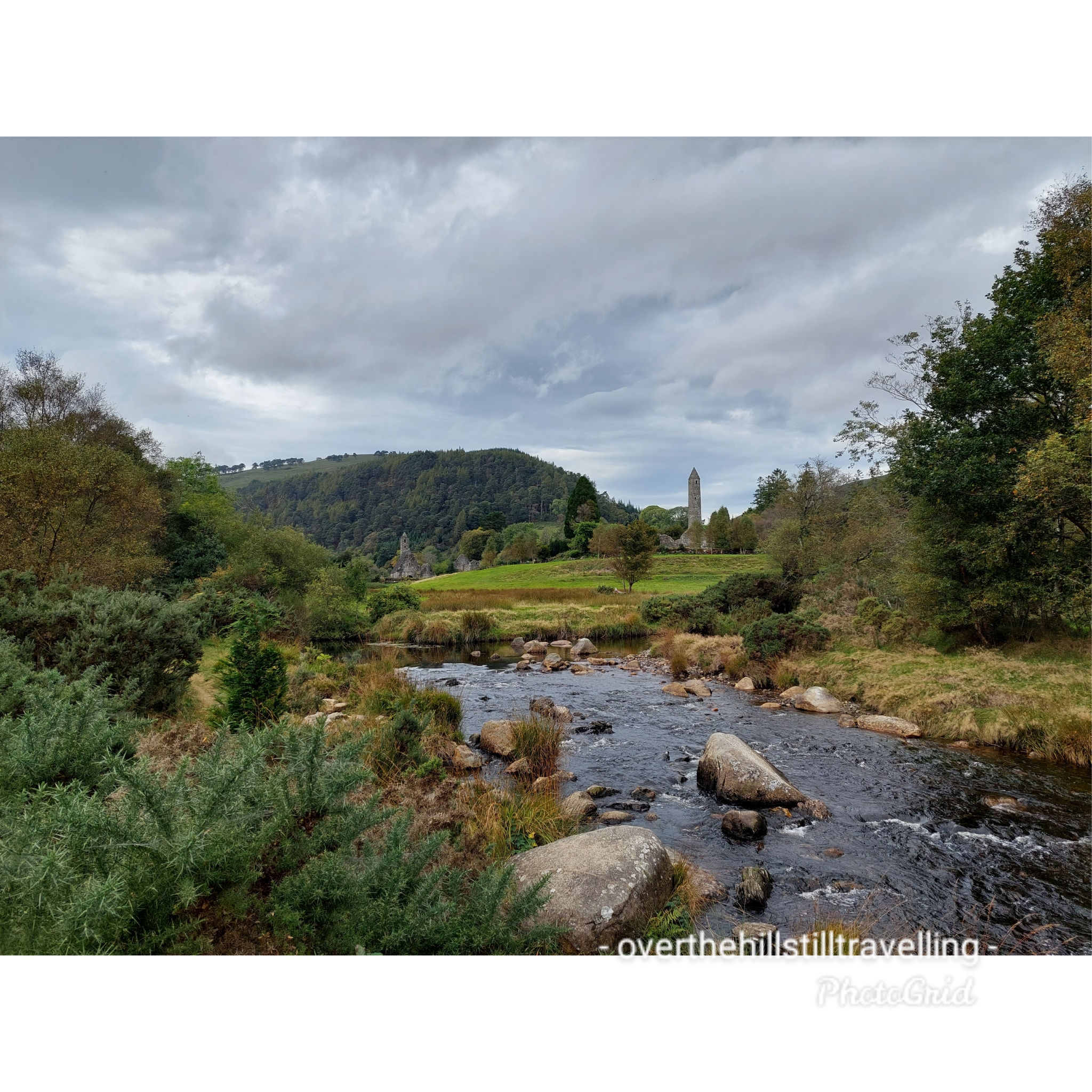
The lakes, formed by glaciers, in the Glendalough Valley are located in the Wicklow Mountains National Park. Besides the lakes and wonderful walks, including The Wicklow Way, there’s the world famous Monastic Site with Round Tower and chapel where St Kevin reputedly spent some time.
Glendalough is home to one of the most important monastic sites in Ireland. This early Christian monastic settlement was founded by St. Kevin in the 6th century and from this developed the “Monastic City”. Most of the buildings that survive today date from the 10th through 12th centuries. Despite attacks by Vikings over the years, Glendalough thrived as one of Ireland’s great ecclesiastical foundations and schools of learning until the Normans destroyed the monastery in 1214 A.D. and the dioceses of Glendalough and Dublin were united. For more information here’s the link https://visitwicklow.ie/listing/glendalough-monastic-city/


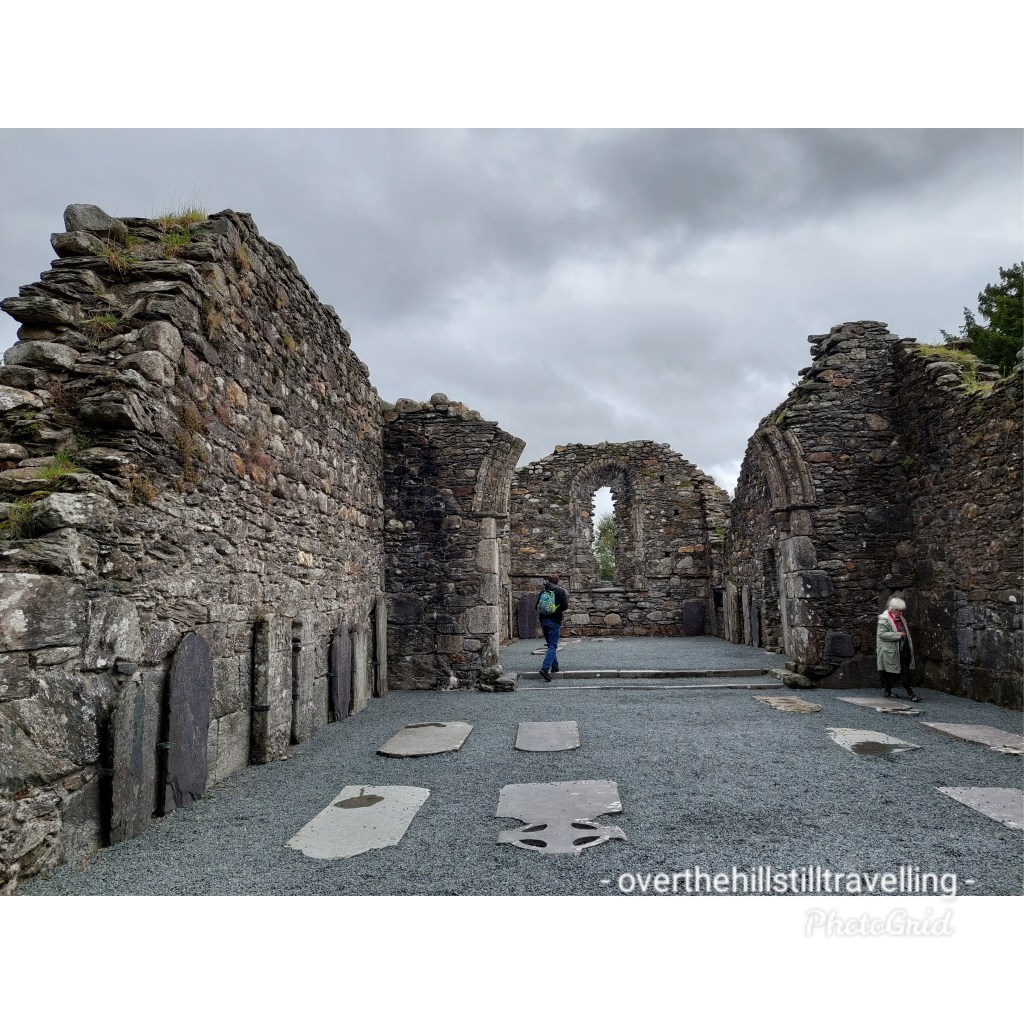

Being back at Glendalogh has inspired me to walk around the lakes, and then head over to walk the Ring of Kerry. I’ve already walked the virtual route via the Conqueror challenges and now I’d love to walk it in real time.
On our way back to Dublin we drove over to the east Coast and stopped off at Bray for a stroll along the Promenade and beach, then dinner.


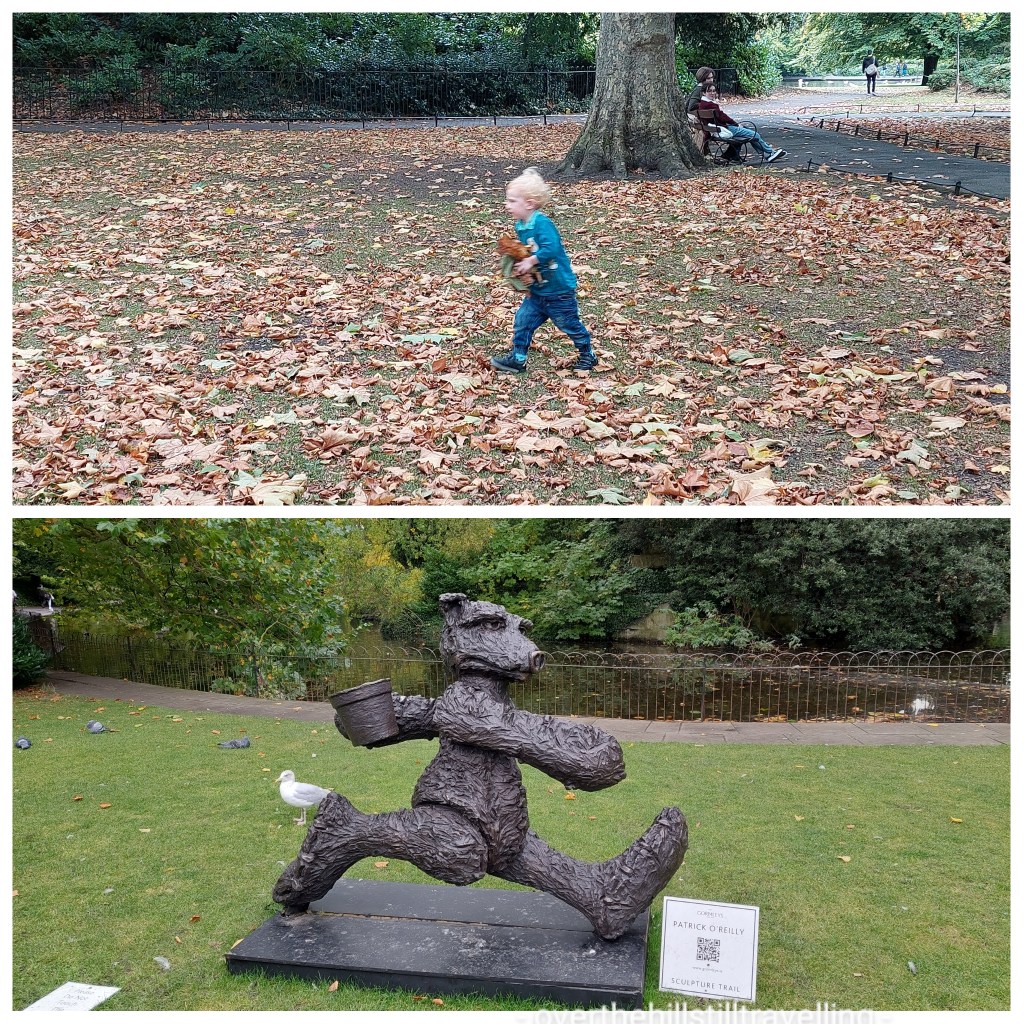
We visited St Stephen’s Green where my grandson did a fairly good imitation of a sculpture 😁😁 Just in the opposite direction!
We visited Christ Church Cathedral where my grandson wanted to try out all the chairs, and he and I stood on medieval tiles

Christ Church Cathedral, originally a Viking Church, is almost 1,000 years old. It was founded circa 1028, is Dublin’s oldest working structure, and is the spiritual heart of Dublin. It is also one of Ireland’s top visitor attractions and a place of pilgrimage through the centuries.
Then Marsh’s Library where they had a fantastic exhibition about elephants
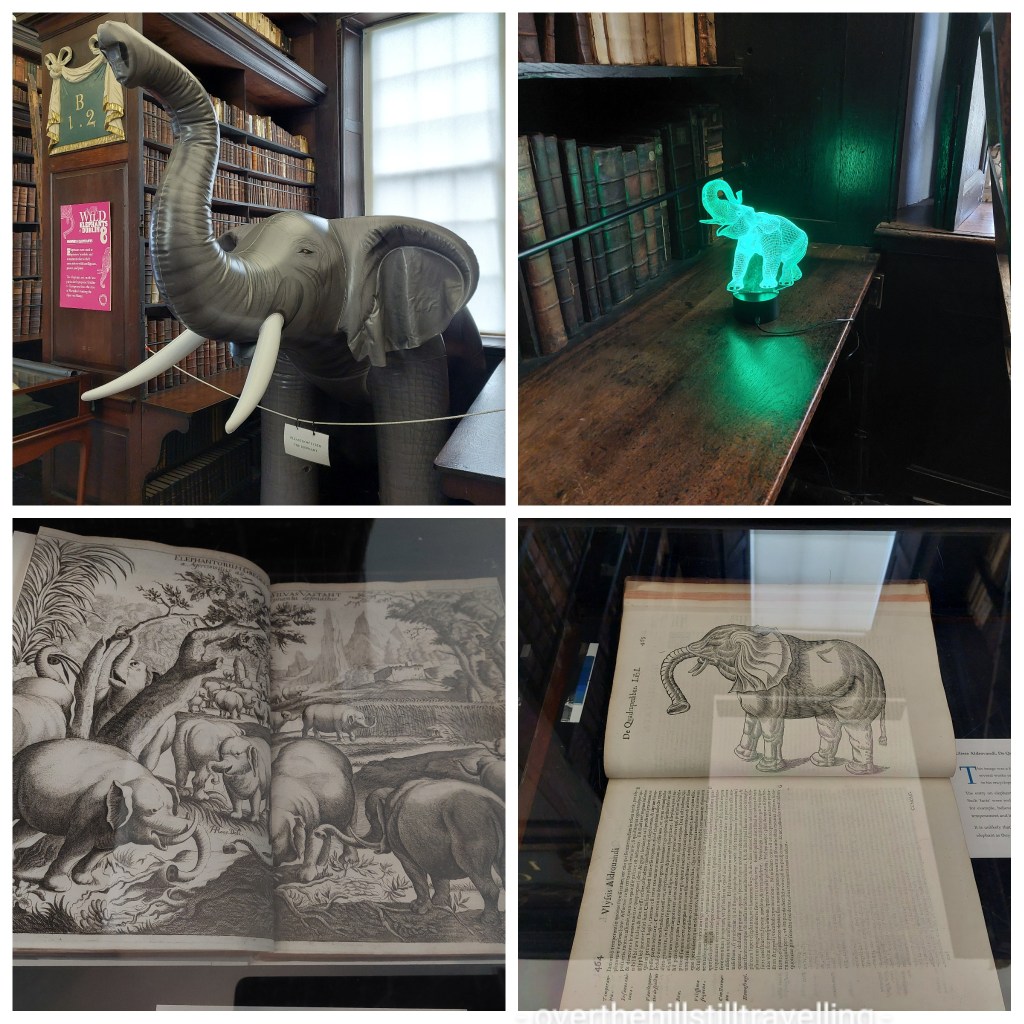
Marsh’s Library was founded in the early 18th century by Archbishop Narcissus Marsh (1638-1713). Designed by Sir William Robinson (d. 1712) the Surveyor General of Ireland, it is one of the very few 18th century buildings left in Dublin that is still being used for its original purpose.
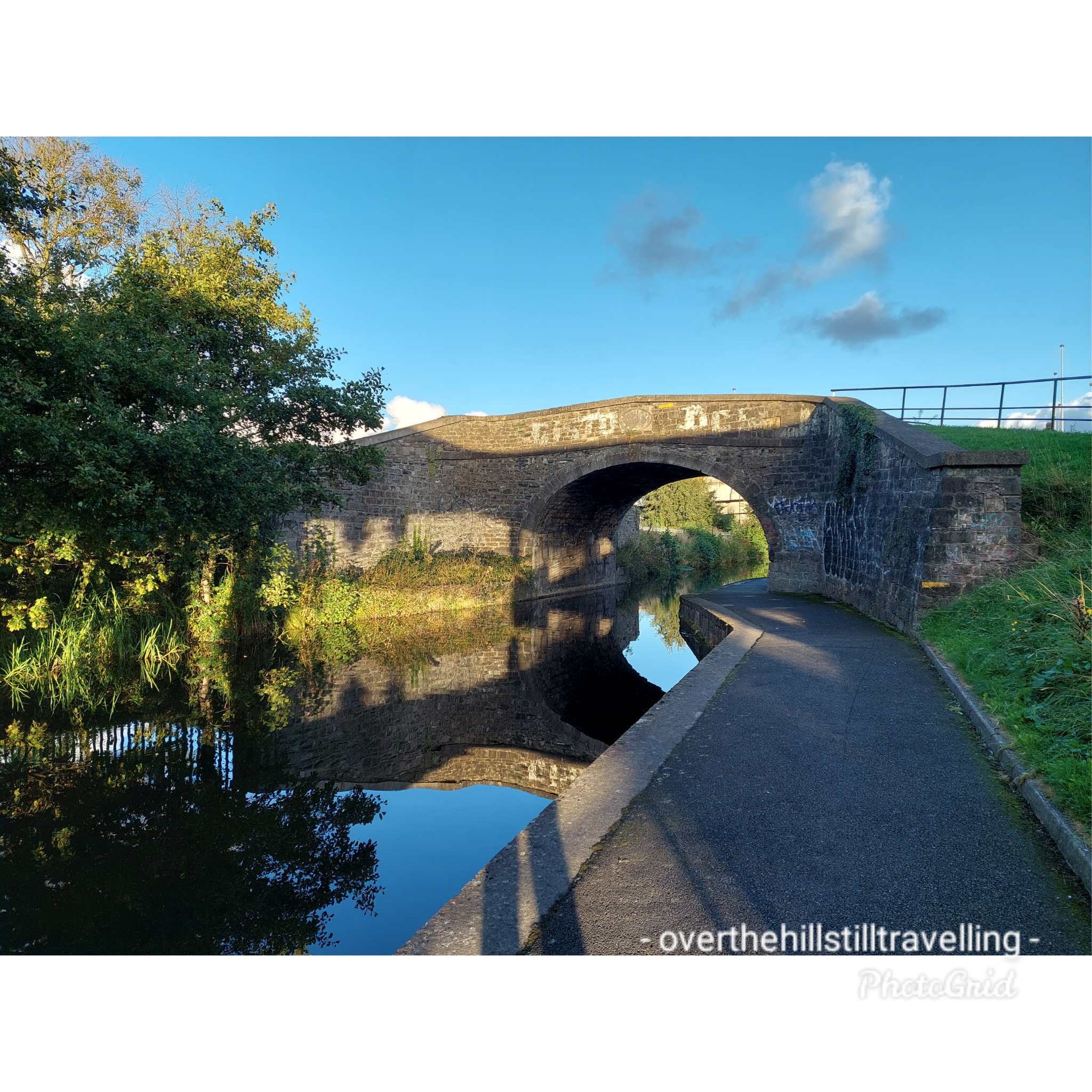
On my sister’s birthday we enjoyed a walk along the Grand Canal near Phoenix Park while visiting with their friends.
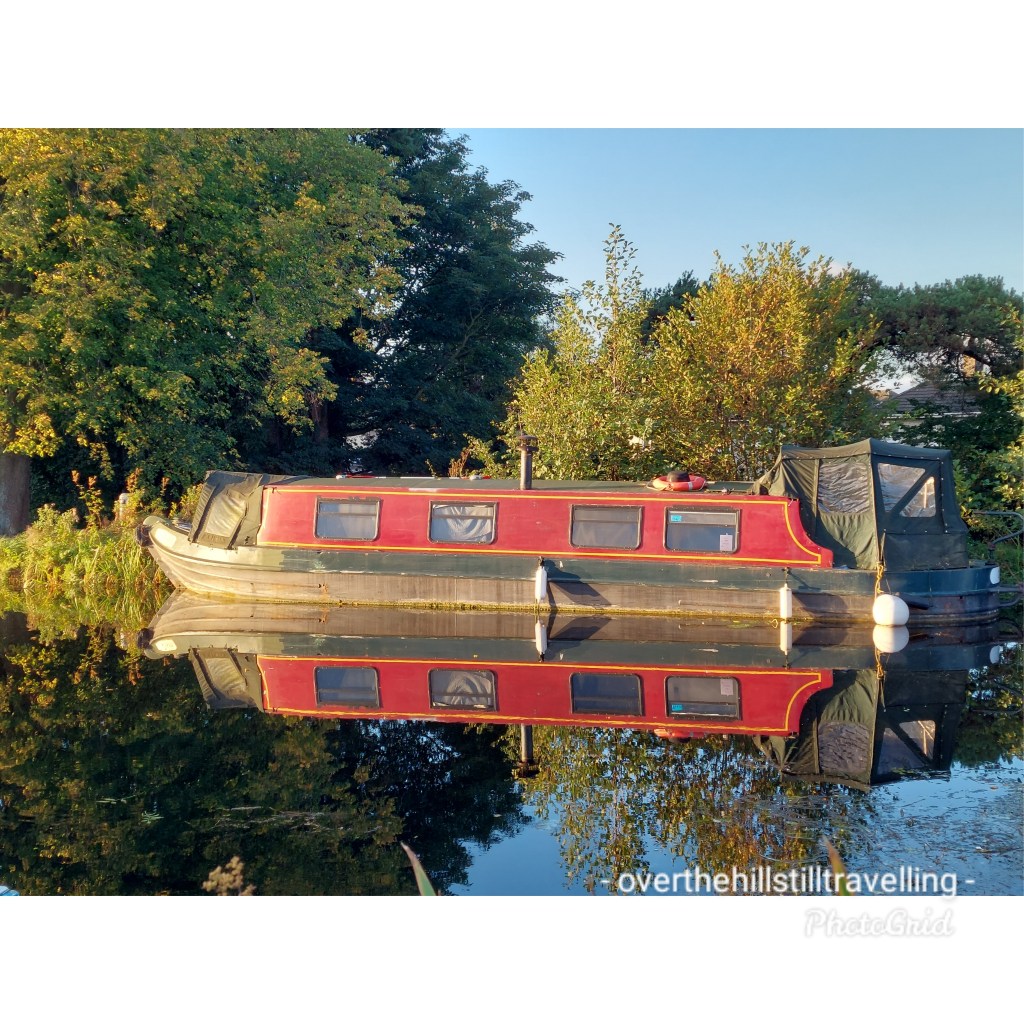
As with UK canals, you can see some beautiful canalboats either moored or in transit.

It’s a lovely way to travel and I invariably have canalboat lifestyle envy…
The Grand Canal stretches for 131km, with 43 locks, five of which are double locks, from Dublin to the River Shannon in County Offaly…would definitely be worth a walk. The Grand Canal (Irish: An Chanáil Mhór) is the southernmost of a pair of canals that connect Dublin, in the east of Ireland, with the River Shannon in the west, via Tullamore and a number of other villages and towns, the two canals nearly encircling Dublin’s inner city. Its sister canal on the Northside of Dublin is the Royal Canal. The last working cargo barge passed through the Grand Canal in 1960. Ref Wikipedia

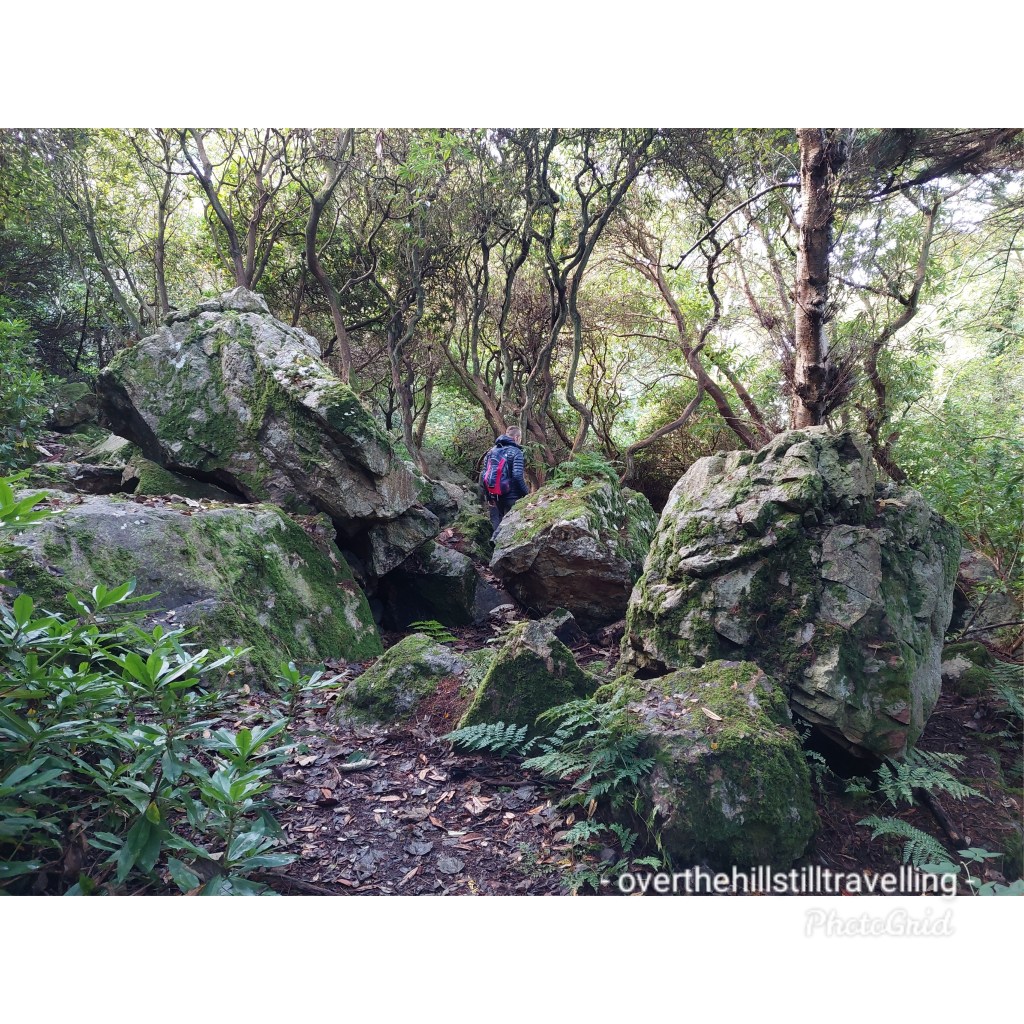
We also visited Howth, and a brief visit to the castle ruins, then a walk along the coast. A stunning day, the route took us through magical forests and up some precipitous paths, the sun added a welcome warmth.
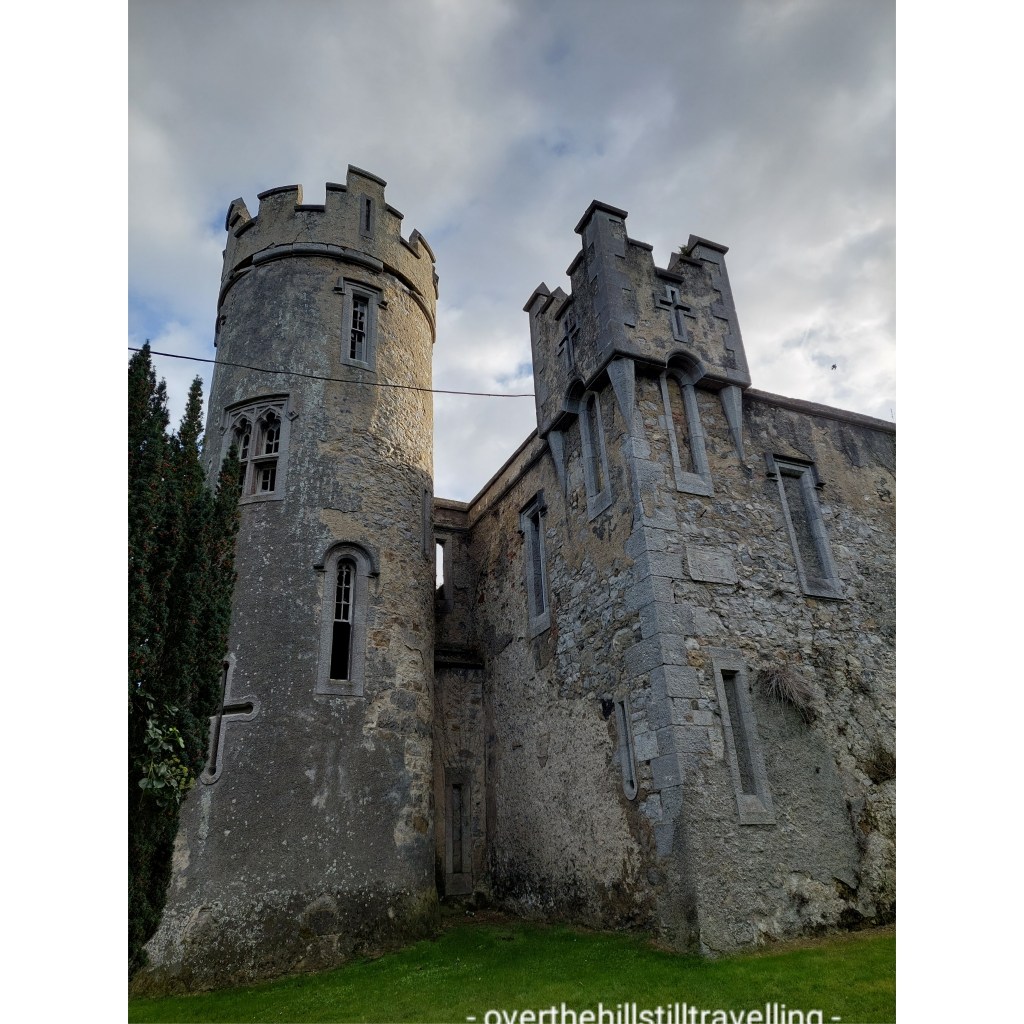
Since 1180 the St Lawrence family were the feudal lords of Howth. The original family castle, a timber structure, was sited on the edge of Howth village, on Tower Hill, overlooking Balscadden Bay. In some form, Howth Castle has stood on its present site for over 750 years. The great English architect Sir Edwin Lutyens in 1911 restyled a 14th-century castle built here, overlooking Ireland’s Eye and the north Dublin coastline.
The estate previously included much of coastal northern Dublin, including the lands of Kilbarrack, Raheny and parts of Clontarf, but these were gradually sold off from the mid-19th to the mid-20th century. Ref Wikipedia


In all a wonderful visit and much swapping of stories. Its quite hard being so far away from the people you love and life invariably gets in the way of communication.
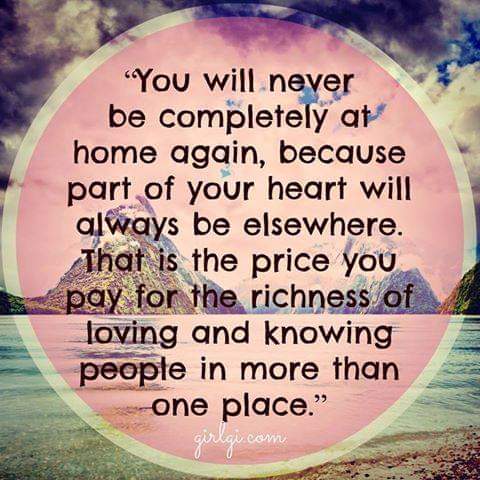
And then it was the final day and a last walk around Dublin


Clapham Common
Posted in around the UK, cities and towns of the UK, conqueror challenges, Domesday Villages of England, It's my life, project 101, Travel, walk 1000 miles 2021, tagged addicted to walking, adventures in london, baby boomers travel, Clapham Common, conqueror virtual challenges 2021, domesday book villages england on November 16, 2021| 8 Comments »
I’m working near to Clapham Common for the next 12 days. I never knew it was so pretty.


This is going to be a relatively easy booking, but quite boring with nothing much to do. I may just get to start and finish (hopefully) my September blogs – it will all depend on whether or not my laptop is still operational.
From Wikipedia: At over 85 hectares in size, Clapham Common is one of London’s largest, and oldest, public open spaces, situated between Clapham, Battersea and Balham.
Clapham Common is mentioned as far back as 1086 in the famous ‘Domesday Book’, and it was originally ‘common land’ for the Manors of Battersea and Clapham. ‘Commoners’ – tenants of the Lords of the Manors, could graze their livestock, collect firewood or dig for clay and other minerals on the site“.
Whoop whoop, another Domesday Book place.
Lots of space for walking, and I’m planning on finishing the Ring Road Iceland by Wednesday next week 🤞🤞🤞 and starting the Romantic Road, Germany virtual challenge.
Tomorrow I shall go walkabout and look out for interesting architecture.
No Instagram images were found.
Follow me on Twitter
My TweetsApril 2026 M T W T F S S 1 2 3 4 5 6 7 8 9 10 11 12 13 14 15 16 17 18 19 20 21 22 23 24 25 26 27 28 29 30 Archives
Categories
My photos
-
Join 565 other subscribers
- Follow Not Just a Granny on WordPress.com
Blog Stats
- 159,083 hits
Blogs I Follow


 Not Just a Granny
You must be logged in to post a comment.