Feeds:
Posts
Comments

Archive for the ‘project 101’ Category

2017.09.14 Day 8 – a morning in Esposende and then onto Viana do Castelo

After yesterday’s marathon walk I was pretty much exhausted by the time I arrived at my hostel. I had decided to bus today instead of tomorrow and give my hip and ankle a rest. They were fairly painful and I didn’t want to do any damage. So after a quick meal, a lovely hot  shower and putting out my clothes for the morrow and repacking my bag (done at night so as to not disturb my room-mate in the morning), I settled in and soon fell into a deep sleep. The foam earplugs I carried with me were an absolute bonus. I could have slept through an invasion and not heard a thing! I loved that the bunk had a dedicated locker, so I could pack Pepe away along with all my valuables and not worry about any of it continuing along the Camino on it’s own. 😉

Come morning, I needn’t have worried about disturbing my room mate! By the time I woke up she was long gone LOL. I dressed and popped downstairs for a lovely breakfast and then checked out officially…but left Pepe at the hostel while I went walkabout. Having decided to bus to Viana do Castelo and discovering that the buses are not that frequent, I had time for a brief explore of this town of Esposende, which is apparently a city!! There you go then!! Esposende gained city status on 2 July 1993 🙂 In 1801 the population was 4,157 and in 2011 34,254.

What a delightful ‘city’. Just a short walk away from the hostel was the main square, the roads are mostly narrow and cobbled, gaily coloured awnings covering cafe tables set out for patrons, and brilliant to see artisan shops and local stores rather than streets lined with charity shops, one-pound stores and ubiquitous high-street grocers. #noTesco

camino de santiago, portuguese coastal route porto to santiago

the streets of Esposende

camino de santiago, portuguese coastal route porto to santiago

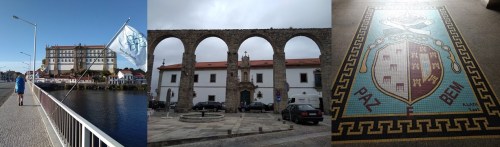
The main Square, the beautiful Teatro Club with a fabulous interior, a church, the fantastic cycle and pedestrian lanes, an interesting coat of arms, and the Maritime Museum

I was well impressed with the pedestrian and cycle lanes. They are light years ahead of Britain in this respect…although to be fair, these lanes were not in the city centres or older towns. Still I think our road people should have a look.

Occupation of the area of Esposende, dates back to pre-history, but nowadays there are only artefacts of stone or ceramic, with Roman occupation known through archaeological finds, including the barbarian kingdoms and Middle Ages.

camino de santiago, portuguese coastal route porto to santiago

Esposende – Coat of Arms – The arms were officially granted on April 27, 1995.

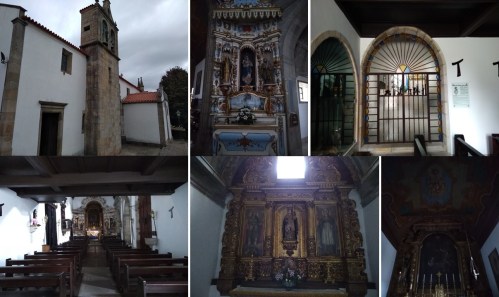
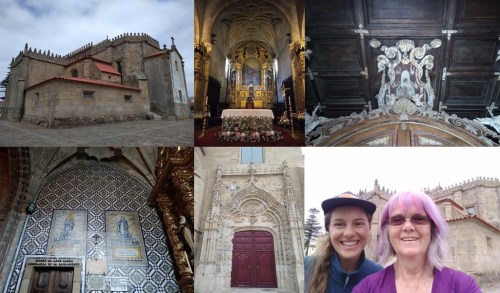
There are some fantastic churches in the town, and as with all the churches I had visited so far, the interiors were stunning. One of the churches, the Church and House of Misericórdia dates back to 1579, while the current building dates back to the 1893 renovation works. The interior is of Rennaisance aesthetics and the chancel has a beautiful baroque woodcarving, surmounted by a 17th-century altarpiece where Nossa Senhora da Misericórdia (Our Lady of Mercy) is presented. The church had a pilgrim’s stamp set up, so you could just stamp your own passport, and to my delight I found a small statue of St James perched on a decorative sconce on the wall with a Camino sign beneath 🙂 So exciting!!! The ceiling was absolutely stunning, decorated with polychrome woodcarvings representing the prophets.

camino de santiago, portuguese coastal route porto to santiago, esposende

Nossa Senhora da Misericórdia (Our Lady of Mercy)…so beautiful

camino de santiago, portuguese coastal route porto to santiago

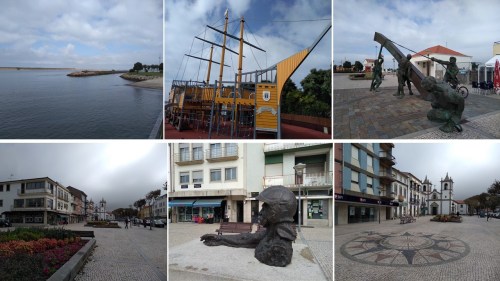
the mouth of the river, ship in the children’s playground, fantastic sculpture; Monument to the Men of the Sea, the town square and an intriguing sculpture; bust of a firefighter

camino de santiago, portuguese coastal route porto to santiago

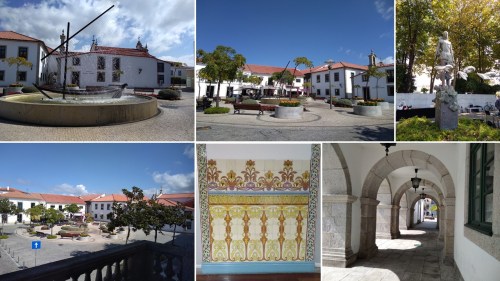
scenes of Esposende – note the stunning boat sculpture in the fountain. The statue is of King Sebastian who, on 19 August 1572, by Royal Charter, turned Esposende into a village

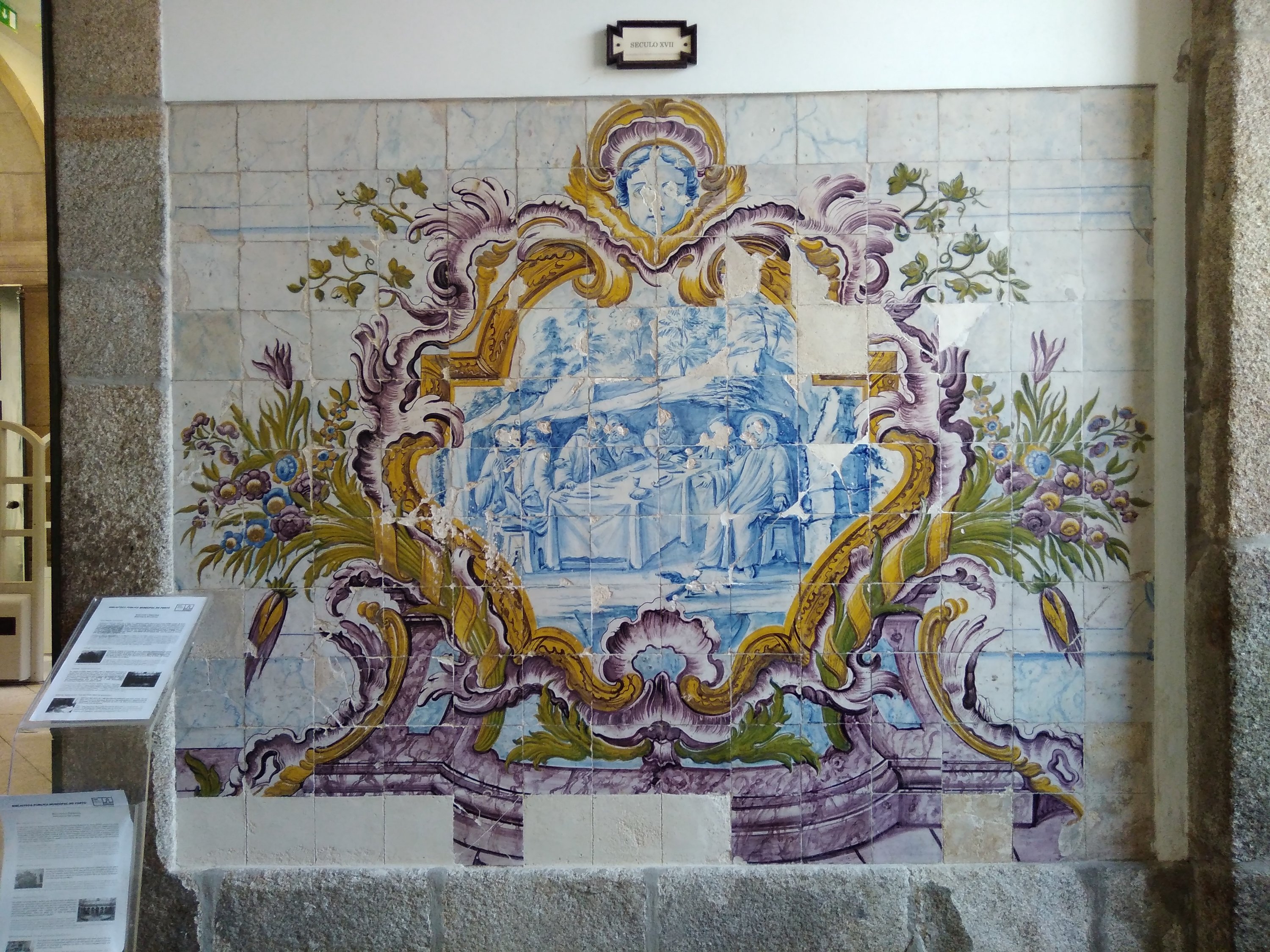
The boat sculpture was inaugurated in 2010 as a tribute to the Atlantic fishing vessel of the fishing community of Esposende. The Catrain is a traditional open boat (although in this instance they took the concept of ‘open’ a bit far ;). The tiled wall I saw inside the Teatro Club and the view of the square is from the balcony of the same building.

camino de santiago, portuguese coastal route porto to santiago

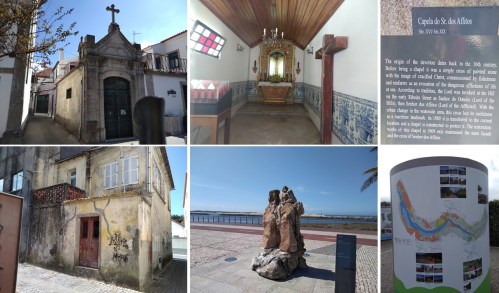
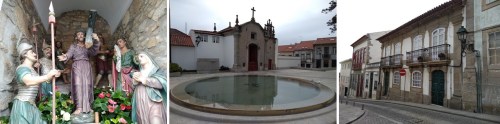
scenes of Esposende – Capela do Sr. dos Aflitos, old buildings, a sea-side sculpture; Cavaleiro and map of the river and estuary

And then it was almost time to go. Esposende to Viana do Castelo. Sadly I would be missing out on visiting the Monastery and seeing the Ponte Sabastiao enroute. Oh well.

camino de santiago, portuguese coastal route porto to santiago, esposende

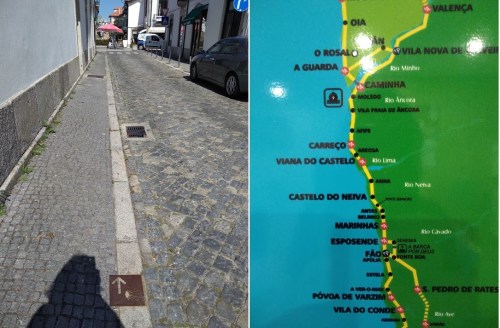
Camino de Santiago – Esposende to Viana do Castelo – the signs are there 😉

After checking out of the hostel Pepe and I took a walk along the road to visit the fort and lighthouse. Set in front of the Forte de São João Baptista de Esposende. The 15 metre tall lighthouse that dates back to 1922 is unusual in that it is made of metal. The fort dates back to the late 17th century and was built to guard the mouth of the river Cávado just behind Esposende’s beach. The fort looks very derelict, but from the washing on the line, I’m guessing someone lives there.

camino de santiago, portuguese coastal route porto to santiago

The Farol de Esposende (Esposende Lighthouse)

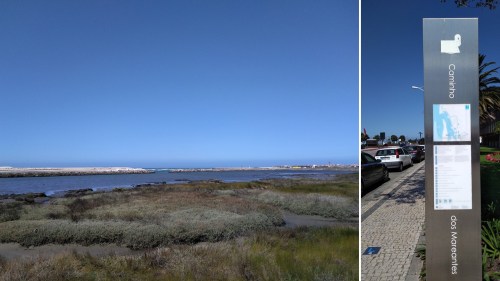
While exploring I noticed some tiny blue arrows and white metal church shaped insets in the paths and streets. Seems there’s a mini-camino route in town that takes you to the many churches in the area. To much for me on that particular day….but if I ever return!!

camino de santiago, portuguese coastal route porto to santiago

The estuary and Camino dos Mareantes, Esposende…intriguing

On the bus to Viana do Castelo, my next overnight, looking out the window as the countryside and villages whizzed by nearly killed me…. seeing all the photo ops I’m missing 🤧🤧 But better to rest than not be able to walk at all by tomorrow. It’s 24kms from Esposende to Viana do Castelo. I’ll walk again tomorrow. Once I leave Tui on the weekend there will be no rest days.

I was blessed with another fantastic day of blue skies and sunshine……

Buen Camino 🙂 I’m loving my #Camino2017

camino de santiago, portuguese coastal route porto to santiago

Bom Caminho

and whilst the road to Esposende was not paved with gold, the gold from Brazil reached Esposende during the age of the great Atlantic voyages 🙂

If you’d like to read more about my Camino adventures
Day 5 – Porto to Vila do Conde

Day 6 – Vila do Conde – rest day

Day 7 – Vila do Conde to Esposende

Don’t miss Day 8 part 2 – an afternoon in Viana do Castelo

Read Full Post »

2017.09.12 – Day 6 – Vila do Conde : rest day (no not really!! LOL) As my daughter would say “Mom, you don’t know the meaning of ‘rest!” Walked: 13.29kms / 26595 steps+

portuguese coastal route porto to santiago

Washing day on the Camino

Laundry day today. Washed all my clothes by hand 😂😂😂 Longggg time since I’ve had to do that!!! There’s a self-service laundromat in the square but it’s more expensive to wash a small bundle of clothes than what I pay for my meals 😣😣 I love that their word for laundry is lavanderia… Sounds so lavenderish. 😊

After a delicious breakfast at the Erva Doche Guesthouse (they have an amazing selection of teas), I set off to explore on what was a gorgeous day. Sadly I’ve lost my Camino family for now, they’re going inland and walking to Barcelos on the Central Route today. But we’ve exchanged numbers and will hopefully meet in Santiago for the Friday night service next week on 22nd. I’m looking forward to seeing who I meet in the coming days.

camino portuguese coast route port to santiago

Breakfast at the Erva Doce Guest House in Vila do Conde

Had a fantastic walkabout around Vila do Conde, one of the oldest settlements in northern Portugal, where geological artefacts dating from 100,000 to 15,000 years have been discovered in archaeological sites in the parishes of Modivas, Malta, and Labruge.

camino portuguese coast route port to santiago

Vila do Conde, Portugal – on the Portuguese Coastal Route

First up to the Santa Clara Convent that I saw on the hill yesterday, which turned out to be an old age home!! I know where I’m going to retire to 💕💕 They stamped my pilgrim’s passport which was fab.

camino portuguese coast route port to santiago

Santa Clara Convent, Vila do Conde

One of the biggest and richest feminine convents in Portugal, founded in 1318, by Afonso Sanches and his wife, Teresa Martins Telo. Although I wasn’t allowed into the grounds to explore, I spent some time admiring the views of the River Ave and the town from the hilltop; absolutely stunning!! There’s a fantastic old church on the same grounds, sadly closed when I was there, and a small chapel, fortunately open, attached to the monastery; totally magic.

camino portuguese coast route port to santiago

Views of the River Ave and town from Santa Clara Convent, Vila do Conde

8 monastery chapel

the tiny chapel located next to the convent

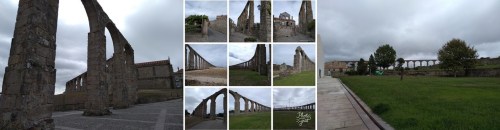
Then I decided to follow the 999 arch aqueduct; Aqueduto de Vila do Conde. Just because.  Initially constructed between 1705 and 1714, the second longest in Portugal, it had 999 arches and ran for four kilometres; connecting a spring in Terroso, Póvoa de Varzim with a fountain in the monastery of Santa Clara.

camino portuguese coast route port to santiago

The 999 arch aqueduct in Vila do Conde

Well I only got about half way and it kinda petered out and only small sections continued that were mostly inaccessible. Thank goodness, just the bit I followed was over 2 kilometres. Twas meant to be a rest day. Along the way, under one of the arches, I bumped into my group of 5 that I had met yesterday. What a pleasure to see them. On my way back along the arches I went past a fab church that I’d seen earlier, Church of Sao Simao e Sao Judas Tadeu, but it only opens Sundays. So instead of exploring the church, I bought a delicious bunch of grapes from the market next door. 🙂

camino portuguese coast route port to santiago

Church of Sao Simao e Sao Judas Tadeu, Vila do Conde

I was absolutely fascinated by the railway tracks I saw. The same as in Porto, they are lined with grass and level with the surrounding roads.

camino portuguese coast route port to santiago

the railway tracks leading to Vila do Conde Railway Station

I visited the beautiful main church; Igreja Matriz de Vila do Conde, where I got another pilgrim’s stamp in my passport, and met a lovely young lady, also walking the Camino, with whom I had a wonderful conversation. Unfortunately, although I wrote her name down in my diary, I can’t seem to find it.

camino portuguese coast route porto to santiago

Igreja Matriz de Vila do Conde

 Construction of the church started at the end of the 15th century (1496-1497) and ended in the beginning of the 16th century (1514-1515). A National Monument since 1910 due to the importance of the building; regarded as a late Gothic and Manueline style church and its Renaissance tower.

It’s extremely hot and humid and my initial thoughts are correct, I really should have planned this journey for October during the cooler months. But cest la vie, I’m here on my Camino and loving it!!  “atm I’m back at the hotel doing what sensible people do; staying indoors for siesta and something to eat” 😉😉😉 Some days it wasn’t possible to find a place for siesta, and I had to be really inventive.

camino portuguese coastal route porto to santiago

not the most substantial meal ever, but this was lunch LOL

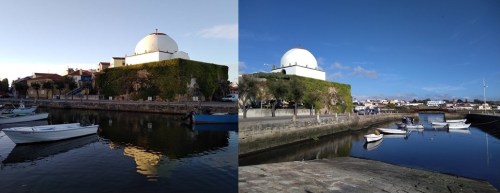
Earlier in the day I had spotted an intriguing church atop a jut of rock; ‘Capela de Nossa Senhora do Socorro – the Chapel of Our Lady of Aid/Help’ is a beautiful Greek style white-washed, round-domed church that shone out in the afternoon sun. I simply had to find out how to get there. So after my siesta, I went walkabout and finally found the way along a steep, narrow, cobbled stone lane…

camino portuguese coastal route porto to santiago

Capela de Nossa Senhora do Socorro), the Chapel of Our Lady of Aid/Help, Vila do Conde

Stepping into the courtyard to find this breath-taking edifice was worth the climb. Built on a square plan with rounded dome, the interior of the chapel exemplifies 18th-century architecture, with azulejos; painted tin-glazed ceramic tile work, showing the life of Christ, and a Rococo-style altar.

Capela de Nossa Senhora do Socorro), the Chapel of Our Lady of Aid/Help

interior – Capela de Nossa Senhora do Socorro), the Chapel of Our Lady of Aid/Help

I had seen similar ceramic tile work in many of the churches I visited and of course in the Sao Bento Railway Station in Porto. Absolutely stunning.

I spent the early evening exploring and taking 100s of photos.

camino portuguese coastal route porto to santiago

scenes of Vila do Conde

The towns in Portugal are ever so quirky but mostly very poor. There are ramshackle tumbled down houses interspersed amongst the regular houses that you can see have been boarded up for decades.

camino portuguese coastal route porto to santiago

scenes from my a.m. walkabout; Vila do Conde

In contrast there are a number of churches that although old are filled with very ornate decorations and sculptures. The Madonna and depictions of Christ are everywhere in every pose or decorative garb you can imagine. All very colourful.

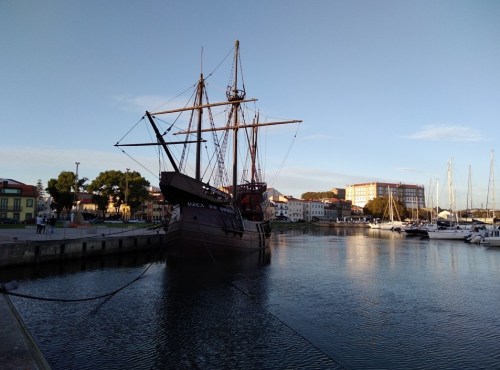
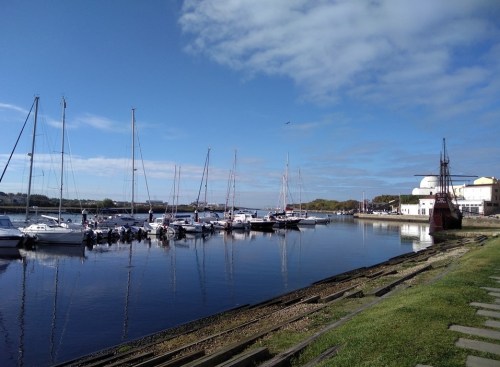
The main square near the marina is very posh with sculptures and water features but just beyond is a different story. In the marina is a fantastic replica of a carrack; a three- or four-masted ocean-going sailing ship, developed in the 14th & 15th centuries in Europe, and first used for trade from the Mediterranean to the Baltic, then by the Portuguese for trade along the African coast. It was being refurbished when I was there so I couldn’t visit, but it looks amazing.

camino portuguese coastal route porto to santiago

a Portuguese Carrack, Vila do Conde

Okay so, I finally caved in, my lavandar was not going to dry any time soon, so  took my very wet washing to the laundromat; the lavandaria, and after the lady there helped me to descipher the instructions, I popped my clothes in the secagem section 😉😉 I tell you what, this is the most posh, clean, beautifully laid out and friendliest staffed laundromat I’ve ever been to. The machines are all Miele… I mean seriously upmarket equipment. The UK could take a page from their book. 😀😀 €1.50 to dry my washing; bargain
Every day 😊😊😊 

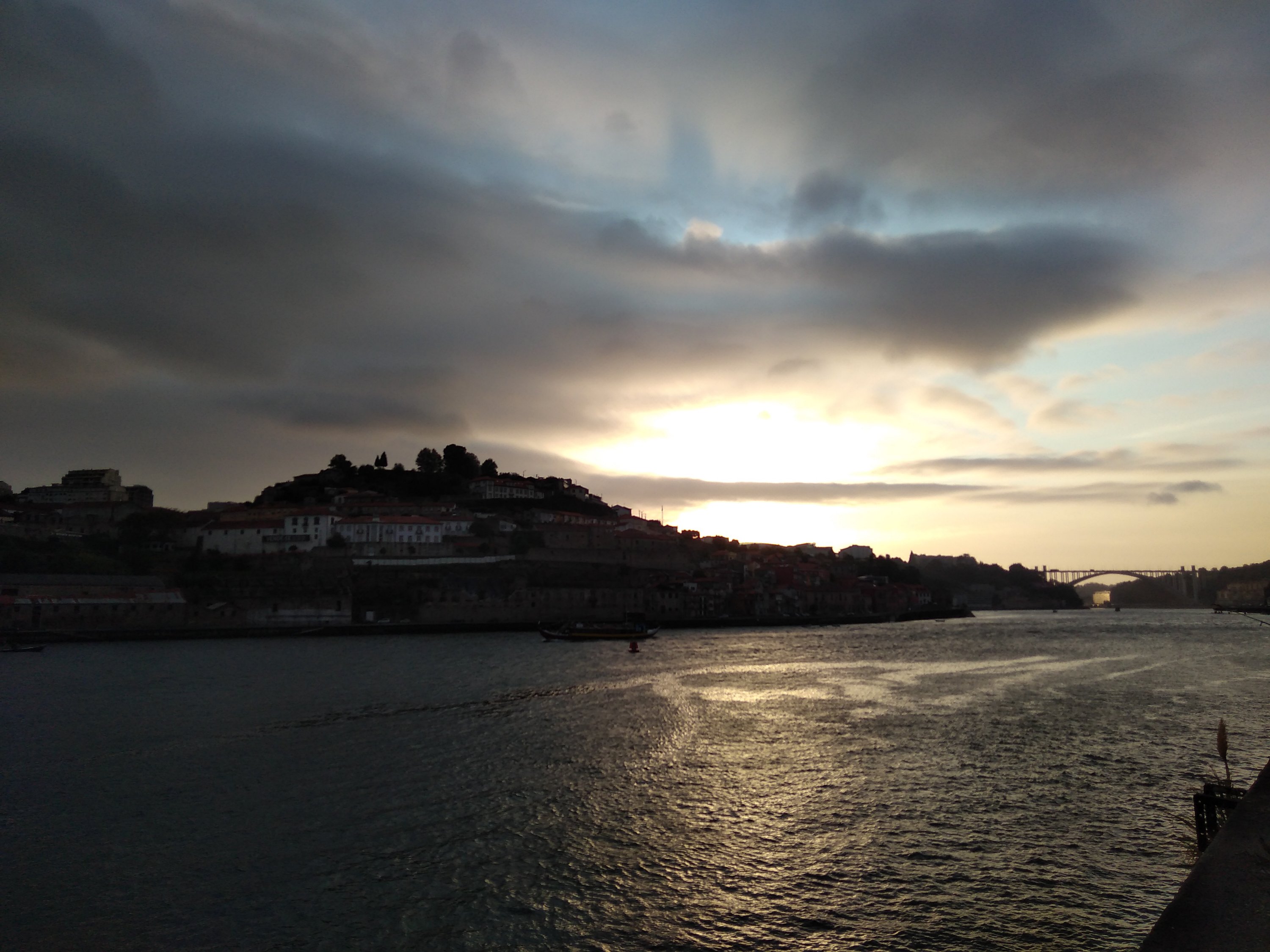
After that, I decided to walk to the sea front to watch the sunset. I was excited about seeing a sunset tonight and when I started out the sky was still blue and clear, hoorah! But the seafront was a lot further than I thought and by the time I got there, 15 minutes later, a cold front of thick misty cloud had blown in and blew away my chances of a fab sunset. Although I’m sure it was fabulous somewhere in the world 😃😃😃  Maybe tomorrow. So disappointing. I remember thinking at the time; ‘ oh well, I’ll catch the sunset tomorrow night’.

camino portuguese coastal route porto to santiago

Chapel of Nossa Senhora da Guia at the seafront and my stunning sunset 😉

But it wasn’t to be, and the next sunset I saw was in Caminha 3 days later. But there’s a stunning memorial and a tiny little chapel that I couldn’t resist exploring, as well as the fantastic fort; Sao Joao – Fort St John. However, I did see many a beautiful sunrise 🙂

camino portuguese coastal route porto to santiago

Forte Sao Joao, Vila do Conde

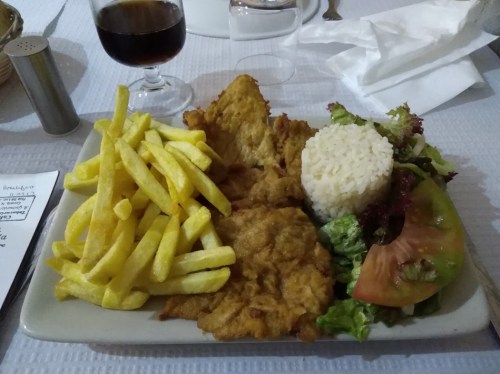
I had supper at a pilgrim’s restaurant where for €5 they offered a bowl of soup, a main course and a drink. Yummy and just what I needed.

camino portuguese coastal route porto to santiago

a substantial meal for 5 euro

On my way to the sea front I had the sheer joy of listening to and watching a flock of swallow settling in for the night. Much swooping and chirping and I briefly saw a murmuration. Wonderful end to a fantastic day.

Then after one last wander I went to bed.

camino portuguese coastal route porto to santiago

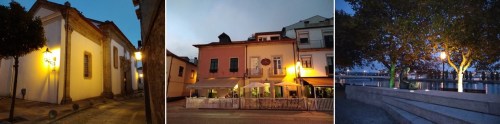
a late evening walk around Vila do Conde. – Erva Doce Guest House in the middle

It seems I also have a new room-mate; Helga from Germany.

Vila do Conde has a history that goes back 100,000 years and was once a large port.

camino portuguese coastal route porto to santiago

Port of Vila do Conde. Not as important as it was in previous centuries, but still a fantastic place to visit

The passage of King Manuel through Vila do Conde, during a pilgrimage to Santiago de Compostela, in 1502, helped to develop some of the important infrastructures in the city. The late Gothic Azurara Church was rebuilt in 1502 by the people of the village to commemorate his pilgrimage to Santiago.camino de santiago portuguese coastal route porto to santiago

Walking tomorrow. Vila do Conde to Esposende.

Join me on instagram/notjustagranny for more images from my travels around the UK and Europe as part of Project 101


Read Full Post »

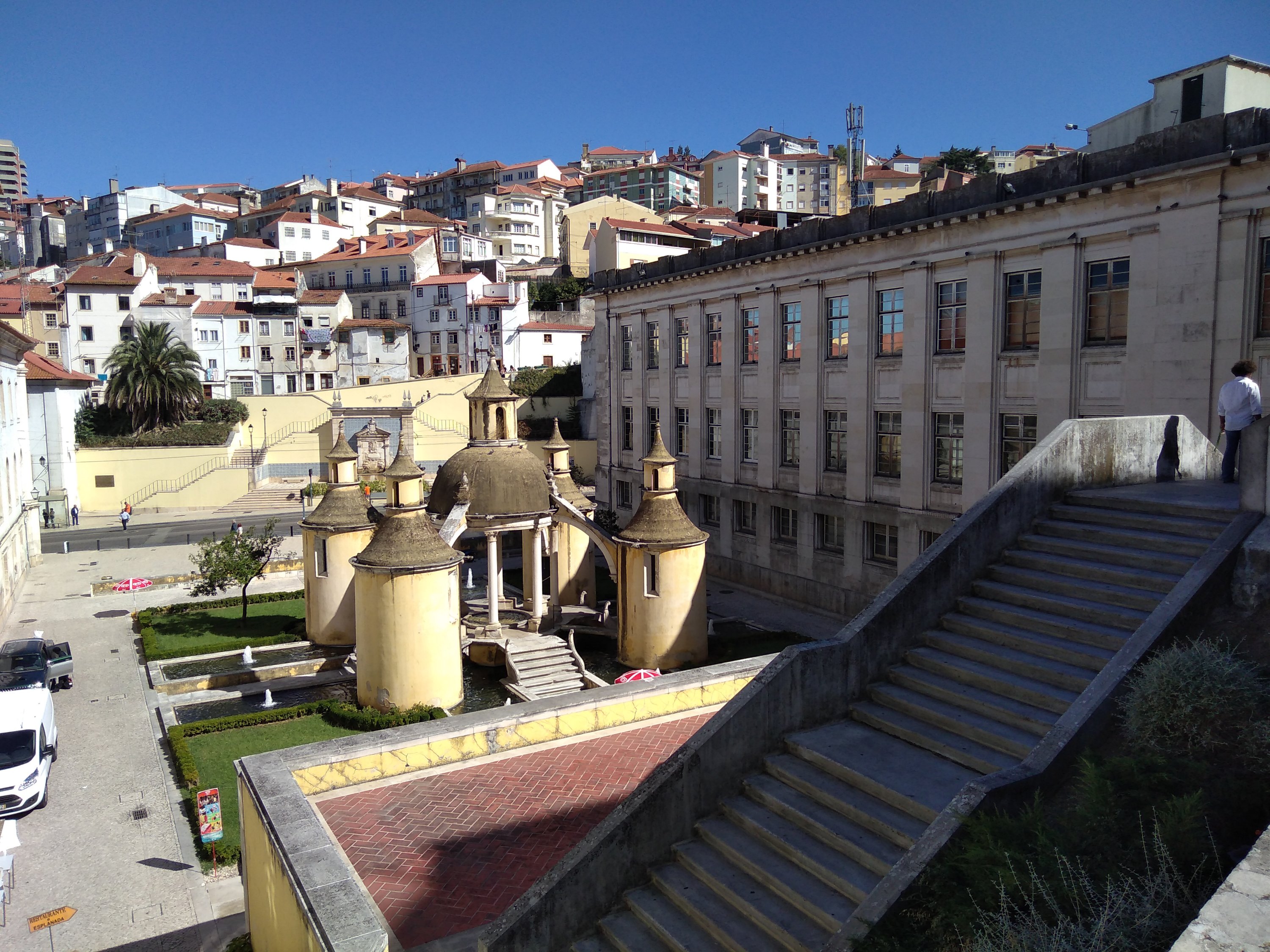
What a fantastic city. Coimbra, a UNESCO World Heritage Site and world famous University City is perched high on a hill that just goes up and up and up some more. But the views from the University at the very top are astounding and worth the effort. 

I started out relatively early and took the 08:52 train from Porto-Campanha which is conveniently a 5 minute walk from my hotel. Within a hour we were at Coimbra-.

I walked into the city from there and enjoyed the coolness of the morning ; the temperature changed fairly soon and I got very burned and hot.

The city as I said is perched on a hill. Winding cobbled lanes lead up and up, very steep slopes, the houses balanced haphazardly one in top of the other, so close together you couldn’t fit a sheet of paper between them.

The architecture is fascinating, but I was sad to see do many wonderful old buildings in a complete state of disrepair and dereliction.

There are te dozens of churches, monasteries and a few cathedrals. I managed to visit a few, all of which were wonderful. I’m always reminded that people built these places. The minds that conceived of them… I’m left amazed.

Coimbra is an 11th century city and some of the ecclesiastical buildings go back to the early 12th century. Awesome.

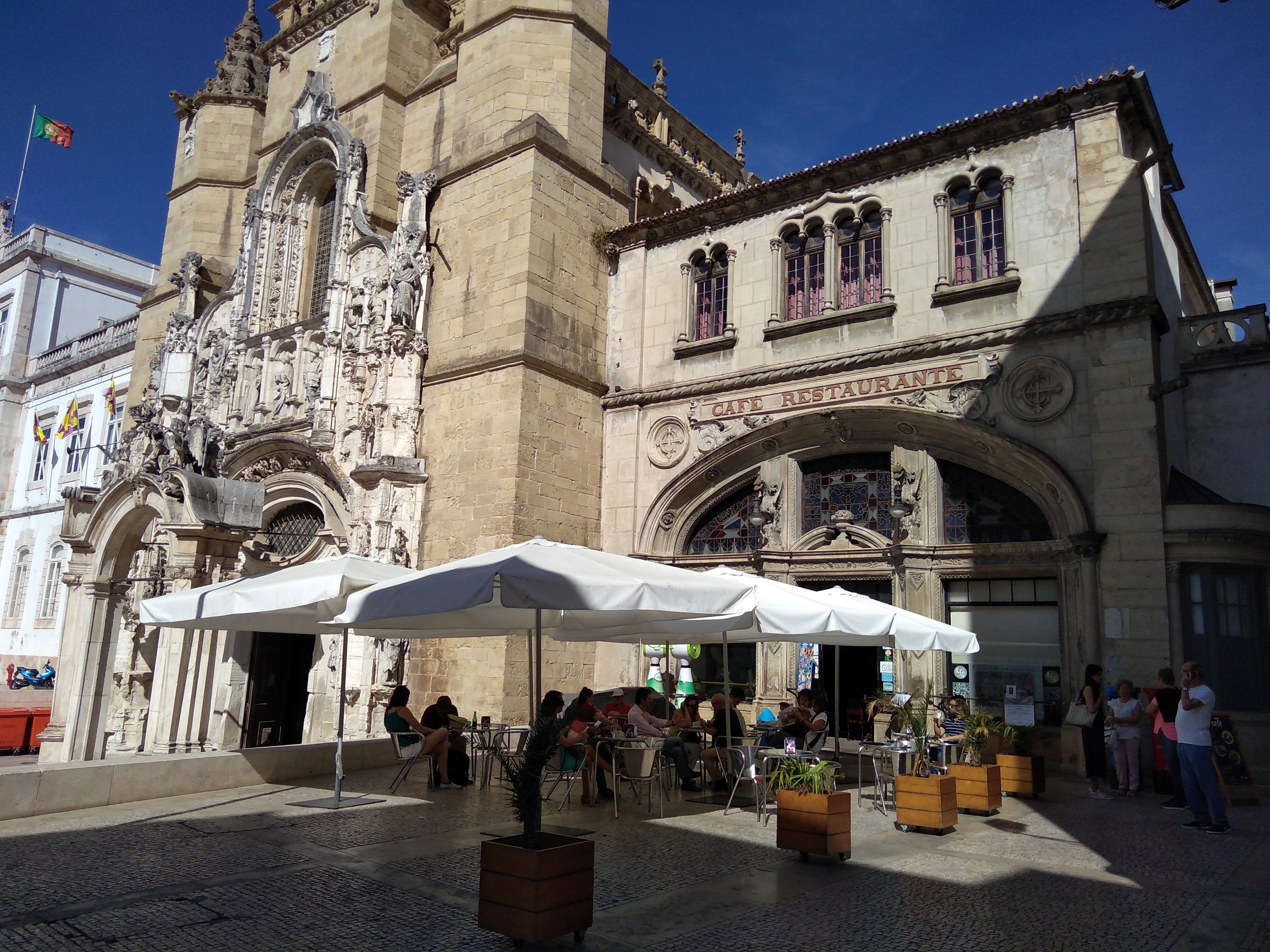
There are dozens of squares each with tables and gaily coloured umbrellas, lots of quirky shops with a delightful array of goods. I bought 2 tea-towels and an oven gloves as mementos. Like I need more weight in my bag LOL

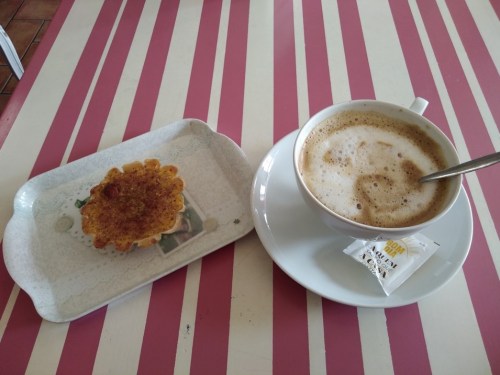
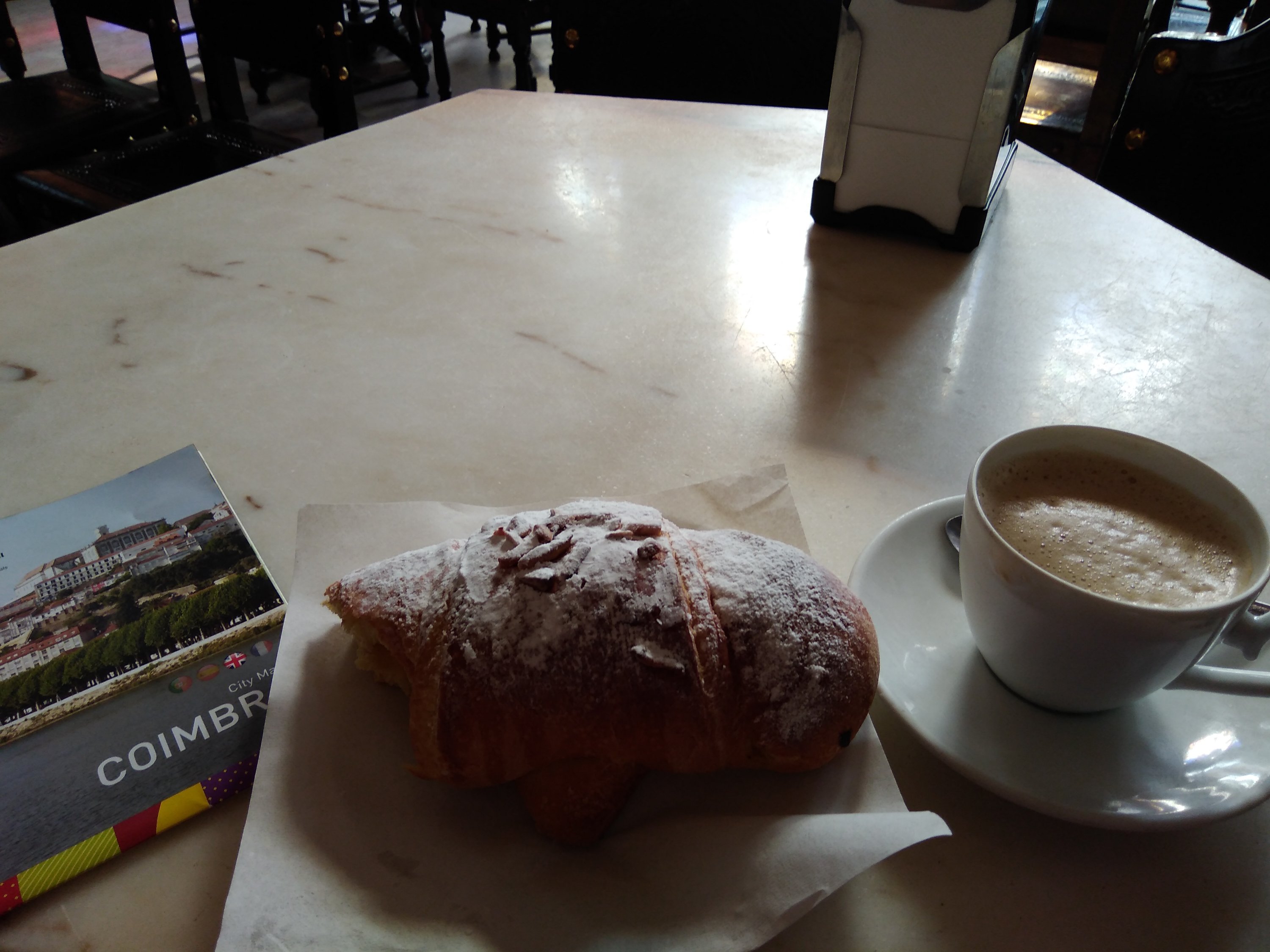
I had a cappuccino and a custard cream pastry at this restaurant. Delicious.

I walked along the riverside. The River Mondego is incredibly wide! There’s a colourful pedestrian bridge I walked across that offered amazing views of the river and city.

I discovered an extraordinary Monastery on the other side of the river. Archaeological ruins offer a tantalising glimpse into the ancient past.

 On the hill is an amazing church and what looks like another monastery. I need to do more research on that.

Before leaving I stopped off at a cafe and partook of a cappuccino and a most delicious custard pastry.

Coimbra is an enchanting city with so much to see.

 Centuries of history in those cobbled streets that play havoc with your ankles. 

And then it was time to go. I took a taxi to the station. By 17:45 my feet, after 15 kms had had quite enough thank you.

Walked 15kms. 32,419 steps from when I got off the train until I stepped into the taxi. 

I mistakenly jumped on the wrong train, but since it was headed to Porto, it was all good and the ticket inspector didn’t come by.

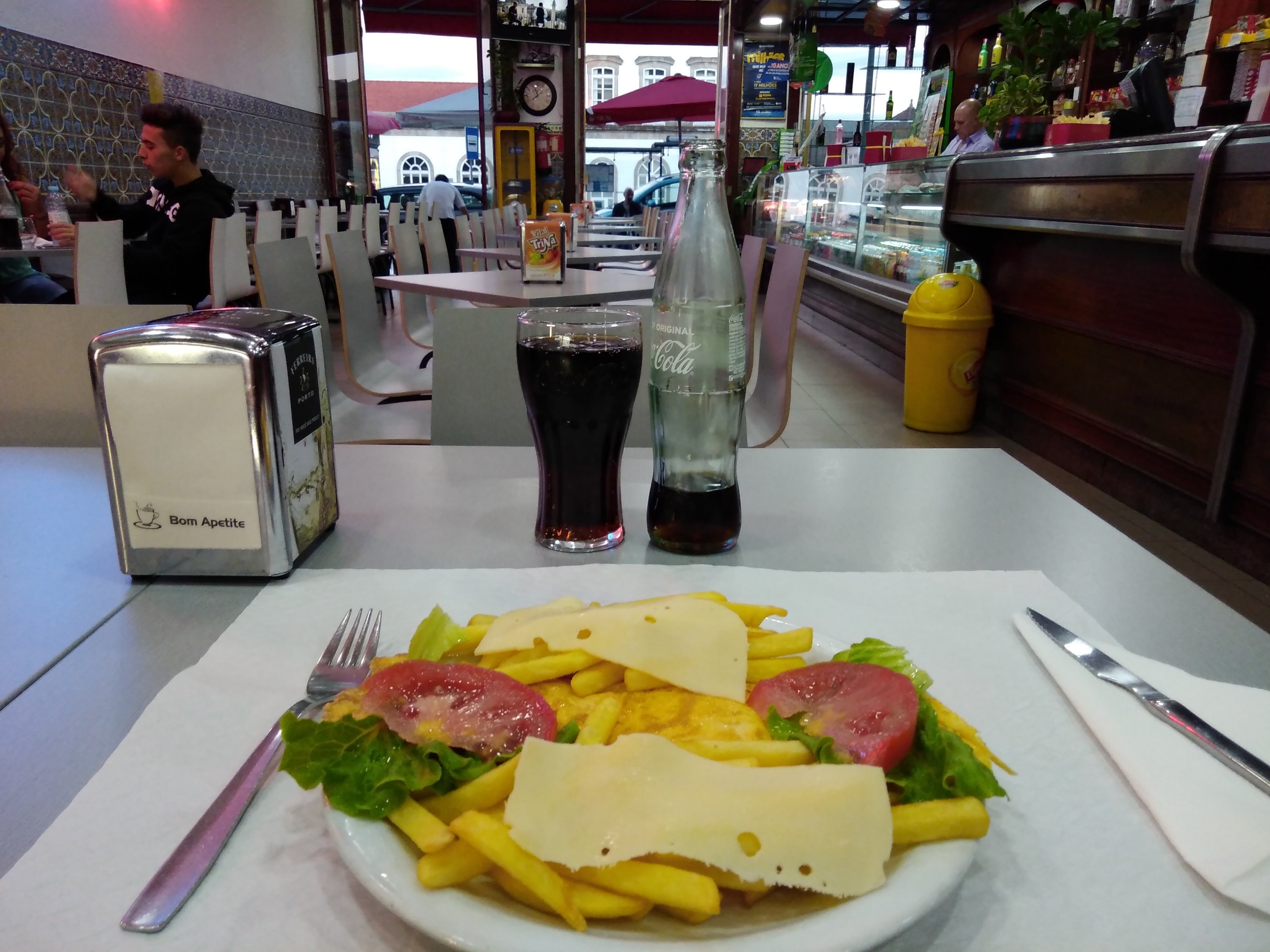
After paying my bill at the hotel in preparation for my early departure tomorrow, I popped in at a local cafe and enjoyed a cheese and tomato omelette. Delicious. 

Tomorrow my Camino proper begins. Wish me luck, hope that the Camino does indeed provide and Buen Camino. 

Read Full Post »

After walking my legs into the ground yesterday and a very late goodnight, I slept till 9am today. I did wake as the sun tinged the clouds pink, but fell asleep again. Missed breakfast so bought myself two croissant on the way to the Metro. Golly, what a mission to buy a trip. It’s similar but very different to London’s top up oyster cards….which is way more easy.

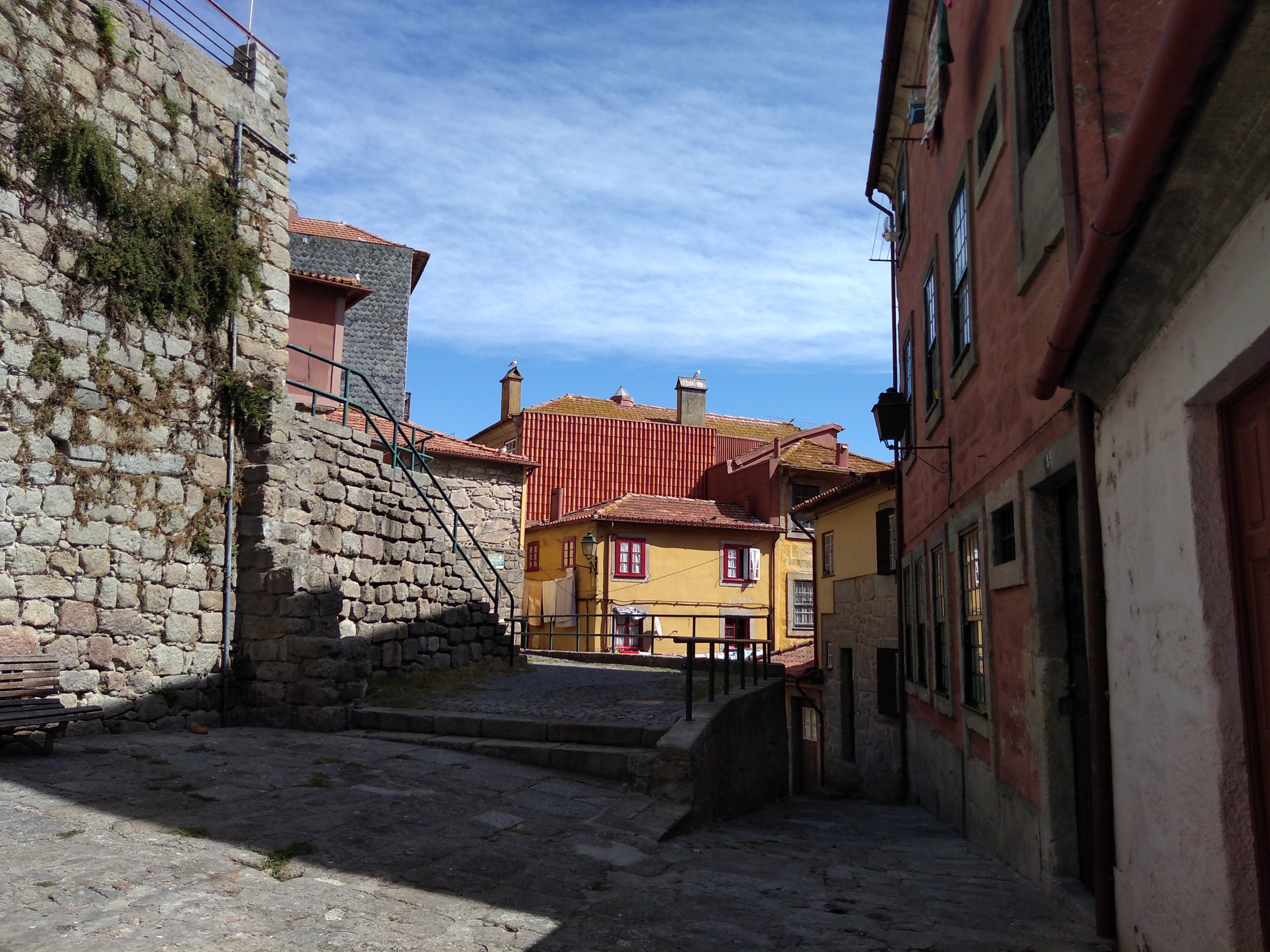
I eventually got it sorted and into town. Got off at Trinidades which is meant to be close to the Se Cathedral but isn’t LOL. If I’d been paying attention yesterday I’d have realised that Sao Bento Station is a 5 minute walk away. But on the plus side I got to see parts of Porto I wouldn’t have otherwise.

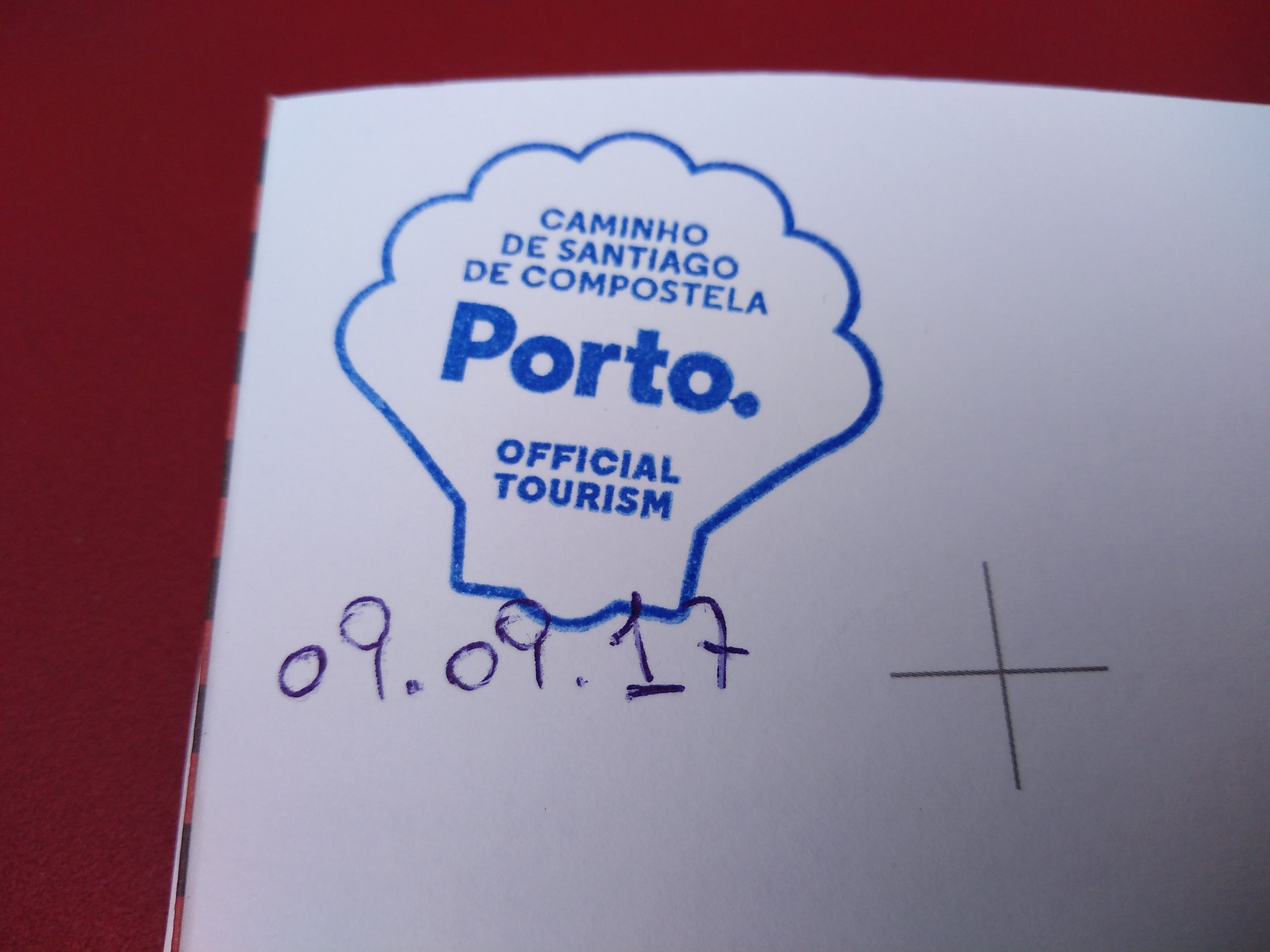
Besides the amazing street art I visited an amazing church that left my mouth agape. I needed some touristy information so popped in at a nearby info centre where my questions were answered by a delightful young man, and had my pilgrim’s passport stamped….my first stamp for today. It’s amazing.

After that I went walkabout, recorded the 12noon chimes on the Avenue Liberdade and meandered about till I found the famous Lello Library that everyone talks about. I had planned to visit yesterday but thought the price a tad high. But today I changed my mind and reminded myself that I may never visit Porto again and to make the most of my time here. The Livraria Lello is famous for its staircase which is quite beautiful and an unusual design. A tad pricey at 4.80euro but worth seeing.

From there I stopped off at a small restaurant for a toasted cheese and ham. I needed some iron for energy. Sometimes when you order an old favourite, it arrives and you’re surprised at what you get LOL This is not what I was expecting. It was also very expensive. Lesson learned; check the menu for prices before ordering.

From there I finally took the first steps on my Camino. I walked back to Catedral Se popped in for a 2nd pilgrim’s stamp

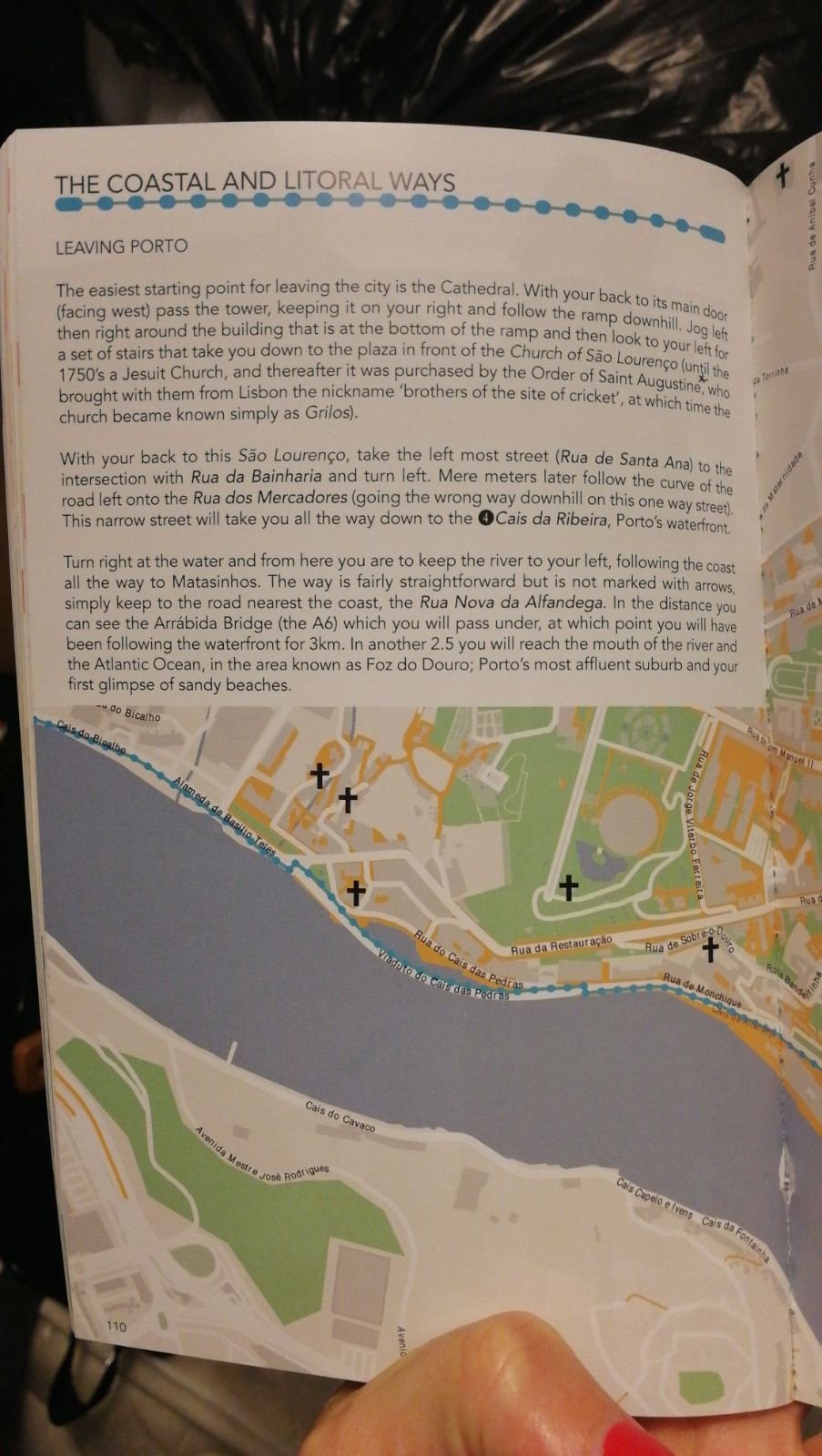
 and followed through pilgrim’s route down a multitude of steps along a winding route

 to the riverfront and onto Foz do Duoro. I passed the extraordinary Sao Francisco’s Church so stopped to visit. There are catacombs.. Whoa. But sadly no skulls and crossbones, just rows and rows of coffins.

And then finally I was on my way. Wow, what an amazing walk. Just on 5kms of amazing scenery, an extraordinary bridge and typically traditional Portuguese houses.

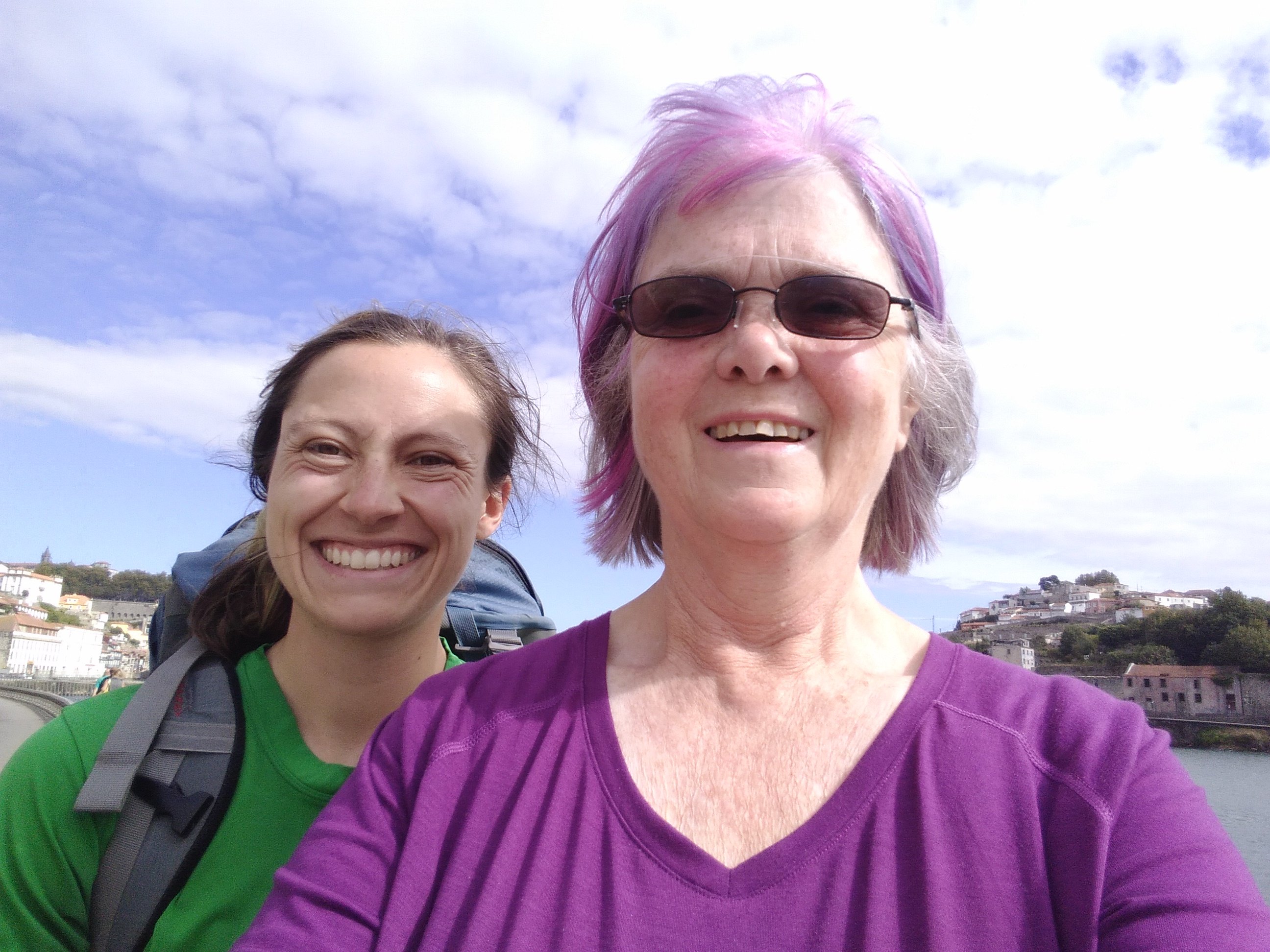
I then had the delightful pleasure of meeting my first pilgrim. 😁😁😁 Absolutely over the moon and thrilled to have met Jasmine from Colorado USA!! I saw her walking towards me with her backpack along the pedestrian bridge that juts out over the river. As we drew near I said: “ola! Camino?” and she said “yes!” 😊😊👏👏 OMG I was so delighted I nearly kissed her. My very first bona-fide camiga. 💞💞 She’s just completed the French route from SSJDP to Santiago and then took a bus to Finesterre and a train to Porto where she’s planning to stay for a few days.

 We chatted, exchanged notes and ideas and recommendations of what to see in Porto then hugged and wished each other Buen Camino and waved goodbye.

After that I had a spring in my step and bounced along with a smile on my face. It made my day. The walk was wonderful, the scenery too beautiful – looking back upstream to Porto.

Foz do Duoro is wonderful and if I’d known just how lovely it was I’d have planned my route differently and stayed a night there.

I saw a tall ship sailing by,

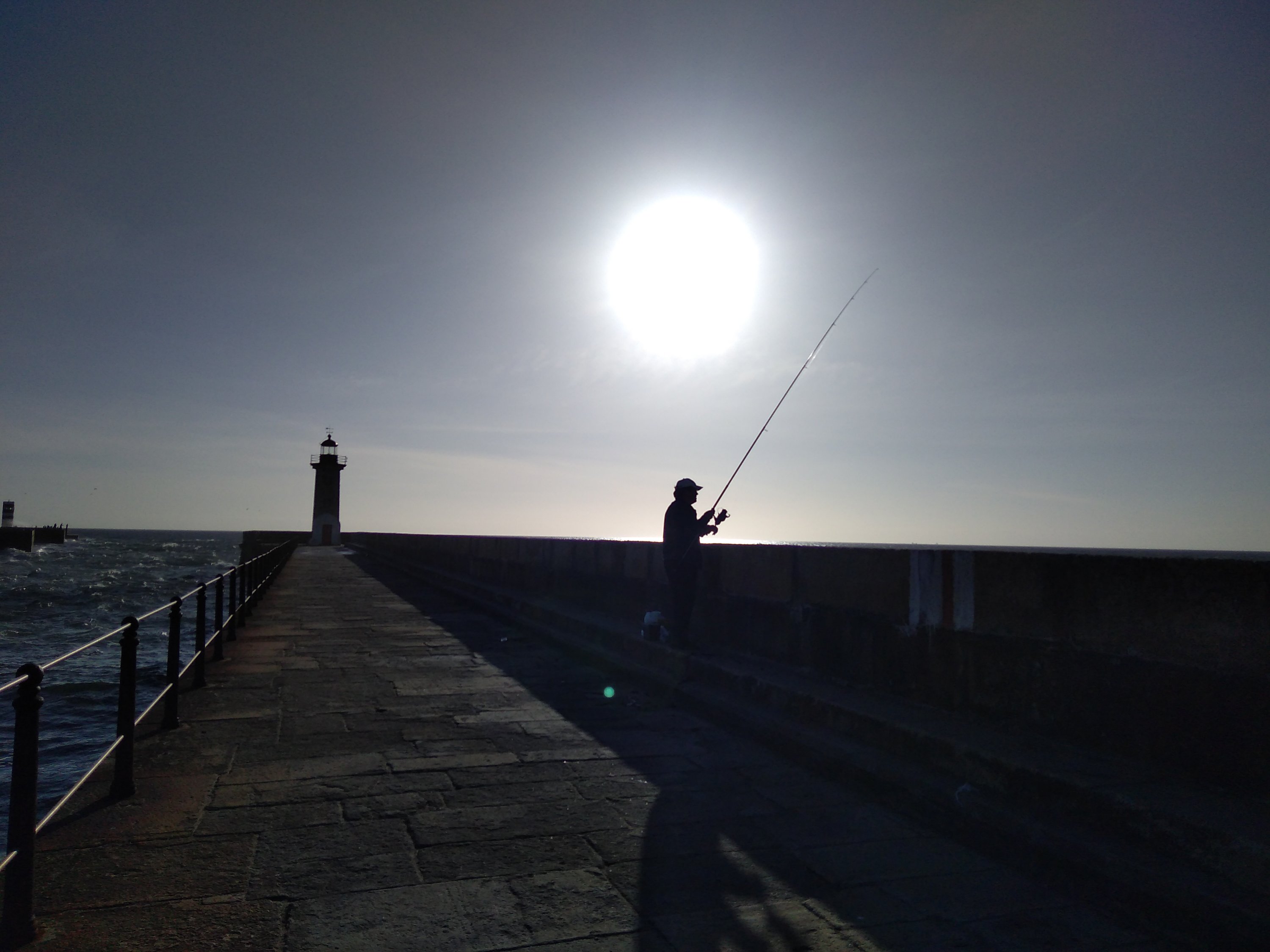
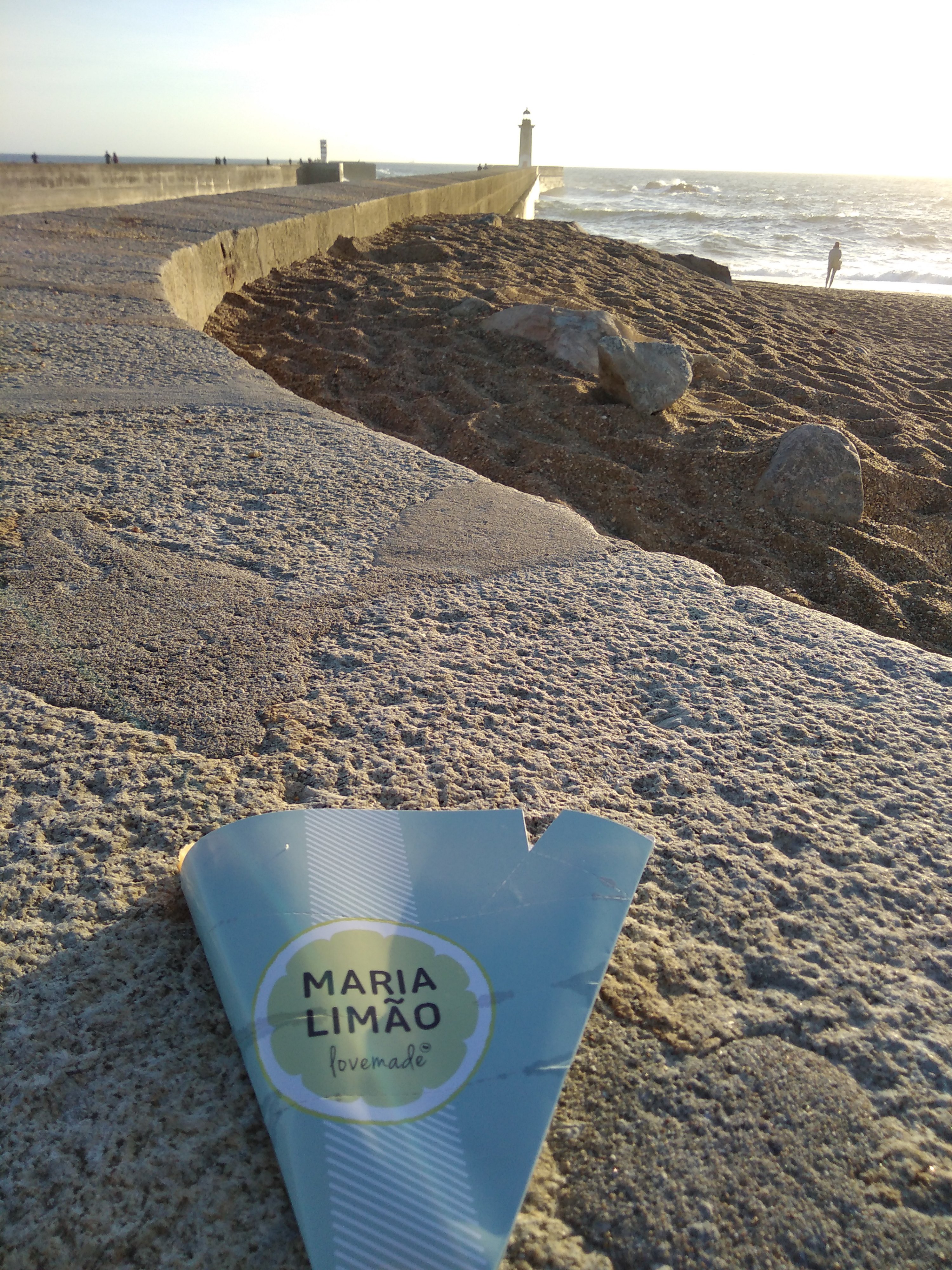
watched fishermen cast their lines, smiled and waved ola at everyone,  stopped for a Nutella crepe and café com leite from Maria Limao ‘love made’… Highly recommended crepe for 3.50. In fact it was so yummy I went back for a 2nd one.

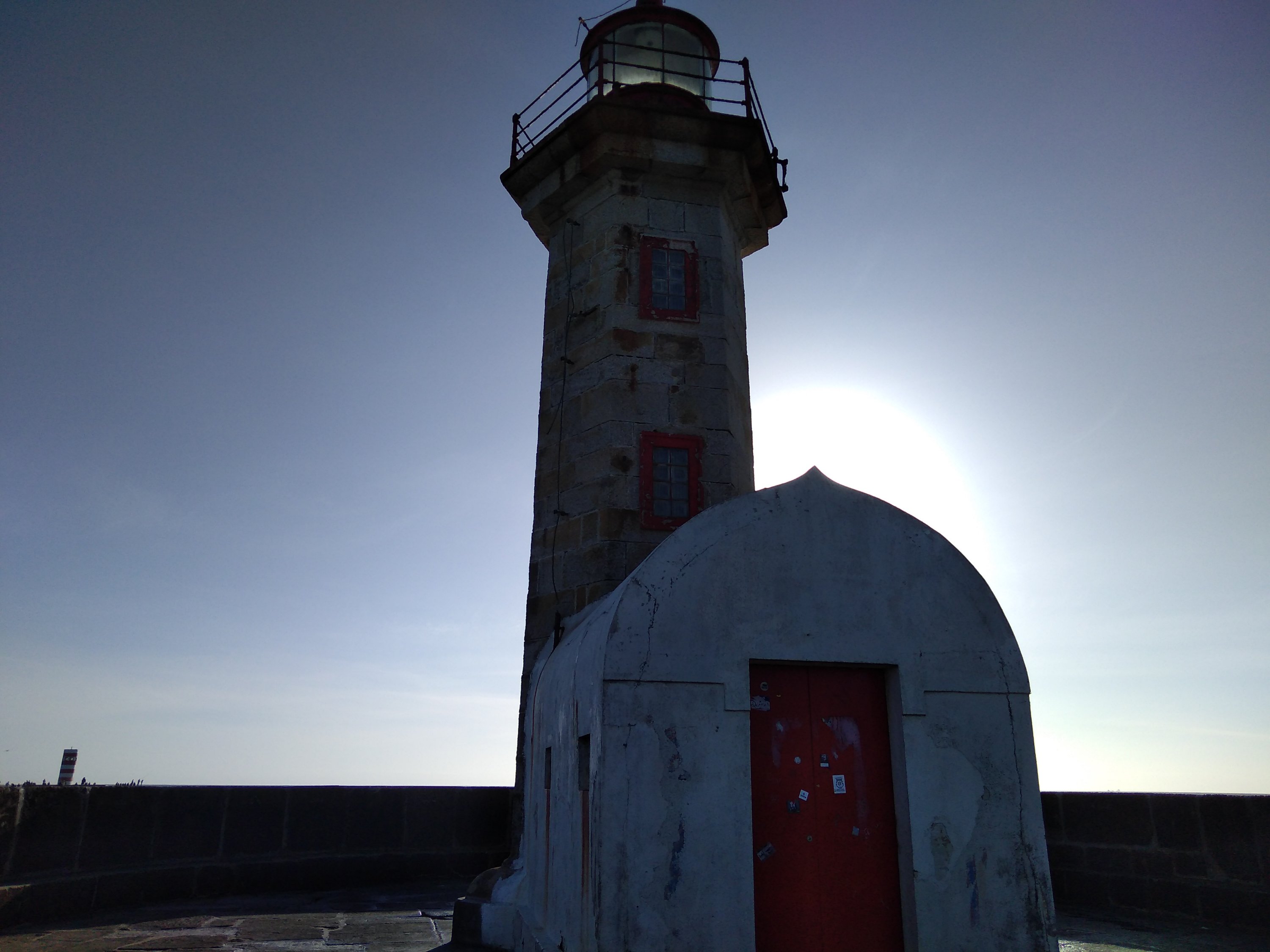
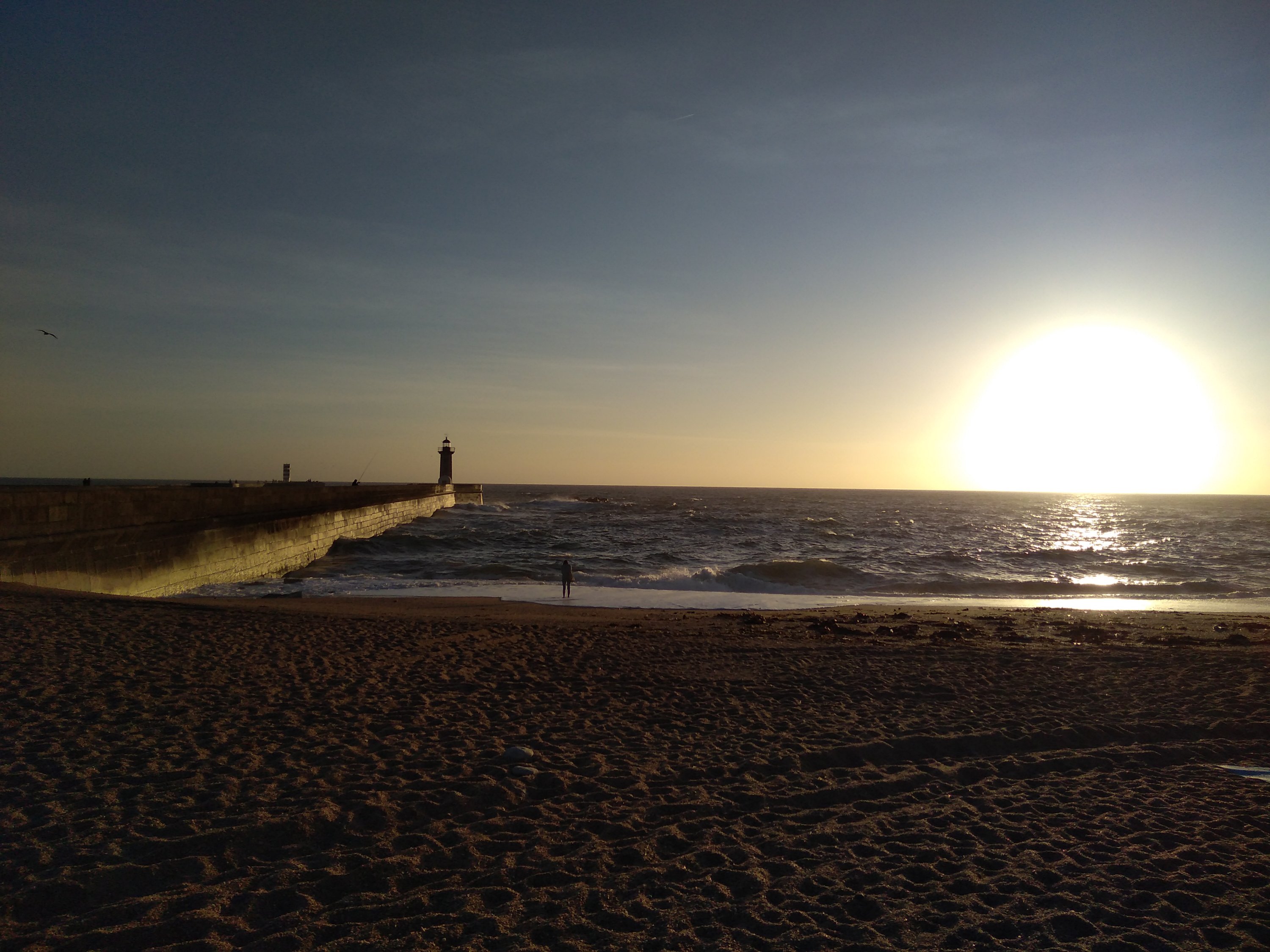
I walked to the lighthouse,

 visited the fabulous fort,

watched the sunset

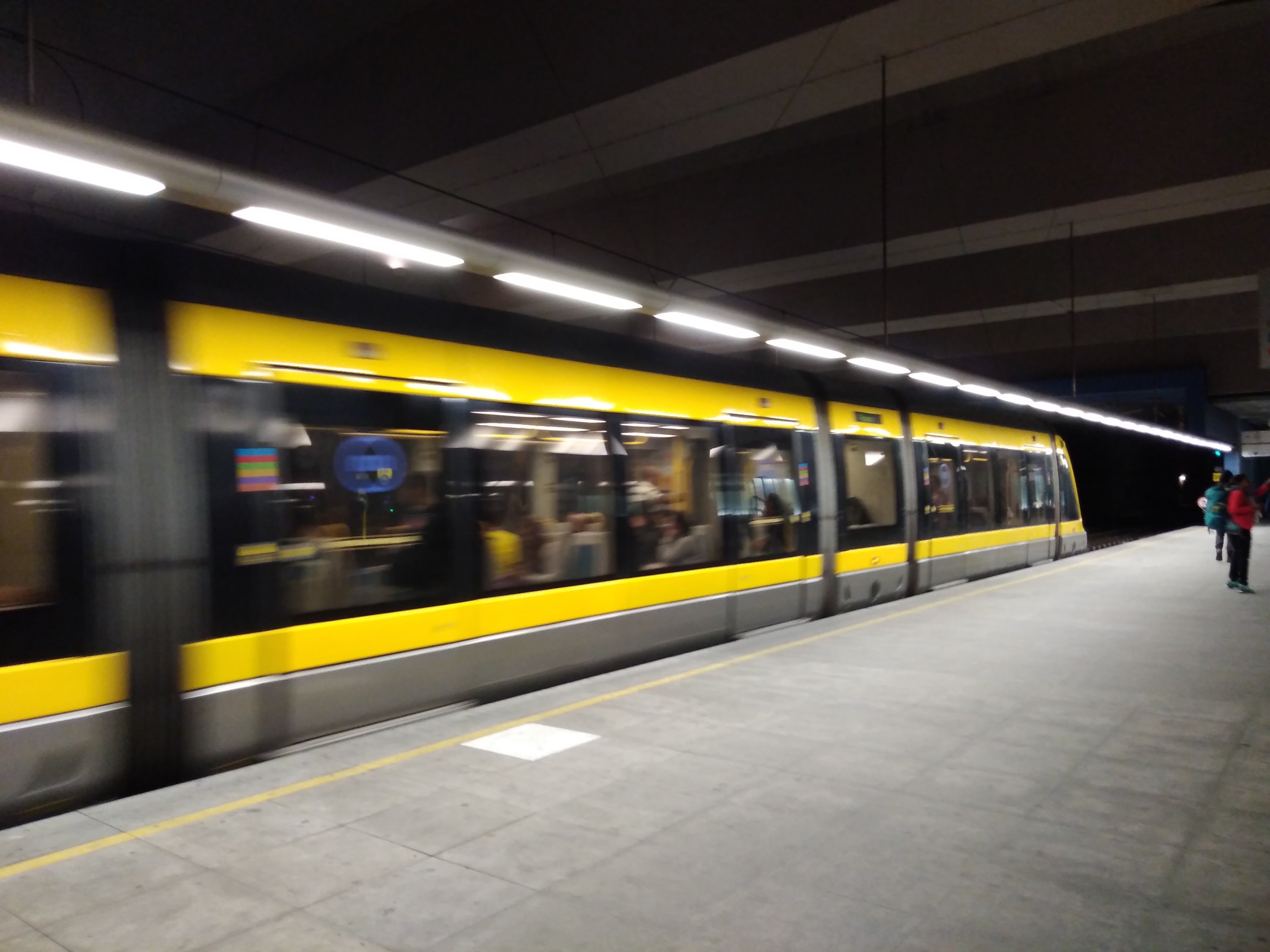
and then rode the Porto City Tram back into town… Too much fun.

 I had planned on walking to Matosinhos but loved Foz so much I tarried too long.
After all that adventure I walked all over the place just enjoying the evening atmosphere,

then finally jumped on the Metro back to my hotel.

Walked 15kms. 38,500 steps+

I’ve just finished sorting and repacking my backpack in readiness for Monday. Let my Camino begin…

Tomorrow I’m finally visiting Coimbra.. If I wake up in time 😉

Read Full Post »

Walked 14.5 km. 52282 steps.

I’d ordered breakfast at the hotel for today so before setting out to explore I partook of the typical European Continental breakfast ; bread, jam, cheese and juice. Not my usual breakkie but better than the dried out croissant I had in Venice. LOL

Just after 10am I set off out into a beautiful day. Roads familiar to me now led me back towards the cemetery which I was keen to explore. Wow, there are hundreds if mausoleums, some almost as big as our house.

From there I followed my nose towards the city centre, walking here and there depending on what caught my eye.

I visited a fabulous cathedral where I got my first official pilgrim’s stamp. I was so thrilled I almost cried. The gentleman who stamped my passport told me he had also walked the Camino and wished me Buen Camino. 🙂 it gave me goosebumps. Happiness is.

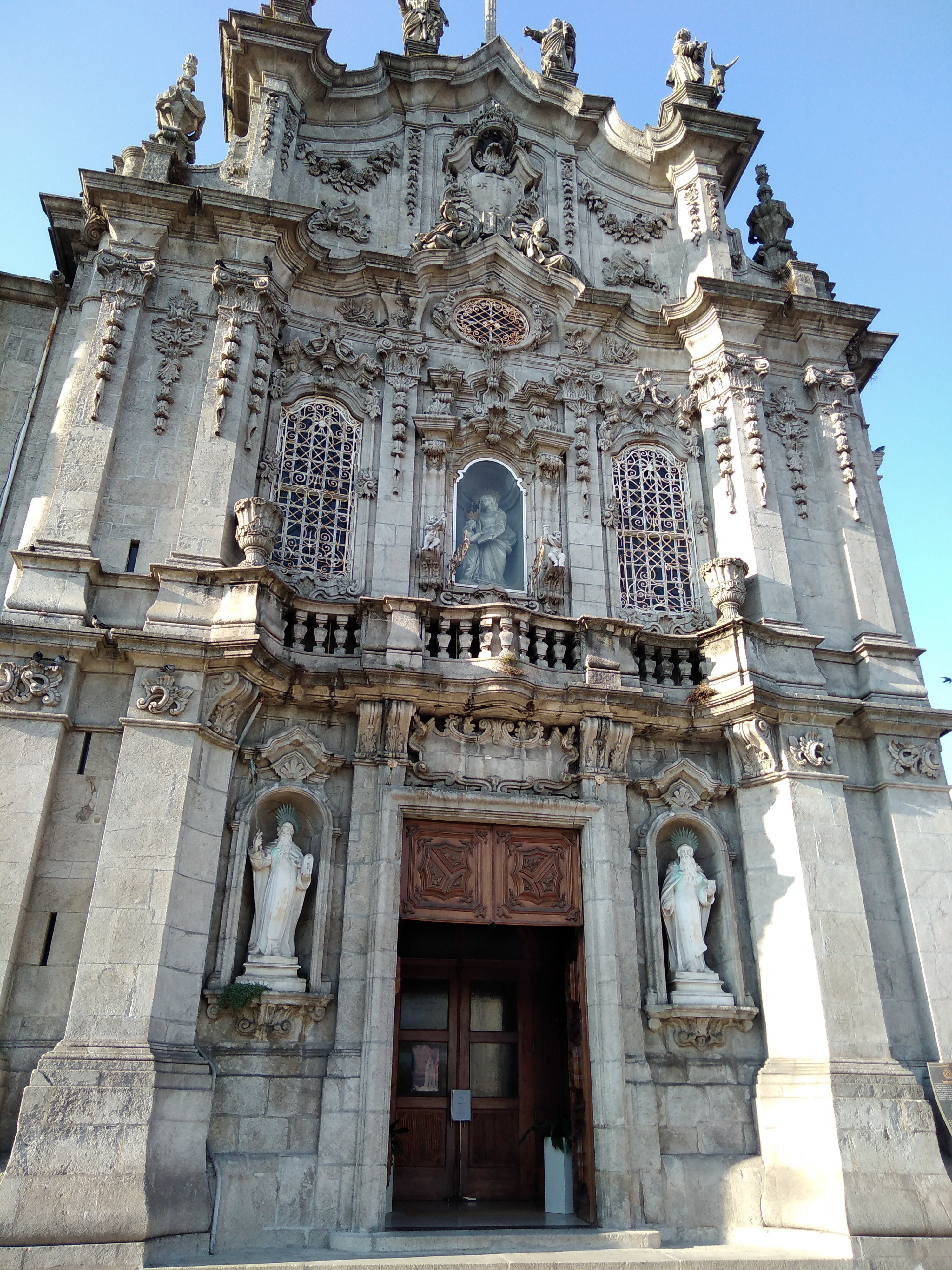
From there I strode down a very steep hill to what turned out to be the Clerigos church and tower. A 45 minute wait to climb the steps for the most incredible views of Porto.

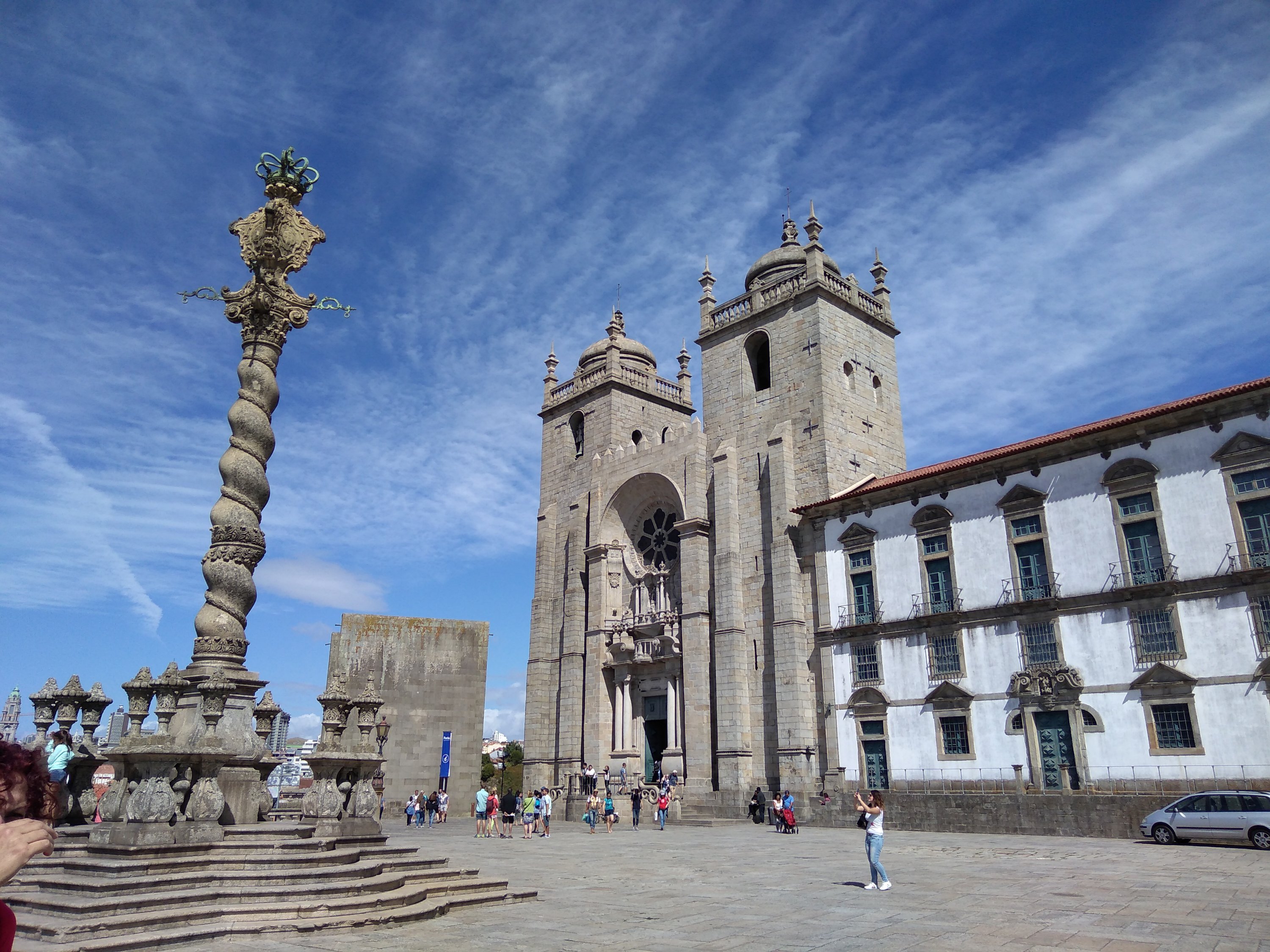
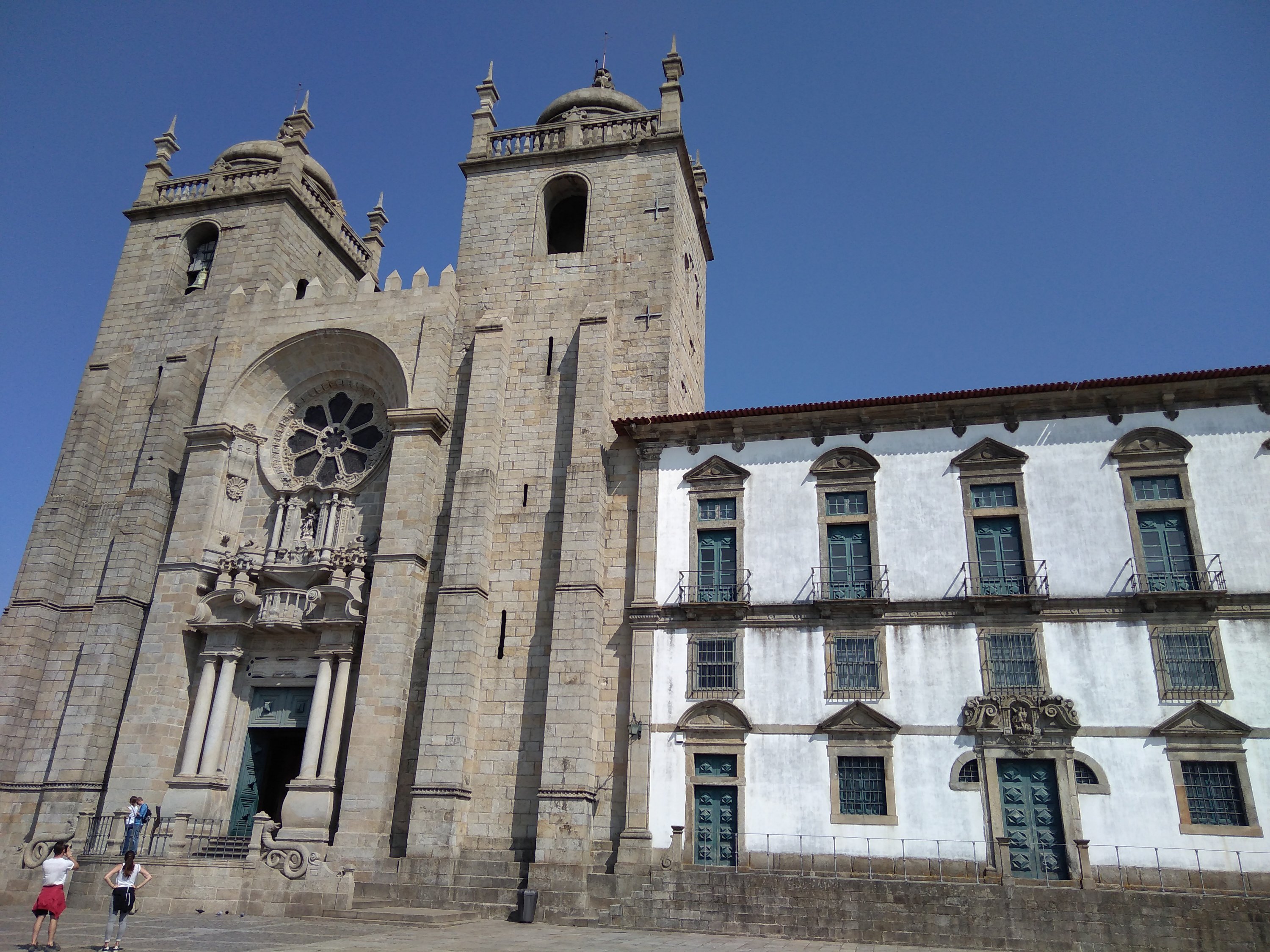
Afterwards I set off towards another cathedral I had seen; Catedral Se. Cathedral of Porto. Wow, I tell you what, they sure knew how to build churches in those days.

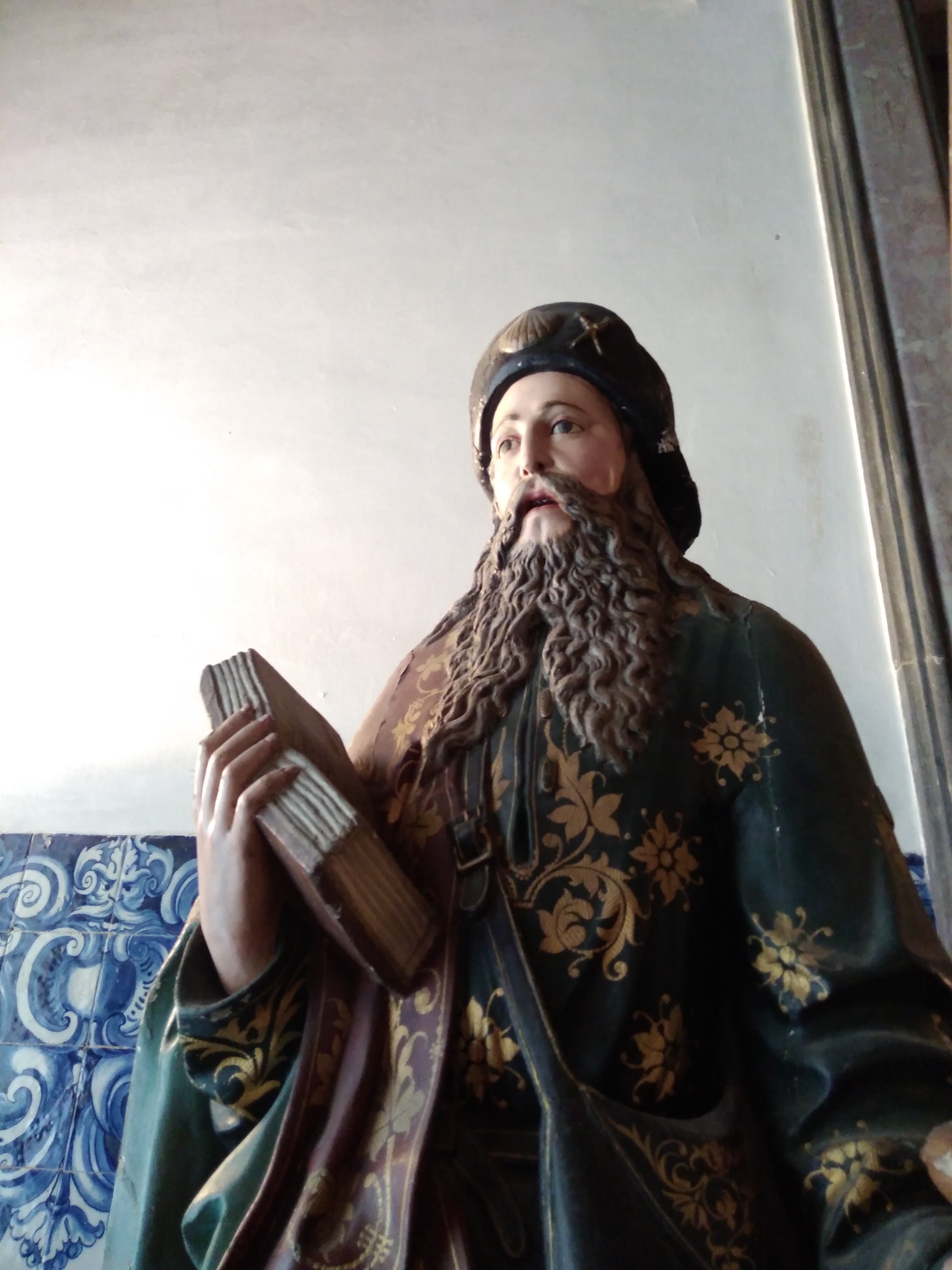
It’s fascinating. I bought the ticket to explore the cloisters, the exhibition, sacristy and climb more steps to the ramparts above the cloisters  I found a small wooden statue of St James as a pilgrim upstairs 🙂 I also obtained my 2nd pilgrim’s stamp.

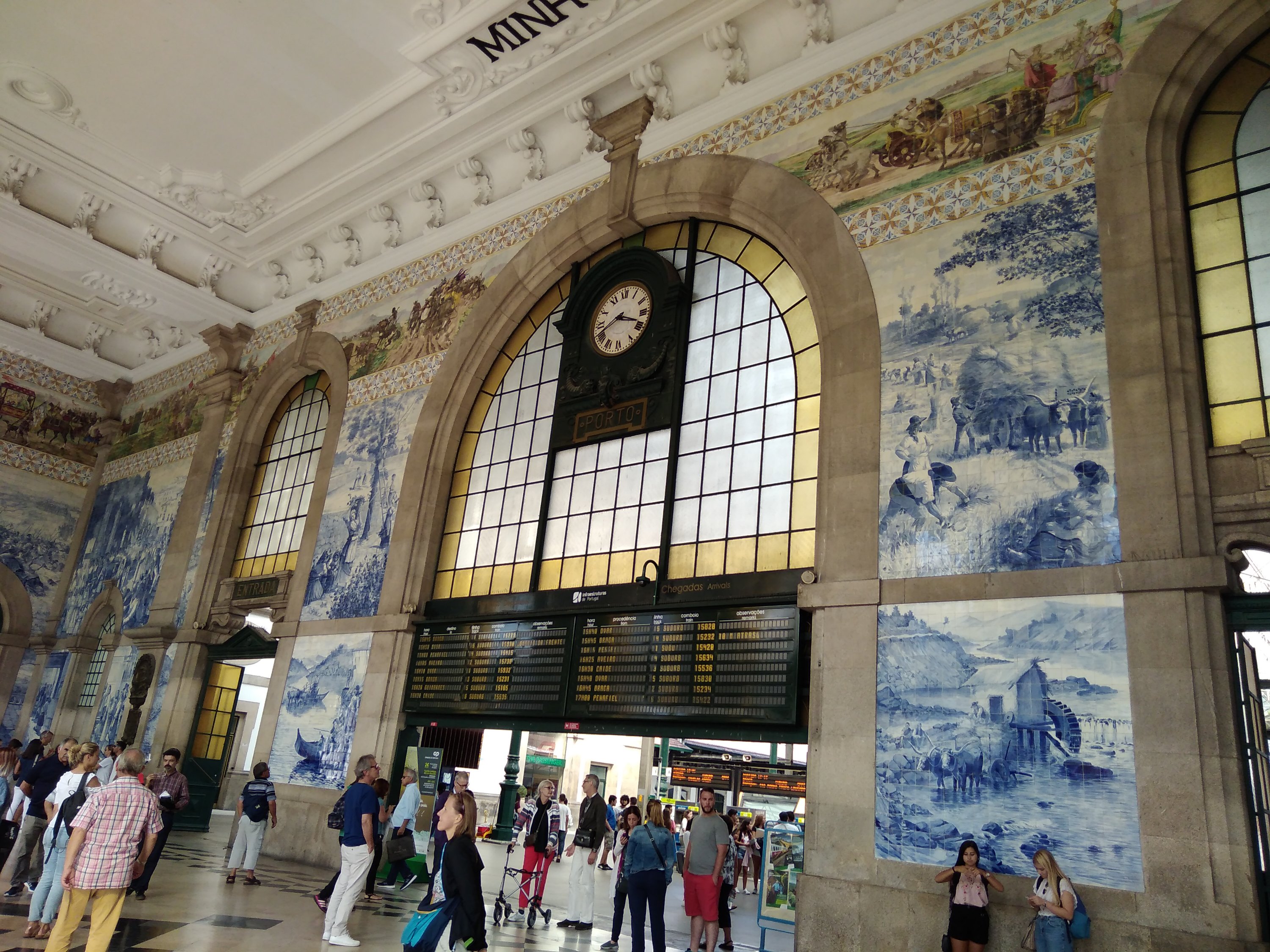
 After my visit I wended my way downhill following the route that marks the start of the Camino from Porto. Then walking back I visited the Sao Bento Station. By golly its beautiful.

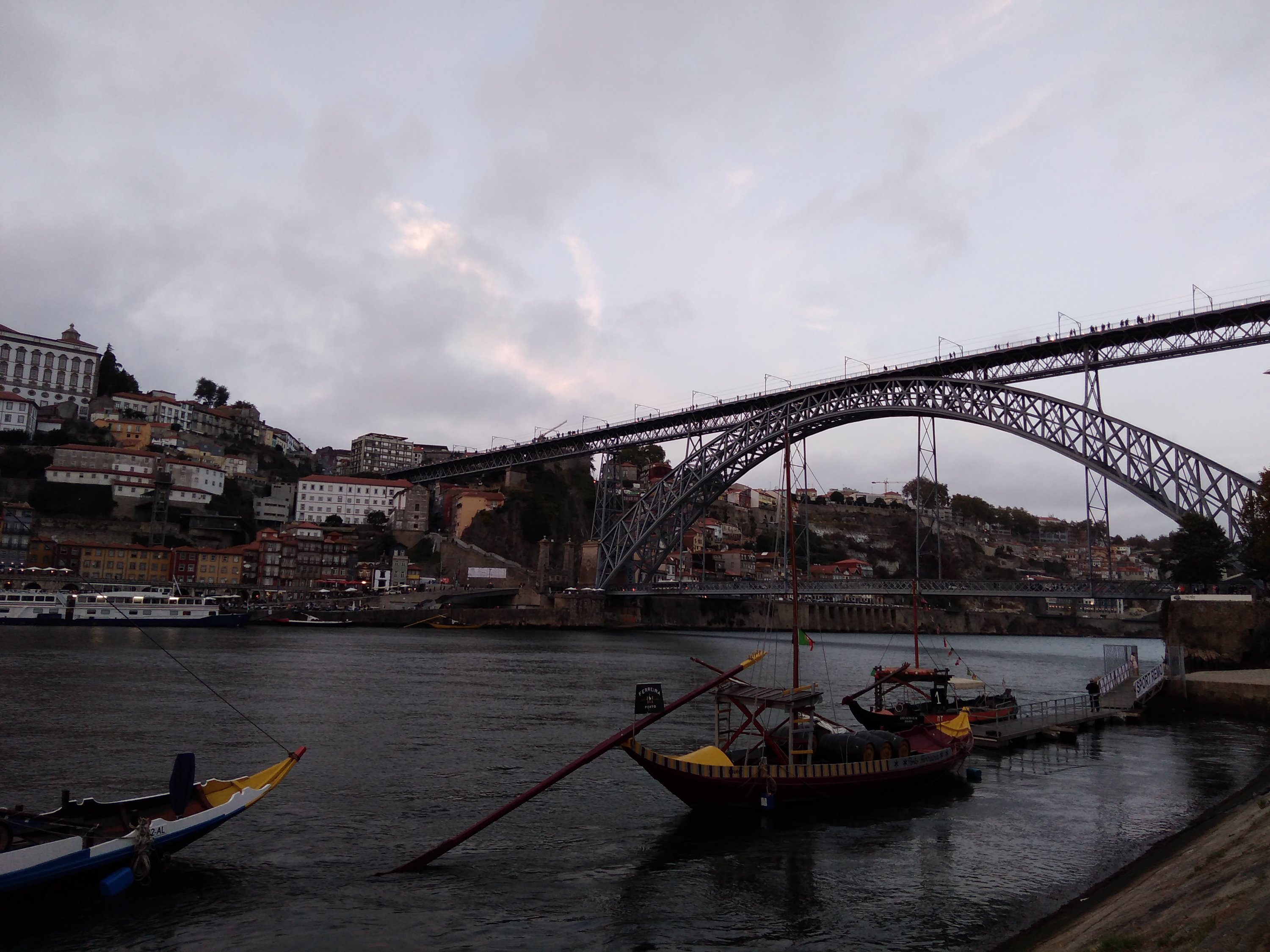
From there I walked to and over the Pte Luiz I bridge and made my way uphill to visit the monastery I could see perched above the river.

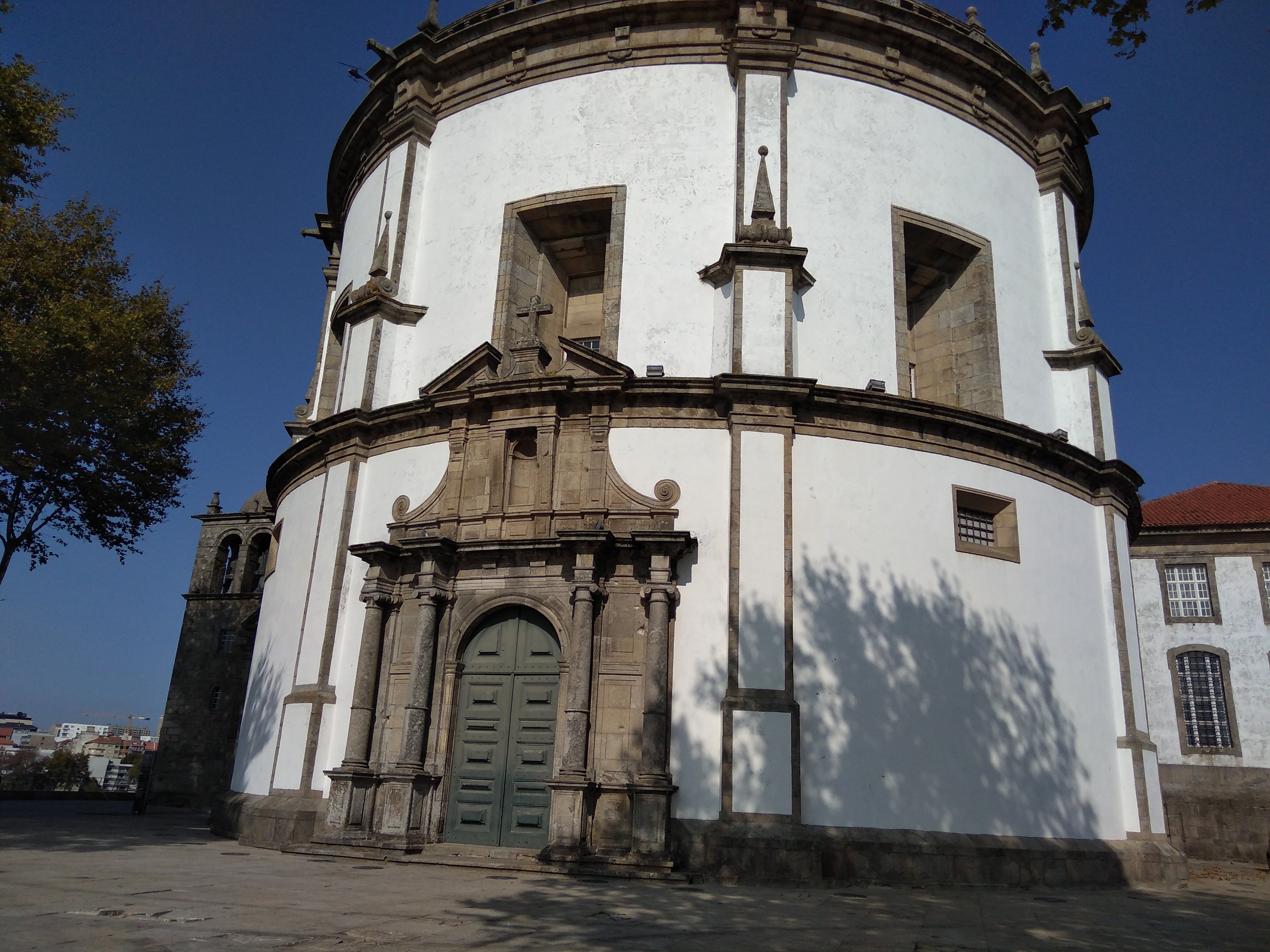
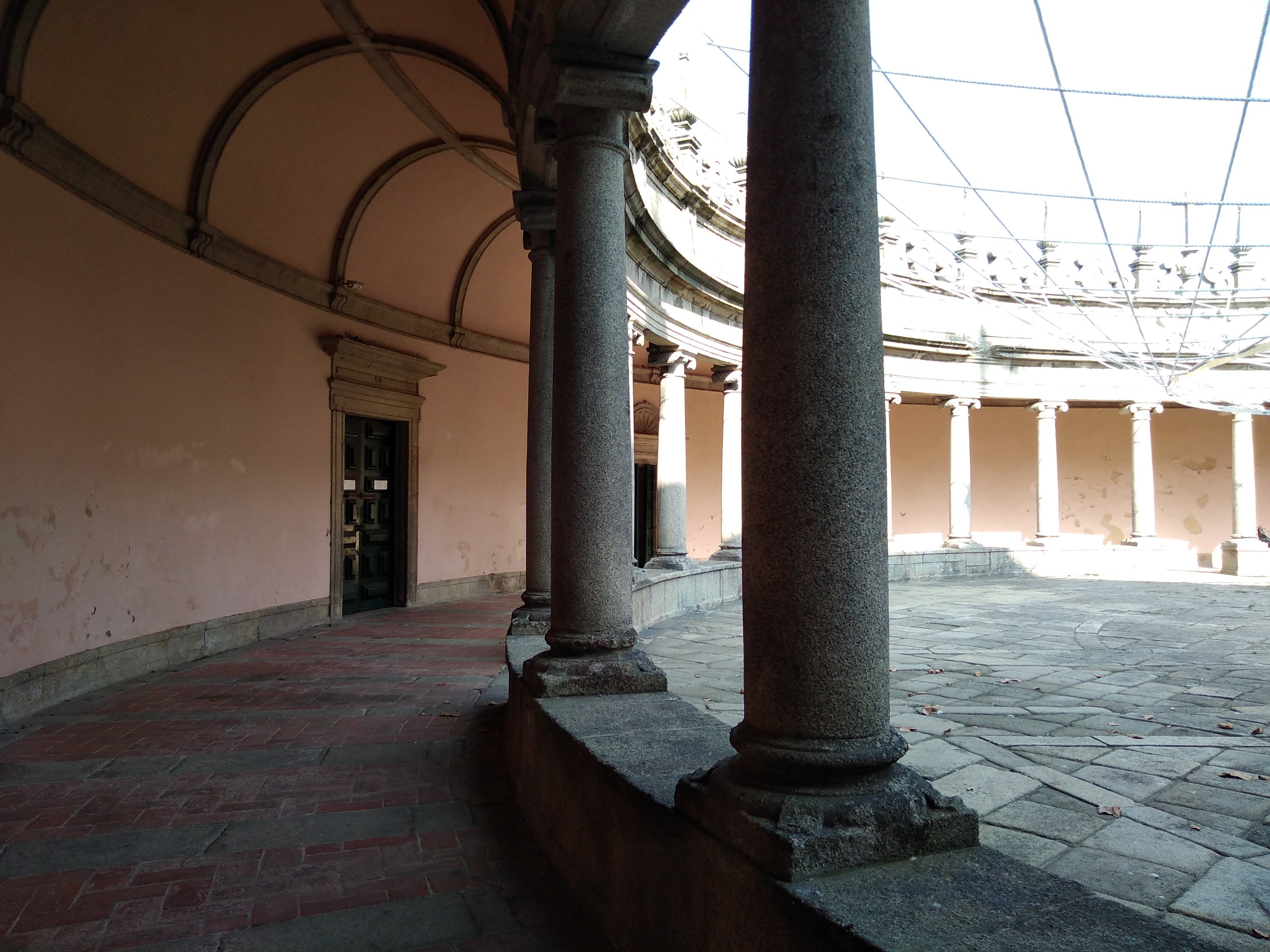
 It turned out to be linked to St August in which is brilliant. A link to my Way of St Augustine walk in July. It’s an incredible church, the cloisters and church are both round and of exactly the same size.

After climbing the tower (and that is it, I’m not climbing any more towers!!) but the views were outstanding so it was worth the effort.

 I crossed back over the bridge and went to visit the Lello Bookshop. But at 5 euro I decided to wait till Sunday as I don’t want to go over budget.

Instead I visited another 2 amazing churches

and then bought a pastry that looked and tasted delicious. I’ve no idea what the filling was and I’m not asking.

While munching I meandered down hill now towards the river front. Magical. Just in time for the sunset, which was beautiful. I again crossed the Pte Luiz

 I and wandered along the waterfront on the opposite bank of the River Duoro.

By now it was getting dark do I stopped at a small restaurant for French fries… Not very Portuguese but they were good. To my delight I noticed a scallop shell and Pilgrim’s sign. I nearly cried again. Now it’s real.

After eating, I  set off back to my hotel and just for good measure climbed another very steep hill.

Then bath and bed. What a fantastic day. I said ola and obrigado a lot today 🙂

And now I can officially say that I’ve visited the UNESCO World Heritage Site that is the medieval city of Porto

A birds eye-view of Porto from Torre dos Clérigos

A busker at the Sé Catedral in Porto

Read Full Post »

After a very early start, a long day in transit between home and Porto, I arrived safely at my hotel.

camino de santiago, portuguese coastal route porto to santiago, walking the camino,

Leaving home and saying goodbye; excited but with butterflies in my belly.

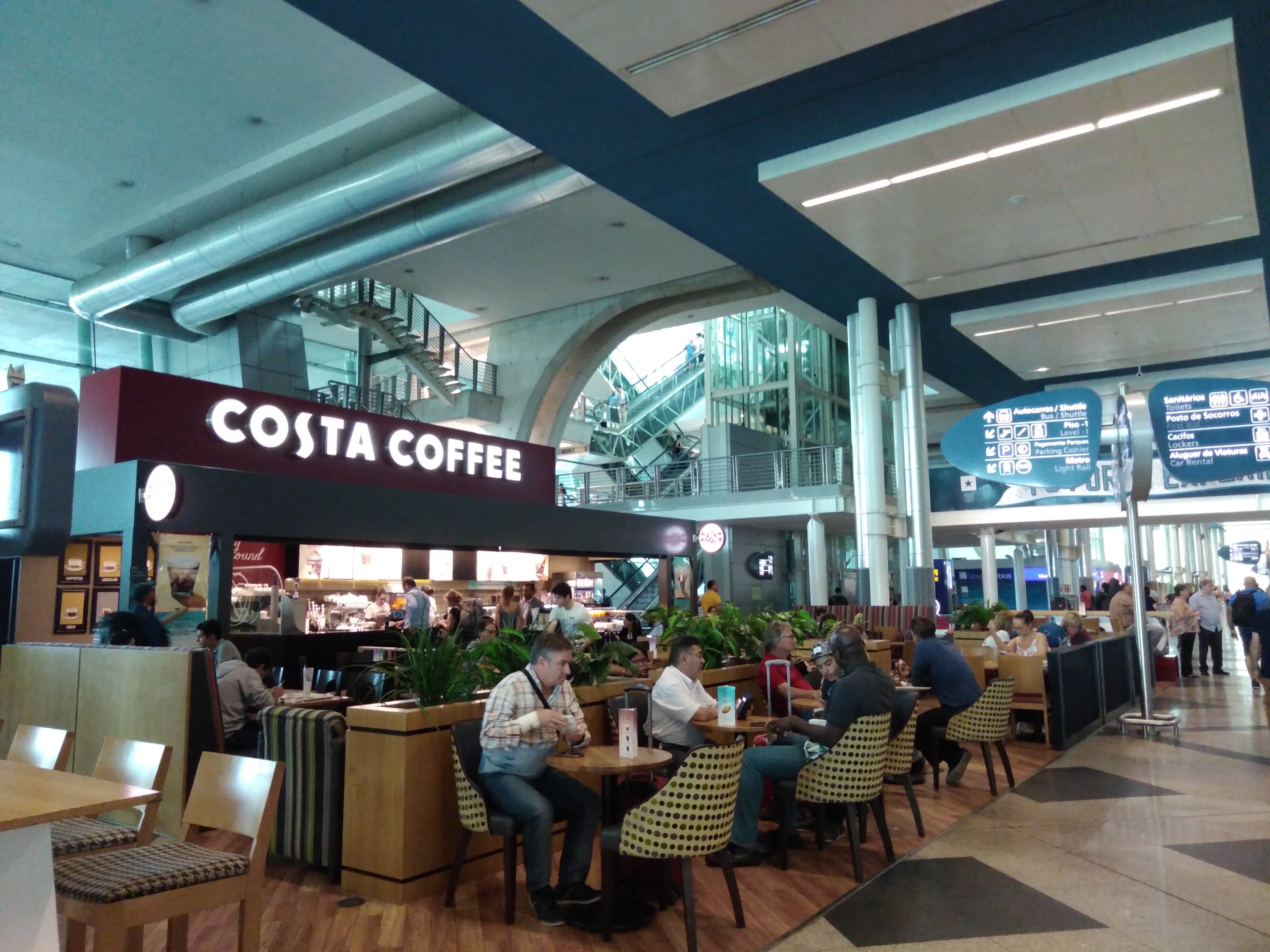
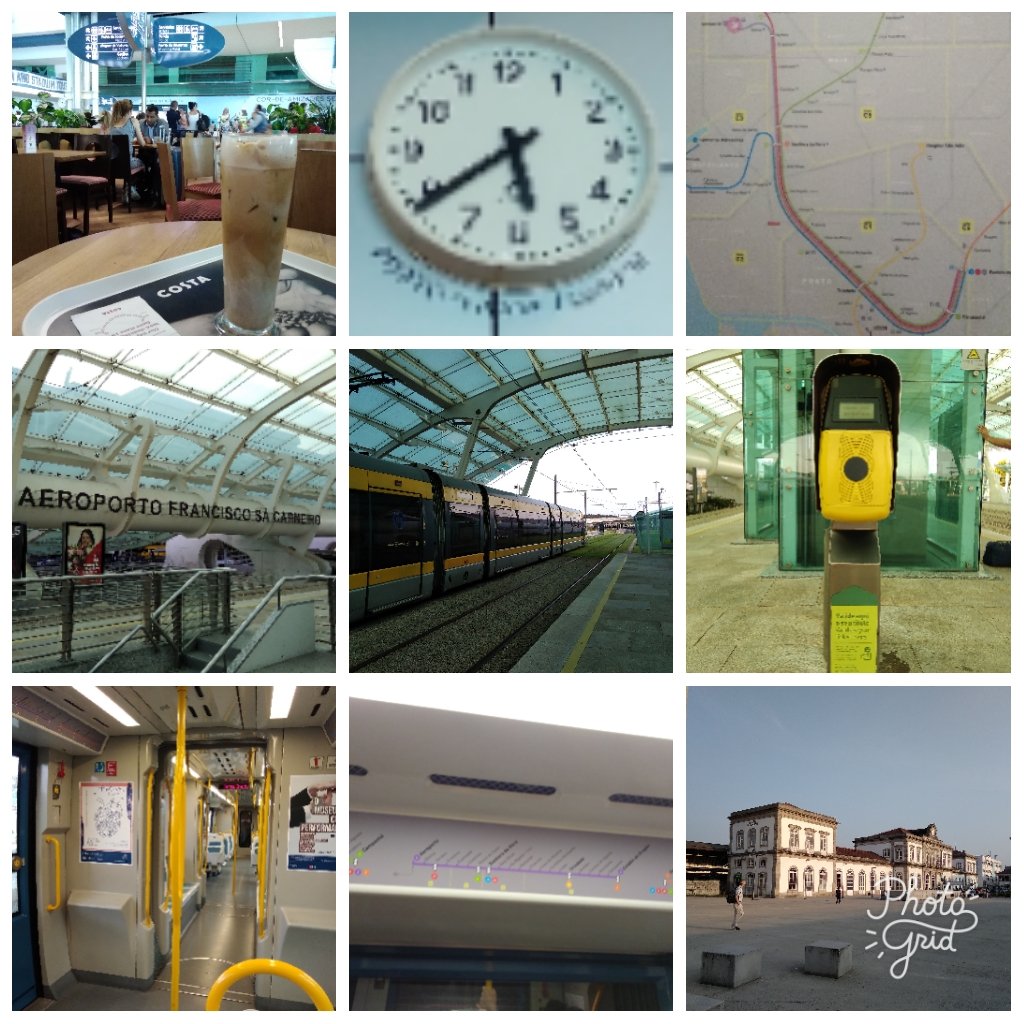
To my amazement and delight I spied a Costa at the airport in Porto. I immediately ordered an iced cappuccino and spent the next 30 minutes just gathering my thoughts and relaxing…. Felt like home.

I’ve found the Metro to be so easy to use. It’s very much like the Overground trains in London, but better coz the stations are mostly open from the streets with no barriers and steps etc.

After checking in at my hotel, home for the next 4 nights,  I went walkabout.

There’s something so thrilling about being in a foreign city where you are to all intents and purposes invisible. No-one knows who you are. You don’t know where you are. And taking that first walk into the unknown is just amazing.

I love just meandering. Although tonight I didn’t meander so much as set out purposefully to see the river. Wow.

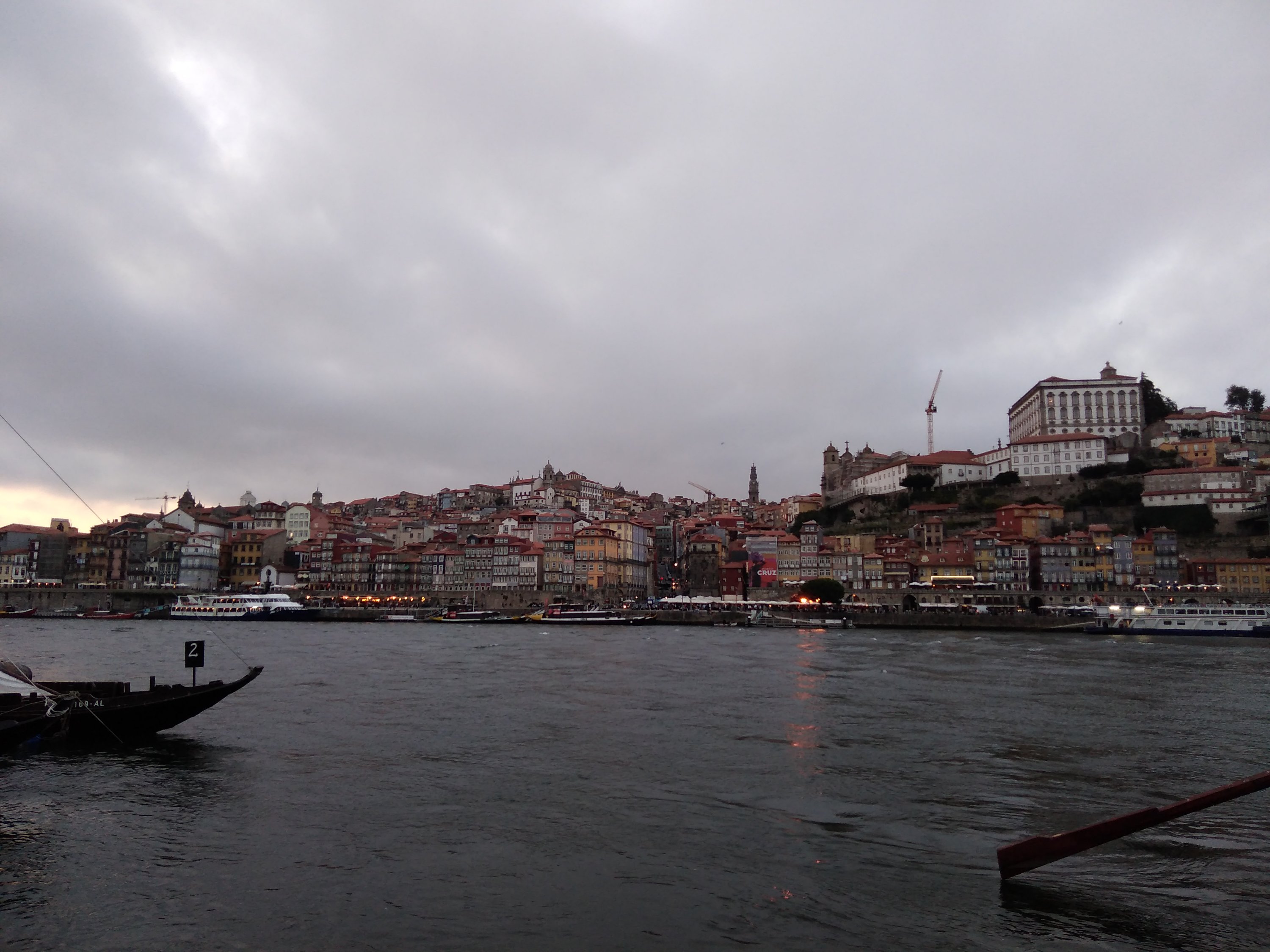
Perfect evening with a rose pink sunset. After heading back towards the hotel, I stopped enroute at a local restaurant for a most yummy meal of cod fritters with bean rice… Delicious.

As I stepped back out into the sidewalk I noticed the big old moon hanging fat and bulbous in the sky like a fat, ripe apricot. A fabulous full moon.

Life is good.

Walked 3.8 km.  6382 steps

Day 2 exploring Porto

Read Full Post »

I remember the first time I saw Arundel Castle in the distance from the train. I nearly fell off my seat in excitement. Just a quick look as we whizzed past was enough to make me foam at the mouth…I HAVE to go there. That was about 6 or 7 years ago LOL Meanwhile life got in the way and work prevailed and I had so many other places to go to too! But finally, as part of my current Project 101, I set the date and squeezed in a few days between assignments. The market town of Arundel was finally on my horizon.

the Market Town of Arundel; a Domesday Book village

the Market Town of Arundel; a Domesday Book village

Oh my gosh, my excitement as we chuffed into town knew no bounds. I had booked accommodation via AirBnB and my host very kindly collected me from the station…huge suitcase and backpack…we only just managed to squeeze it all into her car!! I had arrived quite late in the day, having come straight from an assignment so even though it was too late to visit the castle, it wasn’t too late to go see it. 🙂 My host directed me towards the riverside and before too long I was on my way.

The River Arun heading upstream towards Arundel Castle

The River Arun heading upstream towards Arundel Castle

Arundel Castle is truly a fairy-tale castle. It is beautiful; turrets, and towers, hidden corners, a moat and all thin windows; you could almost expect to see Rapunzel let down her hair…it is exactly that type of castle. It also reminded me very much of the Disney castle in Florida. Just a different colour. 😉 Just wow.
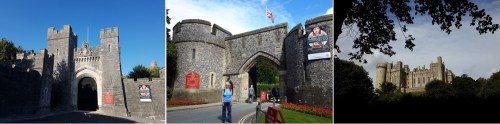
arundel castle

Arundel Castle

As I walked along the River Arun drawing closer to the town the castle loomed large on it’s rocky promontory, towering over the village and river below. You can believe that it would have been an intimidating sight for travellers of old. How I longed to be able to sail into the town on a boat…how awesome that would be. The River Arun is a tidal river which I didn’t at first realise. As I walked along the riverbank I remember thinking how interesting it was that it flowed so fast….what I didn’t realise at the time was that the tide was going out. Later on after my walk I checked the mapmywalk app and that’s when I realised it flowed into the English Channel at Littlehampton and is tidal as far inland as Pallingham Quay, 25.5 miles (41.0 km) upstream from the sea. A series of small streams form its source in the area of St Leonard’s Forest in the Weald, West Sussex. It’s the longest river entirely in Sussex.
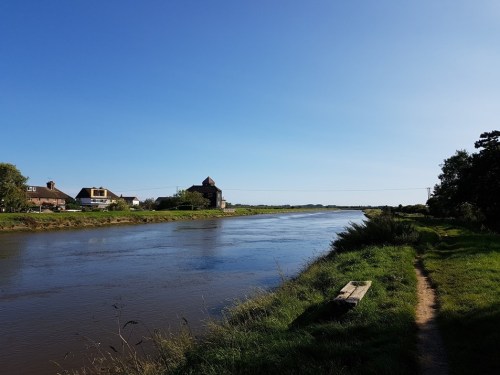
Te River Arun

The River Arun

Within 10 minutes I was in Arundel proper 🙂 whoo whoo. Oh my gosh the houses are lovely. I passed the oldest pub in Arundel; The King’s Arms C1625 wow. I popped in for a quick look but sadly it’s fairly dull with no outstanding features beyond it’s age.
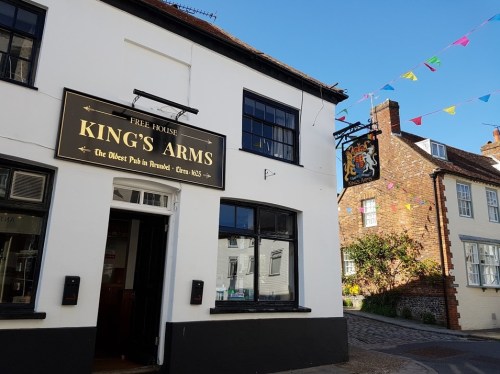
King's Arms, Arundel

King’s Arms, Arundel

I decided to walk up the hill; Kings Arms Hill which is clearly a medieval street with marvellous cobblestones from top to bottom.

Kings Arms Hill, Arundel

Kings Arms Hill, Arundel

At the very top on the hill I could see what to me was an utter surprise….the cathedral!!! I seriously had not see it before..or perhaps I did but was so enchanted with the view of the castle it didn’t register at the time. But oh my word, did it ever register now!!! It is fantastic and reminds me ever so much of the Notre Dame in Paris with pointed arches, steep-sloping roofs and fancy carvings. Gorgeous!!!
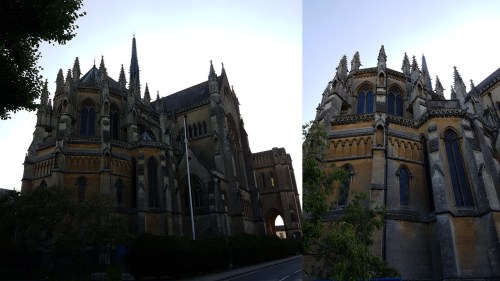
Cathedral in Arundel

Cathedral in Arundel

The architectural style is French Gothic (hence the reason it reminded me of the Notre Dame), and the interior is simply stunning. I had no idea what to expect, but when I stepped in through the door I stopped dead in my tracks, my mouth agape and all I could say was wow wow wow. Not one of my finest descriptions!! LOL It is so beautiful that you can’t quite believe what you’re seeing. Not overly ornate as some cathedrals tend to be, it’s better described as exquisite….the cream stone arches soar heavenwards to a vaulted ceiling, light streaming through the windows captured dust motes dancing like delicate fairies on the sunbeams in the otherwise still air.
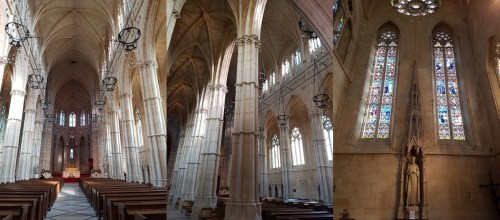
Cathedral in Arundel

Cathedral in Arundel

I wafted around in sheer bliss just absorbing the elegant stillness and admiring the gentle beauty of the arches and niched sculptures and the large rose window adorned with exquisite stained glass. The Lady Chapel can best be described as serene.
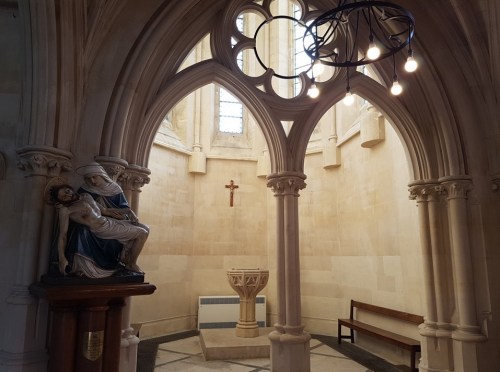
The Lady Chapel, Cathedral Arundel

The Lady Chapel, Cathedral Arundel

I love these churches. So simple, so elegant, so beautiful. I stopped at the shrine to St Philip Howard. Quite an extraordinary story.
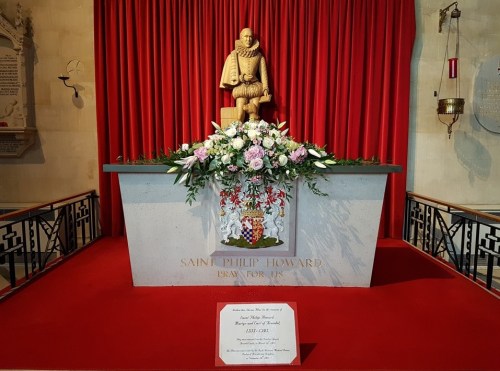
St Philip Howard, Arundel Cathedral

St Philip Howard, Arundel Cathedral

I could have stayed for hours, but I had a castle to see….I was saving my first glimpse, savouring the anticipation 🙂

During my walk I noticed a fantastic 14th century church; The Parish and Priory Church of Saint Nicholas Arundel…although the church proper was closed at that time I did explore the churchyard and planned to visit the next day.

The Parish and Priory Church of Saint Nicholas Arundel

The Parish and Priory Church of Saint Nicholas Arundel

I meandered the streets, slowly making my way towards the castle. I passed a divine little cottage; the Bakers Arms Cottage, at the junction of Maltravers Streets and Bakers Arms Hill, is a British listed building with a pitched tile roof, is timber-framed and fronted with red brick. Absolutely fabulous. There are so many wonderful old houses in the town ranging from 15th – 19th century, many of which are British listed buildings. The history in those houses is just phenomenal.

Bakers Arms Cottage, Arundel

Bakers Arms Cottage, Arundel

I stopped to marvel at the Town Hall – just an amazing building that looked more like a medieval gate than a town hall.
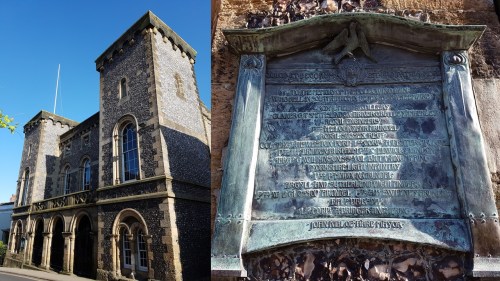
Town Hall, Arundel

Town Hall, Arundel

The High Street is home to a darling array of wonderful old buildings, one of which had sections cut out of the facade exposing the original flint wall and beams behind. Amazing!!! I loved the configuration at the end of the street forming a V with a tiny island that played host to an amazing War memorial. I was so pleased to note that there were few of the usual High Street chains; Tesco, Starbucks, Sainsburys and so on. Although there were a few charity shops mostly it was artisan bakers or antique stores, a local butcher and a few bookshops and of course a number of antique stores.
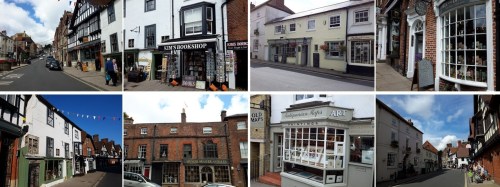
High Street shops in Arundel

High Street shops in Arundel

From there I made my way over to the castle entrance….To my intense disappointment the castle gates were already closed but I did walk along the avenue of trees on the perimeter and managed to get a fantastic image of the silhouette with the sun setting behind. My daughter was due to visit and spend a night with me in a couple of days and we agreed to visit at that time; wow, what an extraordinary place.

Arundel Castle, Arundel

Arundel Castle, Arundel

I crossed over towards the river and noticed that it was now flowing in the opposite direction….ahhh, a tidal river 🙂 I explored the remains of the Dominican Friary and then crossed the old town bridge.
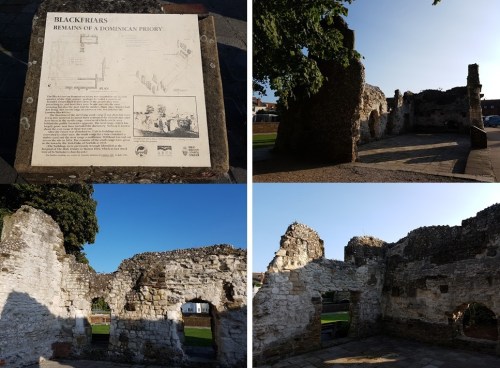
Blackfriars Dominican Priory, Arundel

Blackfriars Dominican Priory, Arundel

Arundel was registered as a port in 1071 and by the mid 19th century the Arun was linked by canals to London and Portsmouth. By the early 20th century the port was moved to Little Hampton. On another day, when the tide was way out, I noticed the remains of the wharves sticking up out the mud. Intriguing.

Arundel Bridge and the River Arun

Arundel Bridge and the River Arun

On the other side of the bridge I noticed a now well-recognised wooden stake with a couple of discs nailed to it…hah! On closer inspection one of them hinted at what looks like a brilliant walk (?) The Monarch’s Way – a 615 mile walking trail following the escape of Charles II after the Battle of Worcester in 1651. oh my gosh. I need another lifetime LOL The Monarch’s Way is one of the longest of all English long distance footpaths. The Way follows the path taken by Prince Charles II as he fled to France following the sound thrashing of his army at the Battle of Worcester in 1651 in the English Civil War. At my current pace I should be able to walk that in ….oh maybe 41 days or 2 months. Hmmmm

I had a fab view of the castle as I crossed the bridge. On my way back to the B&B I noticed the Arundel coat of arms on the riverbank ‘Antiqua Constans Virtute‘ – Steadfast in ancient virtue. In case you’re interested here is a link to the details of the coat of arms.
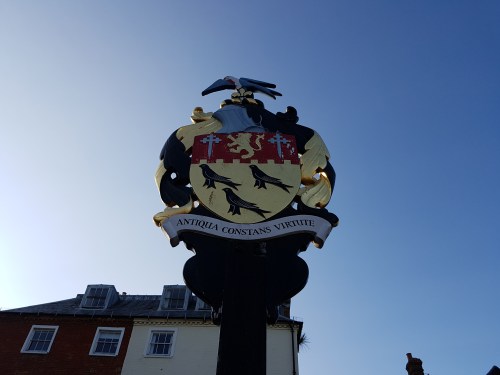
Arundel coat of arms

Arundel coat of arms

I waked along Tarrant Street and noticed a fabulous old building; Belinda’s 16th Century Restaurant. A friend of mine on instagram, Pete and I had arranged to meet the next day for tea and cake…this seemed like the perfect venue, and so it was. We enjoyed a delicious tray of scones with jam and cream and a large pot of tea.

Belinda's 16th Century Restaurant, Arundel

Belinda’s 16th Century Restaurant, Arundel

I had the most perfect weather that evening so decided to walk downstream along the river to the town precincts where I had earlier notice an intriguing looking house and then home to bed.
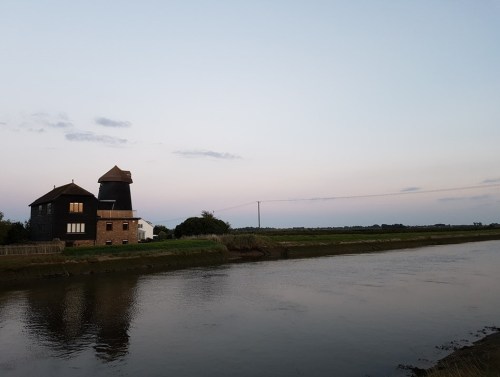
River Arun Arundel

River Arun Arundel

After a bit of a lie-in the next day, I made my way back along the river into town and enjoyed a most wonderfully relaxing day meandering around the town, taking hundreds of photos, popping in at the antique shops, the Castle Chocolate shop where I bought some delicious chocolates and met Clive with the lovely smile, then over to the castle (seriously I could not wait to visit), then made my way over to the fabulous Swanbourne Boating Lake.

Swanbourne Lake, Arundel

Swanbourne Lake, Arundel

I had just intended a brief walk, but it was so beautiful out and the lake looked so lovely, the shady green trees inviting and since I had much time on my hands I decided to walk right around the whole lake….I’m glad I did, it was wonderful. ‘Amidst a backdrop of chalk cliffs & trees you’ll find Swanbourne Lake which has been in existence since pre-doomsday and is home to waterfowl of many varieties.‘ Apparently in 1989 when the lake dried up one summer, they discovered the remnants of a WW2 plane that had been shot down over Arundel. A German Ju88A01 was shot down on 13th August 1940 at 6.30am. Two of the airmen baled out and survivied, one baled out but die and the 4th baled out but was mortally wounded and died of his wounds a couple of days later. If you’re interested here are some facts about Arundel.

After my lakeside walk I crossed over the road and decided to walk back to town along the riverbanks. From the river, across the fields of green, you have the most amazing view of the castle on it’s hill with the town nestling at the foot.
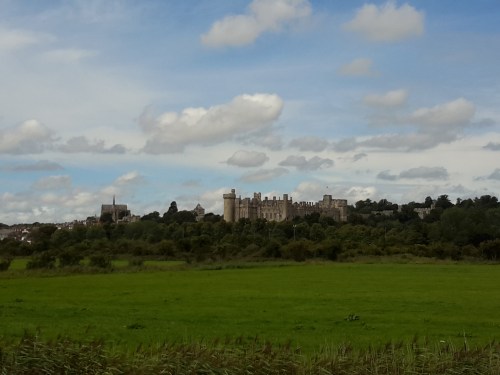
Arundel Castle West Sussex

Arundel Castle West Sussex

I met up with Pete in the early afternoon and we had that most enjoyable tea and a lovely conversation at Belinda’s after which I walked him back to his car….for which I was rewarded with a lift back to the town 😉 After saying goodbye I set off downstream of the river once again and walked and walked, leaving Arundel far behind…such a gorgeous day.

Looking back upstream towards Arundel Castle

Looking back upstream towards Arundel Castle

After a very late start on the 17th I set off once again to explore the town and to visit the 14th century church; the Parish church of St Nicholas. Phenomenal. I’m always amazed that these places survive for so long and often remain a hive of activity in the community. The church was hosting a number of sculptures when I visited; part of a week’s events with sculptures around the town – a trail you could follow. The Priory Alms Houses next door were stunning and I was dying to get behind the gates and into one of them to see!! The Domesday Book records that a Church, dedicated to St Nicholas, existed during the reign of Edward the Confessor between the years 1042 – 1066.
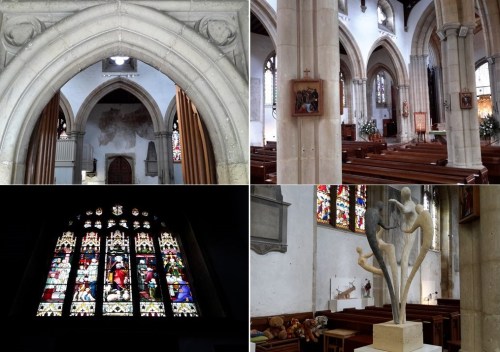
Parish Church of St Nicholas, Arundel

Parish Church of St Nicholas, Arundel

I spent a fascinating 30 minutes exploring the church. There are remnants of some fabulous medieval paintings on the walls, which like many others I’ve seen in the churches on my Southwark to Canterbury walk, are quite simply amazing.
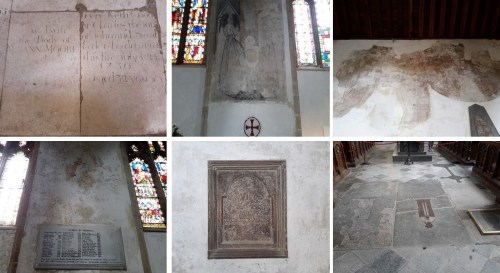
Parish Church of St Nicholas, Arundel

medieval paintings and brasses Parish Church of St Nicholas, Arundel

It’s incredible that they have survived at all. From inside the church you can see through a full-length glass wall into the The Fitzalan Chapel which is only accessible via the castle grounds and wherein are buried family members of the Dukes of Norfolk and Earls of Arundel. (we visited that side of the church during our visit to the castle).
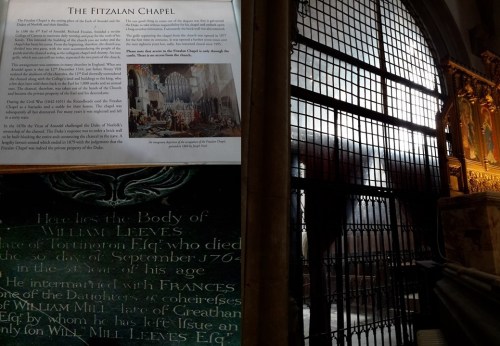
Parish Church of St Nicholas, Arundel and the Fitzalan Chapel

Parish Church of St Nicholas, Arundel and the Fitzalan Chapel

My daughter arrived later that night and after a cup of tea and a chat we went into town for supper. It was so much fun having her there with me. We visited the castle the following day and bought the Gold ticket which gave us access to the gardens, the Norman keep, the Castle and the bedrooms.

Arundel Castle in one word : amazing!!! Sadly we were not allowed to take photos inside the castle, but I managed to slip in one or two before being told off LOL The grounds of the castle are huge with incredibly beautiful gardens you can lose yourself in.
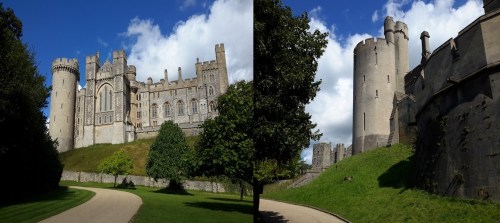
Arundel Castle, West Sussex - home to the Dukes of Norfolk and Earls of Arundel

Arundel Castle, West Sussex – home to the Dukes of Norfolk and Earls of Arundel

We saw a most extraordinary sight in one of the formal gardens; The Collector Earl’s Garden – conceived as a light-hearted tribute to Thomas Howard, 14th Earl of Arundel (1585-1646), known as ‘The Collector’ who died in exile in Padua during the English Civil War, the gardens are beautifully laid out with the grand centrepiece a rock-work ‘mountain’ planted with palms and rare ferns to represent another world. This supports a green oak version of ‘Oberon’s Palace’, a fantastic spectacle designed by Inigo Jones for Prince Henry’s Masque on New Year’s Day 1611. Flanked by two green oak obelisks, the rock-work contains a shell-lined interior with a stalagmite fountain and gilded coronet ‘dancing’ on top of the jet.
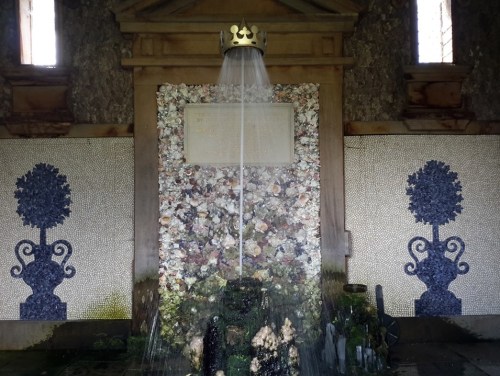
Oberon's Palace and the Dancing Crown, Arundel Castle

Oberon’s Palace and the Dancing Crown, Arundel Castle

Arundel Castle has been the seat of the Howard’s ancestors since 1102. A snippet of interest: Queen Victoria and Prince Albert stayed in Arundel Castle from December 1 to 3, 1846. Victoria notes in her diary for December 2 that year: “After breakfast, Albert and I sallied forth by a back way and walked along a path below the castle, commanding an extensive view, which put us in mind of the slopes at Windsor. The garden is very pretty and full of evergreens, which made Albert extremely jealous for Osborne House.”

We spent a few hours meandering around the gardens, visited the Fitzalan Chapel, the Norman keep,

views across West Sussex from the Norman Keep of Arundel CAstle

The Norman Keep, Arundel Castle

where you have the most amazing views across the castle grounds, the town, the river and far across the fields. Stunning.

views across West Sussex from the Norman Keep of Arundel CAstle

views across West Sussex from the Norman Keep of Arundel CAstle

The castle is still home to the Duke of Norfolk and most of the rooms are used on a daily basis…except when visitors are about. The private chapel is absolutely astounding, the library was incredible and some of the bedrooms just fabulous. We even saw the bed and bedroom where Queen Victoria slept during her visit. The halls and rooms are filled with paintings, statues, a Faberge sculpture, magnificent tapestries and some of the most interesting artefacts. There is a photocopy of a letter from Elizabeth I and some absolutely fabulous treasures.
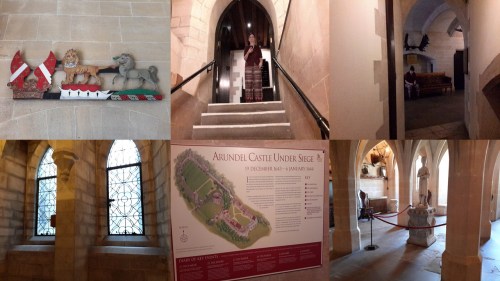
a peek inside Arundel Castle

a peek inside Arundel Castle

Although not very big, and easily managed in a day’s sightseeing, Arundel is chock a block with oodles of history and you must set aside at least 3 hours for a visit to the castle, there’s so much to see.

And thus endeth my journey to Arundel to see a castle. With this trip I have added to 4 categories on Project 101; which now brings the totals to : Castles: 39 Cathedrals: 27 Rivers: 39 and Domesday Book villages: 106. 🙂

I’ll write more about Arundel Castle, the Fitzalan Chapel and The Parish Church of St Nicholas at a later stage. I’m preparing for my Camino 2017 and must focus on that.


http://www.british-history.ac.uk/vch/sussex/vol5/pt1/pp10-101

Read Full Post »

Whewww. 1 week till I arrive in Porto at the beginning of my Camino 2017 : 7 days : 168 hours : 10,080 minutes 😂😂😂 and just 10 days till I start walking the Portuguese Coastal Route from Porto to Santiago de Compostela. In fact by this time next week I will have landed in Porto…all being well.

inspirational quotes

Sometimes we have to stop being scared and just go for it. either is will work or it won’t. that’s life!

I can’t express just how excited and trepidatious I am feeling. My mind is swirling with thoughts like; have I got this, do I have that, what if I lose my meds, should I carry this or that or the next thing, will I have enough money? Will my shoes be suitable? Have I enough clothes? Do I have the right clothes? Do I have enough time? Can I find my way?

Blah blah blah and horrors…. what if I find I can’t walk 25kms+ for 11 days in a row!!! With a 7.5kg backpack on my shoulders. 😦 😦 😦 I’m under no illusions as to how heavy it can get after walking for 6-8 hours per day….even though I only walked for 3 days each journey last month. Southwark to Canterbury ‘in the footsteps of Chaucer‘ and Ramsgate to Canterbury ‘The Way of St Augustine‘.

So yes, all the fears, all the uncertainties and all the excitement of the experiences I’ll have, the issues I’ll face, the challenges ahead, the places and wondrous things I’m going to see are whirling like dervishes about inside; my mind is in turmoil as the date for lift off approaches and all I want to do is go home right now and I bloody can’t because I’m working 😢😢😢 I’m not sure if I should cry, scream or laugh… I’m trying to focus on the latter.

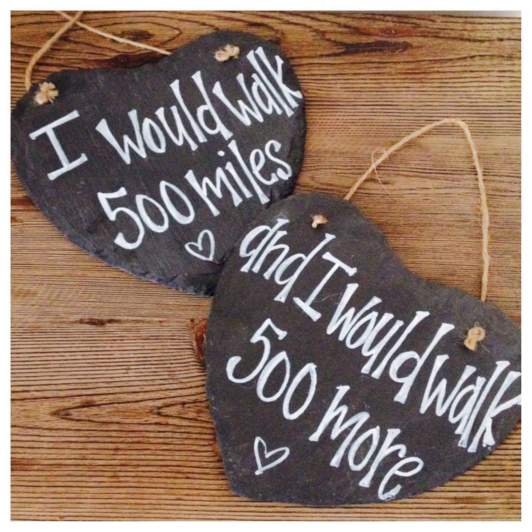
So OMG 7 days. This all seemed like such a brilliant idea 18 months ago. 7 years ago it seemed like even a better idea!!!! LOL urgh. I love travelling. I love going to new places. I love exploring. So why am I so conflicted about this trip? I’ve trained and trained and trained some more. The #walk1000miles challenge has been brilliant for encouragement!

walk 500 miles

Becoming a Proclaimer 🙂 – heading now towards 1000 miles

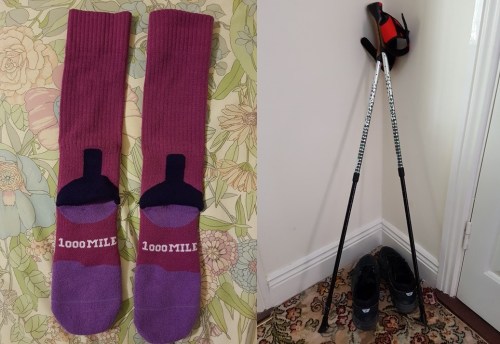
I’ve done dozens of practice walks, climbed hills and down dales, through fields and along rivers. I’ve practised with the poles…still can’t quite love them, but they are useful. Got proper shoes and breaking them in. Tested 4 different types of socks (found the best ones) and learned that it’s never a good idea to walk in wet socks 😕😕

packing for the camino de santiago

By the time I get back from my Camino, I will have walked 1000 miles..however these are not the socks I’ll be wearing. But those are the poles I’ll be taking.

I’ve experimented with the backpack… Which I think is really the crux of the matter. It’s bloody murder carrying that thing. Sigh. Oh well.

nordic walking poles and osprey backpack

my nordic walking poles and osprey backpack looking fairly benign….

I’ve researched and read dozens of sites and packing lists…what should I take? What will I need? Is this useful? Do I have the right shoes? Will I need a rain-jacket? I have to keep reminding myself I’m going to Portugal and Spain, not outer Mongolia!! I’ve already ditched 1.5kgs of stuff…..I guess my intentions to minimalize my life before I buy my motorhome are being put to the test. This is a good start.4 camino packingBesides all that, after my phone crashed in July, I’m a little fearful for it happening again, so I bought a 2nd phone as back-up (like I need the extra expense) and for the last few days I’ve been transposing all the VIP information from the Camino spreadsheet to my phone calendars and into a small notebook that I’m carrying in case my phone gets lost or I can’t get wi-fi – I’m an old fashioned gal, I still like paper and pen 😉

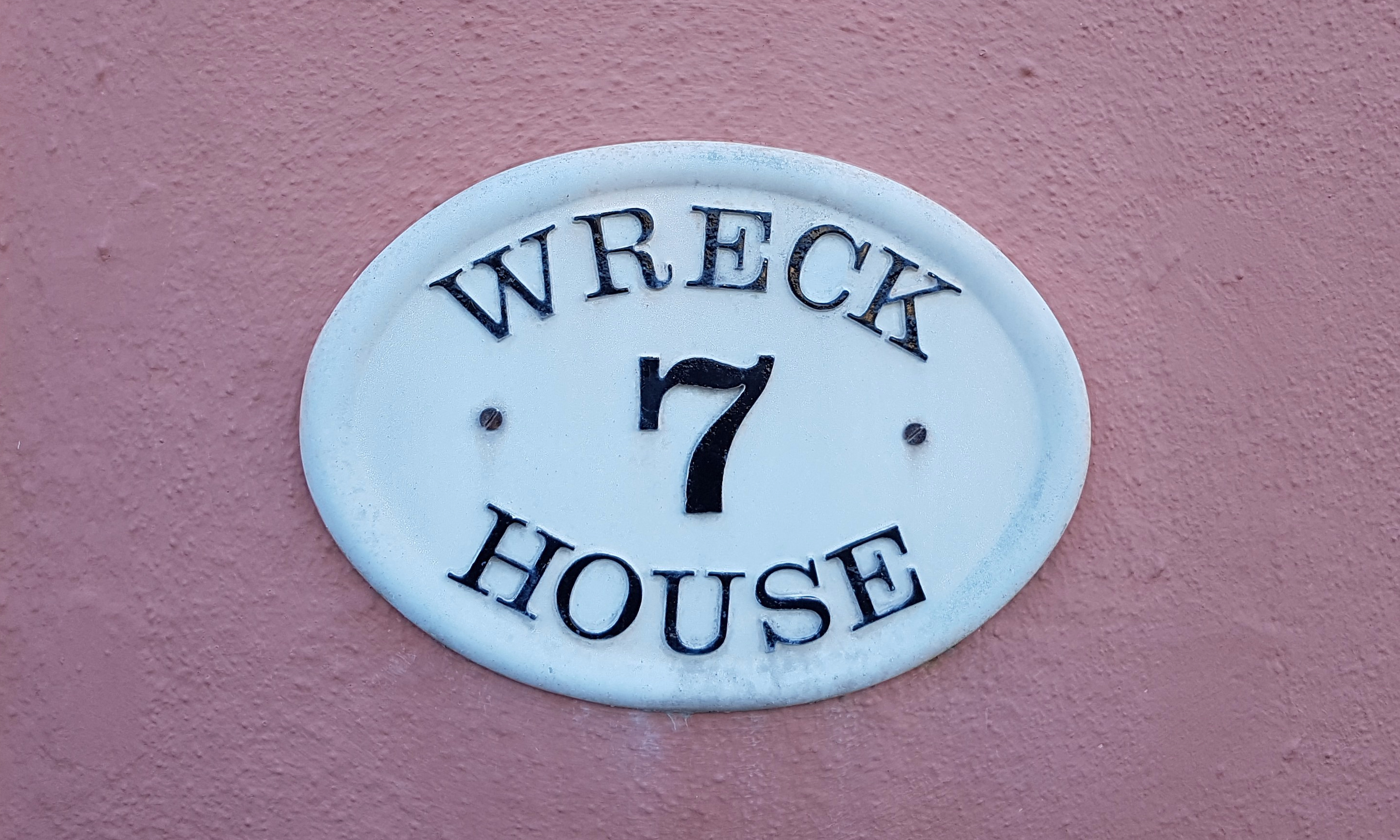
I took this image in March while on holiday in Torquay with my beloved daughter and it seems perfectly apt right now; I’m a ‘wreck’ 😂😂😂

camino de santiago porto to santiago

7 days to the start of my Camino 2017 – Porto to Santiago

I read a lovely quote in the notebook “The beginning is always today!” Mary Shelley. I guess that yes, today is certainly that; the beginning; of my countdown to Porto…this shit is getting serious now. I can’t understand why I’m so conflicted though. I think the seeds of my fear were sown back in 2016 when I stumbled upon a blog written as a memorial to all the people who have died on the Camino routes in the last 10 years or so. Prior to that, it had never entered my head that people actually died!!! while on Camino. I was horrified. I think that knowledge may have played a part in my cancelling the trip I was going to make in September last year. Since then my daughter has become engaged and due to be married in May 2018. ❤

Although I try to not think of it, I am fearful that I too may die while on Camino. It’s not like I’m ill or anything, but some folks were healthy enough when they started and had a heart-attack enroute, some were knocked over by traffic and one lady Denise Theim was murdered. Now as I say, although I’m not focusing on death, the niggling is there in my mind. I would hate to let my daughter down…I’m meant to be walking her down the aisle when she gets married and it would be heart-breaking if I wasn’t there for her special special day. I’ve asked her to promise me that she’ll ask her father to walk her down the aisle in the event I’m not there…but meanwhile I’m visualising me escorting her….actually I can’t wait for the day, she looks absolutely gorgeous in her dress 🙂

So back to the Camino. One thing that has been really good is reading other people’s blogs and facebook updates on the various pages I’m following. It’s good to know I’m not alone in my fears. So many women and men have posted at how fearful they feel in the days preceding their start, how nervous…many with exactly the same fears I have.

camino de santiago porto to santiago

Inspirational quotes

A couple of days ago I got a sudden burst of excitement and wanted to just go already…now! I posted this on instagram: “14 days to go and I’ll be on my Camino. I had a few options for this number but I quite liked the story in this. The unicorn reflects my dream to walk the Camino, now just about to come true, and the words ‘seeds’ reflects that I’ll be sowing new seeds (experiences) in the garden of my life.

my camino 2017 porto to santiago

sowing the seeds of my adventures

I wonder what will grow from this journey? New friends? New feelings? New emotions? New thoughts? New perceptions? I suspect it will be all the above. I do know for sure that new adventures await, new photos (of course), new places to be seen and new challenges await… My feet hurt just thinking about that! 😂😂😂 I hope you don’t mind that I’ll be posting my #countdown from now till I go. I’ve suddenly gone from trepidation to excitement and now I just want to GO ALREADY. In fact it brings tears to my eyes… OMG what an adventure. Although I’m sure that within 3 days I’ll be saying OMG I must be mad!!! What am I doing!!????”

portuguese coastal route mapacoastal

The Portuguese Coastal and Central routes

And yes, just 4 days later, that euphoric emotion has passed and I’m back to wavering between fear and excitement.

I love travelling. I’ve travelled all over the world entirely on my own. I have stumbled through the language barriers. I have enjoyed meeting people. I have loved being solo…..but for some reason, this trip feels different. I guess it’s probably because I’ll be moving constantly for 11 days; walking between 18.5 – 32 kms at different stages staying at a different hotel/hostel/alburgue each night bar 3. 184.2 kms is an awful lot more than 66.91 over 5 days and 109.01 split over 3 days – 2 weeks apart!!

I’ve planned and replanned my route, changed the distances between stages, reduced some days and increased others. Cut out two days of travelling and reduced the distance from 235kms to 184kms.

Somehow this looks awfully far…..


I’ve wanted to visit Portugal for ever such a long time and Porto has been my top destination. In Spain it’s Barcelona which I’ll be travelling to after my journey to Santiago. I’m so excited to be seeing those places….and yet the 11 days between Porto and Santiago are looming large in my head. I’ll also be adding to Project 101; 3 UNESCO World Heritage Sites; Porto Historic Centre, Coimbra and Santiago. I’ll be visiting a number of cathedrals….I’ll count them once I’ve been, a few walled cities, and crossing a few rivers, and ancient bridges. And besides that…..I’ve no doubt that I’ll be visiting a LOT of churches 🙂

All that remains now are for the days to march on by and soon I shall be on ‘my way’. Porto to Santiago de Compostela along the Portuguese Coastal Route….

camino 2017

Camino de Santiago

Buen Camino….

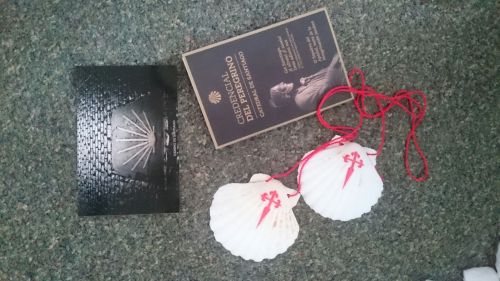
Porto to Santiago de Compostela - my pilgrim's passport and the scallop shells

Porto to Santiago de Compostela – my pilgrim’s passport and the scallop shells

Other blogs I’ve written about the impending Camino

Camino 2016, my way

My Camino the journey so far

My Camino 2017

On the road and what to pack #Camino2017

Pilgrimage – the road to Santiago

The Spirit of the Camino

Walking the Camino and lessons learned

Harrassment on the Camino

Read Full Post »
Before setting off on my adventure I did some research into the history of St Augustine and the journey between Ramsgate and Canterbury. It has been super fascinating to find out more about Augustine and the era he arrived in England, and of course the walk itself revealed so many amazing places…I long to just do it again. The churches in particular are just fantastic.

About St Augustine: Augustine was born in the first 3rd of the 6th century and probably died 26 May 604. He was a Benedictine monk who, in the year 597, became the first Archbishop of Canterbury. Augustine was the prior of a monastery in Rome when Pope St Gregory the Great chose him in 595 to lead a mission, aka as ‘the Gregorian mission’, to Britain to convert King Æthelberht and his Kingdom of Kent from Anglo-Saxon paganism to Christianity. After many dangers and difficulties by land and sea Augustine landed at last on the shores of Richborough near Ebbsfleet on the Isle of Thanet in AD 597. Successful in his endeavour, his legacy is with us still today throughout art, culture, legal systems, music, and more. He is considered the “Apostle to the English” and a founder of the English Church. The church in Ramsgate, built by Augustus Pugin, is also the shrine of St Augustine of England. The shrine at Ramsgate houses a relic of St Augustine’s bone.

The Isle of Thanet and the Wantsum Channel.

The Isle of Thanet and the Wantsum Channel.

As you can imagine, thelandscape has changed dramatically since 597 when Augustine landed at Richborough. For one thing the Wantsum Channel, after silting up and becoming un-navigable has since been covered over and is now just a small stream. If I’d had to walk from Minster to Canterbury then, I’d have gotten my feet rather wet LOL

About the shrine and Pugin: Augustus Welby Northmore Pugin (1812-1852) had a particular fascination with St Augustine after whom he was named. In 1843 Pugin bought a cliff-side property in Ramsgate nearby Ebbsfleet – ‘close to the spot where blessed Austin landed’. He first built a family home, ‘the Grange’, and then a personal church dedicated to Augustine. Augustus Pugin and his family are buried in the church.  In 1848 it was the venue for the first High Mass on Thanet since the Reformation.

The Shrine of St Augustine in Ramsgate

The Shrine of St Augustine in Ramsgate

More about the route: 19.1 miles – usually comfortably walked over 2 days. It can be done over one day; but certainly NOT by me!!!

Domesday Book villages along the way: 3 – Minster, Stourmouth, Fordwich and of course Canterbury…although I’ve visited there a number of times so I didn;t count it in for this walk. So 3 new places to add to Project 101. 🙂 There are quite a few other Domesday Book villages nearby the route but despite my intentions I didn’t get to visit…frankly…after walking all those miles I was absolutely NOT interested in diverting and adding more miles….so those places will have to wait for when I have access to a car!! Habitations in most areas of the late 11th century England followed an ancient pattern of isolated farms, hamlets and tiny villages interspersed with fields and scattered over most of the cultivatable land. Domesday Book

Stop 1. St Augustine’s Shrine – Ramsgate – the Shrine of St Augustine built by Augustus Pugin, this magnificent personal church and burial place is dedicated to his patron St Augustine. On 1st March 2012, the church became the official shrine commemorating the coming of the Gospel to the Anglo-Saxon peoples. Augustine and his group of forty monks were invited to Canterbury and through their holy lives, miracles and preaching converted 10,000 souls, as well as King Ethelbert who allowed Augustine to build a monastery and establish a cathedral church.

Stop 2. St Augustine’s CrossCliffs End stands close to the site at which an important meeting between St Augustine and King Æthelberht of Kent is said to have taken place nearly 1,500 years ago, and preached his first sermon to our own countrymen. The 19th century cross of Saxon design marks what is traditionally thought to have been the site of St Augustine’s landing on the shores of England in AD 597. Accompanied by 30 followers, Augustine is said to have held a mass here before moving on. Thus he happily planted the Christian faith, which spread with speed throughout the whole of England.

Stop 3. Minster Abbey, Minster – It was just a short distance from the present site of Minster Abbey, that within a few years of Augustine’s arrival on the shores of Thanet, Christianity had spread throughout southern England, and monastic life began to flourish. St. Augustine became the first Archbishop of Canterbury and together with his monks established a monastery there.

Minster was a royal foundation; its foundress and first abbess was Ermenburga or Domneva, a great-granddaughter of King Ethelbert of Kent.
The name Minster is derived from the first “mynster” or monasterium/ monastery built on the site of the Parish Church of St.  Mary the Virgin by Domneva in 670 AD.  Her daughter Mildred became the second Abbess.  She was one of the best loved Anglo-Saxon Saints and patron of Thanet. The monastery was repeatedly attacked and eventually destroyed during Viking raids of the 9th & 10th Centuries, the foundations of which were uncovered during excavations in the late 1930’s.

An East grange was built to accommodate guests and those on pilgrimage to the shrine of St. Thomas of Canterbury, while the south wing of the Abbey was added within a 100 years of the Norman Conquest in 1066, this “Norman Wing” also remains standing. Minster Abbey is considered to be possibly the oldest inhabited house in the country, and home to the monks for over 500 years. During the reformation the monks were forced to leaveand it passed into private hands. The Benedictine community of St Walburga in Bavaria, re-established Monastic Life at Minster Abbey in 1937 and once again the Abbey became a place of prayer and dedication to God.

Stop 4. St Mary’s Church, Minster – St. Mary’s Church, known as the ‘Cathedral on the marshes’ founded in 670AD was originally both a monastic and a parish church, and is the mother church of western Thanet. In bygone days the sea would have come up to the Churchyard wall which acted as a barrier during high tides. The turret may have served as a watch tower for shipping. The first Church was probably built of mud and wood. The oldest part of the present building was built just after the Norman conquest with work continuing for about 100 years. The Chancel is Early English in style. The nave has stood in its present form since about 1150.
The Church has a set of 18 mediaeval monks stalls (Misericords), which is one of the finest in the south of England.

I absolutely loved this church, so beautiful and serene it seems to float above the trees….quite apt since it was known as the cathedral on the marshes.

Stop 5. All Saints, West Stourmouth – A Grade I listed building, the church stands in the settlement of West Stourmouth, some 4 miles (6 km) north of Wingham. The main fabric in the church is Saxon with alterations made in the late 12th century. The church was damaged in an earthquake in 1382, and subsequently rebuilt. In the chancel there’s a brass dated 1472!! Windows were replaced in the 14th and 15th centuries and the church was restored in 1845, when the seating was reorganised. The royal arms of George III can be seen in the church. It has been redundant since 1979.

Another stunning little church, I spent a very happy hour there just enjoying the serenity. It was also raining so the shelter was most welcomed.

I stayed overnight at The Rising Sun Inn Stourmouth. “Originally a bakery owned and worked by the Monks of the Diocese of Canterbury, the first part of the building was erected in 1372 during the reign of Edward III. An absolutely wonderful location in the heart of the Kent countryside.

Stop 6. Stodmarsh Nature Reserve – The name Stodmarsh is derived from the Saxon words “stode”, meaning mare, and “merse”, a marsh, demonstrating its former use of pasture for cattle among the marshes.
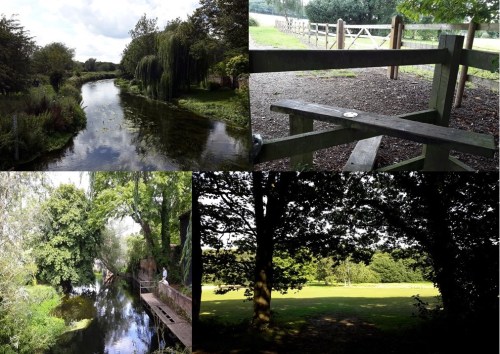
This was probably one of my favourite sections of the walk….mile on mile of marshlands beneath blue skies and fluffy white clouds floating above. It was incredibly peaceful and I saw about 5 people in the whole time it took to cross. The reserve has the largest reed bed in the south east of England, which supports a range of specialised birds and insects. The reed beds are an excellent sanctuary for migrating birds such as swallows and house martins in the summer and starlings in the winter. Bittern, marsh harrier, kingfisher, great crested grebe, coot, moorhen, reed bunting, bearded reedling can all be seen. The reserve supports a large variety of invertebrates (including dragonflies and moths) and rare plants. It also has a strong population of water voles. Stodmarsh has over 6 kilometres of footpaths, including a circular walk around the whole site. There are short and long easy access ‘sensory’ trails at the Stodmarsh end of the reserve.

Stop 7. St Mary’s Church, Stodmarsh – The church, dedicated to St Mary is small and consists of a single aisle and chancel; first built in the 12th and 13th centuries. Originally part of the possessions of the abbey at Canterbury, it remained so until 1243, when the abbot Robert, at the insistence of archdeacon Simon de Langton, granted it to the hospital of poor priests in Canterbury, together with four acres of Stodmarsh, on the condition that they should not demand in future any tithes from the abbey. 

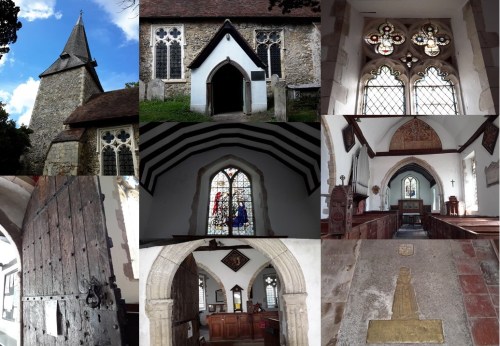
Stop 8. Church of St Mary the Virgin, Fordwich – The church, dating from the Norman era, stands near the centre of Fordwich, some 3 miles (5 km) northeast of Canterbury. There is some Saxon material in the nave, while the chancel and north aisle were added in the 12th century. During the 13th century the chancel was extended and the west tower was built. In the 14th century the windows in the south wall of the church were inserted and box pews were added in the 18th century, and the church floored with tiles. Sadly the church closed in 1995, but it is open for visitors. In the north aisle is a large block of limestone standing about 5.5 feet (1.7 m) high, carved to give the appearance of a tomb. Dating from about 1100, it is considered to be the former shrine of a saint. It is not known how long it had been in the church but it was moved from the church to Canterbury Cathedral in 1760, and subsequently returned to Fordwich in 1877. It is considered that it may have been part of the shrine of Saint Augustine of Canterbury.

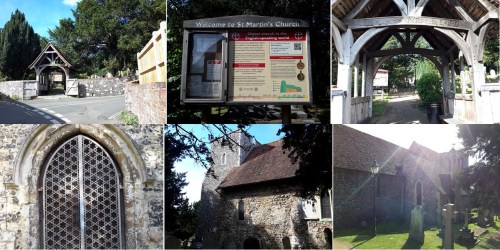
Stop 9. St Martin’s Church, Canterbury – the first base of St Augustine when he came to Canterbury in 597. The Church of St Martin in Canterbury, England, situated slightly beyond the city centre, is the first church founded in England, the oldest parish church in continuous use and the oldest church in the entire English-speaking world. Oh my gosh, I can’t believe that I managed somehow to end up visiting this church. Although it was securely locked, I did get to walk around the grounds for a few minutes and rested there before my final push into Canterbury.

St Martin’s Church was the private chapel of Queen Bertha of Kent in the 6th century before Augustine arrived from Rome. Considered to be the oldest Church in the English speaking world still used for worship, and has been for over 1,400 years. It was here that Queen Bertha welcomed Augustine, who with his 40 companions, set up his mission when he arrived from Rome in 597AD to convert the Saxons. Here they remained until King Ethelbert granted him the land for the abbey and the cathedral which, with St Martin’s, now form the Canterbury World Heritage Site. For this reason it is sometimes called the first church of the Anglican Communion, and forms part of the Canterbury World Heritage Site. Shortly before 1844, a hoard of gold coins which may date from the late 6th century was found in the churchyard, one of which is the Liudhard medalet, which bears an image of a diademed figure with a legend referring to Liudhard.

The other two parts are Canterbury Cathedral which is where my walk ended and St Augustine’s Abbey, which I am yet to visit.

http://www.martinpaul.org/architecturalhistory.htm

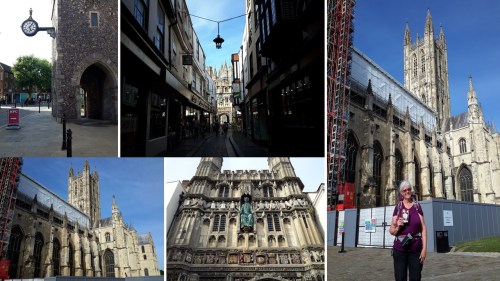
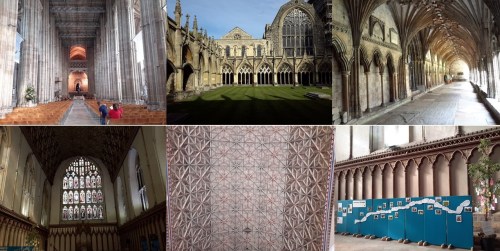
Stop 10. Canterbury – Cathedral

Canterbury Cathedral is the destination for those who travel along the pilgrim paths from Winchester and Rochester. It is also the beginning of the route to Santiago de Compostela in Spain and the Via Francigena to Rome.

The Way of St Augustine

The Way of St Augustine

Medieval pilgrimage: a pilgrimage is a journey to a holy place connected with the stories of the bible. People have made pilgrimages for centuries and thousands still do so today, but it was especially popular in the medieval period. Early churches were built over the tombs of saints. The bodies and relics of saints, famous miracle-working images and statues , and holy wells, all attracted pilgrims. Apart from major holy cities such as Rome and Jerusalem, there were many thousands of major and minor pilgrimages sites across Europe and hundreds in England.

Why is Canterbury so important?Canterbury is where St Augustine, who reconverted parts of southern England to Christianity founded his cathedral in 597 AD. The cathedral always attracted pilgrims as a special holy place, but it was only after the murder of Archbishop Thomas Becket in 1170 that large numbers of pilgrims began to come to Canterbury. Canterbury has one of the largest collections of holy relics; bones, clothes and other items associated with saints in England. Most pilgrims only visited Canterbury once in their lives, so it was important to make it as memorable an experience as possible. Pilgrims, then as now, liked to take a souvenir of their journey, and Canterbury had many different badges that could be bought in the town, and which would identify the wearer as a pilgrim to Thomas Becket’s shrine. 

St Augustine’s Abbey: Although I didn’t get to visit this particular site due to the fact that I somehow ended up on the Roman Road into Canterbury and thus visited St Martin’s Church instead, I am planning to visit at some stage after my Camino de Santiago….so more on that later. I have however visited in the past, but the next visit will have more meaning after having done the walk.

St Augustine’s Abbey was a Benedictine monastery in Canterbury, and marked the rebirth of Christianity in southern England. Founded shortly after AD 597 by St Augustine, it was originally created as a burial place for the Anglo-Saxon kings of Kent. For two centuries after its founding, St Augustine’s was the only important religious house in the kingdom of Kent. It is now part of the Canterbury World Heritage Site, along with Canterbury  Cathedral and St Martin’s Church. The abbey functioned as a monastery until its dissolution in 1538 during the English Reformation

The Conduit House at St Augustine’s Abbey; dates from the mid-12th century. A roughly octagonal masonry tank is now divided by an 18th century chalk and brick wall. Four tunnelled openings and three smaller ducts, which collect water from springs, lead into the tank. Water was delivered from here to the abbey by a lead pipe 75cm (3 inches) in diameter running from the western side of the structure. The pipe may have led to a water tower at the abbey, which would have fed smaller tanks in the kitchen, infirmary and other parts of the monastic complex.

Thanks for reading this far…I hope you’ve enjoyed learning more about one of England’s many saints. 😉

To read more about my walk

Day 1 The Way of St Augustine Ramsgate to Stourmouth 

Day 2 The Way of St Augustine Stourmouth to Canterbury

Read Full Post »

Day 2 of my Way of St Augustine walk dawned bright and cheerful; blue skies and fluffy white clouds 🙂 Yayyy. I had been so blessed with the weather on both my walks. Most of the days were lovely blue skies and fluffy white clouds and not too hot. Perfect for walking. I guess one can excuse the heat and rain if one had good weather otherwise 😉

way of st augustine

You are here….yayyy 🙂 Bright sunny day and I’m off for a walk

I slept so well that night at The Rising Sun Inn… the bed was so comfy I could quite easily just have stayed in bed the whole day. LOL But adventures awaited and breakfast would soon be on the table. I dressed, tidied the room, packed Pepe and set off. First stop: dining room. Nary a soul joined me…apparently I was the only guest that night. Besides the ghosts that is.

Breakfast was a splendid affair….’Full English’ please preceded by cereal, tons of fruit and a cup of tea. I had to eat well since it wasn’t likely I would eat again that day till Canterbury. Anyway I needed the energy.

And then it was time to go. Bill settled I got some last minute instructions from the landlady and at 08:35 I was on my way…first a bit of an explore of the hamlet then onto School lane and across the fields…..it’s along this lane, through the gate and directly across the fields, just head towards the church spire! Hmmmm. Nope.

After much backwards and forwards and walking through a farmers farm 😉 which was actually a bonus since they were picking raspberries and I got to taste some (delicious), I finally decided to ignore the direction to walk through the gate, checked map my walk and set off…once again creating my own ‘way’ and St Augustine will just have to deal with that! So there!!

way of st augustine

lovely open fields but nary a church spire in sight

I did finally spy the church spire and although it definitely wasn’t direct, I eventually found my way. The houses were so quaint and quintessentially English it was hard to bear it! As I passed close to the church I saw one house that I just loved. I remember thinking that it looked a bit sad and that if I lived there I’d be out in the garden enjoying the flowers and the roses. When I read the visitor’s book I noticed a heart-felt request to pray for the health of a lady, someone’s Mother….turns out she lived in that house, but a little notation above the original request mentioned that she had sadly died just the week before. It was so heartbreaking, and then I understood why the house looked sad.

way of st augustine

a beautiful house with an air of sadness. I love the roses and the red phone box. quintessential English houses

All Saint’s Church, West Stourmouth was just wonderful to visit. An absolute gem of a church, so much history within those walls. The first incumbent 1281!!! Just wow. Reading the memorials is truly eye-watering…some of the dates are just incredible. I spent some time there just absorbing the serenity and peace and then set off once again….I could not find the route. After walking back and forth I finally spotted two gentlemen chatting nearby and asked them…they showed me where to turn and I wasn’t mistaken, it really just wasn’t clear and there were no markers. Perhaps because I had come a different route straight from the inn instead of from Plucks Gutter, I probably came in at a different angle and therefore the map didn’t make sense.

way of st augustine

these little churches are absolute gems. a real treasure house of history

Walking through the Kent countryside was such a treat. I crossed channels of water and walked through fields of ‘something or other’…sorry no idea…I’m not an expert, but it was lovely anyway 😉

way of st augustine

channels of water and fields of crops

My next destination was Grove Ferry and the marina. A gentleman suggested I head towards the house with the boat on the roof? Okayyyy. It took me just over an hour of walking and I was there….blissful green grass and lots of lovely water. Pity I couldn’t have a swim!! I spotted a pub, The Grove Ferry Riverside Pub, and stopped off for tea and a piece of cake and the all important rest. Chatted to a family who were driving through. Nice.

way of st augustine

house with a boat on the roof! paths of green. Grove Ferry Marina and the pub. another gate

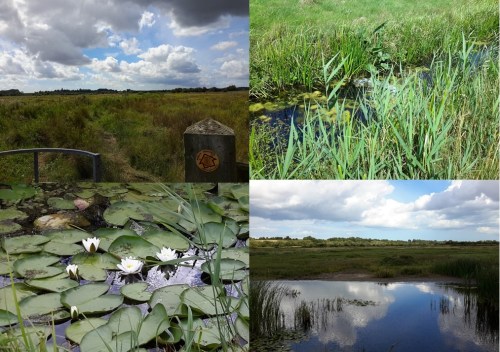
And then it was the long stretch through Stodmarsh National Nature Reserve in the Wickhambreaux Valley. I loved the many gates I passed through.

What a treat it was walking through the nature reserve. Over an hour of peace and quiet, just me and nature; miles of grasses, channels of water, birds, butterflies, bees, dragon flies and blue skies with fluffy white clouds; blissful.

way of st augustine

Stodmarsh Nature Reserve

8 way of st augustine

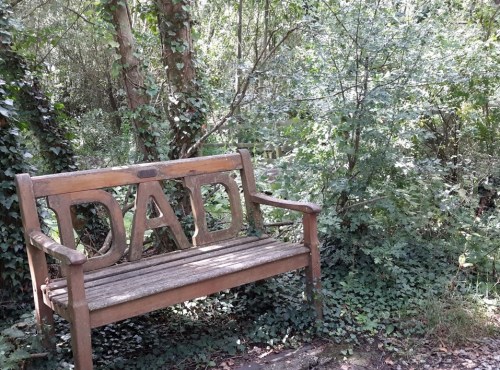
As I neared the exit I noticed a wooden bench with the word DAD sculpted on the back. I rested there for about 10 minutes and thought about my Dad who has also done a number of ‘Caminos’.

way of st augustine

DAD – nice

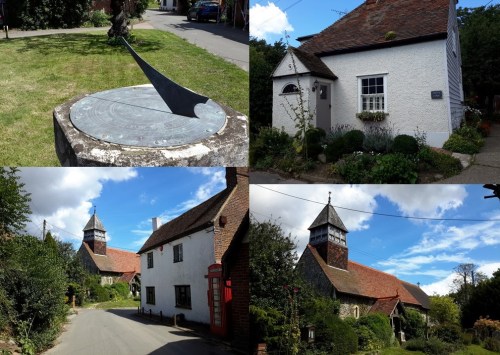
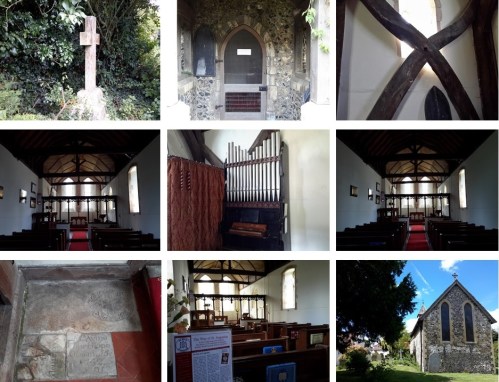
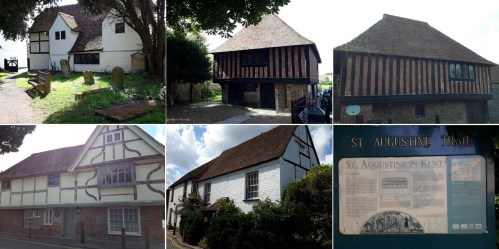
Shortly afterwards I found St Mary’s Church in the village of Stodmarsh. Another wonderful little church. To my surprise there was a story board featuring the Way of St Augustine 🙂 Magic. I’m on the right road! This hamlet too was just gorgeous; ancient buildings and so much history it’s hard to take it all in.

way of st augustine

a dainty little hamlet – Stodmarsh

way of st augustine

St Mary’s Church Stodmarsh

As I left the village I passed some amazing farms; wide open spaces with the river in the background. Such a beautiful day I could barely believe it. And so goodbye to Stodmarsh. This country is beautiful.

way of st augustine

Goodbye Stodmarsh

way of st augustine

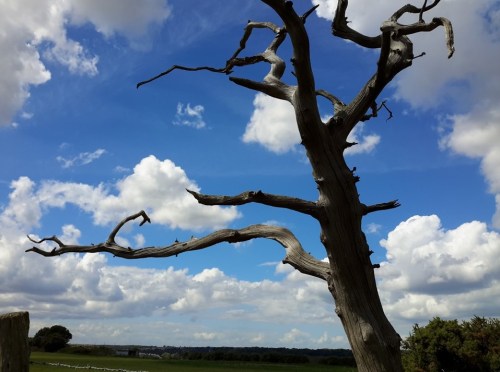
I love a good tree

From here I set off through some pretty remote countryside, through forests of trees, some old, some newish, along lonely pathways, past lakes and occasionally I spied other walkers through the trees…usually disappearing before I reached them. It was weird, but interesting.

the way of st augustine

The Way of St Augustine – I’m pretty sure these trees are not the same he saw!

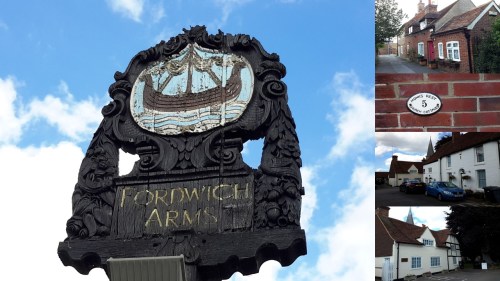
My next destination was the Domesday Book village of Fordwich that I reached just before 3pm. Stunning place. As I entered the village I passed a house named ‘Monks rest’ – too divine!!!

way of st augustine

Fordwich; a Domesday Book Village on the Way of St Augustine

The church again was just amazing!!! I love these churches, they are so extraordinary. This church like the others, an absolute gem of a stop on my route, was open but again sadly, no pilgrims stamp. You can feel the aeons of history thick in the air; as early as 620AD with remnants of the Saxon building. And I just loved the donation box!! Stunning. I had never seen one like it before. I spent ages here and got to speak to quite a few people as they came in to visit. I signed the visitors book and was delighted to see that a couple from Shawnigan Lake, Canada were waking the Way of St Augustine on the same day as me 🙂

way of st augustine

Church of St Mary the Virgin Fordwich

16 fordwich church

Before I left Fordwich I crossed the river over the bridge and took some photos. Definitely going to have to visit here again..so much to see and so little time.

the way of st augustine

Fordwich; a Domesday Book village on the Way of St Augustine. The Town Hall is awesome! loved the houses

It was by then already 15:30 and if I still wanted to visit St Augustine’s Abbey and Conduit House, I had to get moving.

Things get a bit hazy from here onwards. I was already very tired. The previous two days of walking had worn me out. Thank goodness I had decided to do these 2 walks prior to my Camino in Europe. I have learned so much about distances, timing, and carrying the backpack. Invaluable lessons that allowed me to adjust my Porto to Santiago route considerably.

As a result of my tiredness and the map not matching what I was seeing, I very definitely went off-route!! I asked for directions but the people I spoke to hadn’t heard of St Augustine’s Way so I simply asked for directions to Canterbury…and ended up having to navigate a golf-course and finally ended up on the Roman Road into Canterbury rather than following the final stages of Augustine’s route. 😦 But on the plus side, I found a cafe for some much needed chocolate and a sugar-rush…a can of Coke. I seldom drink the stuff but these were desperate times and I really needed the energy.

the way of st augustine

countryside and reading maps….LOL

And as a major bonus I managed to visit St Martin’s Church…even though it was closed by the time I eventually got there. Oh my gosh, I can’t believe that I managed somehow to end up visiting this church. Although it was securely locked, I did get to walk around the grounds for a few minutes and rested there before my final push into Canterbury.

the way of st augustine

St Martin’s Church Canterbury – oldest church in continuous use in the country

St Martin’s Church was the private chapel of Queen Bertha of Kent in the 6th century before Augustine arrived from Rome. Considered to be the oldest Church in the English speaking world still used for worship, and has been for over 1,400 years. It was here that Queen Bertha welcomed Augustine, who with his 40 companions, set up his mission when he arrived from Rome in 597 AD to convert the Saxons. Here they remained until King Ethelbert granted him the land for the abbey and the cathedral which, with St Martin’s, now form the Canterbury World Heritage Site.

And so to Canterbury Cathedral. Footsore and weary beyond belief I passed through the city walls at just on 17:00! Hoorah. I would be in time, only just, to get my Pilgrim’s Passport stamped at the Visitor’s Centre. Once again it was supremely fun at arrive at the gate to the cathedral as a Pilgrim; the folks on duty at the gate are marvellous and made a great fan-fare of my arrival 🙂 – Make way – we have a Pilgrim coming through. Hoorah!! By 17:15 my passport was stamped and I was having my photo taken in front of the cathedral. What a blessing. What a journey. I still can’t quite believe that I actually walked for 3 solid days. Wheww.

canterbury cathedral way of st augustine

Finally through the city walls and so to Canterbury Cathedral

The staff invited me to stay for the Choral Mass which I did. But first a bit of an explore. I visited the cloisters and the Chapter House where I photographed the stained glass window featuring Archbishop Chichele for my client. They had a fantastic exhibition about pilgrimage to Canterbury featuring the route from Winchester…next on my list me thinks 😉

canterbury cathedral way of st augustine

Canterbury Cathedral – journey’s end The Way of St Augustine

As I left a verger came along to lock up and I asked her to direct me to the tomb of St Augustine. She went one better and unlocked the area for me; usually closed to visitors so that I could take some photos and pay homage. I can’t describe how fantastic that was.

way of st augustine

The shrine of St Augustine at Canterbury Cathedral

After the choral service I went walkabout through the gardens and almost got myself locked into the grounds for the night LOL But fortunately I discovered to my relief that the entrance to the cloisters was still open. Not that I would have minded staying there overnight, but I had places to go and people to see….and work the next day!!! blergh.

It seemed such a let down to be heading back to work after such an amazing 3 days. But needs must; I have a Camino to save up for!

I did a quick tour of Canterbury to take some photos and then I was off to the station;

The River Stour in Canterbury - looking towards the East Bridge

The River Stour in Canterbury – looking towards the East Bridge

no time for a pancake treat this trip but I shall make up for it next visit! I reached Tonbridge (my accommodation for the night) at just after 9pm. Seriously ready for a shower and bed.

And so endeth my pilgrimages to Canterbury; the Roman town of Dvrovernvm.

In case you missed it: Day 1 The Way of St Augustine

Medieval pilgrimage: a pilgrimage is a journey to a holy place connected with the stories of the bible. People have made pilgrimages for centuries and thousands still do so today, but it was especially popular in the medieval period. Early churches were built over the tombs of saints. The bodies and relics of saints, famous miracle-working images and statues , and holy wells, all attracted pilgrims. Apart from major holy cities such as Rome and Jerusalem, there were many thousands of major and minor pilgrimages sites across Europe and hundreds in England.

Why is Canterbury so important?Canterbury is where St Augustine, who reconverted parts of southern England to Christianity founded his cathedral in 597 AD. The cathedral always attracted pilgrims as a special holy place, but it was only after the murder of Archbishop Thomas Becket in 1170 that large numbers of pilgrims began to come to Canterbury. Canterbury has one of the largest collections of holy relics; bones, clothes and other items associated with saints in England. Most pilgrims only visited Canterbury once in their lives, so it was important to make it as memorable an experience as possible. Pilgrims, then as now, liked to take a souvenir of their journey, and Canterbury had many different badges that could be bought in the town, and which would identify the wearer as a pilgrim to Thomas Becket’s shrine. 


Read Full Post »

« Newer Posts - Older Posts »

Self Propelled

Self propelled adventures through life; blogging on cycling, touring, micro-adventures, general shenanigans, and environmental news

johnelsewhere

Thoughtful wanderer in search of virtual meaning

Things Helen Loves

TRAVEL, WALKS & EVERYDAY ADVENTURES

Short Walks Long Paths

Wandering trails around the coast of Wales

Port Side Travel By Jill

My travels, photos, tips/tricks and anything else I think of!

Wonderwall

My 360: wonderwalls,theatre, travel, Sheffield, books...

Robyn's Ramblings

My Thoughts. Expressed.

Graham's Long Walk

Graham King's long walks around Britain

The Lawsons on the Loose

Philip & Heather are making memories through their travels.