One of my favourite and most prolific categories in Project 101 is visiting places named in the 1066 Domesday Book; a survey undertaken by William the Conqueror after he invaded England and defeated King Harold and his forces during the Battle of Hastings in 1066.
The Norman Conquest (or the Conquest) was the 11th-century invasion and occupation of England by an army made up of Normans, Bretons, Flemish, and men from other French provinces, all led by the Duke of Normandy later styled William the Conqueror. Ref wikipedia
Usually I find that the towns and villages especially, have some way of advertising their links with 1066, either in the form of a village sign or remnants of their links are noted in a book or some historical objects.
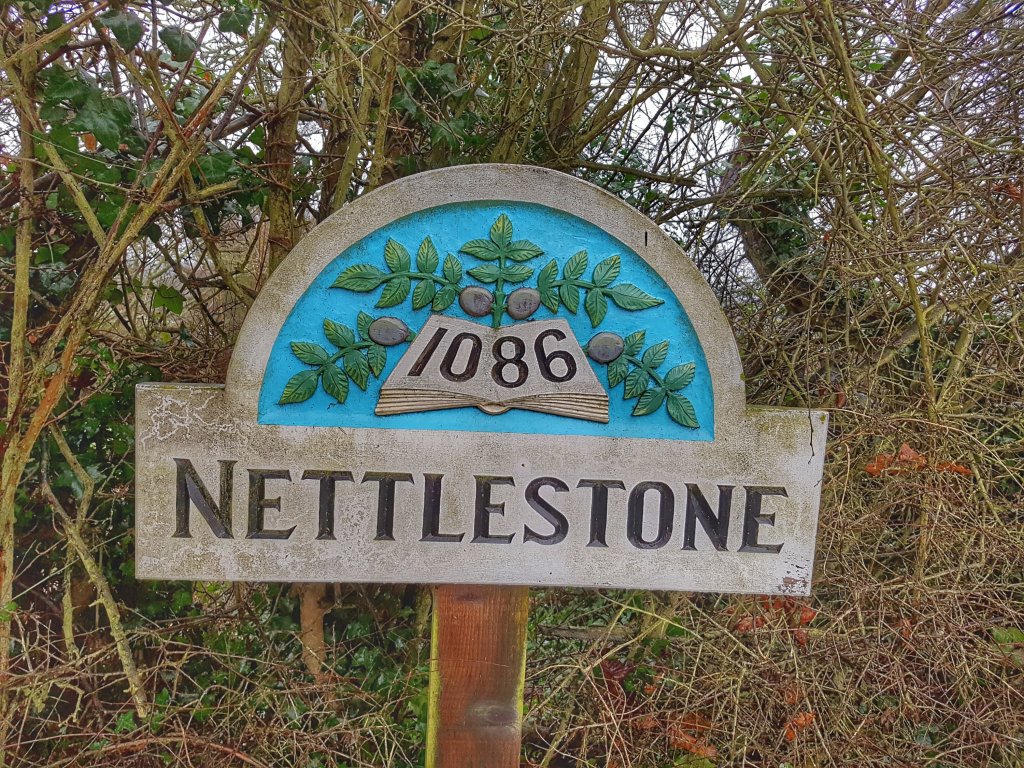
Nettlestone, Isle of Wight
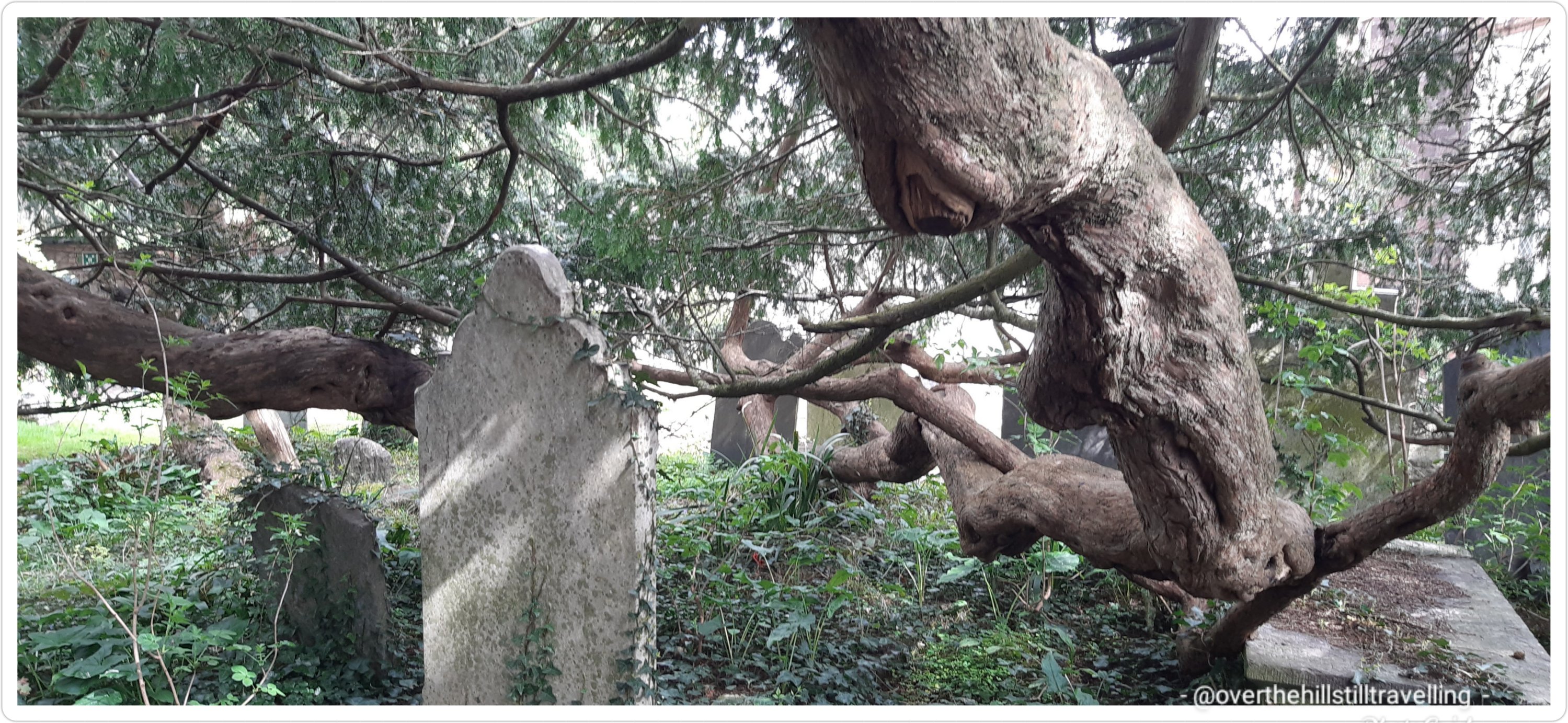
In the case of Stoke Gabriel, its a tree – a first! I initially noticed this on Google when I was researching the village prior to my visit a few months ago.
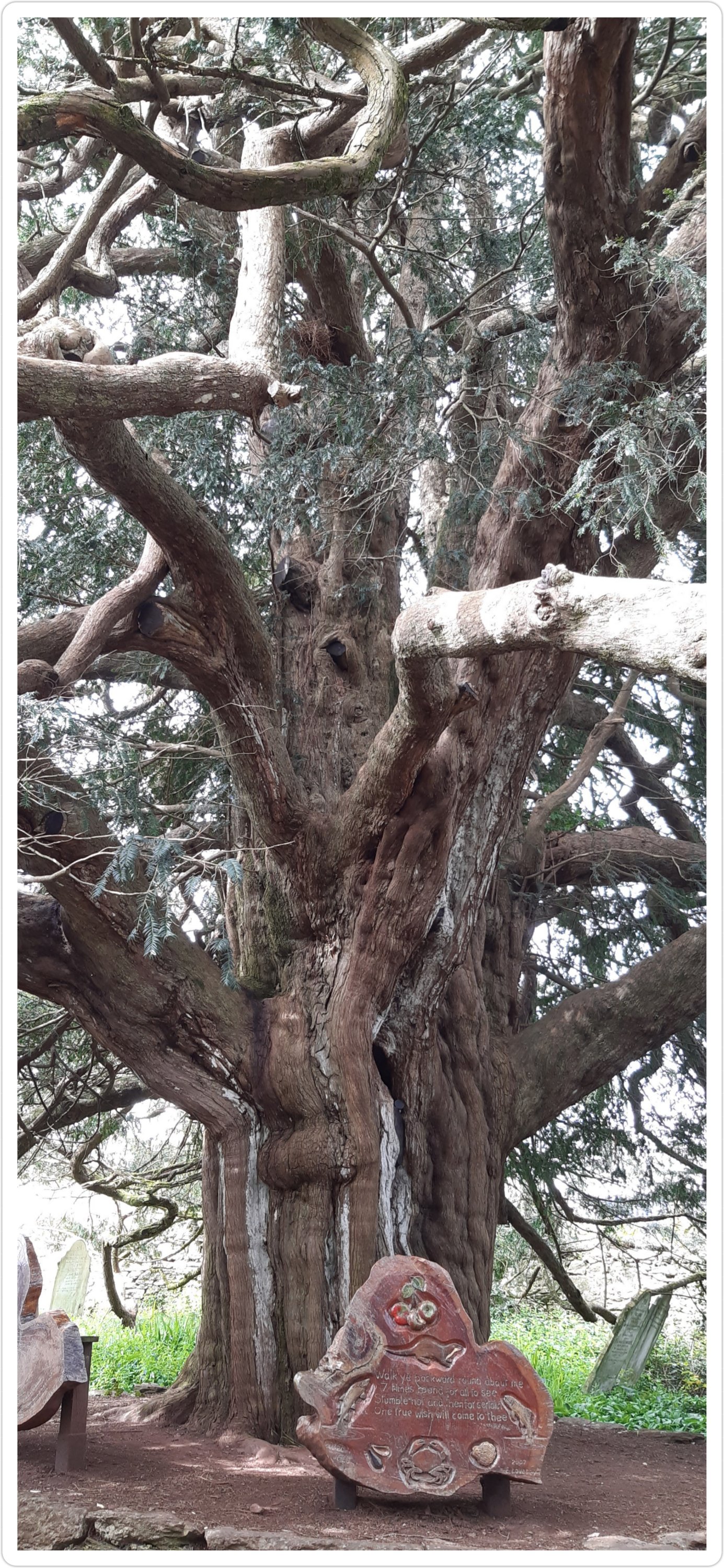
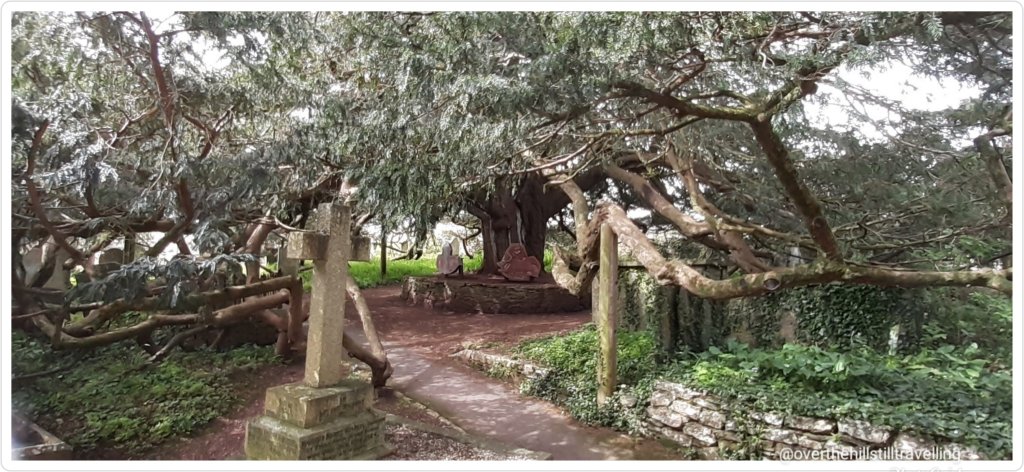
Domesday Book tree – alive before the 1066 Norman Invasion Domesday Book tree, St Mary & St Gabriel Church, Stoke GabrielDomesday Book tree
Of course as soon as I could, I made haste to see this for myself. Its quite extraordinary to be in the same proximity as a living, breathing creature that was already well established before the invasion even took place nearly 1000 years ago.
How you might wonder is it that much a thing remains….so
Domesday Book tree
Why does every churchyard have a Yew tree? The answer has to be that the early Christians built their churches on the ancient Druid and Pagan sites of worship and the planting of yew trees in modern churchyards reflects the early assimilation of the old religions into the new religion.
I’m guessing that because they live in churchyards they’ve survived progress by living on sacred grounds. I found a fascinating article about yew trees that you might enjoy, and from which I noted the information above in italics : why does every churchyard have a yew tree Their contemporaries were not as lucky…and as usual were destroyed by progress….
The longbow (so called because it is 6’ in length) was the premier weapon of the middle ages and made from yew. The volume of yew wood needed for war archery from the early 13th to the late 16th century was far too great to be supplied by from trees grown in churchyards. After all of the yew stands in Britain and Ireland had been depleted, the English crown began to import yew wood from all over Europe including Austria, Poland and Russia.
Nevertheless, this marvellous creature remains to remind us of history and our mortality…whether it does or does not thrive on the bones of the dead is irrelevant, its here for us to enjoy and be amazed.
Domesday Book tree – arms spread wideDomesday Book tree, thriving on the bones of the dead ☠☠
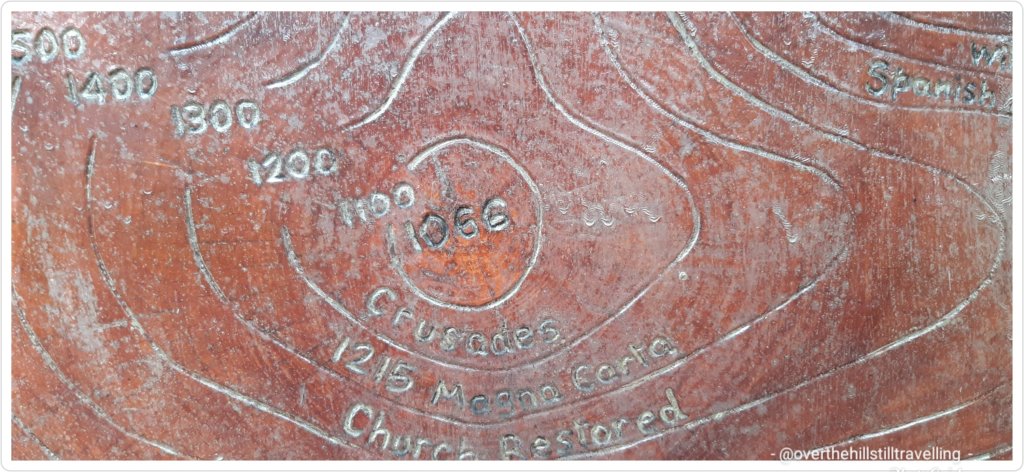
Some of the events this tree has lived through:
Domesday Book tree – it has seen historical events come and go
I followed the instructions, but unfortunately no-one was there to witness my endeavour
Walk ye backward round about me 7 times…
In fact the tree is even older than the church by a few centuries…
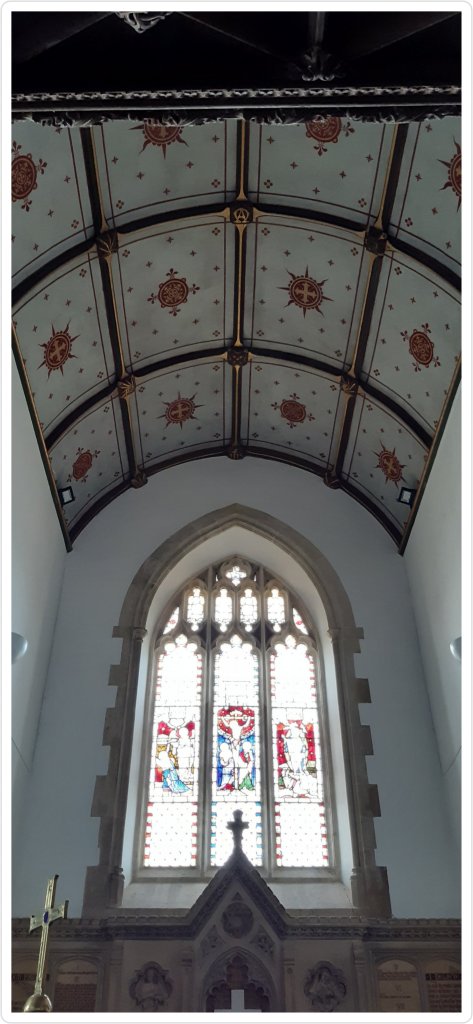
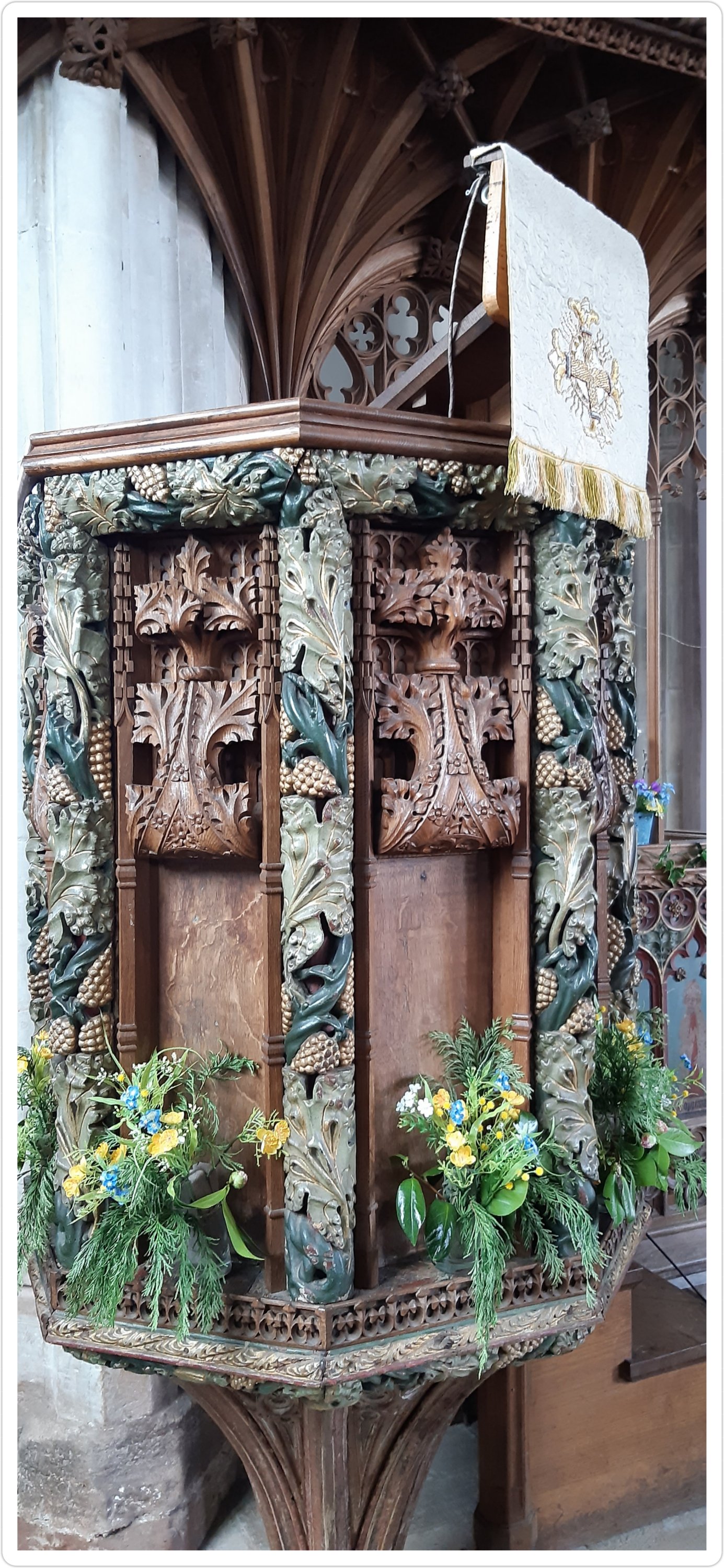
The interior of the church was no less interesting
Church of St Mary and St Gabriel, Stoke Gabriel Beautiful carving on the pulpitChurch of St Mary and St Gabriel, Stoke Gabriel Church of St Mary and St Gabriel, Stoke Gabriel, Devon
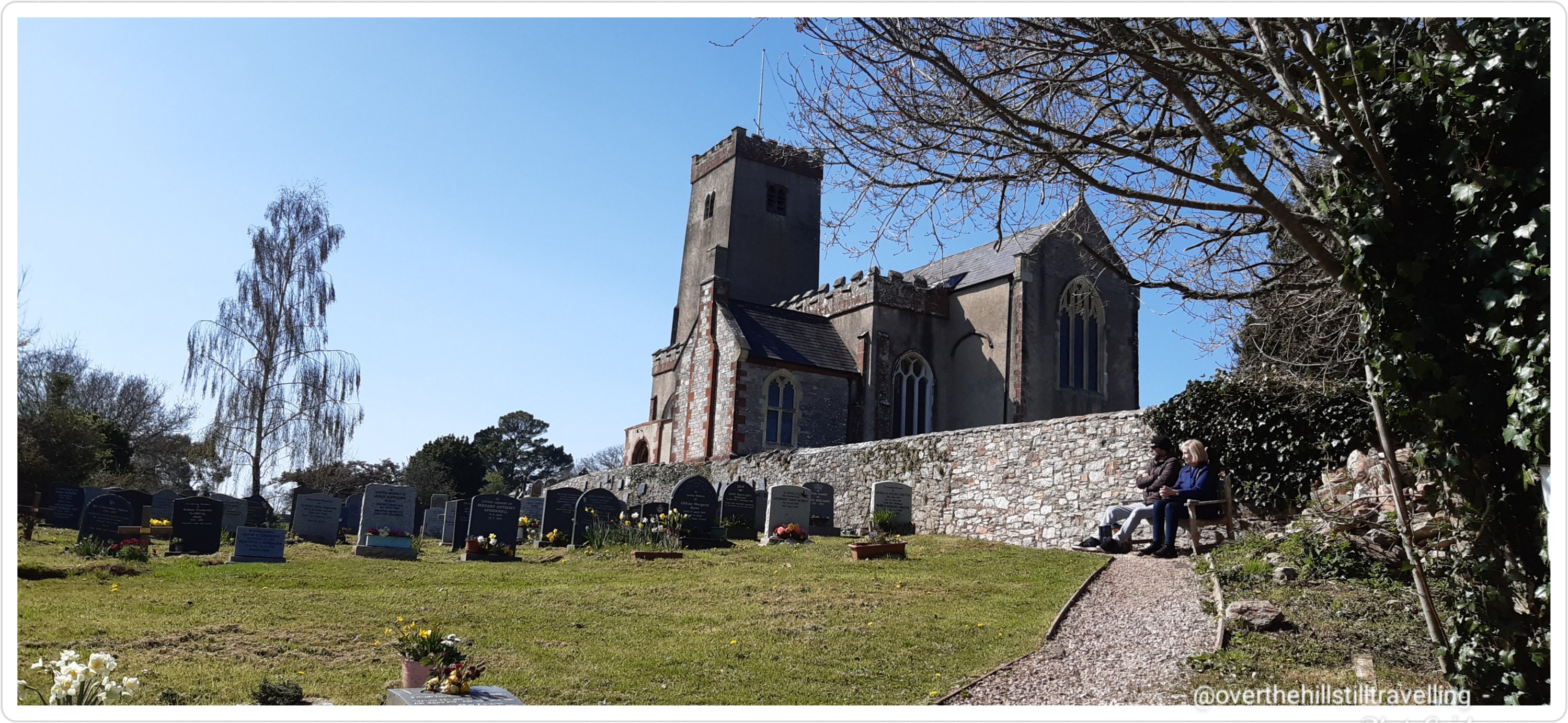
The church building was originally constructed in the early 13th century, of which only the Norman tower survives today. In 1268, Bishop Bronescombe of Exeter dedicated the church to St Gabriel, resulting in the name change of the parish from “Stoke” to the more distinctive “Stoke Gabriel”.
I often included the churchyard in my many daily walks around Stoke Gabriel and occassionally I forgot about adding kms to my virtual challenges and instead I just sat on one of the benches or under that glorious, ancient tree and enjoyed the peace and quiet.
And I shall once again include it in my walks when I return to SG later this month…
As mentioned in a previous post, on Monday I took myself on a walk to complete the ‘twittens’ of Lewes, after which I followed the High Street across the River Ouse to explore the other side of town.
To my absolute delight I found a wee church dedicated to St Thomas a’ Becket. Having just completed The Pilgrim’s Way a few weeks ago, this was wonderful little surprise.
St Thomas a Becket Church, Lewes
Of course I had to do some research and this is what I found ❤❤ Thomas a Becket actually visited Lewes at some stage!!! Oh my gosh just WOW!
St Thomas a Becket Church, Lewes
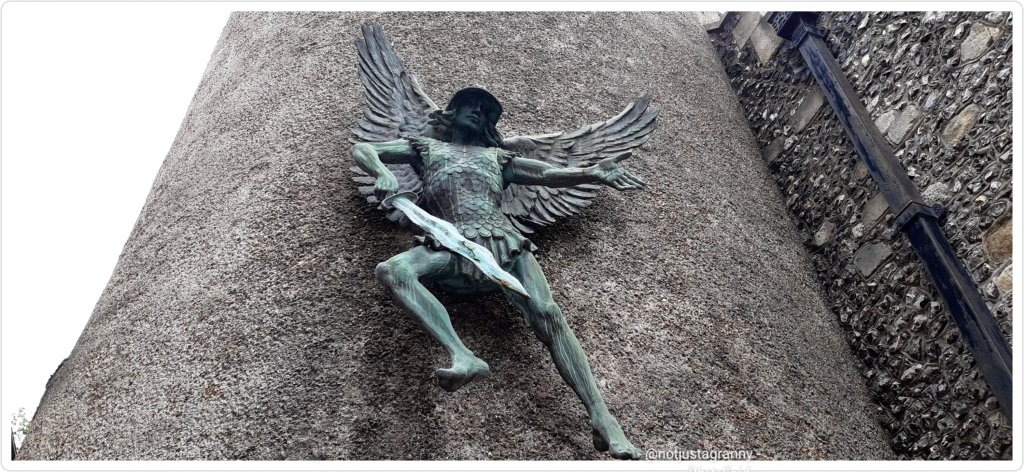
St Thomas a Becket at Cliffe is a parish church in Lewes, encompassing the parish of All Saints. Becket was apparently a benefactor and frequent visitor to the nearby Collegiate Church of St Michael the Archangel, just a short walk away, which I visited just a few days ago. Totally weird to think that Thomas a Becket actually walked through the streets of Lewes. I never really associate him with more than Canterbury Cathedral, but of course he must have travelled to any number of cities and towns in England.
Collegiate Church of St Michael the Archangel, Lewes
Cliffe church, originally a chapel of ease of the college of Malling, was built, either…. so it is said, by the direct order of Archbishop Thomas Becket, to whose martyrdom it is dedicated. But it is also suggested that its building was financed by one of Becket’s murderers as a penance for committing an act of sacrilege, or by someone who witnessed the dastardly act but did nothing to prevent it.
St Michael the Archangel
So 3 options exist…I wonder which it is. If you’re interested in learning a wee bit more about the church, here’s a link https://st-thomas-lewes.org.uk/history/
Super awesome to discover Thomas Becket’s connection with Lewes, and completely unexpected.
Now, I really must get on with updating my pilgrimage, completing the 2nd half of the Pilgrim’s Way from Oxted to Canterbury.
It has however been so exciting to explore Lewes and discover her secrets, and I still have a castle and a priory to visit, as well as the north side of town. Oh and let’s not forget the walks I’d still like to do.
As I’ve mentioned before, in my job I get to travel and work all over the country. I consider myself very lucky to be able to do this, especially during these challenging times when a lot of people are struggling with lockdown and unable to get out much.
Travel is my opiate and I love discovering new places, especially if the history of said place includes a mention in the 1086 Domesday Book, or boasts a castle, or a Roman wall (anything Roman in fact makes me happy), or even just an awesome history. And Lewes has just about all of the above.
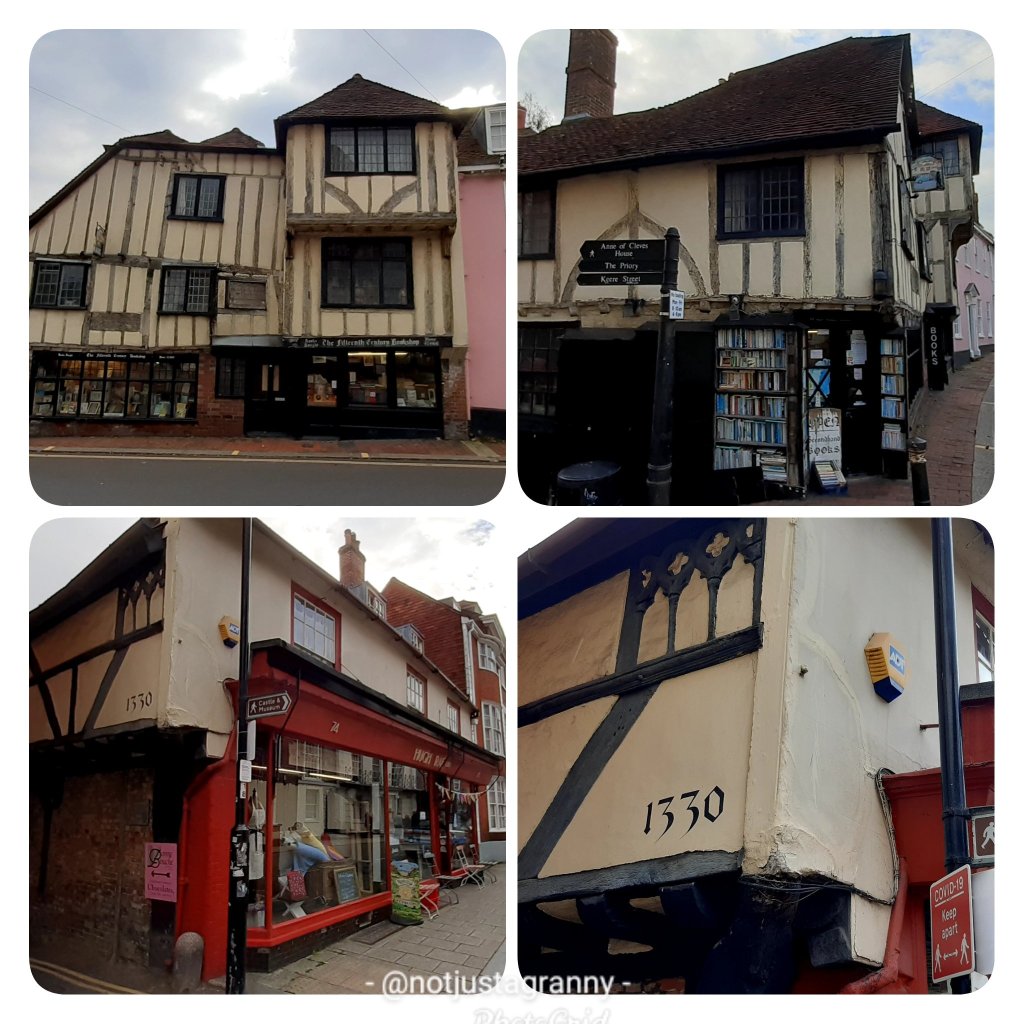
The narrow cobbled lanes, the quirky high street, and to my delight I spotted 2 very old buildings as we drove up the high street to my next assignment.
I had a choice of 2 bedrooms, either the 1st level, or the 2nd…I chose the 2nd level despite all the stairs because the views across the countryside are absolutely stunning, the hills are enticingly close – and I have a wonderful view of the sunrise…when it’s not raining.
On Saturday during my break I immediately set off to explore and walking along the High Street I first walked through the churchyard of St Anne’s Church. I noticed a row of 12 cast-iron memorials, early19th century; all for the same family, and of 10 children, 9 died before the age of 4 years…the youngest was 4 months old. Only 1 child survived till the age of 38. Heartbreaking. I’ve put a link to the church’s history because its absolutely fascinating.
Next I passed the Old Toll House which stood at the west gate into the city. The gate no longer exists and the toll house on Rotten Row is now a private residence.
I popped in at St Michael’s Church on the High Street but had to admire the interior from behind a thick glass ceiling to floor window. Closed due to Covid-19. Urgh. This damn virus. I love these ancient churches and always welcome an opportunity to visit.
Meandering along I suddenly discovered the castle 😃😃😃 I’d been so enchanted by the old medieval buildings, I’d missed the even older castle. But there it was. Unfortunately I couldn’t enter that day because I had neither mask nor money, but they’re open every Saturday, so next it shall be.
I explored the lanes and back paths on the north side of town and admired the views across the downs. Oh how much I’d love to walk those downs….soon. The autumn colours are just stunning.
I discovered quite by accident the old windmill apparently once owned by Virginia Woolf…awesome. The views of the castle from the back streets on the north side were stunning and I mentally kicked myself for not having money and a mask, the views from the castle ramparts must be stunning!!
From there I meandered along the High Street admiring the old buildings and taking dozens of photos (nothing new there then 🤭🤭) History plaques are attached to many of the buildings and give a fascinating glimpse into the towns varied past.
History plaques
I spotted a banner with a compilation of photos from the famous annual Lewes Bonfire Night event. I immediately kicked myself again 🤪🤪….this was something I’d wanted to witness ever since I read about it some years ago, but forgotten…on further investigation I learned that sadly, it has been cancelled for 2020 due to Covid-19, but I’ll make a note for future. From wikipedia: Lewes Bonfire or Bonfire, for short, describes a set of celebrations held in the town of Lewes, Sussex that constitute the United Kingdom’s largest and most famous Bonfire Night festivities, with Lewes being called the bonfire capital of the world. If you Google Lewes Bonfire videos, you’ll find some extraordinary footage.
I walked past the old Flea Market which looked very interesting and could have done with a bit of a wander, but again….no mask. You’d think that by now I’d be used to wearing a mask and remember to take it with me on my meanderings, but no….🤪🤪
The WW1 & 2 memorial looked absolutely beautiful
I made a brief sortie along the upper parallel lanes of the south side, but didn’t feel like walking back UP the very steep lanes if I went down…tomorrow is another day LOL
On my return to my work location, I hopped on to wikipedia and did some research. To my delight I discovered that Lewes is mentioned in the 1086 Domesday Book which brings the total number I’ve visited to 147!!! 😃😃
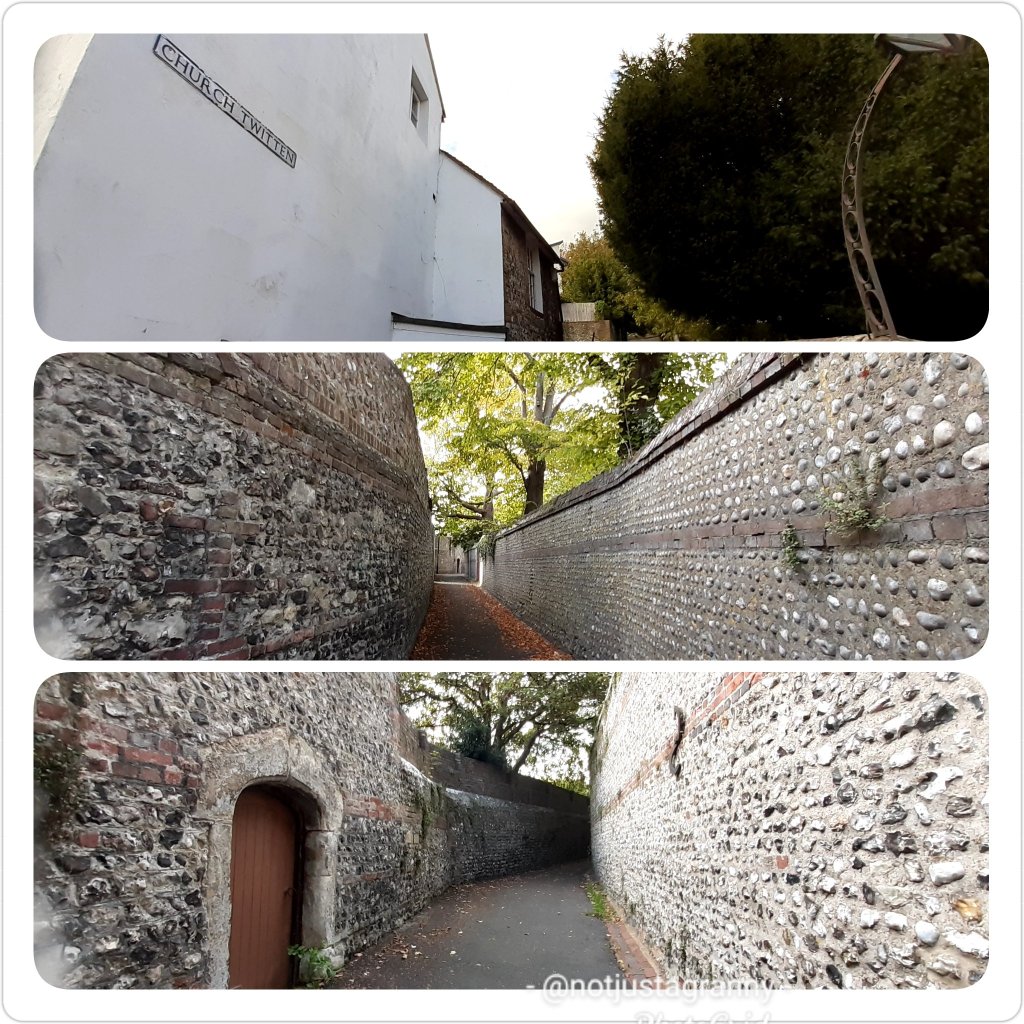
Reading further my curiosity about the ‘twittens’ was piqued. I’d noticed that some of the South side lanes had names like Church Twitten and I was intrigued. I’d never come across the word ‘twitten’ before, and I’ve visited dozens of old villages in the last 12 years.
According to wikipedia: the network of alleyways or ‘twittens’ which run north–south on either side of the High Street date back to Anglo-Saxon times. According to the Dictionary of the Sussex dialect and collection of provincialisms in use in the county of Sussex published in Lewes in 1875. “Twitten is a narrow path between two walls or hedges, especially on hills”. Well, how about that. Fascinating, and I learn something new every day. ☺ jm just amazed I’ve never come across the word before….surely twittens are not unique to Lewes!?
Lewes looks absolutely charming and I’m looking forward to exploring more thoroughly over the next 3 weeks.
A few snippets of history:
The Saxons invaded East Sussex in the 5th century.
Founded in the 6th C, the name Lewes is probably derived from a Saxon word, ‘hluews’ which meant slopes or hills.
In the late 9th C King Alfred made a network of fortified settlements across his kingdom called burhs.
Saxon Lewes was also a busy little town with weekly markets. In the 10th C it had 2 mints; it was a place of some importance.
At the time of the Norman Conquest in 1066 Lewes probably had less than 2,000 inhabitants.
The Normans built a castle to guard Lewes and founded the priory (small abbey) of St Pancras in Lewes.
Lewes was listed as a settlement in the 1086 Domesday Book with a recorded population of 127 households, putting it in the largest 20% of recorded settlements, and is listed under 2 owners.
St. Anne’s is a Grade One Listed Norman Church, on the medieval Pilgrim’s route from Winchester to Canterbury and built with pilgrim money.
In 1148 King Stephen granted Lewes a charter.
In the 13th century Franciscan friars arrived in Lewes.
In 1264 the Battle of Lewes was fought between King Henry III and some rebellious barons led by Simon de Montfort.
In 1537 Henry VIII dissolved the Priory. In 1540 Henry gave Anne of Cleves House to his wife after their divorce – however Anne never lived there.
The plague struck in 1538.
During the reign of Catholic Queen Mary (1553-1558), 17 Protestants from Sussex were martyred in Lewes.
The famous radical, Tom Paine, lived in Lewes from 1768 to 1774.













 Not Just a Granny
You must be logged in to post a comment.