Feeds:
Posts
Comments

Archive for the ‘around the UK’ Category

On the eve of my impending journey to my next assignment, this time in Lancashire I decided to write and update on My Camino and the journey so far. You may recall I wrote a post a short while ago about ‘doing’ the Camino my way. Well ‘doing’ it correctly is clearly advisable, so in order to gain some insights I joined two Camino groups on Facebook (I have since joined another). I have gleaned so much by way of interesting and useful hints and tips as well as safety advice that I am beginning to feel a little more ‘prepared’ than I was when I first started to lay my plans. Of course one of the most important aspects of walking the Camino is being at least relatively fit…a fact attested to by many of the walkers in the group. Feet appear to be the worst hit!

camino 2016; the journey so far

My Camino; the journey so far

One evening in May this year, my daughter and I took a walk from Broadstairs to Joss Bay; something we do quite frequently…go for long walks, that is. When we got back home, I suddenly realised that this is what I could do as part of my training.

We often walk to Ramsgate and since I walk a lot anyway this seemed an ideal way to up my distances and improve my fitness…..in order to keep track of my progress, I downloaded a fantastic little app called MapMyWalk that tells me how far I’ve walked each day, how long it’s taken me and what my pace is per km…I immediately started using it…..this is my journey so far! The app gives you a lot more info but those are the 3 items I’m most interested in.

Since starting these walks, I’ve learned quite a lot about myself.

1. I am far more durable than I though. A bit like the Energizer bunny I just…

my camino; the journey so far

…keep going

2. I’m way more resilient than I thought. 319.11 km’s walked so far

3. I can endure walking in the rain!!! LOL

my camino; the journey so far

not too much singing going on…but I did walk in the rain LOL


4. I can walk wayyyy further than I have since I was in my 20’s. Sandwich 28.54 kms

and

5. I’ve confirmed that I really do enjoy my own company.

my camino; the journey so far

not a soul in sight…

Just walking, not responsible for anyone except yourself, gives you a sense of freedom. I’ve always enjoyed my own company and seldom get lonely. But walking on your own for 185 miles through a foreign country is a far cry from holing up at home with a good book, or spending a week away on my own, so we shall see. I do believe however that the route/s always has people walking or residents of the hamlets and towns along the way…so if I need company, I’m sure I’ll find it.

I haven’t had any of the lightning-bolt epiphanies that people say they experience when walk long distances on their own, but I have learned that in my 60’s I am still very much happy to walk and walk and walk, and talk to myself. I call it ‘doing a Forrest Gump!! I have some very interesting conversations. I also tend to rant a lot, which wouldn’t surprise my daughter in the least! LOL

I can’t share any spiritual or emotional insights so far, but that may well still happen when I do walk the actual Camino…..in the meantime this is my physical journey. The one day that impressed me the most was the day I walked to Sandwich!

Day 1 : 19/05/2016 Broadstairs to Joss Bay – I’m not sure how far I walked this day as it was pre mapmywalk, but its been really interesting since then to see my stats.

my camino so far

Day 1. 19.05.2016 the day it all started

Although I haven’t walked on consecutive days, I have walked whenever opportunity arose

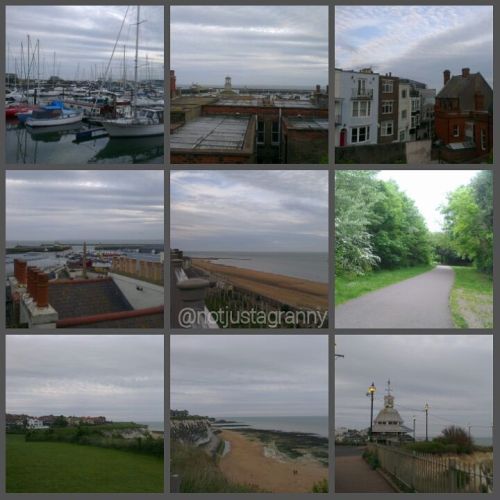
Day 2 : 22/05/16 : Broadstairs to Royal Esplanade Ramsgate and back : Walked 12.38 km  -2 hours 59 minutes
my camino; the journey so far

Day 2. 22.05.2016 Ramsgate Royal Esplanade

By day three I was really keen to stretch myself a little bit so undertook a marathon:

Day 3 : 23/05/16 Broadstairs to Margate and back : Walked 17.94 km – 4 hours 5 minutes

my camino; the journey so far

Day 3. 23.05.2016 Margate

As you can imagine after that walk!!!! I needed to rest for a day LOL  Then it was off to London for work and a new environment in which to stretch my legs 🙂

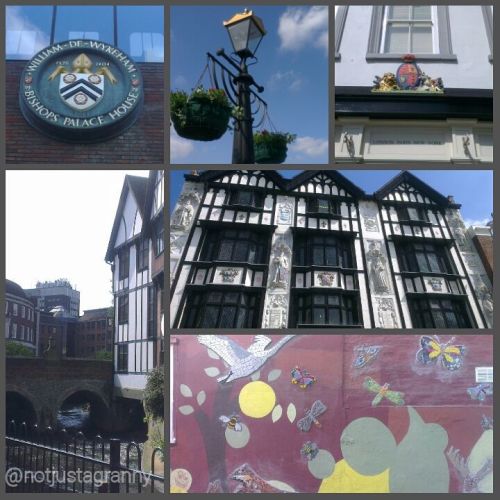
Day 4 : 26/05/16 Thames Ditton to Kingston and back : Walked 7.37 km – 1 hour 32 minutes
my camino; the journey so far

Day 4. 26.05.2016 Kingston

Day 5 : 27/05/16 Thames Ditton to East Moseley and back : Walked 6.73 km – 1 hour 19 minutes

my camino; the journey so far

Day 5. 27.05.2016 East Moseley

Day 6 : 28/05/16 Thames Ditton; circular walk : Walked 2.24 km – 25 minutes

Day 6 : 28/05/16 Thames Ditton to Canbury Gardens, Kingston Upon Thames : Walked 7.64 km – 1 hour 33 minutes
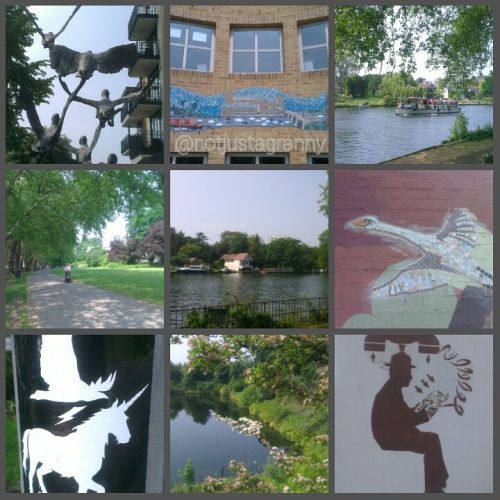
my camino; the journey so far

Day 6. 28.05.2016 Canbury Gardens

Working so near to Hampton Court Palace was tantalising so I asked for an extended break

Day 7 : 29/05/16 Thames Ditton to Kingston then to Hampton Court Palace and back : Walked 11.59 km – 2 hours 42 minutes

my camino; the journey so far

Day 7. 29.05.2016 Hampton Court Palace

On the 31st May my gear arrived!!! 🙂 I was so excited to be unpacking just some of the items I would need so I could start trying them out. However, with testing various items in the meanwhile, I have in fact discovered that there is much I actually wouldn’t need
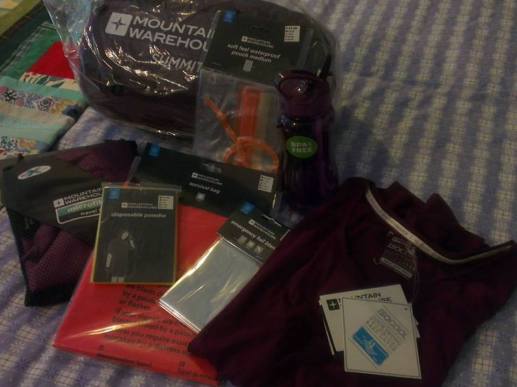
my camino; the journey so far

Clearly I am a fan of Mountain Warehouse 🙂

While working, my breaks are usually two hours and I found I could easily fit in a walk to Kingston and back. Although it was very hot over that period, which I found most unpleasant, I really enjoyed the walks; such a lovely part of the river.

Day 8 : 31/05/16 Thames Ditton to Kingston Upon Thames, Canbury Gardens and back : Walked 8.19 km – 1 hour 43 minutes

Day 9 : 01/06/16 Thames Ditton to Kingston Upon Thames, Canbury Gardens and back : Walked 7.81 km – 1 hour 45 minutes

Day 10 : 02/06/16 Thames Ditton; circular walk : Walked 3.93 km – 48 minutes

Day 11 : 03/06/16 Thames Ditton to Kingston Upon Thames and back : Walked 8.38 km – 1 hour 44 minutes
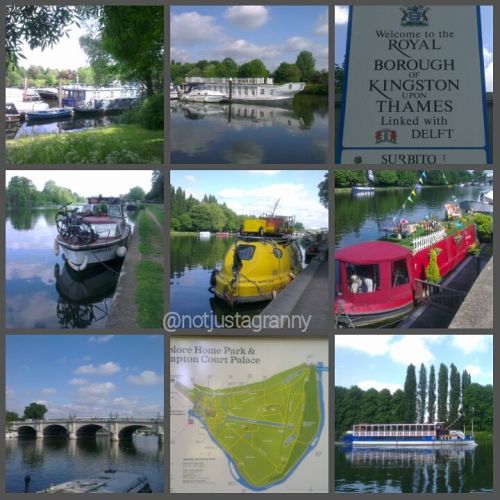
my camino; the journey so far

Scenes from my Thames Ditton to Kingston walks

Day 12 : 04/06/16 Thames Ditton circular walk : Walked 3.43 km – 46 minutes

my camino; the journey so far

Day 12. 04.06.2016 Thames Ditton circular walk – stopping to smell the roses

I was keen to make a 2nd attempt at a walk along the Thames riverbank to Hampton Court Palace, so one day I took myself off. I love the palace so it was a treat to visit, albeit briefly.

Day 13 : 05/06/16 Thames Ditton to Kingston Upon Thames then to Hampton Court Palace and back : Walked 10.90 km – 2 hours 53 minutes
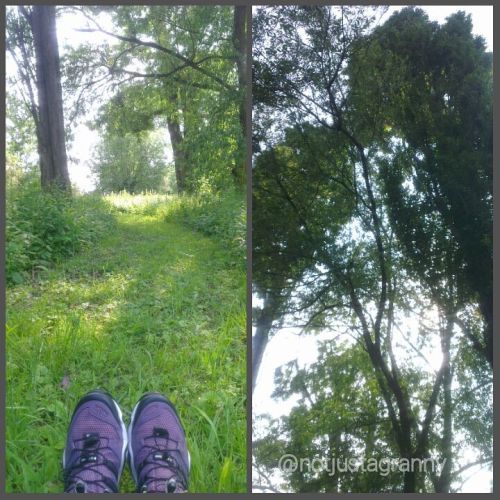
my camino; the journey so far

Day 13. 05.06.2016 Hampton Court – it was very hot this day..I rested in some shade

Day 14 : 06/06/16 Thames Ditton to Kingston Upon Thames, Canbury Gardens and back : Walked 8.72 km – 1 hour 56 minutes

my camino; the journey so far

Friends – I’m sure I will make new friends on the Camino in time

Once I got home to Broadstairs after that assignment, I got right back into walking to Ramsgate and back, which I find is a good stretch without being too exerting.

Day 15 : 08/06/16 Broadstairs to Ramsgate and back : Walked 7.43 km – 1 hour 24 minutes

my camino; the journey so far

Day 15. 08.06.2016 Ramsgate

I was keen to see if I could manage another walk to Margate and to my surprise found it much easier the 2nd time….I even walked right around the bay….When I left home it was overcast and gloomy, by the time I reached Margate it was a most glorious day…I do love living at the seaside.
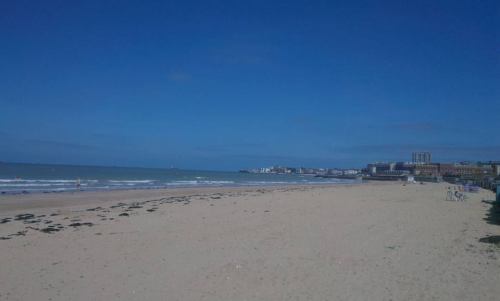
my camino; the journey so far

Day 16. 09.06.2016 the other side of Margate Bay

Day 16 : 09/06/16 Broadstairs to St Peters Village to Margate and back : Walked 23.59 km – 6 hours 23 minutes

my camino; the journey so far

Day 16. 09.06.2016 via St Peters to Margate

Day 17 : 10/06/16 Broadstairs to Ramsgate and back : Walked 9.42 km – 2 hours 33 minutes
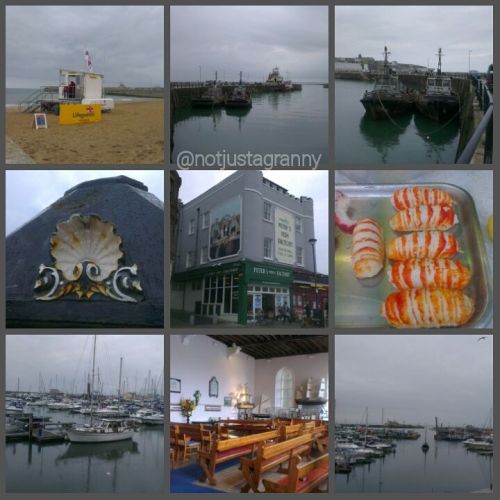
my camino; the journey so far

Day 17. 10.06.2016 Ramsgate

All too soon I was off to my next assignment at Bexhill on Sea, and having worked in the area before, I knew it would offer great walking opportunities…and so it did. The East Sussex Coast is beautiful; very flat with pebble beaches, great for walking although I didn’t do much walking on the beach – it’s really hard to walk on pebbles.

my camino; the journey so far

Bexhill on Sea

Day 18 : 12/06/16 Bexhill on Sea to Cooden Beach and back : Walked 5.71 km – 1 hour 36 minutes
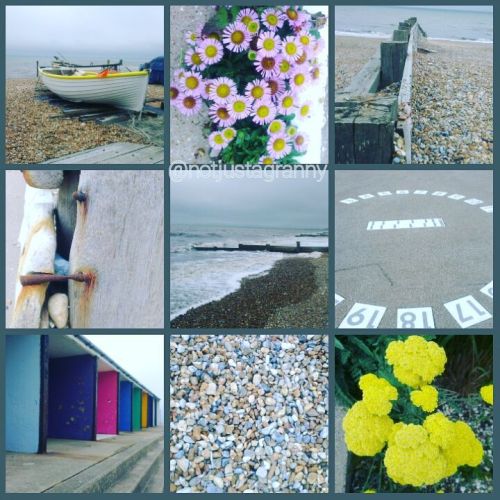
my camino; the journey so far

Day 18. 12.06.2016 Bexhill on Sea

Day 19 : 13/06/16 Bexhill on Sea to Hastings Road and back : Walked 7.03 km – 1 hour 42 minutes

my camino; the journey so far

Day 19. 13.06.2016 Bexhill on Sea

Day 20 : 15/06/16 Bexhill on Sea to Hastings Road and back : Walked 7.70 km – 1 hour 42 minutes

my camino; the journey so far

Day 20. Bexhill on Sea

Day 21 : 16/06/16 Bexhill on Sea to Hastings Road and back : Walked 7.47 km – 1 hour 53 minutes

my camino; the journey so far

Day 21. 16.06.2016 Bexhill on Sea

Day 22 : 17/06/16 Bexhill on Sea circular walk : Walked 4.90 km – 1 hour 14 minutes

my camino; the journey so far

Day 22. 17.06.2016 Bexhill on Seas

After quite a few decent walks I was dead keen to try a walk to Hastings and back. If I came unstuck I could always take the train back LOL. And so the next day, having arranged some extra time for my break, I set off for Hastings. What a marvellous walk. Truly beautiful and I so enjoyed the time alone with the sea breezes gently blowing off the sea. I felt that this is what it would be like on the route from Porto to Caminha which is where I would head inland to Valenca and then crossing the Minho river into Spain near Tui.

Day 23 : 18/06/16 Bexhill on Sea to Hastings and back : Walked 17.36 km – 3 hours 30 minutes ( I really enjoyed this walk).

my camino; the journey so far

Day 23. 18.06.2016 Bexhill on Sea to Hastings

Although I didn’t make it all the way into Hastings itself, I did get as far as the Pier which was superb…it stretched quite far out into the sea and offers fantastic views looking back.
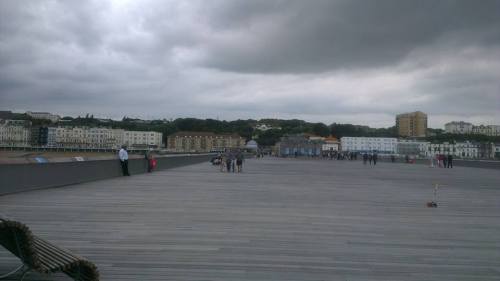
my camino; the journey so far

Day 23. 18.06.2016 From Bexhill on Sea to Hastings Pier

Day 24 : 20/06/16 Bexhill on Sea to Hastings Road and back : Walked 6.65 km – 1 hour 37 minutes

Day 25 : 21/06/16 Bexhill on Sea circular walk : Walked 4.58 km – 1 hour 33 minutes

Day 26 : 22/06/16 Bexhill on Sea to Hastings Road and back : Walked 8.35 km – 1 hour 42 minutes

Day 27 : 23/06/16 Bexhill on Sea to Hastings Road and back : Walked 8.84 km – 1 hour 52 minutes

my camino; the journey so far

Days 24-27. Bexhill on Sea

Even though most days I walked much the same route, with a few slight variations, I made the most of my breaks to keep my fitness levels up. I had all sorts of weather to contend with; blazing heat with the sun baking down, windy blasts from across the channel and rain…..rain that soaked me to the skin, at which time I discovered that in fact my shoes were not waterproof hahaha. One day I got so wet my shoes squelched.

After two weeks it was back home; once again to enjoy my lovely long walks along the Kent coast.

Day 28 : 25/06/16 Broadstairs to Ramsgate and back : Walked 8.90 km – 2 hours 16 minutes

my camino; the journey so far

Day 28. 25.06.2016 Ramsgate – I stopped frequently on this walk to take a photos

Day 29 : 27/06/16 Broadstairs to Dumpton Gap and back : Walked 4.36 km – 1 hour 6 minutes

my camino; the journey so far

Day 29. 27.06.2016 Dumpton Gap

By this stage I had spent a considerable amount of time planning my Camino and having decided to walk along the Portuguese Coastal Route, using google maps I calculated the various distances starting from Porto through to Santiago. On the whole the routes were averaging about 14-18 kms, which after all my practice walks I knew I could easily manage, but on some days I would need to walk up to almost 30 kms, so I was keen to see if I could walk that far and thus planned a walk along the Kent coast from Broadstairs to Sandwich….. 🙂 Would I make it?

Day 30 : 28/06/16 Broadstairs to Sandwich (train back home) – you didn’t expect me to walk home?? after I’d already : Walked 28.54 km – 7 hours 2 minutes

my camino; the journey so far

Day 30. 28.06.2016 Sandwich

The walk to Sandwich was amazing. I discovered a path that led right along the top of the cliffs and so, after passing through Ramsgate, I walked via a twisting route to Cliffsend and then onto Pegwell Bay National Nature Reserve and finally to Sandwich, by which time I was exhausted and famished. But the views were just stunning and well worth the pain.

my camino; the journey so far

Day 30. 28.06.2016 views across Pegwell Bay

As part of the Camino test, I wanted to be sure that I could indeed walk two long days on the trot (no pun intended!!) ….so next day, with aching feet and legs and a back that wasn’t happy with the backpack, I set off once again to Sandwich….I nearly made it 🙂
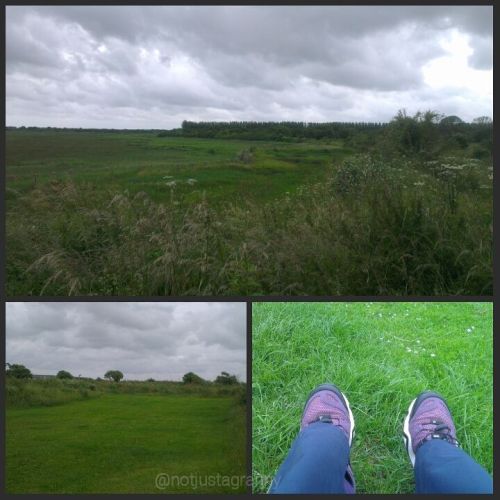
my camino; the journey so far

Day 31. 29.06.2016 taking a lunch break in Pegwell Bay Nature Reserve

I did stop at the very edge of the nature reserve and then walked back….so…..

Day 31 : 29/06/16 Broadstairs to Pegwell Country Bay and back                                           Walked 21.84 km – 5 hours 33 minutes
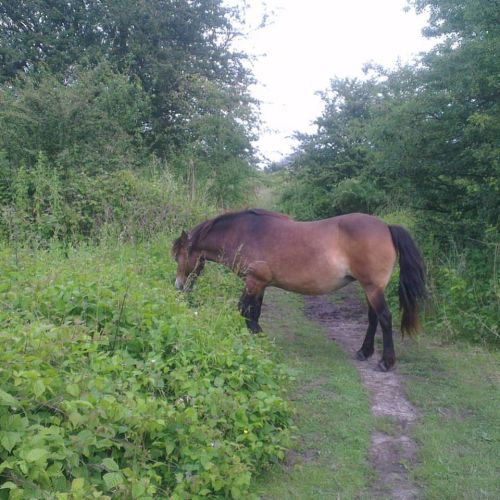
my camino; the journey so far

Day 31. 29.06.2016 Pegwell Bay Nature Reserve

Although I didn’t get as far as the town, I did have to walk back again as there were no trains nearby! hahahaha. But it was a fantastic day, well spent.

Day 32 : 30/06/16 Broadstairs to Botany Bay and back : Walked 7.90 km – 2 hours
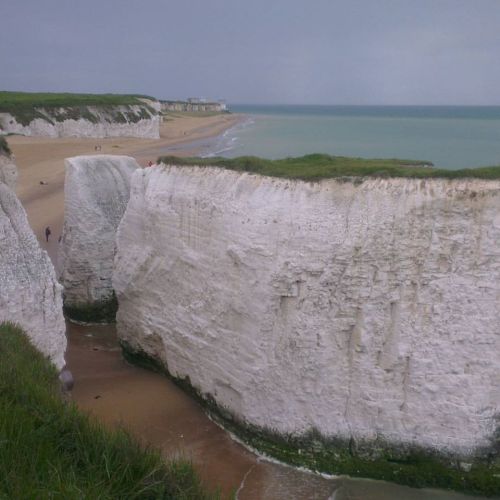
my camino; the journey so far

Day 32. 30.06.2016 The Stacks

with a 2nd walk in the evening from Broadstairs to Dumpton Gap and back, I walked another 3.54 km – 56 minutes

And then life got in the way……I had recently been to South Africa to sort out my belongings and ship them over to the UK. All went well and I got everything packed up and shipped over…..and then came the surprise…..UK Customs and Excise….even though the shipment was of no great value, my posessions were in excess of 15 to 45 years and older, and for my own personal use….I still had to pay Customs Duty on the goods. Urgh!! and so endeth my Camino 2016, which will now have to be Camino 2017 LOL or not!!

The shock of this news kind of threw me off stride (no pun intended). The cost of the duty pretty much absorbed my travel money and I didn’t want to dip into my savings. Besides that I had just started my next assignment, and due to the nature of the position I was unable to leave the house for any length of time unless there was another person there.  So except for one day (see below) that took care of that; no more  Camino 2016 practice walks.

Day 33 : 24/07/16 : Oveny Green to Chevening and back : Walked 7.75 km – 2 hours 4 minutes

my camino; the journey so far

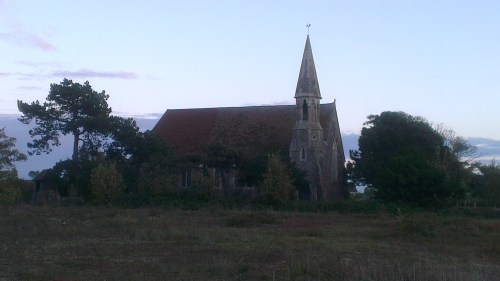
Day 33. 24.07.2016 Chevening Church

I so enjoyed being able to stretch my legs again after 3 weeks and thoroughly enjoyed the excursion. I got a little unwell while I was at this assignment and for no discernible reason I still find myself quite without any energy.

Since then I have barely walked any distances at all, except if you count my 3 day visit to London 2-4th September for the Fire! Fire! London’s Burning 350th anniversary events when, as usual, I walked my feet off (but forgot to switch on the app – duh!!).
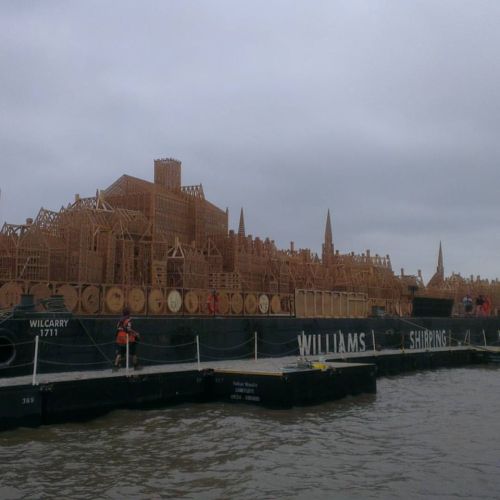
the great fire of london 1666

the City of London in wood…due to be burned on 4th September for Great Fire 350 event

It’s now mid November and I still find myself very low on energy, so my longs walks have ceased for now.

My plans for Camino 2017 are going ahead. For that walk I have decided to walk the English Way from Ferrol to Santiago. I haven’t yet decided on the precise dates, but suffice to say, I must get myself walking again.

my camino; the journey so far

…follow that shell. I saw these Pilgrim Shells in Brussels recently and loved how they lead you to different pilgrim’s churches in the city

We went to Canterbury in August where we visited the East Bridge hospital dating from 1190. It’s an intriguing place, very old with notable Gothic archways and a 13th-century mural. Once a place for pilgrims to stay; a hospitallier….the word hospital derives from this, no ill people were treated there, it was more a place to stay…like a hostel.

my camino; the journey so far

Eastbridge Hospital on the right; Religious hospital dating from 1190 with notable Gothic archways and a 13th-century mural.

Canterbury is one of the most notable pilgrim destinations and you may recall the Geoffrey Chaucer famously travelled there; his Canterbury Tales.

So not only am I planning on walking the Camino, I am also following in the footsteps of Chaucer…albeit a lot slower than he did!! LOL

This is my Canterbury Tale so far : My Canterbury Tales

The history of the Camino de Santiago goes back at the beginning of the 9th century (year 814).

I recently stumbled upon this site about getting walking fit for the Camino 
Read Full Post »

Since moving to Broadstairs, and as part of my ongoing venture; in the footsteps of Geoffrey Chaucer and my Canterbury tales, I have wanted to visit Gravesend. Last week I had the opportunity.
From what I have seen of Chaucer’s apparent route, although he did stop at Dartford, he didn’t stop at Gravesend, but it was close enough for me…..

Although recorded as Graveham in the Domesday Book of 1086, its earliest known historical record, its name probably derives from “graaf-ham”: the home of the reeve or bailiff of the lord of the manor.
A variation, Graveshend, can be seen in a court record of 1422, attributed to where the graves ended after the Black Death.

where the gravesend

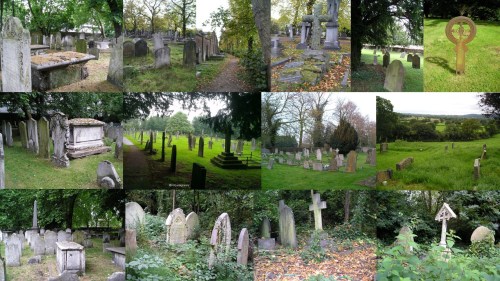
…..where the graves end. Cemeteries I have visited around the UK

An ancient town in n-w Kent, Gravesend has a strategic position on the Thames and as such has played an important role in the maritime history of the country and London.
Besides the more modern aspects of its history, stone-age implements have been found in the area, there is evidence of an Iron Age settlement, and extensive Roman remains have been found. Gravesend lies just north of the old Roman road, now called Watling Street that connected London with the Kent coast. The Domesday Book recorded fisheries, hythes and mills in the area.
I usually do some research before visiting a new place, to see what’s of interest in the area. Sometimes I might actually try to determine the location of such places, but mostly I just head in and around and stumble upon the treasures quite by accident. However there was once place I definitely wanted to see: Milton Chantry, one of the oldest remaining buildings in Gravesend. On my meanderings I inadvertently managed to visit quite a few famous sites.
I left the station and headed along Stone Street and into Princes Street towards the river front and on the way I happened upon the Parish Church of St George and the statue of Pocahontas.

where the graves end gravesend

Princess Pocahontas died at Gravesend in 1617

Princess Pocahontas – In 1616, after being presented to English society at the Court of St James as an example of the “civilized savage”, she became something of a celebrity, was elegantly fêted, and attended a masque at Whitehall Palace. In 1617, she and her husband John Rolfe and son Thomas set sail from London headed for Virginia USA. She became ill on the way and died at Gravesend of unknown causes. Buried in the Parish church of St George in Gravesend, the original location of her grave was under the church’s chancel. Since that church burnt down in 1727 the exact location of her grave is now unknown. As part of my exploration this was my first ‘port of call’ 😉
This statue was presented to the British people in 1958 by the Governor of Virginia as a gift; a gesture prompted by Queen Elizabeth’s visit to the USA in 1957.

Delighted to have discovered this, I continued on my way towards the river. Just past The Rum Puncheon pub I followed a narrow lane that opened up to the river! Just across from me was a huge tanker offloading at Tilbury. Wow.

where the graves end gravesend

view across the River Thames from Gravesend to Tilbury

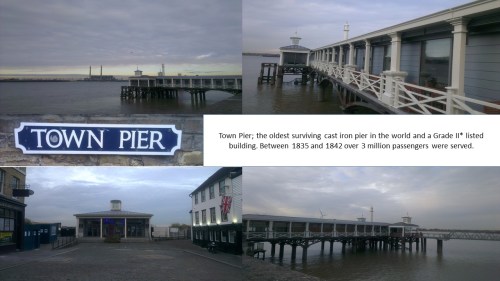
I stopped to find out more about the Gravesend Ferries and then continued on my way towards the Town Pier; the oldest surviving cast iron pier in the world and a Grade II* listed building. Between 1835 and 1842 over 3 million passengers were served. Around 1900, the pier fell into disuse and in 2000 the site was restored with funding from various organisations. It’s a beautiful structure and quite photogenic.

where the graves end, gravesend

Gravesend – Town Pier

Located right next door on Town Pier Square is the oldest pub in Gravesend; The Three Daws, an historic riverside inn dating back to the early 1500’s it is steeped with tales of hauntings, smugglers and Press Gangs. Converted from 5 traditional styled wood fronted cottages, the general structure is older than its history as a Thames tavern. Opened in 1565 during Elizabeth I’s reign, it was originally named as ‘Three Cornish Chough’s and renamed The Three Daws in 1745, large sailing merchant ships used to anchor off on returning from long overseas voyages or while awaiting supplies and a fair wind.
Located at the foot of the old High Street and the river edge, this pub has for centuries been the haunt of smugglers and raided by the old naval press gangs.

where the graves end, gravesend

The Three Daws, Gravesend

One of the oldest taverns in the country, it’s older than Shakespeare’s house, older than many well-known ancient buildings, The Three Daws is almost 450 years old.
Obviously I had to step in and inspect this ancient site. Unfortunately I didn’t see any ghosts 😉

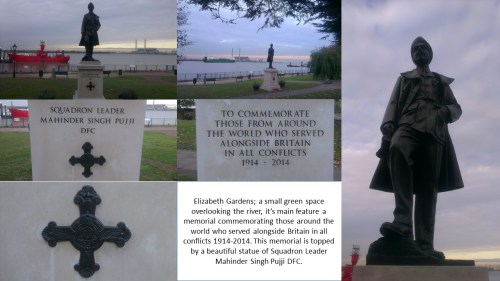
From there I continued along the walkway along the riverside where I came to the Elizabeth Gardens; a small green space overlooking the river, it’s main feature a memorial commemorating those around the world who served alongside Britain in all conflicts 1914-2014. This memorial is topped by a beautiful statue of Squadron Leader Mahinder Singh Pujji DFC.

where the graves end, gravesend

Elizabeth Garden – Mahinder Singh Pujji DFC

Continuing on my way I walked along Royal Pier Road where I found what looked like a church. It is the St Andrews Art Centre and Gallery alongside The Mission House, a rather fine Georgian building.

where the gravesend, gravesend

scenes of Gravesend’s history

I was ambling along having just photographed a row of ships anchors when I happened to look over the wall and saw the remains of the Gravesend Blockhouse; a Tudor Fort: built in 1543 by command of Henry VIII on the river front. Just wow. I didn’t know about that!

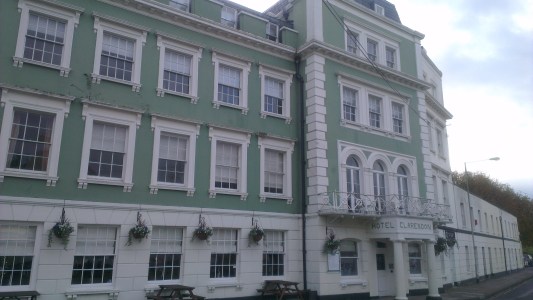
Just along the road, overlooking the river is the rather fine looking The Clarendon Royal Hotel. The main building dates from 1665, originally built as a residence when the Duke of York, later James II was appointed to the post of the Lord High Admiral.

where the gravesend, gravesend

Royal Clarendon Hotel, Gravesend

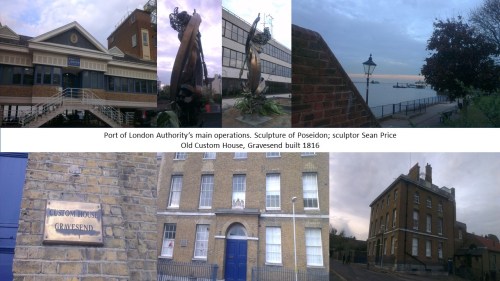
I continued on my way and came upon the Royal Terrace Pier. Built in 1844, the prefix ‘Royal’ was added in honour of Princess Alexandra of Denmark who landed at Gravesend on her way to marry Edward, Prince of Wales, who later became King Edward VIII. Now part of the Port of London Authority’s main operations, public access is limited but I did get to see the rather marvellous sculpture of Poseidon; sculptor Sean Price, that stands out front.

where the graves end, gravesend

Port of London Authority and Custom House Gravesend

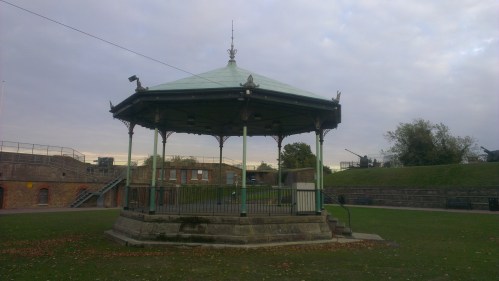
I then headed up Royal Pier Road towards The Terrace and turning left, on my way I passed the Old Customs House and right next door saw what I thought was a park…..I had in fact stumbled quite by accident, upon the New Tavern Fort and Milton Chantry.

where the graves end, gravesend

Bandstand in New Tavern Fort

Milton Chantry, built c1320. Re-founded as a chapel in 1320/21 on what was the site of a former leper hospital founded in 1189. I had heard about this being the oldest building in Gravesend and had added it to my list of things to see in Gravesend but when I asked where it was, I just got a shake of the head…..then as I neared the New Tavern Fort voila, there it was.

Milton Chantry, Gravesend

Milton Chantry, Gravesend

Built circa 1320 it is now mainly encased in a 19th century exterior, but still has its 14th century timber roof. Unfortunately it was all closed up so I couldn’t go in. http://www.english-heritage.org.uk/visit/places/milton-chantry/
New Tavern Fort: wow, right up my alley so to speak.

New Tavern Fort, Gravesend

New Tavern Fort, Gravesend

This fantastic site, part of a military presence established in the town in 1862, sported any number of awesome and fearsome looking guns pointing out over the river. Gravesend is/was located in a very strategic position on the River Thames and as such has come under attack any number of times. I had a most enjoyable time clambering about and viewing the different guns, from different ages.

New Tavern Fort, Gravesend

New Tavern Fort, Gravesend

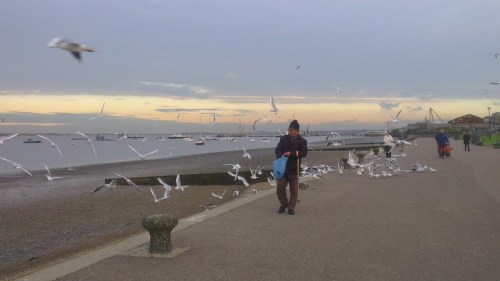
Afterwards and in the waning light, despite the freezing cold I strolled along the promenade enjoying the scenes of the river, the sunset colours on the horizon and watching an old man feeding the seagulls that shrieked, fought and squawked over the food he was offering.

where the graves end, gravesend

Promenade, Gravesend

Making my way back to the town centre I visited the famous clock tower; Gravesend Clock Tower – okay this was easy to find, but to my dismay it was covered with scaffolding…..which is of course a good thing since that means it is being preserved, but obviously I couldn’t get a decent photo of it, so I’ve borrowed one off Wikipedia. The clock tower, dedicated to Queen Victoria to commemorate the 50th year of her reign, was erected by public subscription and the foundation stone laid on 6 September 1887.
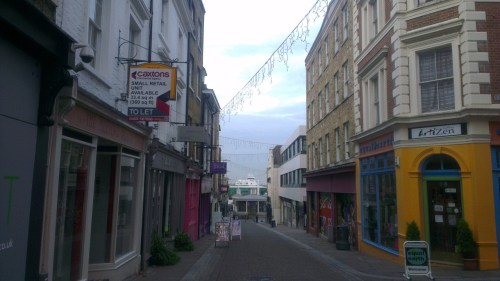
From there I made my way back along Milton Road to King Street and then to the High Street to see the Heritage Quarter.

where the graves end, gravesend

Clock Tower at Gravesend and various scenes around town

Gravesend has one of the oldest surviving markets in the country; the earliest charter granted by Henry III, dates from 1268. Gravesend was sacked and burned by the Castilian fleet in 1380, and in 1401 a Royal Charter was granted that allowed the men of the town to operate boats between the town and London; the Long Ferry became the preferred form of passage….travel by road between London and Gravesend was perilous due to highwaymen.

Gravesend Heritage Quarter

Gravesend Heritage Quarter

In 1840 there were 17 coaches per day setting down and picking up passengers travelling between London, Canterbury, Dover and Faversham.

As I was walking down the High Street and photographing the buildings, I saw to my utter amazement the quite surrealistic sight of a huge tanker sailing past!!! As you can well imagine I ran down to the riverside to see this amazing sight.

Gravesend Heritage Quarter

a tanker sails by at the end of High Street..quite surrealistic

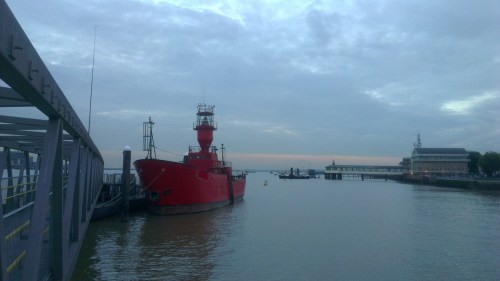
Of course it was well on its way by the time I got there, so instead I ambled along the pier to take a more close up pic of the gorgeous red boat moored alongside and then since I was there I popped into The Three Daws again…just in case I might see a ghost….

Gravesend and the River Thames

Gravesend and the River Thames

Talking of ghosts, as well as the link to Princess Pocahontas, Gravesend can boast links to a number of famous and well-known persons in its turbulent history. Although I didn’t get to visit any other sites with links to famous people, there are a number of names you would probably recognise:
Samuel Pepys – records having stopped off at Gravesend in 1650 en-route to the Royal Dockyards at Chatham.
Charles Dickens – found inspiration for the Pickwick Papers here, and lived at Cobham. In David Copperfield Mr. Peggotty, Ham and the Micawbers say their goodbyes and sail away from Gravesend to begin a new life in Australia.
Sir Edwin Arnold (1832–1904), English poet and journalist, whose most prominent work as a poet was The Light of Asia (1879)
Major-General Charles Gordon (1833–1885), lived in the town during the construction of the Thames forts…although I did get to visit the forts I don’t know where he lived.
I was delighted to discover that Gravesend is twinned with four foreign towns:
flag_of_france-svg Cambrai, France
flag_of_the_united_states-svg Chesterfield, Virginia, United States
125px-flag_of_germany-svgNeumünster, Germany
flag_of_australia_converted-svgBrunswick, Victoria, Australia

Finally I conceded that it was now too dark to explore any further and certainly too dark for photos so I made my way to the station. But first a drink to warm me up. I popped in at Costa for a hot chocolate to go. The contrast between outdoors and indoors was so marked that my glasses misted up LOL

Gravesend and the River Thames

Gravesend

And so goodbye to Gravesend. I’ll probably visit again in the summer. I love the Thames and there are areas further downstream that I’d like to explore.

Read Full Post »

I have just been watching the Remembrance Sunday commemorations on BBC1, a highly emotional experience, especially as I watch our Queen and her Consort, who is now ageing quite fast. I find the march-past of the veterans to be of special poignancy, knowing that they have fought for the freedom of the country.

remembrance sunday, remember, armistice day, war memorials in london

Remember

I’ve said this before, one of the things I really, truly love about this country are the traditions. I love that they commemorate significant events in the history of the country and the world. I have attended as many as I possibly can over the last 15 years and have attended Remembrance Sunday at the Cenotaph at least 3 times (my memory fails me as to whether I’ve been more often). Like Trooping the Colour it is one of the events on the annual calendar that I feel compelled to attend…from a sense of gratitude, thanksgiving, of obligation, of community, of being a citizen of the country.

Remembrance Sunday is a time for families who have lost loved ones in conflicts to come together to honour and remember them, for the veterans to receive thanks and pay tribute to those that knew who died in those conflicts. A time of national remembrance.

My daughter and I agree to disagree on whether there is any point in remembering these past events. Her thoughts are that war is pointless, that people go into the army through choice (especially these days) and that remembering these wars just keeps perpetuating the aspect of wars.

My thoughts are that these people have died in service to their country, they’ve fought to keep our country safe. They’ve left loved ones behind and died in foreign lands in order that I may live in a country that is relatively free.

But, I have to agree with her on the pointless act of war.

Crimean War 1853-1856  : number of dead 213,147 – 293,447. The immediate chain of events leading to France and Britain declaring war on Russia on 27 and 28 March 1854 came from the ambition of the French emperor Napoleon III to restore the grandeur of France….ego.

WW1 1914-1918 : 17 million dead 20 million wounded. The explosive that was World War One had been long in the stockpiling; the spark was the assassination of Archduke Franz Ferdinand, heir to the Austro-Hungarian throne, in Sarajevo on 28 June 1914. Ferdinand’s death at the hands of the Black Hand, a Serbian nationalist secret society, set in train a mindlessly mechanical series of events that culminated in the world’s first global war….ego

WW2 1939-1945 : over 60 million killed or 61 million on the Allied side and 11 million on the Axis side. The Treaty of Versailles may have set the scene, but WW2’s main progenitor was one man: Adolf Hitler. Most historians of the causes of World War 2 agree that its seeds were sown at the end of World War 1…ego.

Since the apparent end of WW2 we have had:

1945 and ongoing : Korean conflict
1945-1946 War in Vietnam
1945-1946 Iran crisis
1946-1945 Indochina wars
1946-1949 Greek civil war
another 12 wars/conflicts around the world and then
1948-1949 Arab – Israeli war
another 12 wars/conflicts around the world and then
1950-1953 Korean war
9 wars/conflicts around the world and then
1955-1975 Vietnam war
26 wars/conflicts around the world and then
1961-1975 Angolan War of Independence
14 wars/conflicts around the world and then
1964-1975 Rhodesian Bush War
1964-1992 FULRO insurgency against Vietnam
1964-2016 Colombian conflict
1964-1974 Mozambican War of Independence
10 wars/conflicts around the word and then
1966-1989 South African Border War
9 wars/conflicts around the world and then
1968-1998 The Troubles
17 wars/conflicts around the world and the
1973 Yom Kippur War
35 wars/conflicts around the world and then
1979-1989 Soviet war in Afghanistan
3 wars and conflicts around the world
1980-1988 Iran – Iraq war
6 wars/conflicts around the world and
1982 Falklands war
27 wars/conflicts around the world
And all of these are just between 1945 – 1989 some are still ongoing.
1990-2002 : 65 wars and conflicts, some ongoing
2003-2010 : 39 wars, conflicts and insurgencies

My source for these wars was wikipedia. But if you really want to see the reality of our world at war since 1900, why not scare the shit out yourselves and have a look at this:

All wars in the 20th century I haven’t counted then all, it’s too depressing. According to the site I’ve hyperlinked it is impossible to be sure but at best guess:

Total deaths: 79,284,507 I’d say that’s probably an under-estimated figure.

Number of wars per country is an eye-opener, but what’s really sad is UK 30 & US 24. The only country with a figure higher than that is China with 34. It’s worth having a look…please also do read his comments on the criteria for the figures compiled.

Today, as for centuries past, our main wars are fought because of ego, religion and money…..oil and wealth; vested interests. Countries still go to war to claim land, to kill those they do not agree with and to protect their vested interests. Ego and money is what drives the world.


People have been marching for peace for decades and yet we are no nearer to not having wars than we were nearly 100 years ago. There have been countless wars around the world since the end of the First World War nearly 100 years ago: the war to end all wars.

remembrance sunday, armistice day

Harry Patch – veteran of World War 1

Well it didn’t end all wars, we are and have been fighting wars constantly and continuously ever since. We may not be publicly involved in all of these wars, but you can be absolutely sure that we have ‘boots on the ground’ in one way or another; vested interests. So 100 years on, is there any point?

Why do we have Remembrance Sunday when the UK is classified as the 2nd largest arms dealer in the world? http://www.independent.co.uk/news/uk/home-news/britain-is-now-the-second-biggest-arms-dealer-in-the-world-a7225351.html  with most of the weapons now fuelling deadly conflicts in the Middle East, conflicts that come back to bite us where it hurts.

It seems a moot point really.

There are fewer peace marches or walks, or anti-war protests than there have been wars.

Are we really marching for peace? or do we march for war. Let’s face it, people make money from wars. There will never be peace on earth. There hasn’t been since time immemorial and there will continue to be wars until the planet implodes or explodes.

Why do we remember?


Read Full Post »

One of the things I love about this country that I adopted as my home, is their tradition of Remembrance. 11 November is woven into the very fabric of the country, her citizens and her traditions.

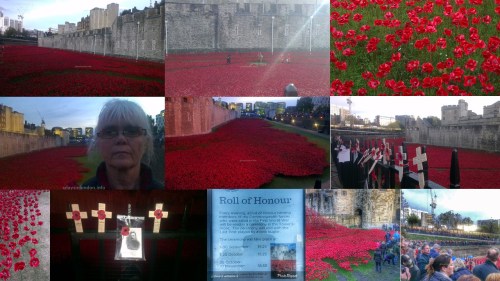
It was my honour and privilege in 2014 to help plant some of the hundreds of thousands of poppies in the moat at the Tower of London…each poppy planted a representation of the lives that were lost during that fateful war. The war towards which young men marched off so bravely to defend their home and country….to fight for the freedoms we enjoy today.

remembrance day tower poppies

Armistice Day – Tower Poppies on 11/11/2014 – We will Remember Them

I was honoured to have the opportunity to attend the event at the Tower of London on 11.11.2014 when the final poppy was planted and the final Roll of Honour was read.

remembrance day tower poppies

We Will Remember Them 11.11.2014 – the very emotional event at the Tower of London

It is fitting and quite right that they should be remembered. I have in the past joined the thousands of people who congregate at the Cenotaph on Whitehall on Remembrance Sunday (the 2nd Sunday of November), a experience to touching and so emotional it’s hard to describe. A time when we remember not only the fallen and those who have since passed on, but also to celebrate those who have fought in more current wars around the globe, who are now fighting a different kind of war….the cheers are deafening.

remembrance sunday

Remembrance Sunday 09.11.2014

As a South African citizen far south of the equator we were vaguely aware of these events, but the clouds of war didn’t hang so heavy over our heads as they did the people who had participated and now lived in SA. I don’t recall ever, especially after we became a Republic, seeing or attending any events related to the two World Wars. My Grandfather used to take my sister and I to the Imperial War Museum in Johannesburg where we clambered over the tanks, planes…my favourite the Spitfire, and various other WW1&2 relics. When I was about 17 he gave me some of his medals (sadly they were since stolen by the natural citizens of SA) and that really was about as much as it touched my life…until I came to the UK.

I know there is some argument for leaving the past in the past, but if we don’t remember the events of the past how can we make sure they don’t happen again in the future.

armistice day remembrance sunday in flanders fields

In Flanders fields the poppies blow…. John McRae May 1915

During the early days of the Second Battle of Ypres a young Canadian artillery officer, Lieutenant Alexis Helmer, was killed on 2nd May, 1915 in the gun positions near Ypres. An exploding German artillery shell landed near him. He was serving in the same Canadian artillery unit as a friend of his, the Canadian military doctor and artillery commander Major John McCrae.
As the brigade doctor, John McCrae was asked to conduct the burial service for Alexis because the chaplain had been called away somewhere else on duty that evening. It is believed that later that evening, after the burial, John began the draft for his now famous poem “In Flanders Fields”.

So, yes I buy my poppy each year, I attend the events at Whitehall when I can and I too Remember them….they deserve to be remembered.

They fought for my freedom.

They fought for our freedom.

At the going down of the sun, we shall remember them

armistice day remembrance sunday we will remember them

11.11.2014 at the going down of the sun…..

Update: 11/11 – I just came across this article and thought it worthy of sharing in remembrance of the lady behind the story of the poppy…it’s so poignant!!

Moina Michael: “The Poppy Lady”

http://www.greatwar.co.uk/article/remembrance-poppy.htm


Read Full Post »

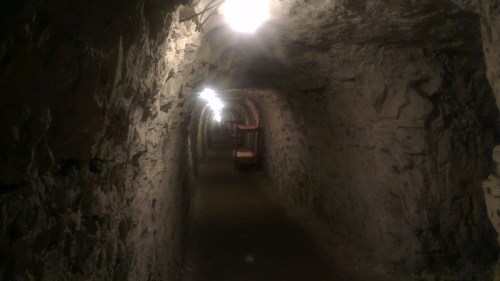
On Sunday 6th November we were treated to a private tour of the famous WW2 Ramsgate Tunnels in Ramsgate!

the ramsgate tunnels

The Ramsgate Tunnels

The tour was conducted by ‘Mr Ramsgate’ the father of my daughter’s boyfriend…..he is apparently the most knowledgeable about the history of the town and has the ‘Freedom of the Town’. Quite cool. It was also ‘meet the parents’ day…she had met them, and he had met me…now it was time to put the two parties together and see how we get on. In all it was a great way to meet, and we all got along really well.

the ramsgate tunnels

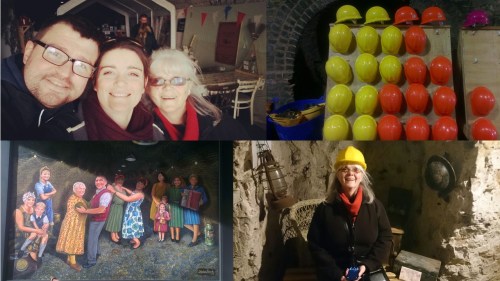
from left to right…Simon, Jean, me and Ralph

The tour was fantastic and before you read further I can say up front that it is a brilliant tour and highly recommended.

IMAG4936 - walk to ramsgate The entrance and the initial part of the tour is located in what was once the original and now defunct Victorian Railway station.
After saying our hellos and introductions done we, so as not to upset the elves who manage safety, put on our helmets and off we went.

the ramsgate tunnels

the three of us at the entrance to the tunnels and me in my hard-hat

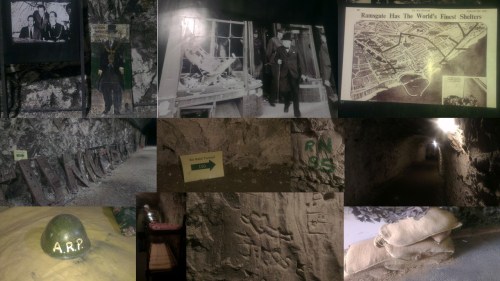
Prior to the clouds of war that descended over Britain and Europe this tunnel was abandoned and unused. The then Mayor of Ramsgate; one Mr A.B.C. Kempe, as a far seeing citizen who foresaw that things were going to get a tad tricky, thought it would be a good idea to build tunnels to protect the residents of his town. The plan was rejected as insane, he went ahead and after 3 years of planning the tunnels were started in March 1939. The first section was completed by 1st June 1939. Miles of tunnels in the chalk cliffs. Many people thought the tunnels were an expensive luxury and would probably never be needed.

the ramsgate tunnels

The Ramsgate Tunnels

When war was declared, Ramsgate was in the front line as the Battle of Britain began and in 1940 the town became the first casualty of the Blitz; on 24 August 1940 the sirens sounded and the citizens of Ramsgate took cover in the deep cover shelters. The town was bombarded with 500 bombs in the space of 5 minutes.

“Then, as the Battle of Britain raged in the skies above, the town gained another claim to fame on August 24, 1940. It was a relatively quiet Saturday lunchtime when the air raid sirens suddenly wheezed in to life. Moments later, Ramsgate became the first place in Britain to experience the full force of the Luftwaffe’s ‘Blitzkrieg’.

In the space of five minutes, a formation of Junkers Ju88 bombers dropped more than 500 bombs in what elderly locals still call ‘the murder raid’.

Even after the bombs were dropped, fighters returned to machine gun any survivors they could find, including the firemen struggling to douse the flaming gasworks.

Fireman Edward Moore would later receive the George Medal from the King for his heroics. More than 1,200 homes were destroyed. American correspondent Hubert Knickerbocker called it ‘the worst raid in history’.

No one is entirely sure why Ramsgate was singled out. One theory is that the Germans were en route to bomb nearby RAF Manston when an armed trawler in the harbour shot down the leading aircraft and the enemy turned on Ramsgate instead.

Yet the civilian death toll amounted to just 29. The tunnels had very quickly proved their worth.”

Then his plan was lauded as heroic.

the ramsgate tunnels

World War 2 – Ramsgate was in the front line during the Blitz of 1940

During the war, the tunnels became home from home for some residents whose homes had been obliterated by bombs and they made themselves comfortable in a space where they could shelter in complete safety. Many took up permanent residence and lived in relative comfort.

the ramsgate tunnels

Home from Home

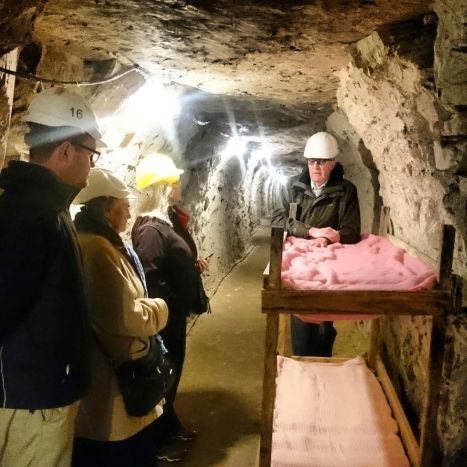
Today you can go on a guided tour through some of the tunnels. The makeshift accommodation set up as it had been during the war. Some people really made themselves at home. The beds that were used for the children are still in-situ.

the ramsgate tunnels

beds line the tunnels…pretty much as it would have been during WW2

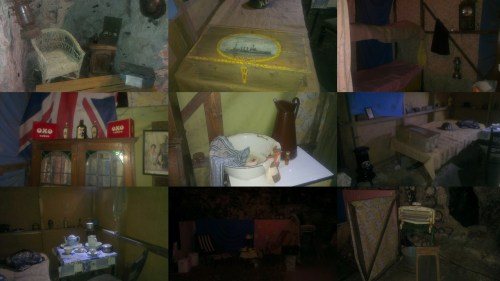
with a wonderful array of artefacts from that era and beyond. It was quite something to learn that most of the artefacts used in the displays belonged to Simon’s grandmother…..(Simon is the daughter’s boyfriend).  My daughter found it quite extraordinary that they have such an amazing and tangible link to their family history.

the ramsgate tunnels

this trunk belonged to a family member

After exploring the tunnels as far we were allowed to go, we went back to the main entrance and viewed an air-raid shelter; these flimsy metal flat-pack shelters that had to be built and installed by the residents in their own back-yards.

the ramsgate tunnels

Imagine how chilling it must have been to hear the air-raid sirens and know that an air-attack was imminent

Besides that there are some amazing props and rusting bits of this and that that have been used as props through out the tunnels.

the ramsgate tunnels

some wonderful props make the area most interesting

Not sure what era this fellow is from but he sure looks good 😉

the ramsgate tunnels

….a horse and carriage for a marriage perhaps? 😉

The bomb-proof deep shelter tunnels were dug in less than 9 months. More than 1,000 people erected makeshift homes in the vast 150 year-old railway tunnel.

the ramsgate tunnels

2 miles of tunnels could accommodate 60,000 people.


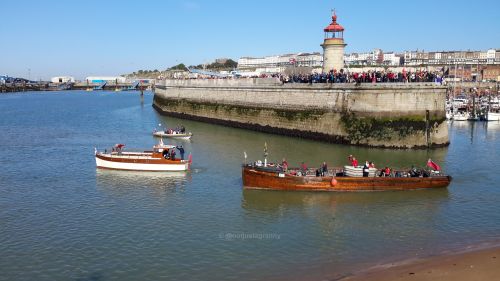
I can highly recommend a visit to the Ramsgate Tunnels; a unique opportunity to take a glimpse into Ramsgate’s heritage and ability to survive through the darkest period of World War II….. Ramsgate is a Royal Harbour and located on the east coast of Kent, on what was once the Isle of Thanet.

20150521_080936 - walk to ramsgate

Ramsgate Harbour for the Dunkirk little ships anniversary event in 2015

Read Full Post »

Well, thank goodness for instagram and facebook LOL

Since UPS have lost my hard-drive with all my images, thankfully due to the fact that I am fairly prolific on instagram, I’ve been able to retrieve some of my images from my #Camino2016 practice walks and other events…..so although (so far) all my images from the last 10 years are still missing…. I still have instagram LOL

images from instagram

thank goodness for instagram

I tend to make a fair number of collages on instagram which is terrific since it combines some of my favourite memories from my walks.

However, that still doesn’t excuse the fact that my hard-drive has gone awol in the UPS system, although it seems they have in fact reopened the case and are going to do a really extensive search for the package. Please hold thumbs

Read Full Post »

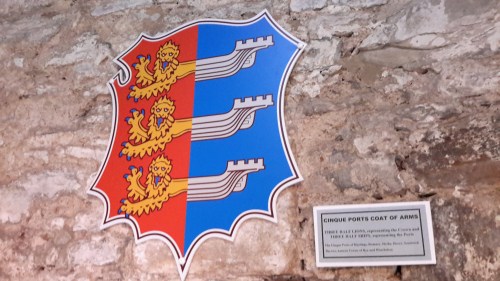
My sister thought it would be a great place to celebrate her birthday, her first in the UK and it was on my list of places to go in my quest to visit all the Cinque Ports; Dover, Hastings, Hythe, New Romney and Sandwich and their ‘7 surviving limbs’: Deal, Faversham, Folkstone, Lydd, Margate, Ramsgate and Tenterden.

Rye, now classified as an ‘ancient town’ was once a Cinque Port as was the ancient town of Winchelsea (of those listed, I have yet to visit those not highlighted)…. Places to go 😉

As mentioned in an earlier post my sister’s initial plan had been to visit the Isle of Wight but after reading an article about Mermaid Street in Rye, the decision was made to spend a few days in this ancient of towns. The first thing we discovered is that the cobbles in Mermaid Street were laid in the 1600’s!!

why go to rye

imagine all the history these cobbles have seen….

History that’s right up my street, so to speak 😉 How could I not want to go there. And so our plans were laid.

Initially there were meant to be four of us, but my sister’s two friends pulled out and so it was just the two of us…that reminds me of a song….LOL But let me not digress, Rye awaits.

We decided to arrive the night before so as to be in the town on her birthday…great idea! I had the hotel tie balloons to her chair for breakfast and persuaded them to put candles onto her breakfast plate!

Where will we put the candles they asked? Oh stick them in the sausage, I replied (as I crossed my fingers and hoped she ordered a full-English) – she did and to her surprise the breakfast arrived with 5 flaming candles!!! accompanied by a fantastic rendition of ‘Happy Birthday’, if I may say so myself 😉

So those were our reasons; here are the reasons you should go!

Ancient history: Rye’s history dates back to before the Norman Conquest at which time it was a small fishing village almost surrounded by water. Since then, the sea has retreated and although there is still a small harbour and a river, the town now lies 2 miles from the sea. Fascinatingly the river is affected by the tides, so it’s fun to watch the ships and boats moored alongside rise and fall on the incoming and outgoing tides. I know – it’s the little things that please me!

why you should go to rye

old fishing boat in Rye Harbour on the Rother

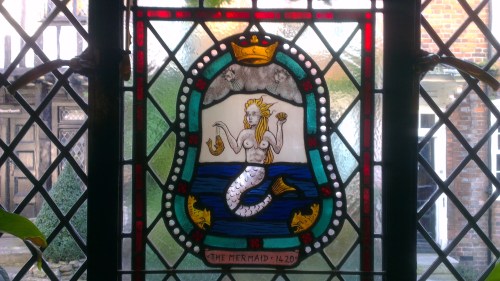
Mermaid Street: listed as one of the prettiest streets in Britain, this quintessentially English street is lined with amazing architecture; the Mermaid Inn, a Grade II* listed building – one of the oldest inns in Britain; restored in 1420 (hello!! note it was ‘restored‘ in 1420!!),

why go to rye

The Mermaid Inn, Rye – restored in 1420

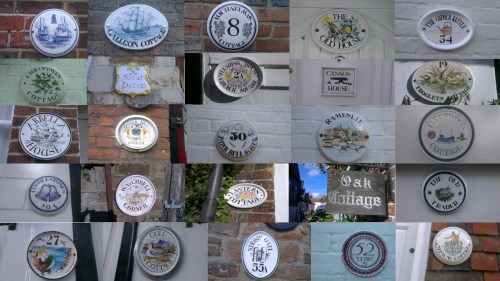
sits comfortably alongside extraordinary Tudor Houses, gorgeous Georgian Houses and a mix in between, bearing some of the most quintessential house names you could imagine, in fact the house names in the whole town were just wonderful.

why go to rye

House names in Rye

We found the street utterly enchanting and spent ages photographing just about every house. The cobbles lend a charming aspect to the atmosphere of stepping back in time and you feel as if at any time a pilgrim could come slowly by, followed perhaps by a knight on his horse or maybe a royal entourage on it’s way to the inn….talking of which, you simply must step into this gem of a building. Oh the history!! It’s extraordinary and I would love to spend a few nights there!!

why you should go to rye

Mermaid Street in Rye

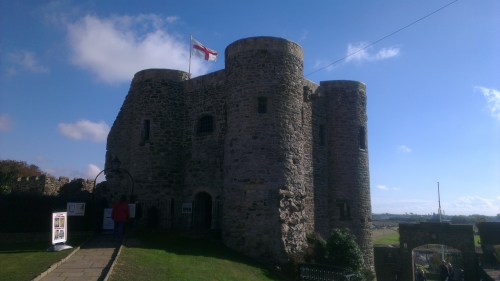
Rye Castle Museum and Ypres Tower: there is something quite spine-tingling when you turn a corner and discover a castle!! My jaw dropped…just wow!!

why go to rye

Rye Castle; Ypres Tower

Thought to have been built in the early 14th century, Ypres Tower (Rye Castle) was part of the town’s defences and the 2nd oldest building in Rye. Although not as big as some castles I have visited before, Ypres Castle is beautiful. Explore the building to discover the Tower’s role through 9 turbulent centuries. Climb to the battlements for a view of the salt marshes and the remains of what during the 16th century was one of the largest and 7th busiest port in England. The views are to die for!!

why go to rye

the view from the battlements of Rye Castle

Head below ground to the dungeons and try your hand at archery! It’s not as easy as it looks in the movies and the swords are rather heavy!! There are some helmets you can try on for fun 😉 We made ourselves look quite silly. while you are there be sure to visit The Women’s Tower; a 19th century prison (believed to be the only women’s prison to survive unaltered from the 1800’s to the present day), the Medieval Herb Garden and the gun garden.  At 3 East Street in Rye and just a short walk from the castle is the Museum where you will find an eclectic and fascinating collection of relics from Rye’s past; costumes, toys, pottery, shipbuilding, an ancient fire-engine and so very much more.

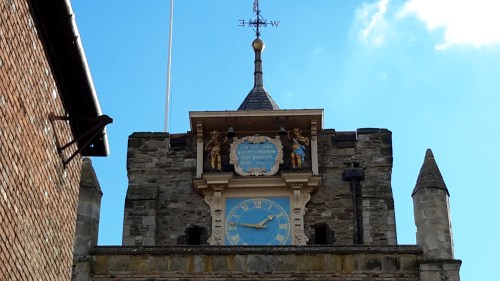
St Mary’s Church; the oldest building in Rye; the Parish Church of Rye has, for 900 years, dominated the hill on which this ancient town stands. Sometimes called the ‘the Cathedral of East Sussex’ the building of the present church was started in the 12th century.

why go to rye

The fantastic 16th century clock at St Mary’s Rye

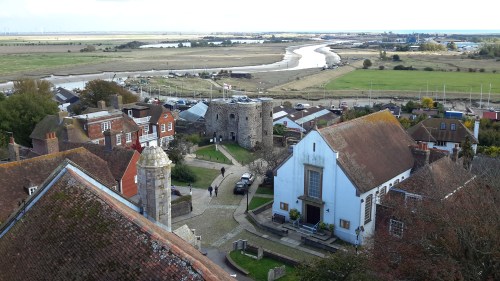
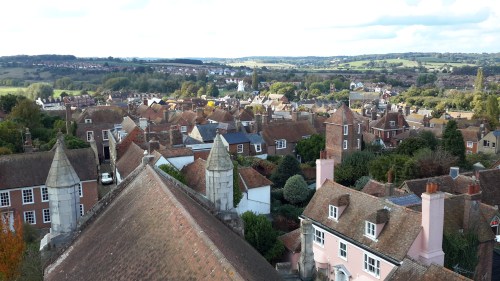
In 1377 the town was looted and set on fire, the church suffered extensive damage causing the roof to fall in and the looters carried the bells off to France – not taking this lying down, the following year, the men of Rye and Winchelsea set sail for Normandy, set fire to and raided two towns and thus recovered the bells. Today you can climb the battlements and be amazed at the fantastic views of the surrounding town and countryside  and Romney Marshes from the tower.

why go to rye

view of Rye Castle and the River Rother from the battlements of St Mary’s

20161022_140709

view across the roofs of Rye and the windmill in the distance

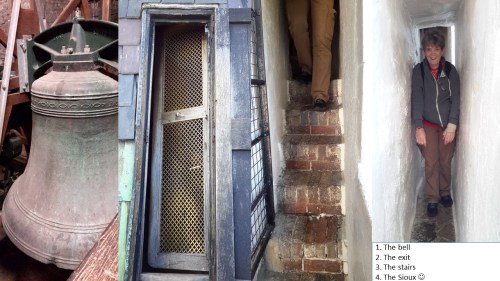
On your way up, beware the bells – they bong on the hour and could damage your ear drums (ask my sister who stuck her head above the parapet just as the bells gonged the hour for 2pm!! She nearly fell off the steps in shock. One of the oldest church turret towers in the country still functioning, the ‘new’ clock made by the Hugenot, Lewys Billiard, was installed in about 1561/2. You can see the pendulum swinging as you enter the church. Do note that the stairway leading to the tower’s viewing platform are VERY narrow!! LOL.

why go to rye

Sioux and The Bell!!


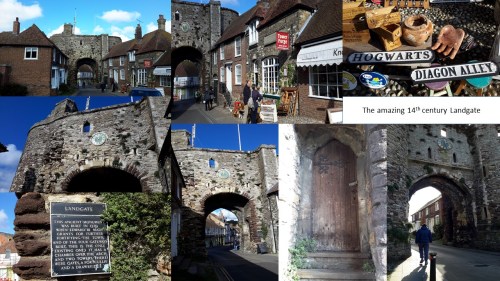
The Landgate Tower: What a startling discovery!! I had seen it listed on the town map the hotel gave us, but that didn’t prepare us for the reality. Again we stumbled upon this ancient treasure quite by accident whilst meandering the streets and couldn’t forsake a closer look. After the French attacked the town in 1339 burning 52 houses and a mill, the Mayor and town corporation decided to build town walls and gates. They received a grant from the King; Edward III and got busy building walls and 4 gates.

why go to rye

The Landgate

The Landgate dates from about 1340. Of the original 4 gates, this is the most complete remaining. Touching the stones that make up this amazing structure gives me goosebumps. Just think about the history and the people this gate has seen…as they say: if walls could talk. There’s a delightful antiques shop right next to the gate and just beyond the gate is ‘Crepes on the Corner’ – the best crepes in town..and they were. I had Nutella and banana…delicious!!  There are glimpses of one of the other gates; Strandgate, incorporated into the Old Borough Arms Hotel at the bottom of Mermaid Street.

The Windmill:  We had seen this marvellous structure the previous day and on our way to Mermaid Street we decided to ‘pop in’ and have a look. I adore windmills, they add such a sense of history and mystery to a place….you feel almost compelled to go have a look. The distinctive and famous Rye Mill is a Grade 2 listed building and has been the inspiration for artists and photographers throughout the centuries. It occupies an historic site in Gibbet’s Marsh where a windmill has stood, in one form or another, since at least the sixteenth century. The Symondons map of Rye created in 1594 shows an illustration of a windmill in the exact spot where today’s mill now stands.  Now a B&B, we had a quick peek at one of the rooms. Located over the railway line and right next to the river, it’s charming and I can assure you that I am so going to stay there some day in the future.

why go to rye

The Rye Windmill

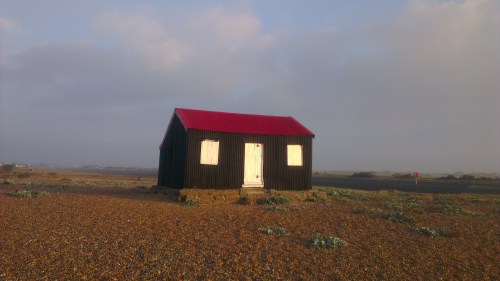
Rye Harbour: classified as a village, this tiny cluster of houses, jetty’s and buildings relative to a harbour are a delight to see. One of the most recognised images is an abandoned fisherman’s hut; black walls, a red tin roof with white painted windows and door that look like a face, stands almost halfway between the harbour and the river mouth.

why go to Rye

the old fisherman’s hut in Rye Harbour Nature Reserve

Rye reached the zenith of her power during the 16th century and at any one time there could be 200 ships anchored near the Strandgate – handling every kind of cargo from around the world. The largest and busiest port on the south coast during Tudor times due to it’s proximity to the continent, Rye’s harbour was more important than Portsmouth or Southampton. Although still a busy fishing harbour, today there are but just a few glimpses left of the original Rye Port, and to reach anything that resembles a harbour requires a short drive from the town to Rye Harbour – a drive well worth taking.

why go to rye

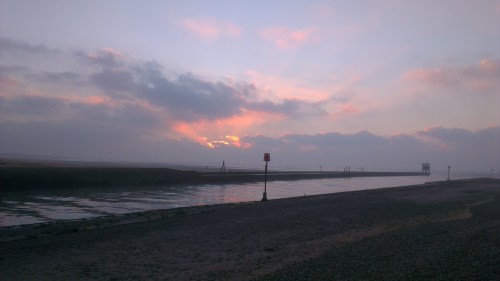
Rye Harbour

The harbour borders onto the nature reserve which is marvellous to walk through of an early morning.  The decline of Rye’s harbour was ultimately caused by the silting up of the river. Silt carried by the incoming tides stayed and settled in the bottom of the river leaving a film of silt which finally made the river un-navigable for ships. Today you can walk along the gravel road that runs between the salt-marshes and the river to the pebbled beaches. Perfect at sunrise.

why go to Rye

The River Rother flows down to the sea…

Rye Harbour Church: as you drive towards Rye Harbour and Nature Reserve, look to your right for a glimpse of this beautiful little church. Built in 1849 in the gothic style, the church of the Holy Spirit was designed by Samuel Sanders Teulon and constructed of local blue stone and Caen stone. Support for the construction of the church came from local estate owners; Mr & Mrs William Lucas Shadwell. In the churchyard is a memorial commemorating the 1928 Mary Stanford Lifeboat tragedy when 17 crew members lost their lives.

why go to Rye

Rye Harbour Church

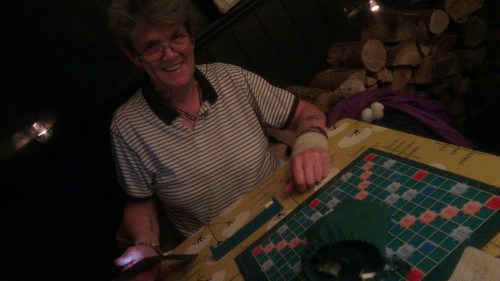
Pubs: as with all towns like Rye there is always a church and those quintessential essential necessities of community life; the pub!  😉  We managed to eat at two and have drinks in one. On our first night in Rye, after exploring the lower reaches of Mermaid Street and surrounding area, we stopped at the Ship Inn for a yummy meal. A congenial location we enjoyed the atmosphere so much we tarried awhile and played a game of scrabble.

why go to rye

a game of scrabble at The Ship Inn

I love how you can do that. The pubs in the UK (and Ireland) are more like family gathering places than drinking houses.  For our 3rd night in Rye we booked to eat at the Ypres Castle Inn, a 17th century pub nestled at the foot of the castle! Accessed down a steep flight of steps the lamps cast an inviting pool of light for a weary, hungry traveller. As you walk down the steps you will find an ancient set of ‘stocks’ used for the naughty people of Rye LOL. We enjoyed a most delicious meal there; for my sister it was the Lamb Hot Pot and for me Battered Cod (the biggest piece of fish I have ever been served), delicious chips and mushy peas.  Although we didn’t tarry for long, it wasn’t due to the ambiance which was lovely. We had in fact both walked ourselves stupid that day exploring every corner and Lydd, and were exhausted by the time we had our meal. The staff were lovely.

why go to rye

the history of 4 inns in Rye

The streets of the medieval town: Rye is quite simply the picture perfect place to meander.  We set off just after breakfast on Saturday to explore and photograph Mermaid Street more fully…..5 hours later and we were still meandering.

why go to rye

Rye architecture

What an extraordinary array of cobbled streets, lanes and alleyways leading hither and thither, quaint houses line the cobbled streets up and down, each an enchanting delight. Every corner we turned opened up to more delights; with an “oh my gosh”, or “ooooo look there!” from me and a laugh of bemusement from my sister as my constant “okay, just one more corner” eventually turned out to envelope almost the whole town.

why go to rye

Rye, a gem of South East England

There are 15th century inns, Tudor houses, the Vicarage where John Fletcher, the Jacobean dramatist, was born in 1536, the Old Rye Grammar School erected in 1636, the old water tower next to the church and so very much more to see.

And last but not least: the three rivers – Rother, Brede and Tillingham.

why go to rye

Three rivers of Rye

The River Rother flows down to the sea….This is the river along which we meandered in the morning and the evening for photos. Used for navigation since Roman times, the river is navigable by small boats as far as Bodiam Castle. With it’s source near Rotherfield and it’s mouth in Rye Bay, the river flows for 35 miles through the English counties of East Sussex and Kent. Its mouth was further to the east at New Romney prior to 1287, but a great storm blocked its exit to the sea and changed its course to flow via Rye.

The River Tillingham rises from two springs near Staplecross, a small settlement in the Parish of Ewhurst in East Sussex and joins the Brede and Rother at Rye.

The River Brede takes its name from the Village of Brede which lies between Hastings and Tenterden. It flows into Rock Channel which is the tidal section of the River Tillingham and joins the River Rother at Rye.

With tales of sailors’, smugglers, storms, ships, seas and derring do, of pilgrims and kings, heroes, dramatists, writers, and a nursery rhyme, you simply must visit Rye!

Little Bo Peep has lost her sheep! – According to legend, this well-known nursery rhyme derives from the deeds of smugglers in the town of St Leonard’s.  West of Burtons St. Leonards is the area known as Bo-Peep which was once a tiny village renowned for smuggling in bygone days:

why go to rye

One of 4 Smuggler gangs that operated in the area of Rye

           Little Bo-Peep has lost her sheep and doesn’t know where to find them;                                                      leave them alone, And they’ll come home, wagging their tails behind them

Little Bo-peep fell fast asleep, and dreamt she heard them bleating;
but when she awoke, she found it a joke, for they were still a-fleeting.
Then up she took her little crook, determined for to find them; she found them indeed, but it made her heart bleed, for they’d left their tails behind them.
It happened one day, as Bo-peep did stray into a meadow hard by,
there she espied their tails side by side, all hung on a tree to dry.
She heaved a sigh and wiped her eye, and over the hillocks went rambling,
and tried what she could, as a shepherdess should, to tack each again to its lambkin.

Rye is a real gem of England; playing a very important role in the history of the country, remnants of which can still be seen today.   It’s pictureque, charming and an absolute delight to explore. We loved it!

why go to rye

Originally, the Cinque Ports (pronounced ‘Sink’ Ports) were a confederation of five harbours, Sandwich, Romney, Dover, Hythe, and Hastings plus the two Ancient Towns of Rye & Winchelsea. Grouped together, for defence purposes, by Edward the Confessor, they supplied the Crown with ships and men.


Interesting links:

What are Cinque Ports?

http://www.ryemuseum.co.uk/home/ypres-tower/

http://www.faversham.org/history/maritime.aspx

Read Full Post »

Just over a month ago to my absolute dismay I banged my hard-drive and damaged the reader. Essentially this meant that my computer couldn’t ‘see’ the information. I spoke to my computer person who after looking at the hard-drive said that the data was still there but that it needed an expert to recover it. He did some research and after I had followed up on some of the testimonials I decided to go with a company called R3 (or Tierra) of who do data recovery. They arranged with UPS to pick up the parcel (my hard-drive) and there endeth the tale….or not. UPS have in their own words ‘lost’ the package and after a number of requests to please continue looking for it, have pretty much said “sorry but….”
received-7

I’m sure that this is what UPS would like me to do…….

Now it may not be important to them, and as they say they handle thousands of parcels every day, but this little hard-drive is vitally important to me. It contains the photos of all my adventures, travels and events that I have attended for the last 10 years, as well as so many documents, spreadsheets and downloads and information that I can’t even begin to remember it all.  The hard-drive was my back up because I keep being told to not store everything on my computer and after the last computer crashed and I had to pay to have the data recovered from that, I bought the hard-drive.

However……

I have spent the morning trying to not lose my equilibrium about this, but frankly it is just devastating. The documentation I can live without, it sucks, but cést la vie, I’ll just have to start all over again (like I have decades in front me y’know LOL), But it’s my photos I am most distressed about. 10 years of places that I have been to, events I have attended, special celebrations and things I have done….in essence, all my memories are on that small piece of plastic (can’t rely on my brain anymore).

Fortunately I have downloaded many photos to facebook and have those albums which I am now going to download and I recently made this video, but oh my gosh….

So, here it is….a youtube video of places I have been

I guess I will just have to visit all those places again…… LOL

Meanwhile I am so totally unimpressed with UPS. They really just don’t care, much like most big corporations, they grow to a size where the customer no longer matters.

One of their replies which really is no reply at all:

“UPS has an automated sorting system, and packages are rarely handled by people in transit facilities. Our investigation team has already thoroughly worked on this and were not able to locate it. I apologise about this, but a claim has been issued for this already.” ….. Uhmmm, Okay, so who will benefit from this claim?

or

“Hello Cindy, I’m really sorry if there’s been trouble with your delivery. If the package is considered lost it just need a little attention from the shipper and our investigation team would start working on locating the goods and getting them to you. In some unfortunate situations when the goods cannot be found a claim is issued.” Again…would UPS please come to the party and tell me who is going to benefit from this claim?  I’m guessing it’s not going to be me.

Read Full Post »

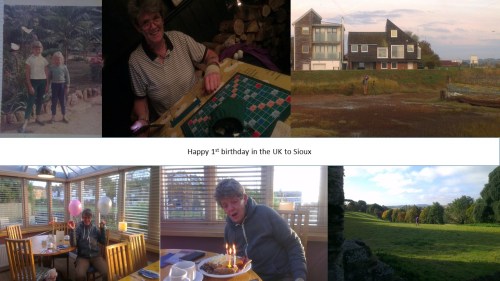
My sister Sioux came to live and work in the UK last year in November. The time has flown and she has travelled far and wide in the last 11 months. This is her birthday month (I won’t give her age away 😉 ), but it is her 1st birthday in the UK. She decided some months ago that she wanted to visit somewhere special for her birthday; initially a trip to the Isle of Wight was planned….but after seeing an article on Rye – Mermaid Street in particular, she decided that this was where she wanted to go.

a trip to 1066 country

Mermaid Street in Rye

And so the plans were made.

I was to join her and so that we could make the most of the trip and explore the area, my daughter lent me her car; Fiona. With 4 days and a car, we made the most of every minute.

a trip to 1066 country

Sisters – happy birthday to you; Sioux. I’m delighted I could join you 🙂

a trip to 1066 country

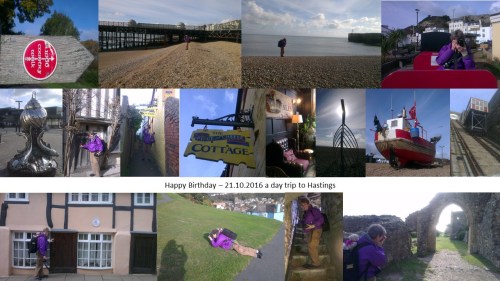
a day trip to Hastings

a trip to 1066 country

a day in Rye

day-4

making the most of our last day

We visited churches, explored castles, admired some amazing views, ate good food, played scrabble, photographed just about every house in Rye, watched the sunrise and the sunset,

a trip to 1066 country

sunset at Dungeness – the ends of the earth

laughed and exchanged stories, and watched the footie in a pub LOL (she’s a Liverpool supporter!).

This is the first time in 58 years that we have been on holiday together without parents, step-parents, siblings, family or children……just the two of us. We had a great time 🙂

Happy birthday Sioux!Happy birthday Sioux!


Read Full Post »

Gathering Leaves by: Robert Frost (1874-1963)

autumn colours in Canterbury

autumn colours in Canterbury

SPADES take up leaves
No better than spoons,
And bags full of leaves
Are light as balloons.

I mage a great noise
Of rustling all day
Like rabbit and deer
Running away.

But the mountains I raise
Elude my embrace,
Flowing over my arms
And into my face.

I may load and unload
Again and again
Till I fill the whole shed,
And what have I then?

Next to nothing for weight;
And since they grew duller
From contact with earth,
Next to nothing for color.

Next to nothing for use.
But a crop is a crop,
And who’s to say where
The harvest shall stop?

work and travel as a carer

Read Full Post »

« Newer Posts - Older Posts »

Self Propelled

Self propelled adventures through life; blogging on cycling, touring, micro-adventures, general shenanigans, and environmental news

johnelsewhere

Thoughtful wanderer in search of virtual meaning

Things Helen Loves

TRAVEL, WALKS & EVERYDAY ADVENTURES

Short Walks Long Paths

Wandering trails around the coast of Wales

Port Side Travel By Jill

My travels, photos, tips/tricks and anything else I think of!

Wonderwall

My 360: wonderwalls,theatre, travel, Sheffield, books...

Robyn's Ramblings

My Thoughts. Expressed.

Graham's Long Walk

Graham King's long walks around Britain

The Lawsons on the Loose

Philip & Heather are making memories through their travels.