Feeds:
Posts
Comments

Archive for the ‘Historical’ Category

After a lovely hot shower when I got back to the B&B the night before, I jumped into bed and snuggled down for the night…weary to my bones but every so happy with what I had seen. Thankfully my night was undisturbed so when the alarm went off at 7:30 again I felt refreshed and ready to go go go. This was also my final morning on the island and I was due to catch the 13:47 ferry to Portsmouth and then train to London.

Sadly the B&B forgot to put out my breakfast tray so I had to raid the dining room and left with 2 yogurt pots and a box of cereal in my backpack. Oh the food I eat when exploring.
exploring the isle of wight, visit the isle of wight

fantastic views from the top deck of the bus

I hopped onto the 08:50 bus to Osborne and arrived with 45 minutes to spare before the gates of Osborne House opened. Rather than hang around kicking my heels I had noticed on the way in that East Cowes marina was just a stones-throw (okay no not really…it was a tad further), so I set off at a quick pace to explore – despite that it was all downhill, I’m so glad I made the effort.

exploring the isle of wight, visit the isle of wight

East Cowes Marina

The weather was stunning in comparison to the day before and the marina looked beautiful. I explored for a bit then headed back to Osborne House…..urgh those hills going back up!!!
osborne house, exploring the isle of wight, visit the isle of wight

aerial view of Osborne and the house

Osborne House was wonderful. The interior is sumptuous and the views from the patio and many of the windows are stunning. Osborne House was the much loved seaside retreat for Prince Albert and Queen Victoria, built between 1845 and 1851, and apparently they spent many a happy day there with their children. It was also the place Victoria returned to after the death of her beloved Albert in 1861. She was to spend the next 7 years there, holed up, mourning the loss of her husband, friend and confidant, dressed in black and refusing to budge, even though desperately needed as Head of State. She even refused to ‘Open Parliament’, which put the Government in a quandry!  Queen Victoria used Osborne for over 50 years, entertaining foreign royalty and visiting ministers.

osborne house, exploring the isle of wight, visit the isle of wight

Osborne House, Isle of Wight – seaside home for Victoria and Albert

Taken on a guided tour of the lower floor and some of the rooms, we were left gasping by the sheer splendour and magnificence of the furnishings and decorations. Albert had pretty much the final say on how it should look and I can say the man had amazing taste; he has left an amazing legacy for the country.

osborne house isle of wight, visit isle of wight

beautifully decorated and long passageways

Not ostentatious, but finely set out, the rooms are stunning with faux-marble columns, exquisitely woven carpets, fabulous paintings on the walls, much of it original furniture and works of art (some are replicas as the current Queen has the originals).

osborne house isle of wight, visit isle of wight

exquisitely furnished with lush carpets, decorative ceilings, fabulous chandeliers

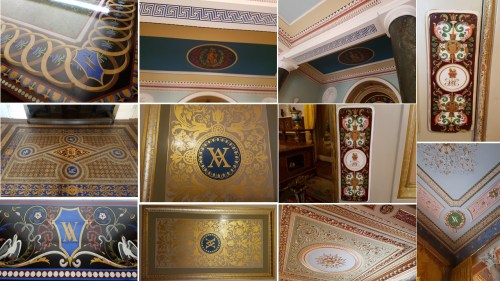
Their initials V & A interwoven can be seen in ceiling decorations, woven into the corners of carpets and added wherever possible.
victoria and albert osborne house isle of wight, visit the isle of wight

V & A – everywhere you looked there initials were interwoven and part of the decor; carpets, floors, ceilings, cornices

I found it to be quite poignant viewing the rooms and imagined the family living there – how much they must have loved it.

osborne house isle of wight, visit isle of wight

beautiful passageways with exquisite sculptures, finely furnished rooms

Many, many family portraits filled the walls in most of the family rooms. Poignant images of beloved children, from toddlers into adulthood with children of their own; all long gone, some of whom met tragic ends.

osborne house victoria and albert, visit the isle of wight

Victoria and Albert who between them created a dynasty that spread across the world – family portraits

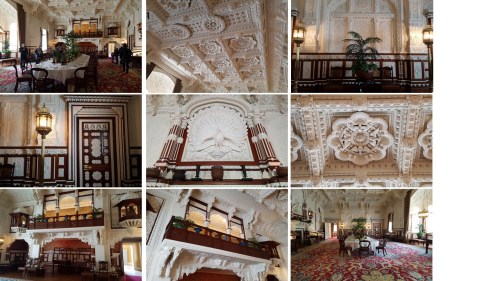
The one room that left me gasping was the fabulous Durbar Room. Added to entertain large numbers of people it was built and completed between 1891 and 1892 almost 30 years after Prince Albert’s death…I’m quite sure he would have approved. This room is stunning! Designed by Lockwood Kipling (father of the author Rudyard Kipling) and master carver Bhai Ram Singh. Detailed with intricate Indian-style plaster work, it is richly decorated in the architectural styles of northern India and reflected Queen Victoria’s then status as Empress of India, the large reception room is breath-taking. Although it looks like everything is carved from ivory, the plaster-work was executed by the Indian plasterer Bhai Ram Singh -there is not one piece of ivory in the room.
osborne house isle of wight, victoria and albert osborne house, visit the isle of wight

The Durbar Room, Osborne House

The Durbar Wing also provided accommodation for Princess Beatrice, Queen Victoria’s youngest married daughter, and her family on the 1st floor.

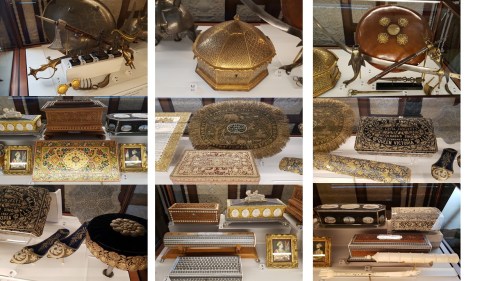
In the display cabinets in the room are some of the stunning gifts received by Victoria when she was Empress of India.
queen victoria empress of india, osborne house isle of wight, visit the isle of wight

gifts for the Empress of India, Osborne House, Isle of Wight

With reference to my visit to The Needles yesterday and the Marconi Monument, in 1898 messages were received from Marconi at Queen Victoria’s Osborne House on a telephone presented by Alexander Bell.

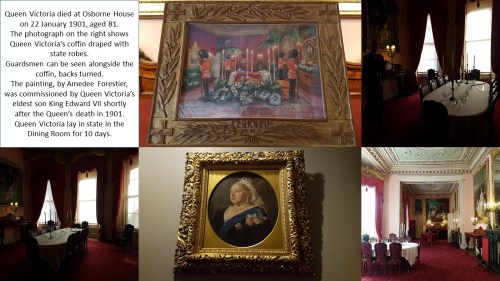
Queen Victoria died at Osborne House in 1901.
queen victoria, osborne house, isle of wight

Queen Victoria – Osborne House, Isle of Wight

Her successor, her eldest son, Edward VII (1841–1910), didn’t need it and as no other member of the royal family wanted to take on the upkeep, the king gave the Osborne estate to the nation on his  Coronation Day in 1902.  Osborne House is now managed by English Heritage.

After the tour which sadly only took in part of the house due to much needed repairs being done on the central staircase, I headed outdoors to enjoy the sunshine and views. The grounds are a delight and much as I wanted to go down to the beach are and visit the Swiss Cottage, my time was almost up, so I contented myself with a quick whizz around the perimeter of the house and at 12noon I recorded the chimes of the clock and then set off back to the bus-stop. In all a fantastic trip.

visit osborne house isle of wight, visit isle of wight

Exterior views of Osborne House and across the grounds to the Solent

My next stop was Ryde, then the B&B where I collected my suitcase and set off for the ferry with plenty of time to spare. I even managed to watch one of the Hovercraft come in to land….again!!! LOL They are fascinating to watch.

And so it was time to say goodbye to the Isle of Wight. I shall definitely return, although I know not when. But there is still much to see and after chatting to the gentleman that I accosted one day on one of my walks in Bembridge, I am inspired to do what he did and walk around the while perimeter of the island. (btw I didn’t harm the guy, I just stopped him to ask about the walking poles he was using!! 😉 )

visit the isle of wight

Goodbye to the Isle of Wight

One of my ambitions is to visit 100 of the Domesday towns and villages in England. There are 84 such places on the Isle of Wight, some of which have morphed into larger towns and others that are still around but looking nothing at all like they may have in 1085/86. I managed to visit 6 of these places: Binstead, Brading, Nettleston, Sandown, Shanklin and a walk through the lower end of Puckpool.

The Domesday Book was commissioned in December 1085 by William the Conqueror, who invaded England in 1066. The first draft was completed in August 1086 and contained records for 13,418 settlements in the English counties south of the rivers Ribble and Tees (the border with Scotland at the time).

Read Full Post »

Day 2: After a very disturbed night, and struggling to get back to sleep after being woken at 01:30 in the morning by a hell of a ruckus downstairs (I did look but couldn’t see who or what), I was tempted to just shut my eyes and snuggle back under the covers when my alarm went off at 7:30! Urgh. But, I had adventures ahead so after a most welcome cup of tea I got dressed, partook of the ‘continental’ breakfast the B&B had kindly provided for me, and set off for the bus to my first stop……Brading Roman Villa.

visit Brading Roman Villa on the Isle of Wight

Brading Roman Villa on the Isle of Wight

It was great travelling along a different route and of course in the daylight I could see so much more of the countryside. Before too long the driver let me off at my requested stop and directed me to the entrance to the villa. On the whole I found the bus drivers on the IoW to be very helpful. It was a real thrill to walk along the route that had possibly been traversed by the Romans nearly two centuries ago. I was quite early so I enjoyed a 30 minute excursion of the site before entering the building.

visit brading roman villa isle of wight

the outside area of Brading Roman Villa

The Brading Roman Villa heritage site is owned and operated by the Oglander Roman Trust and they have done a superb job of preserving the remains. There are a number of cabinets exhibiting ancient artefacts..fab!!

visit brading roman villa

Brading Roman Villa

I had a very entertaining guide give me a head start and then I was off to explore. Oh my gosh! I cannot tell you how stunning the place is. Imagine being able to see the stunning mosaics insitu as they had been laid all those hundreds of years ago. And they are astoundingly beautiful. It always gives me a thrill to walk in the footsteps of long ago civilizations…..I always wish I could just time-travel for an hour or so…just to experience what it must have looked like.

visit brading roman villa isle of wight

some of the stunning mosaics. what a wonderful way to decorate your house

After thoroughly exploring the villa I set off once again for the next leg of my journey to Shanklin. The route took us through Sandown and since I had already visited the town previously, decided to not get off there again.

whistle stop tour of the isle of wight shanklin

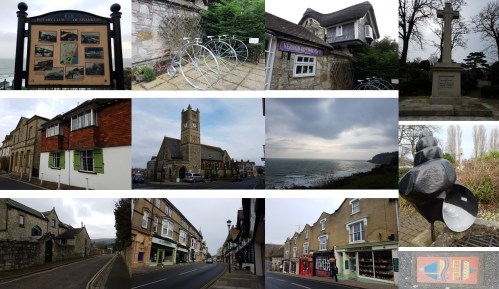
scenes of Shanklin

Shanklin was lovely and I had a fantastic walk around the town, discovered some beautiful places and managed a short walk along the clifftop before heading back into town centre to the little tea-shop I had seen earlier: Cinderella’s Tea Room and Dress Shop…how could I not stop off 😉

whistle stop tour of the isle of wight shanklin

Cinderella Tea Room and dress shop

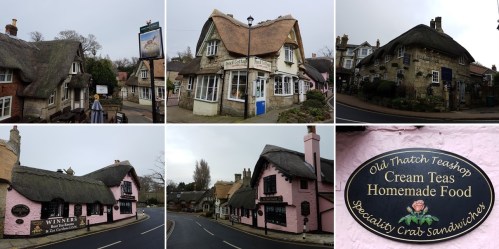
Then it was off back uphill through the town and since my bus wasn’t due for another 30 minutes I decided to walk as far as I could before the next one was due. Along the way I passed the most delightful set of cottages you could imagine. Totally quintessential England. The Old Thatch Teashop was closed for the winter, I am most certainly going to plan a visit the next time I visit the island.

whistle stop tour of the isle of wight shanklin

Chocolate Box perfect – quintessential England – Shanklin Isle of Wight

Unfortunately the clouds had by now settled and it began to rain…I had already walked a fair distance so wasn’t too unhappy to wait for the bus – it arrived just before the heavens opened!! Glad of the snug warmth of the bus I enjoyed the scenery whizzing by. One of the things that surprised me the most about the IoW is how hilly it is. I thought it might be fun to walk around the island next visit, and that thought was uppermost in my mind as we traversed the hills and dales…..those hills will be a test of my endurance, that’s for sure.

Next stop was Newport. Located at the point where the River Medina splits into two; one branch, the Medina continues almost all the way across the island to the southern most point, splitting into lots of smaller tributaries and off shoots along the way, and the other continues as the Lukely Brook to Bowcombe where it peters out.

visit newport isle of wight

Newport Harbour and the River Medina, Isle of Wight

Newport, located in the centre of the island, is the principal town on the IoW and often referred to as the capital. With the town’s quay a short distance away, the town centre is made up of 2 squares surrounded by elegant Victorian and Georgian architecture.

visit newport isle of wight

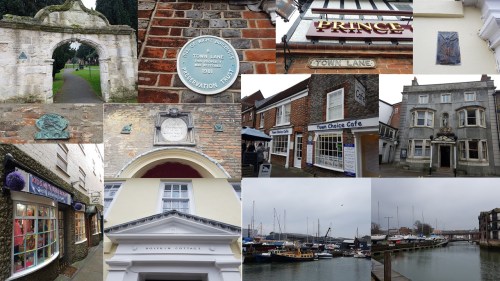
scenes of Newport, Isle of Wight

With a historic past that goes back 40,000 years to the Neanderthal period, mousterian remains; tools made by Neanderthals were found in the 1970’s, there are also Roman remains and two Roman villas, as well as links to the Norman Conquest.  I spent an hour or so walking around and visited The Guildhall Museum which is a delightful showcase for the history of the island. Well worth a visit.

guildhall museum visit newport isle of wight

Guildhall Museum, Newport, Isle of Wight – only £2 entry fee, it’s so worth a visit

As mentioned previously, the buses are not exactly very regular so instead of waiting for 45 minutes for the next one out of town, I walked to Carisbrooke Castle which was next on my agenda. Carisbrooke was for centuries the Isle of Wight’s capital and was once called Buccombe or Beaucombe, and means the ‘ fair valley’ and I’m sure on a fine day it would be an amazing sight from the top of the hill across the valley.

visit Carisbrooke, Newport, Isle of Wight

Carisbrooke, Newport, Isle of Wight

I so enjoyed the walk; it took no time at all and I was within sight of the castle…only at the top of a great big bloody hill LOL. I wasn’t in the mood for climbing!!! Jeez. Anyway, I put on my big girl panties and started trudging uphill. Ever so worth it.

visit carisbrooke castle newport isle of wight

Carisbrooke Castle – Charles I was detained here before his trial

Carisbrooke Castle is stunning!! Carrisbrooke, an historic Motte-and-Bailey castle, originally a Roman fort, is located in the village of Carisbrooke, not too far from Newport. The castle was built soon after William the Conqueror came to England and the following centuries saw a tumultuous history with a number of owners. In 1293 the castle became the property of Edward I and the crown. In 1647 Charles I took refuge at the castle, but this later turned into his prison from which he tried to escape in the months prior to his trial. His daughter princess Elizabeth later died there aged 14. Also managed by English Heritage the castle was unfortunately closed on weekdays at the time of my visit. I’ll definitely have to visit again.

carisbrooke isle of wight

the village of Carisbrooke with the castle on the other side of the river Lukely

The village of Carisbrooke appears to be split in two by the River Lukely with a major part of the town on one side and the castle on the other.  The views from the hill on which the castle perches are outstanding, even though it was a grey and glum day.

From there I made the insane decision to make the long journey to see The Needles. I had planned on doing this as part of my whistle-stop tour, but the day was already closing in, it was raining and I was cold and hungry. But after a quick whatsapp discussion with my daughter I drew breath and started walking…yes, you guessed…the next bus was 37 minutes away and I don’t like standing endlessly waiting!!! ….LOL I tell you it was a real challenge getting around the island with the ludicrous bus timetable. On the way I passed through the village of Gunville, of which I saw little besides the name and a convenience store where I bought something to eat….I was famished by that time : 15:30!! I decided at this point to wait for the bus….the road out of the village was narrow with high hedges and it was raining…..I didn’t fancy becoming a statistic on the Isle of Wight!

Located at the South Western tip of the Isle of Wight above Alum Bay, The Needles, an iconic image, immediately spring to mind when you think of the island.  Am I ever so glad I decided to go!! We got to The Needles tourist area at 16:50 – completely deserted. The bus I arrived on was due to leave again at 17:05. It was raining. It was getting dark. The next bus after was at 17:35…..I did not feel like hanging around. So I dashed over to the viewing platform, had a quick look, took some photos and dashed back to the warmth of the bus. Wow, what a thrill to see them in the distance even though the light was fading rapidly and I could barely see.

visit the needles on the isle of wight

The Needles above Alum Bay on the south-western tip of the Isle of Wight

An added bonus was being able to see the Marconi Monument. Located at The Needles, the monument marks the precise location where Guglielmo Marconi undertook his pioneering work at the end of the 19th Century.  This led to radio and all telecommunications as we know it today.

The Needles and the Marconi Monument, Isle of Wight

The Needles and the Marconi Monument, Isle of Wight

And then we were off and on the way back to Newport where once again and for the final time that day I had to change buses to get back to Ryde.

A magical day, albeit exhausting. I got to see 90% of what I had planned on seeing and even though it was a whistle-stop tour, it was fun. I was however really really glad to get back to the B&B and bed!

The following day; Saturday was my final morning on the Isle of Wight and I had planned a trip to see Osborne House; once the seaside home of Queen Victoria and Prince Albert.

For more about my first day of adventure….

Day 3 – 1/2


Read Full Post »

“Say you have been at Worcester, where England’s sorrows began, and where they are happily ended.” Hugh Peter 1651.

Dating back to Roman times, and a history with links to Neolithic times, Worcester has had a turbulent history with connections to a number of prominent historical figures and historical events taking place in or around the city. Worcester is not only a Cathedral city but is flanked on the  western side by Britain’s longest river; the River Severn. It simply had to be explored!

As mentioned in my previous article I had 3 free days between assignments and therefore an opportunity to explore a new area.  Having spent Tuesday meandering about Preston (article still to come 😉 ) I travelled across counties from Lancashire to Worcestershire and so to Malvern Link.  Wednesday was spent conquering a mountain….okay, I concede…a couple of hills, and Thursday I hopped on a train to the historic Cathedral city of Worcester.

wandering the lanes of Worcester

a day in Worcester – cathedral city

I love a good cathedral and Worcester Cathedral didn’t disappoint.  But, let me start at the beginning.  The day, as with the previous 3 days, was stunning……blue skies, extravagant sunrises, crispy cold frosty mornings with air so fresh it invigorates the soul. Just a short train ride from where I was staying and to my lasting delight we crossed a river and into the city of Worcester. One of those times I wish I’d had my camera in my hand rather than in my pocket as we crossed the river…breath-taking view of the river looking upstream I could see the spire of the cathedral…and a marvellous bridge.

wandering the lanes of Worcester

the view I would have had from the train….

As soon as I alighted from the train I set off towards the river…..what I hadn’t realised is that it was the River Severn….the longest river in Britain at 220 miles from source to sea. I had met this beautiful river a number of times before at various places that I had worked and of course on our trip to Bristol in August. I am also currently working in what is known as the Severn Valley at the base of the Malvern Hills.

wandering the lanes of Worcester

North Hill and Worcester Beacon Hill; part of the Malvern Hills

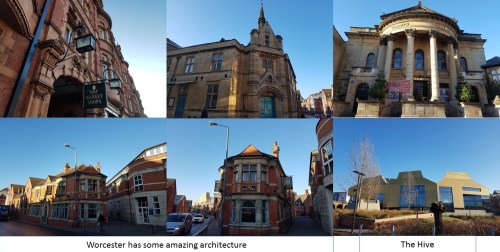
Enroute to the riverside I passed some really beautiful and amazing architecture and a fascinating modern construction called ‘The Hive’.

wandering the lanes of Worcester

Worcester architecture

En-route I walked past the Worcester race-course and passed beneath the viaduct over which we had trundled on the train.  And then there it was….the beautiful Severn River. This amazing river passes some of Britain’s most historic cities and areas as it travels from the Welsh Mountains through the quintessentially English Shropshire, Worcestershire and Gloucestershire countryside. I had the opportunity to see it in Preston as well.

wandering the lanes of Worcester

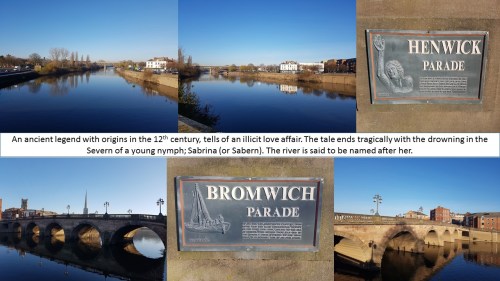
The River Severn runs through Worcester

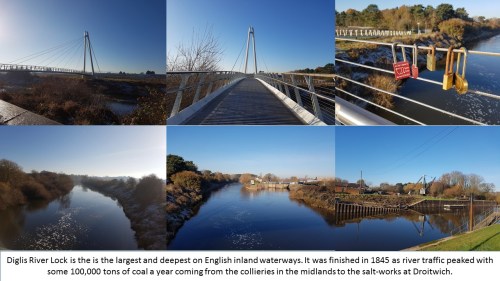
After exploring the Bromwich Parade and visiting the Swan sanctuary riverbank I made my way back over the bridge and on impulse I decided to visit the Diglis Lock….It was a tad further than I anticipated but a marvellous walk. The Diglis Lock is one of many locks along the Severn as it flows past historic cities, gorgeous cathedrals, cosy pubs, exquisite scenery, and down to the flat-lands of the Severn estuary, and so to the sea.

wandering the lanes of Worcester

the Diglis Bridge and Lock on the River Severn near Worcester

Along it’s length it meets with a number of rivers and canals and you will find boats of just about every shape and size. Famous for its tidal bore, the second highest tide anywhere in the world the Severn is truly a wonder of Britain. I think I may just walk it one day! 😉

wandering the lanes of Worcester

Diglis River Lock

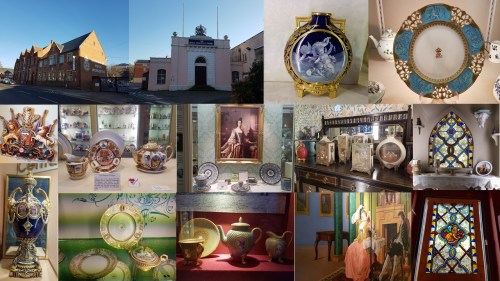
After exploring the riverbank I made my way into the city centre. My first port of call was the Museum of Royal Worcester.

wandering the lanes of Worcester

Museum of Royal Worcester

Oh my word! I can honestly say that the range of imagination in creating these extraordinary piece are art is astounding. Exquisite items that range across the centuries, you will find some of the most intricate patterns and filigree work decorating a most incredible collection as any I have seen in the museums in London. Enchanting! Of course I had to buy myself a piece of china from this world-famous factory; so I bought a mug commemorating The Queen’s 90th Birthday.

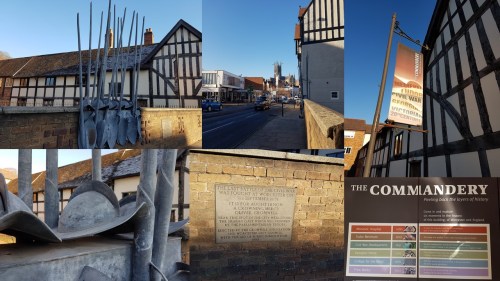
From there I made my way back into the city centre, past the Cathedral’s Edgar Tower (once the Priory gate) and back out again to visit The Commandery located next to a canal that leads into the River Severn and just beyond what was once the 12th century Sidbury Gate. The Commandery played a major part in the Civil War and until recently was the only museum dedicated to the Civil War.  To say this building is intriguing, extraordinary and stunning would be an understatement. I could happily have spent the whole day there….which I shall do on my next visit. With 6 layers of history to work through and 35 rooms….you would need a whole day!

wandering the lanes of worcester, the commandery

The Commandery, Worcester

There was so much to take in that my poor brain felt fried. The most astonishing room in the whole complex was the medieval wall paintings in the 1475 Painted Chamber! Breath-taking. That these incredible paintings have survived for over 600 years is a miracle.

wandering the lanes of worcester, the commandery

The 1475 Medieval Chamber – with original wall paintings. Extraordinary!!

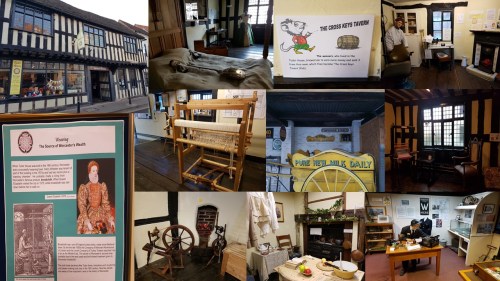
From there I made my way through to the city centre once again to Friar Street and so to the Tudor House Museum. For someone who is a Tudor fan….this was right up my alley!! This building too has oodles history. The rooms are beautifully preserved and set up to depict the many layers of that history; from Tudor times to WW2.

wandering the lanes of worcester, tudor house

Built between 1500-1550; Tudor House. Tavern, Tudor home, weavers cottage, Victorian home, and WW2 wardens post.

I spent a very happy time wandering from room to room, trying to imagine what it must be like to be a house….it gets to see all those events, feel the lives of the people who lived there and witness major events throughout history.  They have some fantastic artefacts in the museum, all of which lend an air of authenticity to the various periods of the history. I nearly said ‘hello’ to the chap in the helmet!! He looked so lifelike LOL

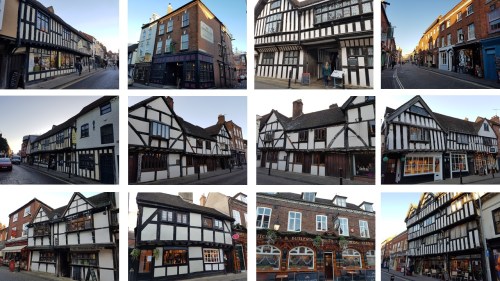
After that I meandered along Friar Street, a delightful array of houses line the cobbled street with quirky little shops, tearooms and restaurants….along with some of the usual chains. Friar Street is a quaint pastiche of black and white listed buildings, ancient relics of bygone ages with a variety of historical pasts, lend an enchanting air of having stepped back in time.

wandering the lanes of worcester, tudor architecture

fantastic architecture in Friar Street, Worcester

Just across the street from Tudor Museum is Greyfriars….a magnificent house managed by National Trust. I decided to explore later in the day since their website said they were open from 8am-8pm and I wanted to visit the Cathedral. Unfortunately the information was wrong! Oh well. Next time

So now for the cathedral….. On my life bucket list I plan on visiting all the cathedral cities in the UK. I have been to a great number of them already in the last 15 years but there are many still to go, so the opportunity to visiting Worcester Cathedral was a must do! I have a philosophy in life…I may not go this way again, so I make the most of the time I am there!

worcester cathedral, wandering the lanes of worcester

Worcester Cathedral

Founded in 680, Worcester Cathedral started life as a Priory prior (?) to the Reformation. Nothing of the 7th century priory now remains, although remains of the Priory dating from the 12th and 13th centuries can still be seen. The Priory came to an end with King Henry VIII’s Dissolution of the Monasteries, and like many others around the country, the Benedictine monks were removed and replaced by secular canons.

What is now the Cathedral, built between 1084 and 1504, represents every style of English architecture from Norman to Perpendicular Gothic, while the multi-columned Norman crypt of the present-day cathedral dates from the 10th century during the time of St Oswald, Bishop of Worcester. The crypt is amazing!!

worcester cathedral, wandering the lanes of worcester

Worcester Cathedral crypt

Worcester Cathedral is typical of English cathedrals, having both a chapter house and cloisters.

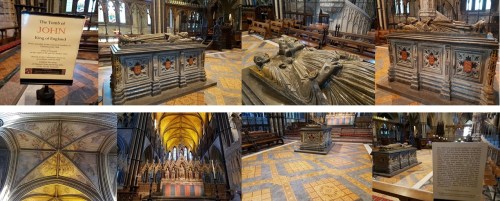
Notably, Worcester Cathedral contains the tomb of King John in its chancel. Before his death in Newark in 1216, John had requested to be buried at Worcester

worcester cathedral, wandering the lanes of worcester

King John’s tomb at Worcester Cathedral

and Prince Arthur’s Chantry, a memorial to the young prince Arthur Tudor, who is buried here. Arthur’s younger brother and next in line for the throne was his brother Henry, who became the notorious Henry VIII.  Worcester Cathedral was spared total destruction by Henry VIII during the English Reformation because of his brother’s Chantry. In 2002, archaeologists used ground-penetrating radar to locate Arthur’s tomb in the cathedral, which is located several feet below the tomb chest that was built several years after his death.

wanering the lanes of worcester, arthur prince of wales chantry

The resting place of Arthur Prince of Wales, son of Henry VII and elder brother of Henry VIII

Something that amazed me totally is how worn the steps leading into the chantry are.

wanering the lanes of worcester, arthur prince of wales chantry

the steps leading into the chantry where Arthur, Prince of Wales is buried

To say that Worcester Cathedral is a real gem would be to understate the beauty of the place. How exciting it was to discover that not only is King John (of 1215 Magna Carta fame) buried here, but also young Arthur Tudor, eldest son of Henry VII and older brother to Henry VIII.  The ceilings are so beautiful, the memorials so astonishing and the crypt so ethereal that you feel like you’ve stumbled into a different realm.

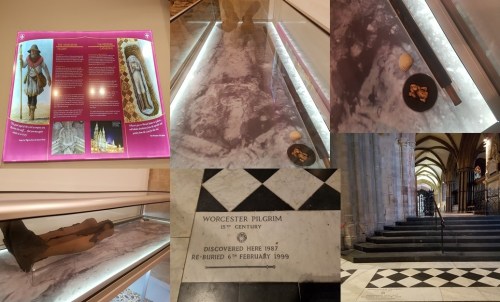
To my sheer delight I also discovered that buried beneath the mosaic floors were the remains of a pilgrim. Not much of him is left to be fair, but how important he must have been to be buried within the walls of the cathedral. At the time of discovery, his shell and staff were uncovered and can be seen in a glass sarcophagus in the crypt.

wanering the lanes of worcester, 15th century pilgrim

The burial place of a 15th century Pilgrim at Worcester Cathedral

I took a quick stroll through the cloisters and popped in at the Chapter House. Two sides of the cloisters were lined with a delightful array of beautifully decorated Christmas trees.

wandering the lanes of worcester, worcester cathedral cloister and chapter house

The Cloisters and The Chapter House of Worcester Cathedral

The sun was setting whilst I meandered through the cathedral so I quickly headed out onto the west lawn for a look at the sunset over the river and also to have a better look at the west facade of the cathedral……it really is quite stunning.

wandering the lanes of worcester, worcester cathedral and the river severn

sunset in Worcester and the River Severn

And then it was time for home, but not without a quick dash through town…I simply had to see the old Tudor architecture by night…..just splendid, it looked positively medieval.

wandering the lanes of worcester, worcester cathedral and the river severn

Worcester by night

I took a quick walk across the bridge to the Swan Sanctuary for one last look at the cathedral from across the River Severn, and finally headed for home.

wandering the lanes of worcester, worcester cathedral and the river severn

Worcester Cathedral looking just magnificent and other-worldly

The swans thought I’d come to feed them!!!  What a brilliant city. I shall have to visit again.

http://www.worcesternews.co.uk/news/11767786.Historic_gates_of_Worcester_could_soon_have_bold_and_brilliant_new_plaques/


Read Full Post »

A selection of powerful writing that came out of the year’s tragedies and conflicts.

via The Posts That Moved Us in 2016: Current Events — Discover

Read Full Post »

I have just spent the last 12 days at a job in a suburb of Preston, Lancashire and although I haven’t been able to explore the city (we’re just too far away), I have been able to explore Preston Cemetery 🙂 Although Preston Cemetery was established in and opened in 1855, the earliest year of a recorded death was 1781. I did search all over for this particular grave but was unsuccessful.

preston cemetery lancashire

Preston Cemetery

The cemetery is a 5-8 minute walk away from the house and en-route to the store where we collect the newspaper, so I’ve had plenty of opportunity to visit during my breaks…which have been a tad tricky to arrange, but I’ve deliberately made a plan to get out, even if just for a hour….or on my way to the store 😉

preston cemetery lancashire

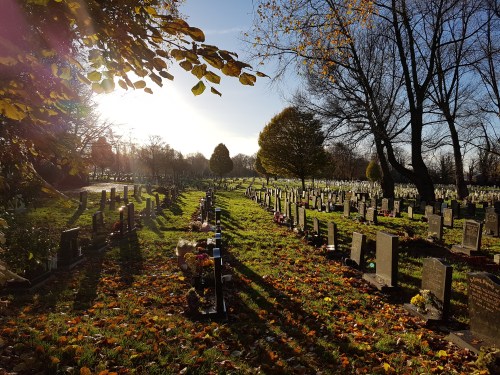
Preston Cemetery, Lancashire. the newer section at 09:36 in the morning

I initially thought that the section I walked past was it…but one day as I explored farther afield, and wondered at the fact that most of the memorials appeared to be fairly new, I discovered the older, original section….now we’re talking.

preston cemetery lancashire

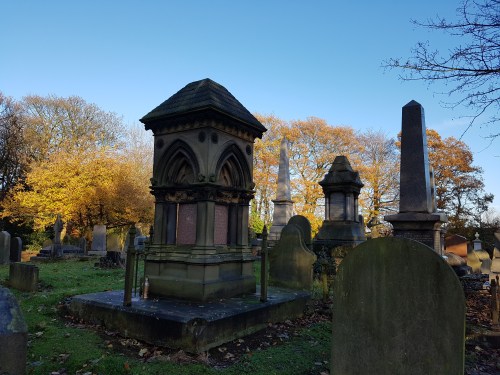
Preston Cemetery, Lancashire – the old section

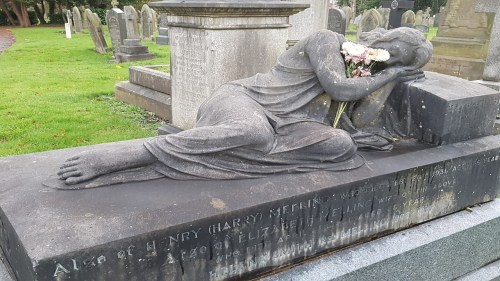
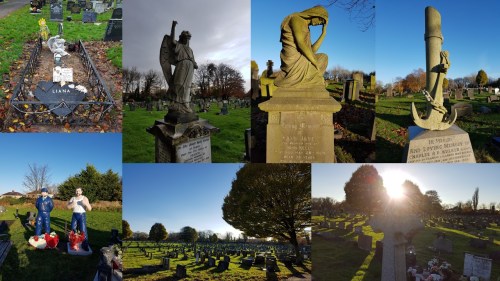
Oh my gosh, it’s amazing. the Victorians really went all out on their extravagant memorials, some of which are quite simply outlandish…huge and ostentatious; urns, wreaths, broken columns, upside-down torches, obelisks, grieving women

preston cemetery lancashire

albeit a later burial; a grieving woman – Preston Cemetery, Lancashire

– many monuments in Victorian cemeteries are pagan rather than Christian, or classical (Roman) or Egyptian.

preston cemetery lancashire

Victorian funerary symbols

Victorian graves tended to be much more elaborate than modern graves. It was expected that a middle-class family would spend as much as it could afford on a monument appropriate to the deceased’s (and the family’s) social status. Monuments were usually symbolic – either religious (crosses, angels, the letters IHS, a monogram for Jesus Savior of Man in Greek), symbols of profession (whip and horseshoes for a coach driver, swords for a general, palette for a painter), or symbols of death.

preston cemetery lancashire

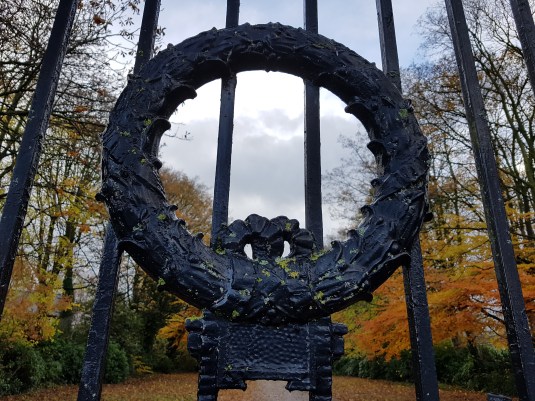
A wreath decorates the gates of Preston Cemetery

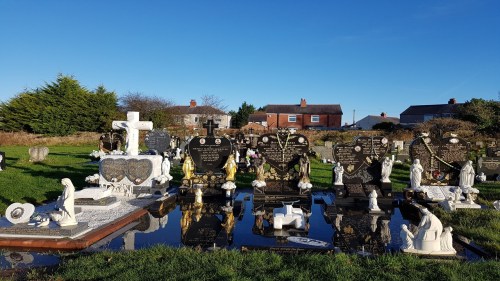
I’ve taken a load of photos of some of the memorials, but you can be sure there is a surfeit of extraordinary plots and memorials to be seen. Many of the memorials are unsurprisingly, but very sadly for babies and children of all ages, from the tiniest infant through to children of 10 and upwards into teens.

preston cemetery lancashire

memorials on the newer side

These early deaths are not limited to the Victorians, one memorial I saw was for two babies from the same family who died a few days apart at 3 months and 3.5 months, along with a number of other family members, different times, all young. Oh the tragedy.

preston-cemetery-3

this appears to be a family plot…so many all with the same name; some mere infants

In all my years of exploring cemeteries around the UK, I have never seen so many memorials for infants 😦

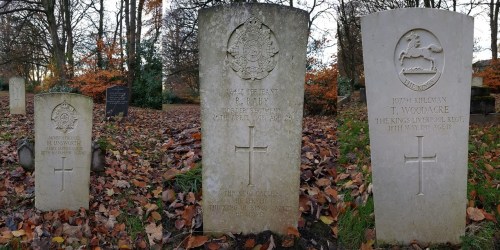
Although cemeteries have an air of sadness and desolation about them, they are fascinating places to visit with so many stories of lives lived, some long, many short, others in service to King and Country. Preston Cemetery is also the location for Commonwealth War Graves……too young!!

preston cemetery lancashire

Commonwealth War Graves – WW1

These cemeteries are also places of incredible beauty.

preston cemetery lancashire

Preston Cemetery, Lancashire

I love the many graveyards and cemeteries I find on my travels around the UK, Preston has certainly been one of my favourites.

preston cemetery lancashire

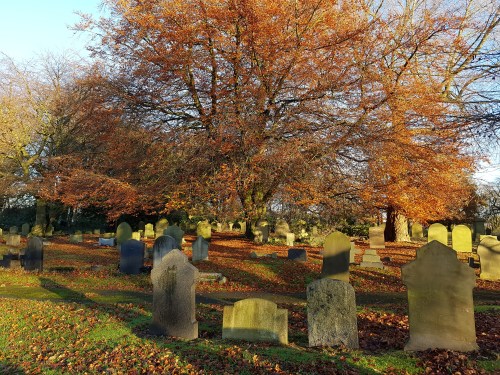
life and death; autumn beauty in a Victorian cemetery

A couple of interesting, albeit gruesome articles about death, dying and cemeteries in Victorian England and London.

http://listverse.com/2015/06/21/10-odd-and-eerie-tales-of-londons-victorian-cemeteries/

https://www.theguardian.com/cities/2015/jan/22/death-city-grisly-secrets-victorian-london-dead


Read Full Post »

The 1066 story includes the Norman Castle built in Hastings by order of William, Duke of Normandy aka William the Conqueror after the Battle of Hastings….ironically fought at a place now called Battle and not at Hastings per se. So it was vitally important that we visited the castle. After our visit to the East Cliff, it was off on a jaunt across town to see the ruins of the marvellous Hastings Castle on the West Cliff. Heading more or less straight across town, I took her along a route I had used before, a pathway and steps that took us past the blue house and so to the top of the cliff. The architecture and houses along the way are a delight.

1066 country, a visit to hastings, seaside towns of britain

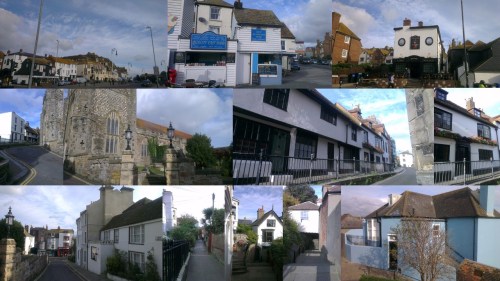
a walk through Hastings from the East Cliff to the West Cliff

We meandered past some marvellous places that set the juices flowing with house-envy and stopped often to admire the view. After a relatively easy walk we reached the top of the cliff and so to the castle.

1066 country, a visit to hastings, seaside towns of britain

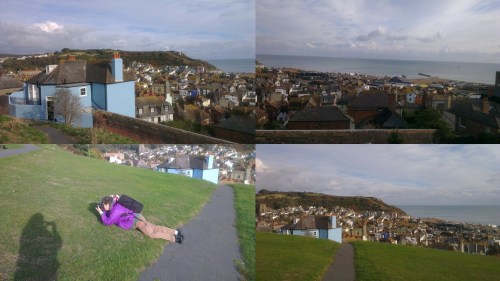
the view from West Cliff across Hastings towards East Cliff – thats my sister on the ground 😉

Originally a wooden tower built on top of a man-made mound or motte surrounded by an outer courtyard or bailey, Hastings castle was typical of the Norman motte and baily castle that would become a common fixture across England following the conquest. Subsequent to his victory at the Battle of Hastings, and after being crowned on Christmas Day 1066, William issued orders that Hastings Castle was to be rebuilt in stone.

1066 country, william the conqueror and hastings castle

the 1066 story and William the Conqueror. Hastings

The ruins we see today are less than half of the original structure that remained after the savage storms of the 13th century when the harbour was destroyed and large parts of the castle fell into the sea. There is enough to leave you in awe of what there once was. It was a mighty fortress that saw the Kings and Queens of Britain visit on many occasions.

1066 country, hastings castle, a visit to hastings, seaside towns of britain

scenes of Hastings Castle. Much of the original castle fell away when the cliffs collapsed

The chapel is in a far better state of repair, so to speak and you can wander and wonder amongst the ruins. I love to just stand still and imagine the scenes of yesteryear with Kings and Queens arriving for once est or another…Knights, Priests, Lords, Ladies, Hand-Maidens, Servants and Serfs…..what a melee it must have been.

1066 country, hastings castle, a visit to hastings, seaside towns of britain

scenes of the ruined chapel at Hastings Castle; The Collegiate Church at St-Mary-in-the-Castle was built in about 1075

One of the things I love most is to run my hand over the stones and flint of these ancient places and try to imagine the person who placed it there….how did they live, where were they from, were they young or old, did they have family…..how long did they live. Because lets face it, I’m pretty certain the builders of these castles probably didn’t have the same privileges our builders of today have! I’d say they probably lived very poorly and were not very well treated by their masters and without doubt the Health and Safety elves hadn’t yet made an appearance!!

1066 country, hastings castle,

imagine the amount of work that went into this wall….

Hastings Castle is a fascinating part of British history that includes ‘The 1066 Story’. An exciting 20 minute audio-visual programme covering the Conquest and the history of the castle through the centuries can be seen on the premises. The short film is well worth watching as it gives you a better idea of how the castle looked before the cliffs gave way and it vanished never to be seen again…except perhaps in the houses that used the pebbles and stones to rebuild some of the more ‘modern’ places you see today.

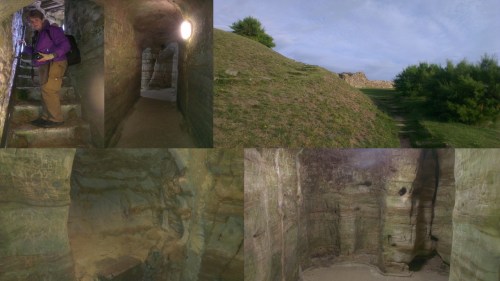
There is a small underground dungeon you can visit…..nothing too fearsome – certainly not like some dungeons I have seen in the past, but interesting nevertheless to imagine the people who trod those stairs centuries ago.

1066 country, hastings castle,

the dungeon….my sister looking a tad trepidatious climbing down the stairs

Although not as impressive as Dover Castle just up the coast and in much better nick, I do enjoy exploring the walls and nooks and crannies of Hastings Castle. I also love the views across the channel. Imagine how awe-inspiring it must have looked to the sailors of yesteryear as they approached the English coastline…..did they come in peace, were they merchantmen intent on trade, or pilgrims seeking a passage to Canterbury, or were they soldiers who quaked in fear of the unknown daunted by the size of the castle,  or were they fearless warriors intent on mischief.

1066 country, hastings castle, english channel

view across the English Channel towards France

My sister and I meandered, and admired, took hundreds of photos and then before they locked us in for the night we took ourselves off back down to the town.

I love Hastings…it is so quirky with loads of history and amazing houses to photograph. Definitely well deserving of a 9+ for interesting ‘things to see’.

1066 country, hastings

Hastings – 1066 country with a history that dates back over 950 turbulent years

Then a quick stop for hot jacket potatoes filled with a yummy concotion at the Hot Potato in Queens Road and then into the car and back to Rye….what a great day. I know for sure I’ll visit Hastings again some day.

Along the way we stopped along the Pett Level Road to watch the sunset. Glorious!!

sunset at pett level road

watching the sunset from Pett Level Road between Winchelsea Beach and Pett Level

For more information on Hastings Castle and the 1066 story

Read Full Post »

My sister recently celebrated her birthday in the UK and as a special treat because we had Fiona (my daughter’s car), I drove us down to Hastings for the day; 1066 country. I love Hastings, it’s one of my favourite places to go. I remember my very first trip there a few years ago…I nearly didn’t leave again LOL

We set off right after breakfast and on the way we stopped at a field that looks over Pewis Marsh, most of which covers the ancient medieval town of Winchelsea, largely abandoned in the 15th century. The field contains the remains of the west wall of St John’s Hospital; an almshouse for the poor.

1066 country, old winchelsea, hastings

a day trip to 1066 country on 21 October – celebrating my sister’s birthday

1066 marks a very special year in the history of England and the UK, and it was in fact on the 14 October 1066 that King Harald lost his life at the ‘Battle of 1066’ in an area that is now called Battle.

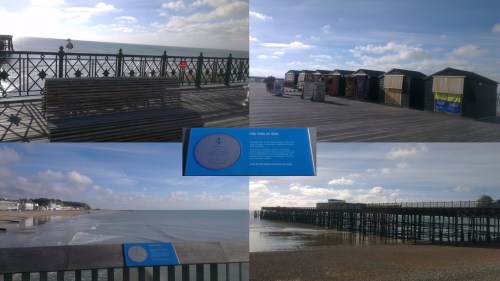
Reaching Hastings after a fab drive through the country, we started off at the fantastic Hastings Pier; we walked right to the end to admire the view and marvel at the history.

1066 country hastings, seaside towns of britain

Hastings Pier. with a remarkable history the pier played a part in the war

From there we walked along the promenade to see the amazing new sculpture installed on the beach in honour of the arrival of the Vikings.

hastings, norman long boat sculpture, seaside towns of britain

Norman Long boat sculpture on the beach at Hastings, by Leigh Dyer to mark the 950th anniversary of the Battle of Hastings

After that we meandered along and discovered the little train that takes you from the beach-front to the fishing village/harbour….so it was all aboard and off we went to Rock-A-Nore Station – pay on the train. It was too much fun….we felt like kids again!!

hastings, rock-a-nore train station, seaside towns of britain

a train ride to Rock-A-Nore Station, Hastings

Then it was back down to earth and a meander through town…we were planning on looking for the ‘Piece of Cheese Cottage’ and stumbled upon it quite by accident.

hastings, the piece of cheese cottage, 1066 country

The Piece of Cheese Cottage, Hastings

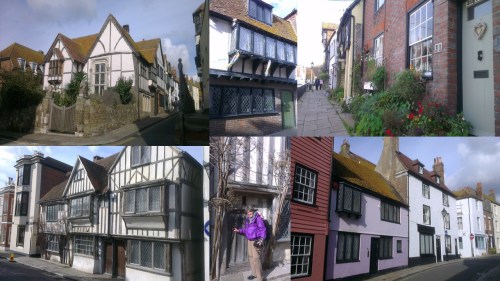
The architecture in Hastings is too twee and quaint for words and we had such an amazing few hours just ambling about photographing every last detail.

hastings, 1066 country

Hastings architecture

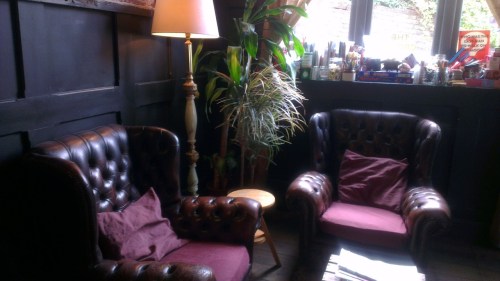
By now we were in dire need of a sit down and refreshments so stopped off at the nearest pub where we made ourselves comfortable in two old armchairs.

hastings, 1066 country

time for a bit of R&R

After that we headed over to the fishing village where we visited the Fishermens Museum …a marvellous collection of nautical artefacts and a fabulous old ship lodge comfortably together.

hastings, 1066 country, fishing harbour

the delightful fishing village in the old harbour

We ambled about admiring the collection and then climbed the stairs to reach the deck of the Enterprise RX278.

1066 story, hastings, fishermens museum

The RX278 Enterprise – lodges comfortably now in the Fishermens Museum

The fabulous Fishermens Museum

hastings, 1066 country, fishing harbour, fishermens museum

the Fishermens Museum – located inside a church built on the Stade in 1852, which fell out of use after the Second World War.

The funicular to the top of the East Cliff enticed us and before too long we were on our way to the top. The United Kingdom’s steepest funicular railway is not only a structure of national importance but also a source of immense local pride.
The East Hill Lift provides access to Hastings Country Park which overlooks the Old Town and Rock-a-Nore.

1066 country, hastings east hill cliff railways

taking the cable car to the top of the east cliffs at Hastings

As we were about to step out the cable car the attendant said to my sister “there go the Russian ships” – my sister was like “yeah right!!” but ohmygosh….yes it was indeed the Russian Navy enroute to Syria using our waters to get there. Very provocative. I knew they were due to sail past the English coast round about that time, but didn’t expect to actually see them. We spent some time enthralled in conspiracy theories.

1066 country, hastings, seaside towns of britain, view from east cliff

the view from the East Cliff across Hastings Old Town – you can see the pier in the distance

Then it was off on a jaunt across Hastings Old Town to see the ruins of the marvellous Hastings Castle on the West Cliff.

1066 story, hastings, map of old town and the stade

a map of Hastings Old Town & The Stade

Part 2 of a day trip to Hastings – follows Sunday 27th at 19:10


Read Full Post »

I’ve lived in Broadstairs for just over two years now. With a number of connections to this famous author, Broadstairs has much to offer the Charles Dickens fan….including myself. However, as so often happens in life, when something is on your doorstep you tend to ‘put it off till another time’.  So since I have an impending move to Ramsgate in my stars…I decided to visit the Dickens House Museum BEFORE I move elsewhere.

charles dickens, dickens house museum, david copperfield charles dickens, broadstairs

David Copperfield – Dickens House Museum, Broadstairs

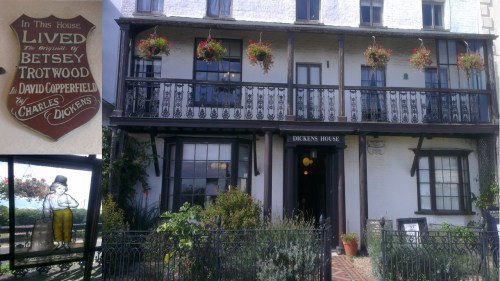
Charles Dickens lived in Broadstairs at many different stages of his life and a number of his books were either written here or inspired by characters in the area. He also, by all accounts, manage to live at quite a few different addresses in the area….a bit like me LOL However, although known as Dickens House Museum, Charles didn’t actually live in the house. It was in fact once the home of a friend; Miss Mary Pearson on whom he based much of the character of Miss Betsy Trotwood, David Copperfield’s great-aunt.

Dickens House Museum, Broadstairs. david copperfield charles dickens

Dickens House Museum, Broadstairs

Stepping over the threshold into the museum is like stepping back in time to another era, you almost expect Dickens to come slowly down the stairs, book in hand.

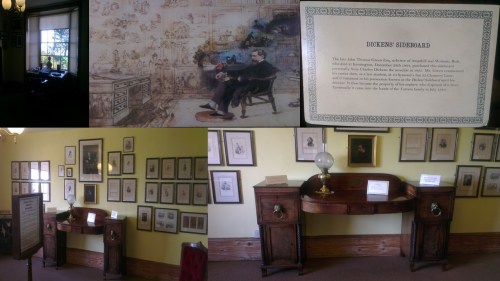
Dickens House Museum, Broadstairs. david copperfield charles dickens

Dickens’ Sideboard

Lovingly restored, with objects and furniture from that era, the house is filled with some items wonderful pieces from a wedding dress to the tiniest pieces of jewellery.

Dickens House Museum, Broadstairs. david copperfield charles dickens

a Victorian wedding dress, Victorian sewing items, various objects d’art and a collection of photos depicting houses associated with Dickens and a scene from the front room

You can see a copy of his will, his sideboard, and a fascinating collection of photos of properties related to Dickens.

Dickens House Museum, Broadstairs. david copperfield charles dickens

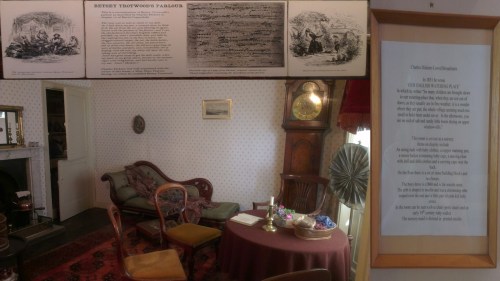
Betsy Trotwood’s Parlour, Dickens House Museum

A reconstruction of Betsy Trotwood’s Parlour as described by Dickens in chapter 15 of David Copperfield.

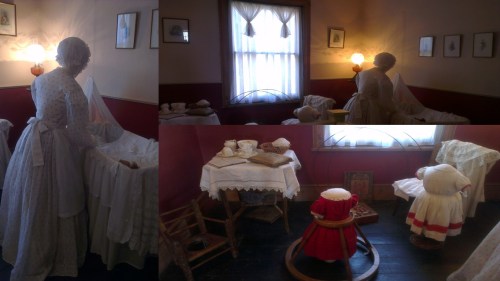
The reconstructed nursery is utterly charming; you can almost hear the laughter of the children.

dickens house museum, betsy trotwood, david copperfield, charles dickens

The nursery

The Dickens House Museum is located just a few yards from the Victorian Promenade that runs along the clifftop looking out over Viking Bay and Broadstairs Beach.

broadstairs

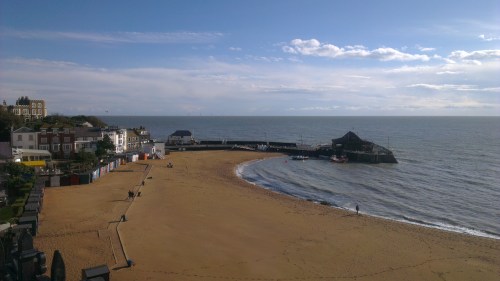
a view of the bay from the cliff top

Broadstairs is a quintessential British seaside town with so much to offer, from ice-cream parlours, tea-shops, museums, Bleak House (where Dickens actually lived) a marvellous hotel, antique shops, artisan bakeries, a plethora of restaurants and some wonderful seaside town souvenir shops where you can buy buckets and spades.

broadstairs a seaside town in kent

a delightful seaside shop in Broadstairs

Come visit sometime 😉

p.s. we also have many typical High Street shops and charities

You can reach Broadstairs by train from St Pancras Station via Ashford or Victoria Station via Rochester from London.


Read Full Post »

On my many Camino practice walks during this year I had occasion to walk along the clifftop between Ramsgate and Broadstairs and although I see the signs pointing to the Italian castle, I usually ignore it since my walks are usually quite focused and I don’t divert from my path.

But a few weeks ago while on a leisurely stroll I decided to heed the sign and headed off into the trees. I had no idea what to expect, but to my absolute delight I discovered a hidden gem of Ramsgate; The Italianate Greenhouse.

hidden gems in ramsgate, italianate greenhouse ramsgate

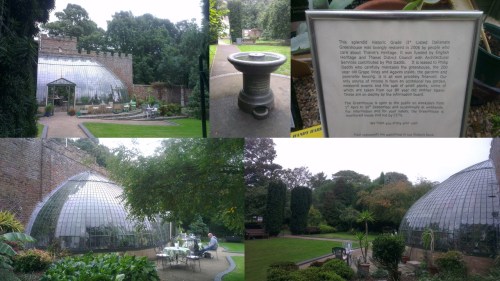
Italianate Greenhouse, King George VI Memorial Park, Ramsgate – a hidden gem

Stepping out of the trees, there before me was a totally unexpected sight; an ethereal-looking greenhouse that dates from the 19th century and appears to grow out of the castellated red-brick wall behind it. Erected in the grounds of East Cliff Lodge in 1832 by Sir Moses Montefiore (1784-1885) who saw the structure in an auction catalogue and bought it, it was originally part of Bretton Hall in Yorkshire.

Constructed of cast iron curving ribs, the greenhouse is covered with fish-scale glass panes. Not very big, it houses an amazing collection of plants, of which the rather marvellous grapevine is certainly an attraction!!

hidden gems in ramsgate, italianate greenhouse ramsgate

the rather marvellous grapevine

The Greenhouse was recently the focus of attention when one of the Mexican Agave plants, after reaching 30ft bloomed for the first time. Apparently this only happens once every 100 years, so as you can imagine folks visited from far and wide to see this extraordinary event.

On the day of my visit, things were a little calmer and besides a family of 5 enjoying afternoon tea in the weakening sunshine, and a volunteer who was trimming the grass edges, I was quite alone to explore and enjoy. The garden is a delight.

hidden gems in ramsgate, italianate greenhouse ramsgate

Italianate Greenhouse and garden at Ramsgate


The Greenhouse is a Grade II* listed building and opens at certain times of the year, mostly in summer, for viewing and a chance to relax in the Tea Garden. For more information visit http://new.italianateglasshouse.co.uk/ The area through which you can reach the greenhouse is now known as King George VI Memorial Park.

The volunteers on site were very friendly and helpful and gave me an impromptu guided tour 😉

How to get there:

Access to the greenhouse and park is from either Montefiore Avenue or on the sea-side from Victoria Parade. It’s 50 meters away from the Montefiore Avenue entrance and a short stroll across the park from Victoria Parade.

The Tea Garden is open on fine weather summer days from approx 10.30am Tuesday to Sunday and Bank Holidays. The Greenhouse is open between 9am – 5pm weekdays from 1 April to 30 September. Enquiries: 07868722060.


Read Full Post »

How exciting…..I have now added Lancashire to the list of counties I have visited in the UK.  Slowly but surely I am getting there….in the not too distant future I will have visited all the counties in England at least 😉

I started this job on Wednesday this week and after a VERY early morning start from Broadstairs

Preston lancashire

Broadstairs 07:11 on 16th November

and three train changes I was on my way up nooooth!!  The landscape from the train is just stunning. We whizzed along past towns and cities, briefly glimpsed as the train rushed by. There’s something quite thrilling about high-speed train travel…

Preston Lancashire

My view from the train….stunning scenery and a rainbow

The further north we travelled, the more beautiful the landscape got….the autumnal colours are astounding; richer, brighter colours that made me want to stop the train so I could take photos; rich red, burnt orange, vibrant yellow and crispy brown all paint a bright palette against the evergreens. I was lucky enough to glimpse a rainbow too!!

As we drew nearer to Preston (my destination) we crossed over a river!!! Absolutely stunning. Unfortunately I was just too slow with my camera to capture it. I will have to investigate…can’t let a river go by and not explore!

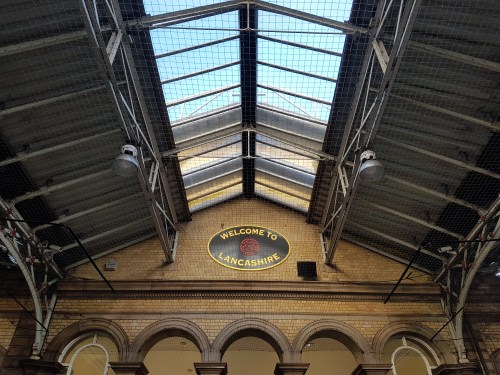
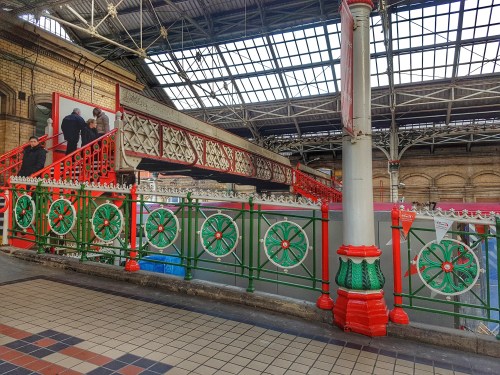
Preston Station is a relic of those marvellous Victorians who created so many beautiful structures, structures that have stood the test of time and continue to amaze us still today. Welcome to Lancashire!

Preston Lancashire

Welcome to Lancashire

I hopped into a taxi and hoped it would head towards the river, but no, to my intense disappointment we are miles away from the centre of Preston 😦 in a suburb called Ribbleton; a seemingly purpose-built town that’s been absorbed into the fabric of the city and now features as a suburb; Ribbleton was a civil parish from 1866 until 1 April 1934 at which time it was absorbed into the County Borough. According to wikipedia, Ribbleton has a library, a number of shops, a pub, post offices and schools. Whoaaaa….I’m definitely going to be exploring that then #not!!! LOL Oh well.

img_20161117_124600

Preston station, Lancashire

My assignment is a double-up with a second Carer and since the notes from the agency said that the Carer can leave the house for their breaks, I thought (mistakenly) that I would be able to hop on a bus and go explore the city centre…but no, the outgoing carer said we can’t leave for more than an hour!! ffs. It really annoys me when I get fed misinformation.

I do believe that the house is near to the Preston Cemetery, so at least I can get to check that out. The cemetery opened July 2nd, in 1855 and according to their website there are 60,108 people interred there with 14,458 gravestones and 3816 different surnames. The earliest year of death is 1781, with the first interment being one: Elizabeth Frances Christian. I did a bit of research on surnames just for fun and although I found a few ‘Eves’ I didn’t find any ‘Eve’ surnames, so I’m guessing we didn’t head this way then…..

I had occasion to step out yesterday to buy the paper for M’Lady and walked past the cemetery….the trees look amazing

Preston Lancashire

Autumn colours in the cemetery

So if I am to explore Preston and see the city it will have to be within the two hours before I leave the city. What a shame. Meanwhile with a bit of research I have discovered the following:

Preston is the birthplace of Teetotalism and the Temperance Founder one Edward Grubb; The Last Survivor of that Heroic Band of Preston Pioneer Advocates by Whose Devoted and Self-Sacrificing Labours the TEETOTAL REFORM was extended from a Local to a National and World-Wide Movement. You can read a little more about Edward Grubb here.

Preston obtained city status in 2002, becoming England’s 50th city in the 50th year of Queen Elizabeth II’s reign.  Located on the north band of the River Ribble that runs through North Yorkshire and Lancashire, the Angles established Preston; its name is derived from the Old English meaning “priest’s settlement”.  In the 1086 Domesday Book it is recorded as “Prestune”. Needless to say the Romans have been here….and during that period Roman roads passed close to what is now the centre of Preston. The Romans built some amazing roads during their tenure, one of which ran from Luguvalium (Carlisle) to Mamucium (Manchester) and crossed the River Ribble at Walton-le-Dale, 3⁄4 mile (1 km) southeast of the centre of the city.

So, in summary, I’m dying to get out and explore!!! But when?  Urgh. The joys of my job.

Read Full Post »

« Newer Posts - Older Posts »

Self Propelled

Self propelled adventures through life; blogging on cycling, touring, micro-adventures, general shenanigans, and environmental news

johnelsewhere

Thoughtful wanderer in search of virtual meaning

Things Helen Loves

TRAVEL, WALKS & EVERYDAY ADVENTURES

Short Walks Long Paths

Wandering trails around the coast of Wales

Port Side Travel By Jill

My travels, photos, tips/tricks and anything else I think of!

Wonderwall

My 360: wonderwalls,theatre, travel, Sheffield, books...

Robyn's Ramblings

My Thoughts. Expressed.

Graham's Long Walk

Graham King's long walks around Britain

The Lawsons on the Loose

Philip & Heather are making memories through their travels.