Feeds:
Posts
Comments

Archive for the ‘Holidays’ Category

I was looking for a recipe for mulled wine and found this on Yahoo. I was expecting to open a link direct to a recipe; I found this instead.

It made for entertaining reading and there are some great recipes too 🙂

I have listed some of the comments below; unedited:

a. simple-buy a bottle of german gluhwein add fruit and spices and off you go

b. Go to a German Christmas market, (they are in a lot of UK cities) buy a bag of mulled wine herbal mix (about £3) and follow instructions. Takes 15 minutes. Easy!

c. you can get mulling spices at most supermarkets this time of year
just put them in the wine, poof

d. Currently, as I have it in the cupboard, I open red wine, put it in a pan, and pour mulling syrup into it.  If I didn’t have this then it depends what I have in.  It always contains Red Wine, cinnamon stick, cloves, honey and nutmeg.
If I have them I will stud the cloves into either a tangering/satsuma/orange or an apple.   sometimes I also add lemon/ornage zest & juice.
Mulled wine is such a varied thing that having a set recipe is pointless, just warm the wine witht he spices and add things if you think it will improve it.

e. Mug a homeless wino as they are they only people who can get real mulled wine, no one knows where it comes from.

f. GO TO YOUR NEAREST SUPERMARKET BUY A BOTTLE,,,IT’S CHEAPER THAN YOU CAN MAKE IT AND QUICKER,,, OPEN IT DRINK IT AS QUICK AS POSSIBLE THEN YOU WONT WORRY WHAT IT TASTES LIKE,,, ,,, THE 3RD GLASS MAKES IT TASTE FANTASTIC,,, JUST DONT FART BEFORE THEN,,, LOL

g. If you buy decent wine in the first place you won’t have to try and disguise it

and then a real recipe:

1. For fantastic mulled wine. 2 bottles good wine, ginger , star aniseed, cloves , fresh large wedges of orange and lemon, cinamon stick & sugar.
wonderful drink.
2 bottles wine, 1 bottle water, 1 small cup brown sugar or honey, 1 orange & 1 lemon cut into wedges, 4/5 star aniseed, several cloves stuck into the orange, 1 cinamon stick and grated peeled fresh ginger. Heat gently, don’t boil.  Thats it, Fantastic

and finally:

2. 4 cups apple cider
1 (750-ml) bottle red wine, such as Cabernet Sauvignon
1/4 cup honey
2 cinnamon sticks
1 orange, zested and juiced
4 whole cloves
3 star anise
4 oranges, peeled, for garnish
Directions
Combine the cider, wine, honey, cinnamon sticks, zest, juice, cloves and star anise in a large saucepan, bring to a boil and simmer over low heat for 10 minutes. Pour into mugs, add an orange peel to each and serve.

and happy holidays. After that I would not be surprised if you have a head-ache 🙂

Read Full Post »

Swindon, the Wiltshire town famous for it’s old rail works and Honda car factory is to be the first twin town of the Florida-based Walt Disney World.

It has been chosen thanks to the efforts of Rebecca Warren, 20, who lives in Swindon.   She produced a winning video slideshow extolling the virtues of the town, and will fly to Florida to unveil a “Walt Disney World Twinned with Swindon” plaque.

Miss Warren said: “I still cannot believe my entry has been selected.  What a great opportunity for Swindon.”

The town beat off competition from Blackpool, Brighton (I’m staying in Hove at the moment, which is nearby) and Cambridge (as they say: it is a delight to visit).

as read in The Times, Tuesday Dec 8th.

Read Full Post »

Have you seen the madness?
With Christmas just around the corner, the time to act is now!


If you still doubt the importance of this festive period, then read the predictions below from a report by Kelkoo:


Christmas sales are forecast to hit £44.7 billion, compared to £43.9 billion in 2008, a year-on-year increase of £832 million. And what are the reasons for this increase? Well, Consumer confidence has improved from unprecedented depths. Retailers are now cautiously optimistic following the ‘Black Christmas‘ of 2008 when sales fell £27 million. Christmas retail sales are now expected to represent 18.5% of total retail sales for 2009.


Online spending at Christmas is also set to receive a boost this year compared to conventional stores, rising from £7.2 billion in 2008 to £8.9 billion in 2009. Online spending as a whole continues to fare well, despite the recession. Online sales have increased dramatically in the past decade from £31 million in 2000 to an estimated £8.9 billion this Christmas.
Everyone LOVES the madness of high-street shopping, or do they?   The crush, the pushing & the shoving!   We all love having to lug bags and bags of shopping around and if the predictions are anything to go by, then thats what you will be doing!   However, in the comfort of your own home, this is how to avoid the crush in Oxford Street during the build-up to Christmas.
Have a very Merry Christmas time!


Read Full Post »

Woke with much excitement this morning; off to the Isle of Skye today.   Had breakfast and packed a picnic lunch 🙂 and set off real early. We wanted to make good progress as the island is over 50 miles away and would take about an hour or so to get there.   Hahaha! Little did we know!

On the way out I stopped at reception to ask for a new kettle; ours had died 😦 and to take a photo of the reception area.   This set the tone for the day! 🙂   Everything is so gorgeous and we didn’t stop once or twice, we stopped dozens of times!

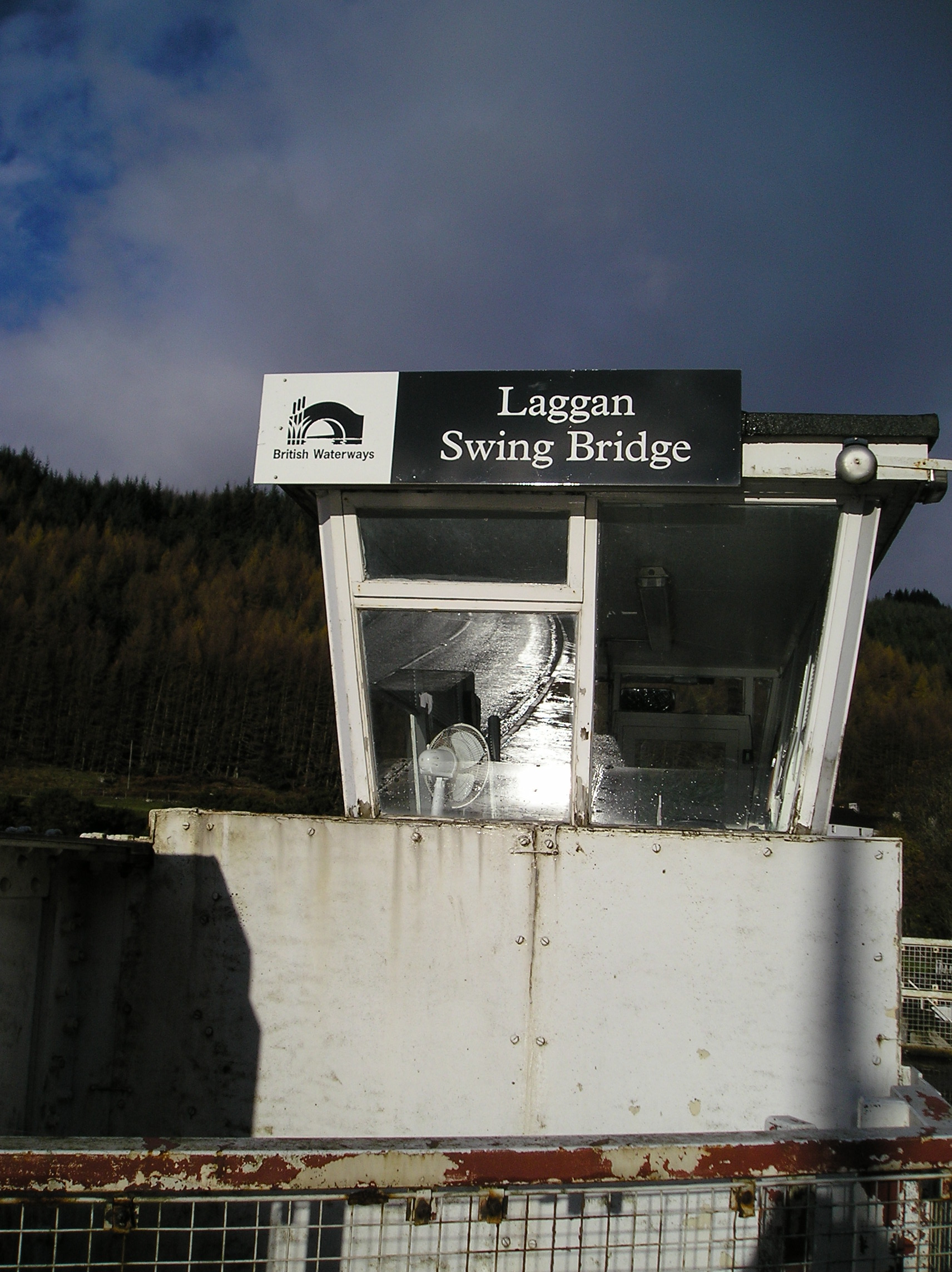
We barely left the grounds of the park when we made or first stop!   At Laggan Swing Bridge.   The day was absolutely glorious and the water on the Loch such a beautiful blue, it just begged for a photo or two.

Laggan Swing Bridge

part of the bridge mechanisms

The valley we are in is just breathtakingly gorgeous and yet we had no idea of the splendour that waited ahead.   The next stop was hardly a mile down the road and so it went.   We eventually got to Invergarry where we were to turn left for the Kyle of Lochalsh and the Isle of Skye.
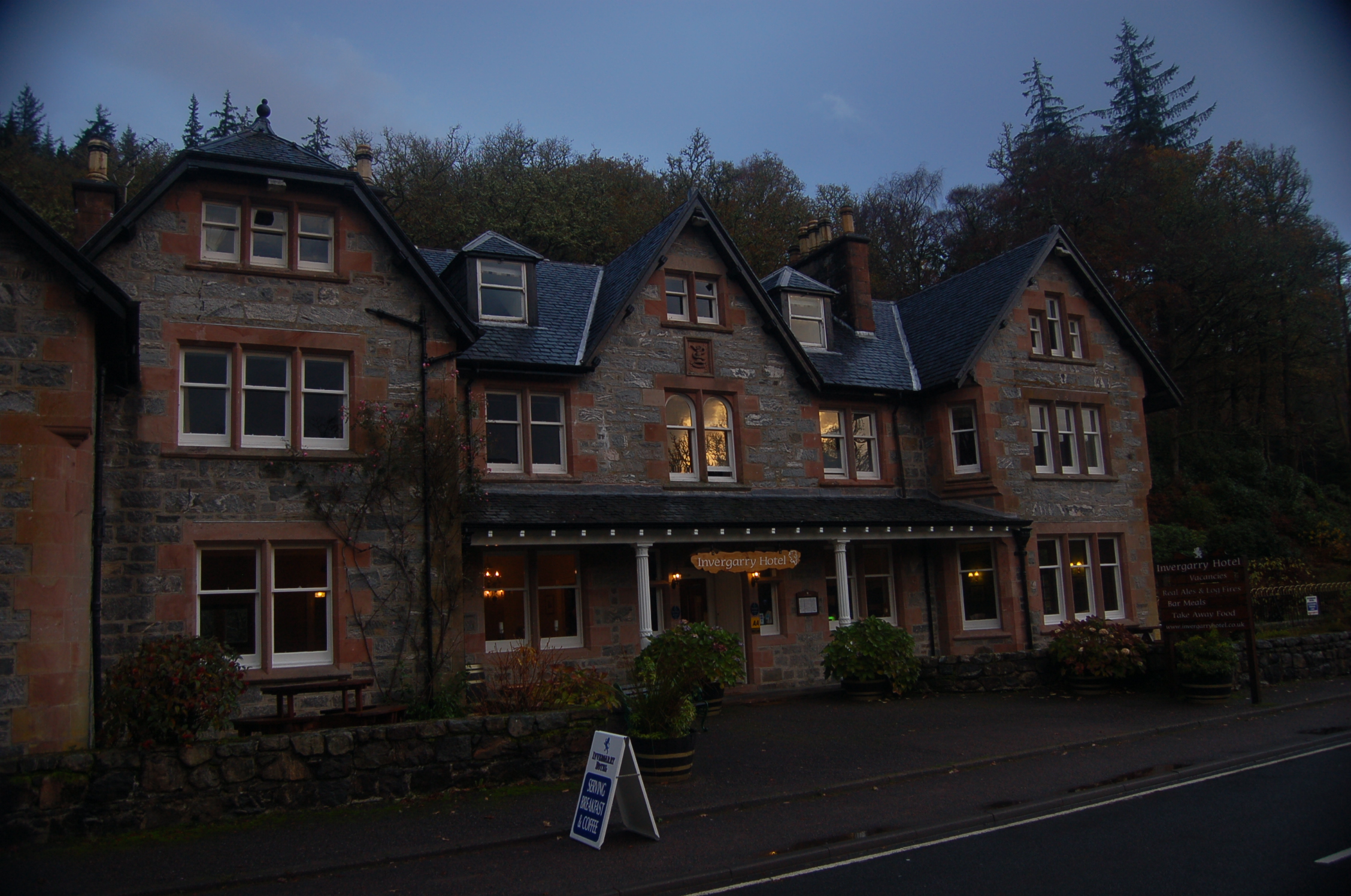
Invergarry Hotel

Of course we stopped once again in Invergarry to take photos of the wonderful hotel

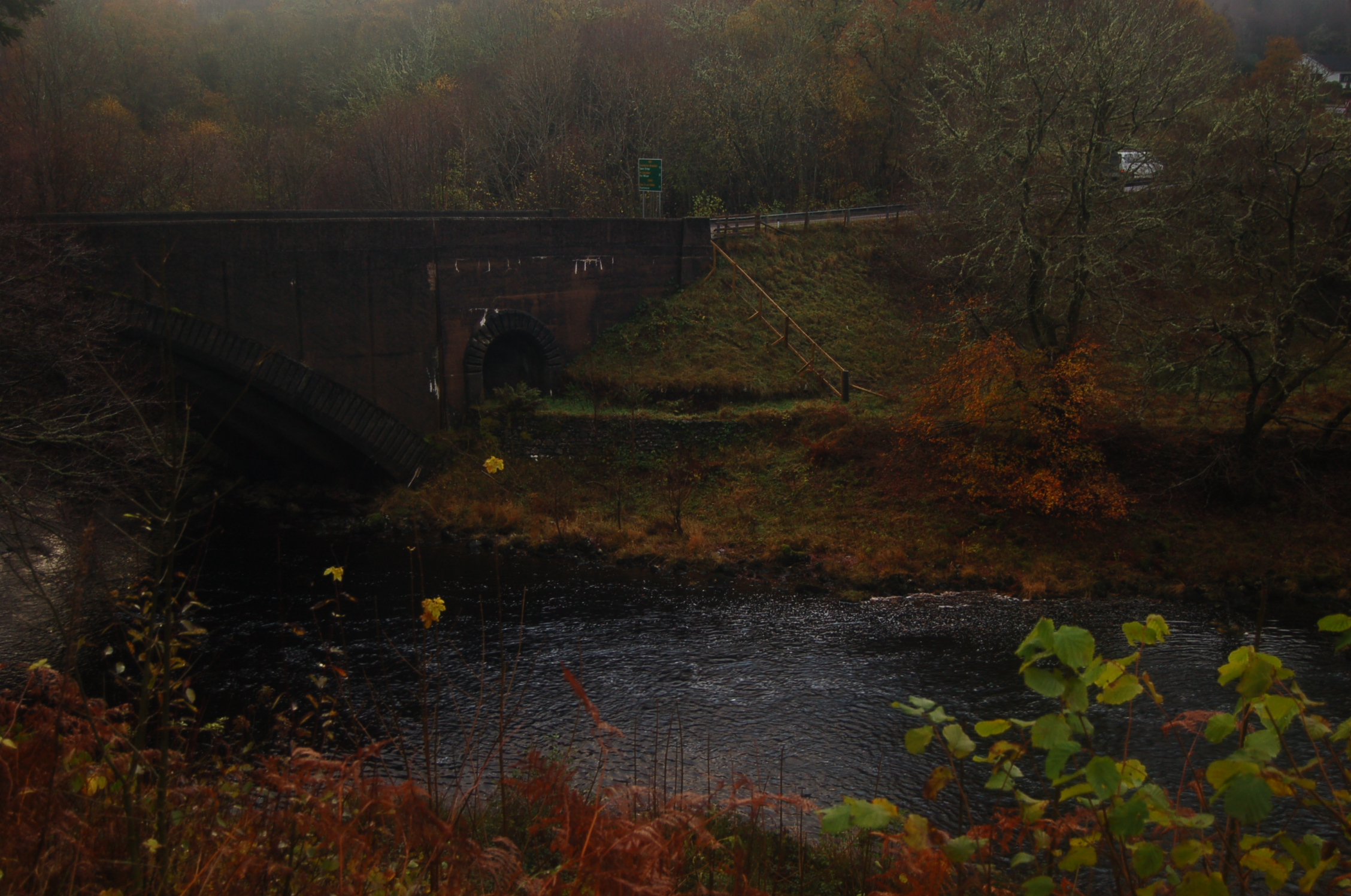
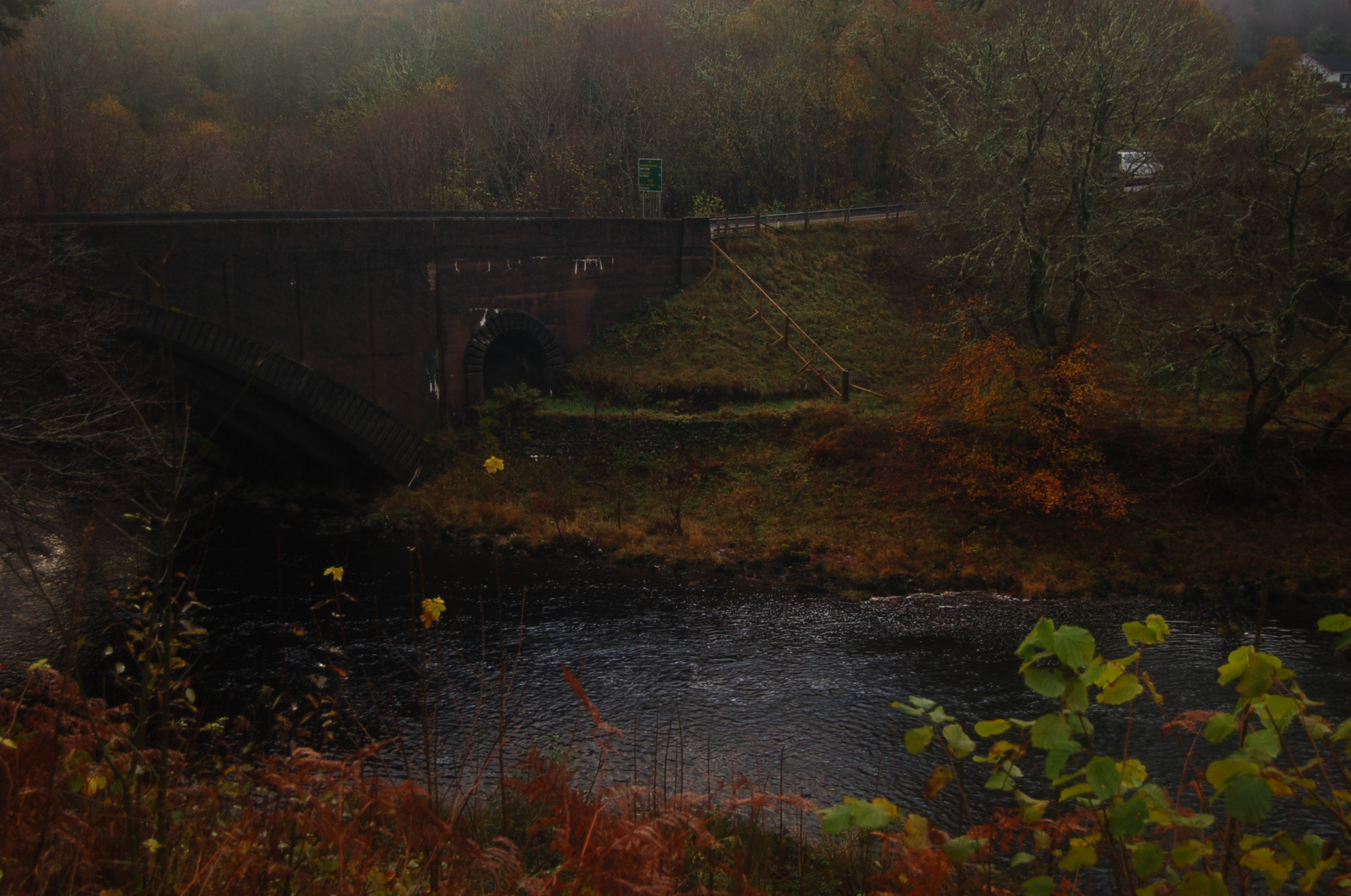
the bridge with river running swiftly below

the beautiful stone bridge we had just driven over and the river that rushed by in the ravine below.
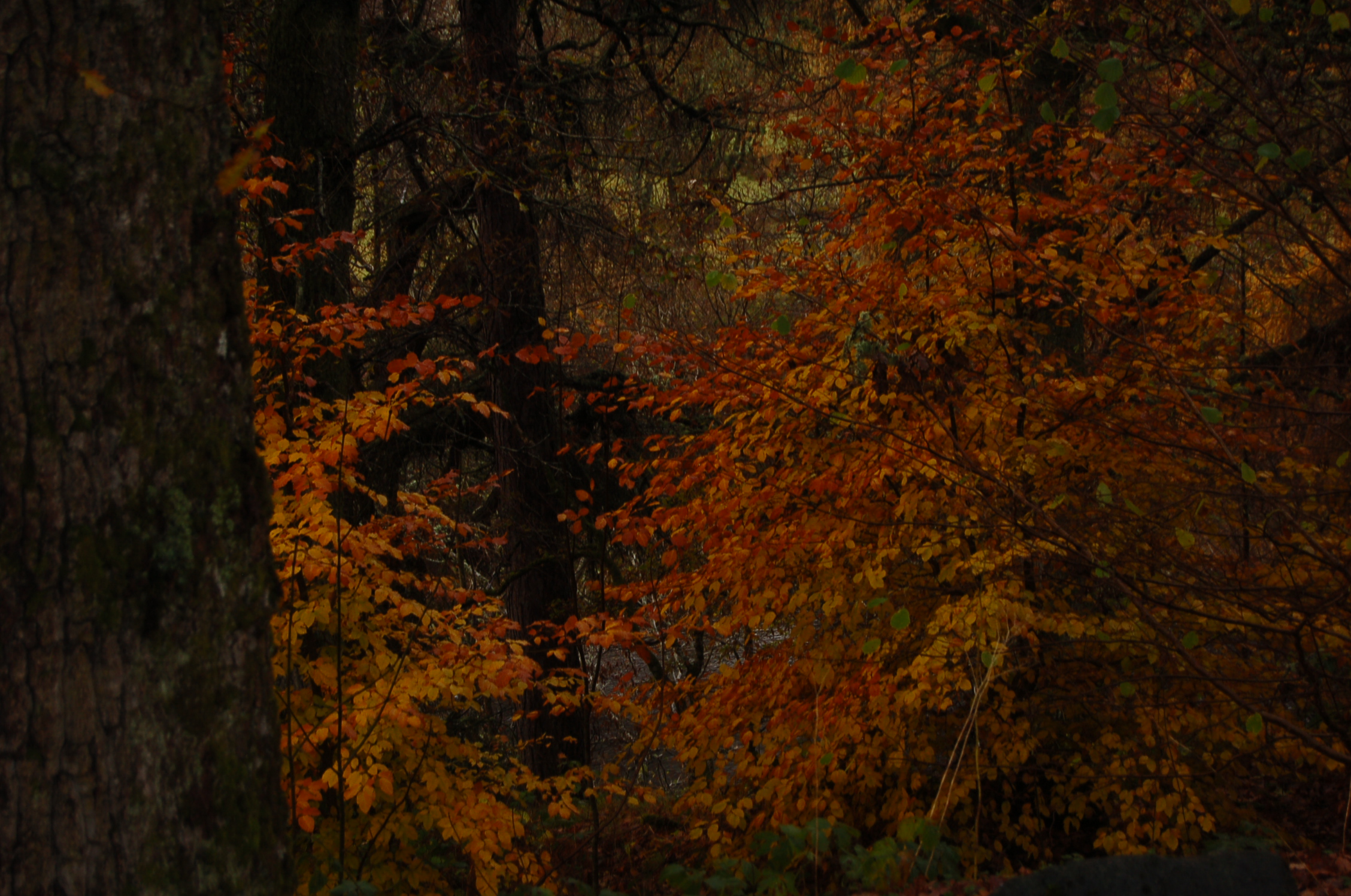
colours too gorgeous to imagine

The colours of the forest are just too gorgeous to imagine.

We did not linger too long and soon made our way towards Skye.   Oh my word!   The scenery was absolutely spectacular.  We hardly got anywhere at all with the frequent stops along the way.   Driving through hills of Glen Quoich was such a treat.  We gasped with disbelief when we rounded a bend and there before our eyes was Loch Garry! 
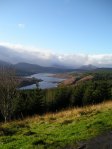
Loch Garry

Stupendous is just insufficient to describe the beauty.   The Loch is huge and stretches for mile upon mile, a massive expanse of beautiful blue water snug amongst the steeply sloping tree covered hills.
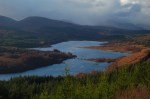
wooded slopes leading down into glacial valley; Loch Garry

A left-over from the glaciers that formed these valleys 12,000 years ago, the water is a flat expanse of icy-blue.

mile upon mile of blue water

We spent ages just looking, reluctant to leave, but time was fleeting and we still had quite a way to go.

The road twists and winds, up and steeply down through towering hills and wooded glacial valleys,
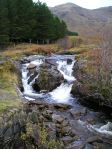
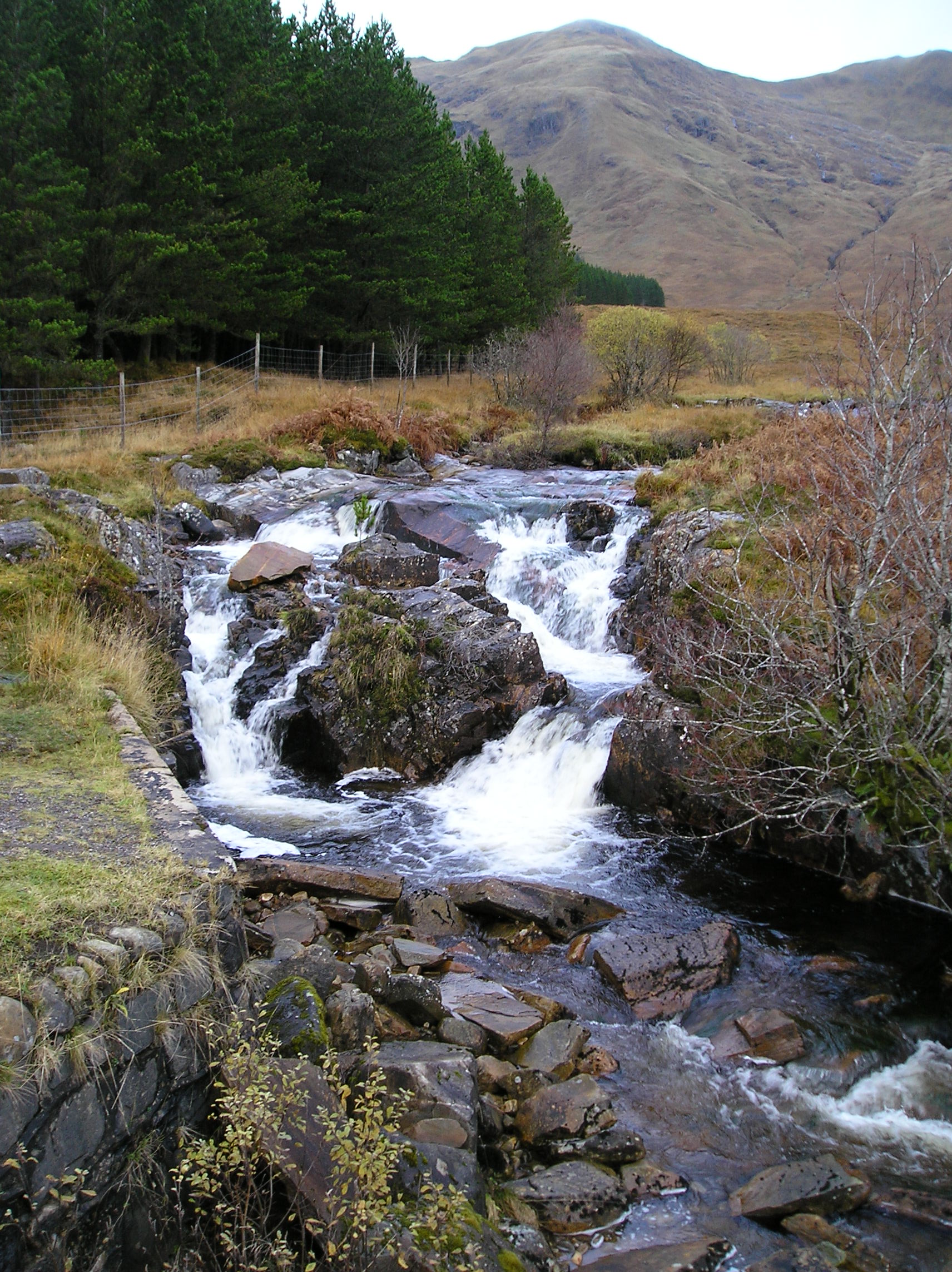
gushing waterfalls everywhere you look

gushing waterfalls round every corner and rushing headlong down the mountain sides.
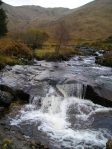
rushing, gurgling down the mountainsides

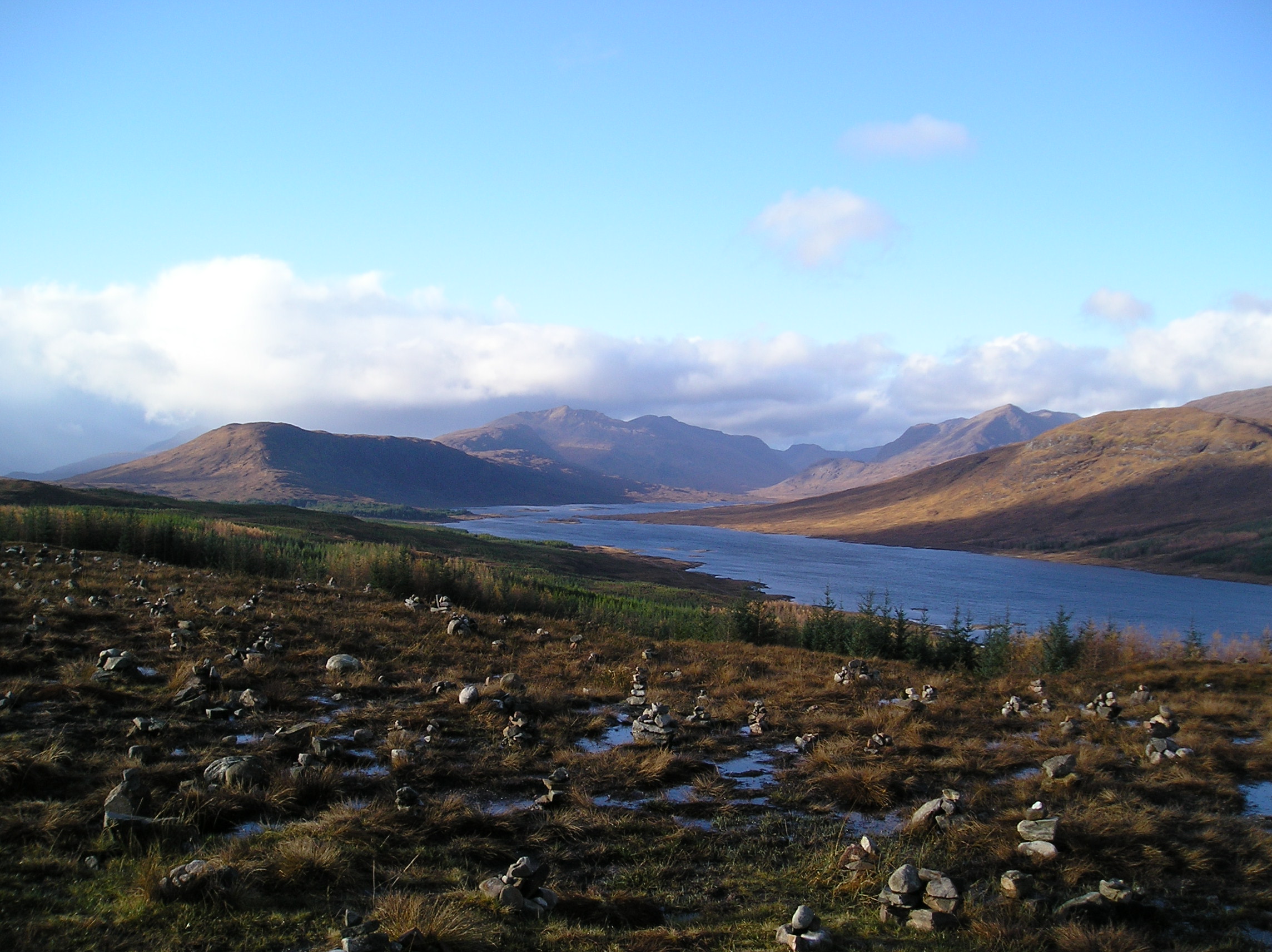
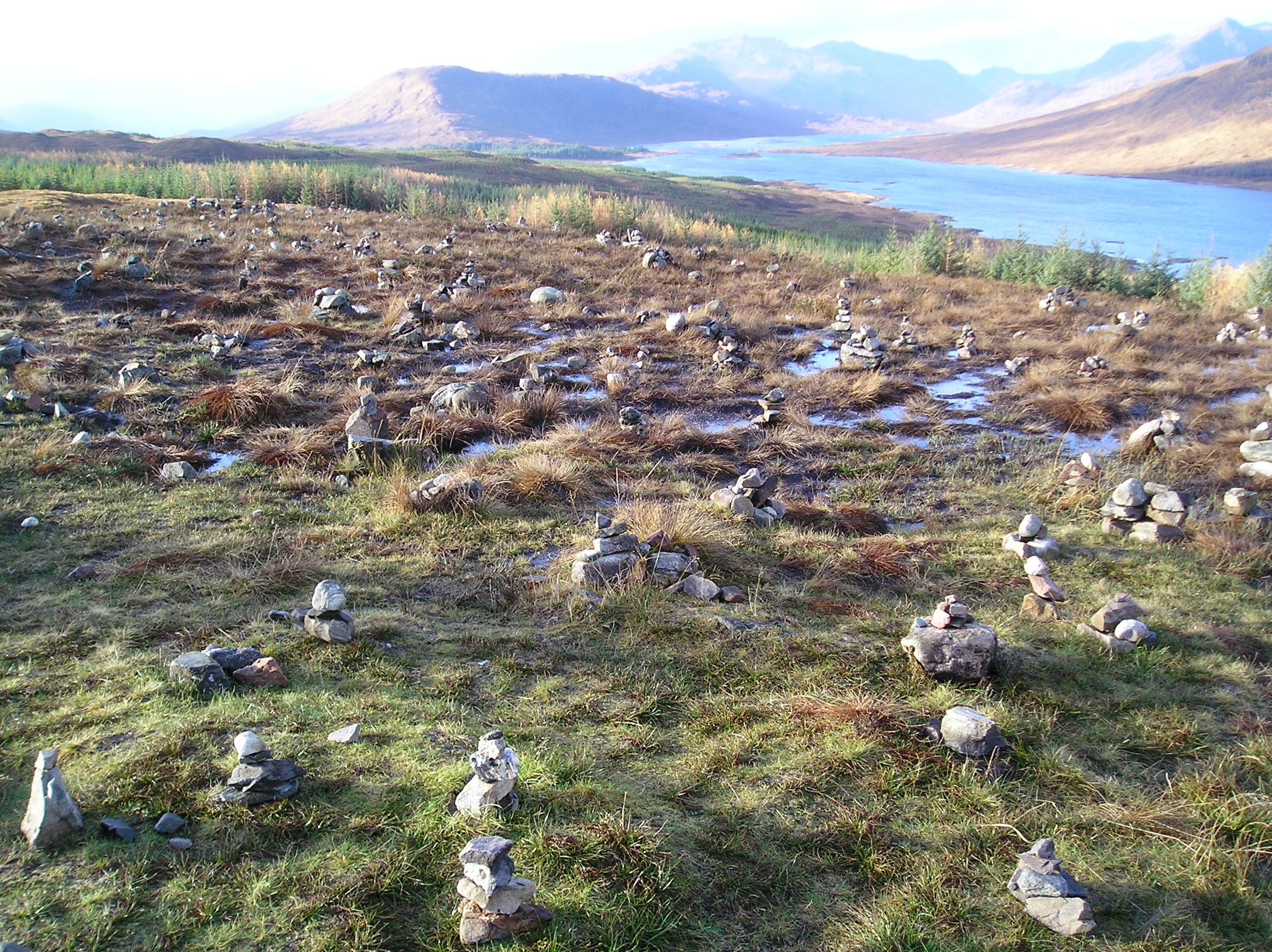
At one spot where we stopped, right at the top of the mountain, we were greeted by a really strange spectacle: a large flat expanse of ground with countless little cairns dotting the area. Really bizarre.
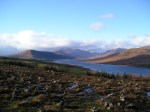
hundreds of little cairns dotted the hilltop
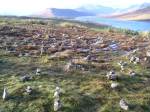
countless cairns, blue glacial waters of Loch Garry in the backround

We kept saying: ‘Ok, no more stops now till we get to Eilean Donan Castle’!   Pointless words, every corner revealed another view, another waterfall,    

another bridge, and we screamed to a stop so many times that it eventually became a joke.
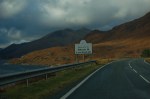
welcome to Skye and Lochalsh

Welcome to Skye and Lochalsh

Nearing Kyle of Lochalsh we passed through a tiny village situated right on the edge of the Sound of Sleat, a massive stretch of water on the left and on the right a valley cut in the cleft of the mountains we had just driven through.

The village of Dornie in the background, the Sound of Sleat on the right

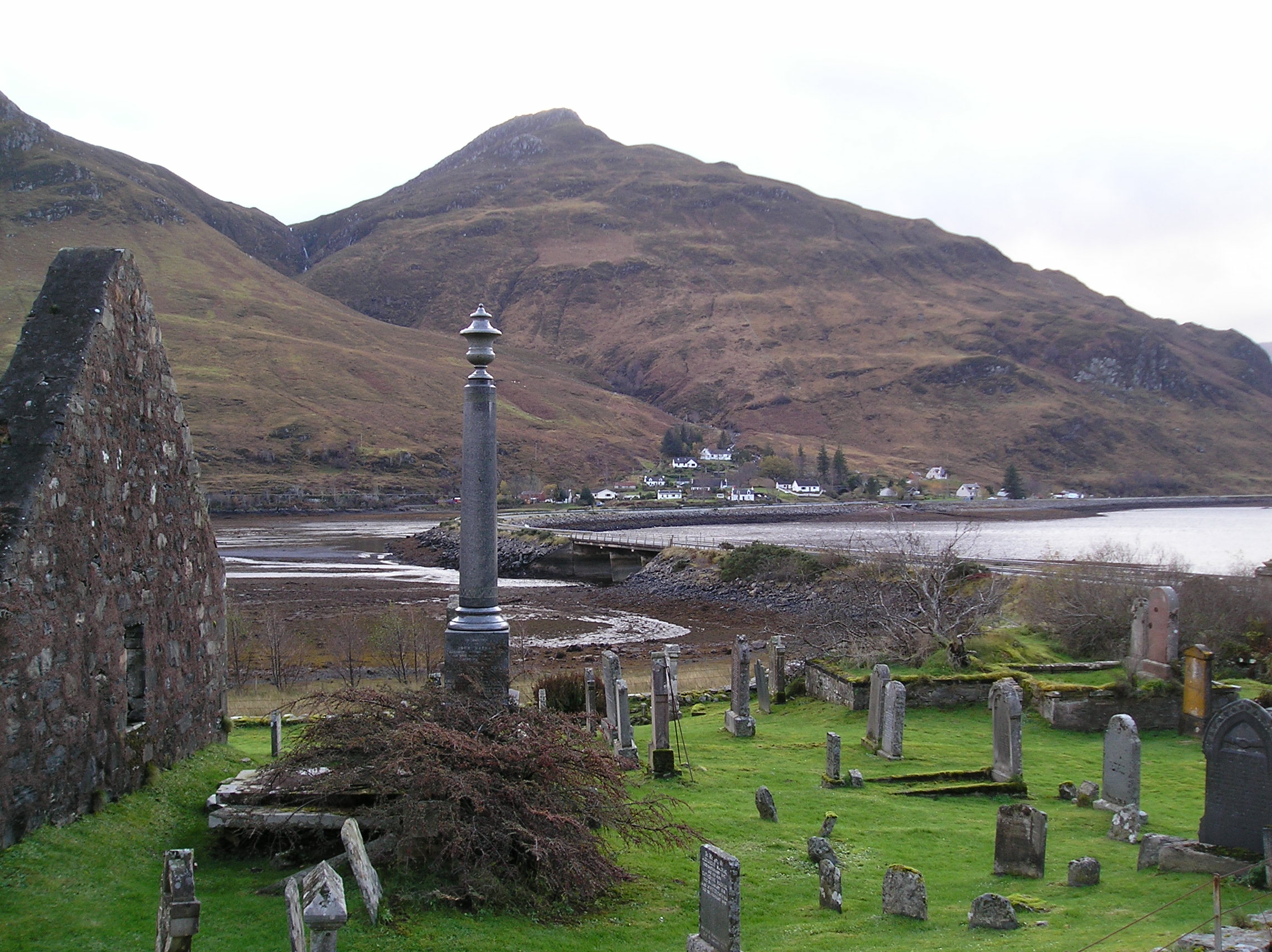
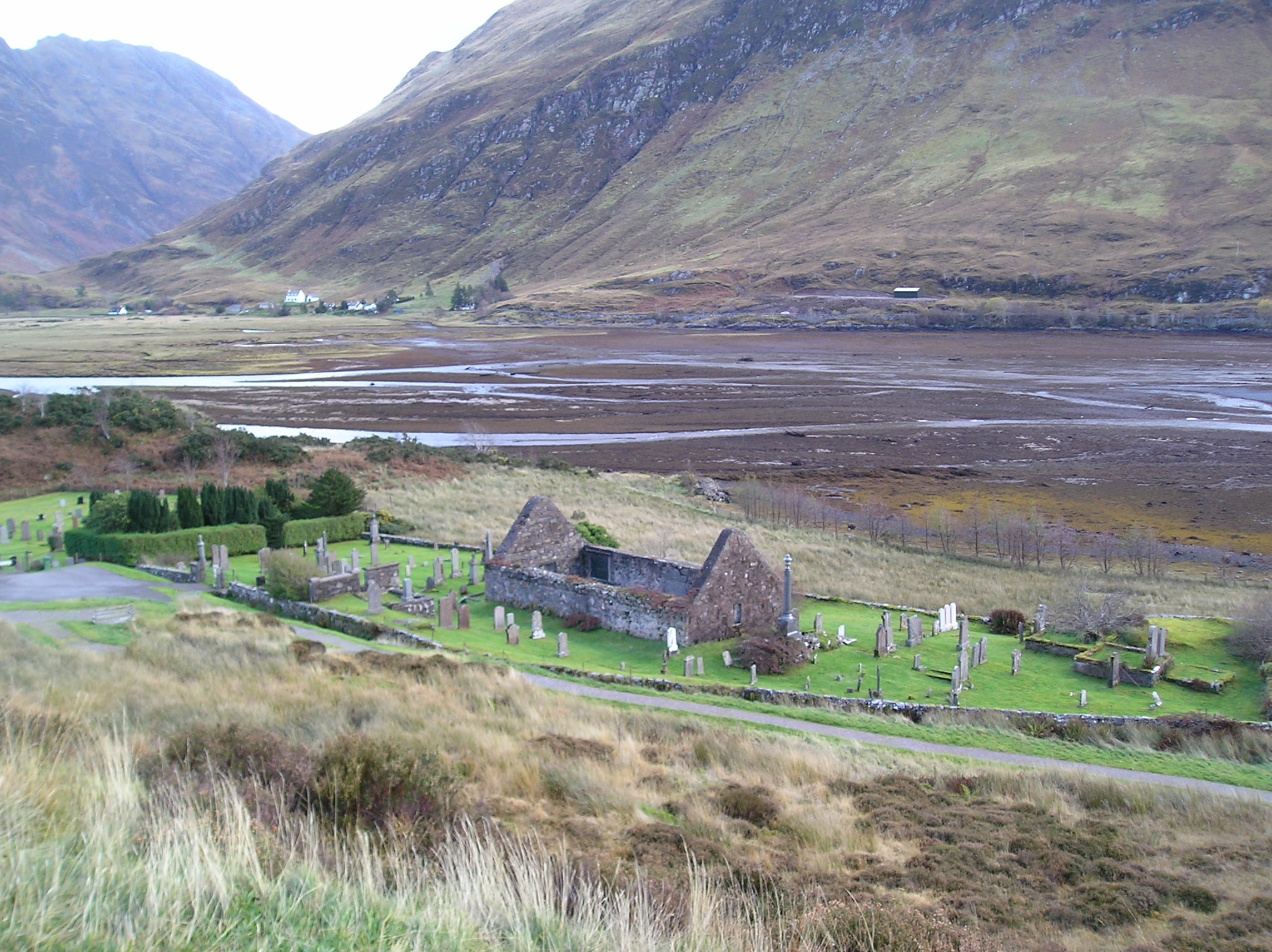
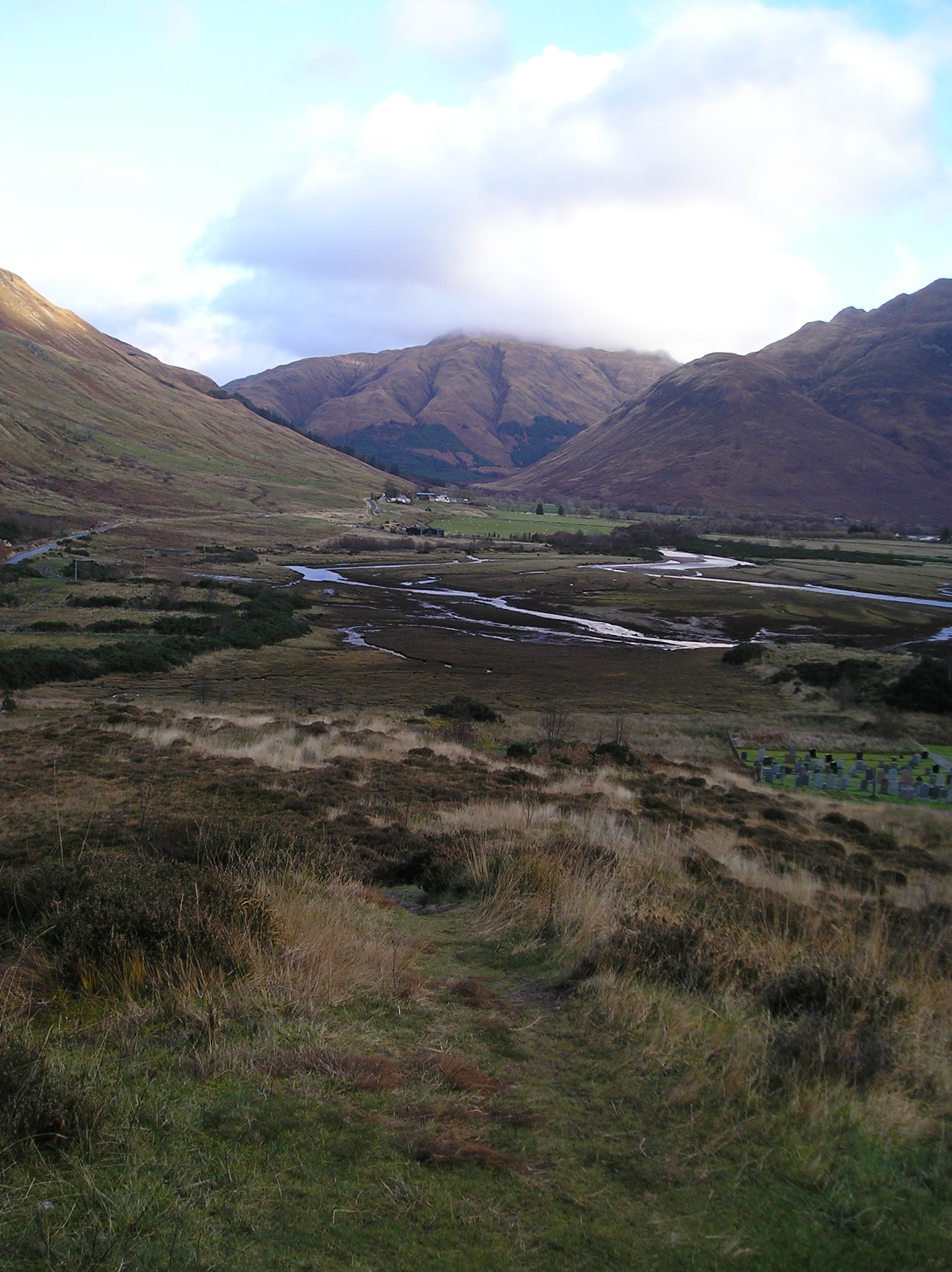
As we passed through the village I noticed a statue high on top of a hill and a ramshackle church in the middle of an ancient graveyard.  
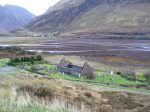
roofless church in graveyard

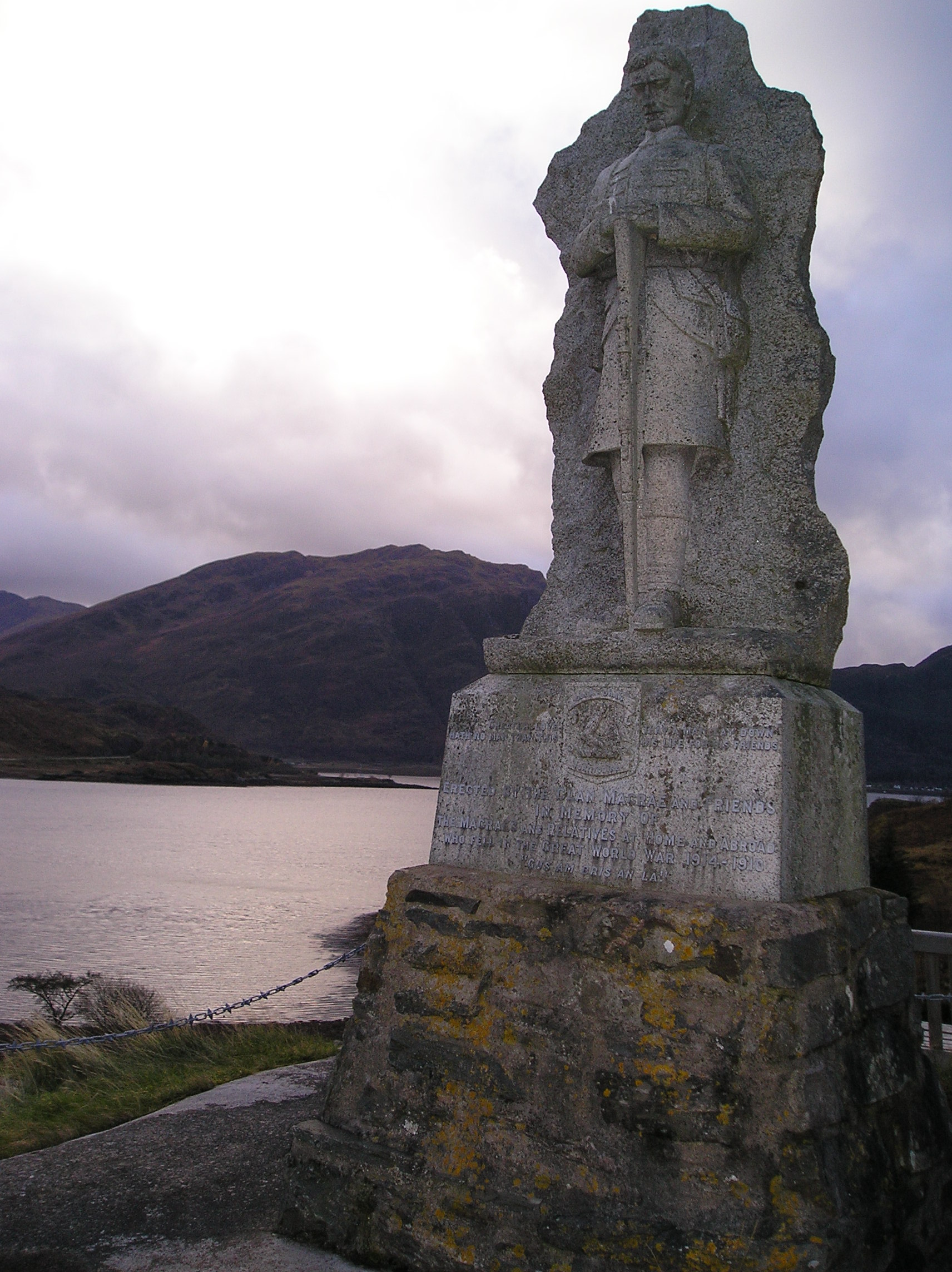
We screamed to a stop once again (I am sure I wore the brakes out!) and parking the car snug against the hedges, walked along a winding dirt path that took us up the steep sides of the hill and eventually to the top and behold: the statue.   It was actually a memorial erected by the clan Macrae and friends in memory of Macrae’s home and abroad who fell at home and abroad in the Great War of 1914-1918. 
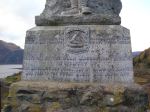
Memorial inscription

the stone memorial and statue

The stone edifice of a man in uniform with the family crest carved into  the stone; has a view second to none, as far as the eye can see,

a view as far as the eye can see

across the hills and along the valleys far, far away. 

me on the hillside

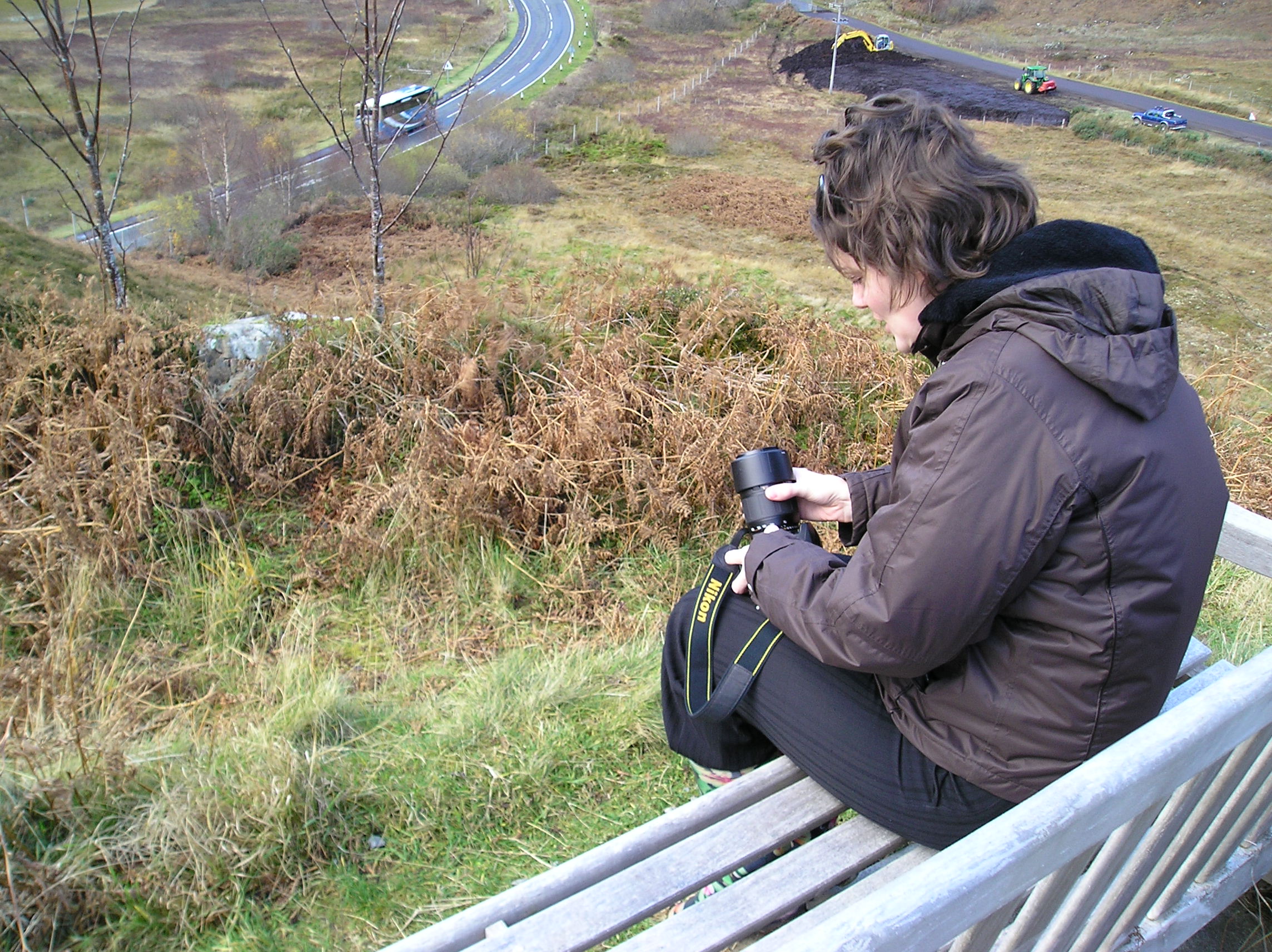
There are a couple of benches atop the crest and even though the wind was attempting to blow us off our feet we sat and tarried for a while in the peace and quiet. 
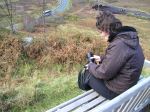
CJ sitting on the bench atop the hill

Then we clambered back down through slushy mud and peat, ever mindful of holes and uneven ground just waiting to twist an unwary ankle!

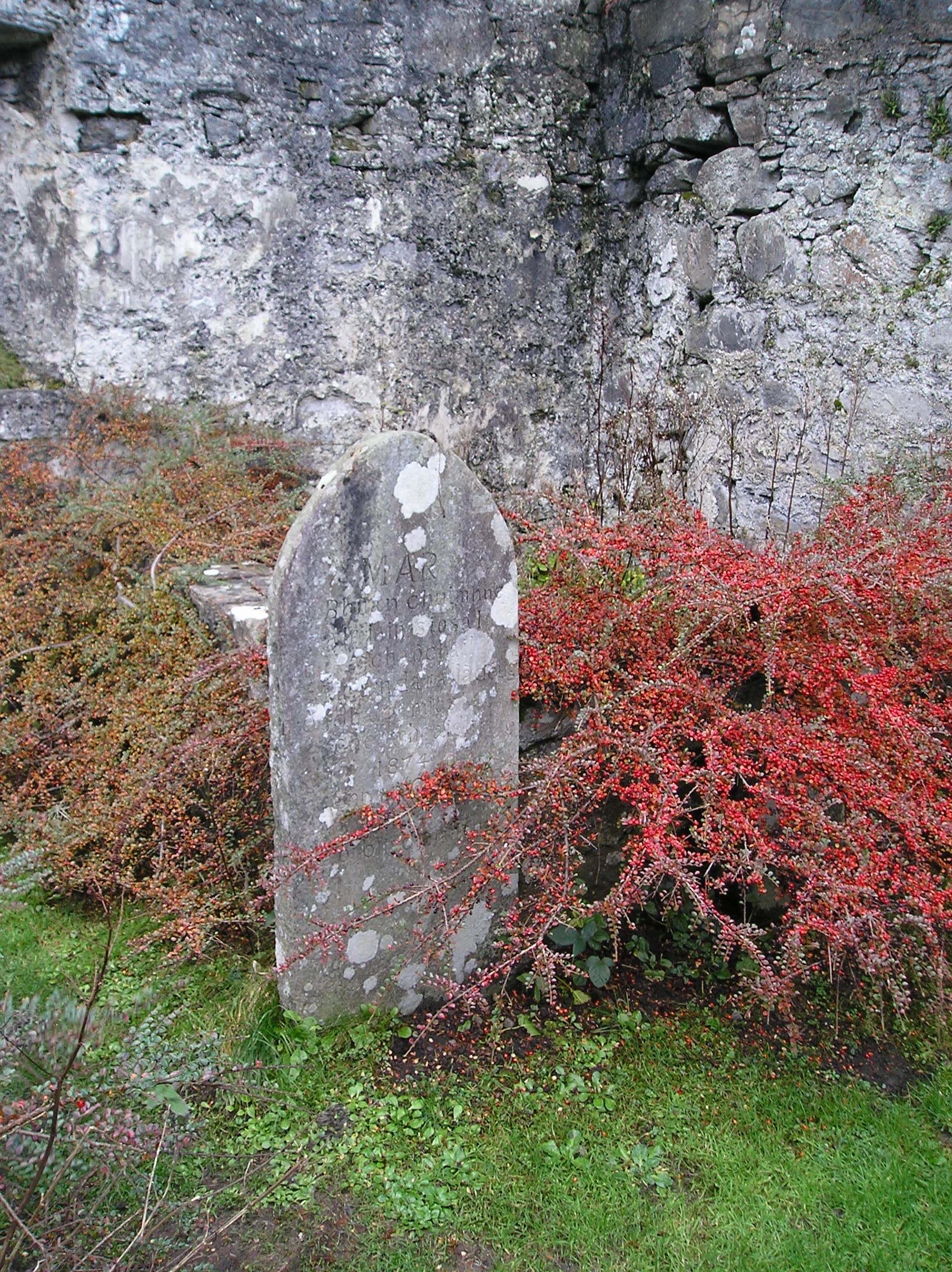
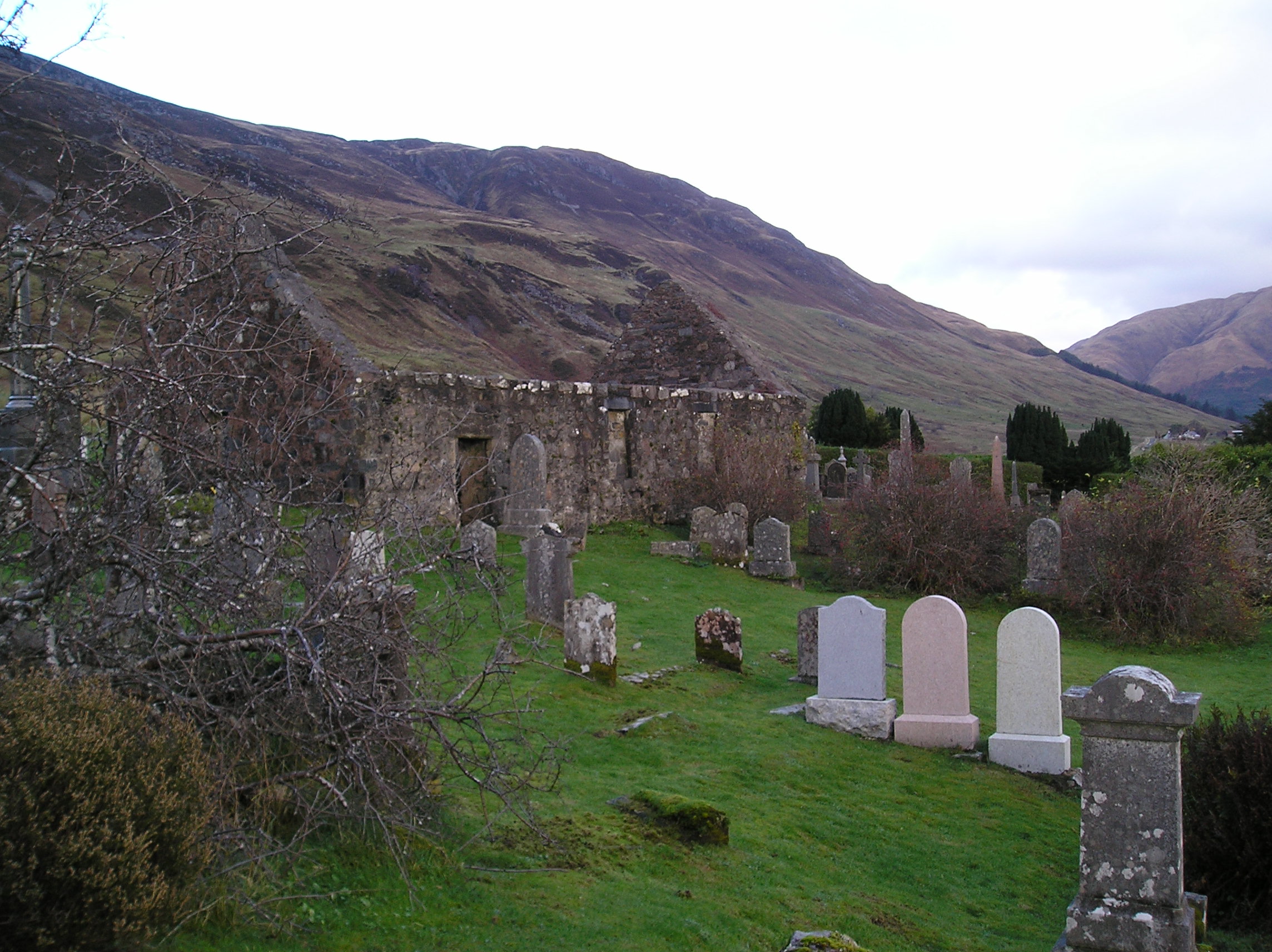
Thence to the graveyard; to explore the tumble down roofless church, with
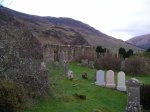
tumble down church

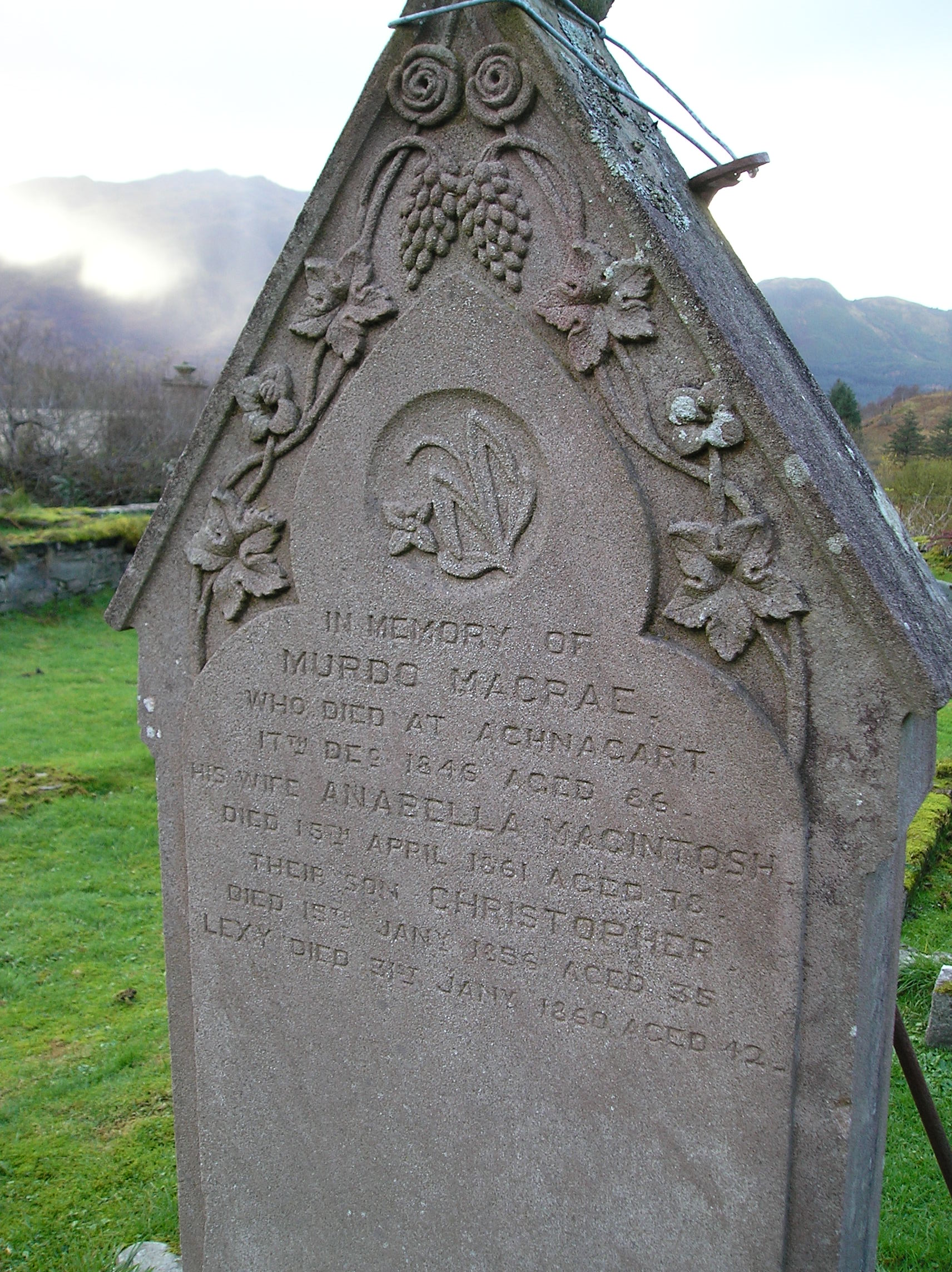
new memorials alongside ancient gravestones and memorials; I love those old cemeteries, the stories they tell.  


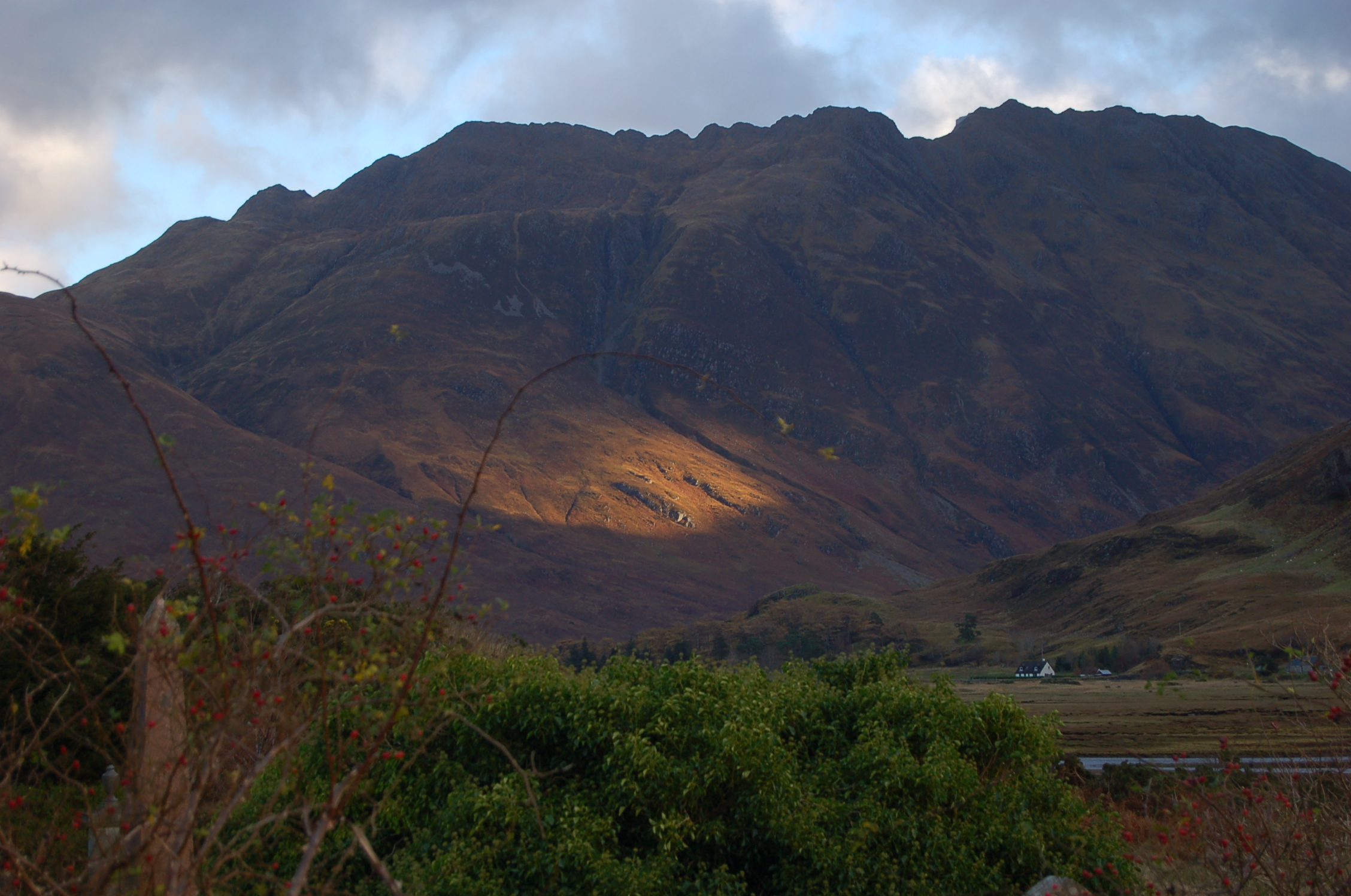
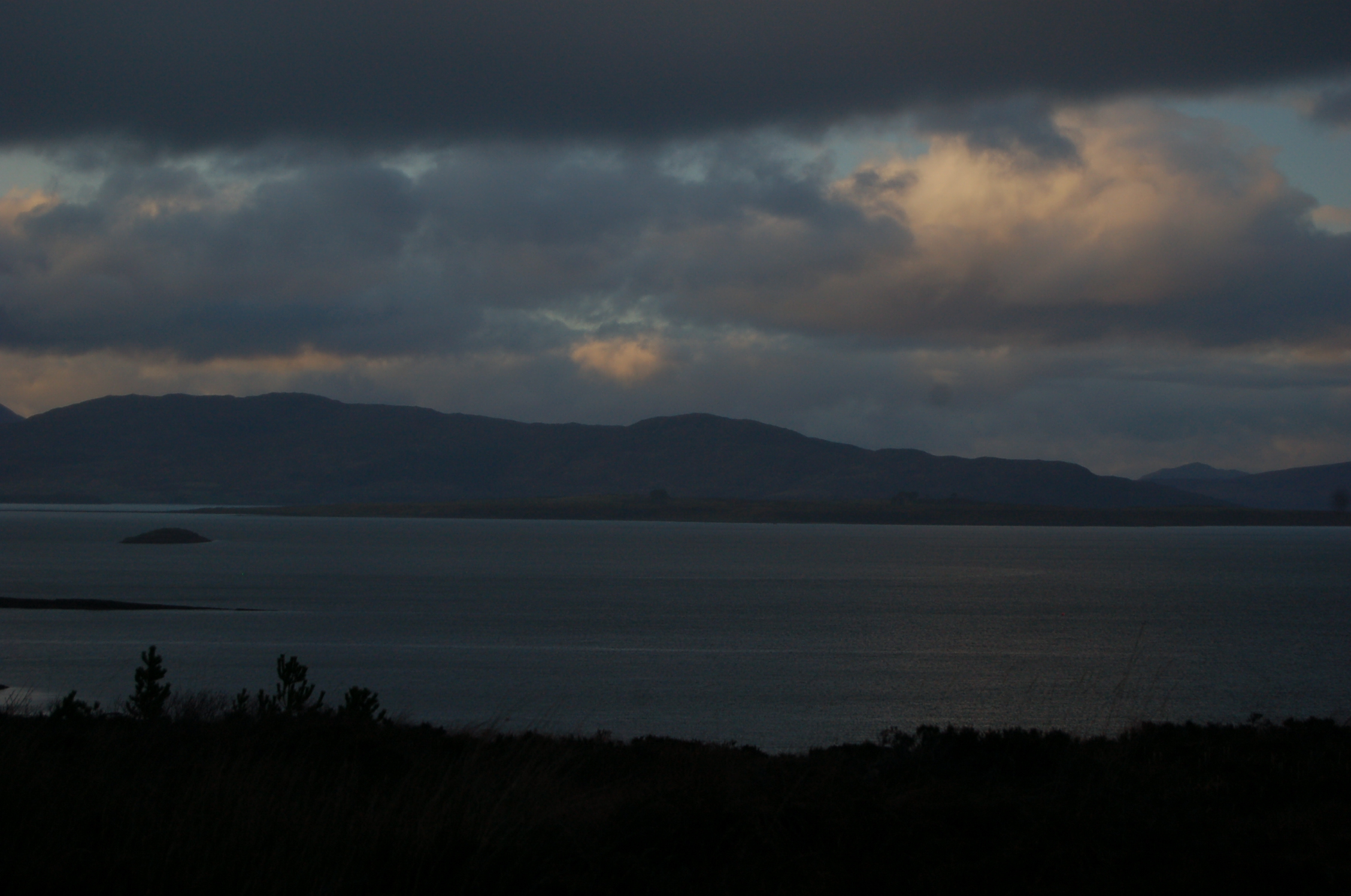
As we clambered about the sun broke through the clouds and shone down in a stream of silver light onto the loch and hills. 
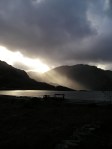
sun touching the mountains

What is quite amazing is that these two photos were taken within minutes of each other from slightly different angles!

Not long and just after we had said no more stopping till we get to the castle, we rounded a bend and there it was!

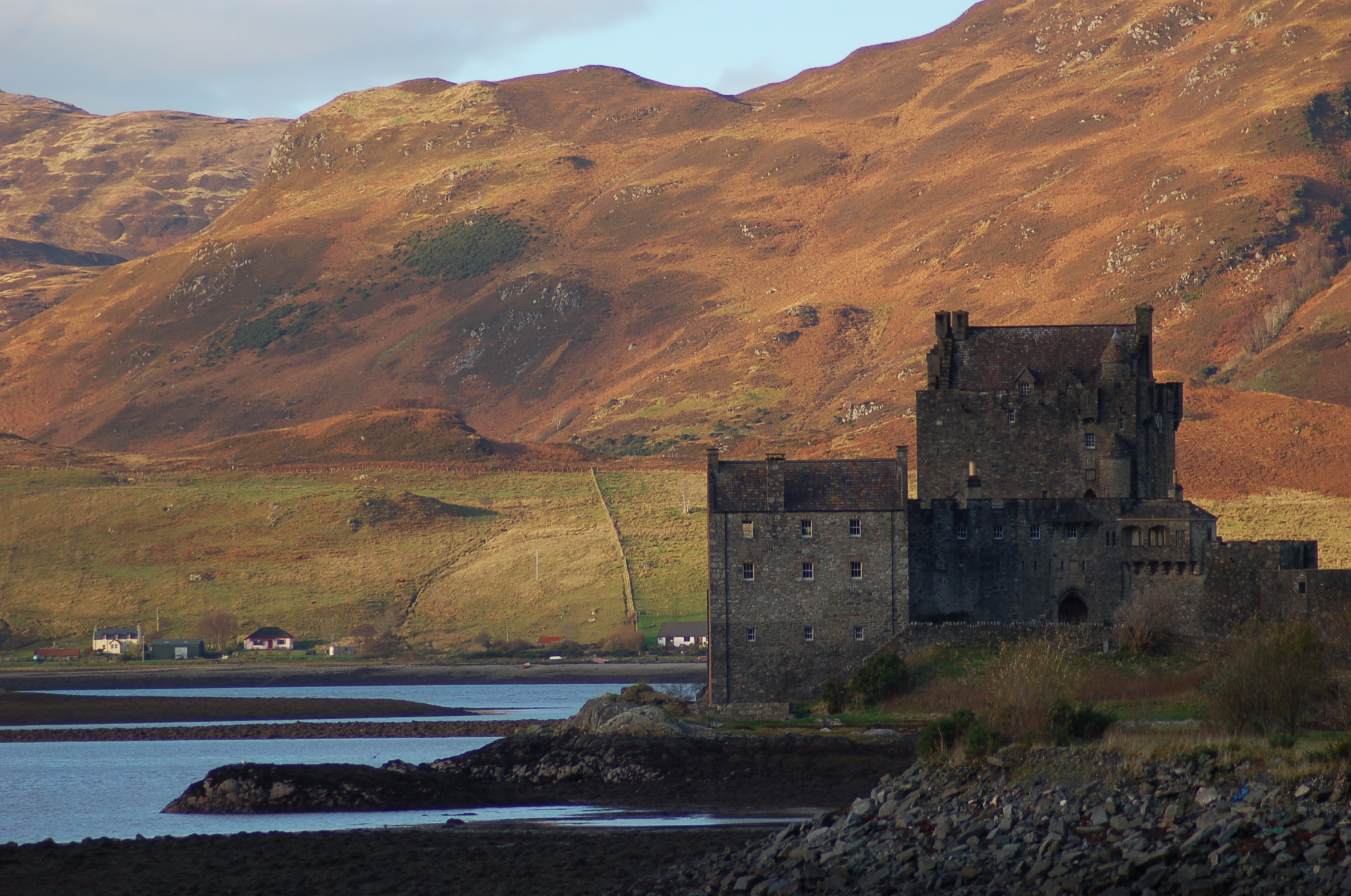
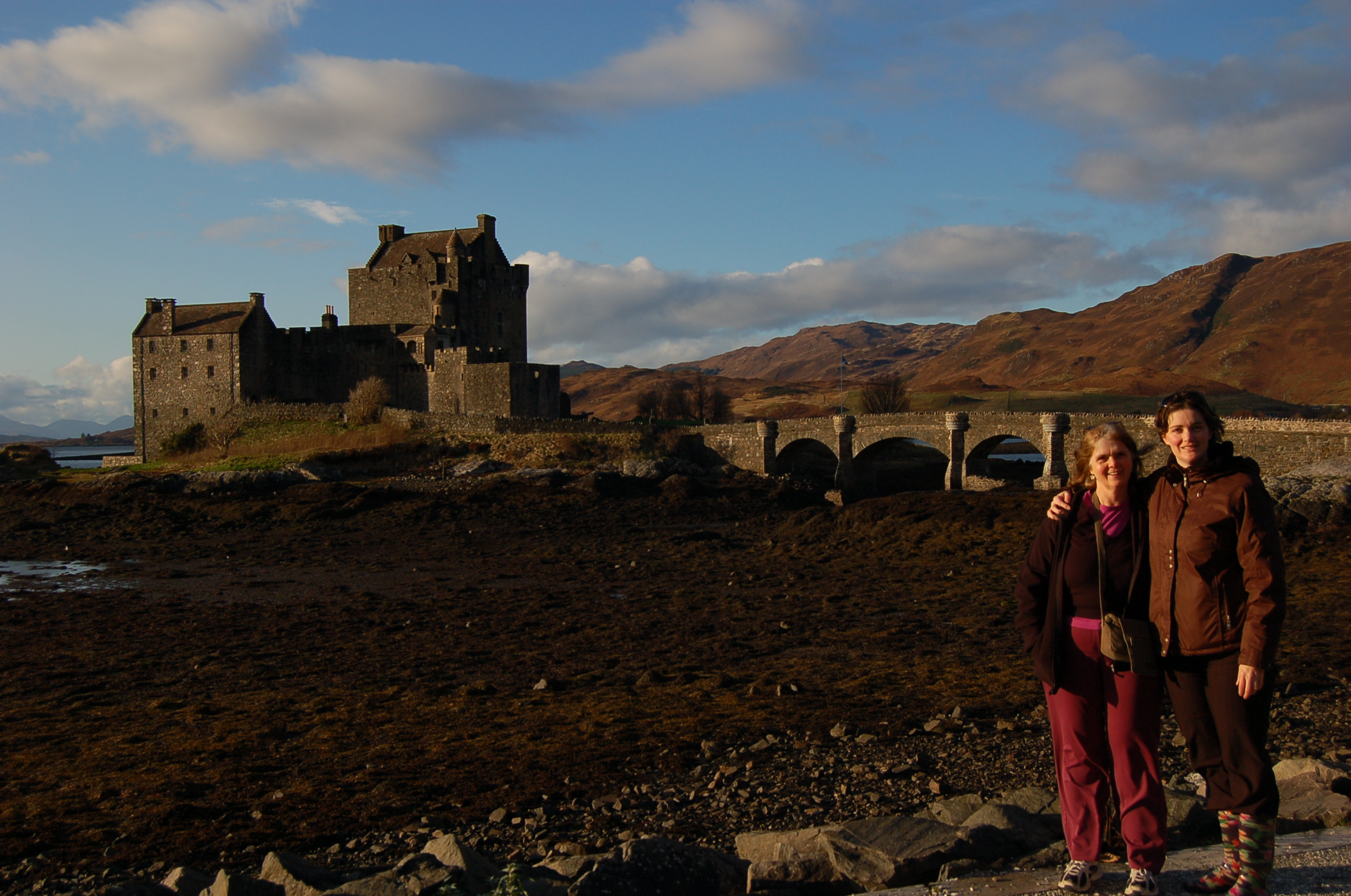
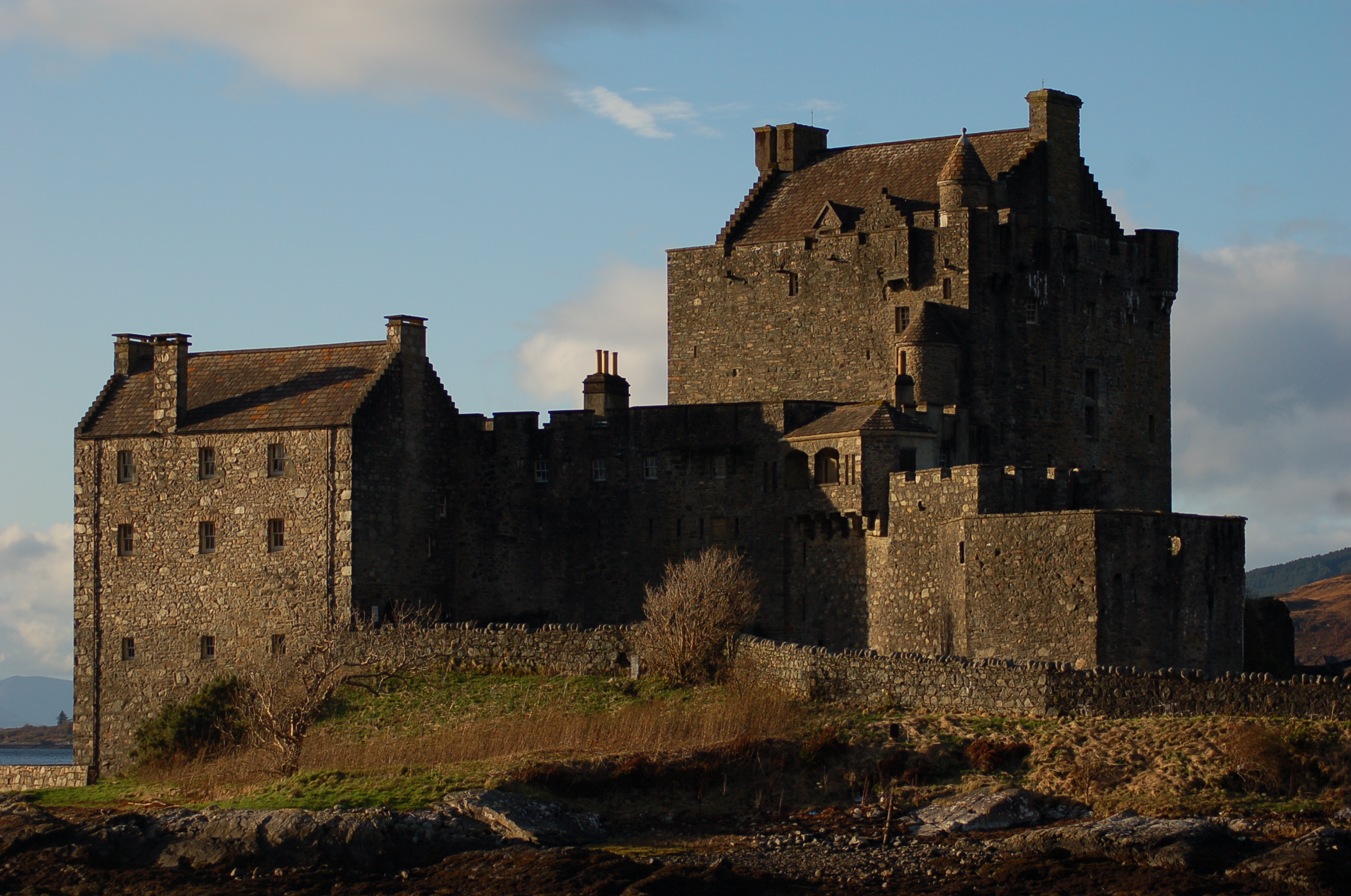
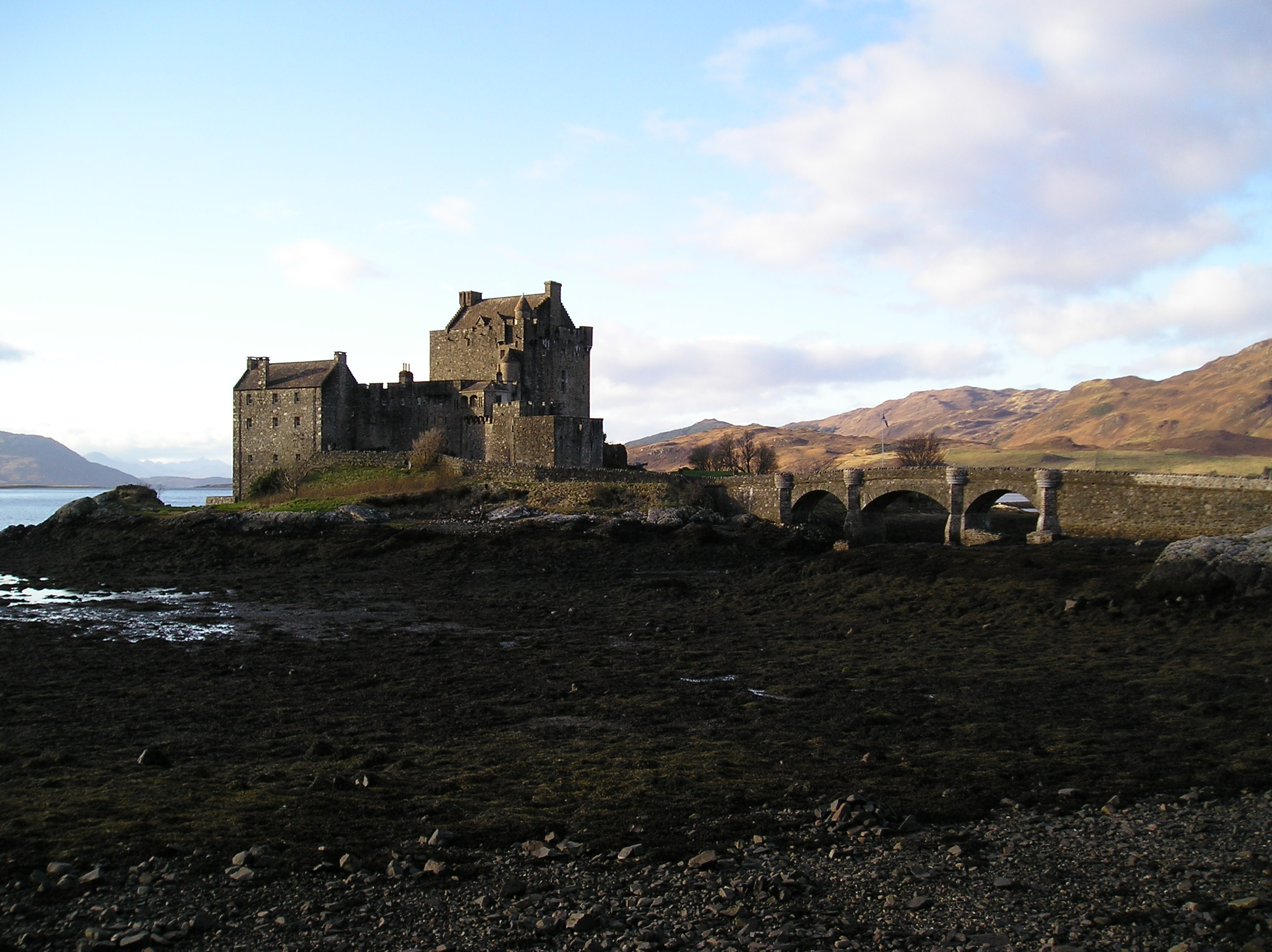
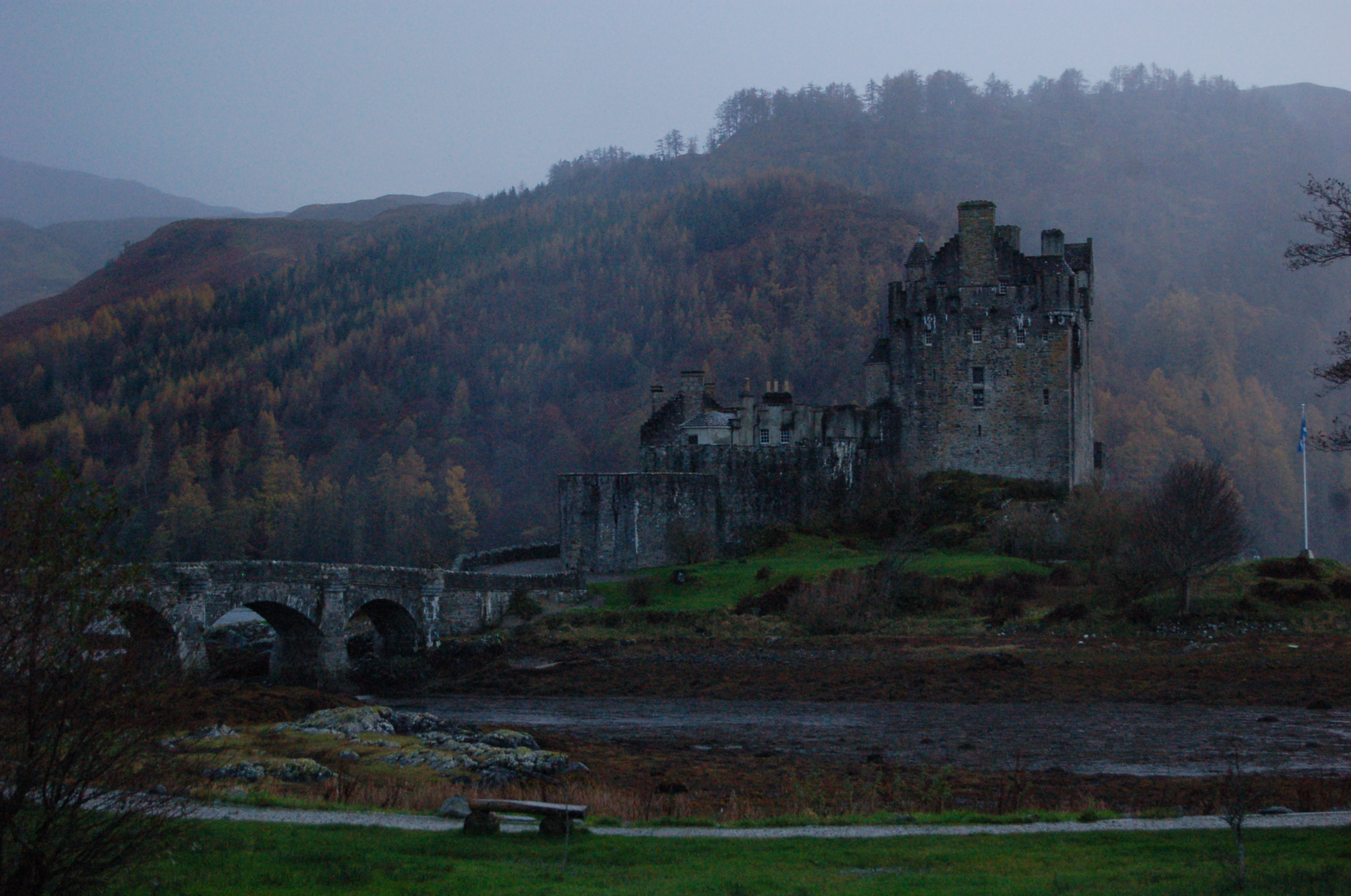
Eilean Donan Castle

Eilean Donan Castle perched on its island at the head of Loch Duich.

Eilean Donan Castle

Only one of the most photographed castles in Scotland and on every calendar you get of castles of Scotland.   Awesome.
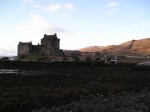
an island fortress

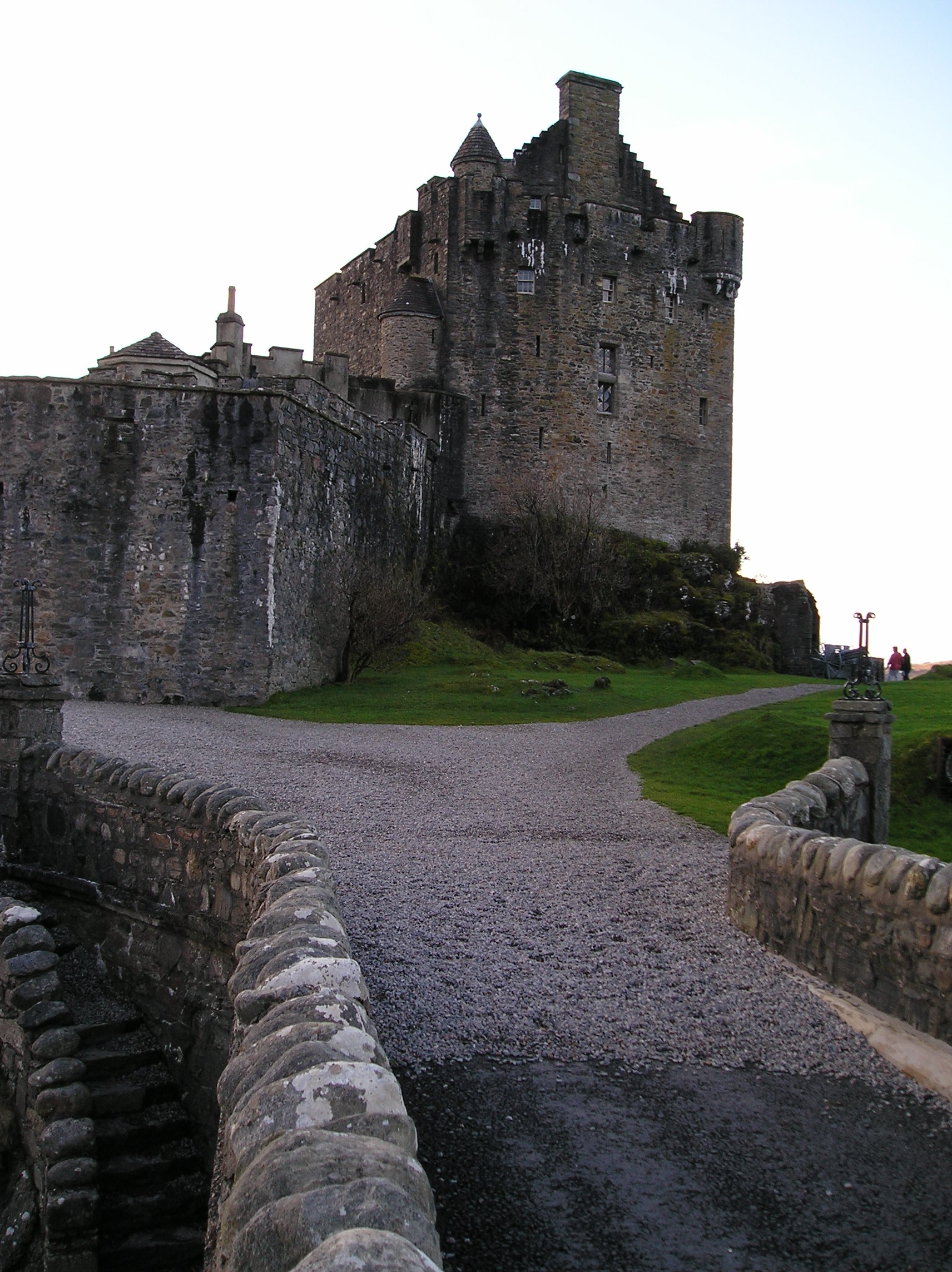
When you see photos of the castle it always looks like it is in the middle of the Loch, but although on it’s own little island, in fact it is not in the middle of the Loch.   Just a short walk over a beautiful stone bridge

the bridge leading up to the castle

and you are on the wee island that supports the structure.   The castle per se is closed from October till March, but that did not stop us exploring the outer perimeters.
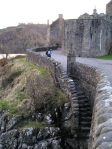
CJ exploring the outer walls of Eilean Donan Castle

the bridge leading to the castle Eilean Donan

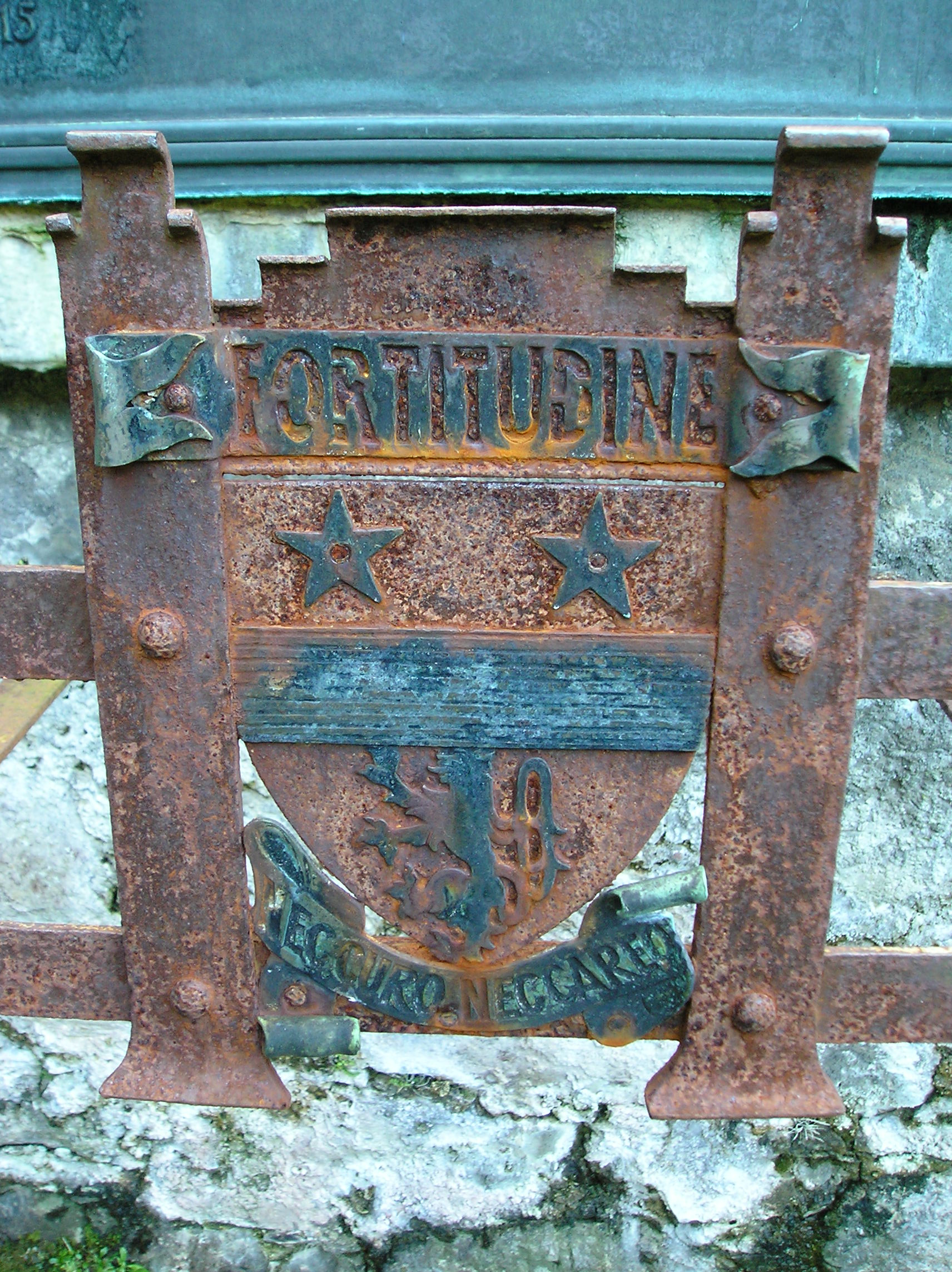
At the entrance to the castle is a family memorial carrying the family crest or arms and listing all the names of fallen Macraes from the 1914-1918 war       
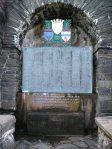
Clan Macrae memorial to family members fallen during the Great War 1914-18

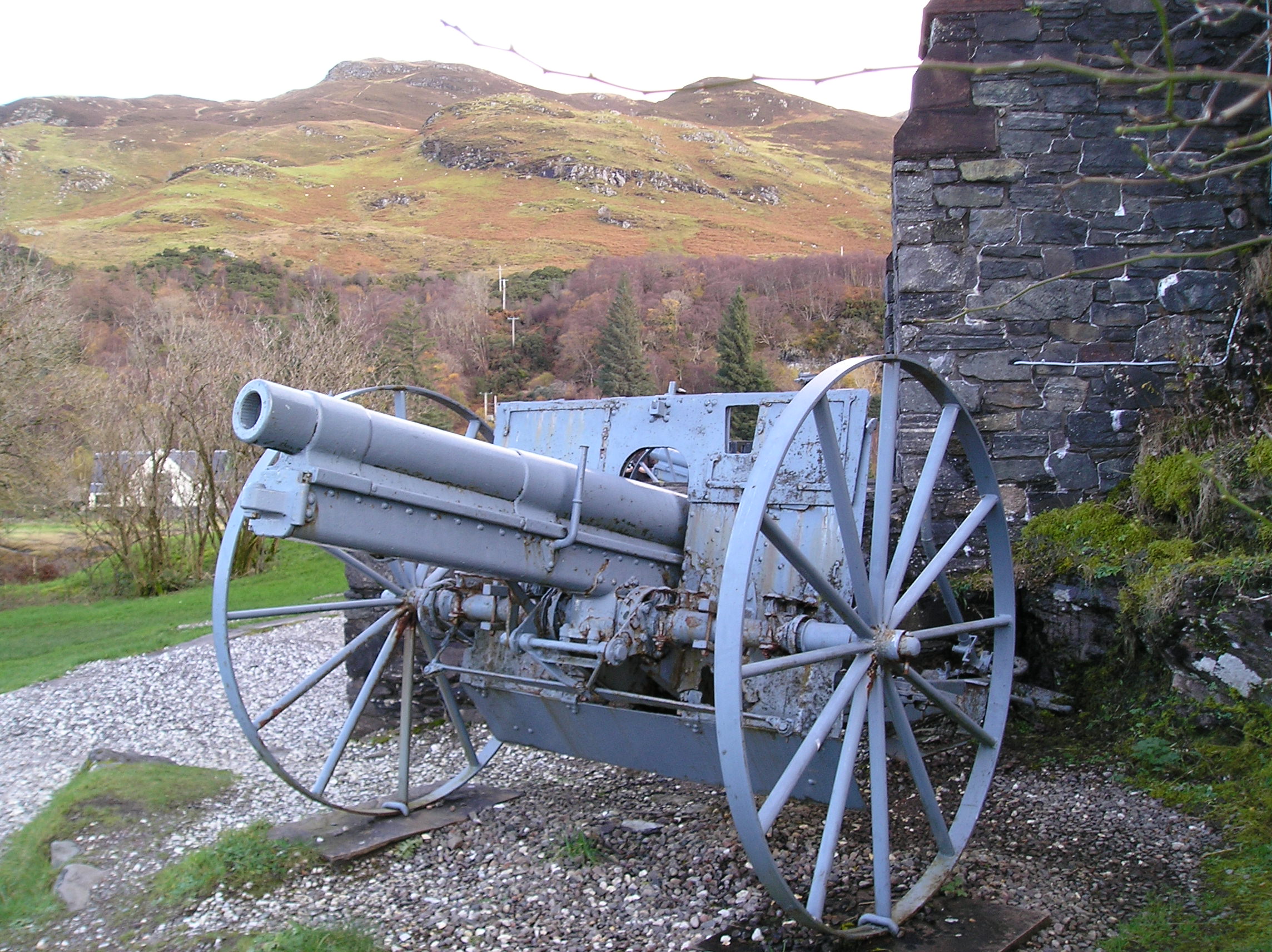
and alongside 2 fine cannons pointing across the Loch and along the bridge.

....down the barrel of a gun!

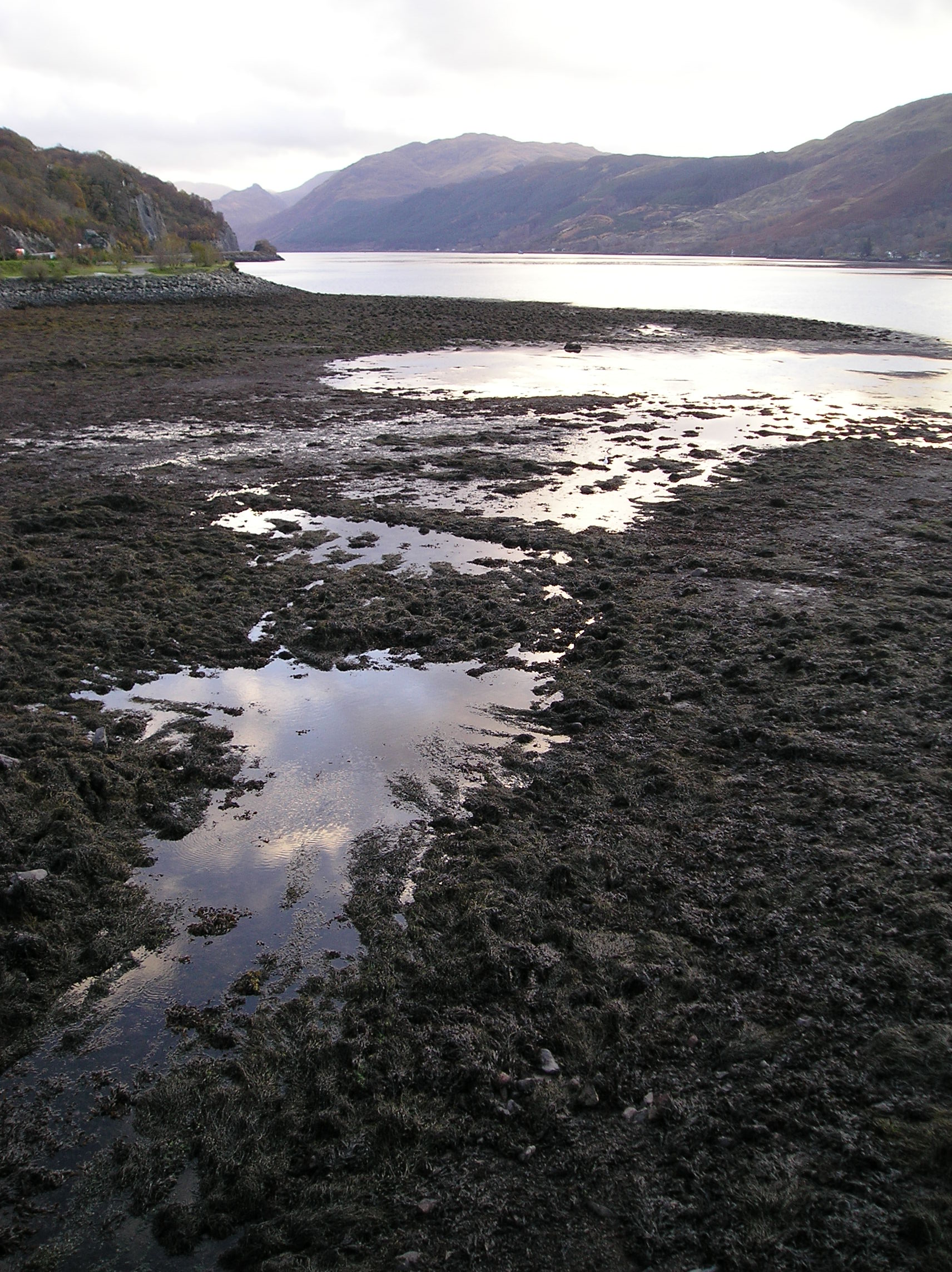
after exploring I then clambered down to the rocks below to look at the views from under the bridge.
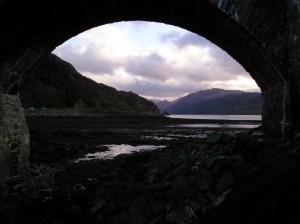
view of the Loch from under the bridge at Eilean Donan Castle

Amazing views from under the bridge.

The castle is situated on a tidal Loch and the rocks were covered with seaweed, with that wonderful salty sea smell. With a long history dating back centuries, the castle is famous for many events, and more recently the film Highlander starring Sean Connery.

me and CJ at Eilean Donan Castle

The castle is a fabulous stone structure,

Eilean Donan Castle

imperious and imposing as castles are meant to be,

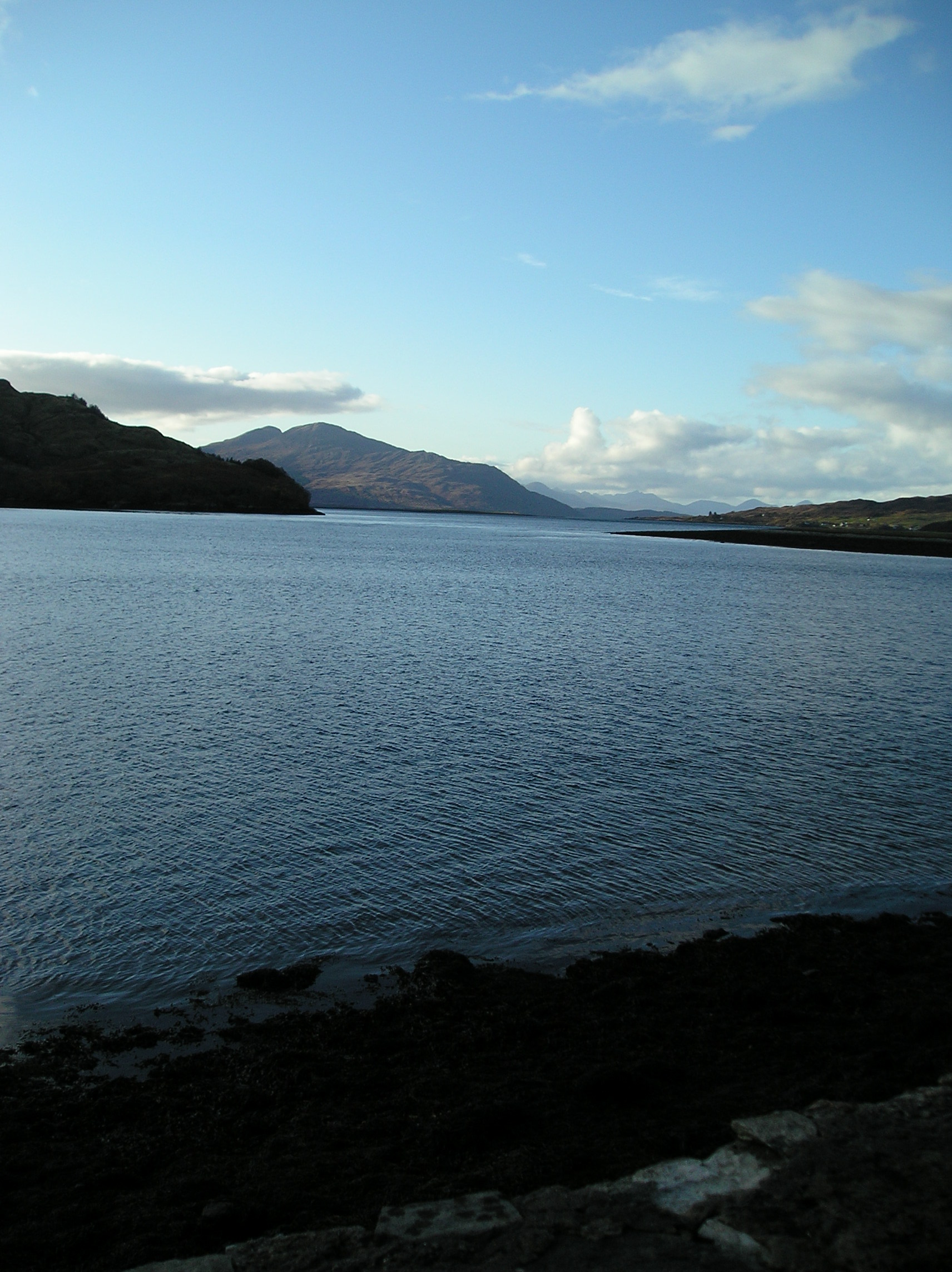
view across the Sound

and with an incredible view across the loch and mountains.

I can see that once the tide comes in how the castle would be inaccessible from the road.  
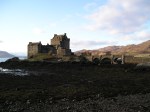
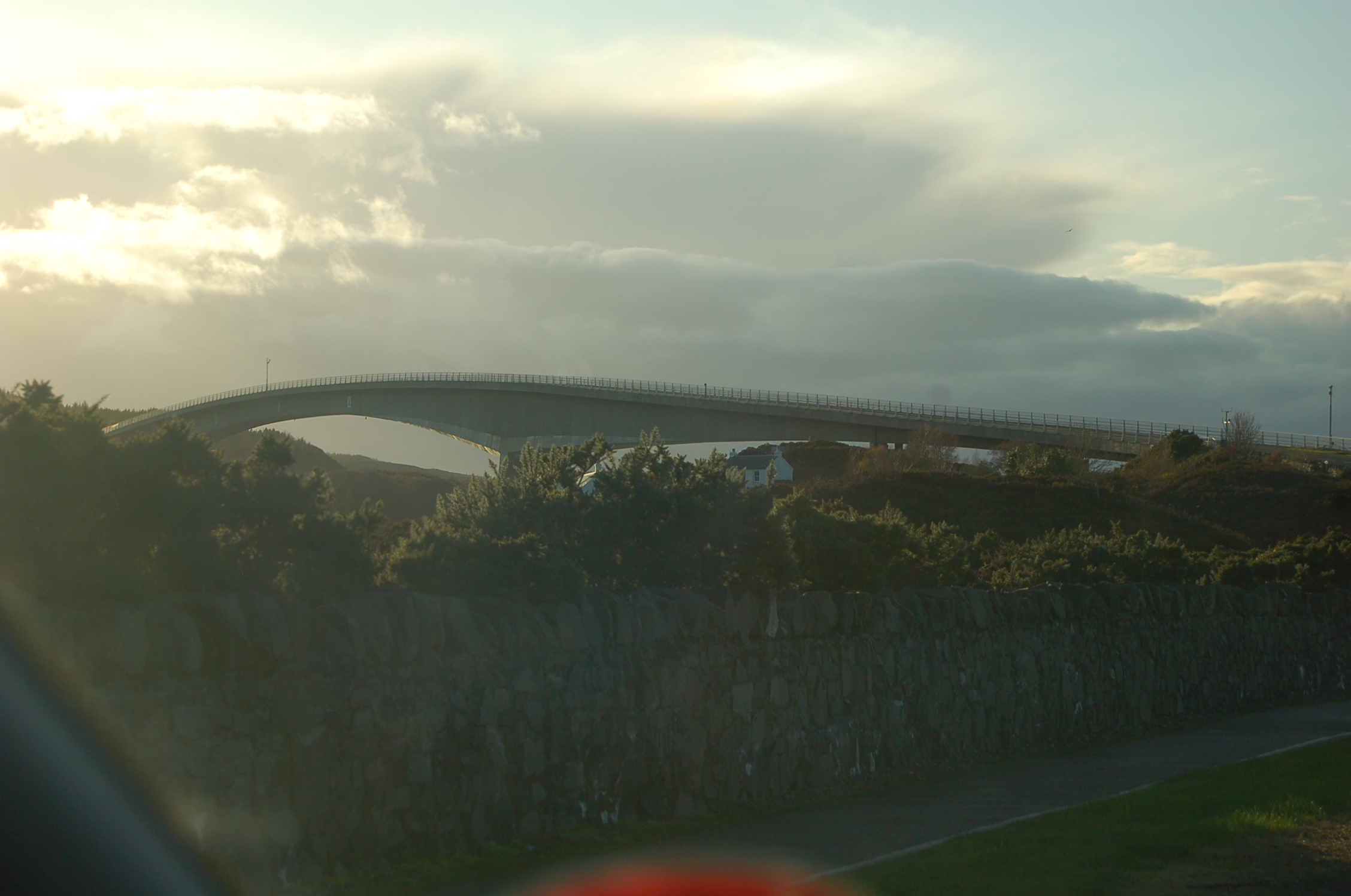
Very near to the Isle of Skye now and with the day waning, we decided to hotfoot it along and get there before the sun disappeared.   There is a fantastic new bridge that crosses the Firth from Kyle of Lochalsh to the isle.

bridge across the sea to Skye 🙂 as seen from the car

The views are just incredible and we gasped at every turn.   As we drove over the sea to Skye and onto the island we cheered, hooray!   It had taken us 5 hours to get there!

Making a sharp turn to the left we stopped off in a wee town called Kyleakin, the gateway to Skye, with a long and proud history.
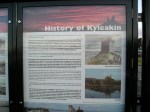
history of Kyleakin; gateway to Skye

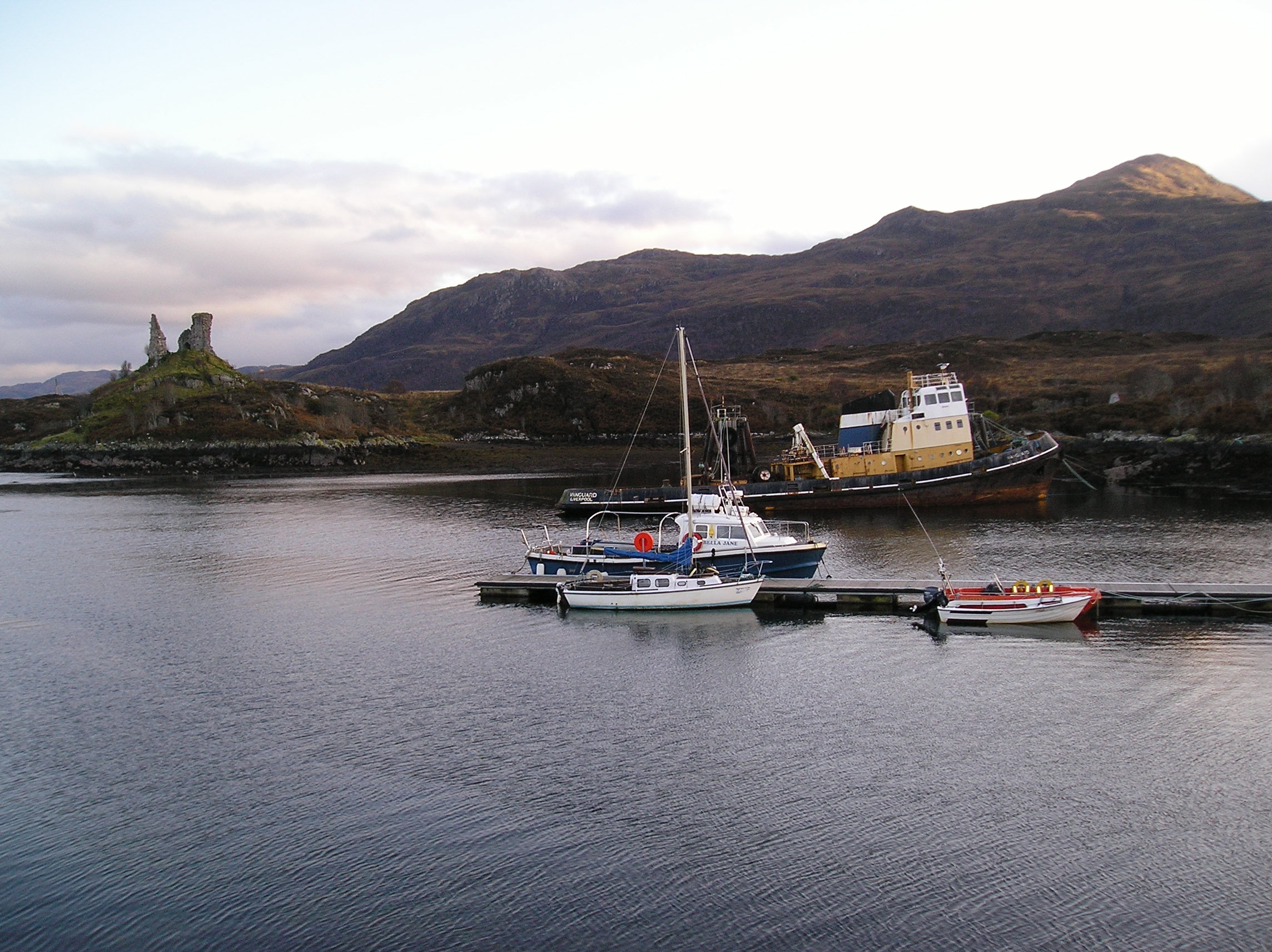
Kyleakin is a harbour town with views to die for.
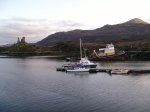
Kyleakin harbour

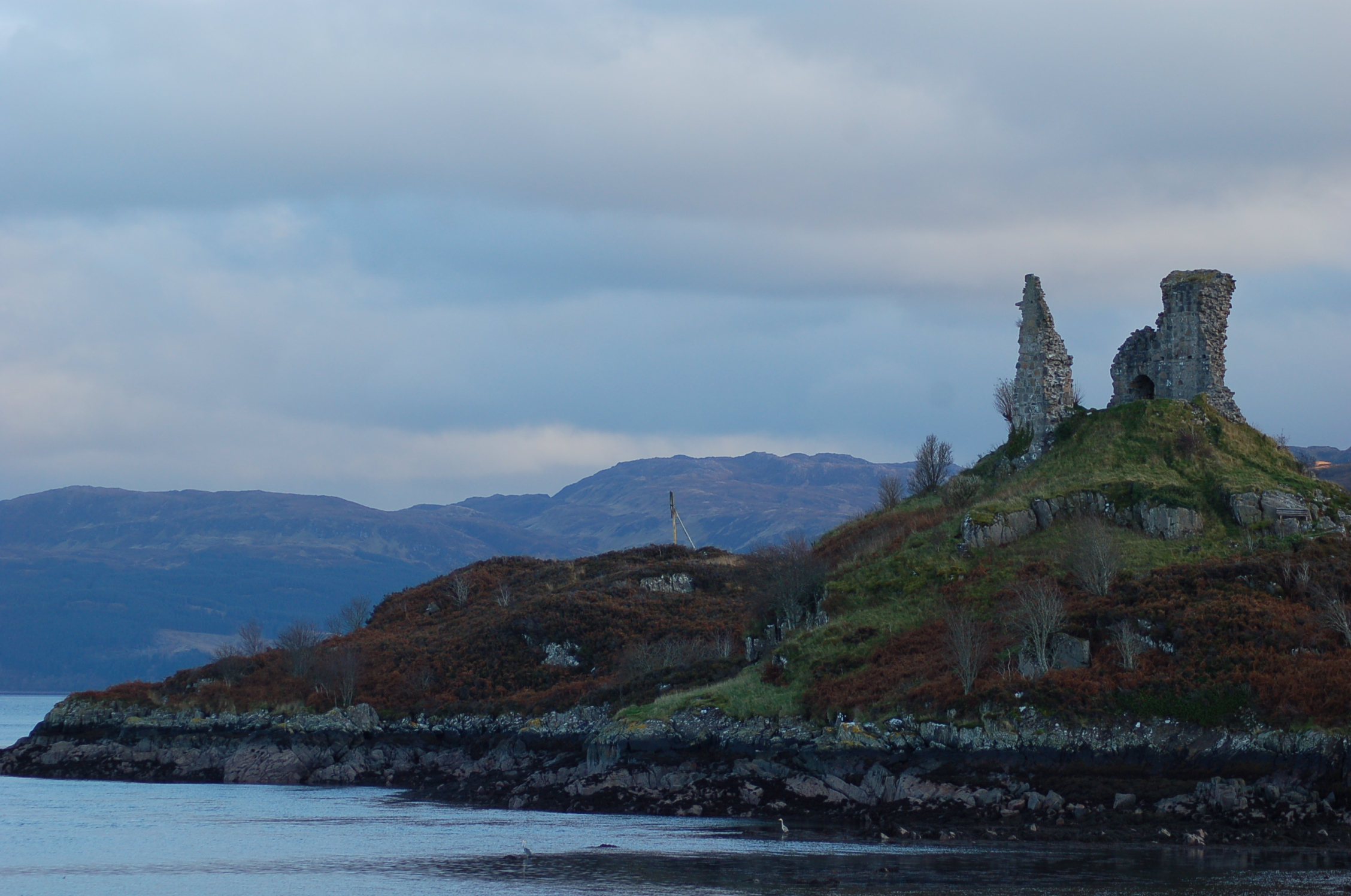
On a rocky outcrop near the edge of town are the remains of Castle Moil.
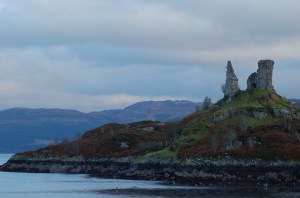
Castle Moil on the Isle of Skye (this is CJ's photo)

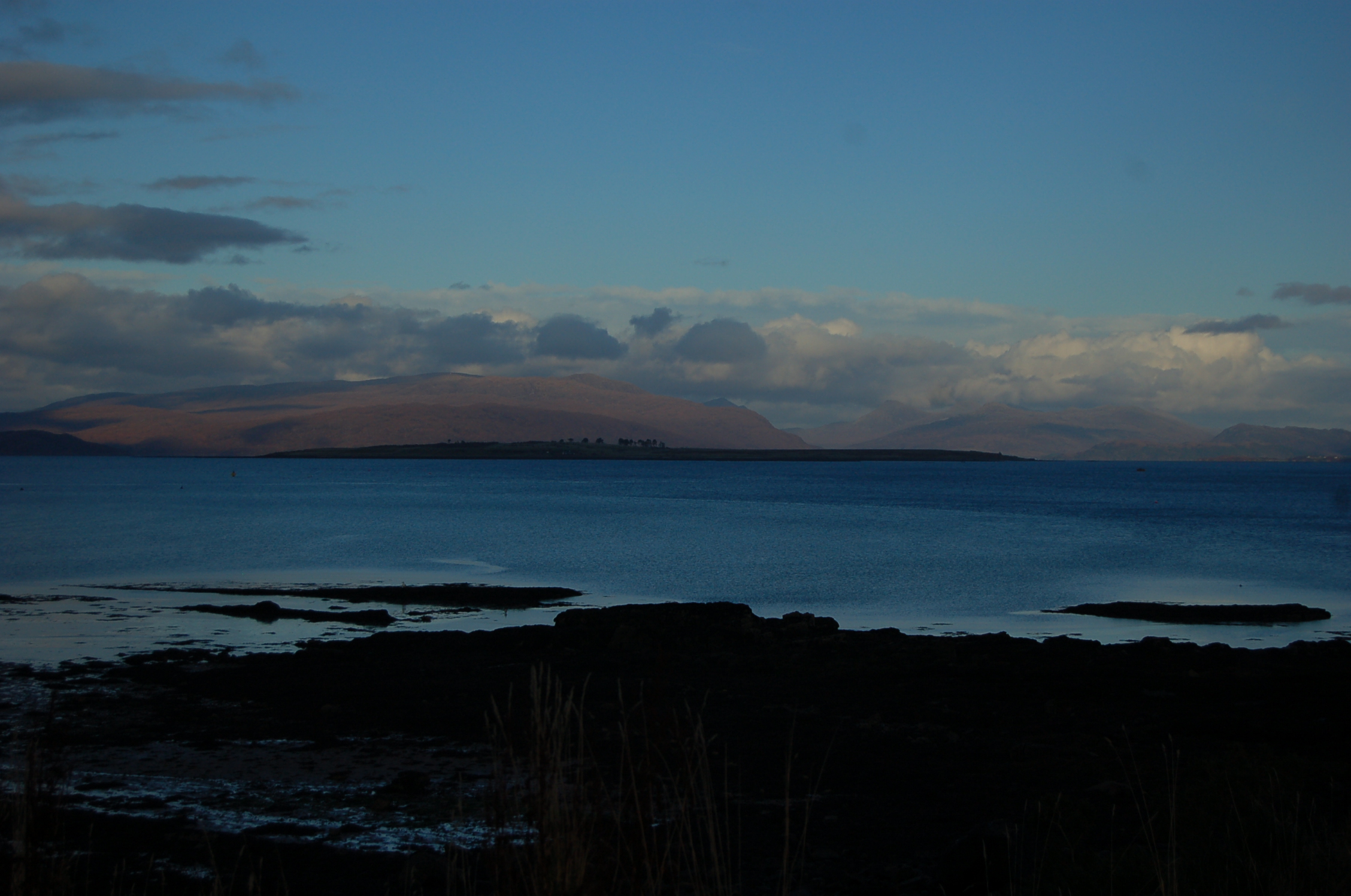
Looking across the Inner Sound we could see Scalpay Island across the water.

Scalpay Island across Inner Sound

The bridge looked magnificent against the blue sky and with the sun beginning to set, looked mystical in the soft misty air.
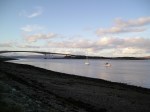
a soft misty look across the Sound to the bridge

We decided to explore further inland so set off along the road to Broadford.

a tiny croft, a stunning view

The views are just incredible and we saw tiny little crofts snug amongst the grass with a fabulous backdrop of sea and sky.

dusk falls on the Isle of Sky

Now it was starting to get darker so we stopped off at a hotel for tea and scones with cream.   Thence homeward bound.
crossing the bridge from the Isle of Skye to Kyle of Lochalsh

Re-crossing the bridge we pledge to return at a later date and explore the whole island.

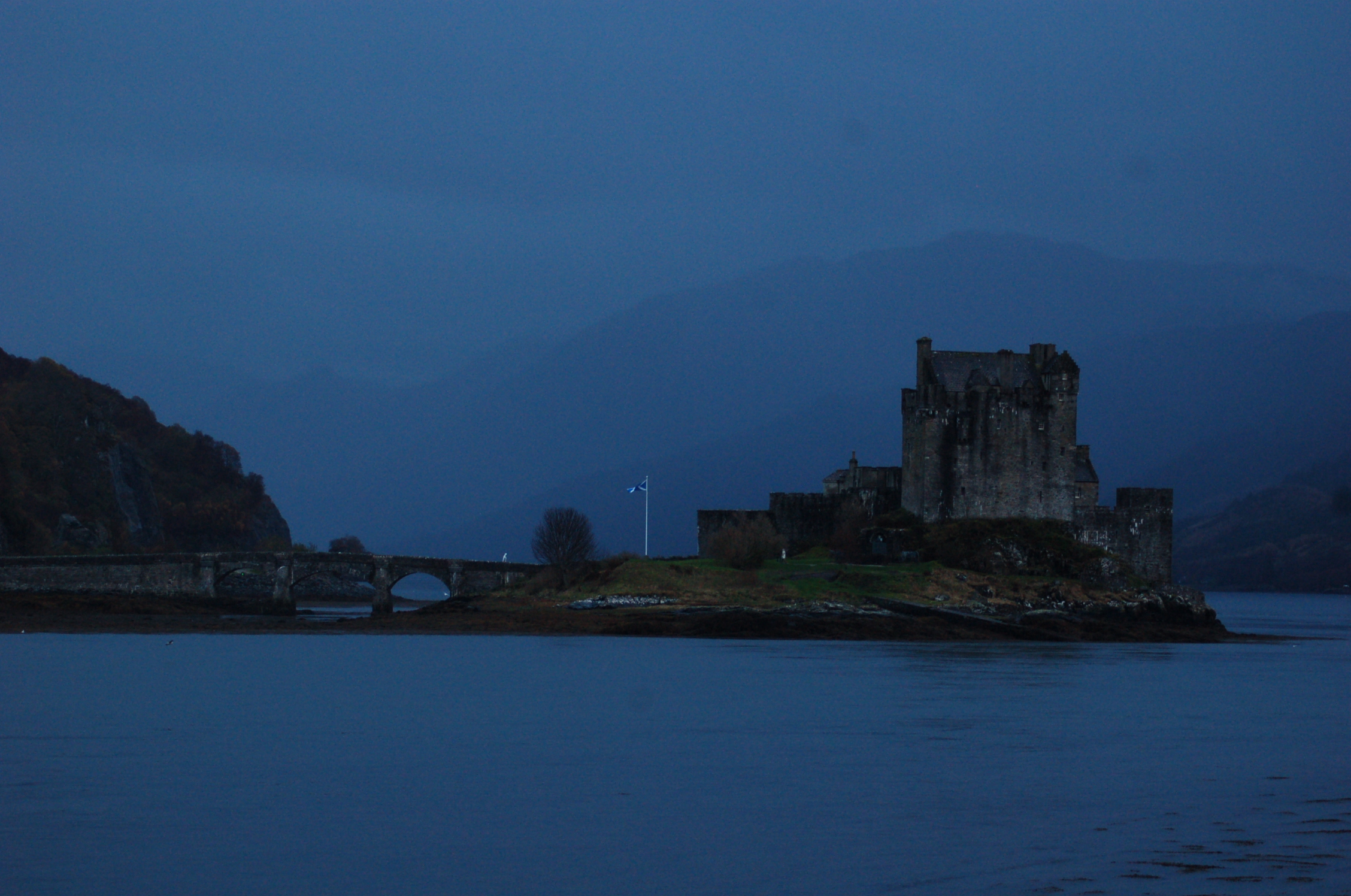
A quick stop at the castle for some sunset photos,

night falls on Eilean Donan Castle (one of CJ's photos)

Eilean Donan Castle as dusk falls (one of CJ's photos)

then with the rain starting up again we set off for home.

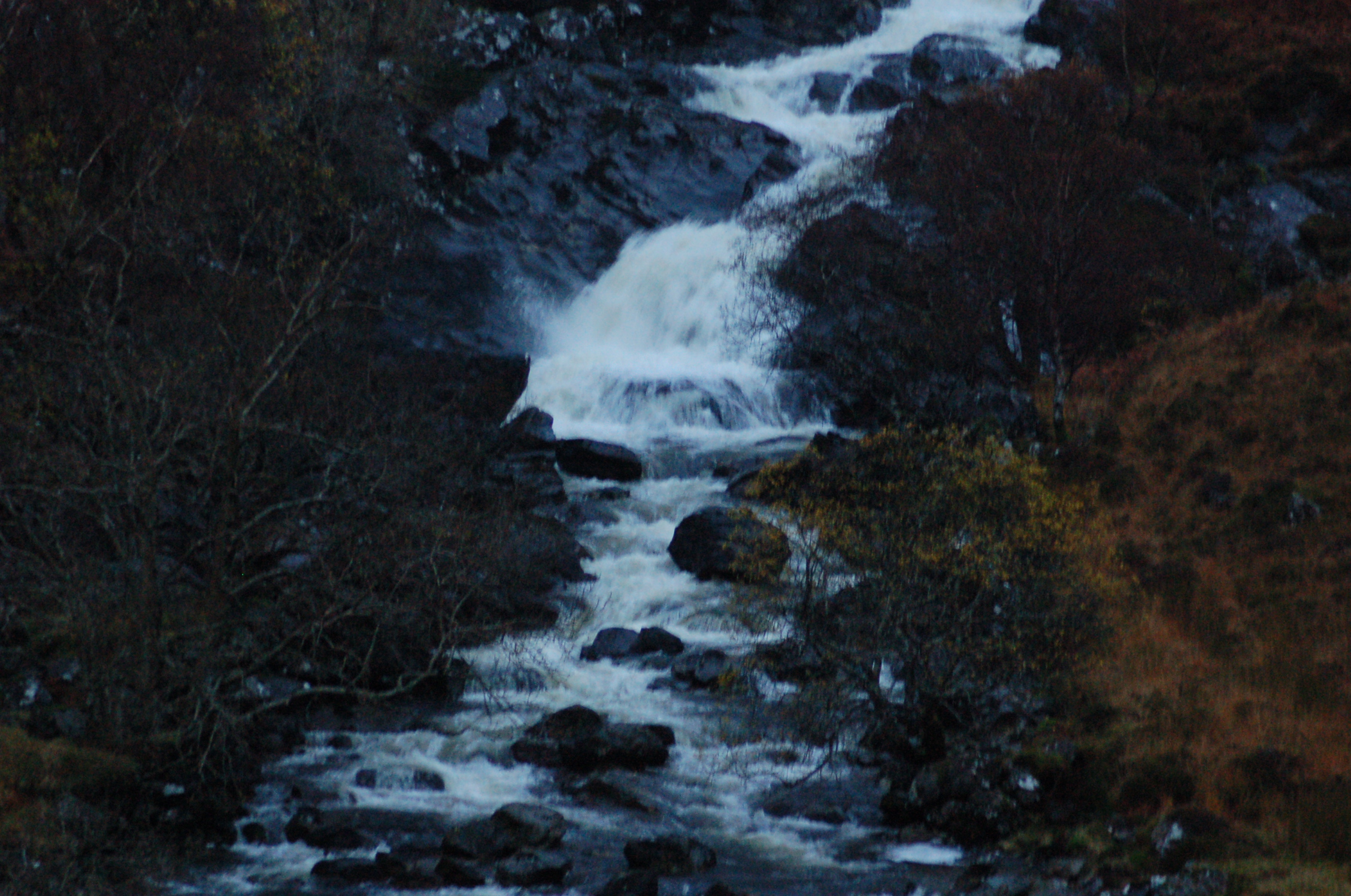
Driving along the winding roads we were once again enchanted by the waterfalls that plunge down the slopes of the mountains!
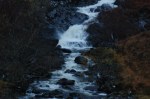
plunging waterfalls

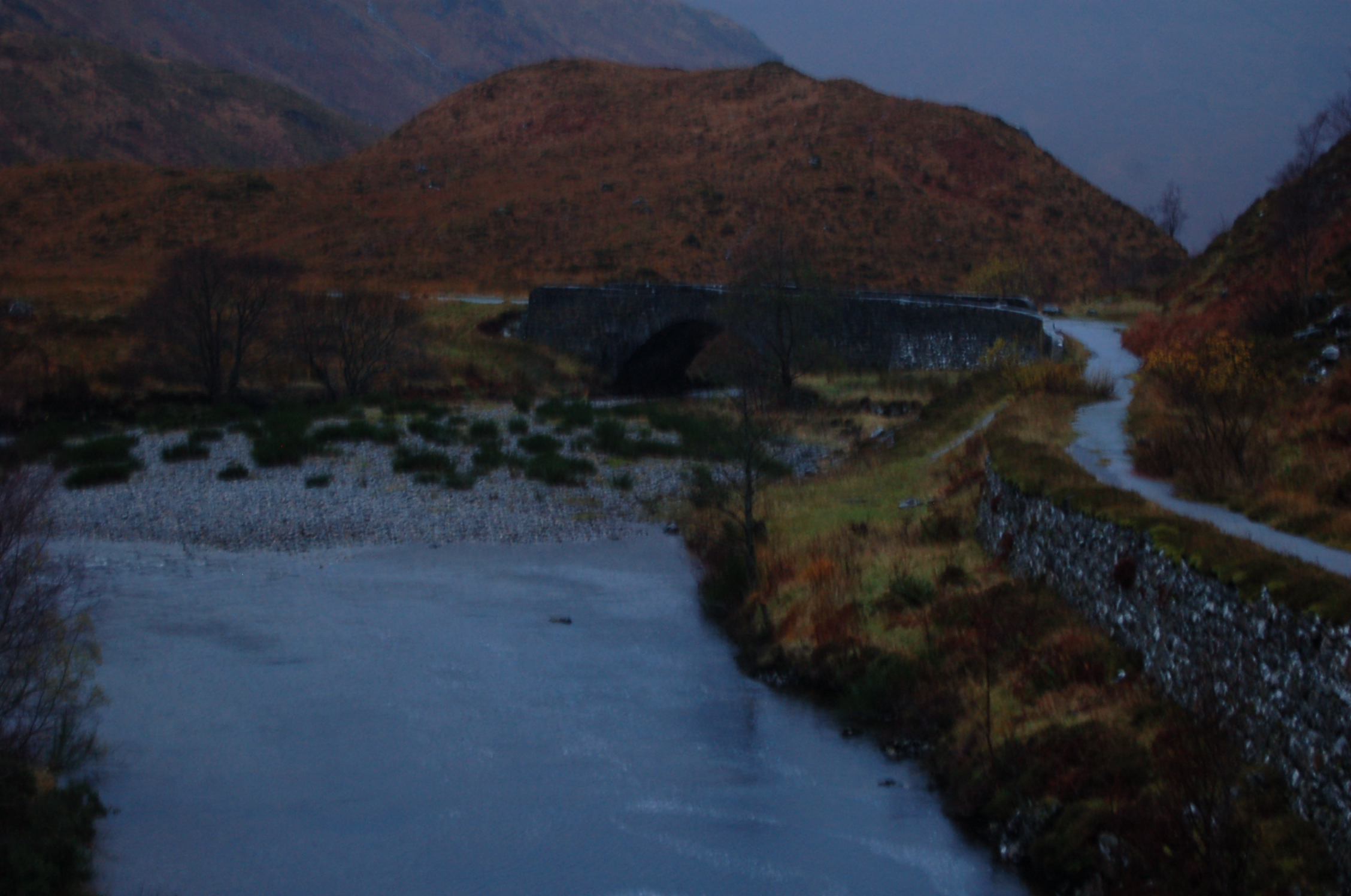
Earlier on in the day before we reached Kyle of Lochalsh we had noticed a wonderful old-fashioned stone bridge (no longer in use) along the way, but as we had no-where to park decided to stop on the way back home.   The rain was pouring down by now and we almost missed the stop when CJ happened to glance out the window and noticed it again.   I slammed on brakes and did a quick turn to the left onto the hard-shoulder and pulled into a lay-bye nearby.   Jumping out the car in the rain we splooshed and splashed along slipping and sliding in the mud and reached the crest of the road in one piece.   So far, so good!   Hahaha.   Not wanting to get soaked to the skin we ran along to the centre of the main-road bridge to get a good viewpoint. 

old stone bridge

As we ran CJ happened to glance up and noticed a huge puddle of water on the left of where we were heading and a great big truck heading our way.   As she turned to shout a warning: “Puddle!” the truck roared by and all I had time to do was duck my head and turn my back as a huge arc of dirty, greasy, black water poured over my head.   I was soaked to the skin.   Thankfully I had, had just enough time to raise my camera into the air just out of reach of the torrent as the water poured over me.    We were laughing so much that it wasn’t just the rain that was to blame for my trousers being wet :).    By now we were absolutely soaked so with no further ado snapped away with the cameras (with very blurry results)
a very blurry photo 🙂 🙂

and then ran lickety-split for the car.   With no time to spare we jumped off the road and down onto the lay-bye as another stream of cars whooshed by.    What a scream.
one last photo for the day!

And so to home!  One last stop along the way in the waning light to photograph one last river
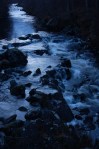


icy rivers rush headlong down the valleys (Cj's photo)

by the time we got back to the cabin we were wet and cold and still hysterical with laughter.   Next up; a hot steaming shower…of clean water accompanied by a towel.   What a brilliant day.

Looking at a map of Scotland after our adventure, I was amazed to see just how many islands are off the west coast.   There is of course Skye, then Rana, Raasay, Scalpay, Canna, Rum, Eigg, Muck, Coll, Tiree, Mull, Lismore, Colonsay, Jura, Islay, Kintyre, Arran, Bute, as well as farther northwest is Lewis, Harris, North Uist, South Uist, Barra (a tiny little island with it’s own airport), hundreds of little splotches of land with no names, and way north are the Orkney Islands (including the isle of Hoy), and even farther north are the Shetland Islands.   Awesome!”

Read Full Post »

Sunday morning broke, quiet and still, barely a sound to be heard outside, the rain dripping from the skies.   While CJ slept, I quietly opened my curtains and gasped out loud.   OMG the view!   What a surprise!   We were situated right against a towering mountain, the slopes covered with a blanket of lovely fir trees, some green some orange, some yellow.  view from my bedroom window

And yet, the best was still to come.

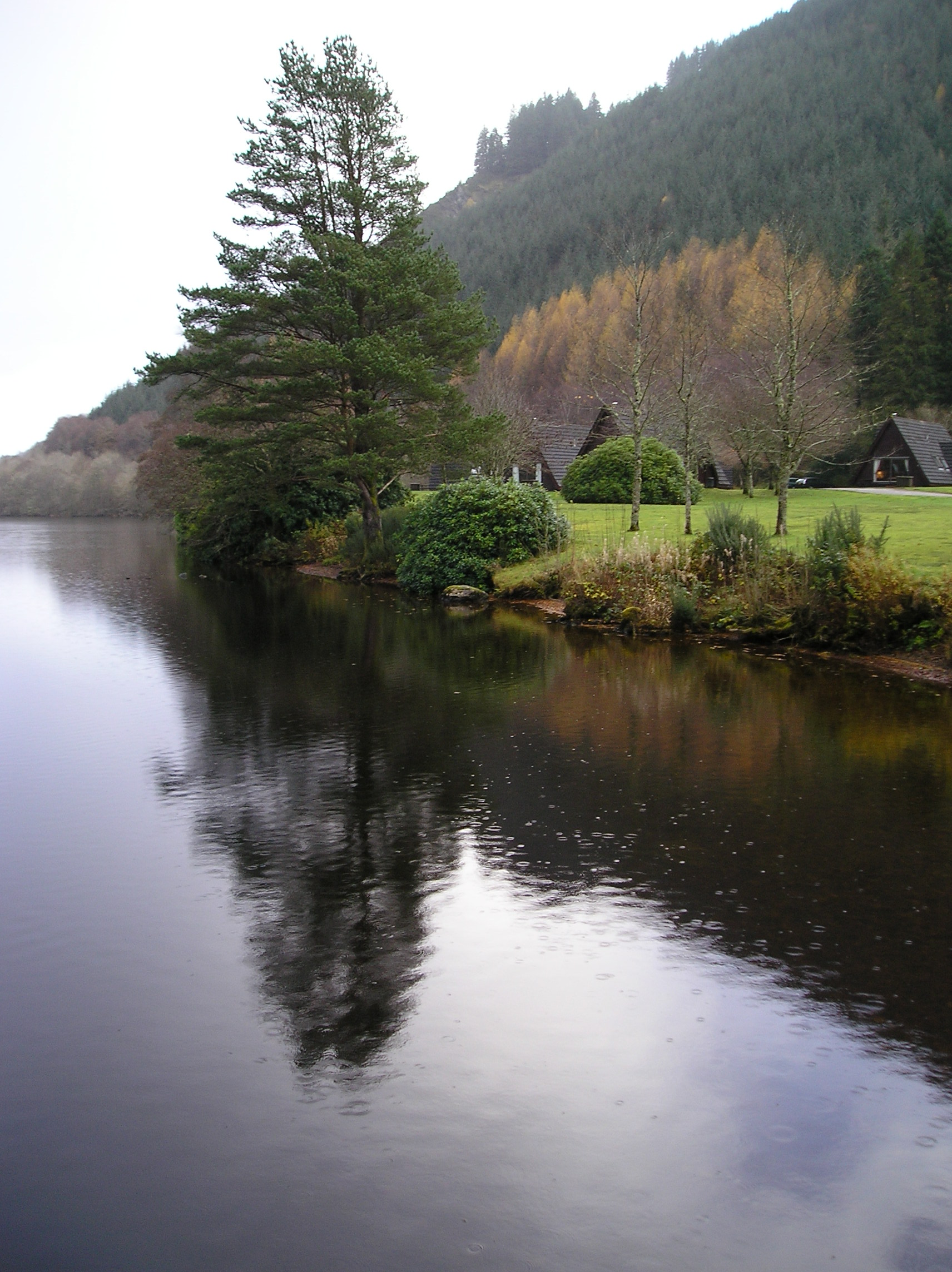
I decided to make myself a cup of tea, so pattering quietly down the passage into the living room area, I put the kettle on and made my way over to the front door of the cabin to open the curtains and peek outside.   WOW!!!!   I literally shrieked out loud and grabbed my mouth with delighted shock.   The Loch was right on our doorstep!  We were surrounded by heavily forested mountains with great swathes of lovely green grass and a massive stretch of water that was Loch Oich!


Stunningly beautiful, it took my breath away.   It was so dark when we arrived the night before that I never had an idea of what was just beyond our cabin and the scene that met my eyes was incomparable.   The trees were glorious in their autumn colours and I was itching to wake CJ.   Pretty soon she was up and about, so I led her to the front door with her eyes closed and sweeping back the curtains I presented her with the sheer beauty of the day.   We were stunned.

Loch Oich is part of the Caledonian Canal that runs from Inverness in the north to Fort William in the southwest of the Scottish Highlands.    There are a number of Loch’s all joined by swing-bridges, the nearest to us being the Laggan Swing-Bridge.

Breakfast was forgotten as we hurriedly dressed and layered, then out the door armed with our cameras, we set forth to capture the magnificence.   As we were standing on the Loch edge, above the clouds we heard the roar of fighter jets zooming overhead!   The sound came as a heck of a shock and as the jets zoomed off into the distance the boom of the aftershock hit our eardrums.   Exciting!


A very happy couple of hours later after taking hundreds of photos we finally headed back to our cabin for food.


Oh my gosh, the scenery is fabulous.   Scotland so lends itself to autumn and the colours are amazing.   After a hurried meal we donned trainers and wellies, hats and jackets and set off to explore the grounds and forest behind us.   The park is set right on the edge of the towering Monadhliath mountain range; covered with wonderful coniferous forest behind, the Loch in front and another towering mountain also covered with coniferous forest that reaches right down to the water’s edge on the opposite side.   With paths meandering alongside a stream and gushing waterfalls, the forest begged to be explored.

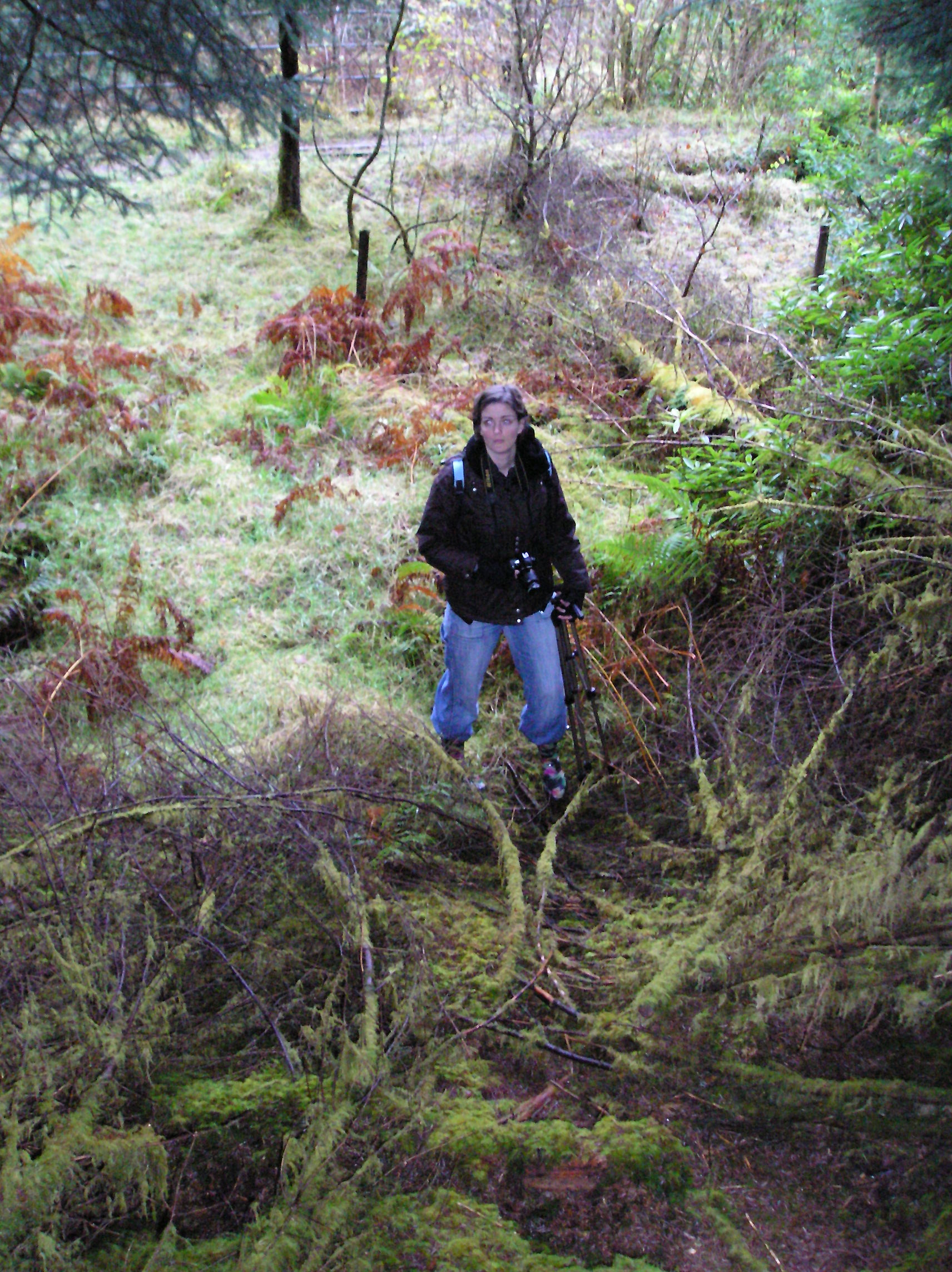
Looking up into the forests was spine tingling and I decided to explore the inner reaches.  Setting off I clambered up the slopes through bracken and fallen moss-covered branches, slipping and sliding all the way.   Needless to say I did not get very far and eventually had to halt just within the trees and meters from the path.

I urged CJ to join me but she was more sensible than that.

I spent a few minutes just enjoying the sighing of the wind in the branches and the hushed quiet of a deeply carpeted forest, then made my way back down, slip sliding away, I eventually reached terra-flat after sliding most of the way on my bum.  It is a lot easier going up than down and I nearly lost my balance a few times then decided to take the inelegant way down, which my daughter very kindly captured on video for all the world to see.   Nice one pet!   Miraculously I was not soaked and my trousers were unmarked by the moss covered slopes.

CJ was hysterical with laughter and can be heard snorting away in the background of the video.   Cheeky brat.   We then meandered along what was a very wet and slushy pathway, dotted with puddles of water and slippery with wet moulding leaves. The  forest was ever so quiet and I am sure we frightened the animals away with the noise we made.   Stopping every few feet to gasp and ooohh and ahhh at all the lovely sights, we saw waterfalls, and streams, trees dressed in their autumn finery of yellows and reds and gold.  

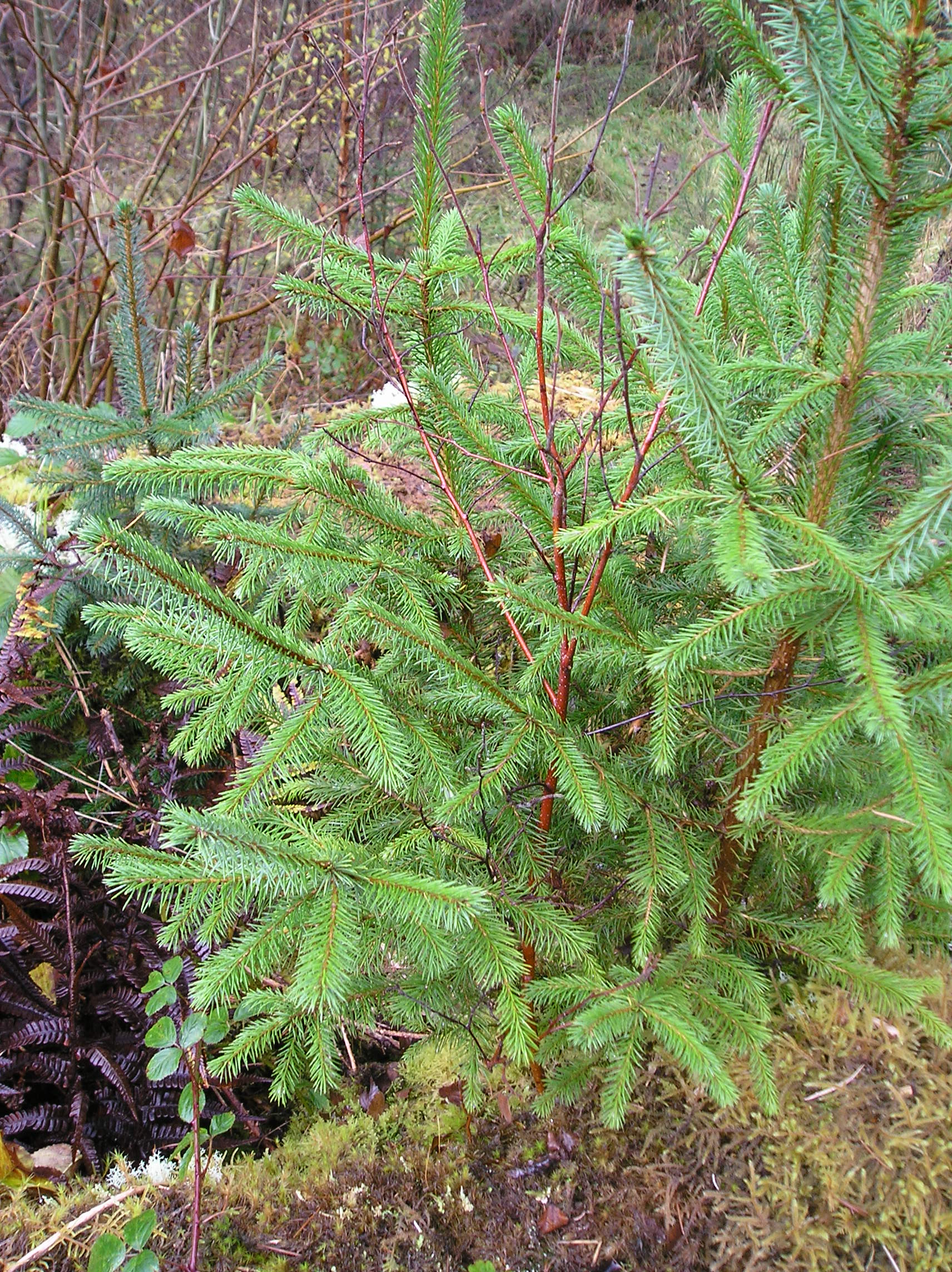
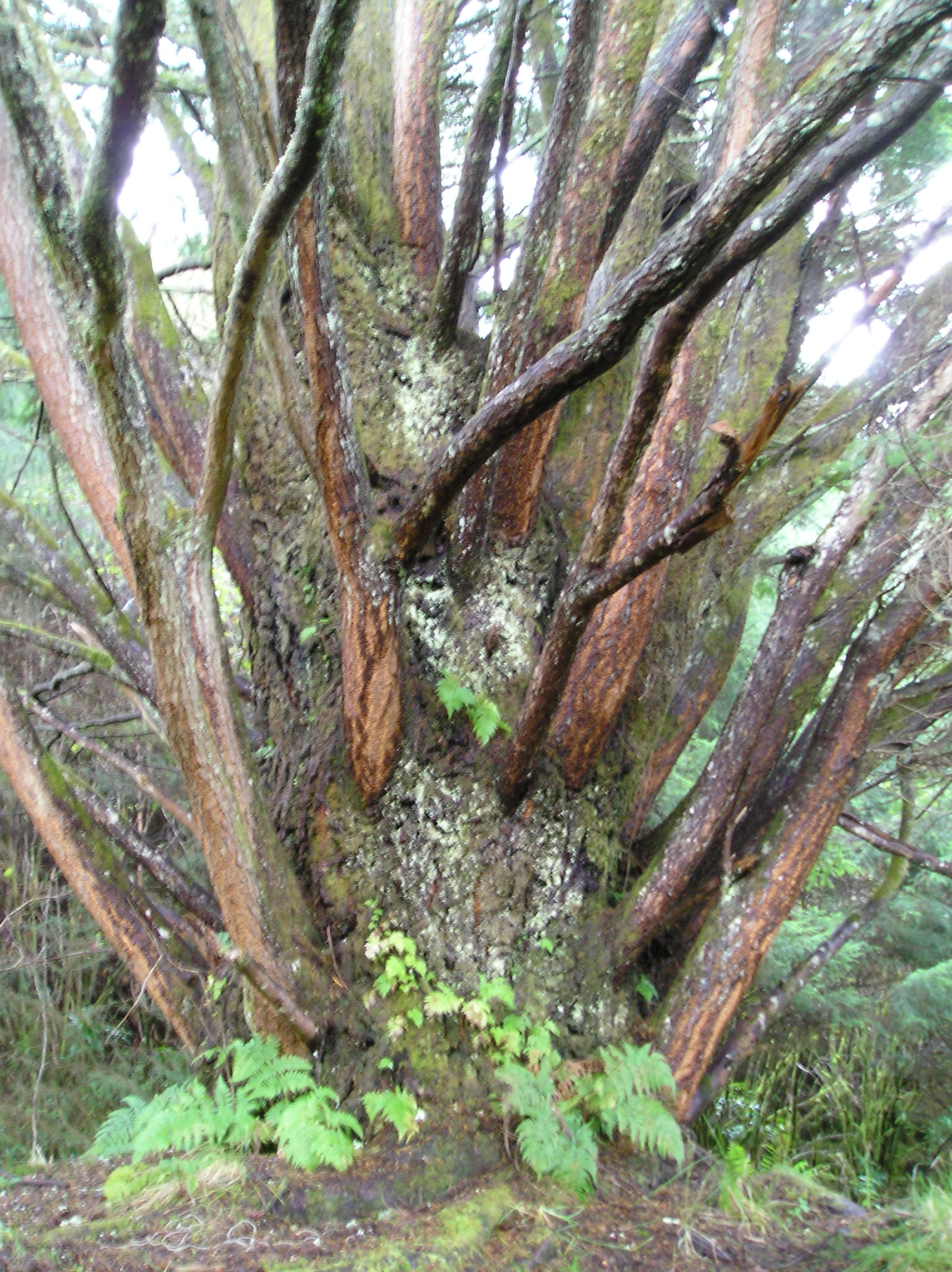
The forest carpeted with a myriad of colours; dark green to psychedelic green, yellow, gold, maroon, brown, beige and red is a sight to behold.   Rotting logs, left over from fallen trees lend a wonderful aroma to the air and are home to a profusion of new growth, with little pine trees sprouting out the top.  Never believe for one second that autumn and winter signal death.   There is a teeming burst of life and new growth everywhere you look.   We chanced upon a tree covered in black seedpods and bursting out the seams were tiny little shoots of green leaf and spiral stems.  Every where you look there is growth of moss and lichen, fungus and mushrooms, new trees sturdily finding their feet and deep in the bracken the first tendrils of leaf waiting for spring.

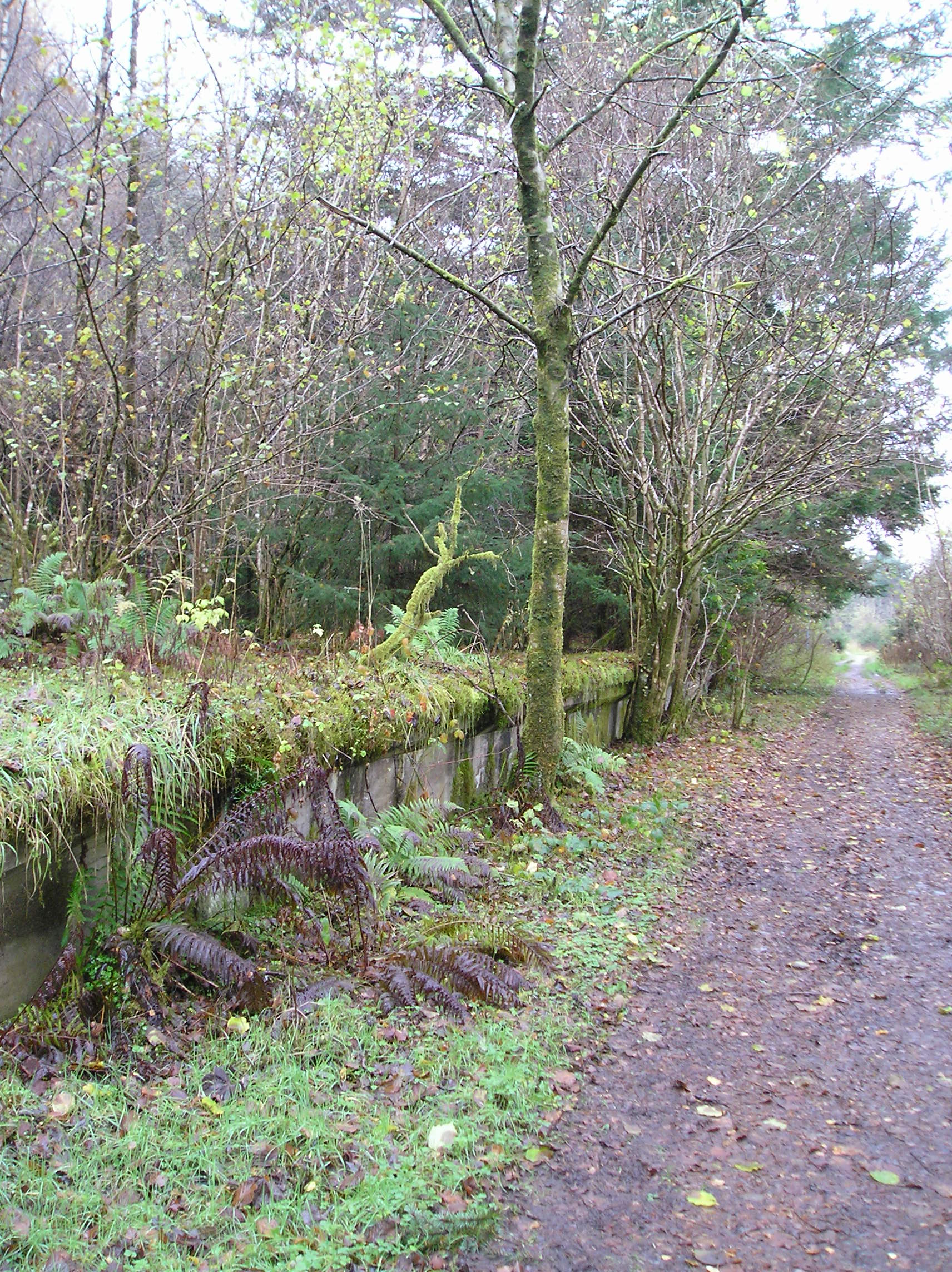
After first exploring one way along the path we retraced our steps then explored the other end.   Chancing upon what looked like a railway platform right on the edge of the forest we were amazed to read that in 1903 someone had decided to build a railway line from Fort Augustus to Inverness.   

Where we were standing were the remains of what was indeed the platform for a railway station.   It was really bizarre since there were a couple of really massive trees growing right in the middle of the concrete edifice and the whole area is covered in green moss and grasses and bracken with younger trees vying for attention.

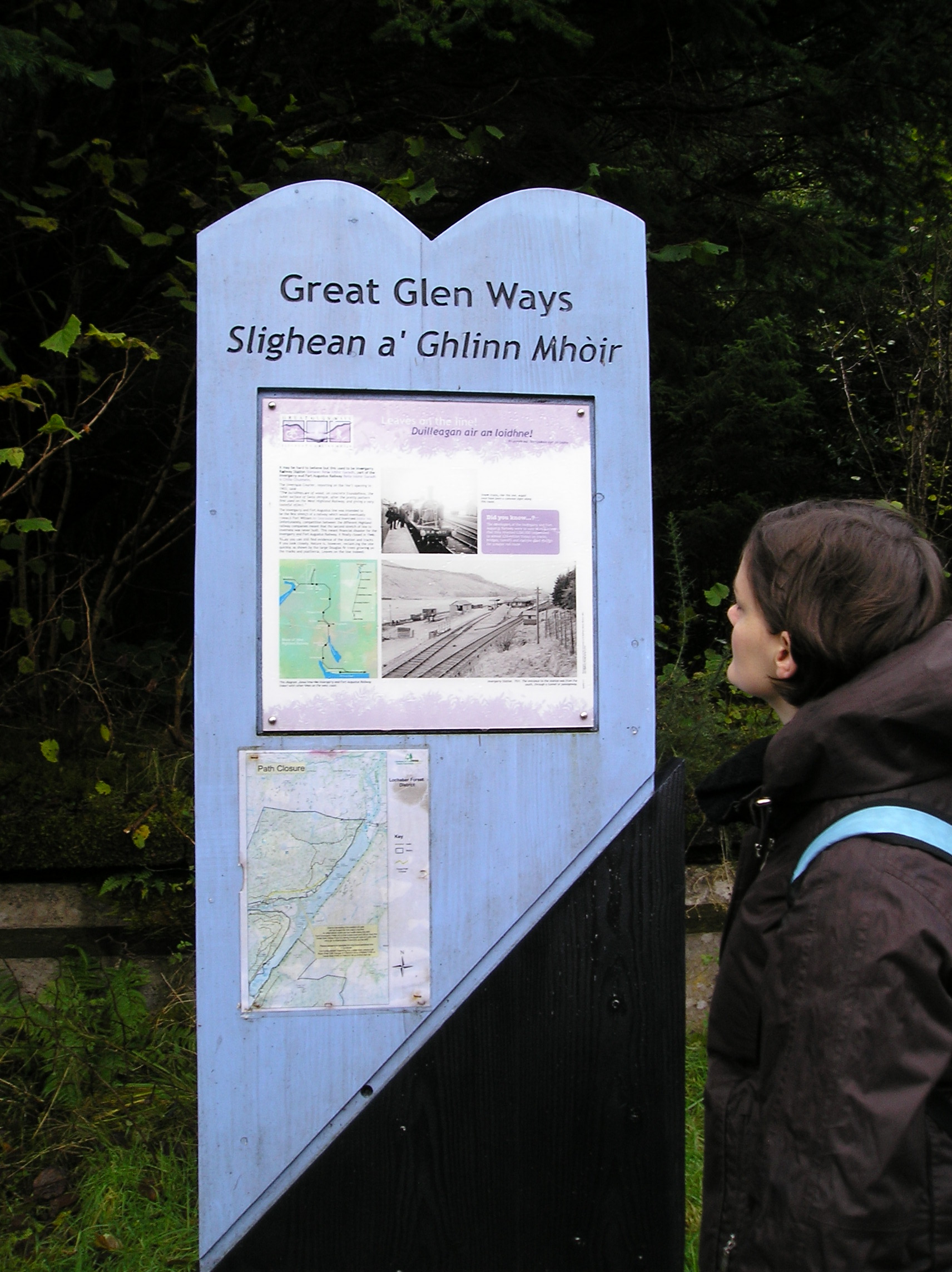
There is an information board with the full story on display and a map of the whole area showing how they intended to build.   Bizarre.


The board says: “It may be hard to believe but this used to be Invergarry Railway Station, part of the Invergarry and Fort Augustus Railway.   Reporting on the line’s opening in 1903, the Inverness Courier says: “The buildings are of wood on concrete foundations, the outer surface of Swiss shingle after the pretty pattern first used on the West Highland Railway and giving a very pretty effect.” The Invergarry and Fort Augustus Line, was intended to be the first stretch of a railway, which would eventually connect Fort William and Inverness.   Unfortunately competition between the different highland companies meant that the second stretch of the line to Inverness was never built.   This meant financial disaster for the Fort Augustus and Invergarry railway.   It finally closed in 1946.   Today you can still find evidence of the station and it’s tracks.   Nature is, however, reclaiming the site rapidly as can be shown by the large Douglas fir trees growing on the tracks and platform.  The developers so sure of its success invested £350,000 the equivalent of £20million today in the building of tunnels, roads and stations.

Hard to believe indeed!   And far more attractive now than it would have been had they succeeded.   I shudder to think.

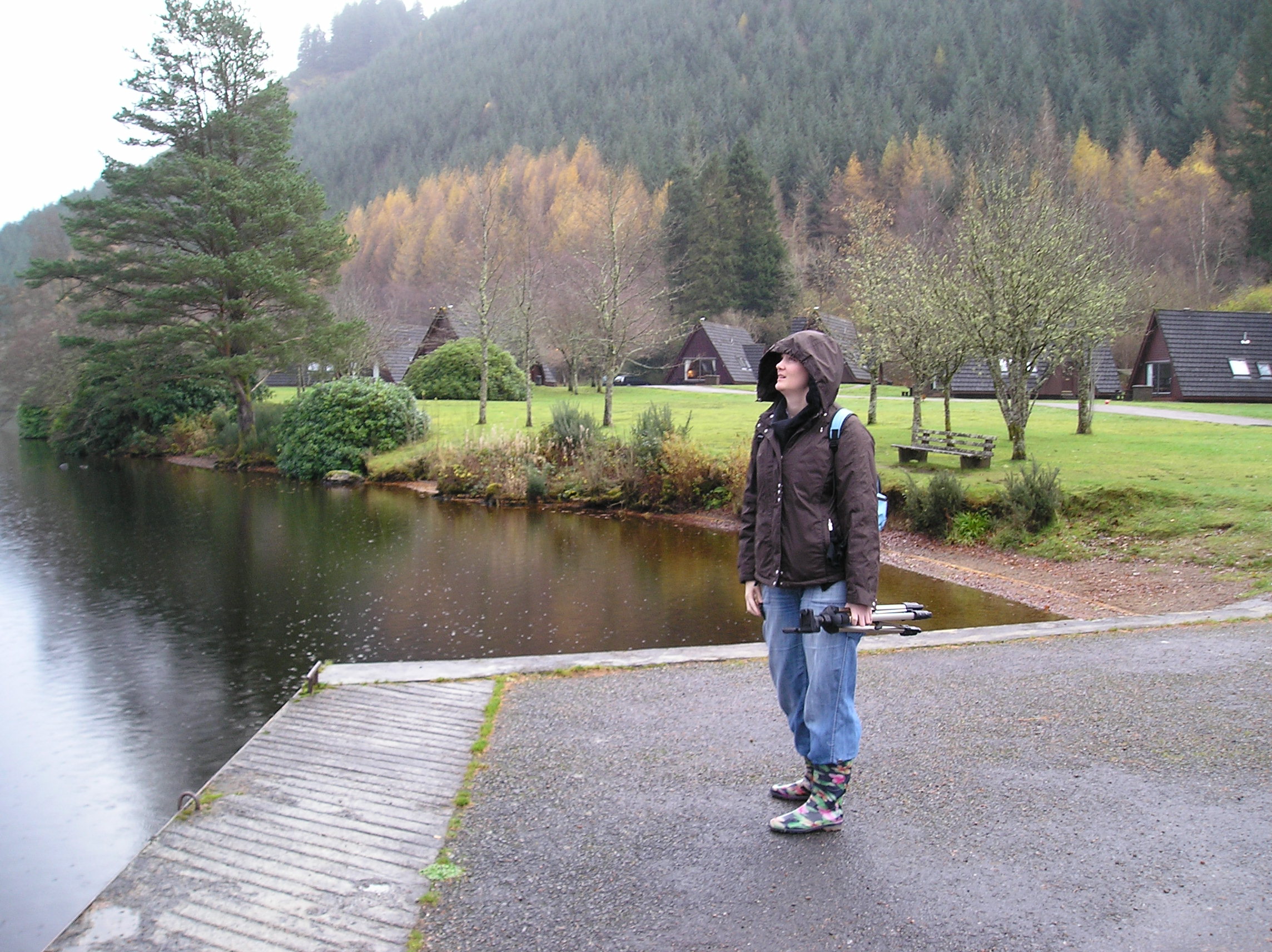
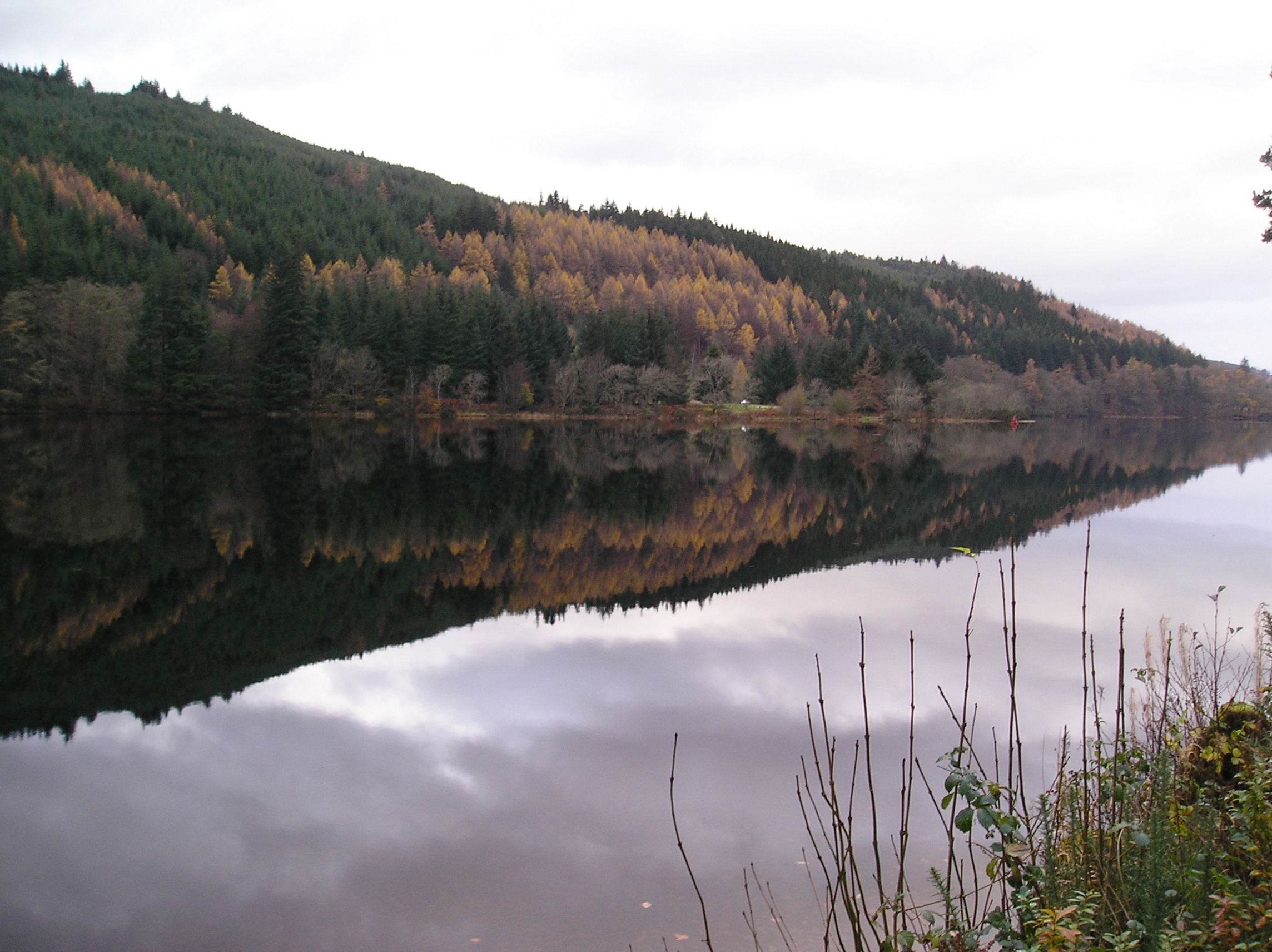
By now it was beginning to rain again so we headed back to our warm cosy haven and had a yummy lunch.   CJ then retired for an afternoon snooze and the rain having eased off, I went off adventuring.   The Loch is so photogenic and with barely a breath of air to disturb the surface, the water lay like a sheet of glass, still and dark, the trees across the Loch perfectly reflected. Eventually CJ joined me and we happily snapped away and admired the views.   By now it was beginning to darken and the light turned a wonderful blueish grey, tinged with pink across the Loch.  


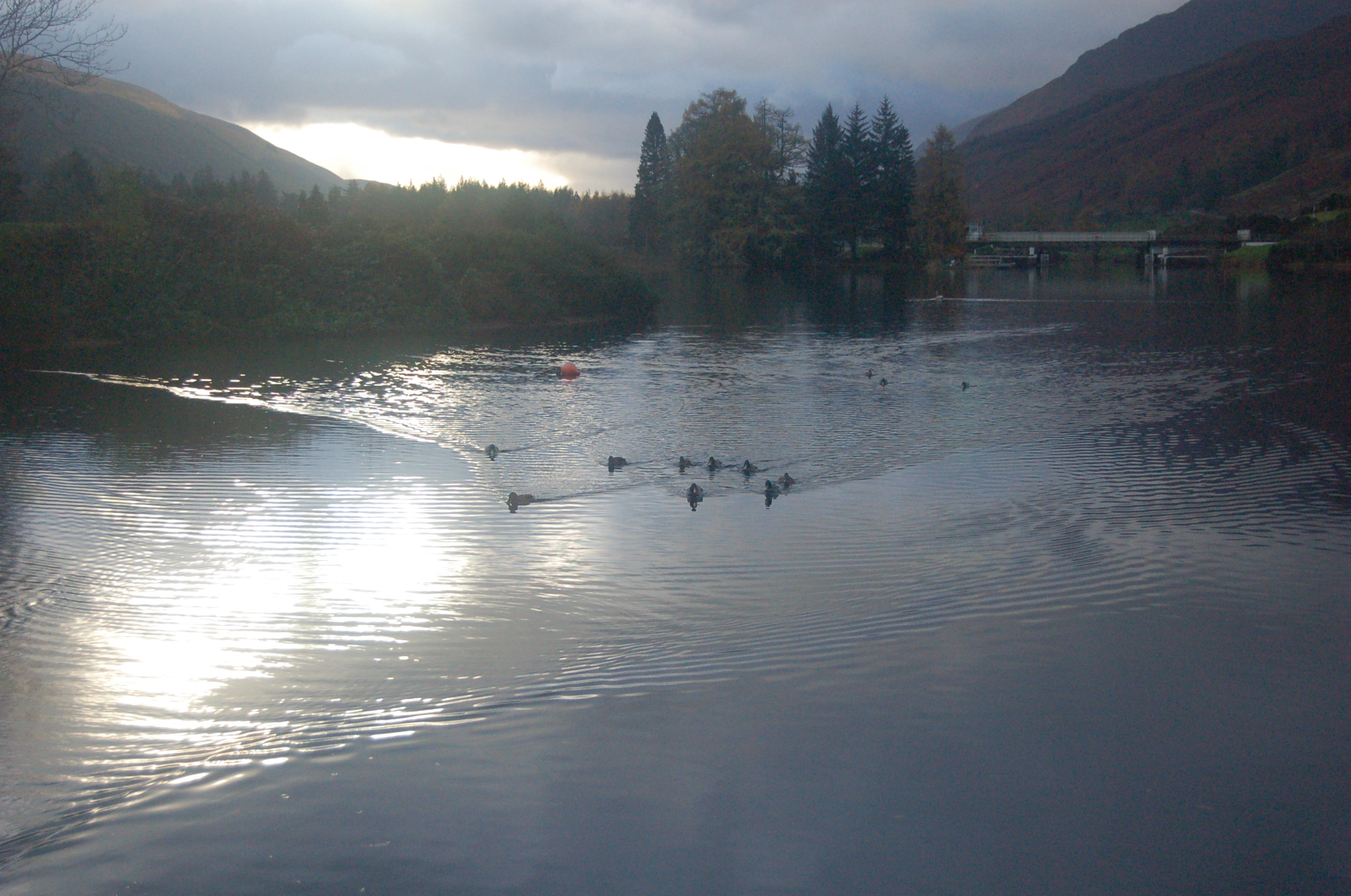
We were joined by an armada of ducks

and a pair of swans that came right up to the edge of the jetty and posed beautifully for some photos. 

Suddenly the clouds cleared and with a splash of pink and silver the sun set, spectacular against the dark clouds reflected in the water.  

We headed on back to the cabin for supper.  Since it is now officially winter and we are so far north, the suns starts to sink behind the horizon at about 3pm and disappears from view about 4pm, and as the light dims rapidly we are soon plunged into darkness.

The cabins are really cosy and we are quite happy to just snuggle and drink tea whilst watching TV or reading or enjoying the photos we had both taken.


An earlyish night for an early start on the morrow!   Time to explore Loch Ness and Urquhart Castle.

Read Full Post »
Facts about Inverness (courtesy of wikipedia):

The name Inverness is Gaelic and translates as ‘mouth of the river Ness’.

Situated at 57.4717N and 4.2254W.

Inverness (Scottish Gaelic: Inbhir Nis) is a city in northern Scotland and it is promoted as the capital of the Highlands of Scotland.

The city lies near the site of the eighteenth century Battle of Culloden and at the beginning of the Great Glen, where the River Ness enters the Inverness/Moray Firth making it a natural hub for various transport links.   It is the northernmost city in the United Kingdom.   A settlement was established by the sixth century AD with the first royal charter being granted by King David I in the twelfth century.

Inverness was one of the chief strongholds of the Picts, and in AD 565 was visited by St Columba with the intention of converting the Pictish king Brude, who is supposed to have resided in the vitrified fort on Craig Phadrig, on the western edge of the city. A 93 oz (2.6 kg) silver chain dating to 500-800 was found just to the south at Torvean.

click here and scroll down for a map of Inverness/Scotland

The 14.11.09 approached both rapidly and slowly and it was with excitement and anticipation that we woke on Saturday and set off on our journey up north.  This is the farthest north we, my offspring and I have ever been – 57.4717N and 4.2254W!!!   Brilliant.

CJ reached Victoria station before I did and very naughtily filmed me walking across the concourse!   We took the Gatwick Express since it was almost £2 cheaper than by regular train.   Go figure.

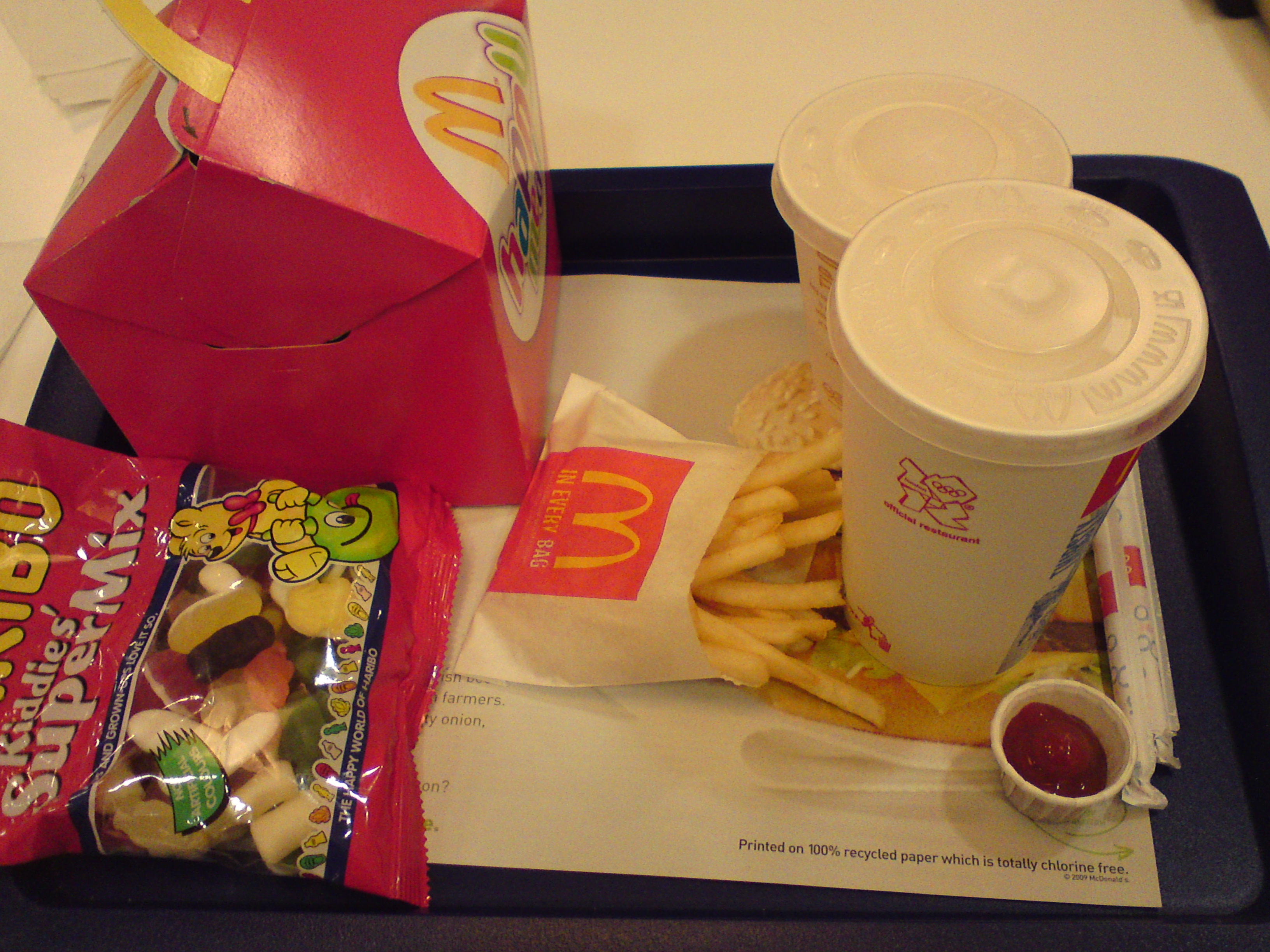
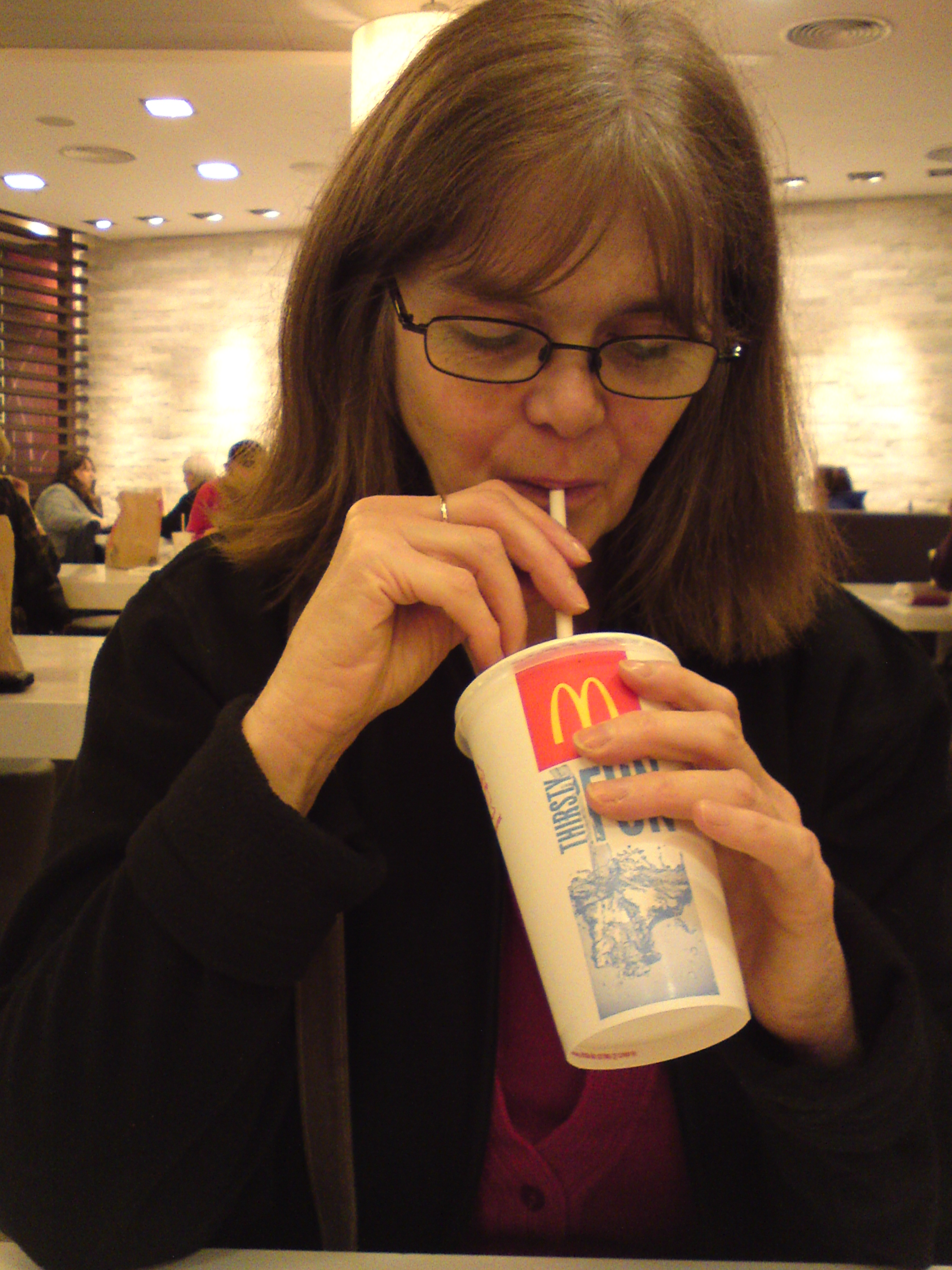
Check in at Easyjet was chop-chop and with time to spare we went to MacDonald’s for a Happy Meal for a happy CJ 🙂

and a chocolate milkshake for me.

This is the first time wev’e travelled with Easyjet and although the flight is the same as any other cheap airline, I was totally unimpressed with the fact that they left our luggage out in the rain and when we arrived at our destination our clothes were wet.  Even more so since CJ was forced to check her bag at a cost of £18 because the bag was literally a zip width to wide for the onboard luggage sizer.

However, excitement reigned supreme as we boarded and finally took off, 25 minutes late.   We were off to the Highlands of Scotland, Inverness and final destination was the Great Glen Water Park, situated on Loch Oich (which we did not know beforehand).

The flight was bumpy but uneventful and flying over England was a treat as always.   The countryside is so beautiful and I never tire of seeing it from the air.   A great expanse of blue sky and great big tumbles of wonderful white clouds accompanied our flight, providing fantastic photo opportunities.

With no idea what to expect we suddenly flew over the highlands!

first view of the Scottish Highlandsand practically climbed out the window with excitement.   The view was stupendous.   Great open stretches of mountain and wilderness, huge lakes that spread for miles.    The sun shone down and touched on a mountaintop providing a glimpse of the splendour to come.

Scotland; land of legends, castles, humble crofts, high mountains and tranquil lochs, battlefields echoing to the cries of long ago and remote glens home to towering firs and magnificent golden eagles.

Touchdown was uneventful, no rain but threatening.   Collected our luggage, which was soaked!   A complaint coming up here!   Then over to Avis to collect our hire car.  I have decided to write up a checklist of things to look out for and questions to ask for future reference.

It was starting to drizzle again, so in the rain I checked the car over thoroughly, remembering the lesson from Ireland.   By the time I had checked for little bumps and scratches my hands were frozen and my sleeves soaked.

By now the light was fading and losing no time we set off, first stop Tesco, just 2 miles down the road for supplies.   We had fun whizzing round the store (which was massive and jam-packed with goodies) picking and choosing yummy things to eat and drink, mindful of our budgets.   By the time we emerged it was dark!!!  Now for the fun bit – finding our way through a foreign town in the dark.   Fortunately CJ had printed a fairly detailed map of the area and we made good progress to the A82 (I think) and then on to our destination.

At that time I had no idea how far the Great Glen Park was from Inverness and had considered taking a cab there!   Fortunately I had hired a car!   It was 54miles from the airport!   I had no idea.   We drove and drove, the rain falling steadily and with absolutely no idea where the place was, we anxiously scanned the map for landmarks.

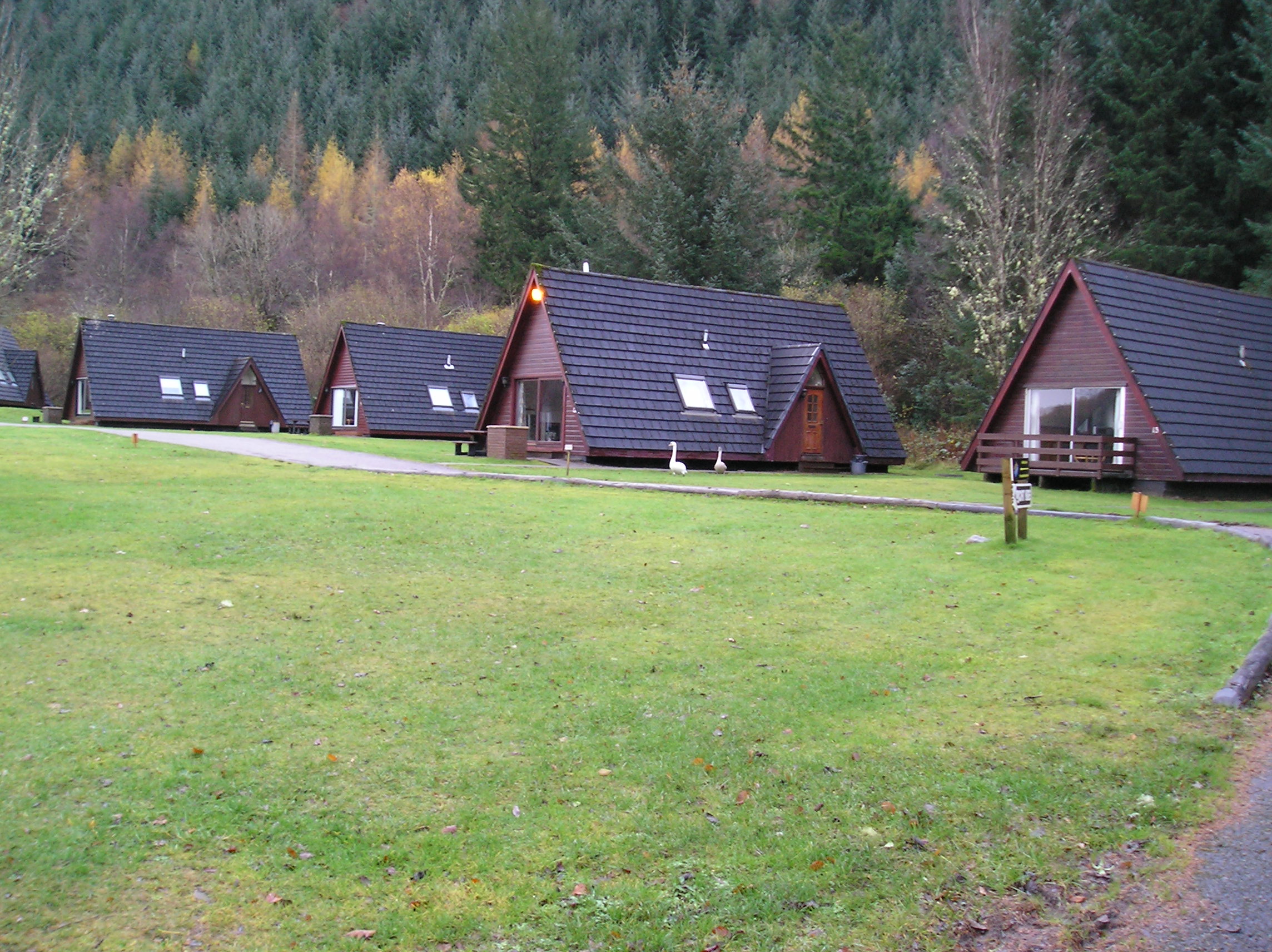
1.5 hours later we finally arrived, just before 7pm and we had made the check-in deadline with 10 minutes to spare.  By now pitch-dark we had not an inkling of the beauty and magnificence awaiting us.   The A-frame cabins are darling and we made ourselves right at home.   The first thing that went on was the heating, as it was quite freezing cold.

Hunting around the cabin it took ages for us to find all the switches to activate the various appliances, and the only one we could not find was the switch for the hot water!   The following day we enquired at the office and the handyman came along to show us where it was – right behind the box of oats I had placed on the counter!!! Go figure.

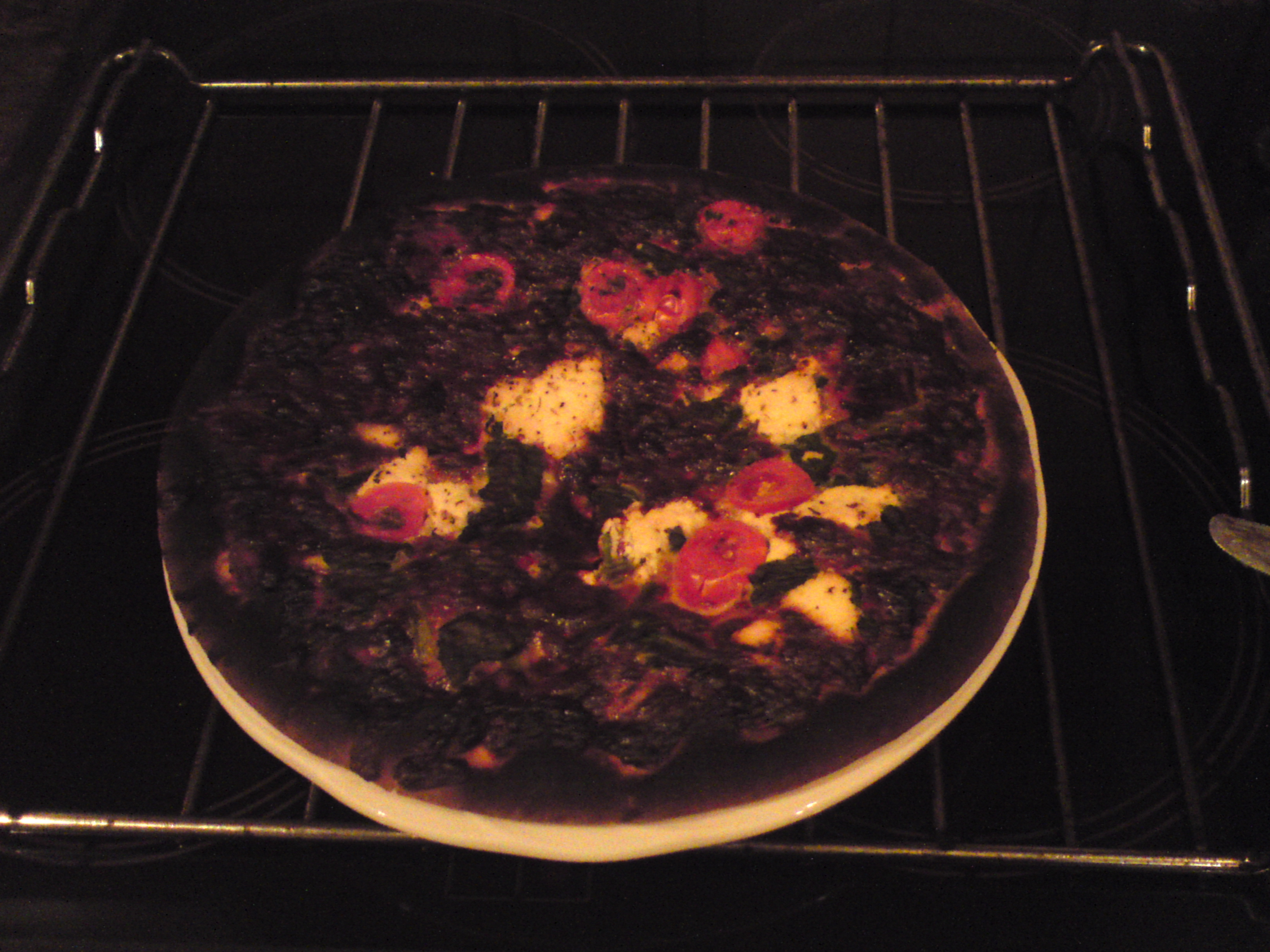
Then a toss-up on who would get the double bed!  CJ won for the first 4 nights since she was only staying till Wednesday, so that was fair enough.  Then time to unpack, hang clothes up to dry and have supper!   We had bought a pizza for convenience and popped it into the oven.   Hahahaha, we ended up with – a burnt pizza for supper!  The oven settings were unfamiliar and we set it too high.  It tasted just fine actually and nicely crunchy round the edges 🙂

Relaxing and watching TV, Strictly Come Dancing was on and not to be missed, followed by X-Factor, we settled in for the week, cosy and comfortable.   Later that evening just after getting into bed, I had a summons from CJ to quickly get my jacket and shoes on and come outside.   I duly complied and stepping out back behind the cabin I lifted my eyes to the heavens and gasped.   A blanket of stars covered the night sky, brightly twinkling and sparkling in the night sky.   I am reminded once again of the fact that because we are creatures of the daytime, we miss out on this glorious spectacle every night.

We shivered and giggled, somewhat nervous that we were so close to the forest, literally feet away, it was dark and eerie and every rustle had us squeaking with fright. With wolves and ghosts in mind, and things that go bump in the night, I did not last long when finally my nerve broke and we skedaddled back inside, laughing and giggling fit to bust.

We had no idea what was awaiting our eyes on the morrow.   And so to bed, I slept like the proverbial baby.  Utter peace and quiet.   Bliss.

Read Full Post »
I had the good fortune of paying a fleeting visit to this amazing city today.   As I wandered through the streets, along the lanes and stepped through ancient college doors into courtyards filled with history, I marvelled at the exuberance of the ivy-clad architecture, the fine detail of gargoyles and kings, and the marvellous atmosphere of a scholarly city.   I even contemplated the possibility of applying to study English or History :).   I could not imagine anything more sublime than living in a University town and studying two of my favourite subjects.   I wonder what the lovely lithe young things would make of a ‘granny’ in their midst.   Oxford is a bicycle town and the students look quite relaxed as they dash about town, visiting friends, the library or the local pub.   As I meandered through the streets passing first the world famous  ‘Radcliffe Camera’, then under the Bridge of Sighs, into the Bodleian Library Quad and stepped inside beautiful churches ablaze with magnificent stained-glass windows, I enjoyed the sun on my face and the cosmopolitan mix of residents, tourists, a South American Pipe band, students and an eclectic mix of the strange and wonderful.

I stopped by the Carfax Tower to watch and listen to the Bell Chimes.

As always I am fascinated by the ancient graveyards and today they were dressed in their autumn finery, the leaves in colours of red, gold, yellow and orange littered the ancient paths and covered the final resting places of famous and forgotten.

The city is a fascinating mix of architecture, the college’s glow gold in the afternoon sun, the spires and domes lit up as the suns rays bathe them in a soft yellow light.   Most of the older buildings and colleges appear to have been built from the same lovely soft yellow stone that lends the city a golden colour.   Secret corners blackened with age and ravaged by the passing seasons withstand the tests of time.

I found a great site which offers a Virtual Tour of Oxford…fabulous!  Be sure to click on the various sites for a close up almost ‘right there’ feel of the city behind closed doors.

To tickle your fancy and give you a little bit of history I sourced a fantastic site on the internet (hooray for google).

a bit of a taster follows, for more info if you want to know more…visit the site

Oxford, The City of Dreaming Spires, is famous the world over for its University and place in history. For over 800 years, it has been a home to royalty and scholars, and since the 9th century an established town, although people are known to have lived in the area for thousands of years.

Nowadays, the city is a bustling cosmopolitan town. Still with its ancient University, but home also to a growing hi-tech community.

Oxford is home to a world famous university, and most of the colleges and university buildings are located in the centre of Oxford, within easy walking distance of each other.

Don’t miss the Bodleian Library,  and the nearby Radcliffe Camera, which is not open to the public, but is well worth a view from the outside.

Nearby, in Broad Street, is the Sheldonian Theatre, a venue for official university functions as well as a variety of concerts.

The University also owns the Ashmolean Museum on Beaumont Street (opposite The Playhouse), Britain’s oldest public museum.

The centre of Oxford is dominated by the University colleges, the most famous being Christ Church, Trinity, and Balliol (from a total of thirty six).

The origins of Oxford are not actually known with any certainty, being as they are, shrouded in the mists of time, but various ideas have been submitted (and disputed) regarding its genealogy.

Medieval historian, John Rous wrote in his 1490 work, ‘Historium Regum Angliae’, that Oxford was originally King Mempricius’ city, Caer-Memre, built on the River Thames somewhere between 1400 and 1500 BC.    However, other historians from Rous’ time were more inclined to support the popular legend that Oxford was in fact founded by the Trojans, after they landed on British soil in around 1100 BC.

Archaeological Evidence
Whilst there may be no definite historical basis for John Rous’ claims or for the Trojan story, there is some evidence of a settlement in Oxford possibly as early as 4000 BC.

Archaeological finds of Neolithic arrowheads and other remains from that period have been discovered in the city, and although no specific or more detailed evidence exists of an actual settlement at this time, it is known that a large Neolithic population once resided in Oxford.

In addition, a more permanent settlement between 2000 and 700 BC is suggested by evidence of Bronze Age barrows in the area.

Roman Times

Oxford in the time of the British Roman invasion appears to have been largely ignored by its conquerers. In fact, records show (or rather they don’t) that there was no town of  ‘Oxford’ in Roman times, although evidence of villas in the surrounding countryside does exist, together with a temple at nearby Woodeaton.

Instead, Brittania’s new leaders favoured Colchester, London (Londinium) and Chester, making Colchester their first capital of the new province, swiftly followed by London (once they realised the strategic importance of the River Thames).

Whilst Oxford has certainly not been recorded as being the centre of any importance during Roman times, evidence does exist of pottery kilns in the city and surrounding areas which may have supplied earthenware vessels to the new rulers of the realm. This is further supported by number of probable kiln sites unearthed in the region – at Woodperry, south of Stow Wood, Marston, Iffley, Littlemore, Kennington, and Headington (Churchill Hospital) – no doubt taking full advantage of the city’s rich clay beds.

Add to this the fact that Oxford was (and is) of course very close to the important trading highway of the River Thames, plus the fuel readily available from the Headington and Cowley woodlands, and you can see how the city would have made an ideal location for Roman industry.

Although there was no large-scale settlement in ‘Oxford’ at this time pottery making appears to have been widespread and prolific in the area. In fact, this industry is one of the earliest recorded in Oxford.

The Saxons

Although Oxford (or Ohsnafordia, as it was known in Saxon times) wasn’t really recognised by the Romans, in the Saxon age it began to assume a much greater importance within Britain. In the late Saxon period particularly, when it was positioned on a major trade route between the two powerful kingdoms of Mercia and King Alfred’s Wessex, growth was high.

St. Frideswide
According to legend, St. Frideswide was born in around 650, daughter of Mercian King Didan, and was brought up to holiness by Algiva. When proffered (and refusing) the hand of King Algar (also a Mercian) she fled her homeland to settle in Oxford and there she built an abbey (where Christ Church stands today) – reportedly to preserve her virginity.

And preserve her it did, for when King Algar followed her there and attempted to take both her and the abbey by force he was struck blind. Only St. Frideswide’s later forgiveness restoring his lost vision.

Long after her death in 735 and during the reign of Ethelred the Unready, the abbey was razed to the ground (in 1002) with Oxford’s Danish population being blamed for the burning, and a large number of them were massacred (as part of the then King’s desire to remove all Danes from England). It was later rebuilt as an Augustinian Priory, the cemetary of which has been excavated in Christ Church Meadow.

St. Frideswide is now the patron Saint of Oxford City.

Alfred the Great
King of Wessex (871 – 899) and leader of the Saxon resistance to the onslaught of Danish Viking invaders, but probably better remembered by many for the legend of his lack of culinary skills. Legend also records King Alfred as responsible for founding Oxford University, not as unlikely as it may first appear.

The Danes Revenge
During the uncertain reign of Ethelred the Unready, in 1009, the Danes sacked Oxford in retribution for the massacre of 1002 and just four years later the city, having increased in importance, was again forced to submit to Danish invasion by Swein Forkbeard and his armies. In fact, Oxford was viewed as so important during this period that Cannute (later to become king) chose the city for his coronation in 1018.

Medieval Age

After recovering from the Danish invasions it suffered in the latter part of the Saxon period, Oxford continued it’s growth and importance right into what is now known as the Medieval age. Not all ran smoothly however, as in 1138 the city suffered a huge fire which effectively burnt it to the ground.

Oxford Castle
From the Medieval age, and still very visible is Oxford Castle, originally built by Norman lord, Robert D’Oily in 1071.

In the winter of 1142, Oxford Castle became the scene of a seige when it was home to Queen Maud (Matilda), during her struggle with King Stephen. The queen only escaped the castle after her guards lowered her over the walls and, in a white dress which effectively camoflauged her against the backdrop of winter snow, she crept through enemy lines and across the Castle Mill stream to freedom.

The Black Death
Oxford was hit hard by the plague (1348 – 1350) and during this time the local colleges kept country houses outside of the city where scholars could flee, no such opportunities for the ordinary resident, however.  As a result, Oxford’s population dropped dramatically during this period, and the colleges took full and grisly advantage of the fact by buying up vacant property and greatly expanding their holdings within Oxford.

Tudor Oxford

Famous Tudor king, Henry VIII, founder of the Anglican Church left his mark on Oxford, taking control of Christ Church from Cardinal Wolsey and abolishing the study of canon law.   He instituted University chairs for medicine, civil law, Greek, theology, and Hebrew instead, marking a fundamental shift in emphasis for the University, away from its monastic beginnings.

The University

The exact origins of Oxford University are not known. Certainly many theories on how it came into being have been expounded, but none have been proved beyond a shadow of a doubt.

King Alfred
It has been said for example, that the Saxon King of Wessex, Alfred the Great could have founded the University during his reign (871 and 899), due to his very un-Saxon penchant for scholarly pursuits, and although this is not as unlikely as it might sound, no cast-iron evidence supports it.

Long after Alfred however, during the late 11th or early 12th century, it is known that Oxford became a centre of learning for clerics, from which a school or university could have sprung or evolved.

Academic Centre
Firmly established as an academic centre by the 13th century, Oxford was drawing students from across Europe for studies focused on houses established by the Dominicans (1221), Fransiscans (1224), Carmelites (1256), and Augustinians (1267). end of excerpts.

and so today in 2009, as I walked the streets of this magnificent city, I met, listened to and observed the students of today.  I wonder of they appreciate the history that surrounds them on a daily basis.

Read Full Post »

Hello dear readers,

Pumpkin

not just a pumpkin!

Here we are almost at the witching hour of Halloween (ok, so for some of us the witching hour has already come and gone and it is now 1st November……whatever!!! 🙂 🙂   Wherever you are I hope you joined in the fun and got some real great treats.

As for us here in the UK and for our Americans cousins on the other side of the water, midnight is on the way and our trick or treating is yet to come.

And as it approaches do you ever stop to wonder about the what, why or how of Halloween.   Personally I love the idea, I also love the US of A for introducing us to the idea.   Any excuse for a bit of fun is good with me 🙂

I decided to do a bit of research this year, not having stopped to answer the above questions myself in the past and this is what I found:

Wikipedia:

Halloween (also spelled Hallowe’en) is an annual holiday celebrated on October 31.    It has roots in the Celtic festival of Samhain and the Christian holy day of All Saints.    It is largely a secular celebration but some have expressed strong feelings about perceived religious overtones.

The colours black and orange have become associated with the celebrations, perhaps because of the darkness of night and the colour of fire or of pumpkins, and maybe because of the vivid contrast this presents for merchandising. Another association is with the jack-o’-lantern (named after the phenomenon of strange light flickering over peat bogs, called ignis fatuus or jack-o’-lantern).   Halloween activities include trick-or-treating, wearing costumes and attending costume parties, ghost tours, bonfires, visiting haunted attractions, pranks, telling scary stories, and watching horror films.”

I am totally into things that go bump in the night, scary movies, ghost stories, haunted castles, being scared witless and having fun watching other people being scared witless;  so this type of event is right up my alley.

I was watching ‘Autumn Watch‘ on BBC2 last night and they showed Simon in Abney-Park Hackney Cemetery wandering about at night, which is so cool.  Abney-Park became the first non-denominational Victorian Cemetery.

so if you are into being scared witless, ghosts, and things that go bump in the night 🙂 why not venture into your local cemetery tonight, the UK certainly has plenty of really ancient graveyards that should fulfil your wildest nightmares 🙂 then drop by later and leave us a comment on what you got up to!

My thanks to our American cousins for introducing us to this marvellous event.   HAPPY HALLOWEEN

Read Full Post »
« Newer Posts

Self Propelled

Self propelled adventures through life; blogging on cycling, touring, micro-adventures, general shenanigans, and environmental news

johnelsewhere

Thoughtful wanderer in search of virtual meaning

Things Helen Loves

TRAVEL, WALKS & EVERYDAY ADVENTURES

Short Walks Long Paths

Wandering trails around the coast of Wales

Port Side Travel By Jill

My travels, photos, tips/tricks and anything else I think of!

Wonderwall

My 360: wonderwalls,theatre, travel, Sheffield, books...

Robyn's Ramblings

My Thoughts. Expressed.

Graham's Long Walk

Graham King's long walks around Britain

The Lawsons on the Loose

Philip & Heather are making memories through their travels.