Feeds:
Posts
Comments

Archive for the ‘around the UK’ Category

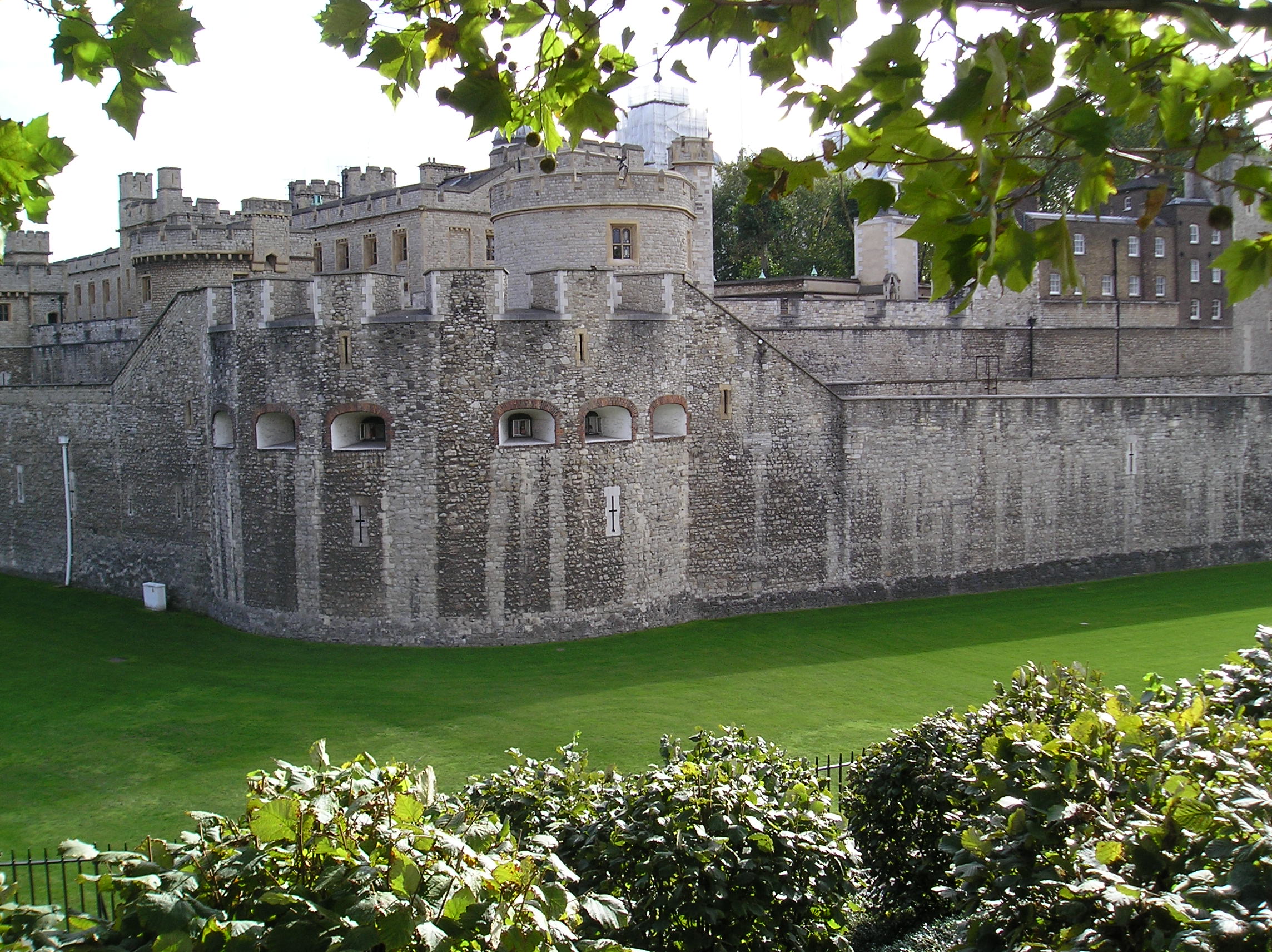
The Tower of London holds many secrets and hides a bloody past behind it’s walls. 

The Tower of London

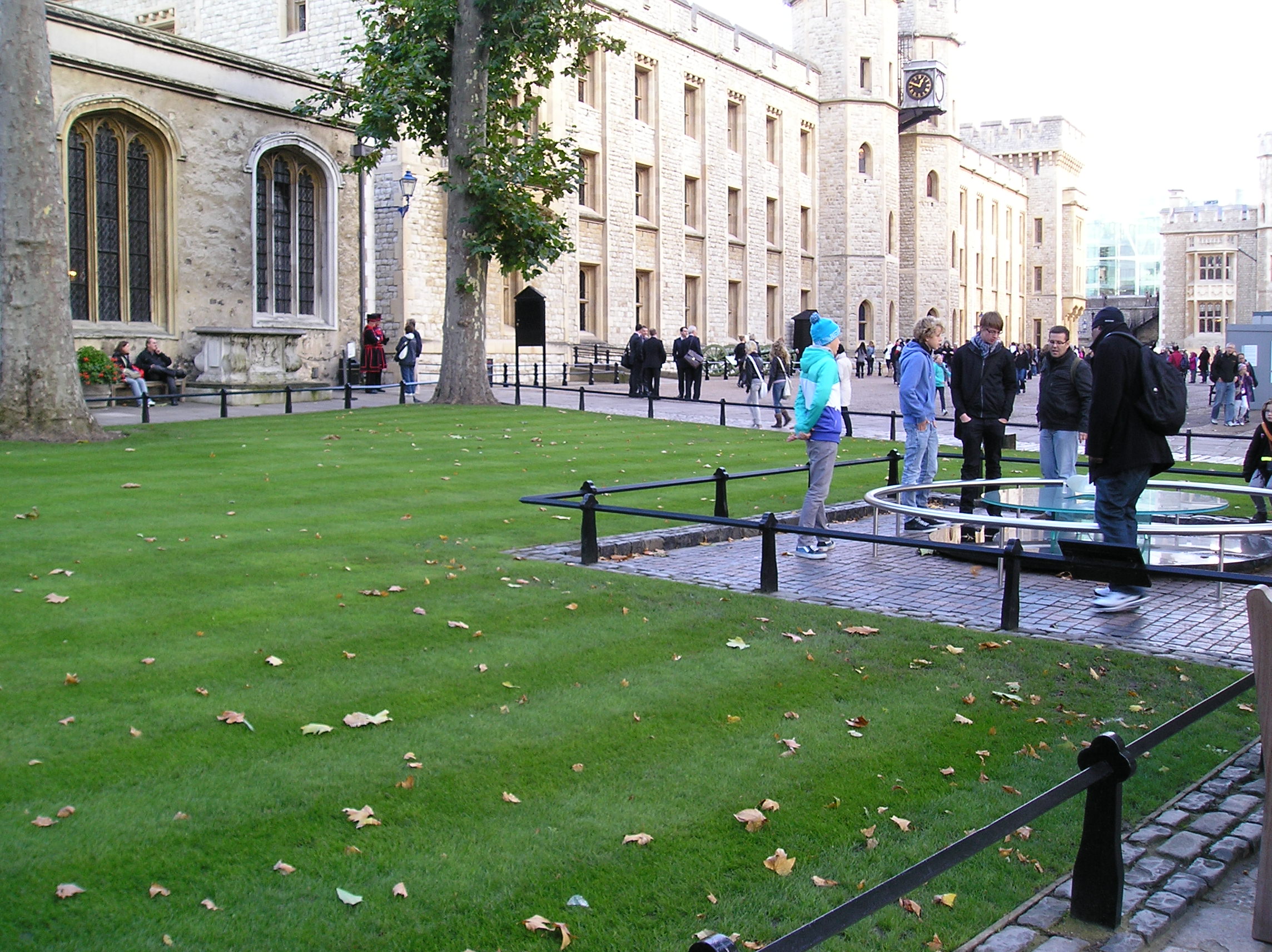
 Not so hidden is the place where many executions took place.  The youngest person to die at the hands of the executioner was just 16 years old; Lady Jane Grey… queen for just 9 days and then beheaded!

Tower Green

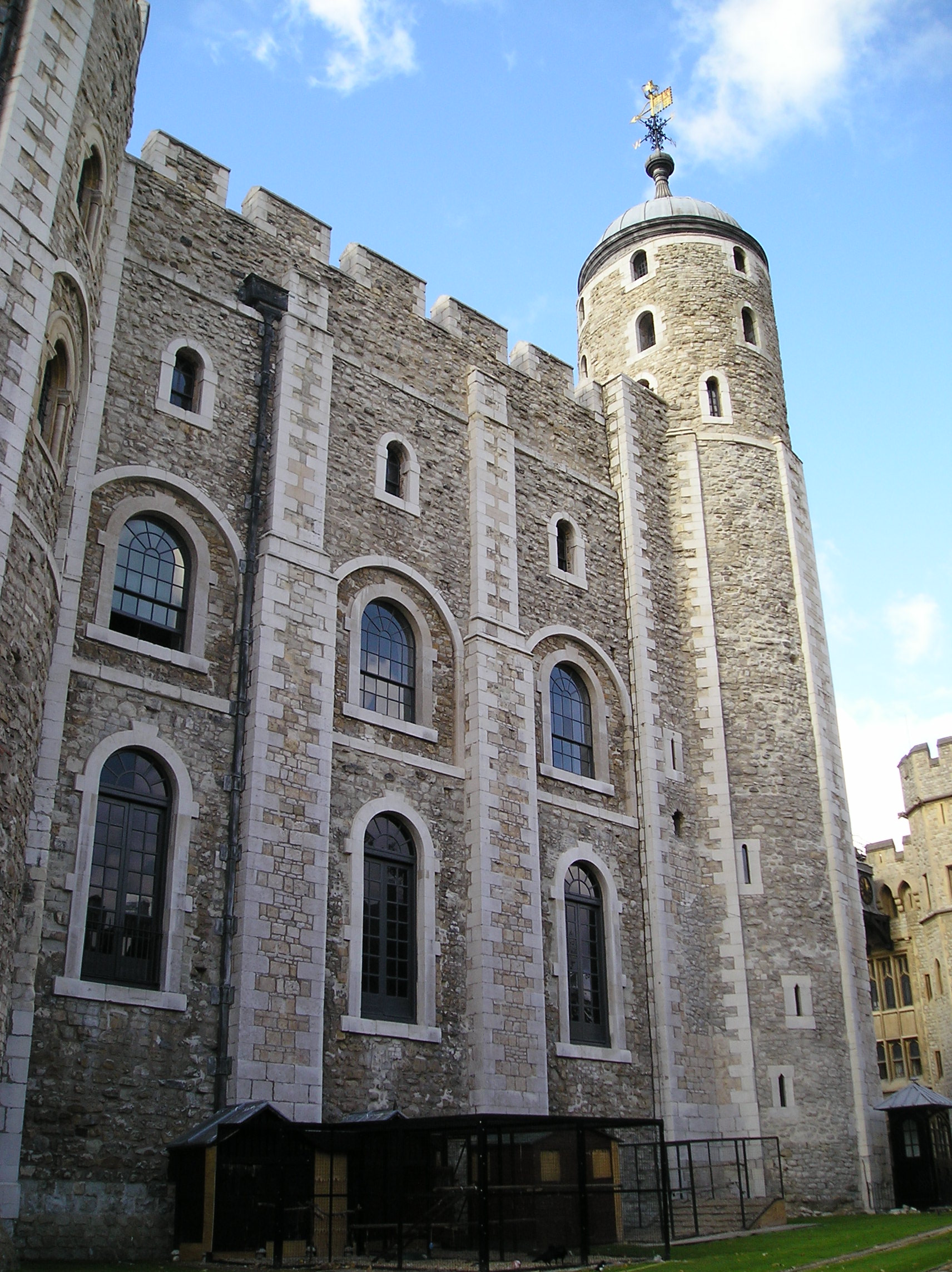
If nothing else the citizens of this tiny island were a blood thirsty and violent bunch. A visit to the Tower of London is a fascinating trip back in history and parts of the tower date back to 1075 when William the Conqueror started work on what is known as The White Tower

The White Tower

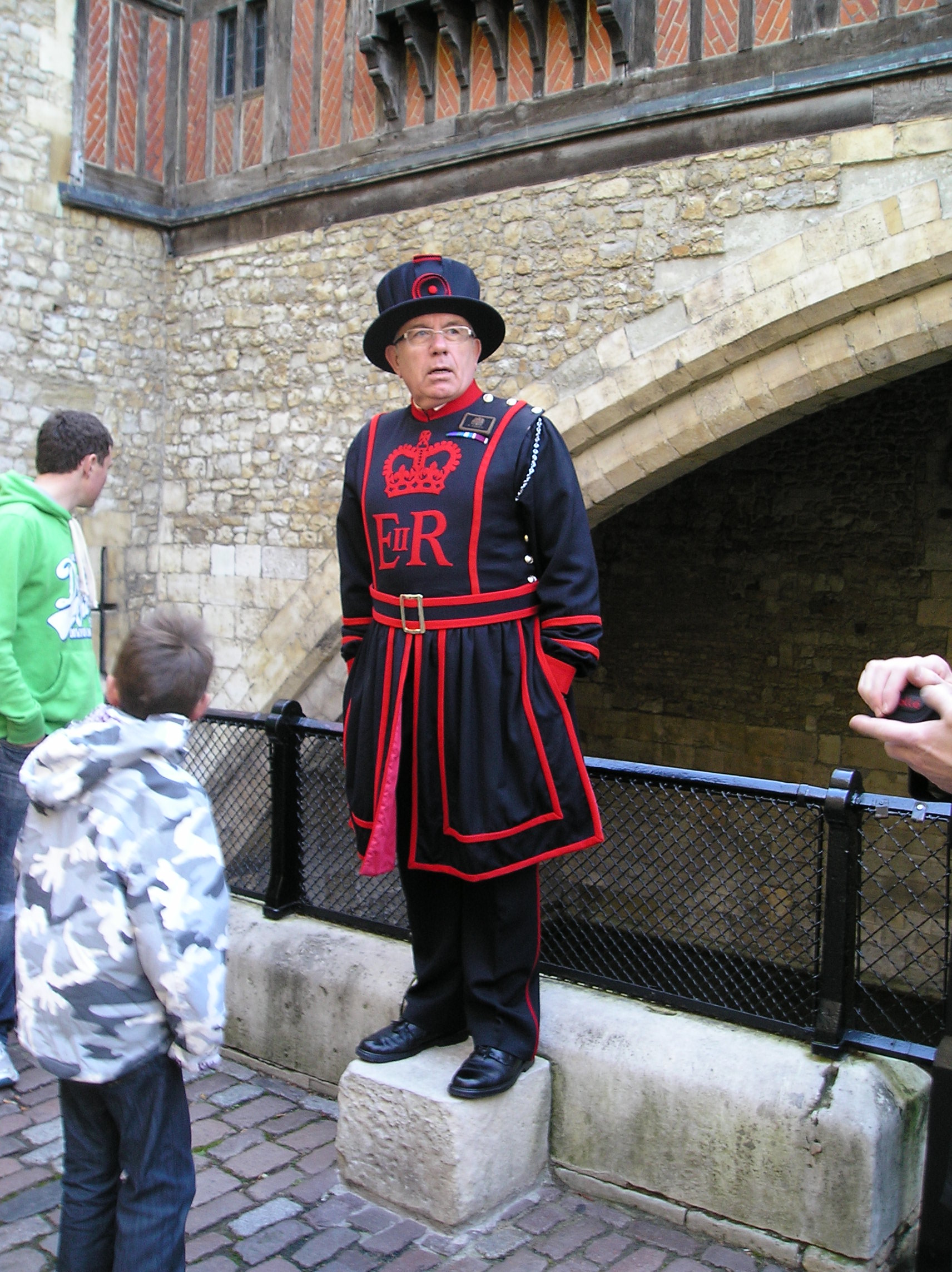
– the Norman Tower; built on the south-east of the ancient Roman city to control Londoners and deter invaders. Between 1238 and 1240 Henry III expanded the castle beyond the Roman city boundary. I took a Yeoman Warder (Beefeater) tour which was highly entertaining, filled with fascinating facts and amusing anecdotes. 

Yeoman Warder

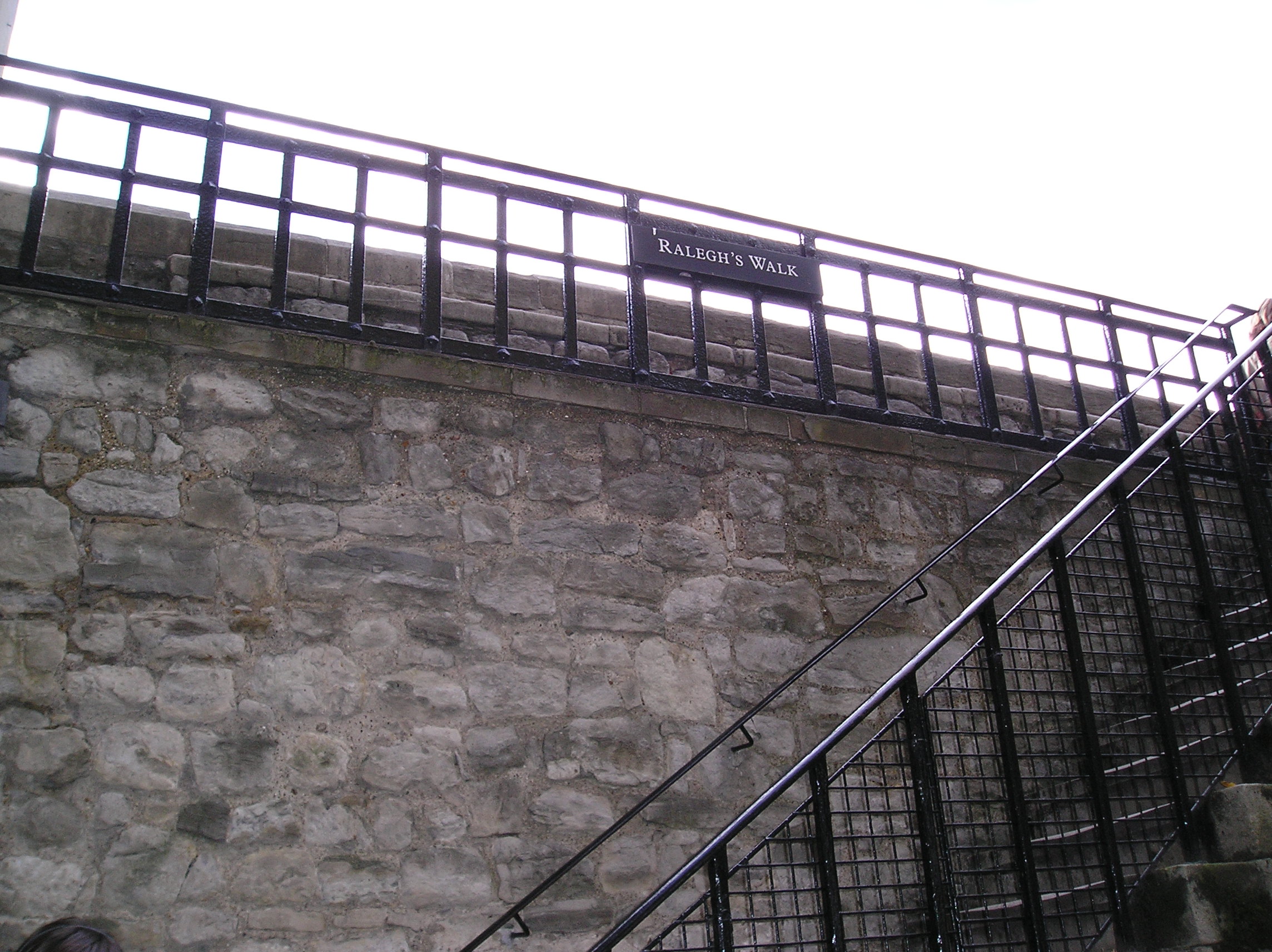
 This lasted for 45 minutes and the I took myself on a tour of the grounds, towers and ramparts.  It always gives me a thrill to walk in the footsteps of well known figures like King Henry VIII who used to wait at the riverside gates for his brides and Ralegh who was imprisoned 3 times in the tower.

Ralegh's walk

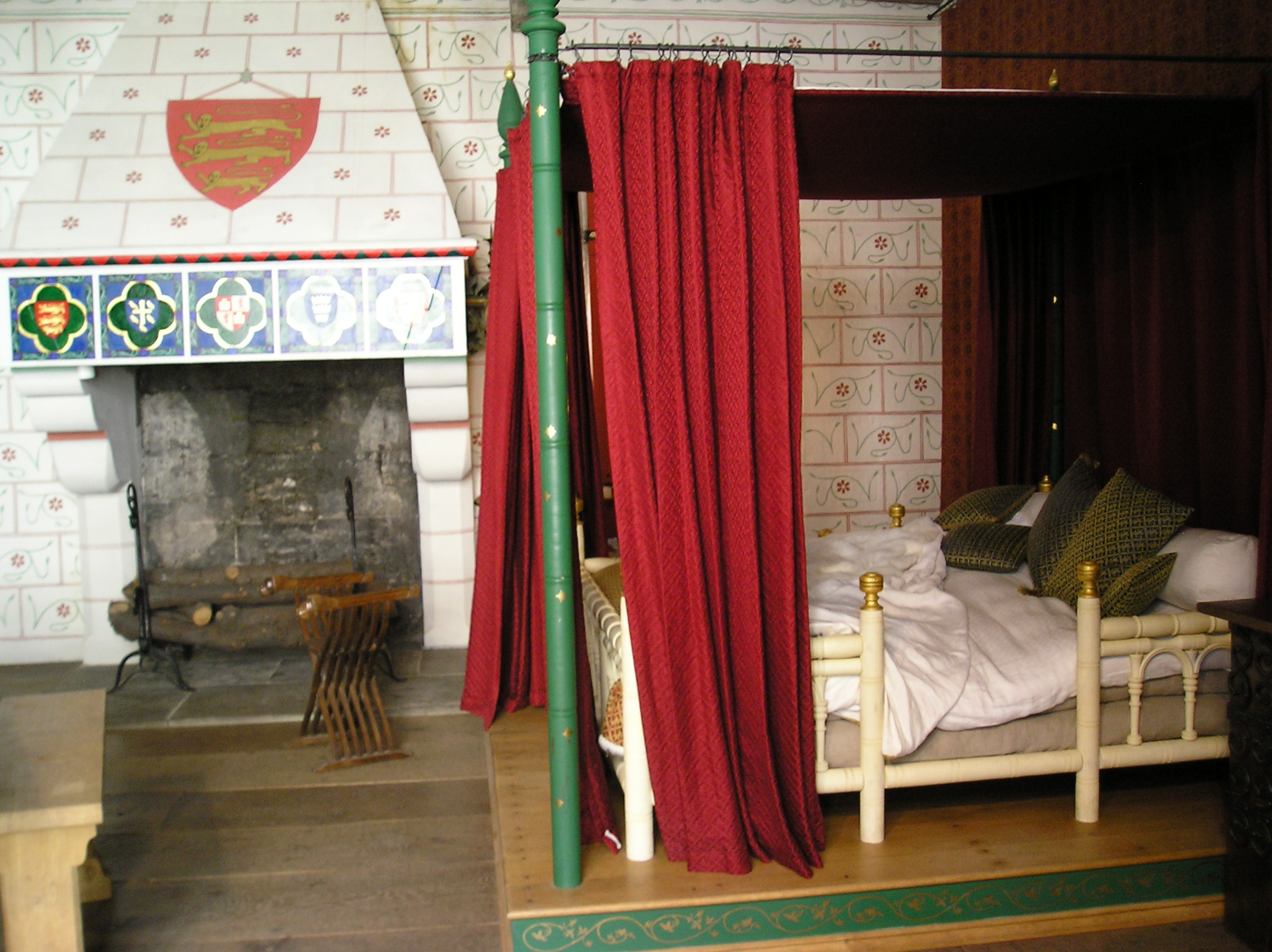
 Tower Green is the spot where 3 queens, two lords and two ladies were beheaded as traitors. Walking in the footsteps of Ralegh, Edward I and Henry III is beyond amazing, and in the medieval palace they have recreated King Edward’s chamber.

King Edward's chamber

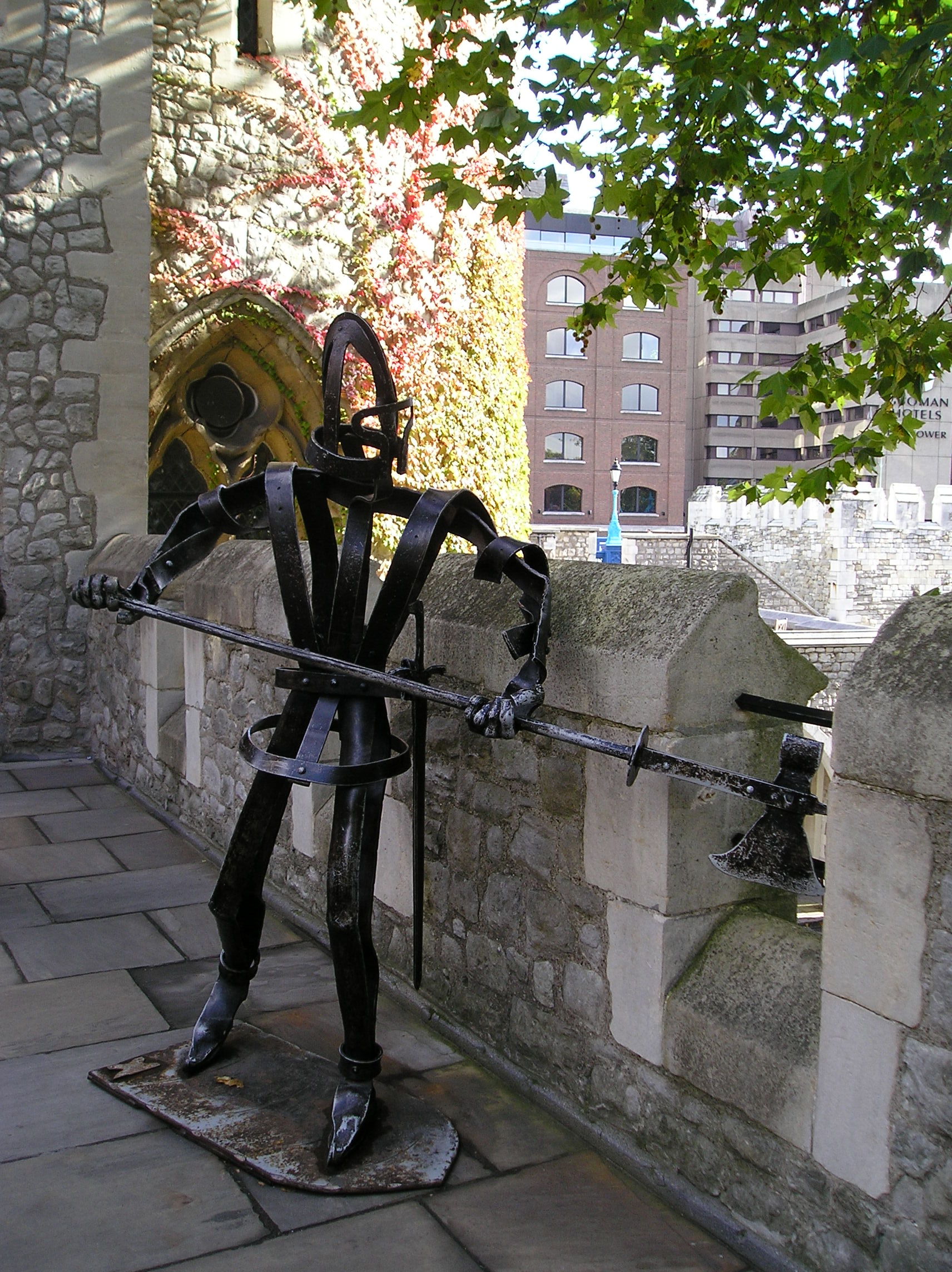
 Dotted on the ramparts are wrought-iron figures depicting soldiers and archers in battle-stance.

soldiers on the ramparts

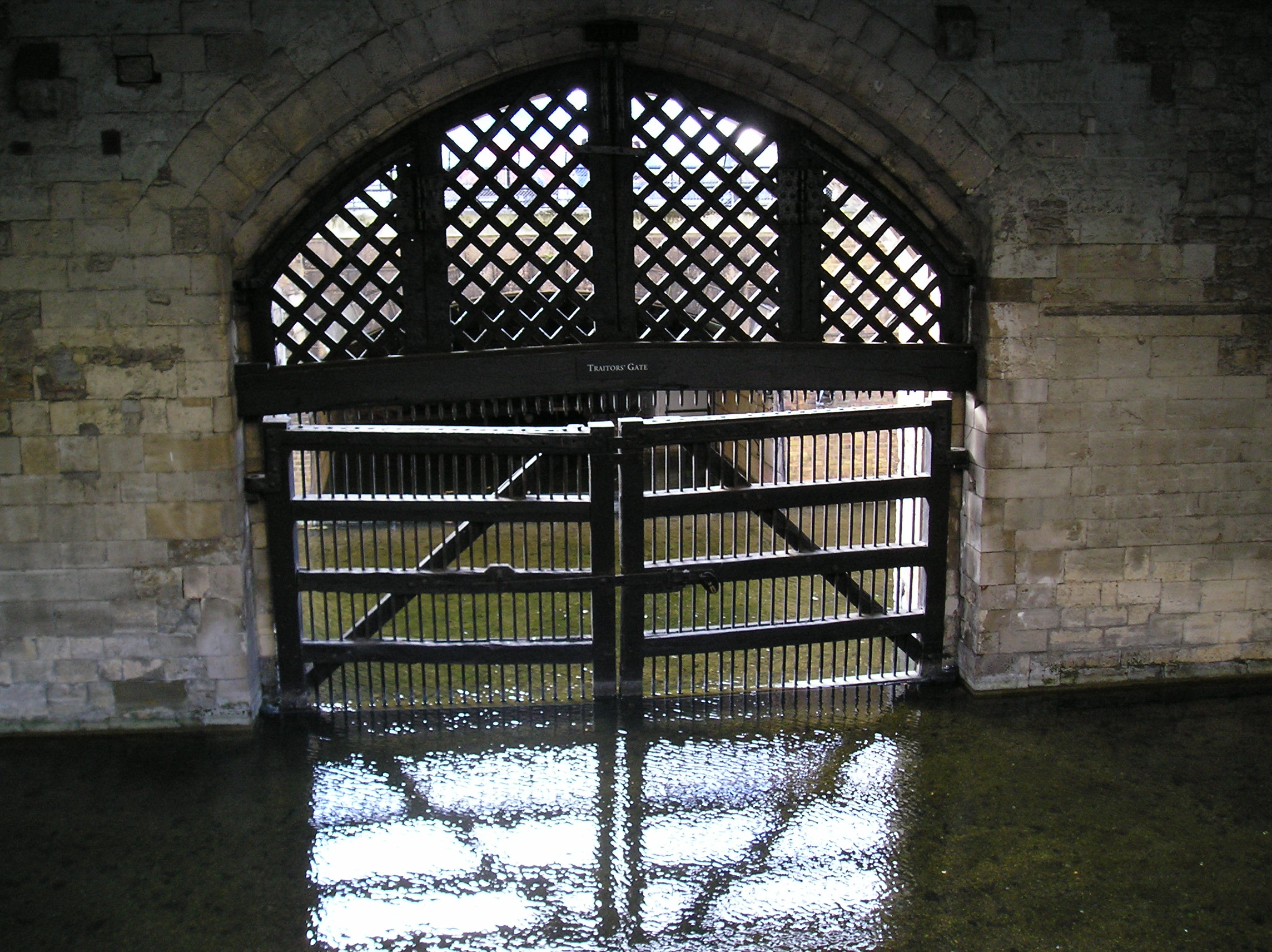
The traitors gate,

Traitors Gate

chapels and towers make for a fascinating visit with the highlight being a visit to see the crown jewels, the most secured area in London. They are quite beyond magnificent with jewels to make your eyes water.  130 people in total live in the Tower and they host many events and on occasion re-enactments of historical events. The ravens of which there are 9 (3 for back-up) are well looked after, legend has it that if the ravens leave the palace the monarch will fall……so, as you can imagine these are the most well looked after birds in history!

the tower ravens

There are laods of guns, cannons and various items of weaponry dotted about the grounds, of which this was by far the most magnificent!

bronze 24-pounder gun and cast-iron carriage

This gun, which weights 5 3/4 tons was probably made in the Low Countries in 1607, commissioned by the Knights of Malta. It is richly decorated with a variety of images representing the Order’s Religious and Humanitarian role. It was brought to England around 1800.  An awesome place to visit.

Read Full Post »

One of the things I have enjoyed most about living in the UK (and there are many), are the wee birds that frequent our gardens.  It is a treat coz I don’t really remember the gardens back in South Africa hosting such cute little birds.  Over the last few months I have been based in London (as per my Jan 1st request…hey the Universe does listen occassionally). The garden of the house stretches way back and is filled with a variety of trees (which I also love). 

view of the garden from my window & altho you can't see them there are two foxes right at the end

It has been my good fortune to experience the end of winter, spring, summer and now autumn in this garden and it has been a joy to watch the birds.  My desk is situated right in front of the double glass sliding doors with a fine view of the verandah and garden – which provides ongoing treats…… 

fox in the garden

One of my daily activities is to feed the birds, and I have had the pleasure of watching these cuties come in to feed; robins, blue-tit, coal-tit, house-sparrows, chaffinch and the very occassional wren (they are just darling). 

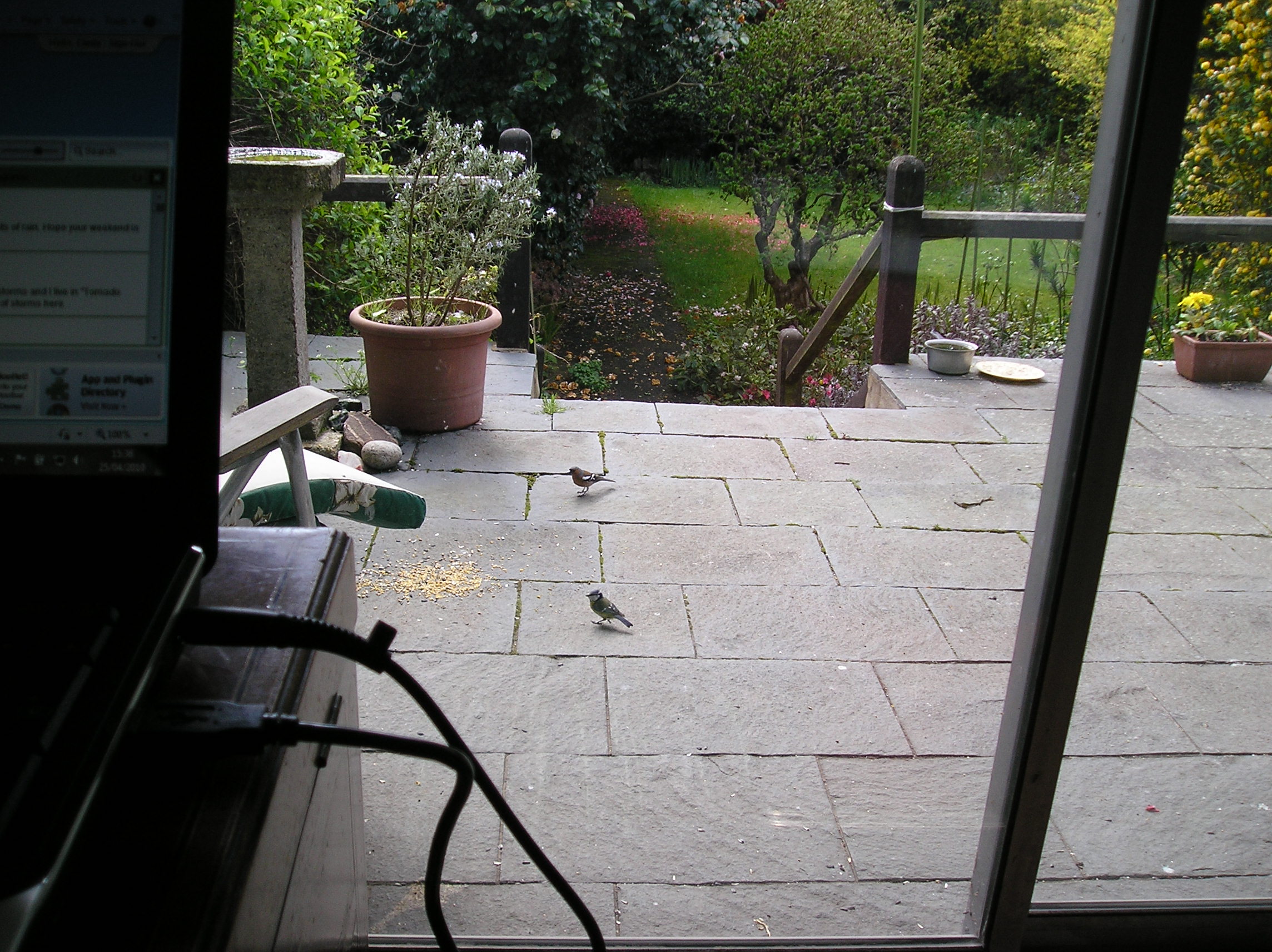
a blue-tit and chaffinch on the verandah....view from my desk

 Of course the food also attracts the larger varieties….jay, magpies (gorgeous colourings) and the blasted pigeons – which I take great pleasure in scaring off.  Spring especially was a treat when the mama’s and the papa’s helped their broods to fledge.  I recall the first morning of this delightful spectacle when my concentration was disturbed by a great flurry of wings and tweets ( 🙂 ) and a busy brood of not so very able chicks flew here, there and everywhere.  

blue tits teaching their brood how to feed - June 2010

They dashed here and there causing a riot of noise and confusion, with the occassional thwack as they flew into the glass doors (I hastily attached pieces of paper to the door to warn them)…. this got quite a few jokes from visitors…. “erm ah, and can the birds read this?” eejits.   Anyway, the point of my story (yes I do get there eventually) is that the birds in the garden are a national treasure, and we do what we can to help them out and build them up to be nice fat, healthy wee birdies.  Fat balls stuffed with seed, peanut and suet treats – equally stuffed with seeds, bird-feeders strung about filled to the brim with a variety of seed – and the bird-bath….filled with fresh water.

So you can imagine my absolute dismay when I read in the Metro (local paper provided free by TFL-TransportForLondon), on August 19th about a bird plague that was being spread ‘by kindness’!! Horrified would best describe my reaction.  Apparently what they have discovered is that wood-pigeons that use the gardens as a source of food leave a parasite ‘trichomonosis’ in the bird-baths and on the feeders.  This is then transmitted to the other wee birds via the seed and water!!  This parasite lives in the upper digestive tract of birds and is spread when they feed each other, this causes the bird’s throats to swell, leading to starvation.

The statistics are frightening: 500,000 of Britain’s best loved birds have been killed by this disease; the greenfinch population has dropped by a 3rd, and chaffinches by a 5th since it emerged in 2005.  The article goes on to say that hygiene is the key and that bird-feeders and baths should be cleaned regularly.  Fortunately this is something I do anyway since the pigeons and squirrels poop and pee all over the place, but since reading the article I have now become quite fanatical and scrub the verandah every 2nd day as well as the bird-bath….I have also increased my ‘scare off the pigeons’ activity and have a great time playing at being a scare-crow…mind you that’s not too hard. 🙂

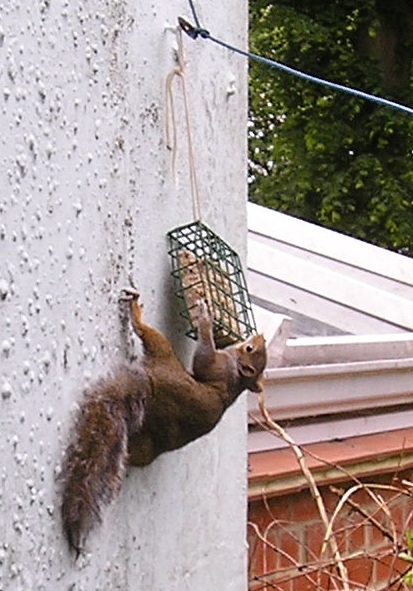
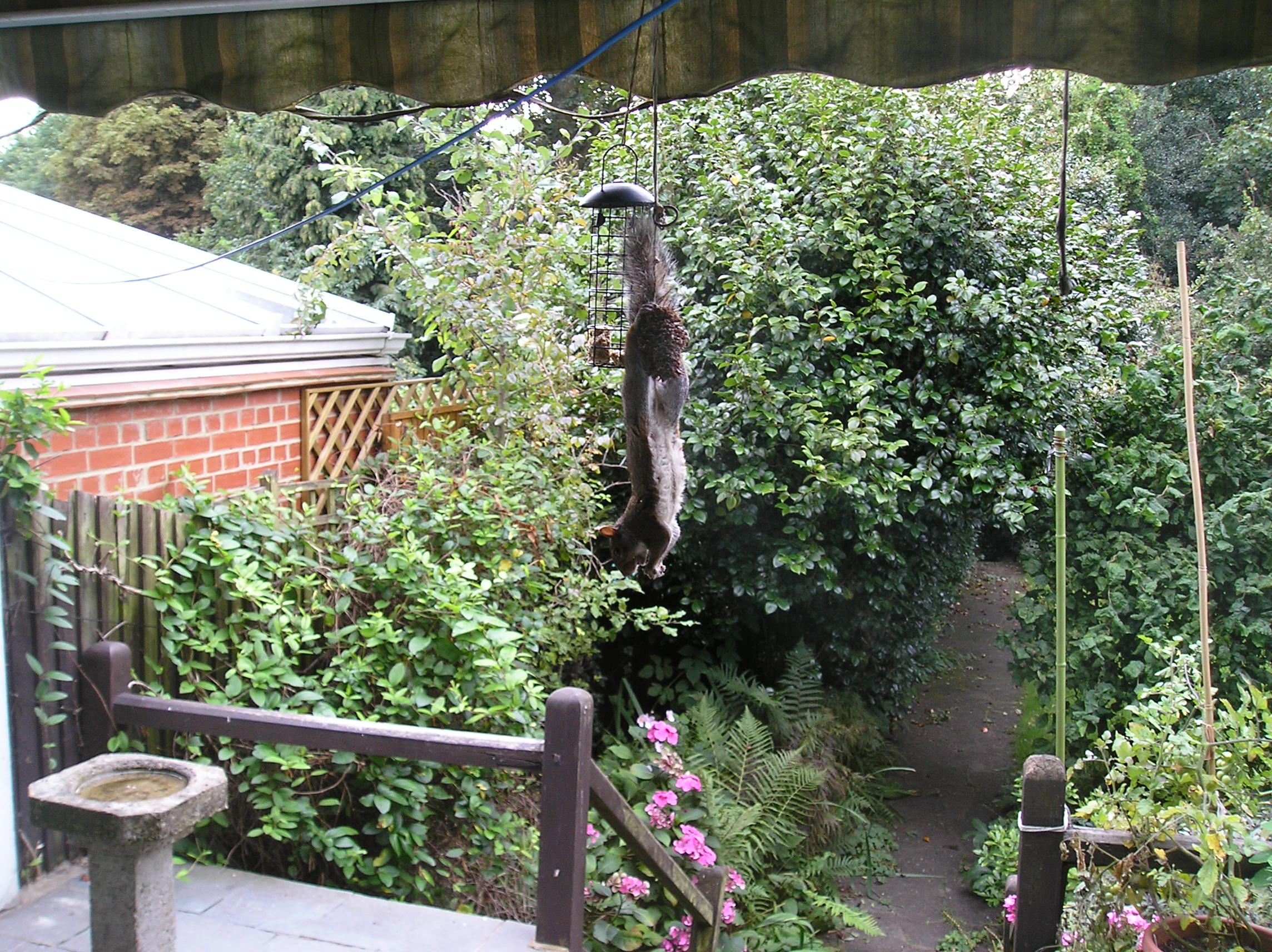
And talking of squirrels; they are a constant source of amusement, albeit a constant source of pesky!! They are very enterprising and it has become a game between them and me now with regards to the bird-feeders!  I find ways of hanging them so that the squirrels can’t get access, and the squirrels find ways of getting to them….. 

mister squirrel and his industrious efforts to get at the bird food

🙂 this little chap was literally hanging on by the toes!

our intrepid little squirrel

…sometimes with hilarious results e.g. falling into the bird-bath 🙂

And so in conclusion….if you live in the UK and you have bird-feeders or a bird-bath….scrub them regularly and keep them topped up with fresh water, and according to Mike Toms of the British Trust for Ornithology, if you notice signs of infection amongst your birds, stop feeding temporarily and hopefully stop the spread of the disease.  And finally….does anyone know of a good way to get rid of pigeons? Nothing that involves shooting them please.

Read Full Post »

a vintage model.....1955 VW Campervan

Ok, so a couple of days ago I posted a blog and therein made mention that currently I am working at my ‘day job’ not my ‘dream job’.  So what is my dream job?  This has been incredibly difficult to pin down….until I came to live in the UK…..

When I was just 17 years old (lordy but that does seem like such a long time ago)….I wanted to be a Nursery School Teacher (I loved little children and babies…still do)…. but my Mother said NO! you go get an office job, you will earn more money! (and what Mother said…you did).  So I did, and she was right.   But was I happy….NO!   I hated working in an office, but as the years went by and I progressed from being a typist who could not type… (the guy gave me a job coz I burst into tears in his office and told him my Mother had said I should not come home till I had a job, and it was 4pm by then)…. to being a Credit Manager; managing a staff contingent of 10 for a group of 5 Companies…. this took the best part of 30 years by the way.  In between there were many positions, not just a few companies, and a whole lot of crappy bosses 😦

However, along the way I learned to enjoy working in an office and to love what I did….phoning people and asking for money.  Just a shame it wasn’t for myself 🙂

Anyways, when I arrived in the UK, which was by default; I came on holiday and never went back (well only briefly to get my Ancestral visa) and I have never looked back…..quite literally – no looking in the rear-view mirror.  So when I first arrived in the UK, what was the job I applied for…..?  Why of course…. I applied to be a Nanny :).     However as fate would have it…. I did not have current experience DUH! and I did not have an NVQ in child management… double DUH!!  So that idea was scotched and went out the window, and anyhow by all accounts being a Nanny in the UK is akin to being one up from a slave.    Not to be deterred I continued to look for a ‘job’ and again by default managed to find a position as a Care Assistant for the Elderly….which I initially hated and then without warning I found that I actually enjoyed it and so I have and have been for the last 8.5 years (except for a 1 year stint in an offfice which nearly drove me to the brink of a nervous breakdown!).

So here I am….. working as a Carer…..but is this my dream job? Nope!   

Since living in the UK I have developed a passion for travelling.  This came as quite a surprise to me since I had never really thought about actually travelling around the world.  Sure I had the odd dream about going to the Maldives (not got there yet) or visiting Venice (been there 🙂 ), going to Paris (been there 🙂 ) and New York (been there 🙂 ).  But besides the odd daydream it was certainly never something I seriously considered I would actually get to do.

Till now!  So UNIVERSE, here is what my DREAM JOB would be…… to travel first around the UK (coz it is so fantastically gorgeous) then round Europe and then the US of A, and then if I am still alive and able to….spread my wings further afield. (ooh that has a double meaning!) LOL.   I would however like to spend at least 4 months a year in London!

So here is my message to the Universe….hello!!!! : My ‘DREAM JOB’  is to travel around the world in VW Campervan that has ‘NotJustaGranny’ with the funky logo emblazoned on the sides…. taking photos of everywhere I go, blogging about the places I am visiting and tweeting! and getting PAID to do it!  I would quite enjoy writing a book too…if that’s ok with you.

So dear Universe, if perchance you are actually listening, as the Guru’s in the Personal Development world maintain that you do…. Hello!!!!

Oh, and just a little p.s. The Guru’s say that when you ‘state’ what it is you want, you have to be specific; so just that there is no confusion about this…..

the VW Campervan should be a 1955 model (nothing but vintage is good enough for me)… you know what I mean 😉

It should be yellow with white trimmings (yellow is my favourite colour)

It should have 2 beds at least….1 for me (of course, and one for my daughter to join me from time to time, or for a friend to come along occassionally…and also for when my grandchildren arrive…have to have enough space for them to travel with me)

It should be fully re-furbished and reliable; preferrably with modern accessories and equipment…like an up-to-date engine. 1955 is all very well but it is a bit long in the tooth!

It should be modified to be eco-friendly….no fumes please.

I would appreciate it if there is enough space for my laptop and camera equipment (oh and I would need sockets for the chargers).

Don’t worry too much about wardrobe space….I don’t have much clothing… LOL

and it would be awesome if it had a lift-up roof-top for air circulation

oh, and a tent attachment would be brilliant for when I am stopped alongside a lake somewhere in the UK or Europe or the US of A, so that I can sit outside and enjoy the scenery and the night stars while I sip a sherry (or two).

If you need any further specifications….contact me via this blog and I will be happy to give you more details.

and just a final p.s.s. (sorry to be so picky, but…) when I talk about being paid to do this…I am happy to earn the money….. but please note that I would require at least £5,000 per month. For travel expenses and so on. ta

by the way….this is a 1955 model (the one on the right) please be sure to send a yellow one 🙂

1955 VW Campervan

and just in case you are wondering….. I put the picture twice so that you are clear on what it is I am looking for!

Read Full Post »

Lavenham Suffolk 24.08.10
Yesterday, after spending the weekend in Twickenham with my delightful daughter, I made my way up northish, to spend a couple of days with a friend in Hertfordshire; in the market town of Bishop Stortford, a very quaint village with a long history (as do most villages in the UK). We have not seen each other for well over a year now and it was great to catch up on all the news and the chat went on till the witching hour (as you can imagine).
Today dawned bright and early and as a treat she decided to take me on a jaunt through the english countryside to the historic town of Lavenham in Suffolk.
Now, in my opinion having travelled to many of the English counties as well Ireland, Wales and Scotland….Suffolk is the prettiest county in England, and the United Kingdom (you are welcome to disagree 😉 ), so today was an absolute treat driving through countryside that I have not seen since June last year.
We set off ‘relatively’ early (we are women after all), and once our destination had been keyed into the tom-tom (I do not trust those things), we made our way north-east.  Somewhere along the way, at one of the very confusing round-abouts in this country which need a navigator to get around, we took an exit too soon, and the tom-tom went into a sulk and would not speak to us 🙂  We drove for ages along the M11 (which I realise probably means absolutely nothing to many of my readers 🙂 ) and eventually the ‘lass’ got her sense of humour back and told us to turn left at the next exit. Hooray, we were back on track.  So to reach our destination took about an hour longer than it should have.
However, I was not complaining, as on the way we drove past fields and fields of grain, rolling hills and scattered copses of lovely green trees. Suffolk, an agricultural county, is mostly flat with soft rolling hills, and today, set against the wonderful blue summer sky filled with broiling, cumulus castles of cloud, made a picture perfect scene.
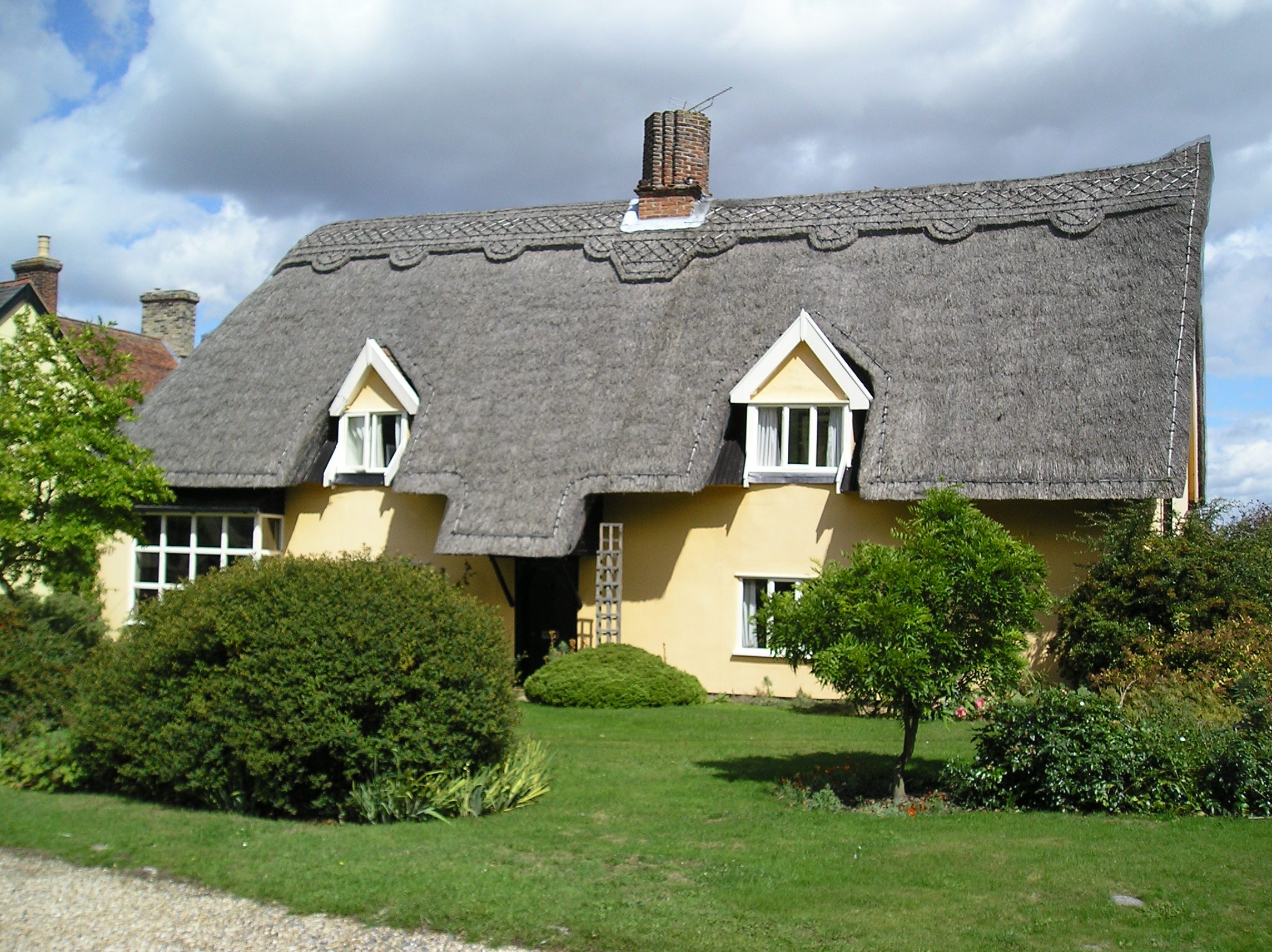
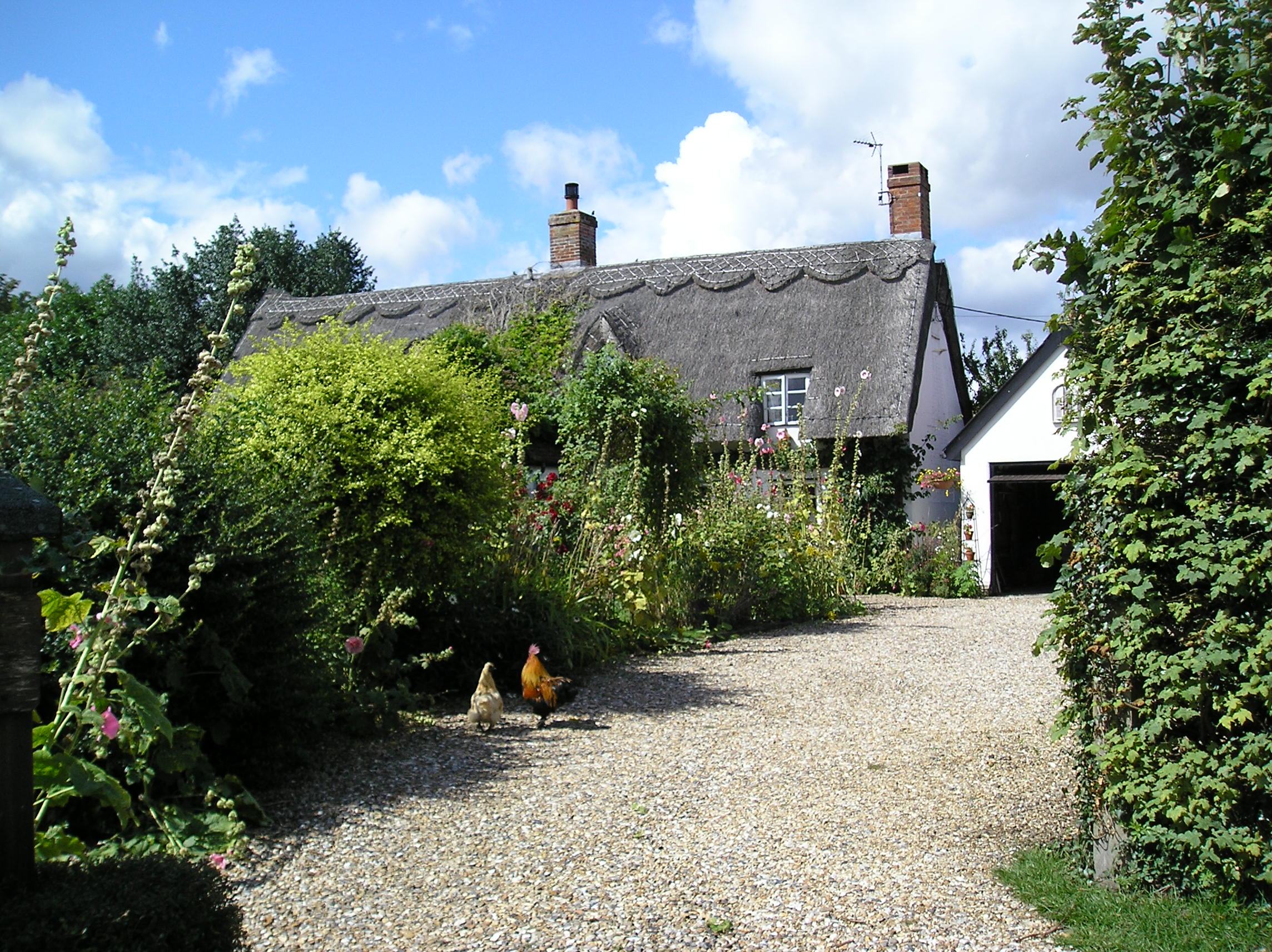
Finally after wondering if we would end up in Norfolk, we reached the turn-off for Lavenham….. our destination!   Passing first through a delightful little village of thatched roof houses, quintessential english gardens and nothing else, not even a church where we made a quick stop for photos…

quintesssential english thatched roof cottage

quintessentially english

an english country garden

and thence to Lavenham.
Lavenham, deep in the rolling landscape of Constable’s Suffolk, an historic market town; built on the success of the Wool Trade, is an absolute treasure trove of delightful architecture – some of the cottages dating as far back as 1340 (the Weavers cottage); Britain’s finest example of a Tudor market town.
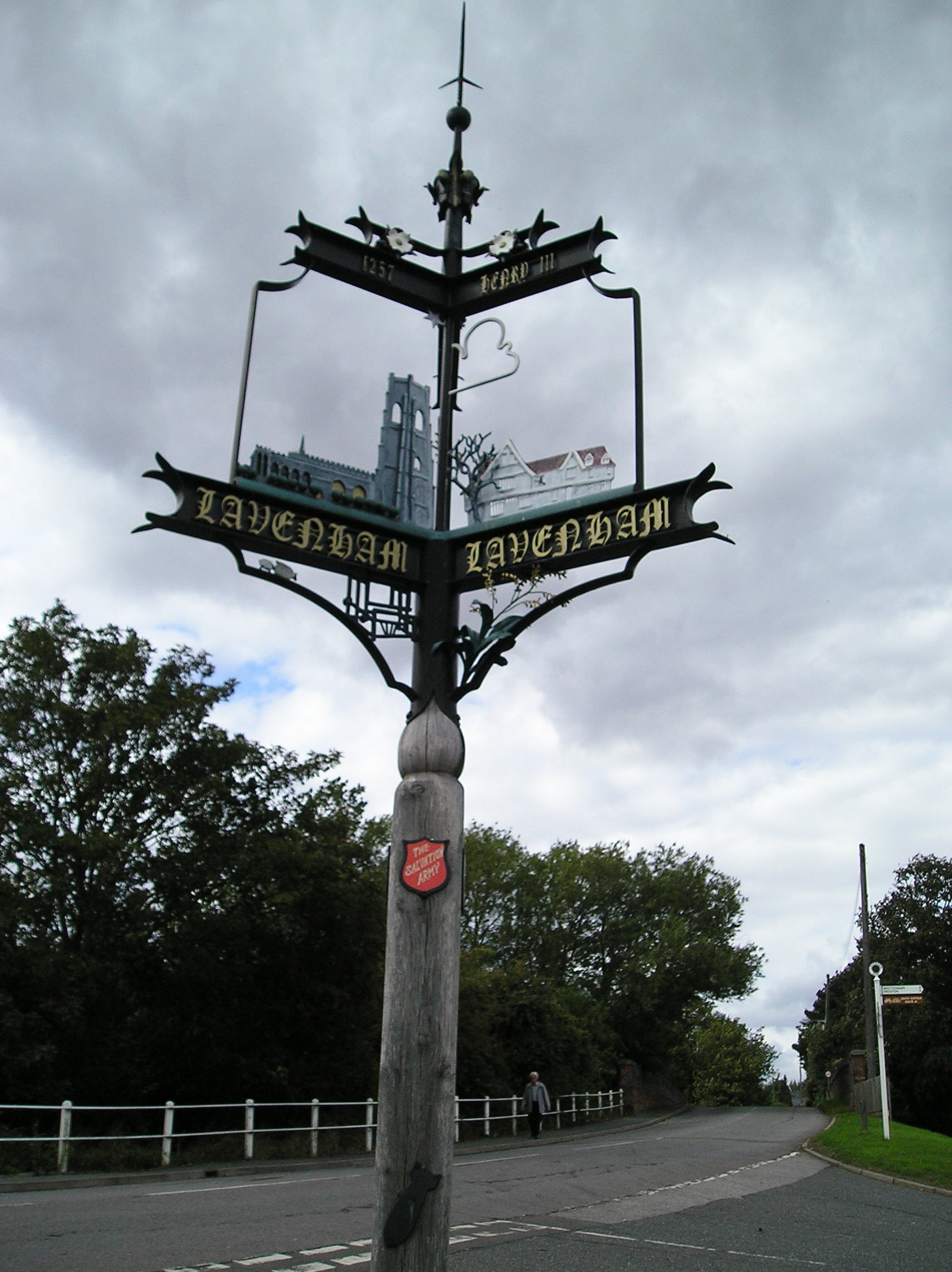
As we drove into the village, on the left hand side and on it’s own little island, we passed the intricately decorative village coat-of-arms.

historic Lavenham - an ancient market town circa 1340

 These Suffolk village signboards are an absolute treat, very decorative and give an indication of the trade that established the village.  Just about every Suffolk village that I have visited in the past have these delightful coat-of-arms signboards at the edge of town.
I was open-mouthed with delight and spent the first 15 minutes or so saying ‘oh my god, oh my god’ these are gorgeous; and gorgeous they were. 

ancient and still gorgeous

 Many of the fine, timber-framed, listed houses in the medieval Tudor style are quite obviously ancient, leaning drunkenly to the side and defying gravity they remain a testament to the style of days gone by.  Crooked wooden beams held together by luck and the very ancient plaster filling.

gaily painted, leaning drunkenly - ancient Tudor houses line the streets

The houses are incredibly photogenic, jam-packed one against the other as they were in those days; unbelievable quaint, higgedly piggedly, leaning crookedly and delightfully unruly, painted different colours, their names indicating the trade of the original owners.  There is even the very quaintly named ‘The Crooked House’ of the nursery rhyme fame.

Lavenham - the Crooked House

he Crooked House Lavenham

‘There was a crooked man,
Who walked a crooked mile,
He found a crooked sixpence
Upon a crooked stile.
He bought a crooked cat
Which caught a crooked mouse
And they all lived together
In a crooked little house.

Pink, white, cream and yellow paint give the village a picturesque facade, some of which lead right onto the street, mullioned panes peer out quizzically, creating an air of mystery that makes you want to peek through to discover what lies behind.
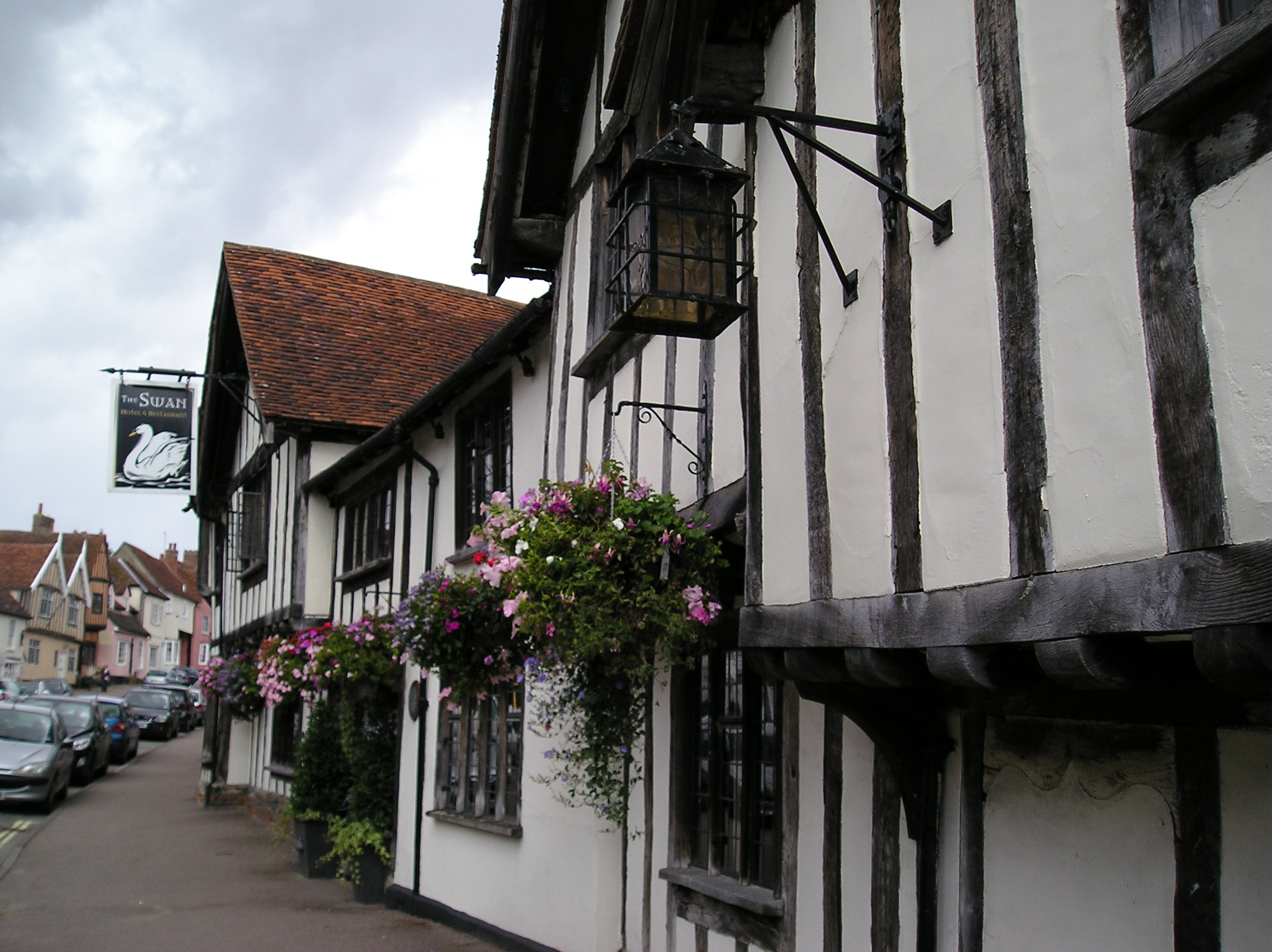
Doorframes look as if they might just fall right over, and lichen covered roofs lean dangerouly lopsided leaving you feeling as if they could suddenly collapse in on themselves.  The Swan Hotel, considered to be the ‘jewel’ in Lavenham’s crown, a magnificent rambling, sprawling collection of  rooms, has served as a hostelry since before the reign of King Henry VIII. 

The Swan Hotel - Lavenham

Steeped in history and charm, the interior of the hotel has wonderful, low 15th century wood-beamed ceilings, large cavernous fireplaces, inglenook fireplaces, original Medieval wall paintings, wooden staircases, winding passage-ways that twist one way and then other, with little rooms leading off and creating a rabbit-warren. The rear of the hotel was the original Wool Hall.  On an exterior side wall we discovered the sign of the Mitre and the triple feather crest of King George IV.

The Mitre & Triple Feathers crest of King George IV

Down a side street and loooking suitably ancient; Lavenham Priory, now a youth hotel.

Lavenham Priory

I could not get enough of all the delightful houses and eventually took well over 300 photos.
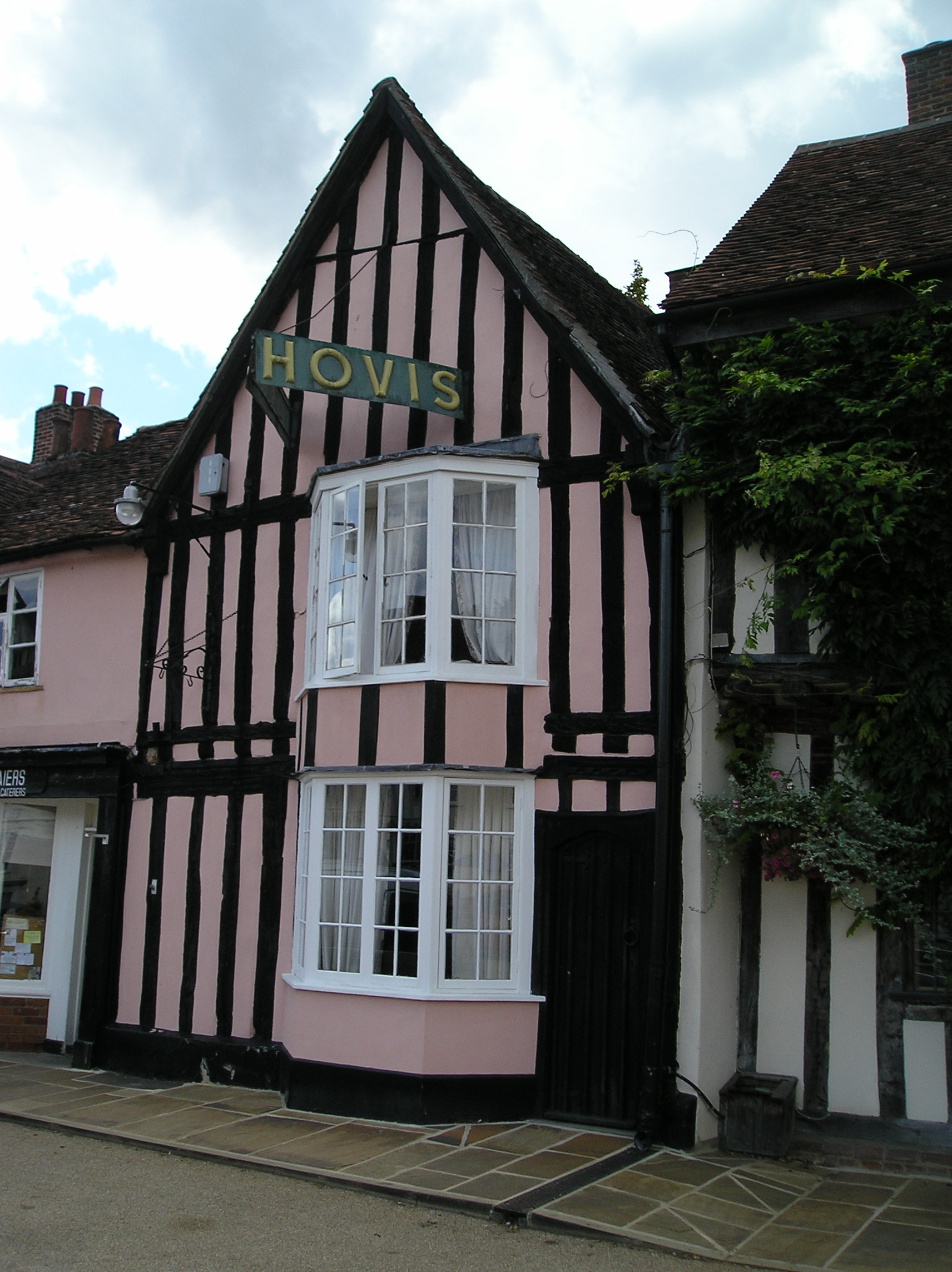
We visited the market square, lined with a delightful collection of houses, with names like Grannies Attic,

the house that bread built - Hovis House

Hovis, a pub ‘The Angel’, the ‘Market Keeper’s Cottage’,

The Market Keeper's Cottage

St Peter’s and St Paul’s Hall and in the centre, dominating the scene; 

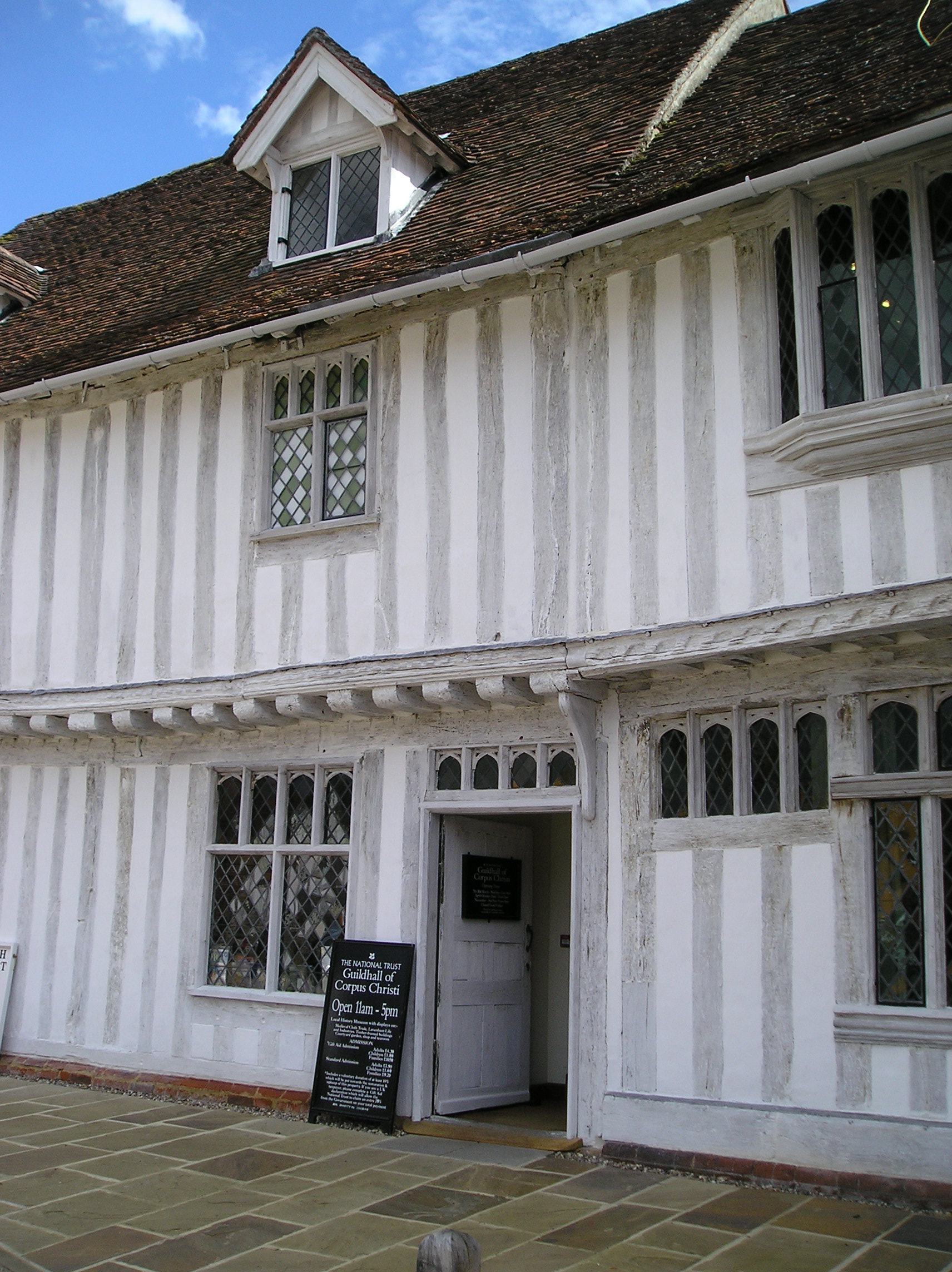
The Guildhall of Corpus Christi - built circa 1530

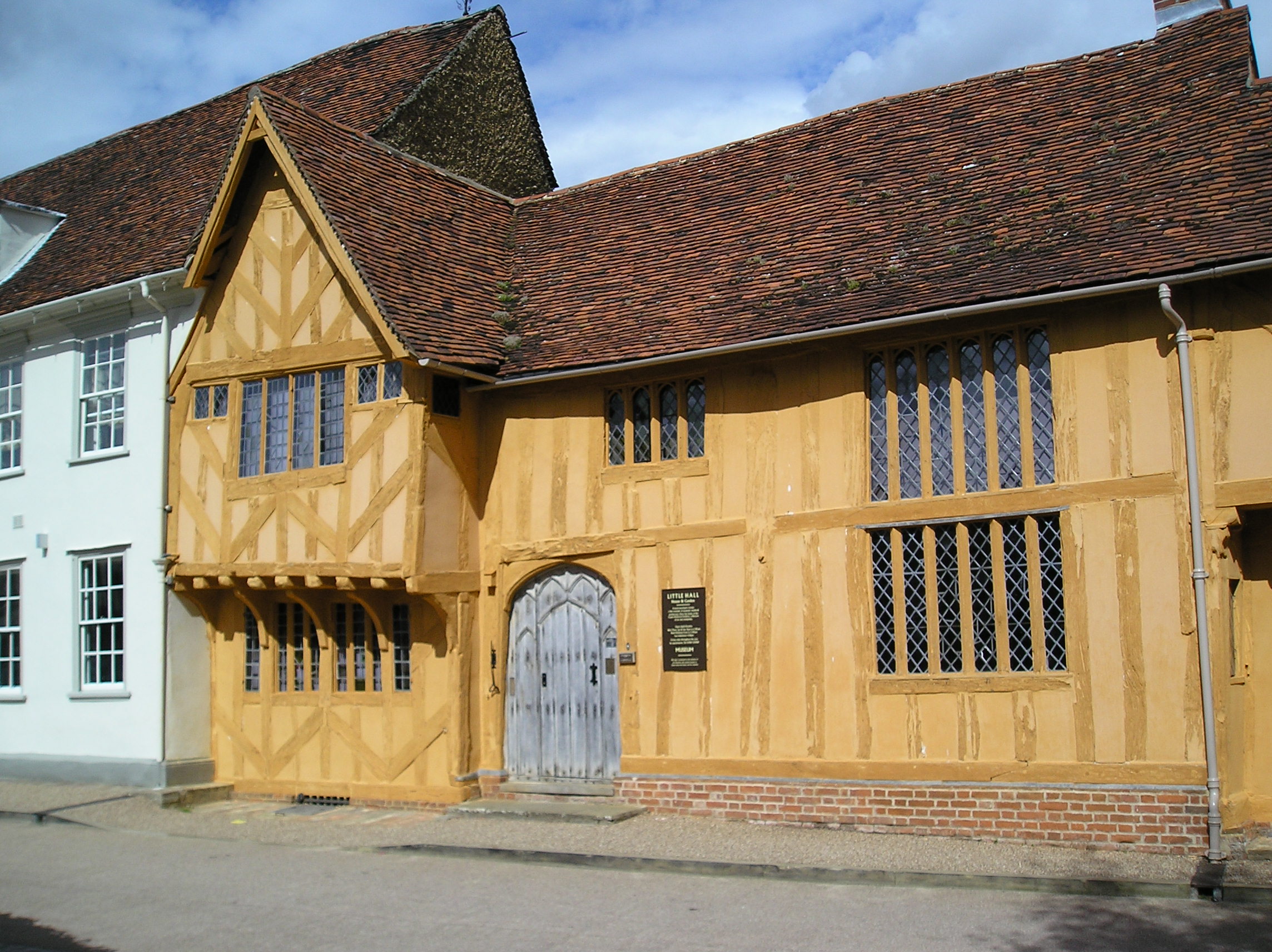
 The Guildhall of Corpus Christi, built in about 1530. Little Hall (a wool merchants house, an example of domestic medieval architecture –

Little Hall - a wool merchants house

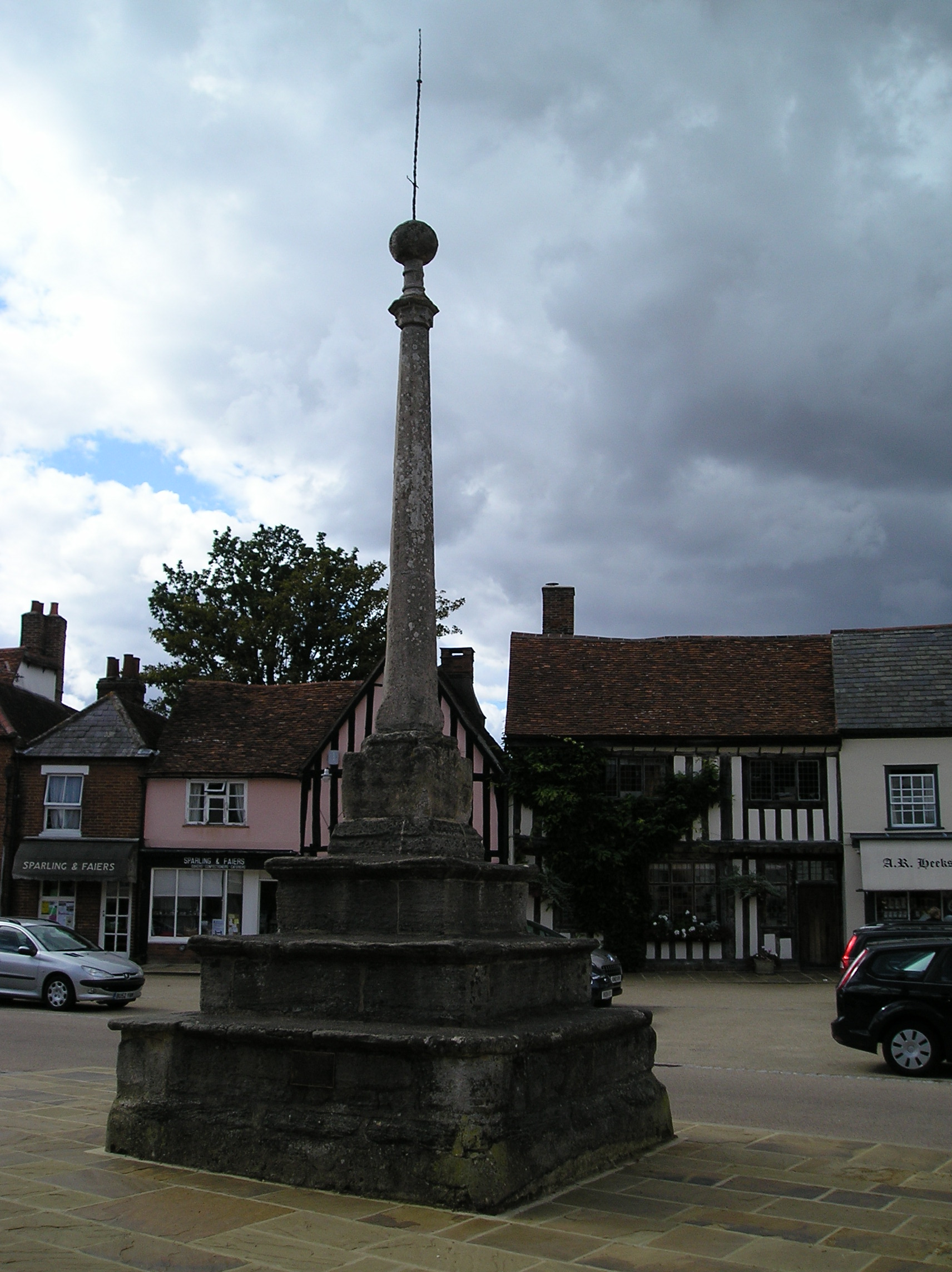
furnished with furniture of the period), and the Market Cross, erected 1501 in accordance with the will of William Jacob. 

The Market Cross - erected 1501

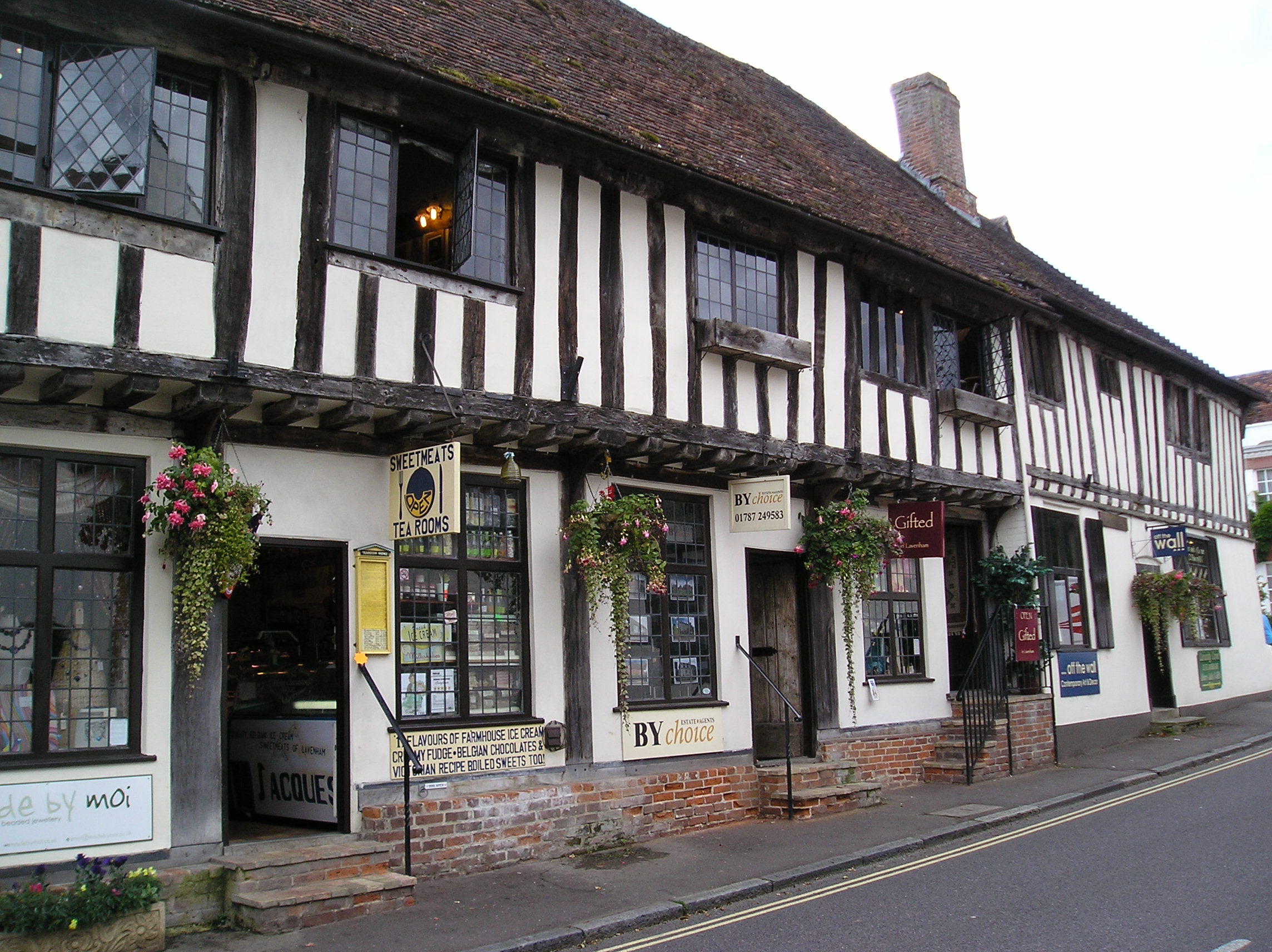
We meandered along Merchants Row a collection of Harry Potter type houses, clustered together and still in trade. 

Merchants Row - lavenham

 The High Street of the village is also lined with these delightful houses – names like Hedgehog Cottage,

Hedgehog Cottage

 Oriel Cottage, Old Rose Cottage, Box Cottage, Buthers Cottage, The Shambles and Hare Cottage amongst others.  Side roads leading off the High Street are similarly lined with gorgeous houses, also gaily painted in pastel colors of green, pink, yellow and white, lopsided and ancient.

beautiful gaily painted Tudor houses

Their wooden beams, jutting out from the structure, so ancient as to be dry as bone, cracking at the edges, pretty english gardens bright with multicoloured blooms and lovely lawns; little pockets of green. 

english country gardens

 Wooden doorways, carved with marvellous creatures; angels and phoenix, grilled peepholes the prelude to our current spy-holes, old door knockers and a bell from the HMS Bremen 1911.

the bell from HMS Bremmen 1911 - nearly 100 years old

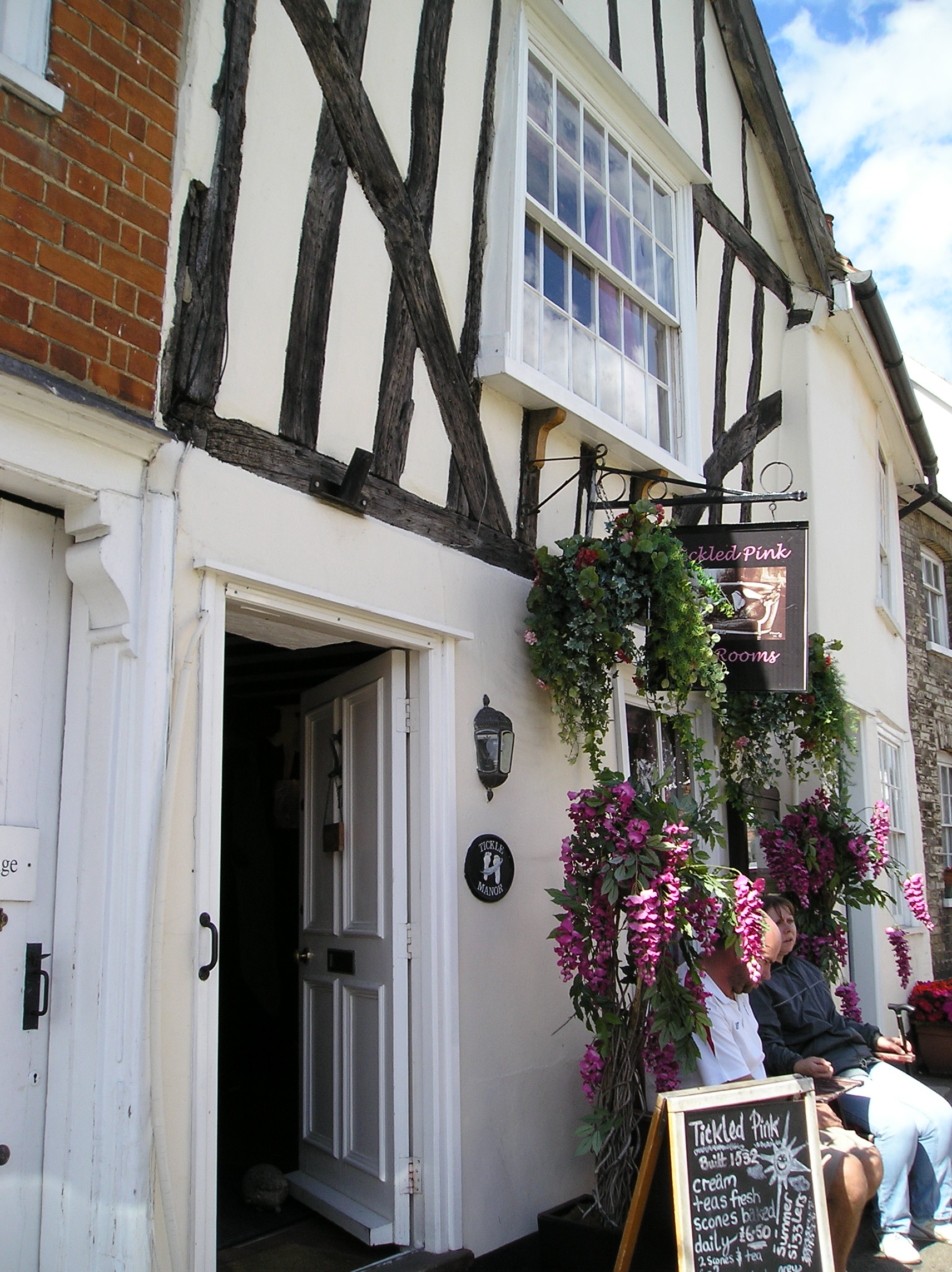
We stopped off for lunch at the twee cafe called ‘Tickled Pink’, formely Tickle Manor, with doorways so low you have bend to walk through, tiny mullioned windows, an ancient fireplace, creaky woodden floors and wooden beamed ceiling, a gorgeous jukebox in the corner. Upstairs for the view, where we enjoyed a repast of jacket potatoes with filling and salad, a very welcome pot of tea and chocolate fudge pudding dripping with thick chocolate syrup and a squirt of fresh cream; delicious.

Tickle Manor aka Tickled Pink tea room

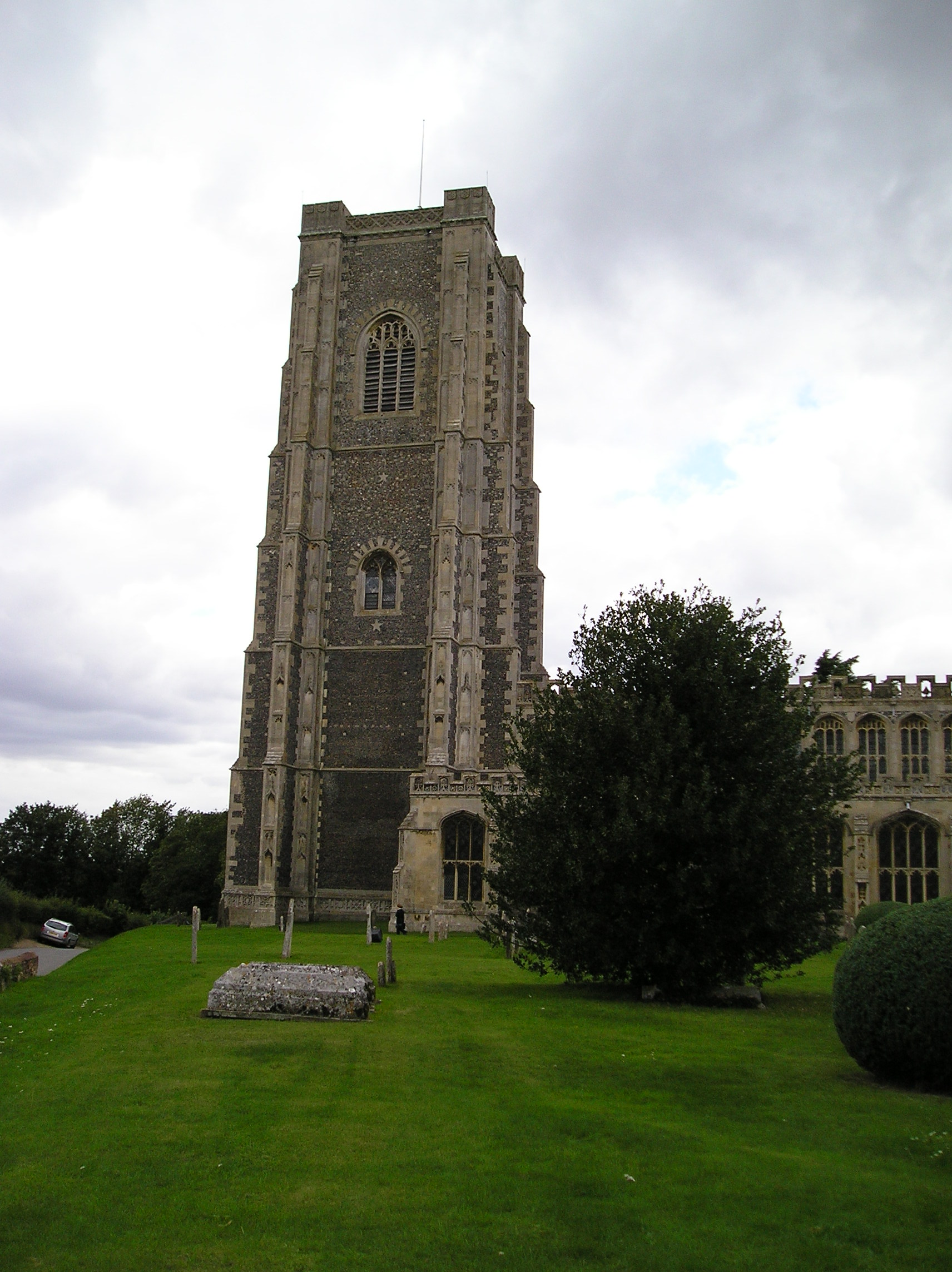
After lunch we went walk-about again and thence to the Norman Church of St Peter and St Paul; a magnificent church with a fabulous Norman Tower, 

St Peter & St Paul Church - Lavenham

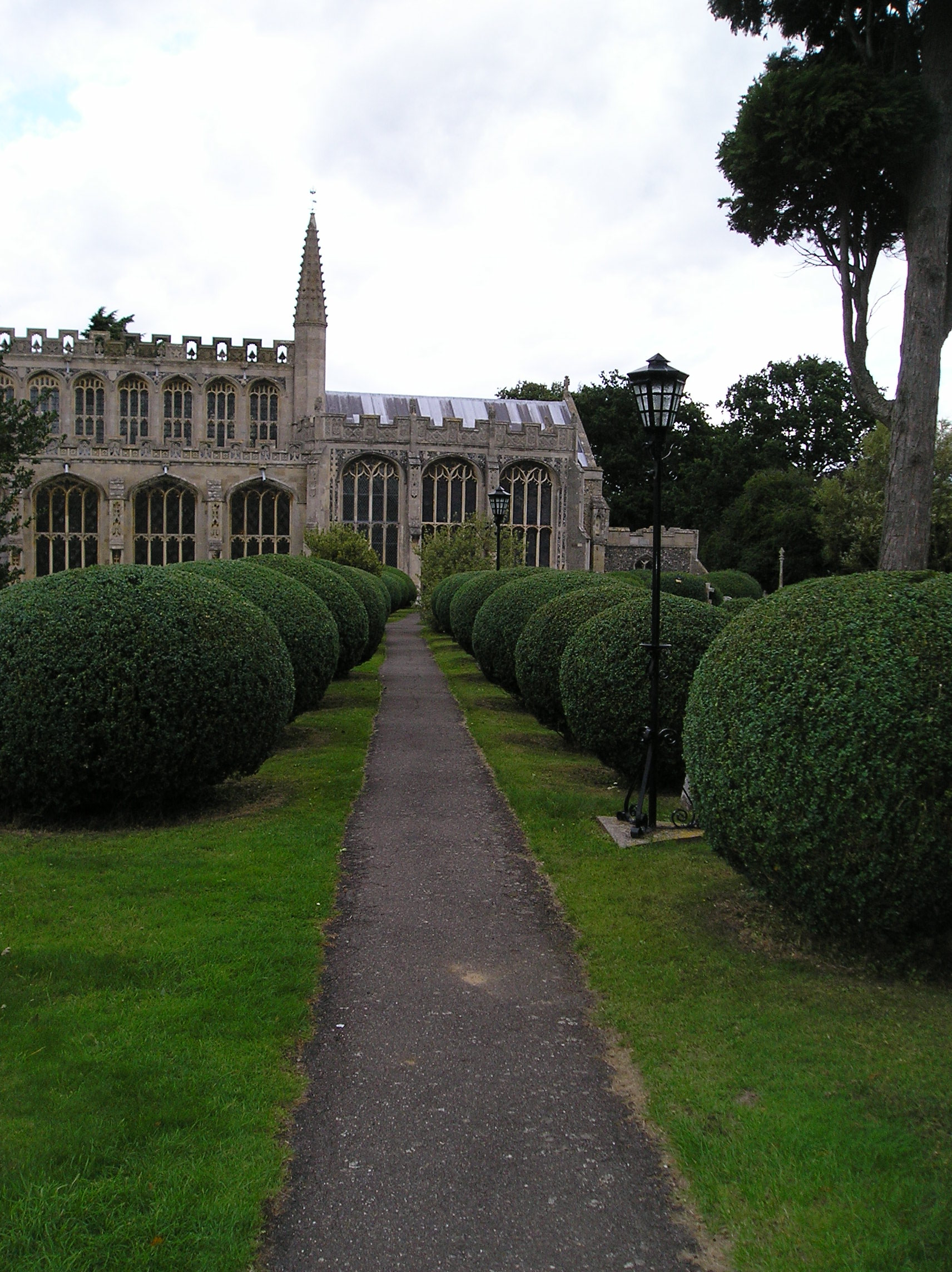
 gargoyles and beautiful decorative carvings – the emblems of the Tudor Kings and Queens, finely etched into the walls; one of the finest parish churches in England.  Beautifully tended, emerald green lawns, interspersed with neat paths, lined with carefully sculpted ball-shaped shrubs lead towards this beautiful, albeit imposing structure. 

neat rows, ball shaped shrubs

 Ancient, time-worn granite slabs, their markings worn away by the passing of the ages and ravaged by the weather, dot the lawns – reminders of those long gone; now anonymous and largely forgotten. 

many souls are on the line..... anonymous in time

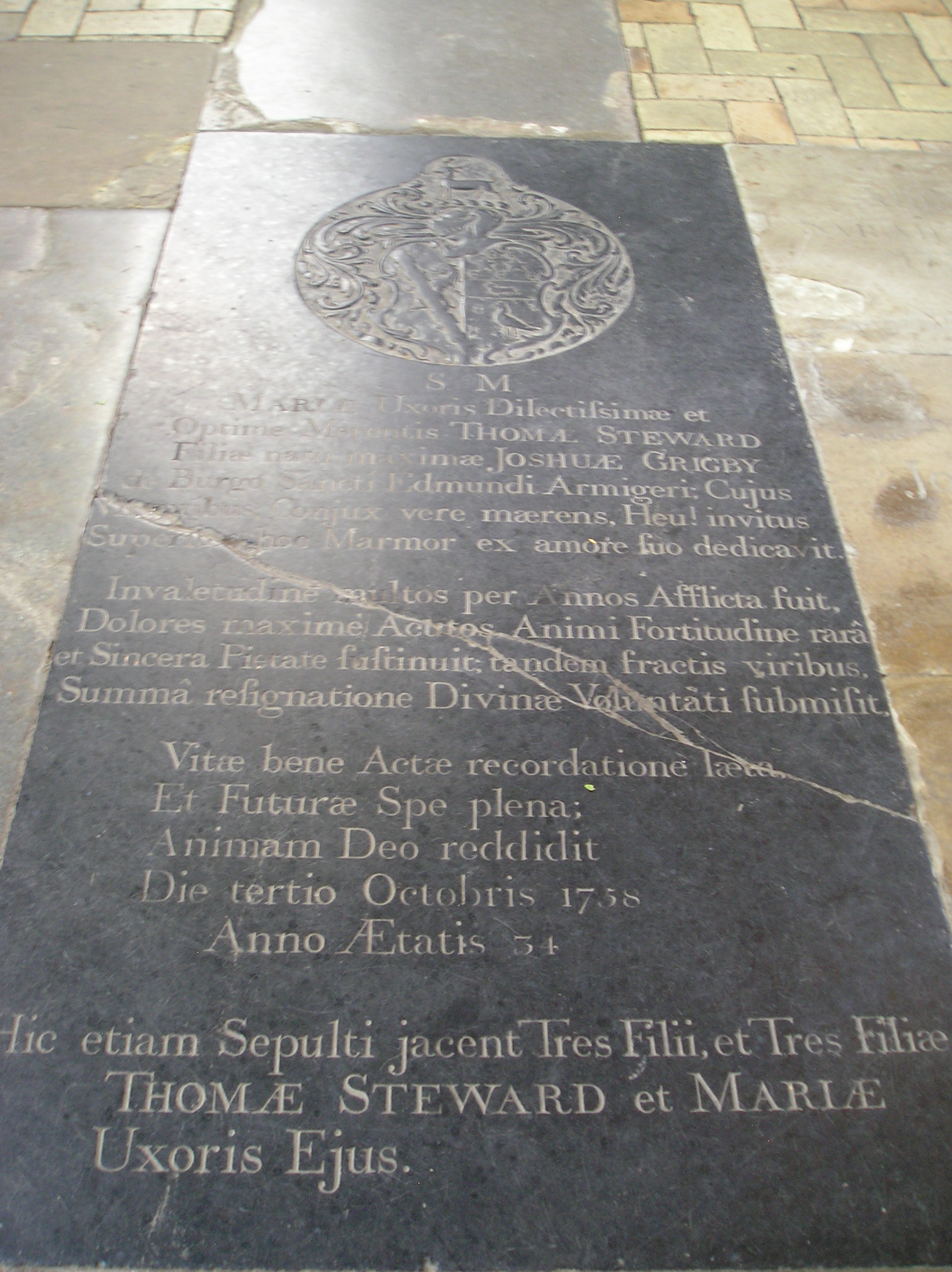
The interior of the church was no less magnificent, high-vaulted wooden ceilings, supported by  towering columns that soar heaven-ward, intricately carved wooden structures leading to side chapels, the floor strewn with marble slabs – tombs of the dead,

tombs of the dead

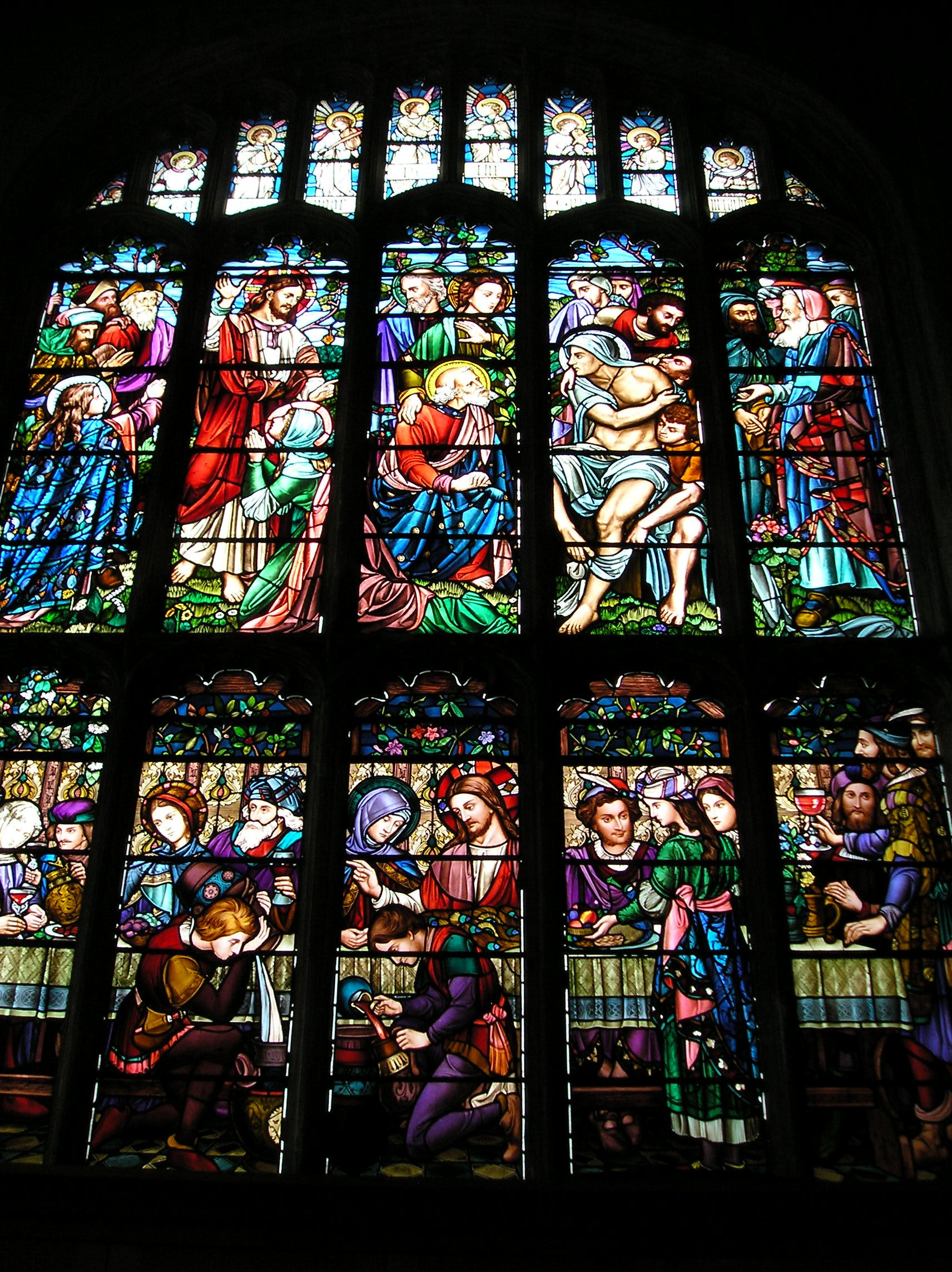
 and magnificent multi-coloured, intricate stained glass windows the likes of which I have not seen before, depicting the stories of Christ and scenes from the bible; breathtaking in their colourful magnificence, dominating and demanding your attention.

stained glass windows

After drinking in our fill of the holy atmosphere we once again hopped into the car, set our course for home and handed our future over to the ubiquious tom-tom, she of the strident voice and absurdly ridiculous random directions.  We wove in and out, round and about going along lanes narrow and winding, lined with ten foot high hedges, a dense barrier to any sort of directional guidance.  By the third toneless instruction to ‘turn left at the next intersection’ I felt she was being mean and spiteful, taking us in a circle; when she suddenlyy gave us a new instruction – turn right!! Hooray.  I was convinced by that stage that she was in a huff and determined to take us off into the wild blue yonder in revenge for the day’s earlier misdemeanor.
We finally after a long drive through Suffolk and Hertfordshire reached home and a much needed cup of tea. A fine day and another village to add to the very long list of delightfully quaint English villages I have had the good fortune to visit.  Almost too many to mention…….I said almost! 🙂

Read Full Post »

My daughter recently moved to Twickenham, and after hearing her raving about the place and following her comment that she was never moving back to London, I had to go visit and find out why!
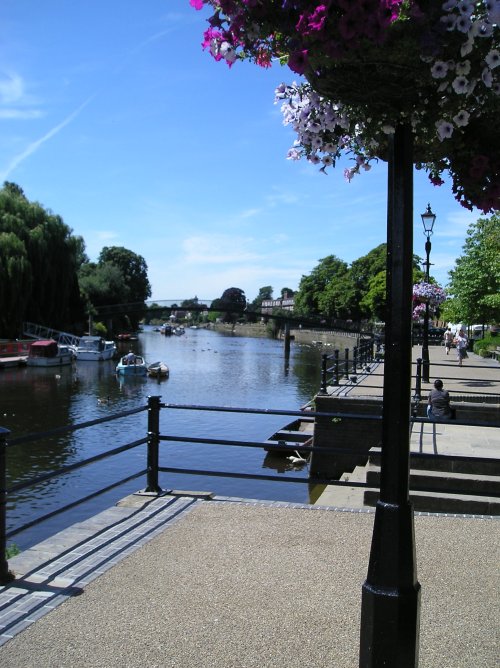
Twickenham is located on the River Thames between Richmond and Teddington; an ancient borough with a fascinating history dating back hundreds of years.  The earliest written evidence for a settlement is a grant of 704AD, mentioning “Tuican hom”.  By the time of the Norman Conquest it was part of the Manor of Isleworth.  By the 18th century it had become the ‘classic village’ and was described as having an “abundance of curious seats”, as it attracted poets, painters and writers including Sir Godfrey Kneller, The Court Painter in 1709, Alexander Pope in 1719, Mary Wortley Montagu in 1720, Horace Walpole in 1747 and painters Samuel Scott and Thomas Hudson in 1749 and 1756.  various members of the French Royal Family, in exile, spent time here in the 1800s.
I arrived via bus from Richmond and enjoyed the quaint houses and churches along the route. The  high street of Twickenham – King Street – is nothing to write home about….it’s lined with the usual array of stores and charity shops, Starbucks, banks, pubs and what-not!
an aerial sketch of Twickenham and the area we explored

Just off this main thoroughfare is where you will find the character that lies behind this town.  Church Street; a stroll along this delightful street will leave you enchanted with it’s character and quaint albeit modern shops.  A book shop,

a few restaurants and an ancient pub or two line the street on both sides as well as a number of other little shops and stores. Church Street has always been at the heart of Twickenham village, dating to back to when the parish was largely a farming community using the river for transport of goods and people.
Sweetshops, tandoori, bookshops,
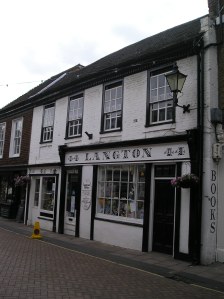
Langton Books - 44 Church Street, Twickenham

 a pub and a gorgeous tea-room are a must-see.

Passing a store named Sweet Memories we stepped inside and indeed it was sweet memories….jars and jars of sweets that reminded me of the sweet shops we used to inhabit as children back in the 60’s. A delightful lass who goes by the name of Carla charmed us with her cheery greeting and sunny smile.  Sweet heaven all round.

Sweet Memories of Church Street Twickenham

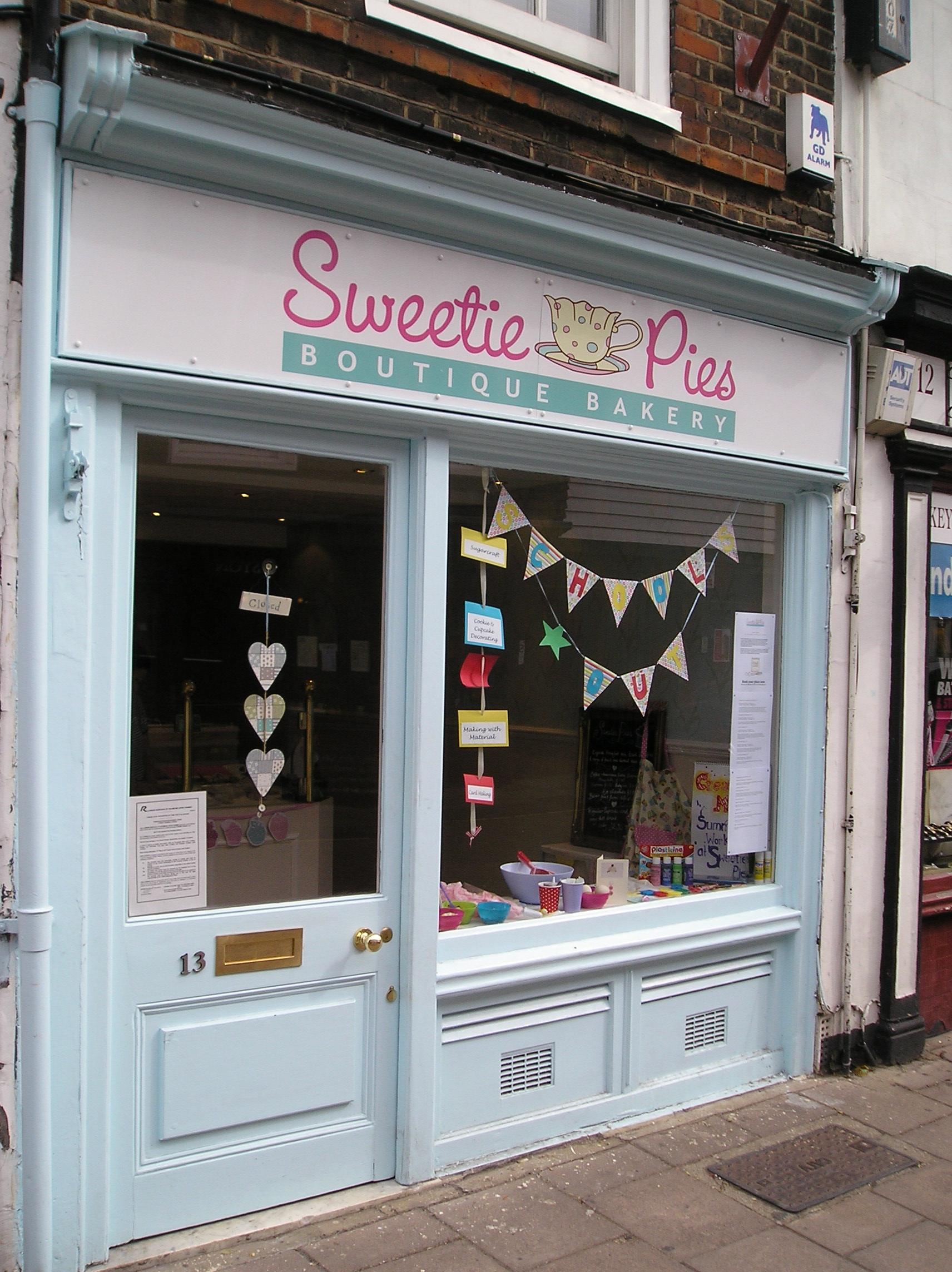
Further along is the aptly named Sweetie Pies Boutique Bakery….
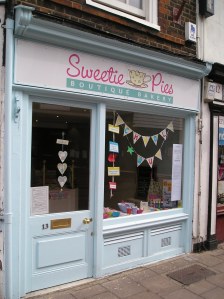
Sweetie Pies Boutique Bakery - 13 Church Street Twickenham

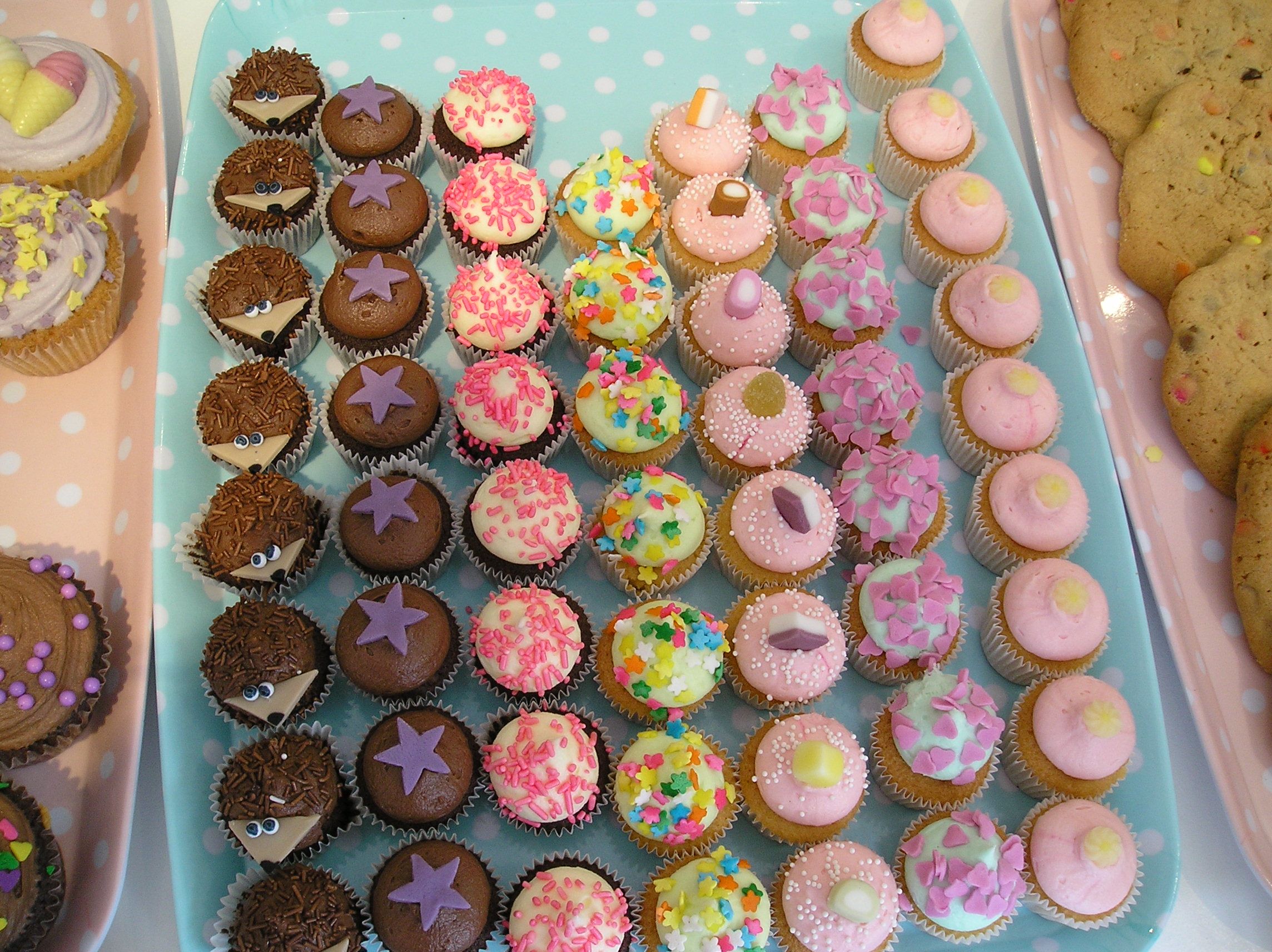
walking through the door your nostrils are assailed with the delicious aroma of cake and icing….eyes widening with delight as you first see the gorgoeus little cakes on display; decorated with swirls of butter icing and topped with icing roses, ice-cream cones, ducks, stars, hearts, 100’s and 1,000’s, in an array of pastel colours designed to tempt the tastebuds and makes it hard to refuse, never mind decide which to choose.
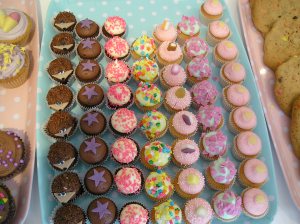
cupcakes at Sweetie Pies Boutique Bakery

A short walk takes you past The Fox Pub,
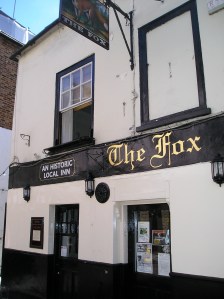
The Fox Pub - oldest pub in Twickenham - Church Street

 probably the oldest pub in Twickenham, steeped in local history and first mentioned in the Sion Manor Court Books dated October 1700, by it’s previous name The Bell. It changed it’s name to The Fox around 1749.  At one time time there were at least 4 other pubs in Church street none of which remain, besides The Eel Pie Pub est 1777.
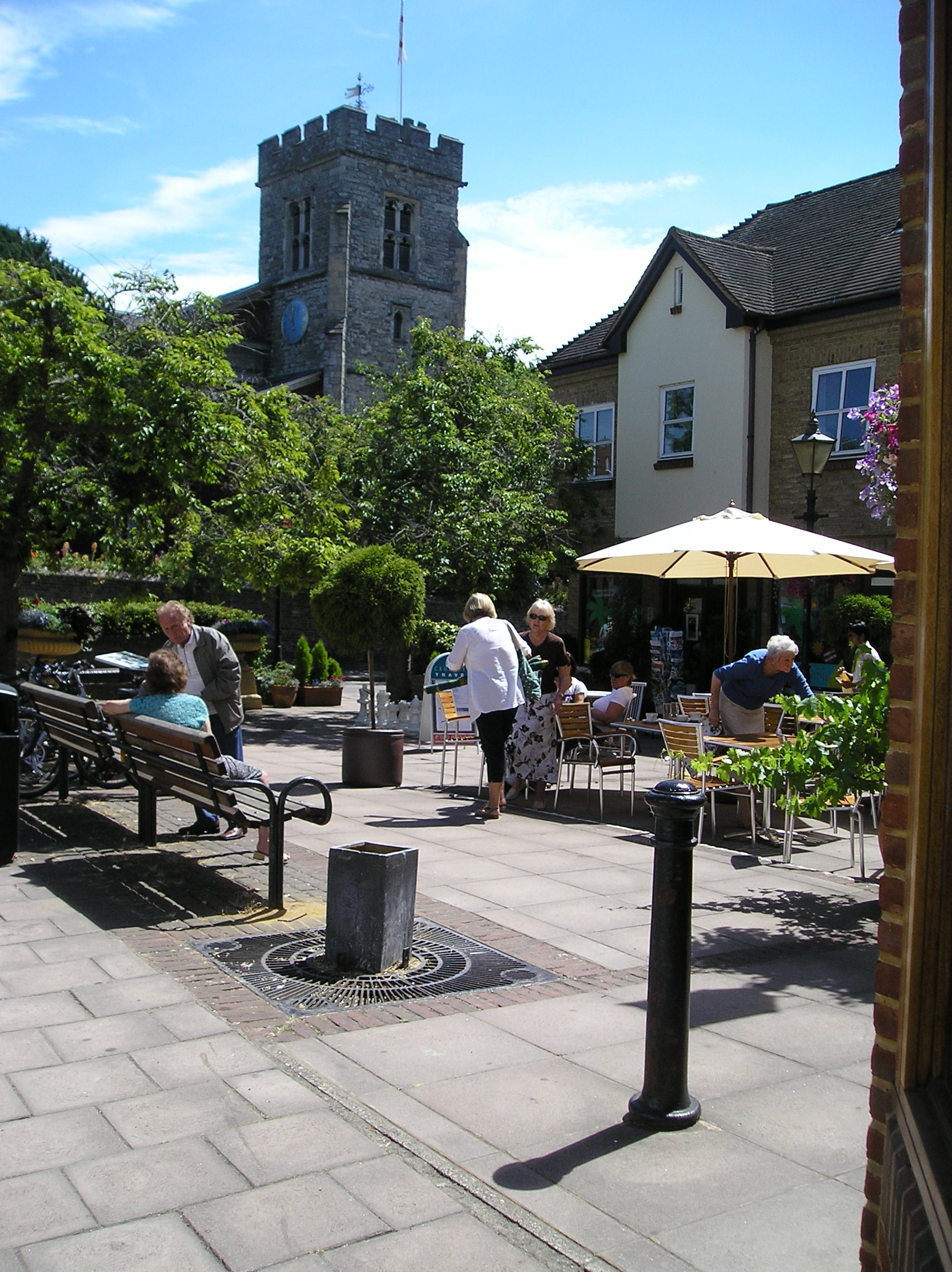
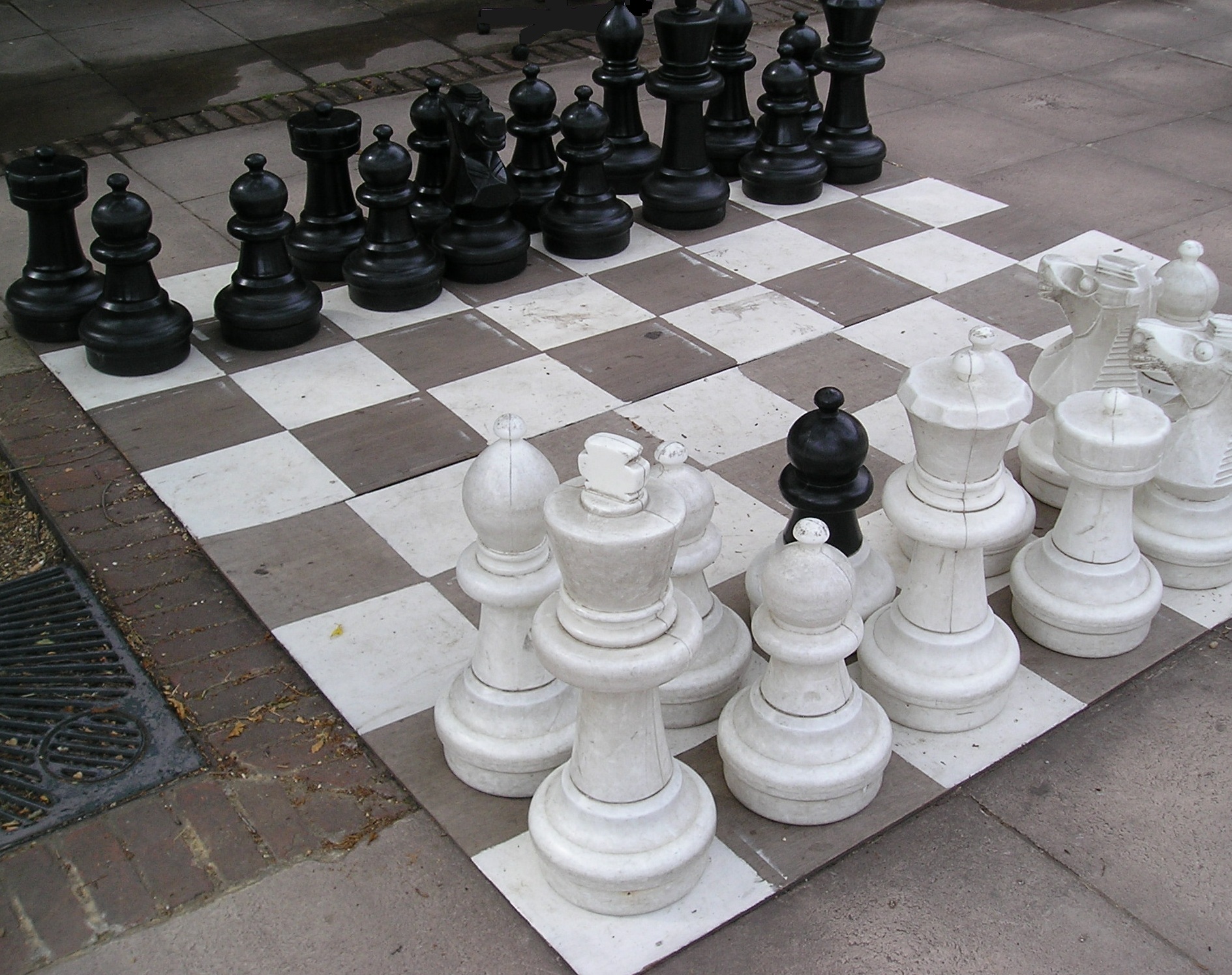
At the far end of Church Street is a little piazza, with a number of shops, none of which I really registered, coz I was so enchanted by the story board and a giant sized chess board! What fun 🙂
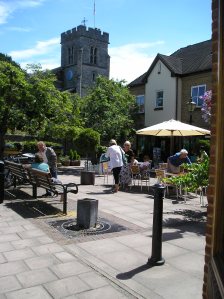
a summer piazza on Church Lane
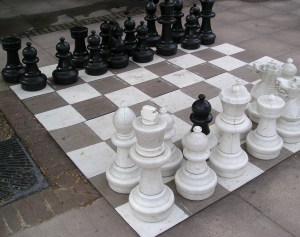
chess set

Across the road from Church Street is of course the church!  St Mary’s, not one of the most beautiful or even quaint looking churches I have ever seen, but pleasant to the eye none-the-less.   The churchyard was sadly quite bare with most of the graves probably dug up in years gone by and the headstones that line the perimeter walls the only reminder of the folks buried there (or not).
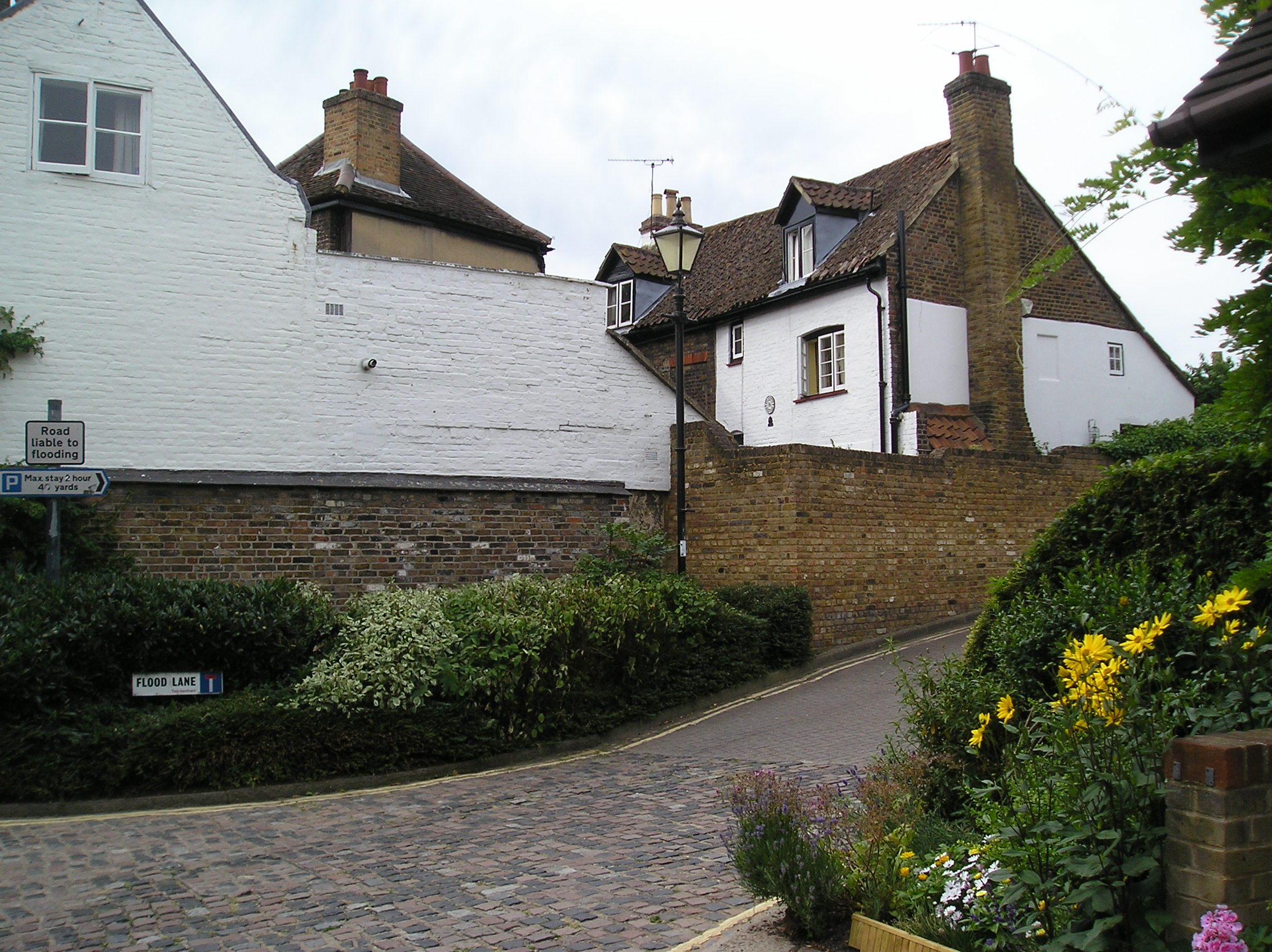
Traipsing down Church Lane we passed Flood Lane,
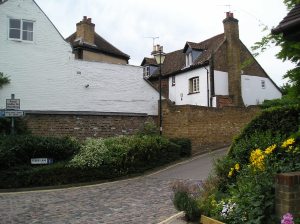
Flood Lane

so named coz when the Thames floods the waters rise that high.  A plaque on the church wall reads : March 12th 1774 the water came rising up to this mark. The mark was a good 8foot from the road level.  The house on the corner had a flood board across the front door.
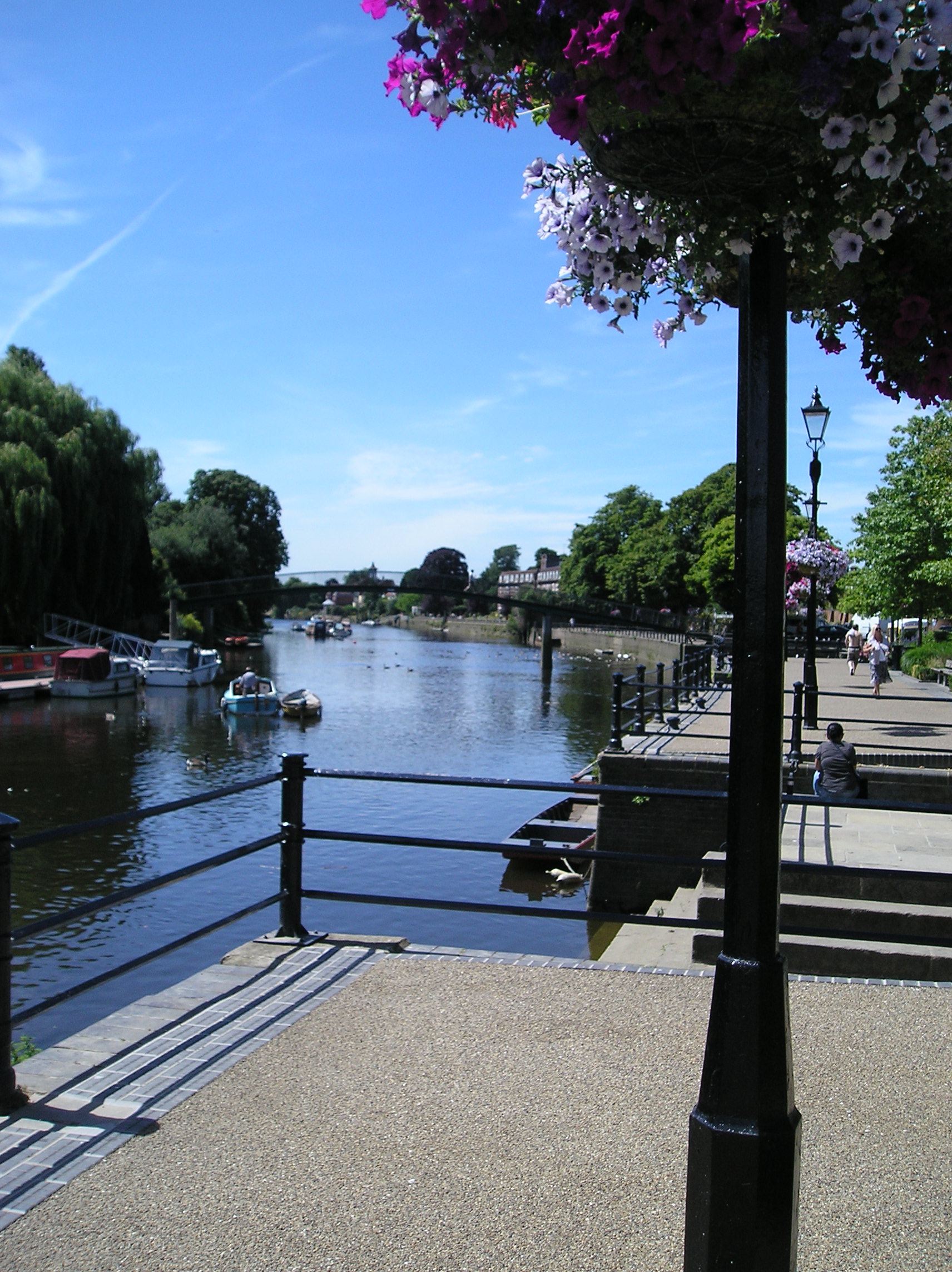
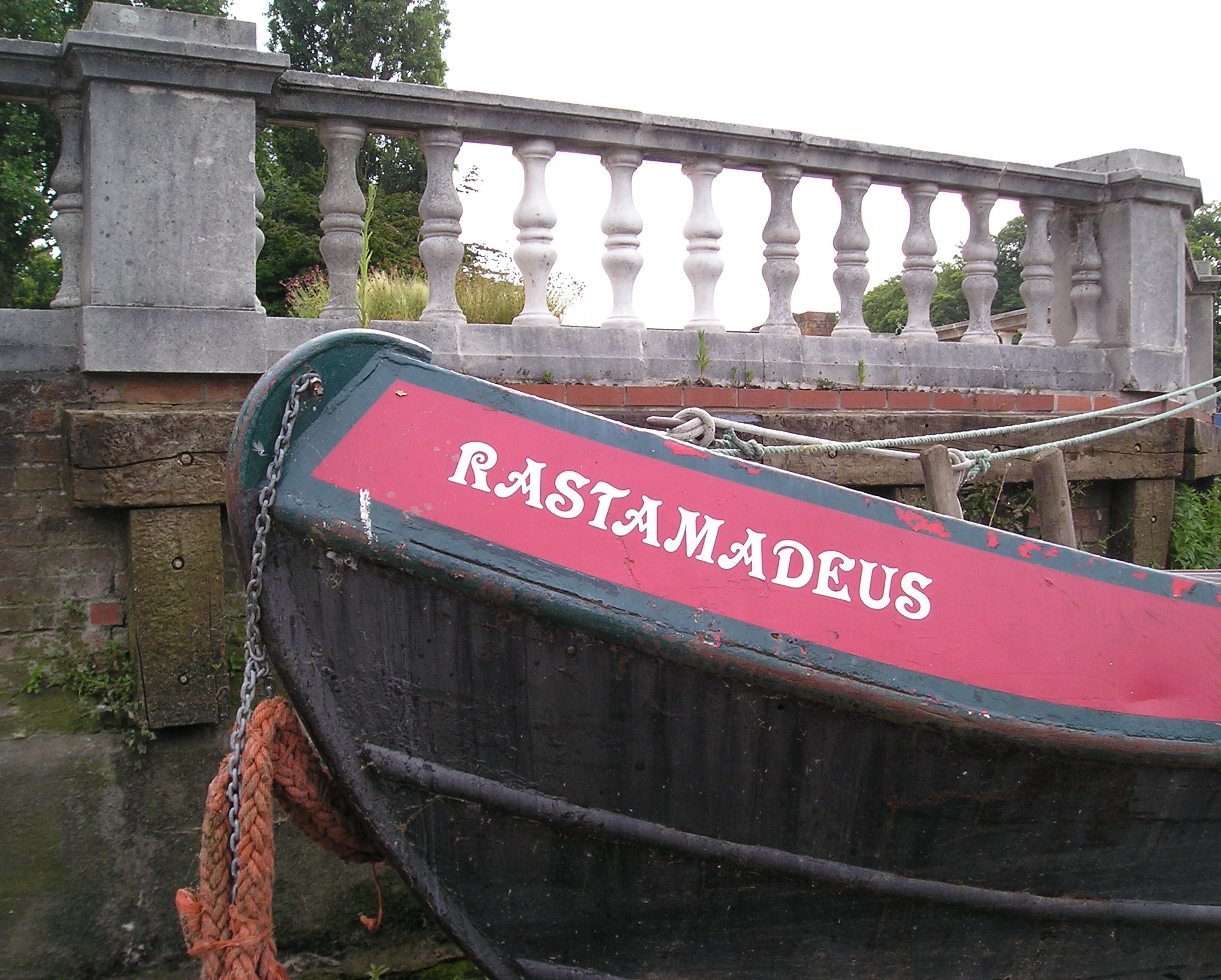
A couple of steps further (not far at all) is the River Thames, she of might and wonder.  A colourful boat named ‘Rastamedeus’ was moored in the berth, stranded by the tide now out.

Rastamadeus

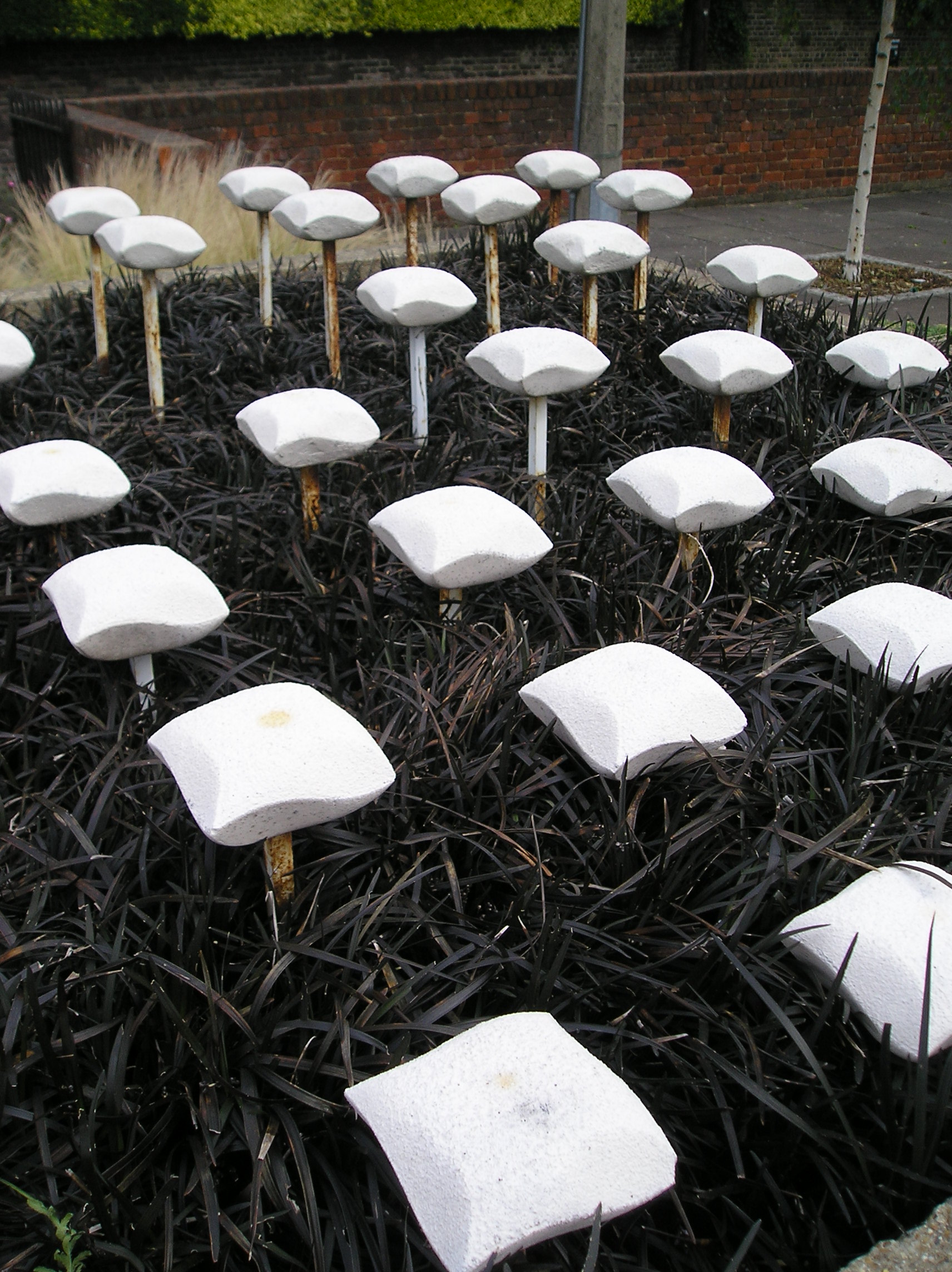
I walked out as far as I could to take some photos of the river on both sides from a different angle (just because I could).  Retracing our steps we climbed a short flight of steps onto the start of Champion’s Wharf where we saw a couple of very interesting sculptures, one of which looked like a bed of square mushrooms. Very bizarre.
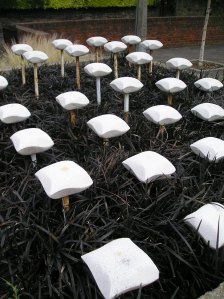
psychedelic mushrooms -sculpture on Champions Wharf

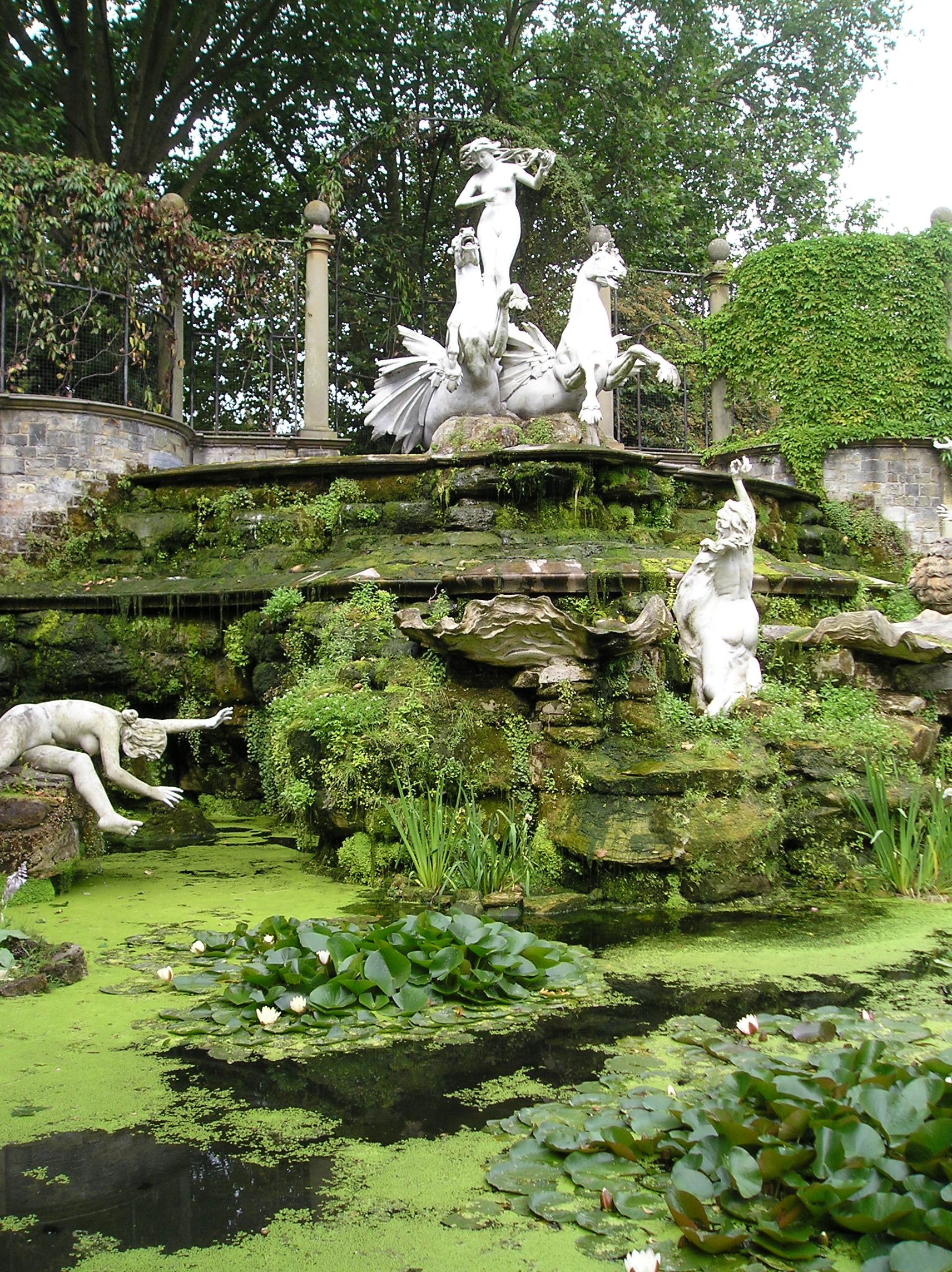
Strolling along the Thames path we ventured into York Gardens to behold the magnificent, marvellous, wonderful fountain adorned with a group of Italian marble statues representing the “Oceanides”.  What an enchanting sight. 

The Oceanides - fabulous statues in the York House Gardens

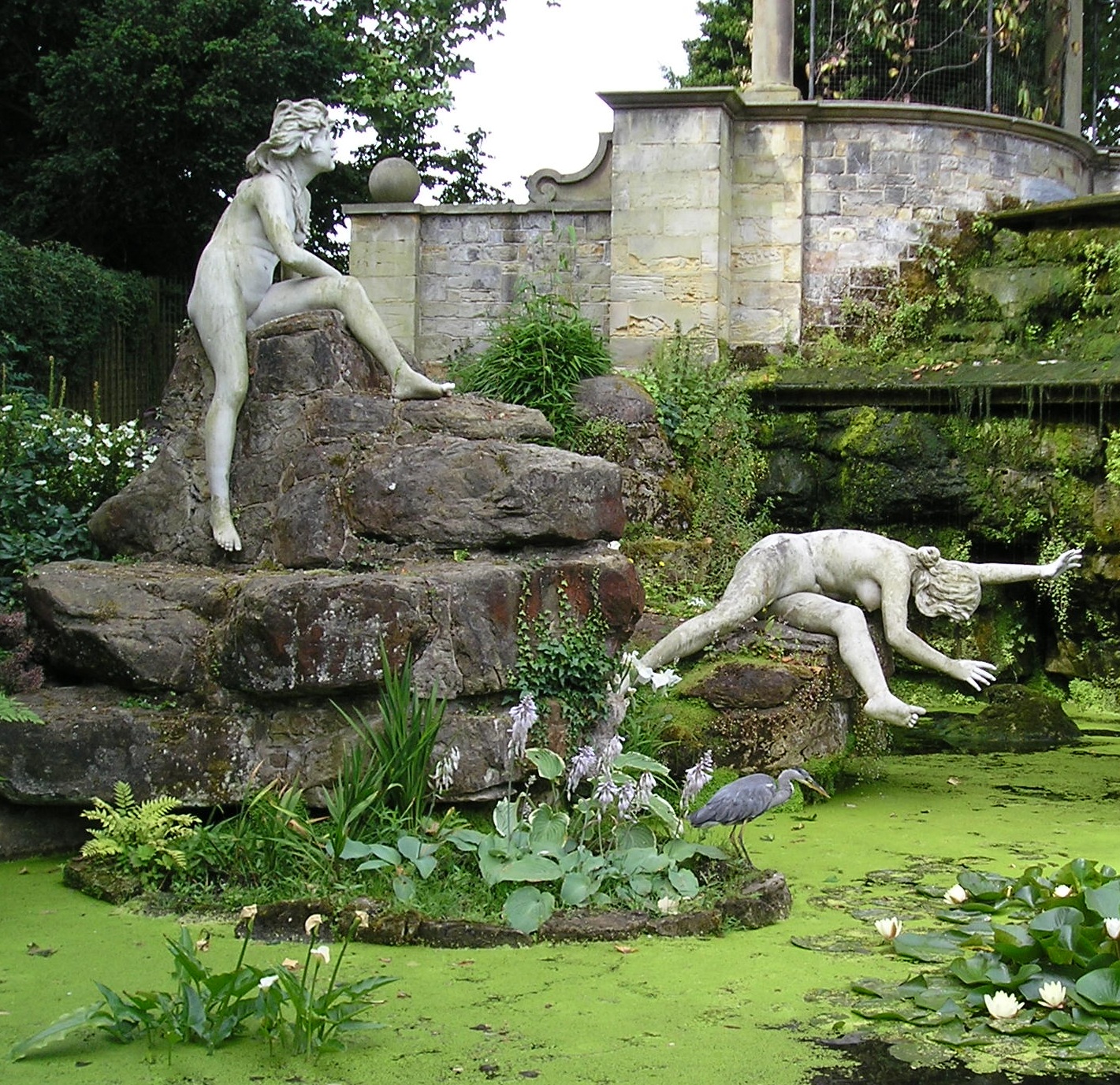
 A cluster of naked nymphs, either sitting on rocks or attemptimg to climb them, all gazing up at the beautiful venus that rides standing up and naked on the backs of two rearing, winged sea-horses.  There is quite a story behind these beautiful creatures and they were very nearly destroyed at one stage of their lives; thankfully for us….they were not!  There is some uncertainty as to who was the sculptor.
The gardens are beautiful; filled with roses and a fountain or two, and what were lovely green lawns a week ago, now browned in the searing heat of the last few days.
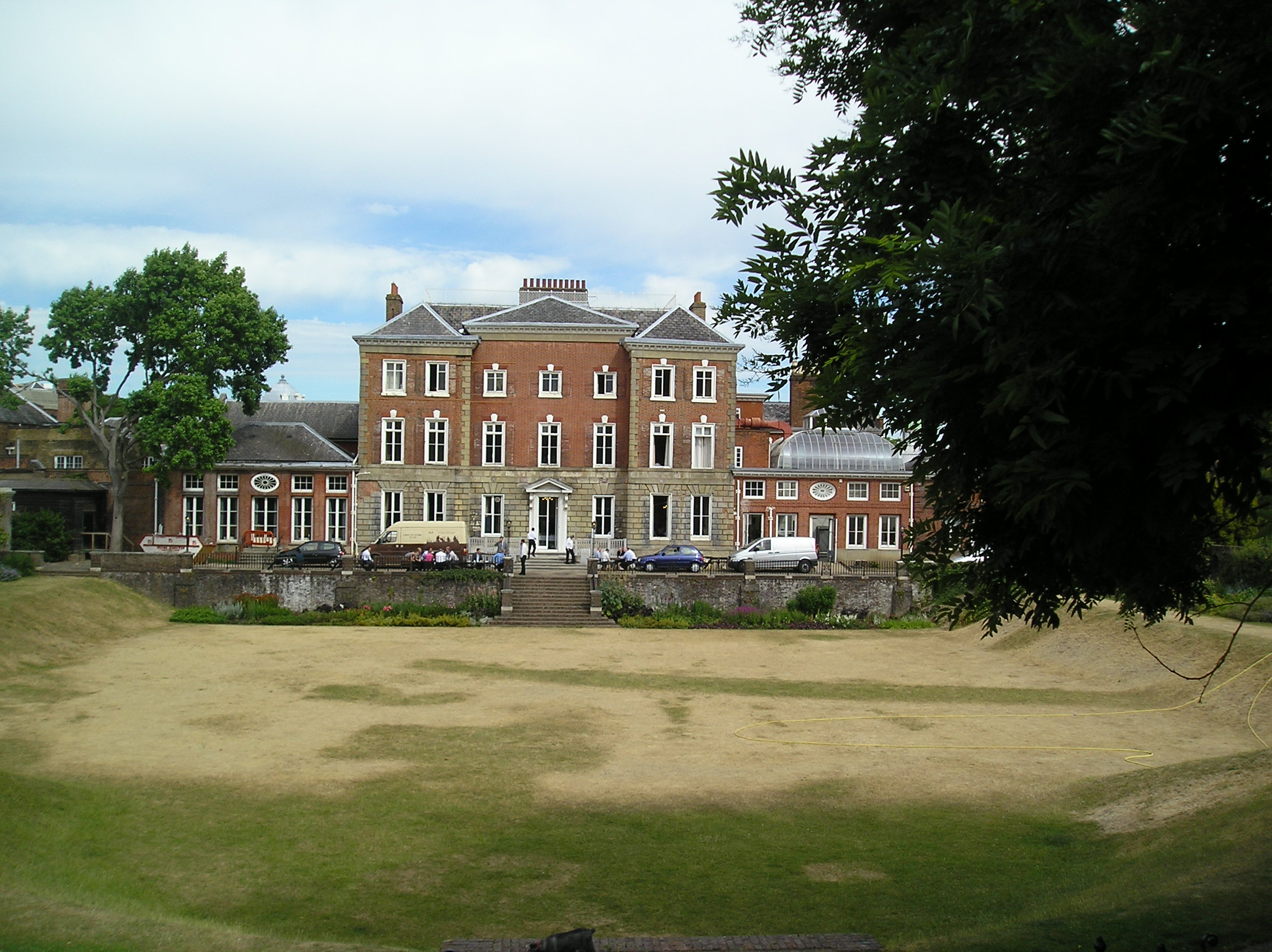
A flight of marble, balastraded steps take you to the top of a bridge that crosses the road below and into the gardens of York House.  A sight to behold.

York House

Imposing and enormous it sits majestically overlooking the lawns below.  York House was named after the Yorke family who owned the land from 1381 – 1539. The present house was built in 1637 and it’s first owner Andrew Pitcarne, later  followed by The Earl of Manchester, Edward Hyde, Earl of Clarendon, Sir Alexander Johnson, Anne Seymour Damer, Archbishop Cleaver, the Comte de Paris, the Duc de’Orleans and lastly Sir Ratan Tata.  It became a Town Hall when Twickenham became a Borough in 1926.  The Orleans princes left their mark with the fleur-de-lys on the stonework and rainpipes.
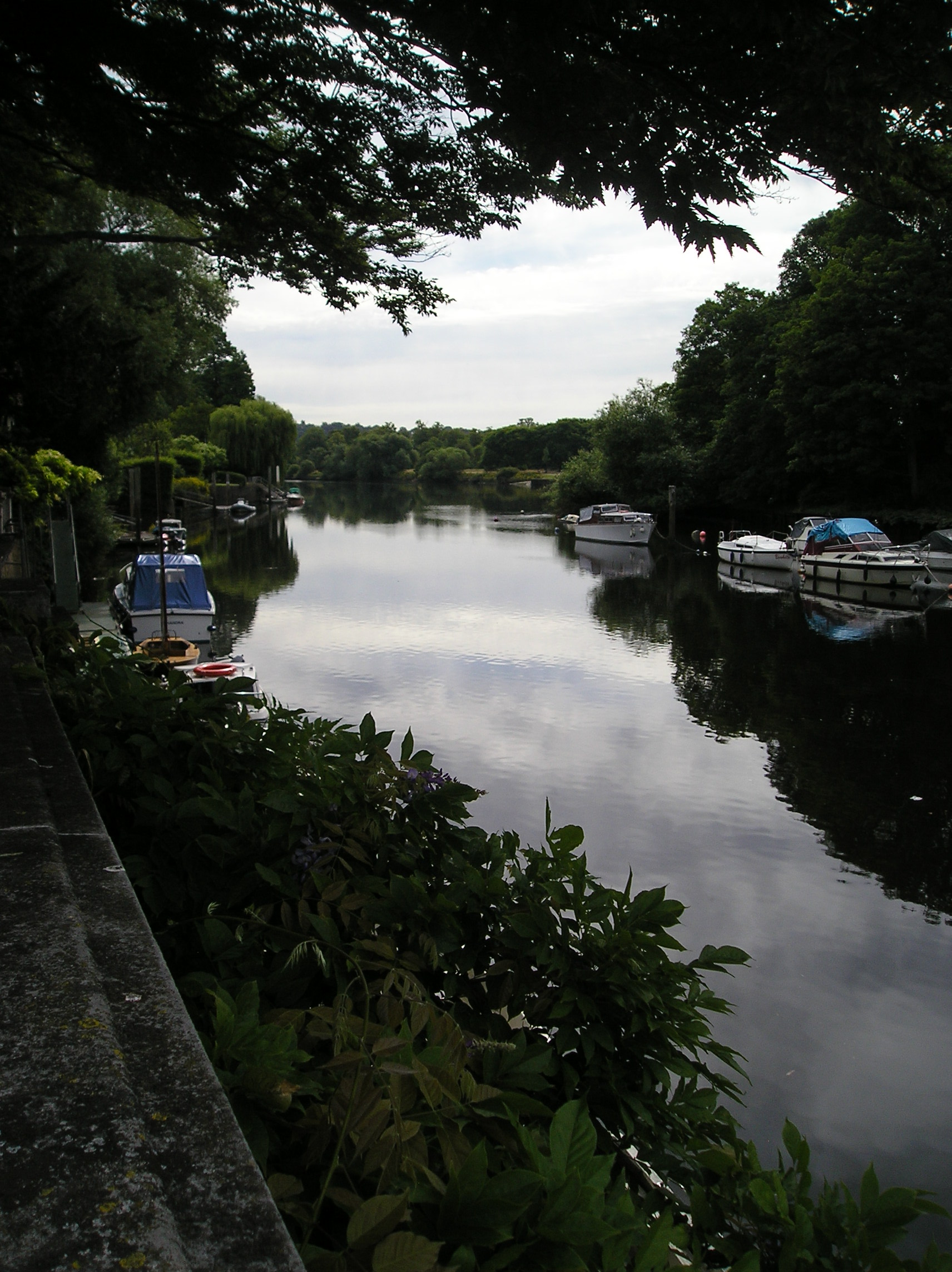
Continuing our walk was strolled along the Thames path, the river, calm and mighty, moving inexorably to the sea, just beyond the balstrades.
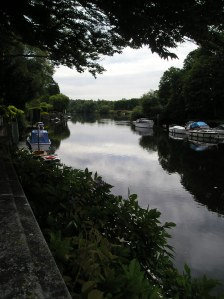
The River Thames

Lining the path are a number of wooden benches, some of which bore memorial plaques to people now residing in a place we cannot see:  Simeon Randall, Pauline Anne Hope and a wee lass of just nine years old. I love that people put up these benches in memory of loved ones, and it is my desire to have one too.  Problem is that I have so many favourite places I would not know where to be!  Maybe in all of them. 🙂  I need to set up a ‘bench’ fund.
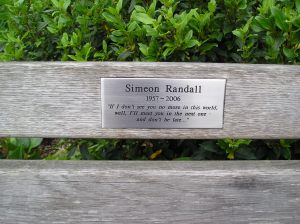
If I don't see you no more in this world......

Continuing our stroll we passed beneath the wides and shady branches of a beautiful beech tree: York House cut-leaf beech, one of London’s great trees.  Across the way we could see the boat-yards of Eel Pie Island, still to be explored. Turning back at this point we once again passed the fountain for a 2nd look, as beautiful then as before.  A heron sat still as one of the statues, peering intently at the pond waters, looking for tea I am guessing; sensible bird 🙂

heron fishing for tea 🙂

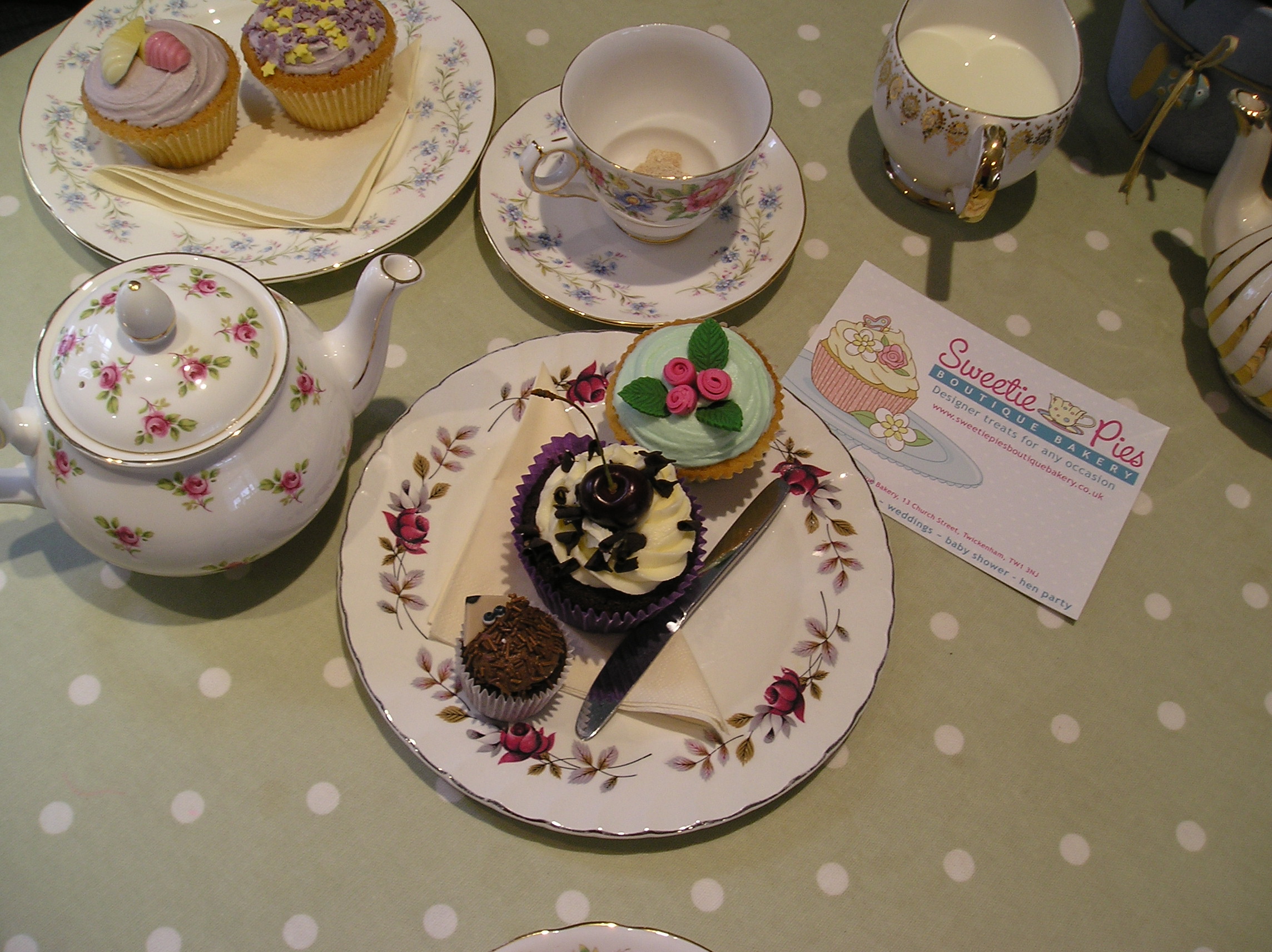
Thence we made our way to the Sweetie Pies shop for tea and cupcakes; of course.
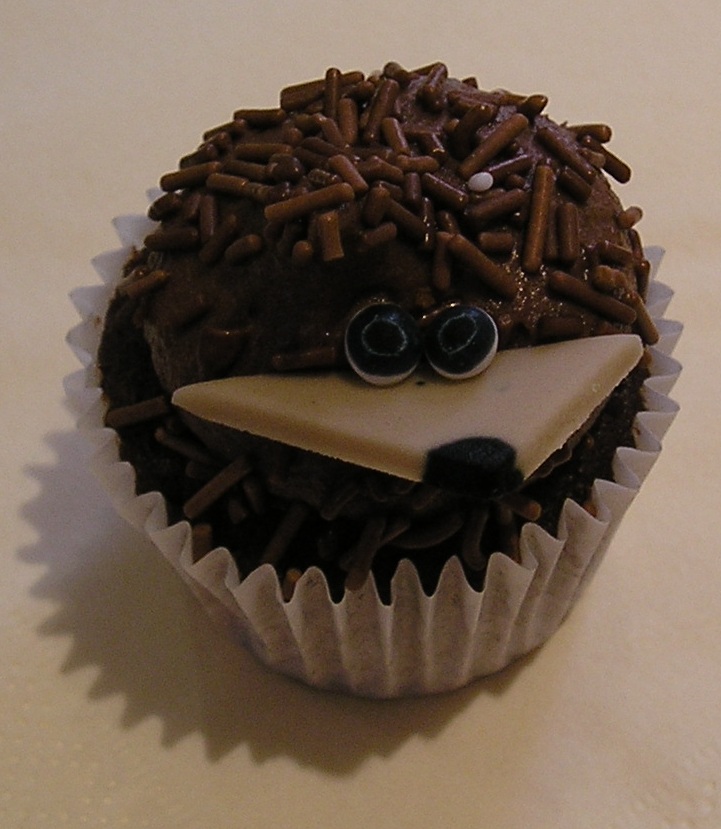
The shop is a delight, the proprietor a young lass as sweet as her fare.  We dithered over which to choose and for me the Black Forest cake with cherries on top, a creation with tightly budded roses and a wee hedgehog won the day. 

could you eat a face like that?

 My daughter chose one with ice-cream cones and another with a sprinkling of coloured stars. 

Sweetie Pies cupcakes

 That and a couple of pots of tea served on fine china with china tea-cups made us feel very posh.  The interior of the shop is tiny and cosy; the ‘Powder Room’ boasting a loo so small I asked they were expecting Snow-White and the 7 Dwarfs!?
Replete, our taste-buds satified we meandered on down towards the river-front once again and so on towards Eel Pie Island, passing the Barmy Arms pub, with a great view from the patio. 

The Barmy Arms Pub

 On the way I noticed a story-board with snippets of island history.  Once upon a time there was a great hotel that hosted the likes of The Rolling Stones, The Who, Eric Clapton, Jeff Beck, Jimmy Page, Rod Stewart and David Bowie amongst others.

The Rolling Stones at Eel Pie Island

The South of England’s answer to Merseybeat.  The hotel met it’s demise in 1971 after a fire hastened it’s demise; now a housing estate – Aquarius.
Stepping by an armada of ducks and swans that thought I was there to feed them we marched onto Eel Pie Island via the narrow pedestrian walkway.  How thrilling to visit an island in the middle of the Thames!

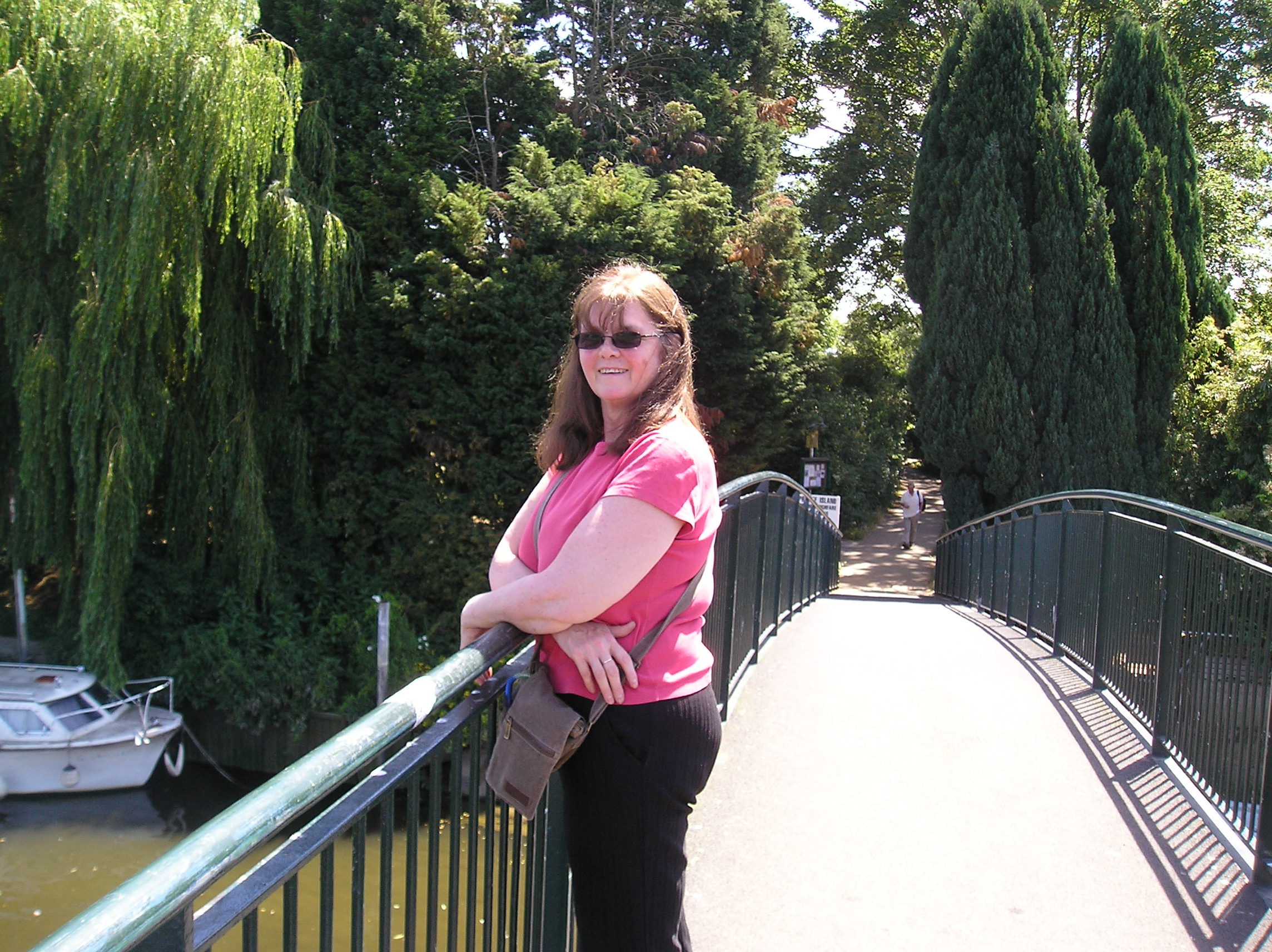
crossing The Thames to Eel Pie Island 🙂

Eel Pie Island, also know as ‘Twickeham Ait’, it appears on Moses Glover’s map of 1635. Cropping of withies to make baskets for the trapping of eels continued until the 19th century.  By 1737 there was an inn called ‘The Ship’ later ‘The White Cross’.  In 1830, a new hostelry was built was built and the island became a resort for summer visitors. 
And what visit it turned out to be.  The island may be in the 21st century, but life on the island has remained entrenched in the 1960’s. 
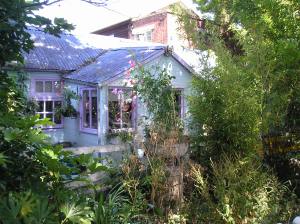
The Loveshack - just gorgeous

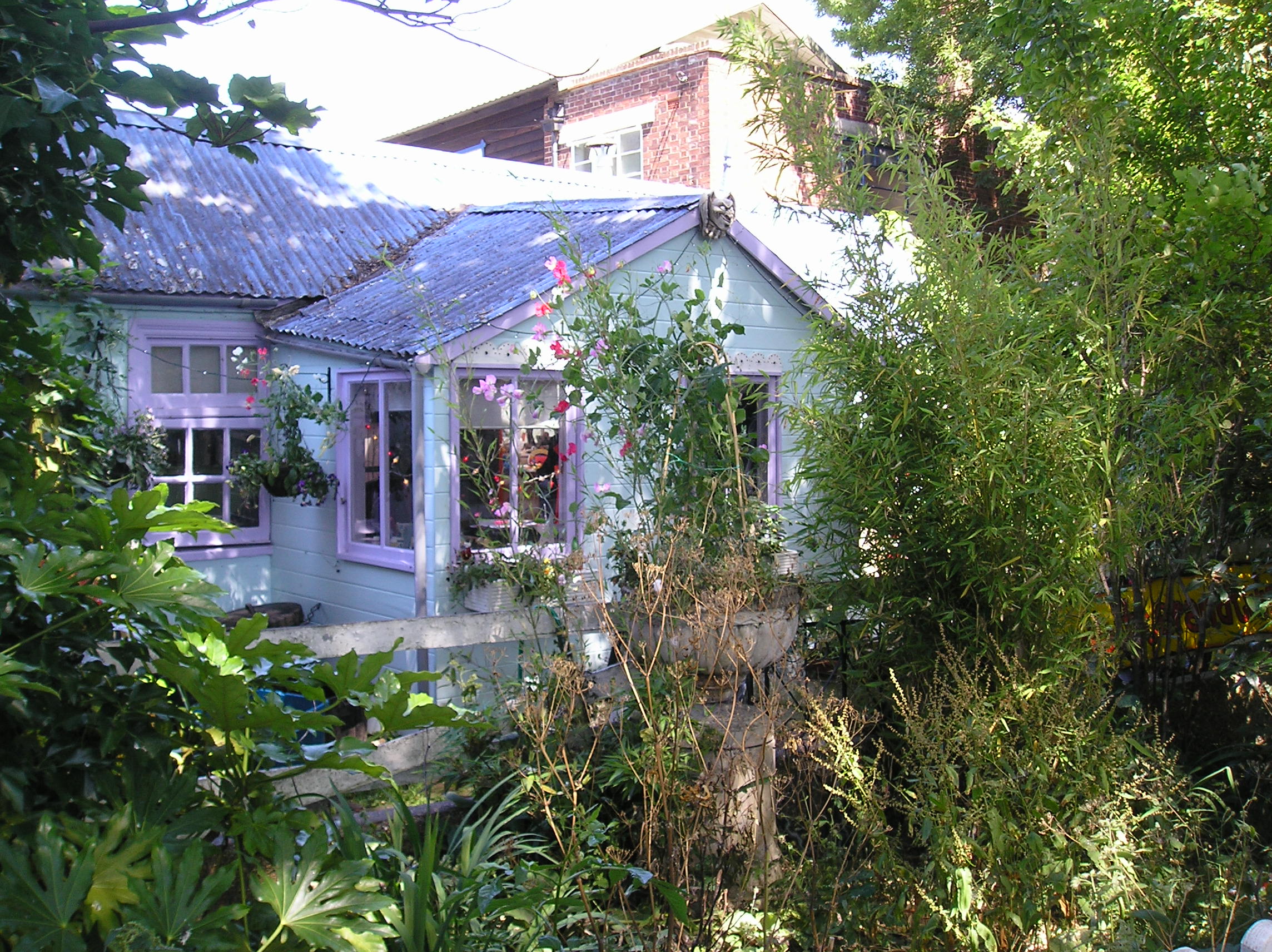
The houses are tiny, cute and quaint (those that we could see), and at the far end via the boat-yard is an artist’s enclave that is seriously straight out of  the Woodstock era.

the artist's enclave

Ramshackle would best describe the air of fading history.  The enclave is a higgedly-piggedly mix of wooden and tins shacks, mostly in a state of external disrepair and look like they’re on the point of falling down.  The cyclists club boast a marvellous mix of old metal painted sign-boards recalling products of a bygone era.
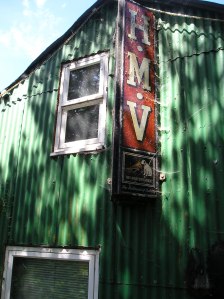
relics of a byegone age - HMV metal sign

 ‘Punch’ ; ‘Lion’ ; HMV and others.  Scattered about as if tossed aside by a giant hand grown tired of it’s toys, now rusting and overgrown with weeds and wild plants, lie a variety of old machinery the likes of which you seldom see these days. Relics!

a giant's toys discarded and forgotten

Further along and illegally gained via a gated entrance (I don’t care for barriers) we entered what appeared to be a cluster of offices, a modern structure in a vintage setting.  If you were wonering what happened to Tweety Bird, well, he is held captive in the jaws of the monster, a now abandonded building crane.  Poor birdy. 
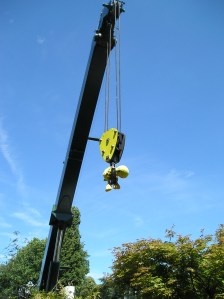
if you ever wondered what happened to Tweety Bird......

 Wonder if the same will happen to Twitter?!
We strolled about the enclave, amazed that people could actually reside amongst this conglomeration of chaos; a delight of everything and nothing….one such ramshackle structure asks ‘anyone for Pimms’. 

anyone for Pimm's?

I could probably pitch a tent in the wee forest we chanced upon at the far end of all this and live happily (albeit uncomfortably) and no-one would even notice.  I noticed a hanging cage that houed a skeleton and wondered if that was the remains of Hansel or maybe Gretel :). 
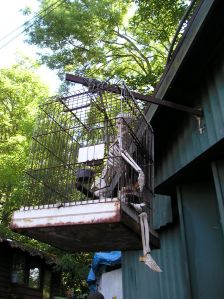
don't overstay your welcome......

The place is littered with junk and bits and bobs, a veritable hoard of what I guess an artist would call ‘useful’ stuff.  Flowers abound and a nasturtium in full bright orange glory dominates the scene lending some colour to what is despite all the ‘stuff’ quite a dull bleached area. 
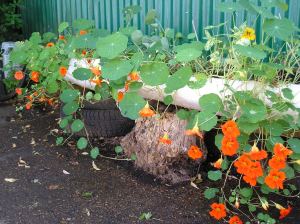
a bright orange splash of colour

Making our way back off the island we headed off to The White Swan for lunch. Along the way we passed under the bridge that leads to York House and walked passed ‘Dial House’, home to a magnificent sundial mounted above the front door; gorgeous.  Dial House was owned by various members of the ‘Twining’ family till the death of Elizabeth Twining on Christmas day 1889. (

on Riverside at Twickenham takes its name from the painted sundial in the centre of the front of the house.

This type of sundial is known as a vertical dial and the enthusiast would describe it as a vertical, declining dial because it does not face due south. Such dials are said to be declining so many degrees east or west of south, so that the gnomon, the rod that casts the shadow of the sun, is angled to one side or the other of the vertical centre line. For the same reason, the hour markers are not quite symmetrical, starting in this case, after 6 o’clock in the morning and ending at 4 o’clock in the afternoon. The perfect south-facing dial would start at exactly 6am and end at 6pm.)

(more…)

Read Full Post »
What do you get when you mix Tradition, Pomp and Ceremony, a Queen, Princes, Princesses, Royal Artilleries, Horses, crowds of cheering people, and Red Arrows?

Trooping the Colour!

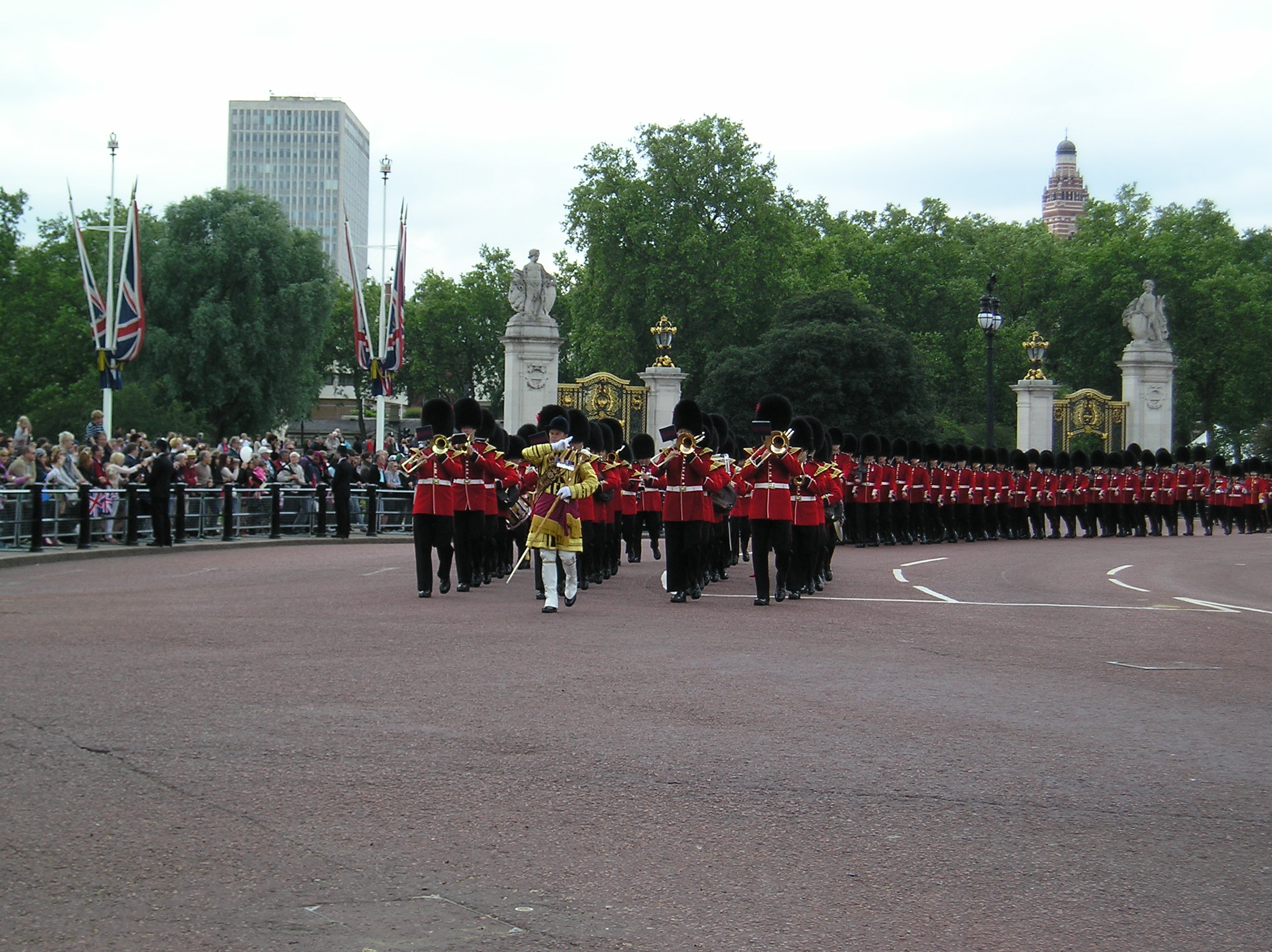
Troops marching by in Colour

The Sovereign’s official birthday is marked with a colourful mix of military bands,

Military Bands

precision marching, some 20,000 well-wishers, top hats and tails, flags and planes and a 41-gun salute, to create an exciting day of Pomp and Pagentry marking a tradition that goes back more than 4 centuries.

The event is an enactment of the traditional preparations for battle when the “colours”, or flags were “trooped” down the ranks so they would be recognised by the soldiers.   This year’s celebration, marking her Majesty’s 84th birthday, saw the colour being paraded by the 1st Battalion Grenadier Guards.

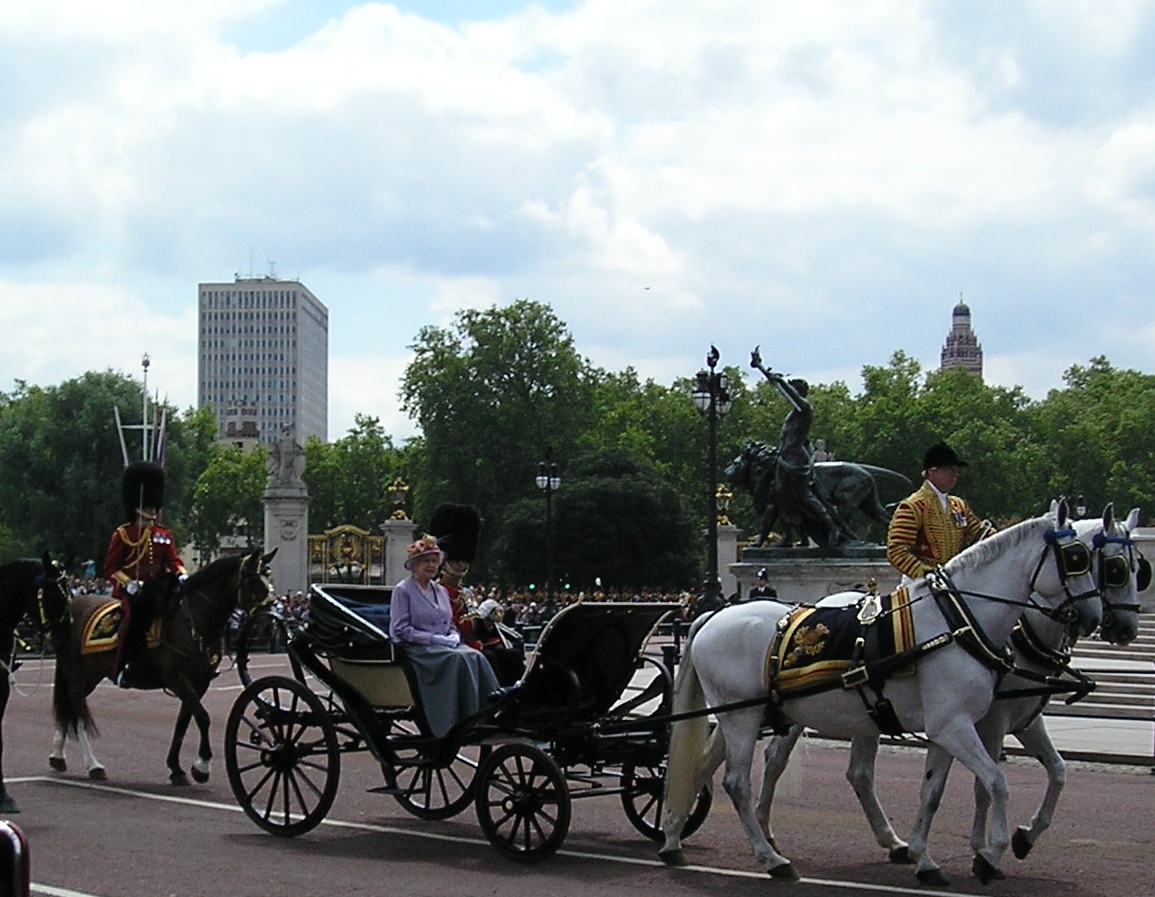
This was the 58th ceremony at which the Queen has presided.    Looking radiant and dressed prettily in lilac with a flambouyant matching hat, sitting in Queen Victoria’s 1842 ivory-mounted phaeton drawn by a pair of horses, with Prince Philip at her side, she rode daintily down The Mall.

one of the carriages being driven to the Palace before the event

Queen Victoria's 1842 paheton drawn by two greys, on their way to the Palace to collect Queen Elizabeth II

Preceded by first Prince William and The Duchess of Cornwall in a carriage, then Prince Andrew with Princesses Beatrice and Eugenie in a second carriage, she was accompanied by the Prince of Wales, the Duke of Kent and the Princess Royal on horseback.

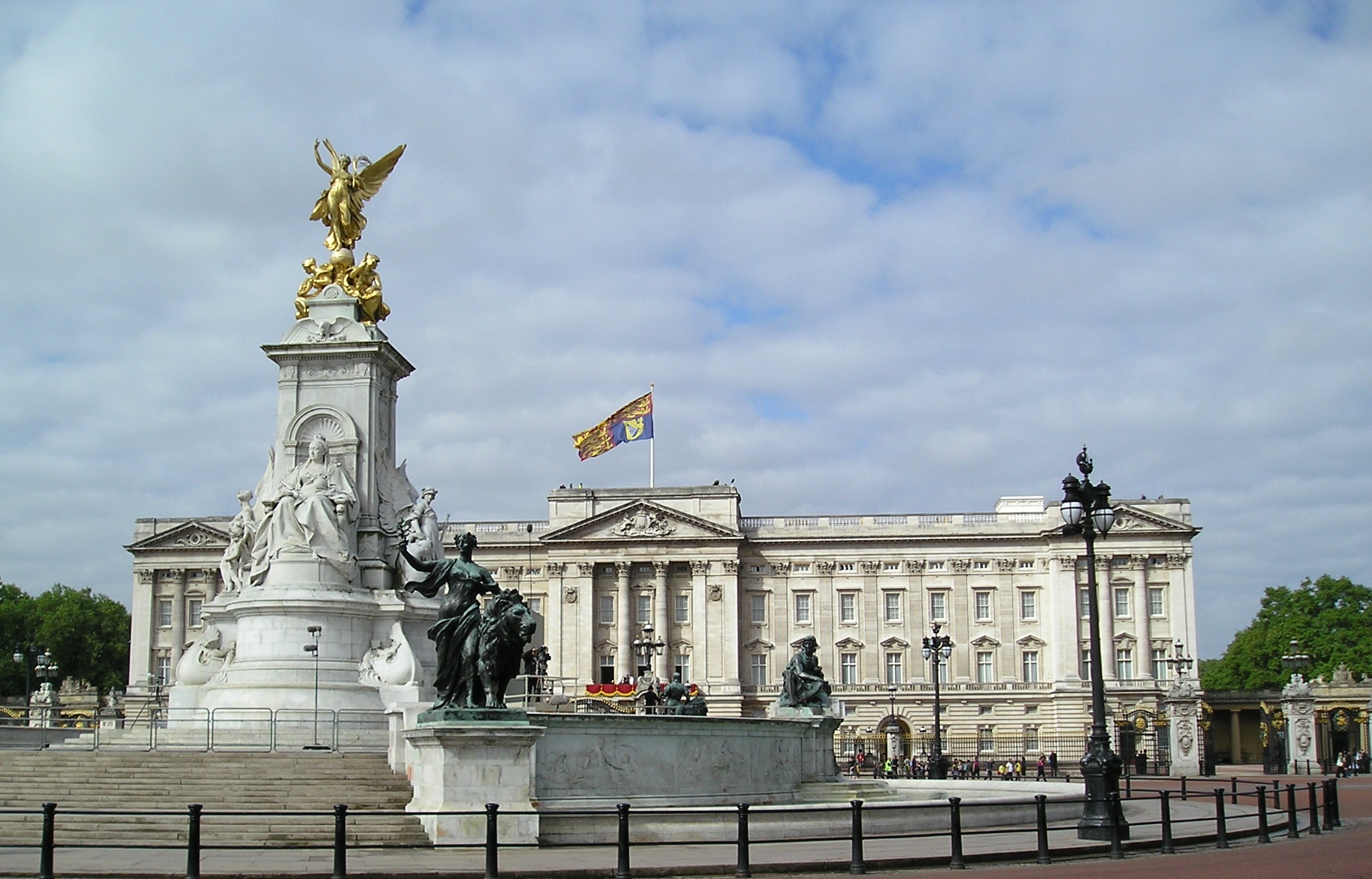
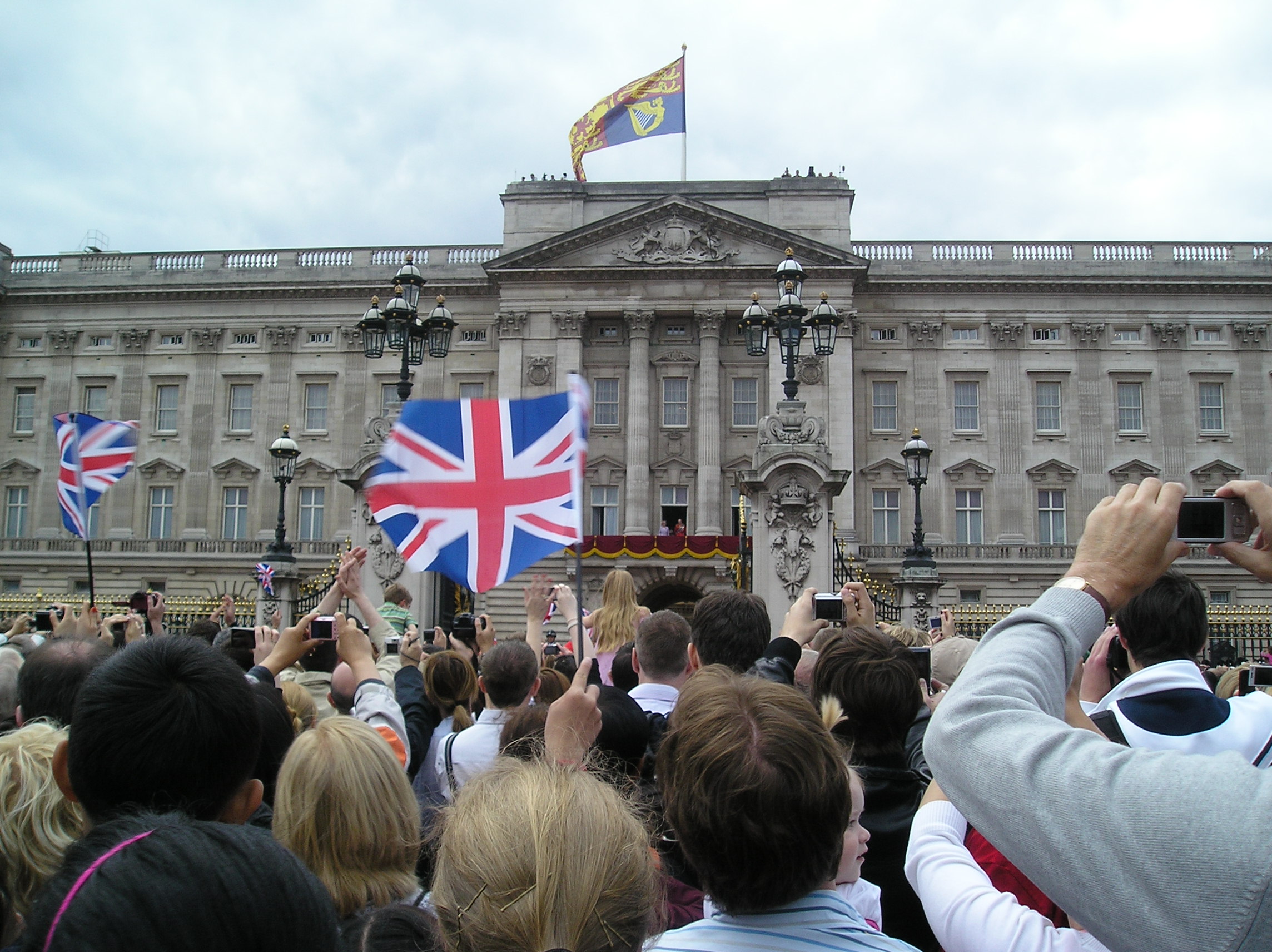
The Royal Standard flew colourfully and cheerfully above the Palace, while below, the streets were cleared of traffic and detritus in preparation for the Queen’s appearance.

The Royal Standard flapping jauntily above Buckingham Palace

The day began at 10am with slightly overcast skies and proceeded with Military precision till the fly-past at 1.30pm.   The British Military are renowned for their detail and each carefully choreographed display never missed a beat.

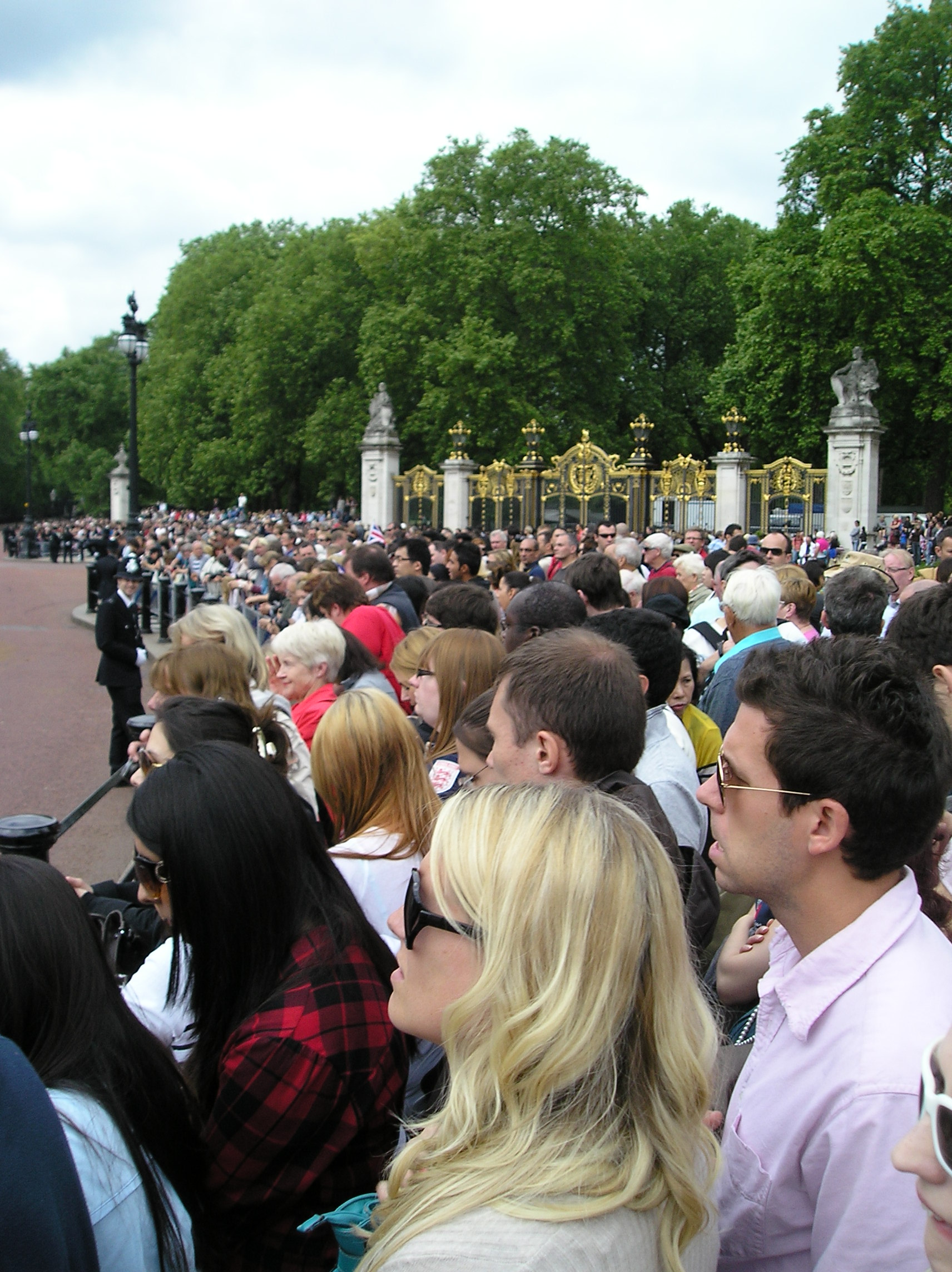
The enthusiasm of the crowds in front of Buckingham Palace, along The Mall and inside the Whitehall parade grounds was visibly palpable.  A ripple of excitement swept through the crowds that had gathered, standing 10 deep, when the first of the Regiments made their appearance. 

standing 10 deep

The Military Bands; 400 musicians, splendid in their colours of either red and black or black and gold, accessorised with enough bling to put any self-respecting Pop Star to shame, played a medley of military tunes and of course “God Save our Queen”.

all the Queen's horses and all the Queen's men...covered in bling!

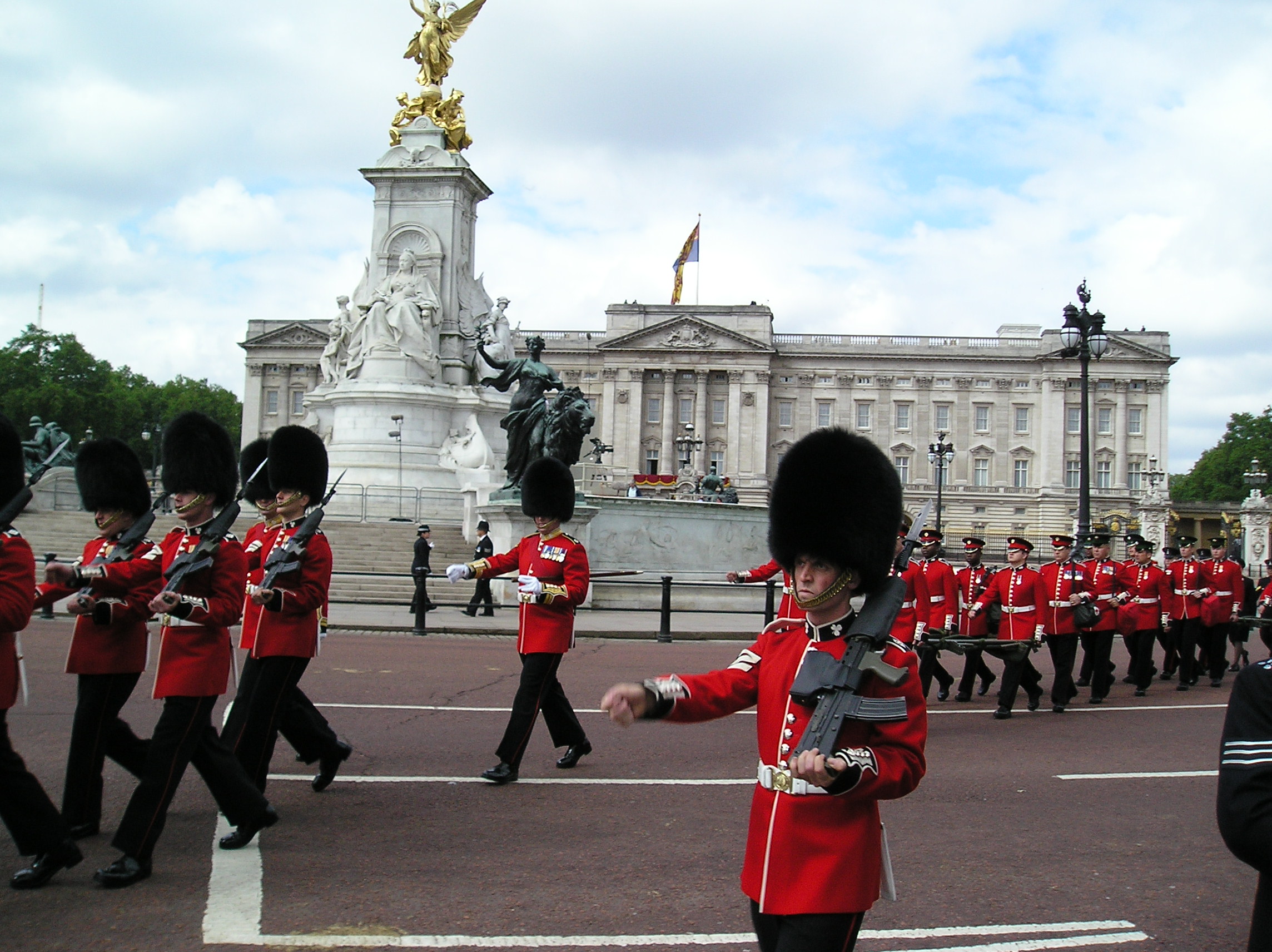
The Troops; the different Regiments marked by their own particular colours and uniforms, marched past in snaking lines of Red, Black and Gold, boots shining, arms swinging jauntily in tandem as they made their way past the Palace to Horse Guards Parade.

snaking line of marching troops

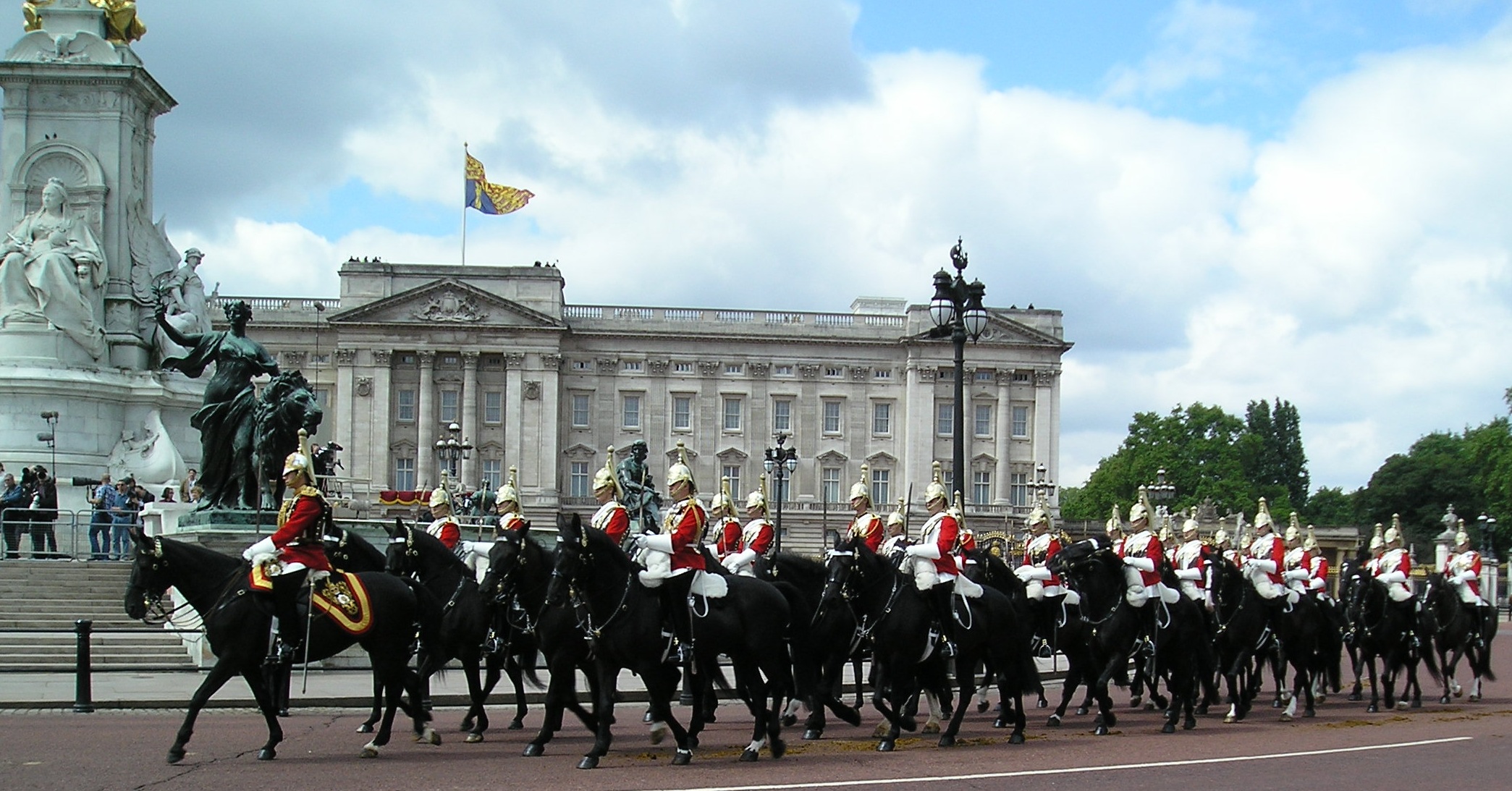
The crowds watched in awe as the field guns, drawn by matching teams of horses rode past,

gun-carriages drawn by carefully matched horses

and in admiration as wave after wave of colour swept along The Mall.

Once the Colour was trooped, the Guards in their poppy red tunics and well-brushed bearskin hats filled the arena with a display of precision marching, after which the Royal family then returned to the Palace, stepping out en-mass onto the balcony to welcome back the Queen and Prince Philip.

After riding out along the route of cheering citizens come from all corners of the earth,

they come from all corners of the earth

the Queen returned to the Palace

Queen Elizabeth looking radiant returning to the Palace

and within minutes stepped onto the balcony to an enthusiastic wave of clapping, cheering and vigorous flag-waving! 

waving flags and cheering crowds greet Queen Elizabeth and Prince Philip as they step onto the balcony

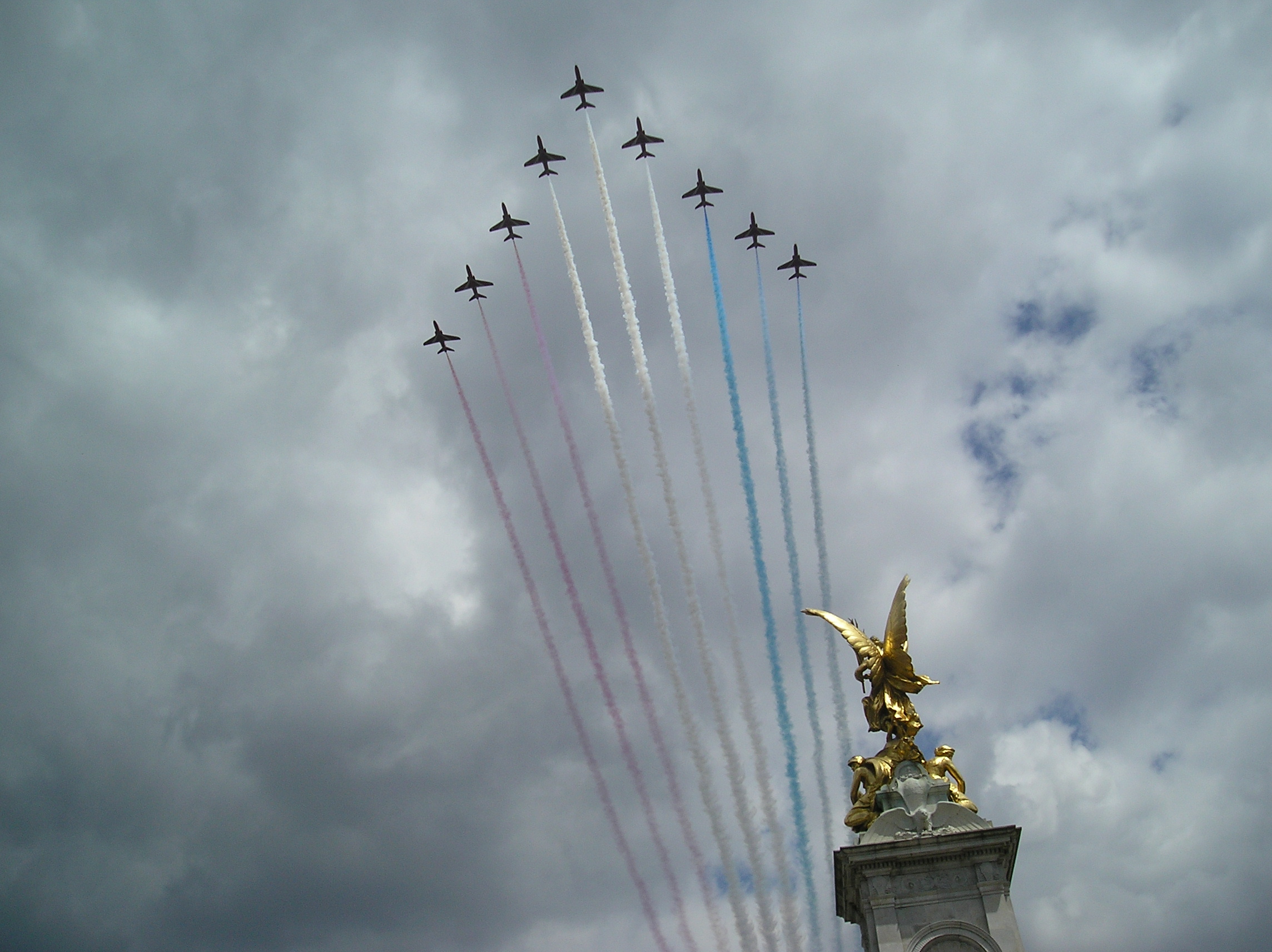
We were then treated to a Royal Air Force fly past, featuring the old stalwarts of World War II – the Spitfire II and Hurricane, as well as  fighter-jets and the Red Arrows which left a stream of blue, red and white plumes across the sky in their wake.

The Red Arrows - a plume of red, white and blue behind them

On the balcony the Queen waved enthusiastically, encouraged by the cheers of the crowd below.

And then….it was all over.  The crowds milled about, not sure what to do with themselves after all the preceeding excitment, and slowly but surely they slipped away to spend the rest of the day enjoying the sights, sounds and smells of London.

milling about after the excitement

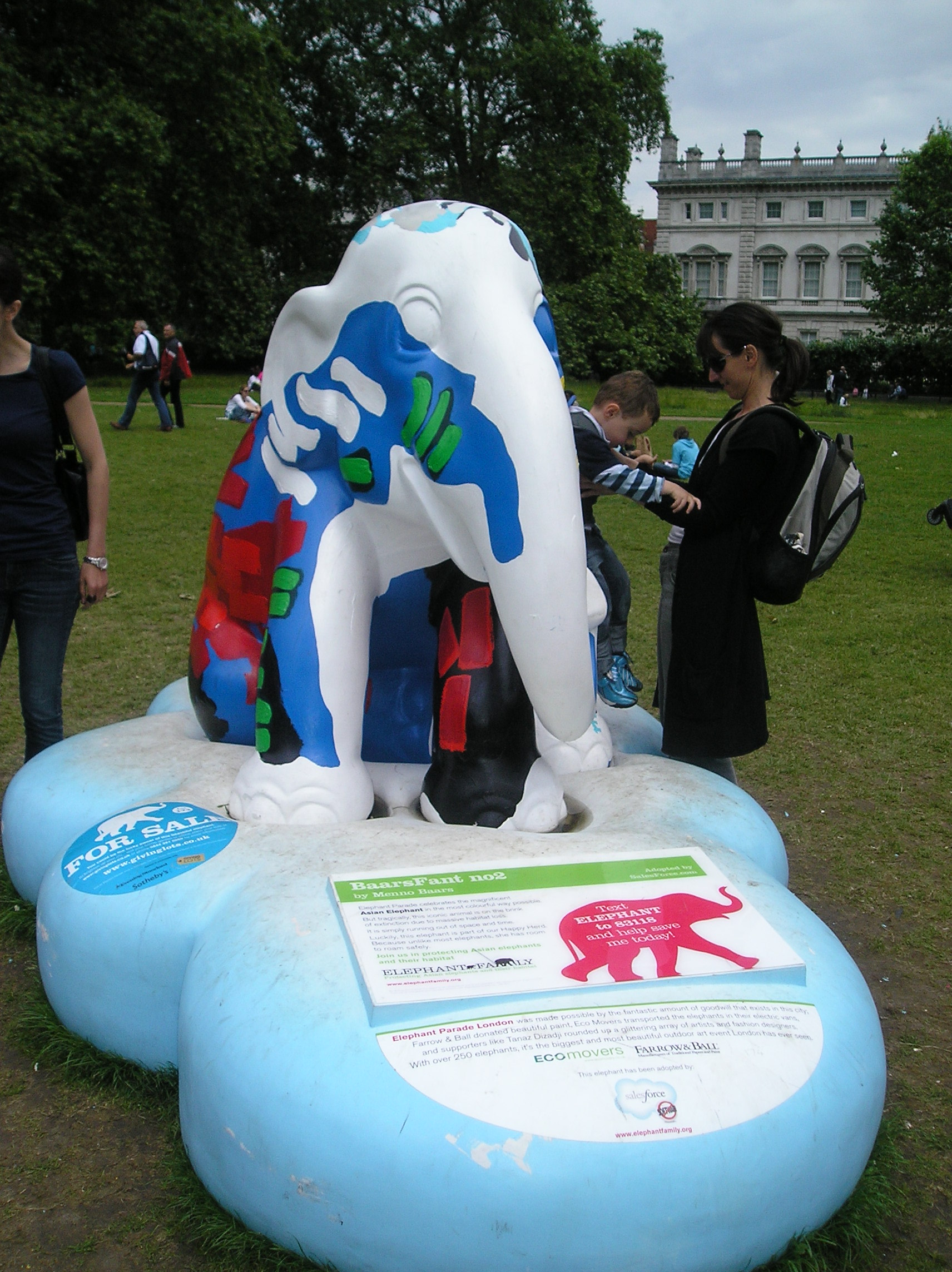
I strolled into Green Park for a bit of rest and relaxation and to have a squizz at some of the delightful little elephants, part of the Elephant Parade, that are dotted about the city for the next few weeks.

Baarsfant

Read Full Post »

 On my ‘wish list’ was the desire to travel; and so I have, to villages and towns around the UK.   Not quite what I had in mind when I sent the message to the ‘Universe’, but there you go. 🙂

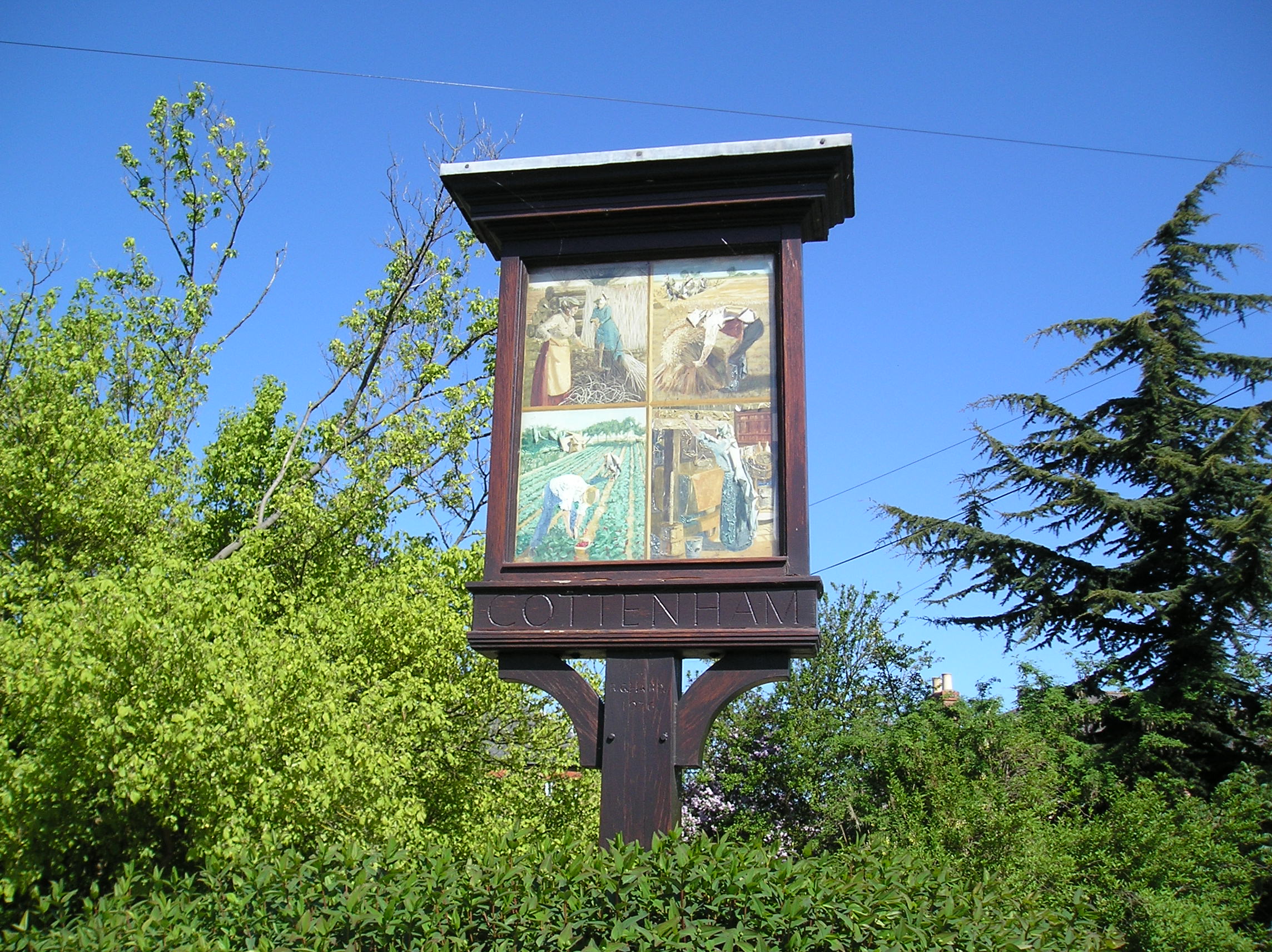
The latest on my travels is what at first glance appears to be a rather non-descript little village named ‘Cottenham’.

Cottenham, Cambridgeshire

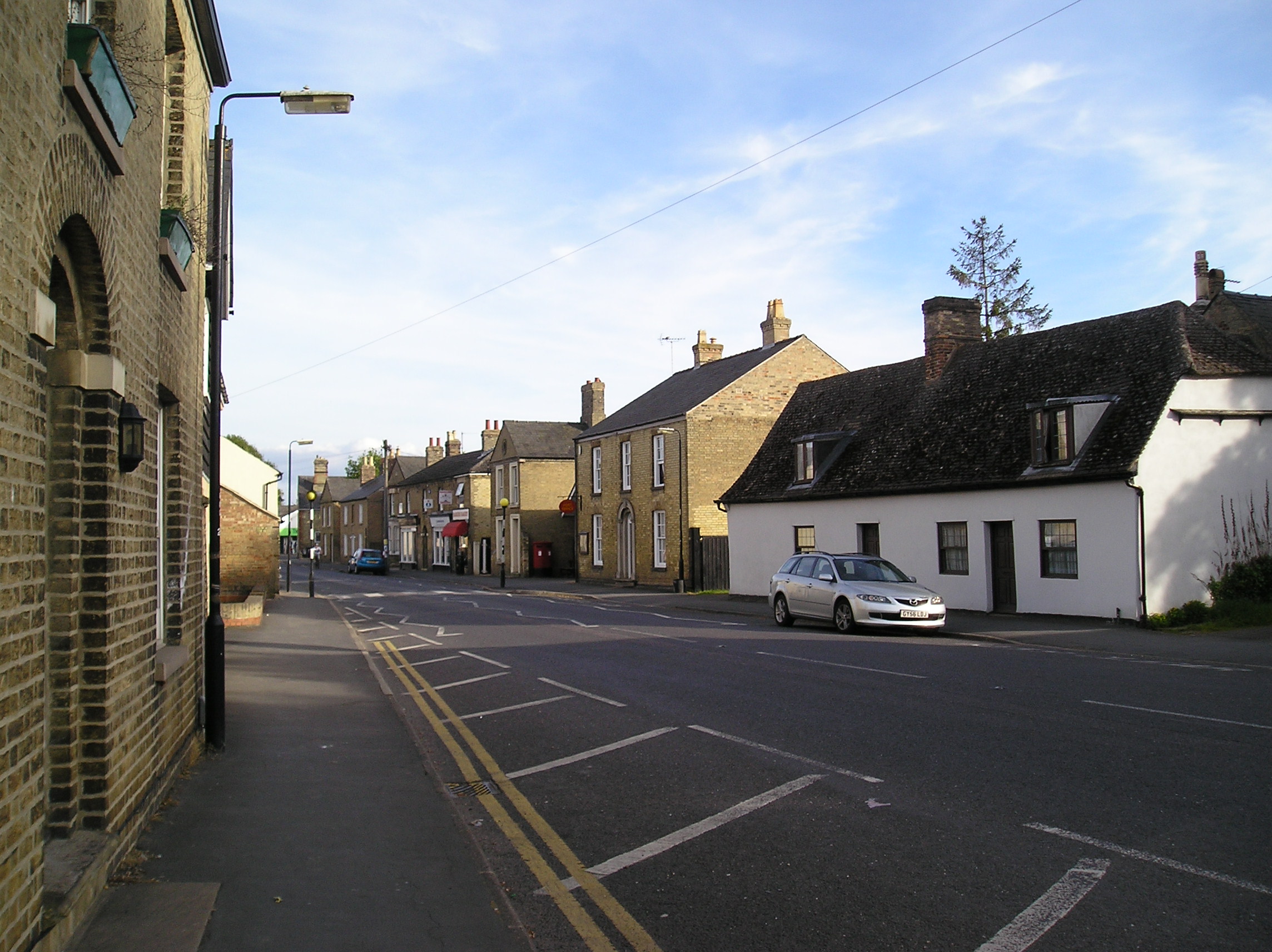
On arriving in Cottenham you could be forgiven for thinking that it looked rather dull, albeit lined with some pretty little houses and some fine examples of Georgian and Gothic architecture, there was nothing much else to excite the senses. It reminded me a bit of that song by John Denver; Saturday Night in Toledo. Some of the lyrics go: “they roll back the sidewalks at night”.

...they roll back the sidewalks at night

Ah! But wait, we have yet to discover what lies beneath!

Cottenham it seems has in fact existed since prehistoric times, and scattered discoveries of Mesolthic and Neolithic tools have been made. Now we are talking! 

On a bend in the ‘High Street’, kind of halfway between here and there,

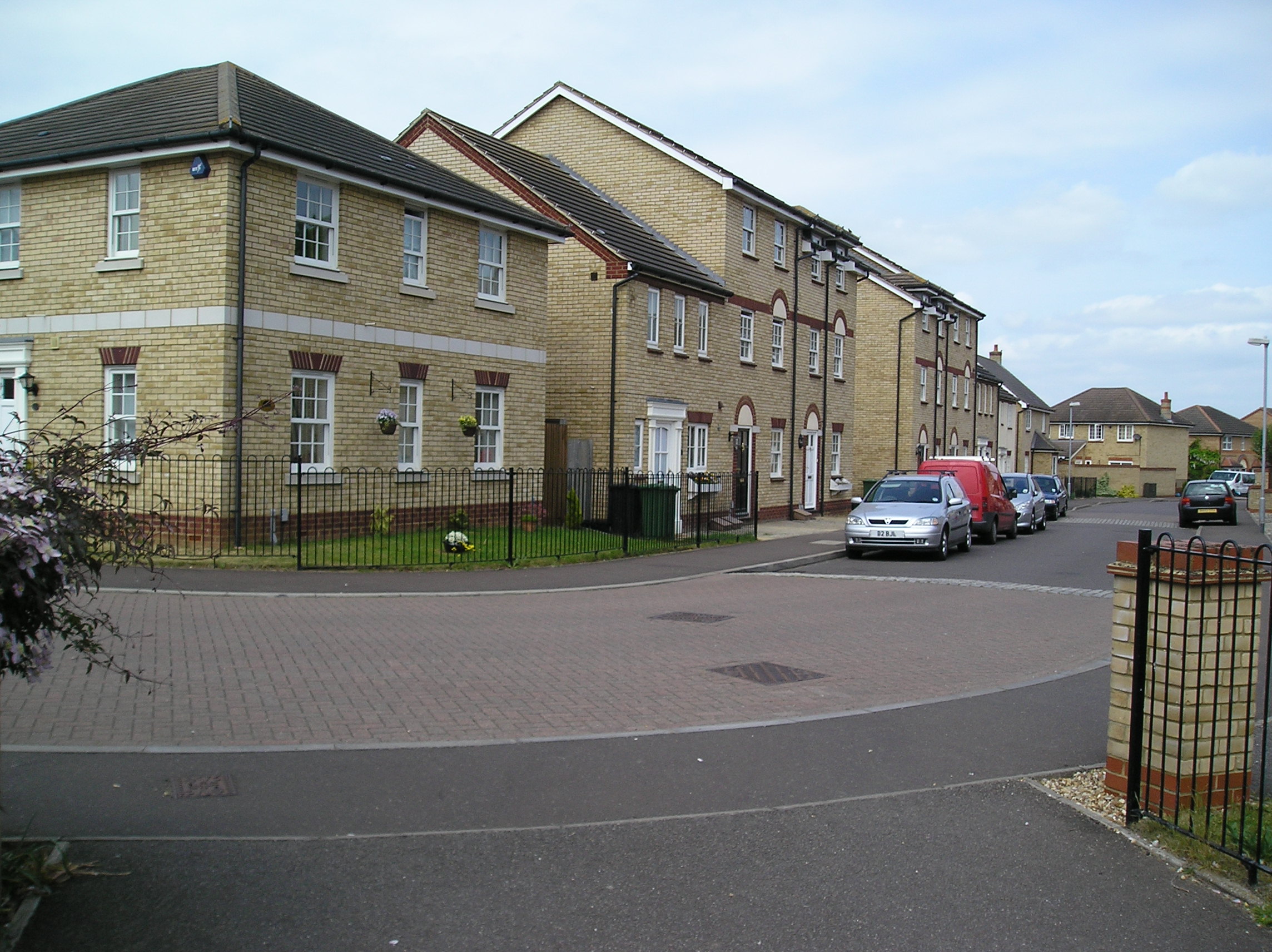
small part of the original settlement of Cottenham

on an area named the ‘pond’ of which there is currently no sign, are the markings of a very early ‘Roman’ settlement; now mostly built over with houses and buildings – the historic society has in fact been able to mark out the early boundaries of a formal settlement, long since disappeared into dust. 

What the area looks like now:

what was the original Saxon settlement site, now built over

part of the medieval Crowlands Manor, now built up

 Origin of the name Cottanham, appears to be Saxon, arising from the early English ‘Cotan’ for dwelling and ‘Ham’ for settlement. Most of the older houses along the High Street were at one time farmhouses.

The High Street, so named, is the longest in the country, measuring 1 & ¼ miles from the Green to the Church. The ‘Green’, a triangle of grass at one end of the village, is edged with lovely plane trees, planted in 1885 by Robert Ivatt, and was once the grazing ground for cattle, now an oasis of repose for the villagers, of which there are currently just over 5,000.

the Green at Cottenham, where they used to graze cows

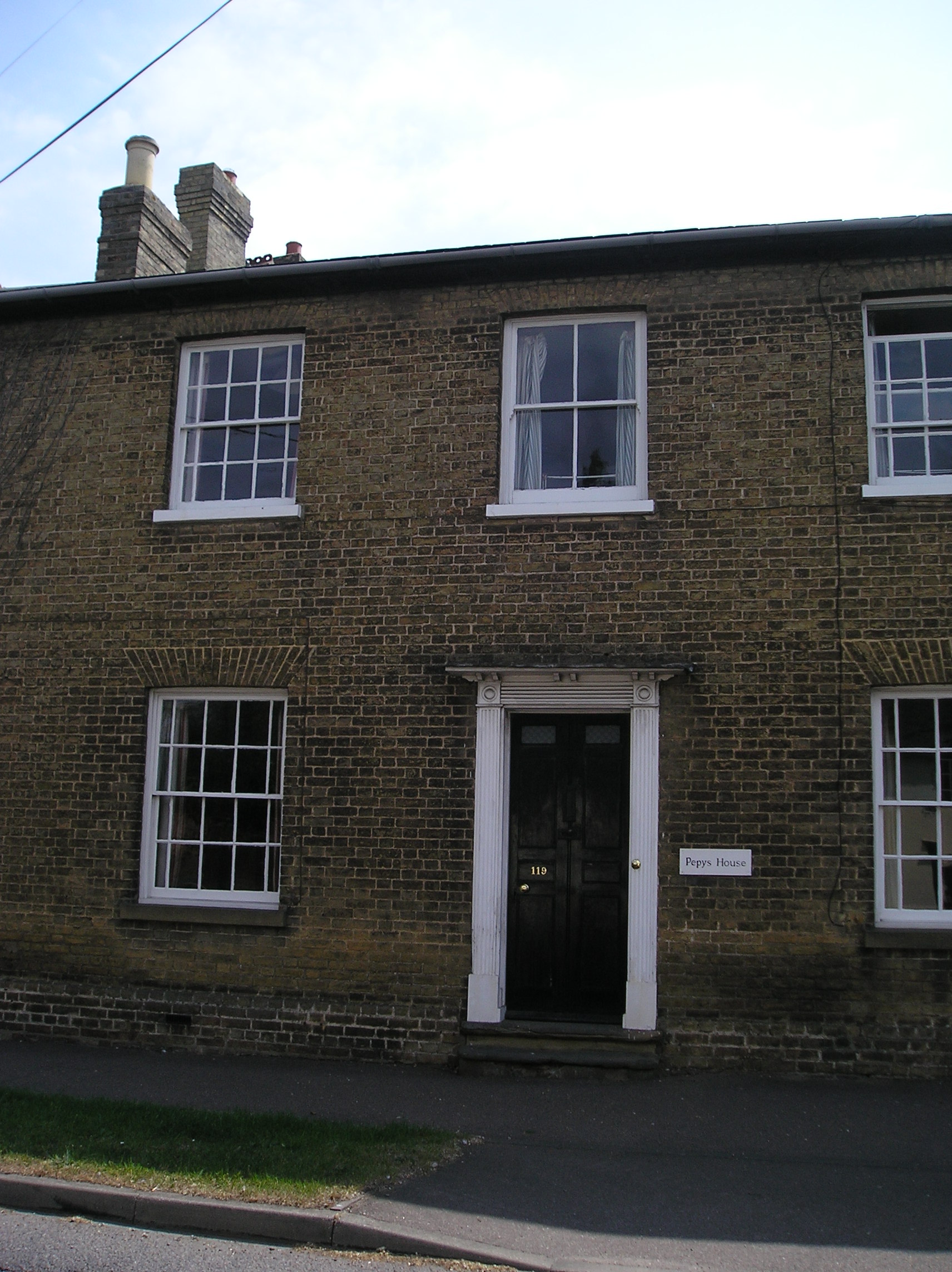
Amongst the present inhabitants, many of whom are descendants of people who have lived here for centuries, are records of the Pepys family in the village since 1273 and the present Earl of Cottenham is a descendent of Samuel Pepys (the diarist) and recorder of the 1666 Fire of London.

Pepys house (Samuel Pepys; diarist used to live here)

Two thirds of Cottenham itself, was destroyed by fire in 1676 (mmm, seems perhaps we should take a closer look at Mr Pepys then!) The lady I was caring for has herself lived in the same house since the day she was born 84 years ago, and inherited the house from her parents.

Across from the Green and on the fork of two roads is the War Memorial – unveiled in 1921 in honour of fifty nine local men killed in the 1st World War.

memorial to fallen villagers WW1

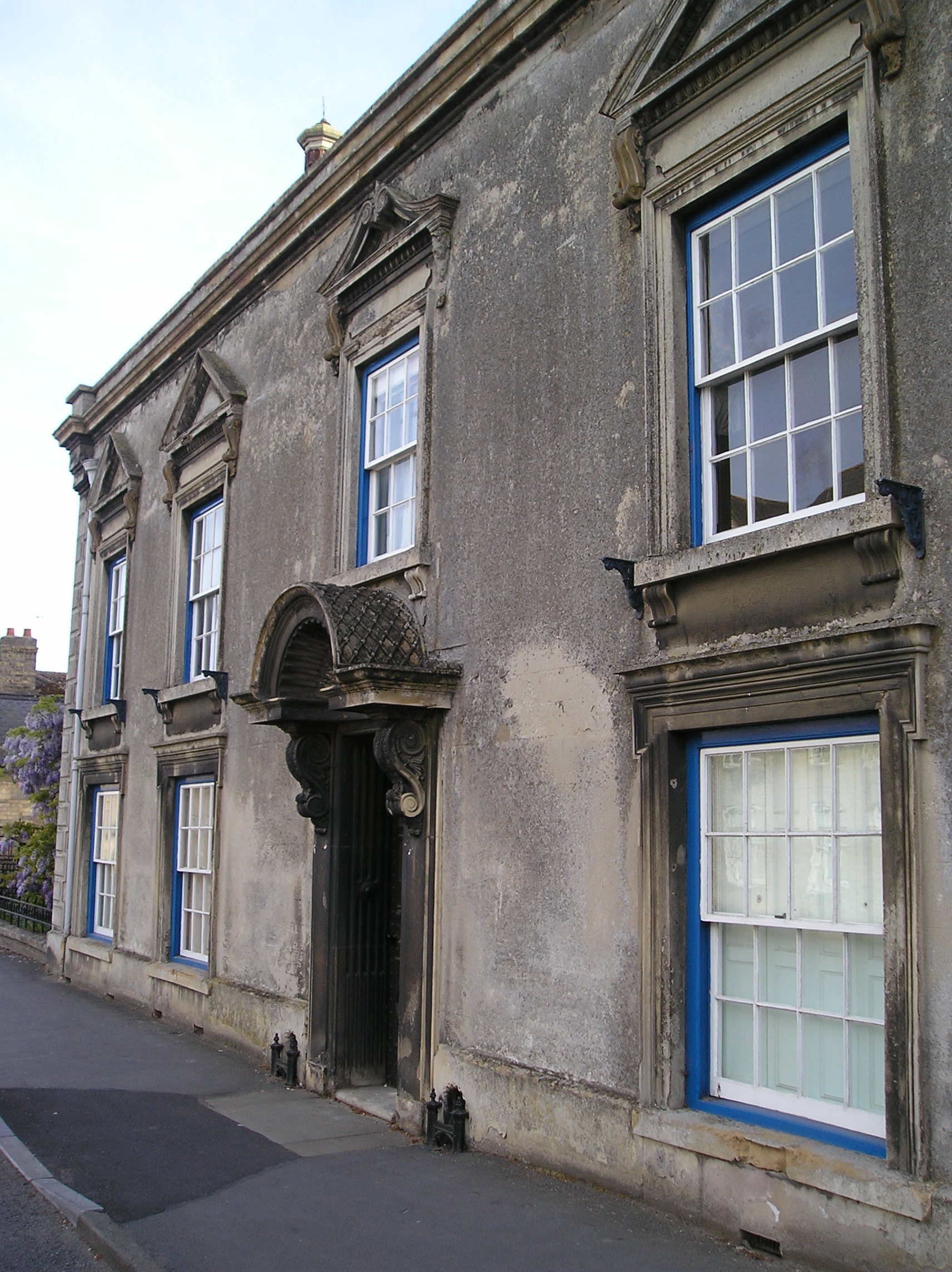
On closer exploration are many fine houses, some of which are centuries old:

Queenholme built 16th century

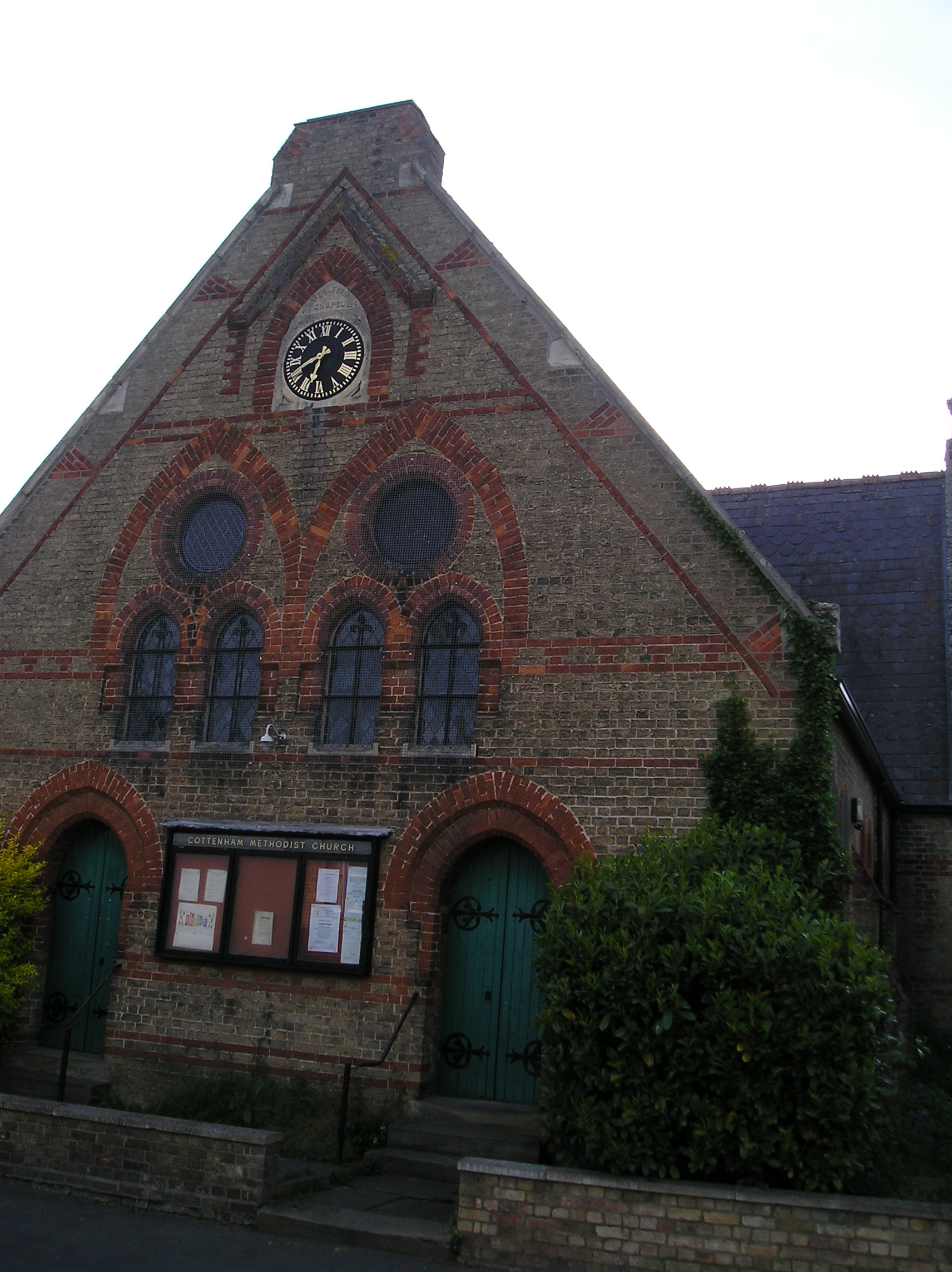
The Wesleyan Chapel built 1864

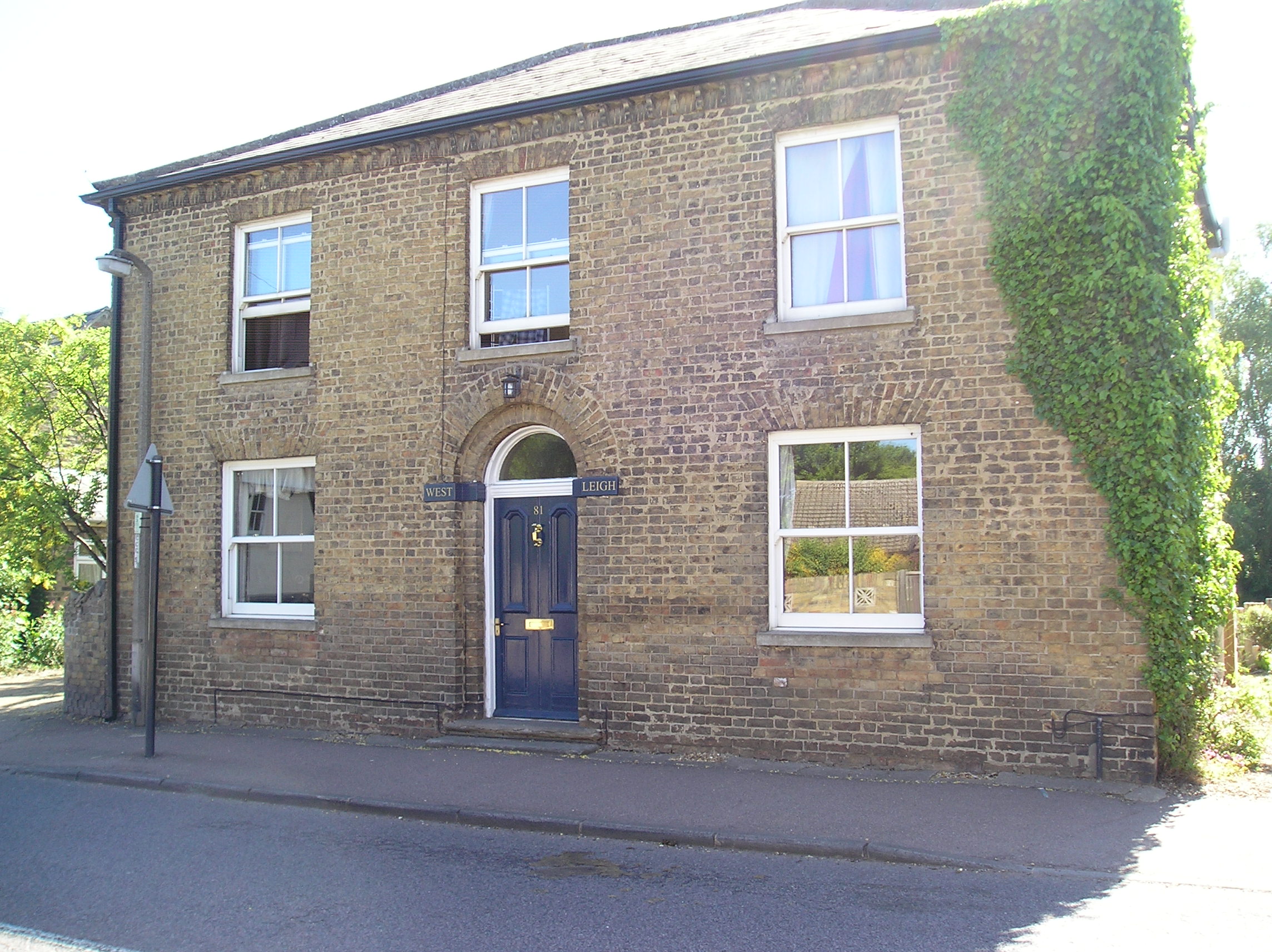
The Gothic House built in the 1730s, was a red brick house, bought by the Ivatt family in 1770 and greatly altered around 1860 when the decorative chimneys were built.

Gothic House

front facade of the Gothic House

wisteria draped over the side of the Gothic House

detail above the front door

White Cottage – home to ancestors of Calvin Coolidge – American President 1923-29

White House (aptly named as it turns out)

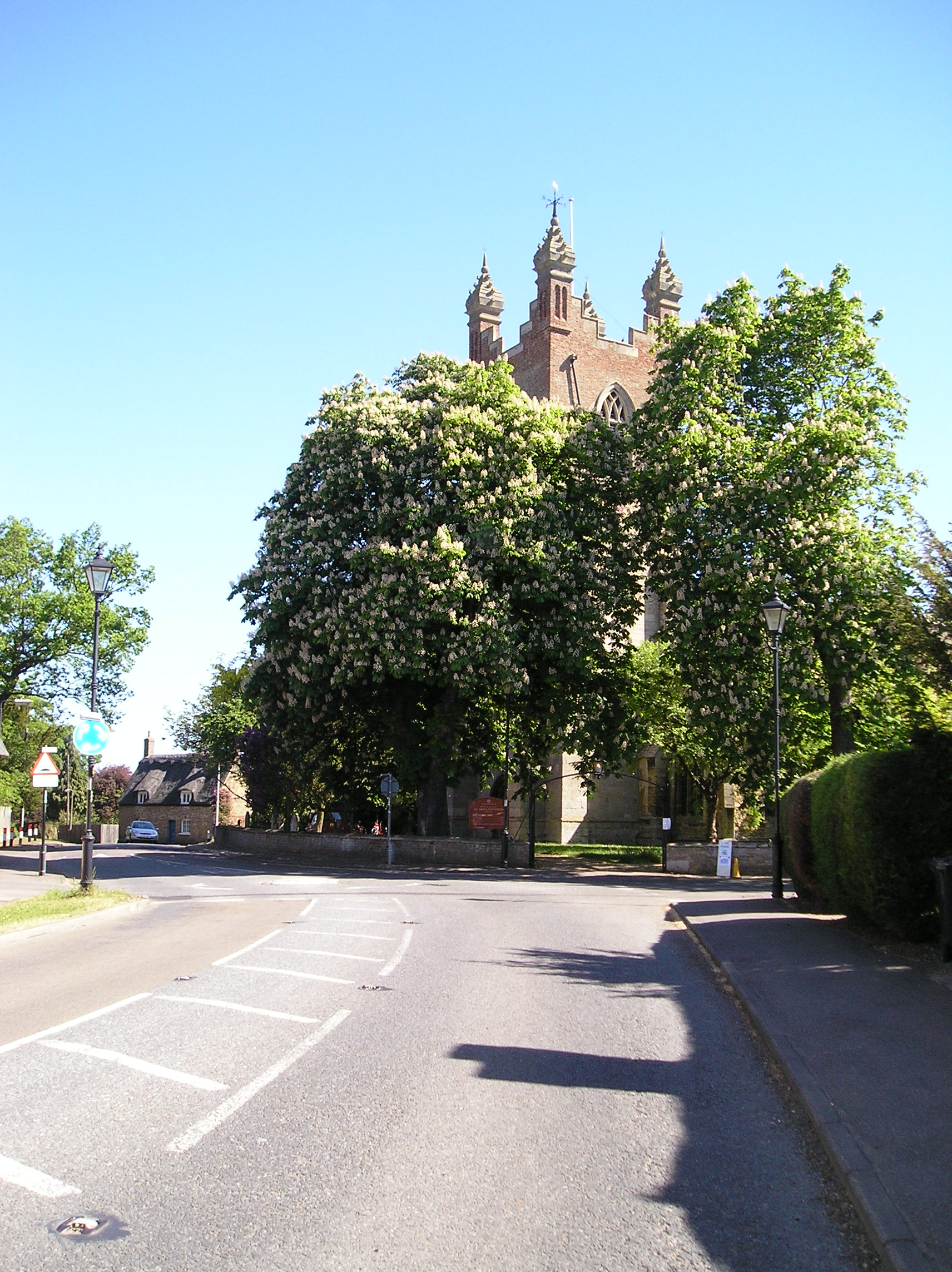
As I explored the area on Sunday, I was drawn by the sound of bells pealing out their call to prayer! The ‘Parish Church of All Saints’; has evidence of a church on this site from the mid-10th century.

All Saints Church

The existing church was built in the 15th century, with a 100 ft tall church tower – and a sundial built into the side with the inscription – ‘time is short’.

'Time is short' inscription on the sundial

Across the road is the Old Rectory – dating back to the 16th century. In 1644 the Rectory was given to Oliver Cromwell’s sister; Robina. (I guess no-one would have argued with that).

At that point the road leaves the village proper and now becomes Twentypence Road – which derives it’s name from a parcel of thirty acres of land on the Cottenham side of the River Ouse, as described in Richard Atkins survey of the Fens in 1604.

Twentypence Road

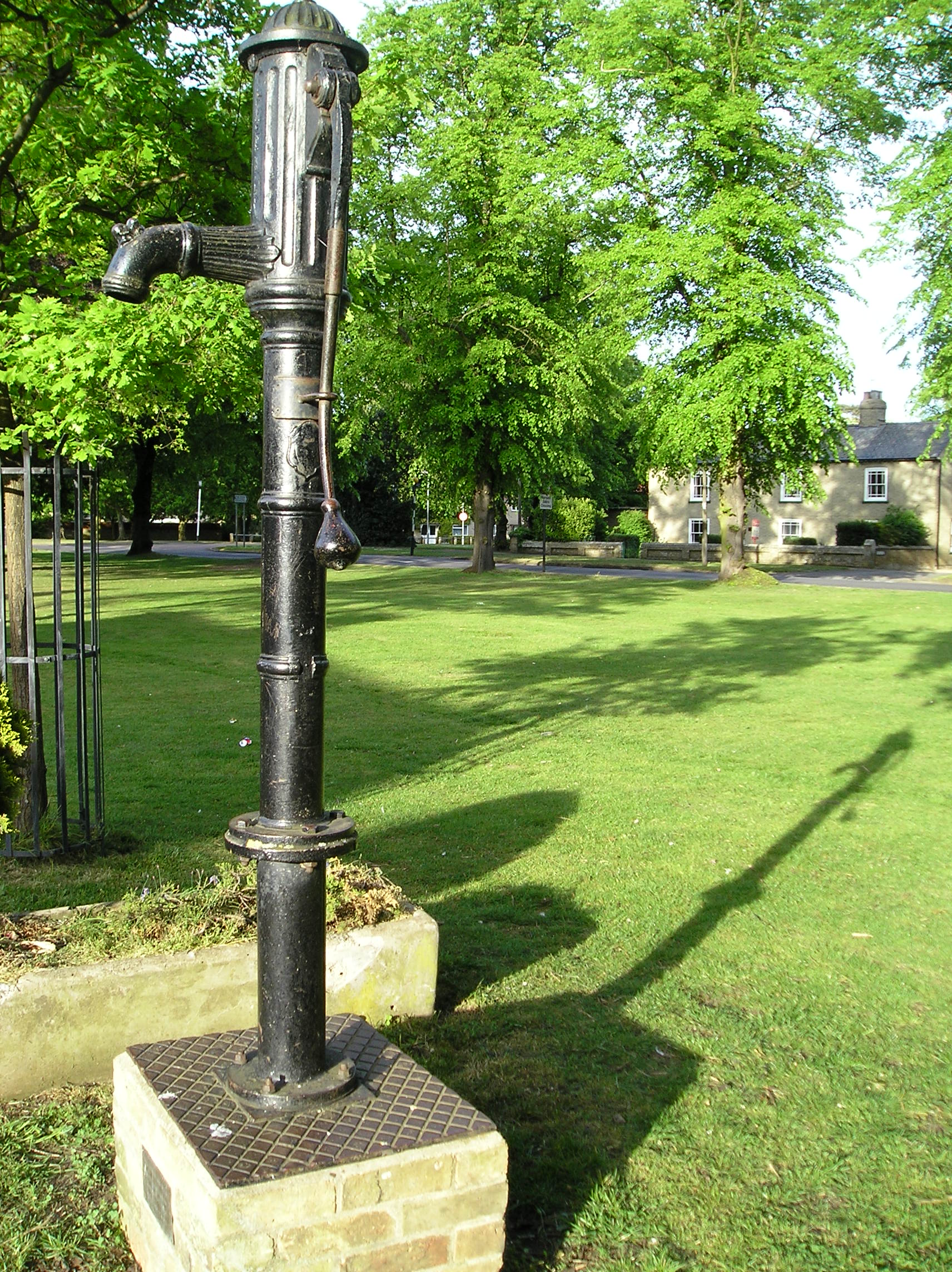
At one time there were four pumps in the village, and with all but one subsequently removed, the remaining pump – erected in 1864, was moved to the Green in 1985 along with the horse-trough.

water pump and horse trough

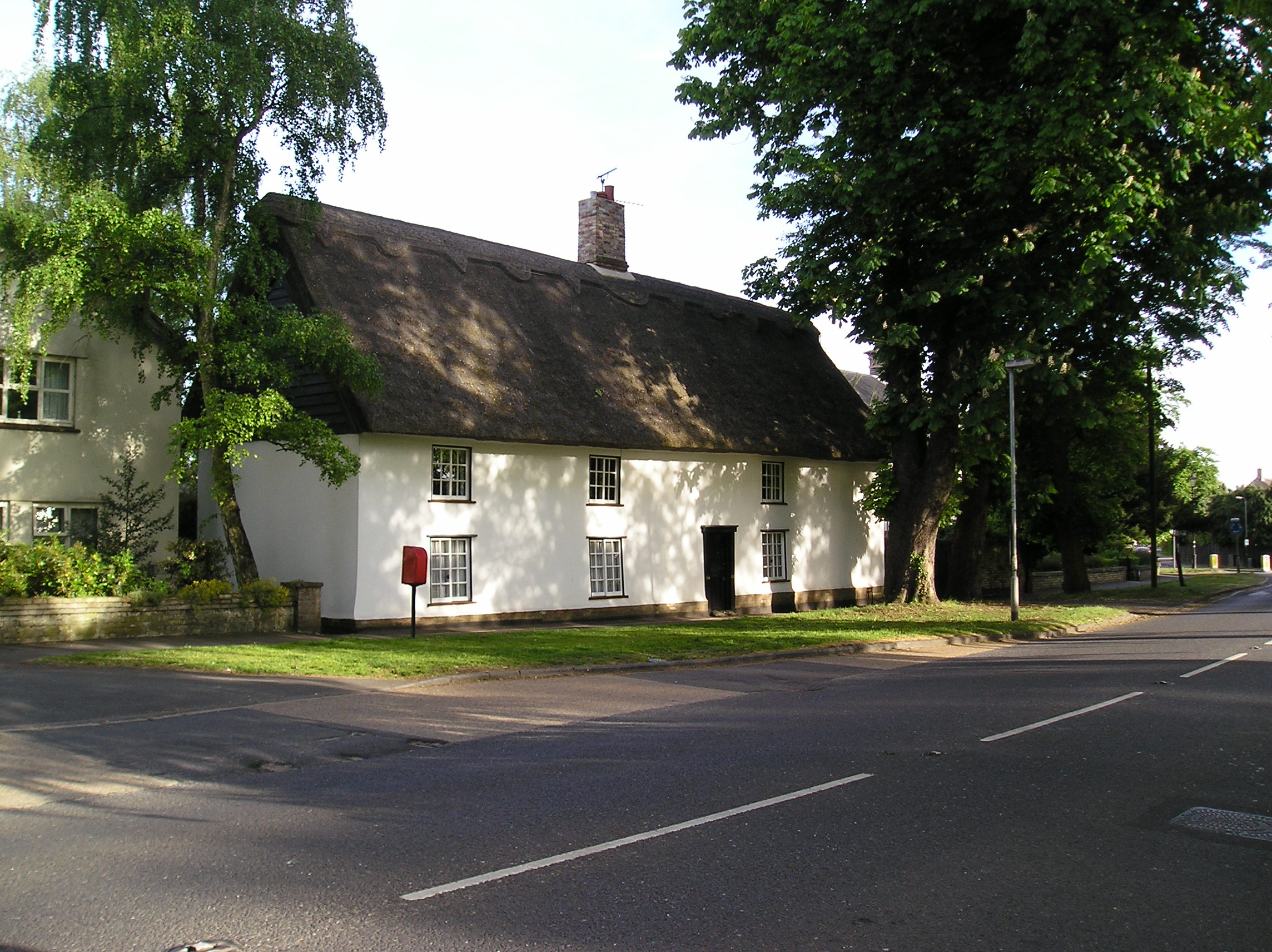
Cottenham was a treasure trove of old houses, ancient history and houses with stories behind their walls.

Although the main road through the village was quite busy during the day the villagers seemed to prefer a lighter form of transport

the villagers preferred mode of transport!

On the sidewalk was a sight common in these villages; a sign board with description of goods for sale. In this instance ‘Pink Peony plants’, unattended, left on a stand or in a box or wheelbarrow, and as is common the instructions for payment are: “please put money through the letterbox”.

'Pink peony plants' - leave money in the letterbox

One day I discovered a book that detailed the history of the village and had a fine old time digging a bit deeper.

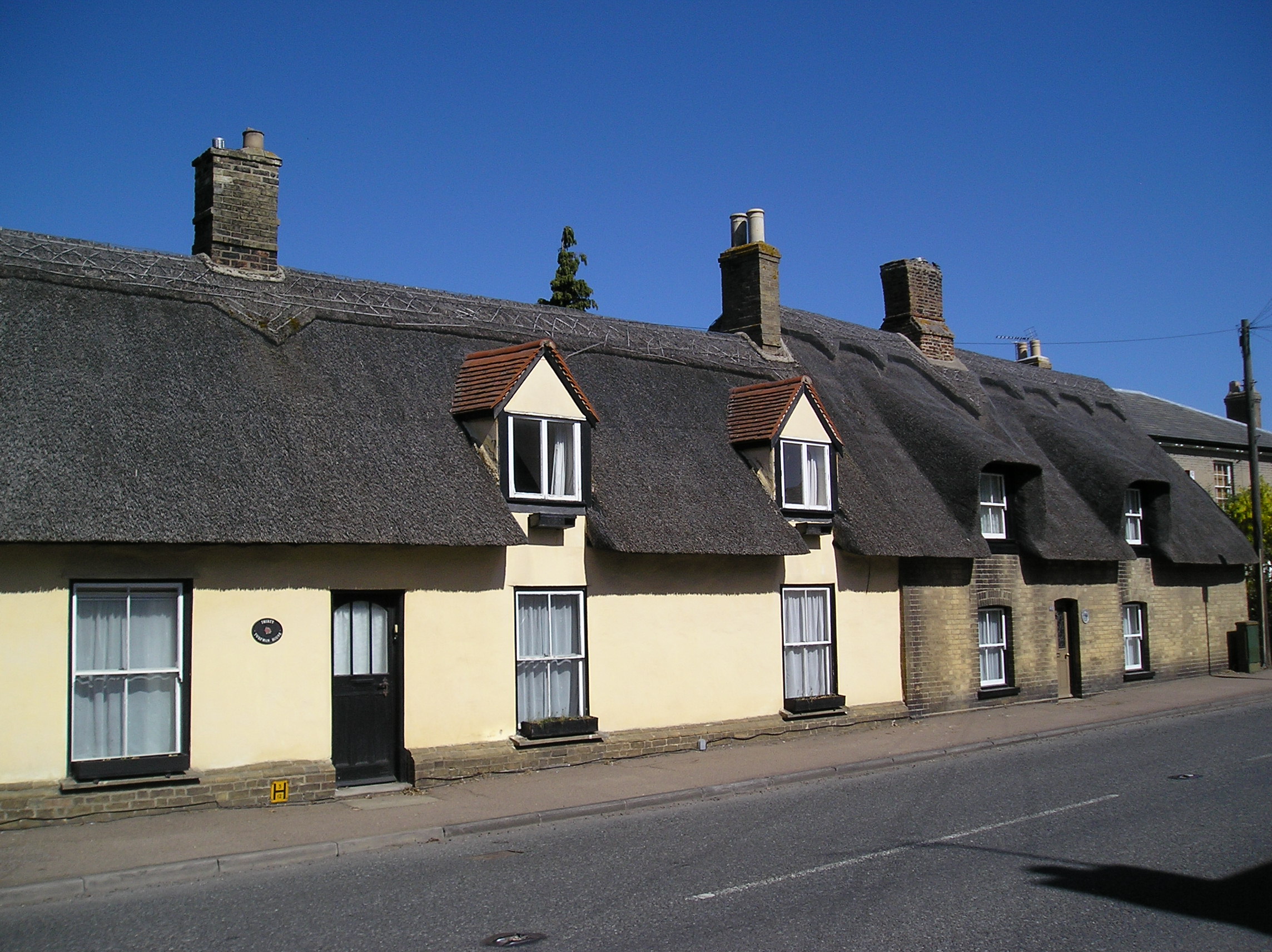
85 High Street; house of Fred Stone – watch and clockmaker and music teacher

house of Fred Stone - watch and clock maker

next door was the old Jolly Millers public house – burnt down in 1898 (now rebuilt)

Jolly Millers pub

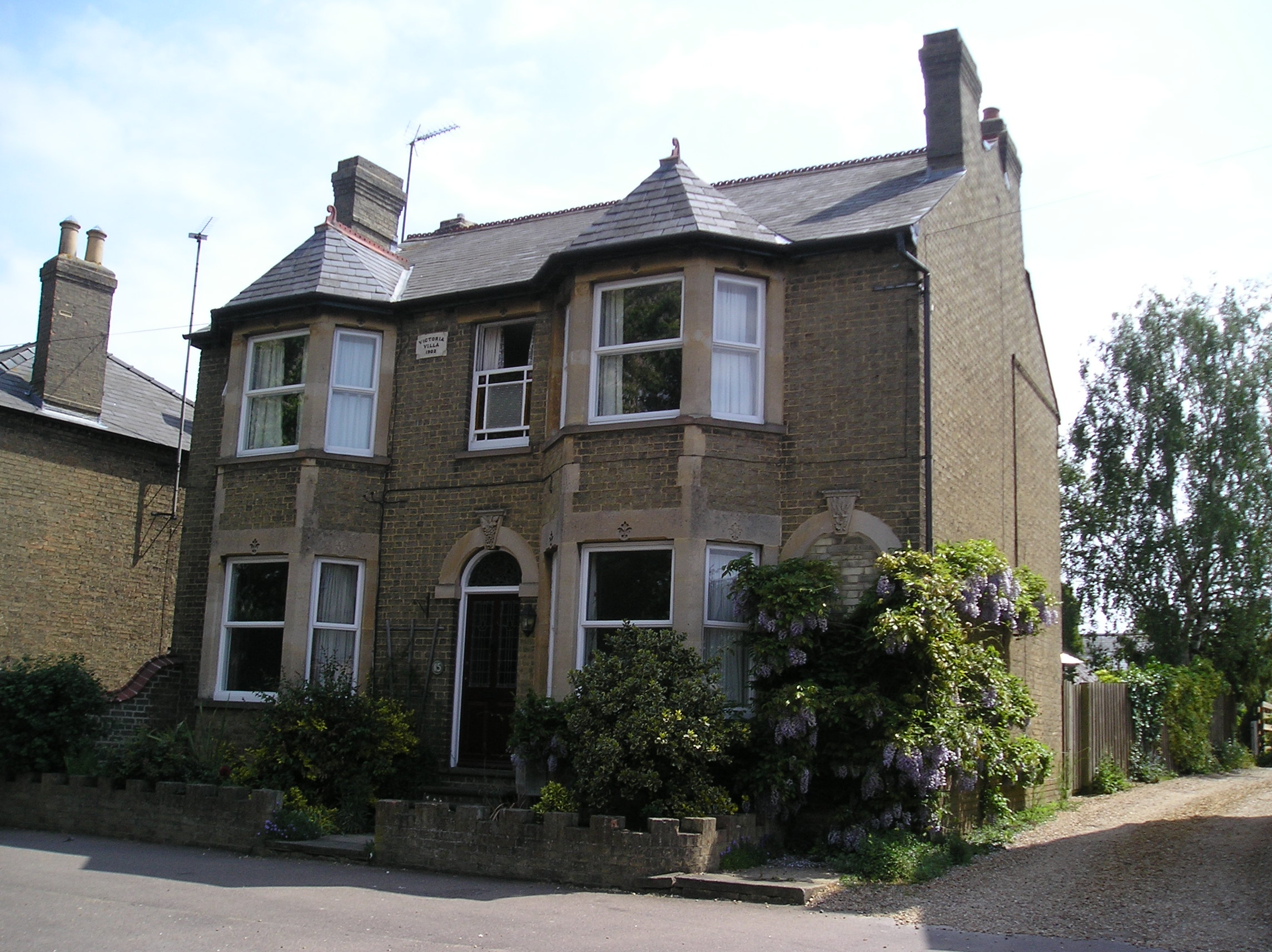
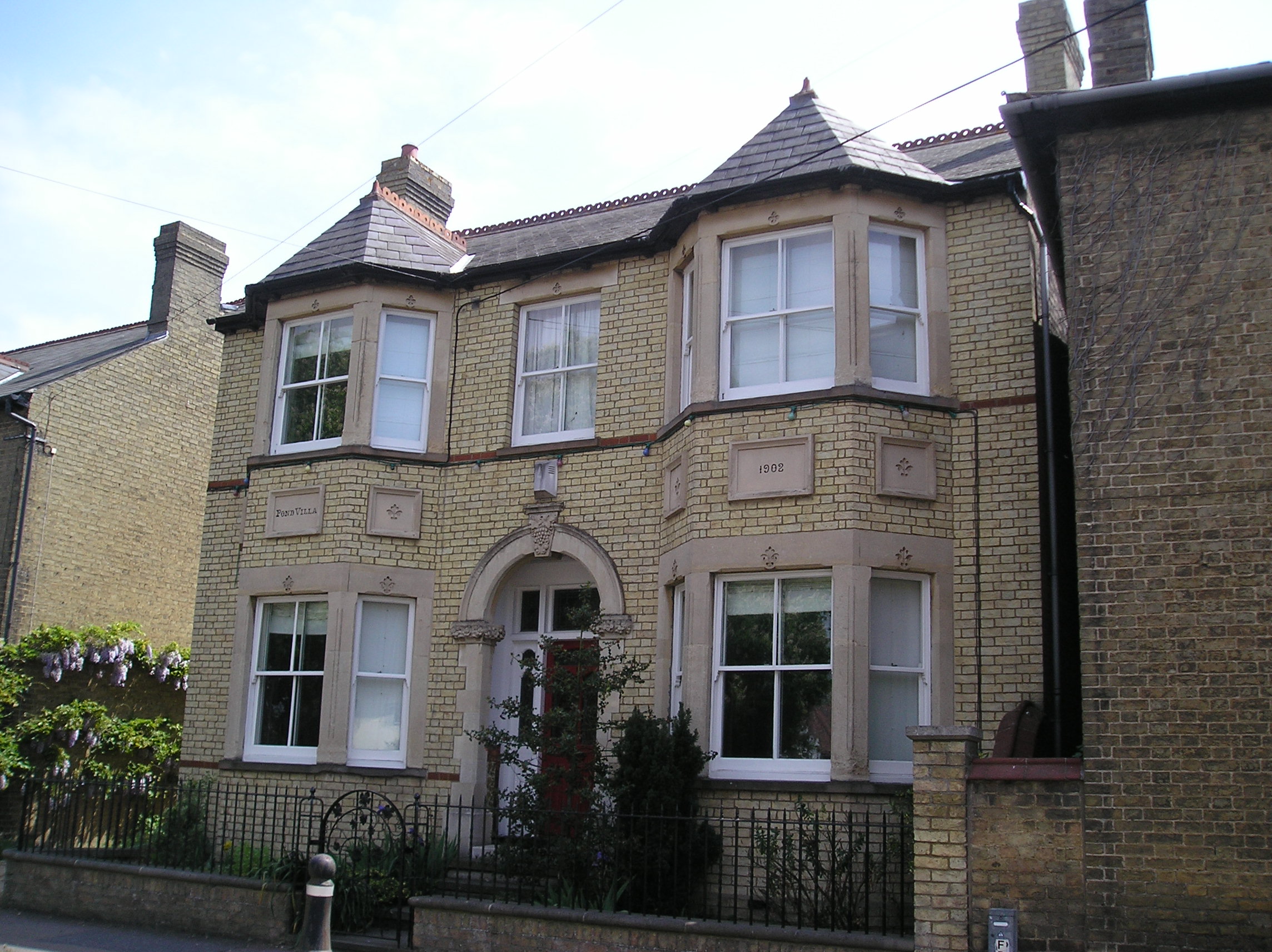
Pond Villa’s built in 1902, and the last houses in the village to be built from Cotteham brick

Pond Villas

Pond Villas

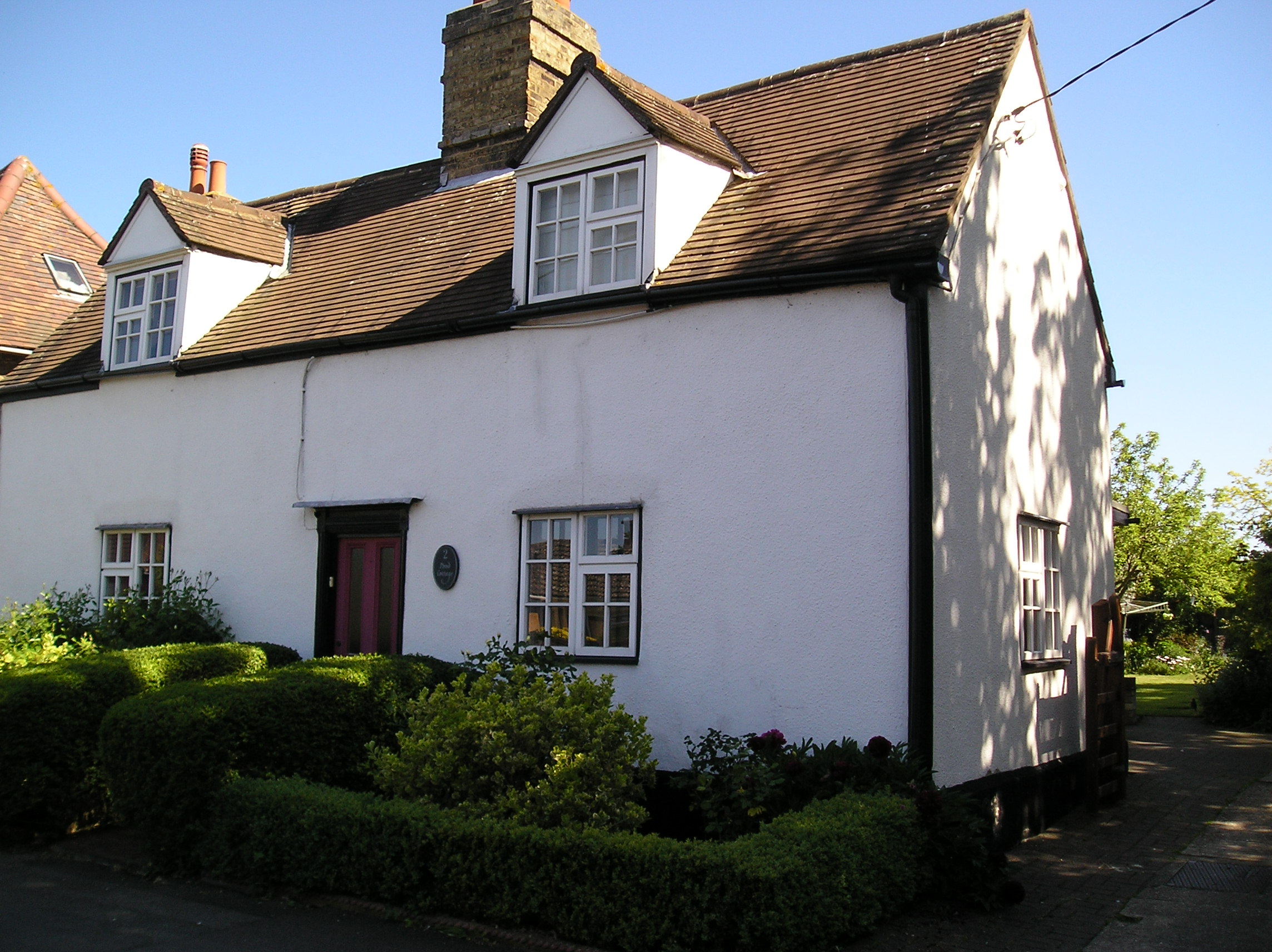
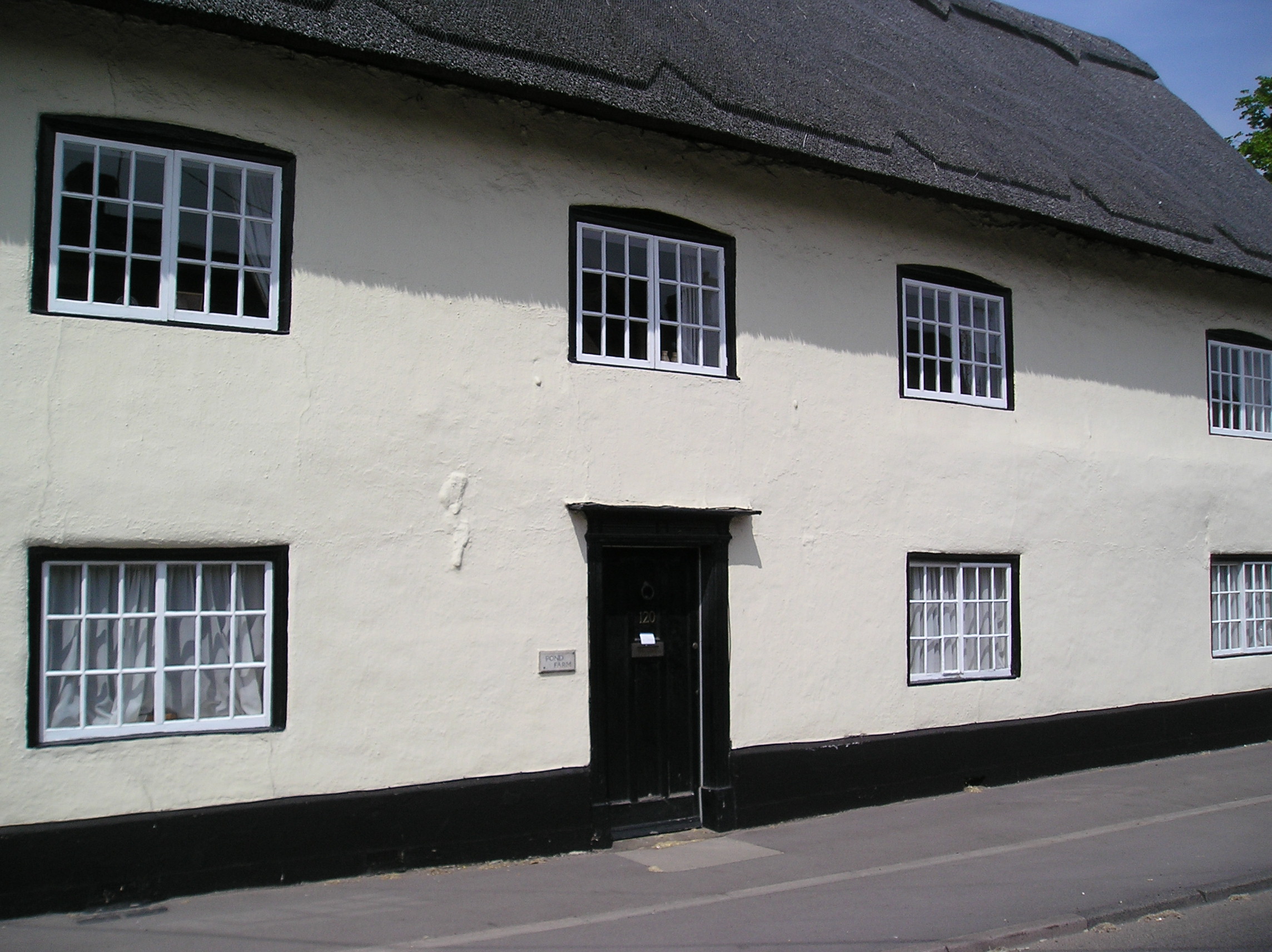
120 High Street – Pond Farm; A group of fifty dissenting families, which called itself ‘The Church Congregation Society of the Protestant Dissenters of the Denomination of Independence’, worshipped in the barn behind this 17th century Farmhouse. Pond Farm was also the site for meetings of the Ranters, or Primitive Methodists.

Pond Farm

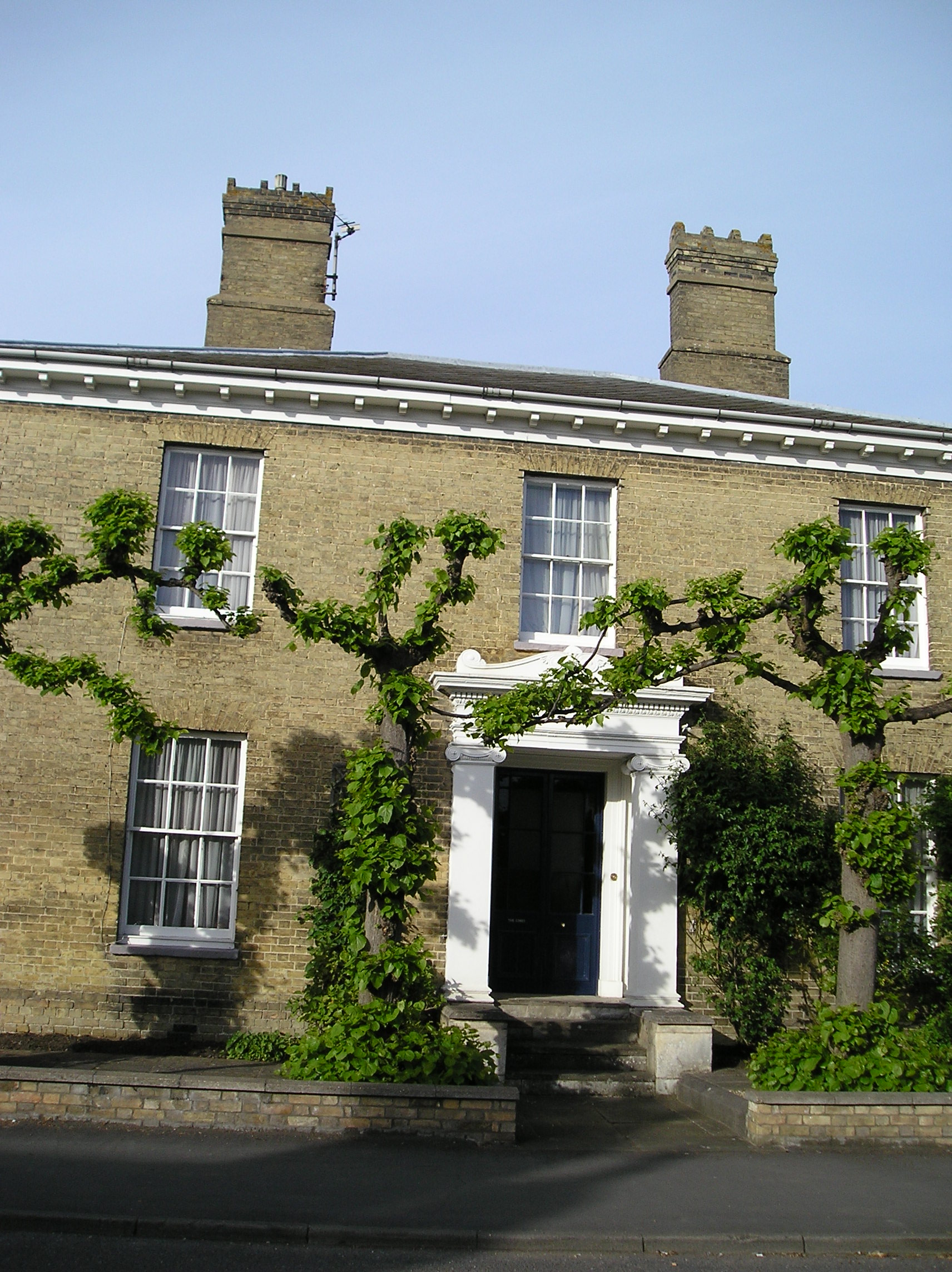
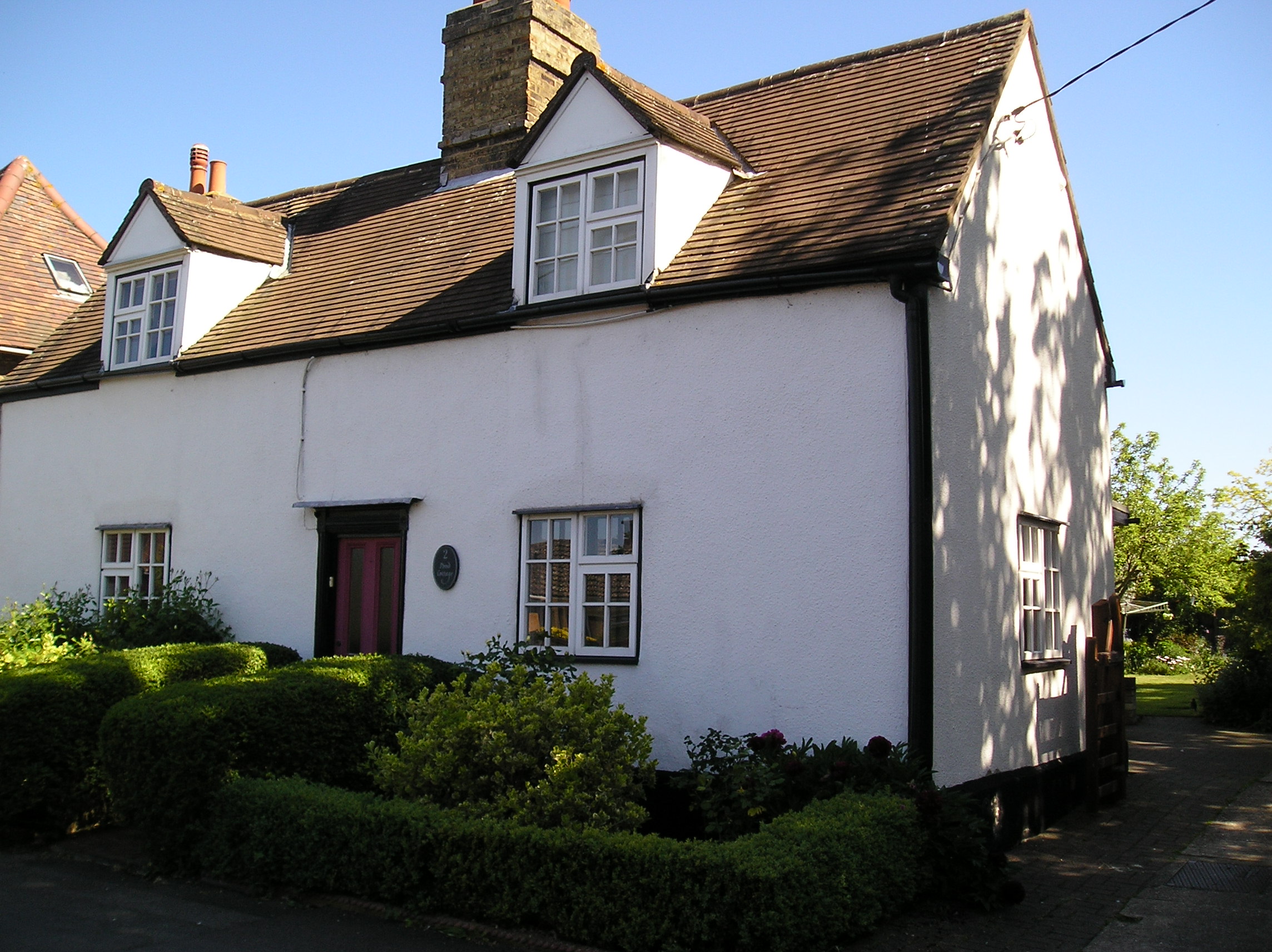
The village was a delight in it’s various architechtural styles.

Ivy House

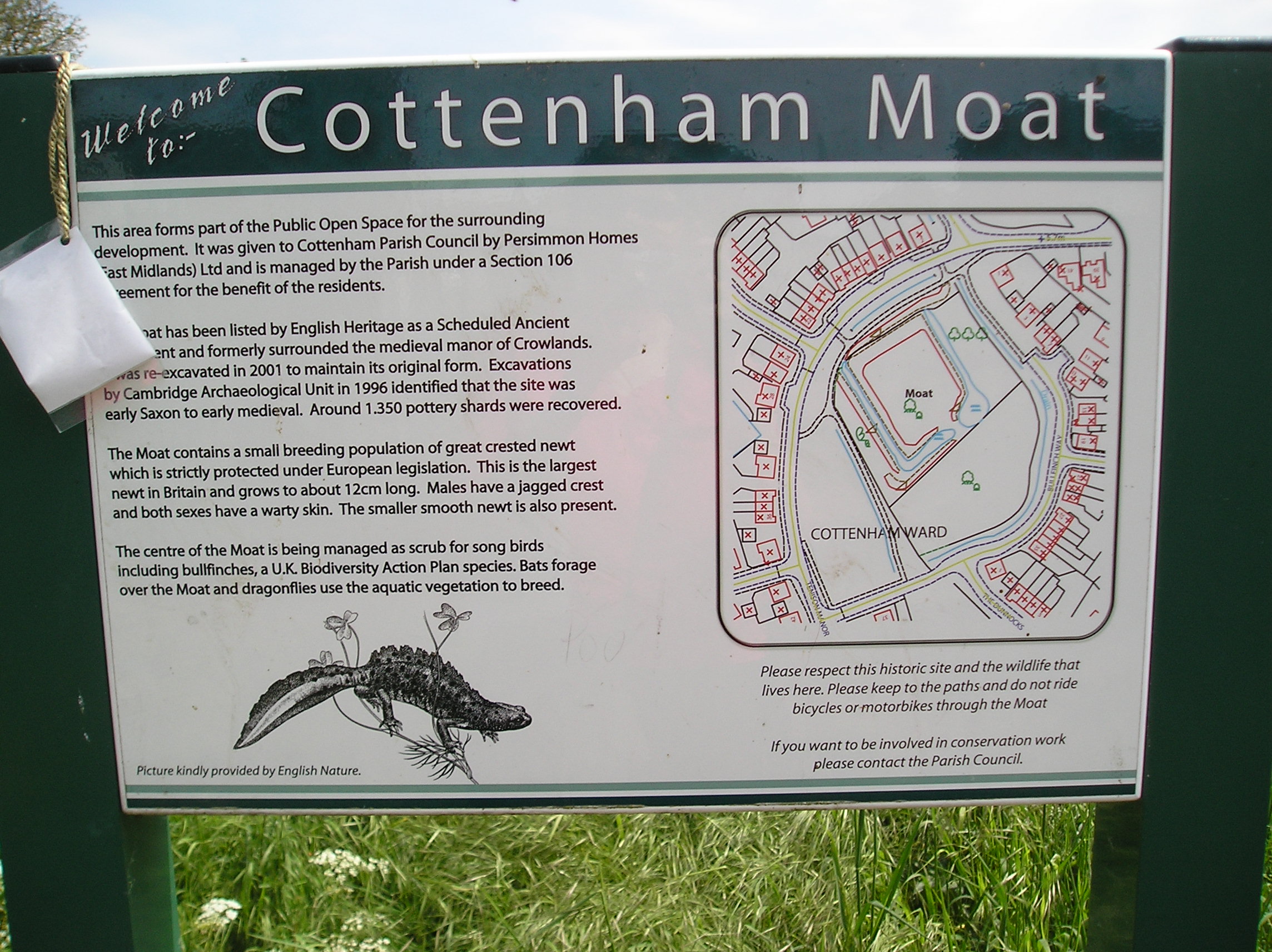
Before leaving I took a stroll over to the old Saxon area to see the moat

Cotttenham moat

Cottenham moat - a scheduled ancient monument

The area has been listed by English Heritage as a scheduled ancient monument. The moat contains a small breeding population of great crested newt, which is strictly protected under European legislation.

And that was my excursion to Cottenham, a quaint English village in Cambridgeshire, not too far from Cambridge and a treasure trove of ancient and new.

Read Full Post »

« Newer Posts

Self Propelled

Self propelled adventures through life; blogging on cycling, touring, micro-adventures, general shenanigans, and environmental news

johnelsewhere

Thoughtful wanderer in search of virtual meaning

Things Helen Loves

TRAVEL, WALKS & EVERYDAY ADVENTURES

Short Walks Long Paths

Wandering trails around the coast of Wales

Port Side Travel By Jill

My travels, photos, tips/tricks and anything else I think of!

Wonderwall

My 360: wonderwalls,theatre, travel, Sheffield, books...

Robyn's Ramblings

My Thoughts. Expressed.

Graham's Long Walk

Graham King's long walks around Britain

The Lawsons on the Loose

Philip & Heather are making memories through their travels.